The 2024 American Community Survey counts roughly 230,000 Albanian Americans (ACS B04006). Community estimates that include ethnic Albanians from Kosovo, North Macedonia, and Montenegro plus second- and third-generation US-born Americans run closer to a million. That is the count question, and it has its own long answer.
This piece is a different question. Not who Albanian Americans are, but where Albania actually is in America. The buildings. The neighborhoods. The Saturday-school classrooms. The bakery counters. The xhamia (mosque) on the corner of an industrial strip in Macomb County. The kisha (church) two blocks off Arthur Avenue. The newsroom in Manhattan that has been printing in shqip (Albanian) since the Ottoman Empire still ran the country.
Albania’s footprint in the United States is larger than the census line suggests, and it is concrete. You can walk through it. You can buy byrek (filo pastry) from people whose grandparents were born in Korçë or Tetovo. You can read a newspaper that was founded a century before TikTok. You can attend a parade in Manhattan that pulls families from five states.
This is the map.
How many Albanians live in the United States?
The 2024 American Community Survey records about 230,000 Albanian Americans (ACS B04006). The real community — counting ethnic Albanians from Kosovo, North Macedonia, Montenegro, and Çamëria, plus the US-born second and third generations who no longer tick the ancestry box — runs closer to a million. That gap is the whole reason a community-led count exists; the companion piece on Albanian Americans walks through the mechanics. For this map, the number that matters is the larger one, because the institutions below were built for it.
Where do Albanians live in America?
Albanian America is not spread evenly across fifty states — it clusters in about fifteen metros. The largest concentrations, by 2024 ACS state count:
- New York (~56,000) — the Bronx (Belmont, Pelham Parkway, and Arthur Avenue, long called “Little Albania”), plus Westchester and Staten Island.
- Michigan (~27,000) — Sterling Heights and Macomb County in metro Detroit.
- Massachusetts (~21,000) — Worcester and Boston.
- New Jersey (~15,500) — Paterson and Garfield.
- Illinois (~15,000) — Chicago. Connecticut (~12,000) — Waterbury. Florida (~16,000) — Tampa Bay and South Florida.
- Fast-growing footprints in Pennsylvania, Texas (Dallas–Fort Worth, Houston), California, and Ohio.
Each of these is a real neighborhood you can walk into. The rest of this guide is the tour — metro by metro, institution by institution.
The shape of Albanian America
The footprint is not spread evenly across fifty states. It clusters. Roughly fifteen metro areas hold the great majority of the institutional life — the parishes, the mosques, the businesses, the press — and a handful of those metros hold the great majority of the people.
By the 2024 ACS, the top states are New York at about 56,000, Michigan at about 27,000, Massachusetts at about 21,000, Florida at about 16,000, New Jersey at about 15,500, Illinois at about 15,000, and Connecticut at about 12,000. Pennsylvania, Texas, California, and Ohio sit below those but with established communities. Texas in particular has grown quickly in the last decade, with Albanian-American families settling in Dallas-Fort Worth, Houston, and Austin.
The gap between the official 230,000 and the community estimate of close to a million is real, and it has structural reasons explained at length in our companion piece on Albanian Americans. For this guide, the relevant point is that the visible footprint — the institutions you can walk into — is built for the larger number, not the smaller one. A parish with 1,350 registered families is not a parish for 230,000 people scattered nationally. It is a parish for a community that knows itself to be much larger than the form admits.
What follows is a metro-by-metro and theme-by-theme tour of that footprint. It is not exhaustive. The point is to give you a working map of where Albania lives in the United States, so that wherever you are, you can find your way to a piece of it.
Belmont, Pelham Parkway, and Arthur Avenue
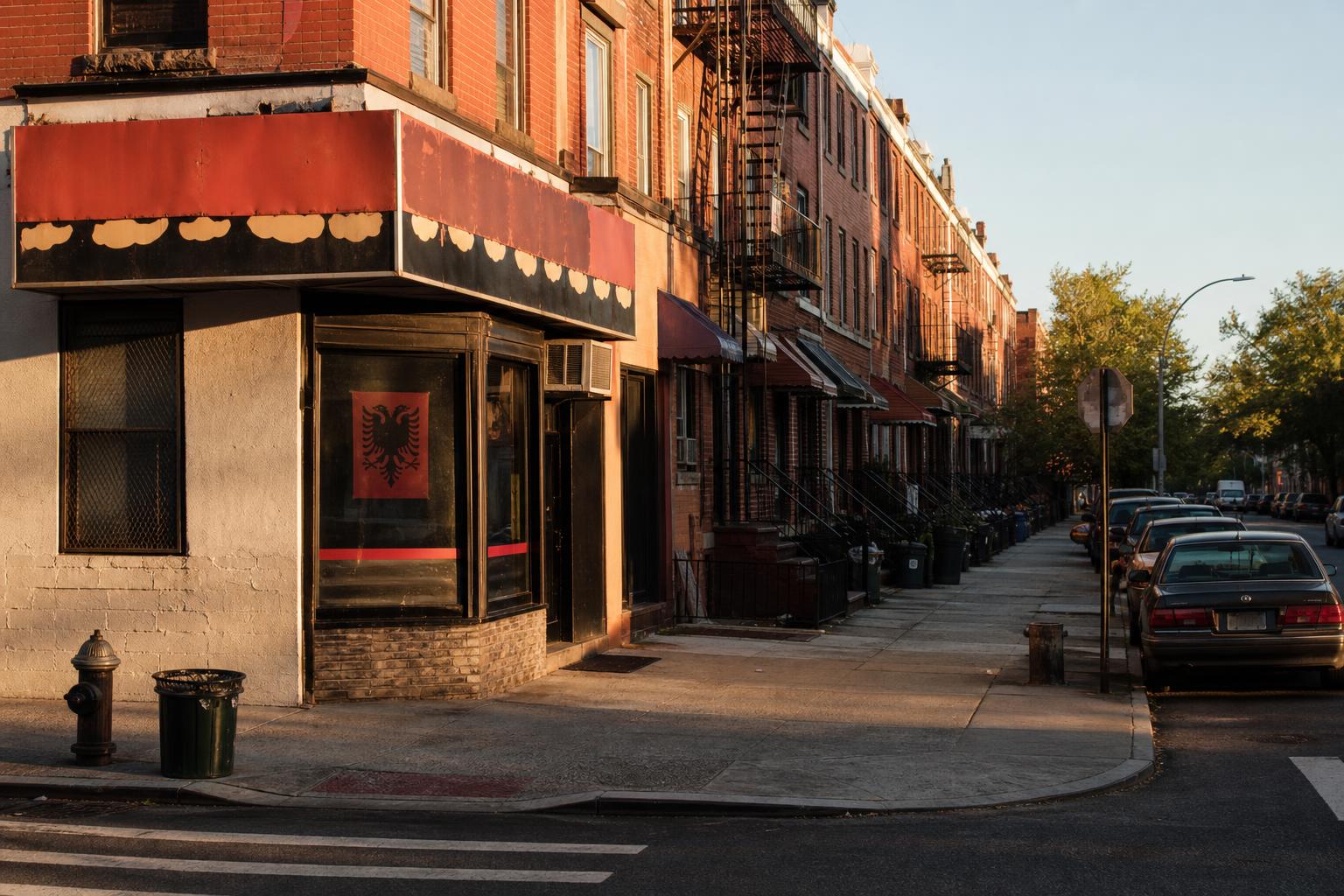
The Bronx holds the largest single Albanian neighborhood in the country. The core runs through Belmont and Pelham Parkway and spreads into the corridor around Arthur Avenue, the long-standing Italian-American commercial street that has, for decades, been Albanian as much as Italian. Locals sometimes call the area Little Albania.
The institutional anchor for the wider metro is Our Lady of Shkodra, the largest Albanian Catholic parish in the United States — located in Hartsdale, in the Town of Greenburgh, Westchester County, about ten miles north of the Bronx — founded in 1969 to serve the Gheg-speaking Catholic families arriving from Yugoslav-controlled Kosovo, North Macedonia, and Montenegro through the 1960s and 1970s. Roughly 1,350 families are registered. The parish runs Albanian-language religious instruction, hosts community events, and acts as a gathering point for weddings, baptisms, and funerals across the metro.
A short walk away, Albanian-owned restaurants, bakeries, and cafés sit along the side streets off Arthur Avenue and up through Belmont. Çka Ka Qëllu — “what’s on the menu,” roughly — is the most-cited Albanian restaurant in the city, widely covered in food press as a community landmark and a place where the diaspora and its visiting cousins sit side by side. We mention it as a documented institution, not an endorsement.
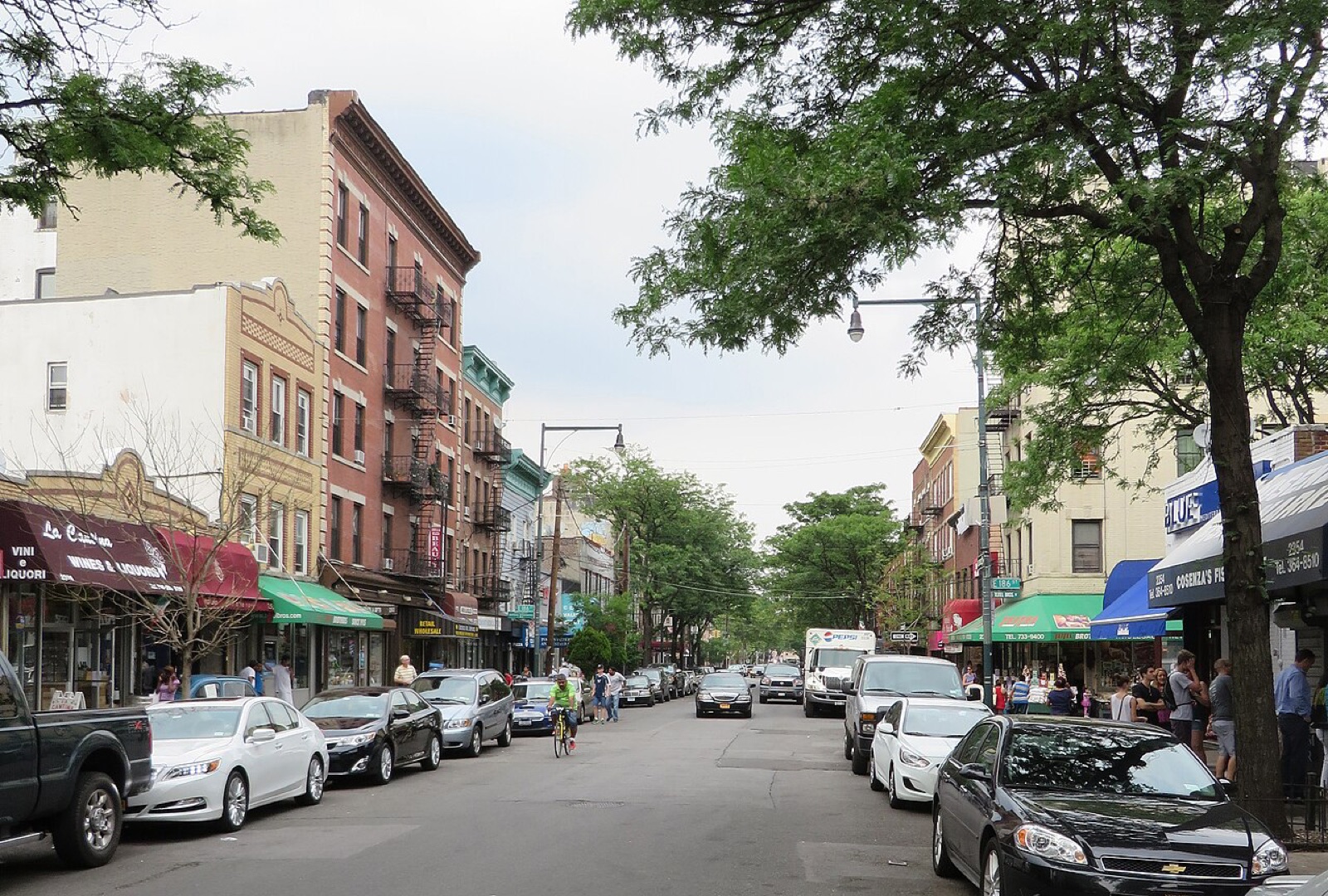 Arthur Avenue, the Bronx. Via Wikimedia Commons (CC BY-SA 4.0).

The parade is the other piece. Each year, the Albanian-American Parade in Manhattan brings families from the Bronx, Yonkers, Westchester, Staten Island, New Jersey, and Connecticut into a single recurring civic event. Flags from Albania, Kosovo, and the diaspora communities of North Macedonia and Montenegro fly together. Cultural groups in xhubleta (the traditional Albanian women’s bell-shaped skirt) walk the route alongside motorcycle clubs, soccer associations, and political delegations. It is the most visible single day in Albanian-American public life.
Add Fol Shqip, the Albanian-language Saturday school in Ridgewood, Queens, and the Bronx-anchored bi-weekly newspaper Illyria, and the New York metro reads as the diaspora’s largest single concentration of community infrastructure.
Sterling Heights and the Detroit metro
Detroit is the second pole. Macomb County — Sterling Heights, Warren, Hamtramck, Harper Woods, Taylor, Beverly Hills — holds the largest Albanian community outside the New York metro, and it is overwhelmingly Gheg-speaking, meaning the families came from Kosovo, North Macedonia, or Montenegro rather than from Albania proper.
The religious infrastructure here is unusually dense. St. Paul Albanian Catholic Church in Warren and Our Lady of Albanians in Beverly Hills serve the Catholic community. The Albanian Islamic Center in Harper Woods, founded by Imam Vehbi Ismail and consecrated in November 1963, is the flagship Sunni Albanian mosque in North America and the institutional center of the Presidency of Albanian Muslim Community Centers, an umbrella body that today coordinates more than a dozen Albanian Sunni centers. The First Albanian Bektashi Tekke in America, in Taylor, was founded in 1954 by Baba Rexheb and is the oldest Bektashi institution in the United States — a Sufi-influenced Albanian-rooted Islamic order with its own clergy and its own xhamia-equivalent gathering spaces.
Detroit is also where the cultural institutions sit thick on the ground. The Albanian-American Society Foundation has been a fixture of metro Albanian life for decades. The Gjergj Kastrioti Scholarship Fund, named for Skanderbeg, supports Albanian-American students out of Macomb County. ACTV, the Albanian Community Television operation in Michigan, broadcasts Albanian-language programming across the diaspora. Saturday schools at the Catholic and Muslim institutions teach reading, writing, and Albanian history to the next generation.
The food footprint follows. Sterling Heights and Warren have Albanian-owned bakeries, butchers, and restaurants where you can buy fresh suxhuk (cured Albanian sausage), homemade byrek by the tray, and the qebapa most associated with the Balkan grill. Adriatic and Balkan delis carry the rest. Drive Van Dyke through Warren and Sterling Heights and you will pass more Albanian-owned businesses in twenty minutes than you will see in most American cities.
Worcester, Boston, and the New England axis
New England is where the diaspora began institutionally. Boston is the founding city. Vatra — Federata Panshqiptare e Amerikës, the Pan-Albanian Federation of America — was founded in Boston on April 28, 1912 by Faik Konitza, Fan Noli, and a small group of others, seven months before Albania declared independence in Vlorë. The diaspora’s first national institution predated the Albanian state itself.
Dielli (The Sun), which became Vatra’s newspaper, was founded earlier, in 1909, and is still in print. It is among the oldest continuously published Albanian-language newspapers anywhere in the world. The Albanian Orthodox Archdiocese in America, founded by Fan Noli in 1908, is headquartered at St. George Cathedral in South Boston. The oldest local Albanian Orthodox congregation in the country is in Worcester, organized in 1911 and chartered as St. Mary’s Assumption in 1915.
Worcester is also the founding city of the Albanian American National Organization (AANO), formed in 1946 by the post-WWII anti-communist refugee wave to provide cultural and mutual-aid support. Natick, Southbridge, Cambridge, and Lowell were each early-twentieth-century Albanian factory towns; most still hold institutional cores — a parish, a hall, an annual banquet — that have outlasted the textile mills that originally drew Albanian workers to the region.
The character of the New England Albanian footprint is different from the Bronx or Detroit. It is older. It is more Tosk (southern Albanian dialect) and more Orthodox. It is built around institutions that have been on their plots of land for over a century. Walking into St. George in South Boston is walking into the oldest organized Albanian-American religious institution in the country. The bones of the diaspora as it exists today were laid here.
Waterbury and the Connecticut presence
Connecticut is the quietest of the major Albanian American footprints and one of the most established. Waterbury is the anchor city, with secondary footprints in Bridgeport, Hartford, and the New Haven corridor. Like the Detroit metro, Connecticut’s Albanian community is largely a product of the 1960s through 1980s wave from Yugoslav-controlled territories, with a second layer from the 1999 Kosovar resettlement.
The Albanian American Muslim Community of Connecticut anchors Friday prayer and Saturday school for the Waterbury and New Haven corridor. Albanian-owned construction firms, restaurants, and small businesses sit along the old industrial spines of the Naugatuck Valley. The community has consistently sent the highest per-capita Albanian Muslim turnout of any New England state to its religious institutions — a quiet but durable presence.
Connecticut is also where you find the longest-running Albanian-American athletic tradition in the Northeast: youth soccer leagues organized through the Albanian-American clubs in Waterbury, feeding into the broader diaspora soccer scene that culminates in tournaments and friendlies tied to the Albania national football team’s US-based supporter clubs.
Paterson and the New Jersey footprint
Paterson, New Jersey, is the second-largest Albanian city in the country by community estimate. It absorbed much of the post-1999 Kosovar wave and continues to draw Albanian families across Passaic and Bergen counties — Garfield, Clifton, Lodi, Hackensack. The community is overwhelmingly Gheg-speaking and religiously plural, with Catholic, Sunni, and Bektashi households often within the same extended family.
The institutional anchor on the religious side is the Albanian American Islamic Center, the subject of our long-form profile on the network that grew out of Imam Vehbi Ismail’s Detroit work. The Garfield/Paterson center serves the Bergen-Passaic concentration. Albanian Catholic parishes operate alongside it, and the broader Albanian-American chamber of commerce network maintains a strong New Jersey presence.
Paterson’s commercial Albanian footprint is dense in the way only neighborhoods that grew under one wave can be. Bakeries selling fresh byrek by the kilo, butchers cutting halal lamb to specification, cafés where the conversation runs almost entirely in shqip, and Albanian-owned construction and trucking firms whose names line the side streets. It is one of the most concentrated Albanian commercial corridors in the country.
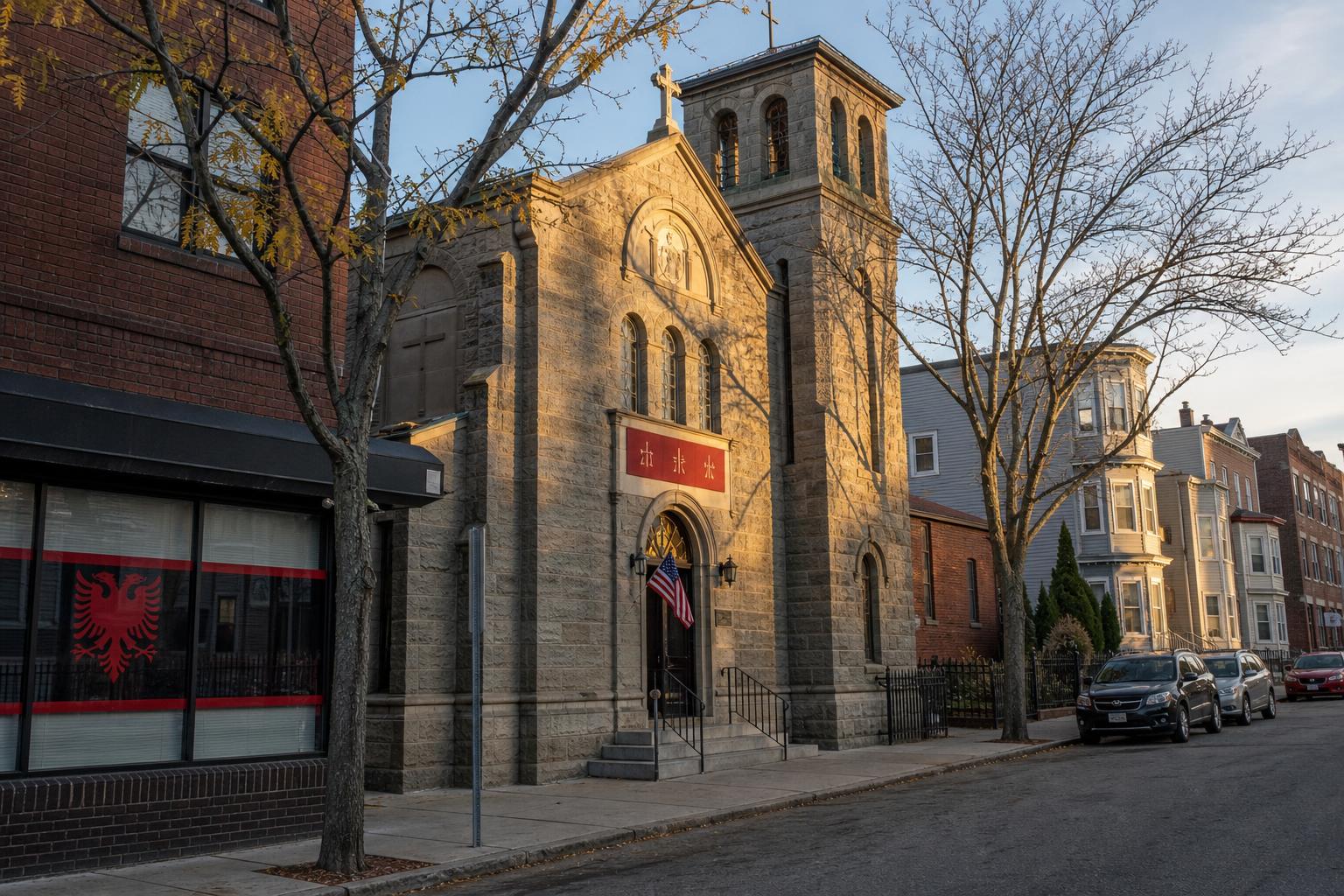
Religion in plural
Albanian Americans are Catholic, Orthodox, Sunni Muslim, Bektashi, and secular — sometimes within the same family. The religious footprint of the diaspora reflects that plurality. No single tradition is the Albanian religion in America. All four belong.
A short tour:
The Albanian Orthodox Archdiocese in America is headquartered at St. George Cathedral in South Boston, with eleven parishes nationally, founded by Fan Noli in 1908. The Worcester parish (1911) is the oldest local congregation. Read our long-form piece for the full history.
Albanian Catholic life in the United States is anchored by Our Lady of Shkodra in Hartsdale, NY (Westchester County, just north of the Bronx), St. Paul Albanian Catholic Church in Warren, Michigan, and Our Lady of Albanians in Beverly Hills, Michigan. Smaller Albanian Catholic communities operate within the broader Roman Catholic structures of New York, Boston, Worcester, and Detroit.
Sunni Albanian life centers on the Albanian Islamic Center in Harper Woods, Michigan and the Presidency of Albanian Muslim Community Centers, which today coordinates Albanian-American Sunni mosques in CT, PA, NY, NJ, FL, MI, IL, and Ontario. Independent Albanian Sunni congregations operate in the Bronx, Boston, Chicago, and parts of Connecticut and New Jersey outside the Presidency network.
Bektashi life in the United States is anchored by the First Albanian Bektashi Tekke in America, in Taylor, Michigan, founded by Baba Rexheb in 1954. The tekke is the oldest Bektashi institution on US soil. The Bektashi tradition has its own clergy — the baba (father), the dervish, the kryegjysh (head father) — and its own ritual life, gathered around the teqe (lodge) rather than the xhamia.
These institutions cooperate. At Flag Day banquets, Independence Day commemorations, scholarship galas, and the Manhattan parade, Catholic priests, Orthodox clergy, Sunni imams, and Bektashi baballarë sit at the same head table. Denomination is real and meaningful inside families, but the public Albanian-American calendar treats shared identity as the operating layer above it.
Albanian-language media in America
The press is one of the most durable parts of Albania’s footprint in the United States, and one of the oldest. Dielli (The Sun) was founded in Boston on February 15, 1909, as the newspaper of the Besa-Besën society — it did not become Vatra’s official paper until Besa-Besën merged into the newly formed Vatra in 1912 — replacing the earlier Kombi (The Nation) which Sotir Peçi had launched in 1906. Fan Noli served as its first editor; George Konda served as its first manager. Dielli is still published — now also online at gazetadielli.com — and is among the oldest continuously published Albanian-language newspapers in the world.
Illyria, founded in 1991 in New York, is the bi-weekly that has anchored post-1990 Albanian-American journalism. It carries community news, diaspora policy coverage, business profiles, and obituaries — the connective tissue of a community that needs a place to record births, weddings, and deaths in shqip. Albanian Times, out of Springfield, Virginia, runs alongside it.
On the broadcast side, ACTV (Albanian Community Television) in Michigan produces Albanian-language programming for the Detroit metro and the wider diaspora, with shows that mix news, music, religious commentary, and community calendar. Albanian-language radio operates out of New York and a handful of other metros. Online streams from RTSh (Albania’s public broadcaster) and RTK (Kosovo’s public broadcaster) reach the diaspora directly, and a generation of Albanian-American podcasters and YouTube creators have built audiences in both English and Albanian.
The press in the diaspora has always done double duty. It is journalism, and it is the community’s record of itself — the place where a wedding in Sterling Heights or a funeral in the Bronx becomes part of the shared written history of the diaspora. That is a function the algorithmic feeds have not replaced.
Civic and professional organizations
The institutional map of Albanian America is broad. The names overlap and the acronyms multiply, but most of the organizations have a clear function and a long track record. A short tour:
Vatra (Federata Panshqiptare e Amerikës), founded 1912 in Boston, is the oldest. It publishes Dielli and operates as the historic federation of Albanian-American mutual-aid and cultural societies. AANO (Albanian American National Organization), founded 1946 in Worcester, was built by the post-WWII anti-communist refugee wave and continues as a cultural and mutual-aid network across New England.
AACL (Albanian American Civic League), founded 1989 in Ossining, NY by Joe DioGuardi, has the strongest record of US-policy advocacy on Balkan questions over the last three decades. NAAC (National Albanian American Council), founded 1996 in Washington, DC, runs additional policy and outreach work.
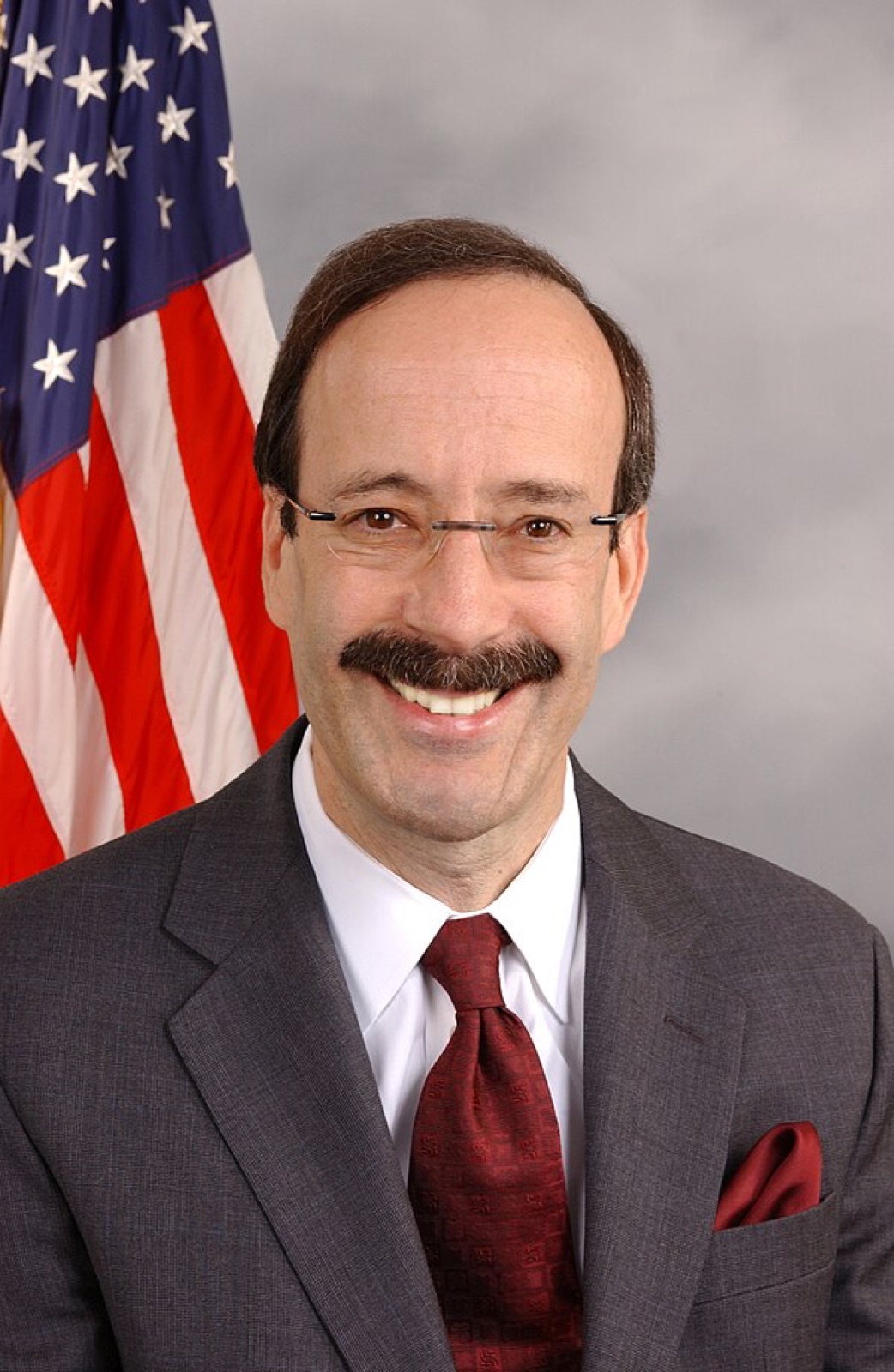 Rep. Eliot Engel, official portrait. Via Wikimedia Commons (US Government, public domain).

Regional and professional organizations fill in the rest. AAEA (Albanian American Educators Association), based in the New York metro, supports educators and runs scholarships. AACI USA (Albanian-American Community of Illinois) anchors Chicago-area cultural and civic life. The GKS Fund (Gjergj Kastrioti Scholarship Fund) supports Albanian-American students out of the Detroit metro. The Albanian American Women’s Organization runs across all of these and cuts across denominations.
Albanian-American chambers of commerce operate in Michigan, Illinois, and the New York metro, and serve as referral networks for everything from real-estate deals to imam introductions to Albanian-language tutors. The chambers are some of the most useful entry points if you have moved to a new metro and want to find the community without having to start at the parish or mosque door.
The National Albanian Registry sits alongside all of these as a 501(c)(3) building one piece of infrastructure that none of them was built for: a community-led count of Albanian Americans and the recognition certificate that comes with it. We are not a replacement for any existing organization. We are the layer that lets the whole community be seen at once.
Where to find the food
Albanian food is a working part of the diaspora’s footprint, and it is regional. The two best-stocked metros are New York (the Bronx and Paterson) and Detroit (Sterling Heights and Warren). In both, you can find Albanian-owned bakeries selling byrek by the tray, butchers cutting halal lamb and beef, and restaurants serving the full Balkan grill — qebapa, qofte, suxhuk — alongside specifically Albanian dishes like tavë kosi, fërgesë, flija, and tavë dheu.
Outside the two largest metros, the food footprint shifts. Boston, Worcester, and the New England Albanian towns have long-standing Albanian-American family restaurants — many of them folded into broader Greek or Italian-American operations because the original Tosk wave was misclassified as Greek by census enumerators a century ago, and the family business inherited the categorization. Connecticut has Albanian-owned pizza shops at a density that surprises outsiders; the same Gheg families that built construction firms in Waterbury also built the Naugatuck Valley pizza scene.
Florida and Texas, the newer footprints, are still developing their commercial Albanian density. Tampa Bay, Orlando, Houston, Dallas-Fort Worth, and Phoenix have a small but growing number of Albanian-owned restaurants and groceries. Adriatic and Balkan delis cover the staples — ajvar, kajmak, raki, feta, suxhuk — under broader regional labels.
A reliable rule: where there is an Albanian parish, mosque, or tekke, there is an Albanian bakery within driving distance. The food infrastructure follows the institutional infrastructure, because the institutional infrastructure follows the families.
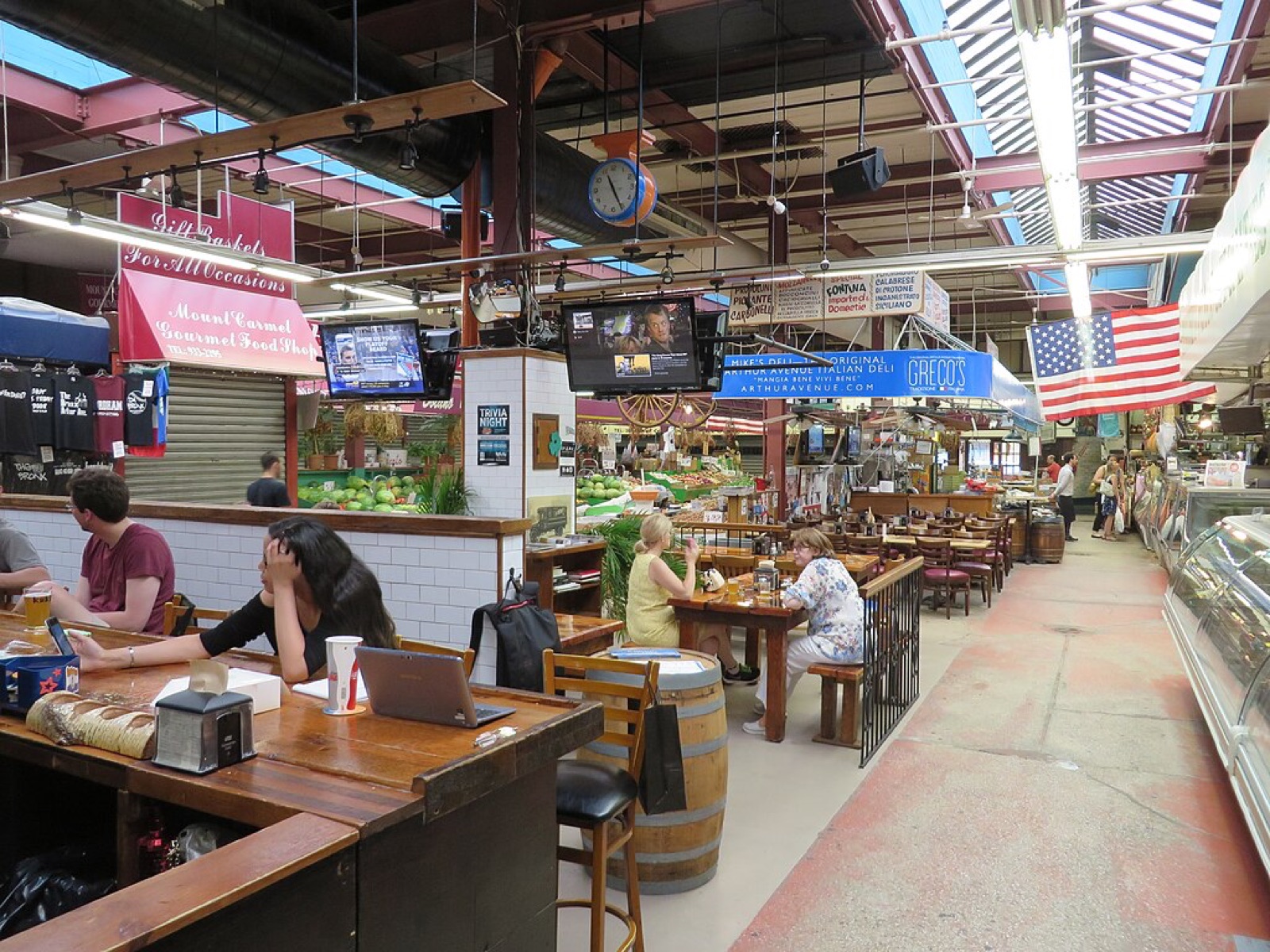 Arthur Avenue Retail Market. Via Wikimedia Commons (CC BY-SA 4.0).
_005.jpg)
What you don’t see in the official count
The footprint above is what is visible. The 230,000 figure in the 2024 ACS is also visible — it is what 230,000 people put on a Census form. The gap between those two visibilities is what the National Albanian Registry exists to close.
The undercount has structural reasons documented for over a century. Christian Tosks from the founding wave were often filed as Greek in the early 1900s because the Ottoman Empire’s millet system filed Orthodox Christians under the Greek Patriarchate. Albanian families from Yugoslav-controlled Kosovo, North Macedonia, and Montenegro have, for generations, sometimes reported ancestry as Yugoslav, Macedonian, or Kosovar. US-born Americans of partial Albanian ancestry sometimes leave the line blank on a form that allows only one or two ancestries. Each effect is small. Across 140 years and four generations, they add up to the gap between 230,000 and the community’s own estimate of close to a million.
The visible footprint — the parishes, the mosques, the tekkes, the bakeries, the parade — is built for the larger number. That is the tell. A parish does not register 1,350 families because the count is 230,000. A network of more than a dozen Albanian Sunni mosques does not exist because the count is 230,000. The institutions know the community.
What they cannot do, on their own, is publish the count. Each one sees its own slice. Vatra sees the Tosk-Orthodox foundational community. The Presidency of Albanian Muslim Community Centers sees the Sunni network. Our Lady of Shkodra sees the New York-metro Catholic Albanian community. The chambers see the businesses. None of them was built to be the cross-cutting count of all of it.
That is the work of the registry.
If you have walked through any piece of Albania’s footprint in America — eaten the byrek, attended the parade, lit a candle at St. George, prayed at Harper Woods, taken your kids to Saturday school — you are part of the community the count is for. Get counted at /register. It takes about three minutes. It is free. The certificate you receive is a recognition document confirming you are part of the registry; it is not a government ID, not citizenship, and not legally binding, and that is stated plainly on the certificate itself.
Albania in America is already here. The count is how the rest of America sees it.