

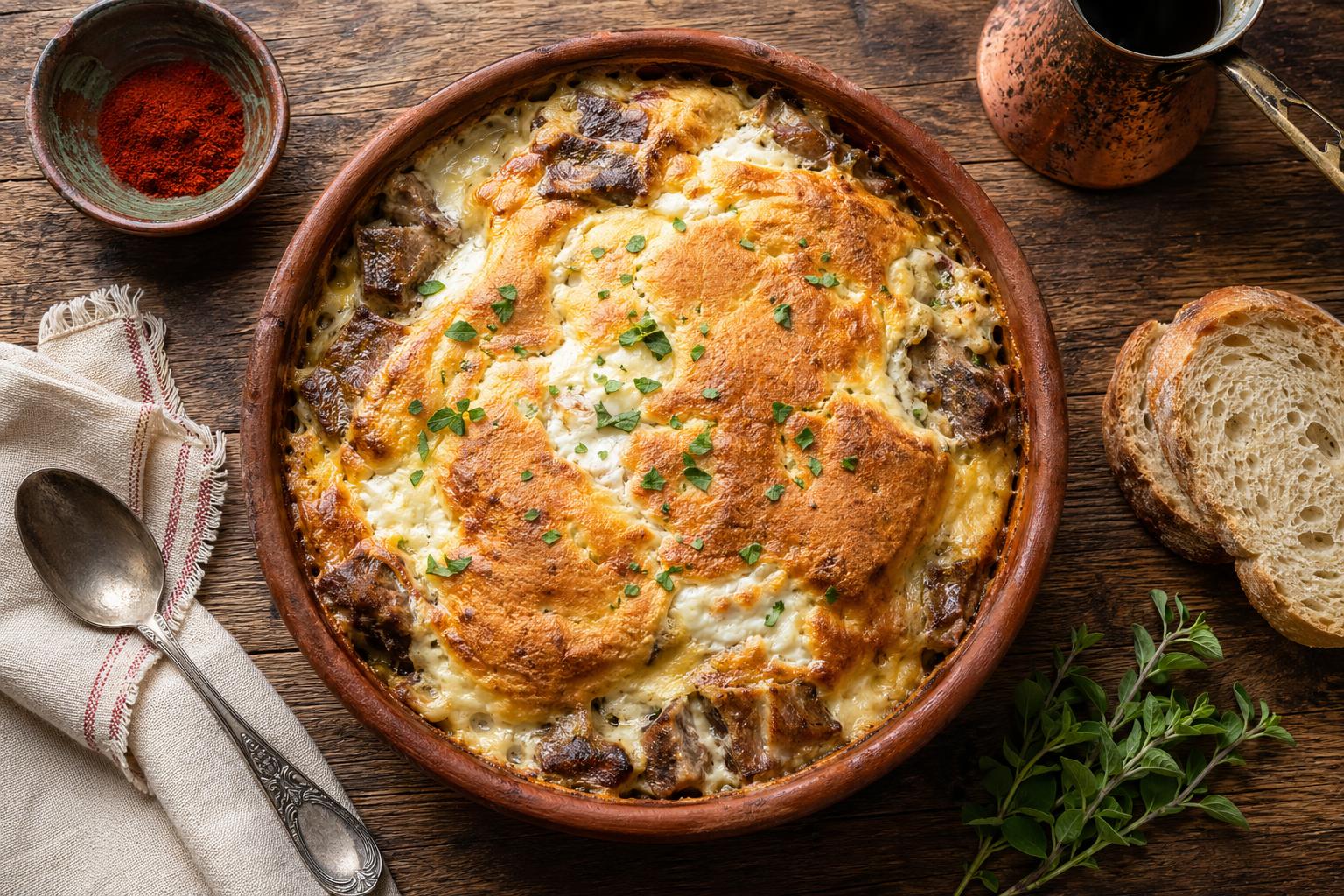
Tavë kosi is the unofficial national dish of Albania. The name is literal: tavë means baking dish, kos means yogurt. Lamb braised in garlic and oregano, layered with rice, then baked under a thick yogurt-and-egg topping that puffs and browns like a soufflé. It is the dish most Albanian-American families serve for Sunday lunch, Easter, Eid, and Christmas — the meal that signals “we are home.”
This is the traditional recipe, with the quantities, temperatures, and timings nailed down. It serves six. It takes about two and a half hours, most of it hands-off.
What Tavë Kosi Is, and Where It Comes From
Tavë kosi is a baked casserole built in three layers: braised lamb on the bottom, par-cooked rice in the middle, and a yogurt-egg-roux topping that sets in the oven. The dish is also called tavë Elbasani — “Elbasan-style baking dish” — after the central Albanian city most associated with it. In Elbasan it is the regional specialty; everywhere else in Albania it is the dish you cook when you want the table to know the day is important.
The dish sits at the center of Albania’s culinary identity for a reason. Lamb, oregano, and olive oil place it firmly in the Mediterranean. Yogurt and the baked egg-set casserole format place it in the Balkan-Ottoman world. Tavë kosi is what happens when those two traditions meet in one pan. It is older than the modern Albanian state and shows up across Ottoman-era Balkan cooking in cousin forms, but the Albanian version — yogurt forward, lamb forward, oregano forward, rice as a quiet structural layer — is its own thing.
For diaspora cooks, the dish carries weight beyond dinner. It is one of the recipes most likely to get lost between generations: the grandmother who made it without measuring is gone, and the version she made does not appear in English cookbooks the way Italian or Greek classics do. Writing the numbers down is part of how the dish survives.
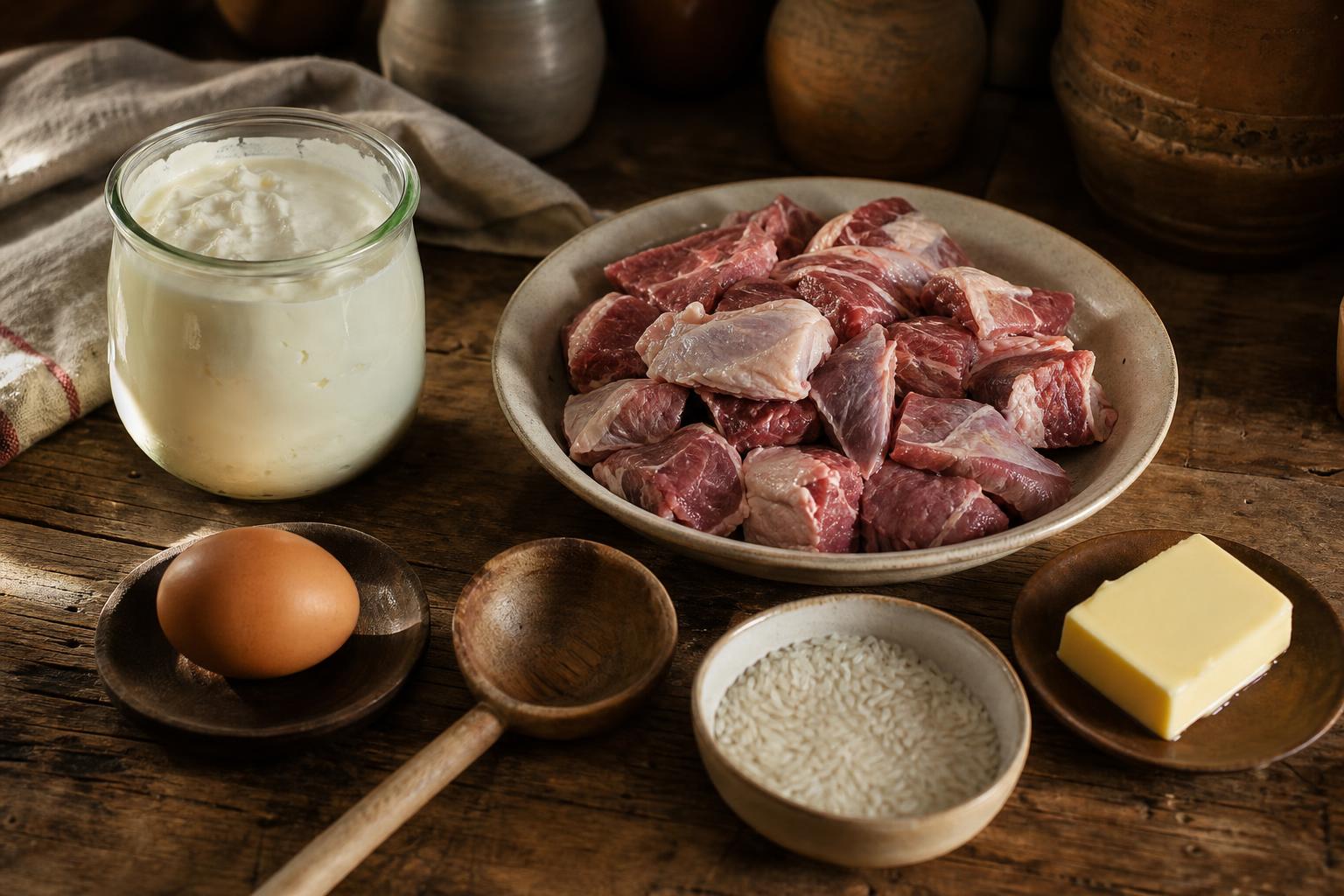 The full ingredient set for tavë kosi — lamb shoulder, full-fat Greek yogurt, eggs, long-grain rice, butter, garlic, and oregano. — Graphic by NAR
Ingredients
Serves 6. All measurements are US standard.
For the lamb:
- 2 lb boneless lamb shoulder, trimmed and cut into 2-inch cubes
- 2 Tbsp olive oil
- 4 Tbsp unsalted butter, divided
- 4 cloves garlic, finely chopped
- 2 tsp dried oregano, plus more to garnish
- 1½ cups water (approximate; you will use it in stages)
- 1¼ tsp kosher salt, plus more to taste
- ½ tsp freshly ground black pepper
For the rice layer:
- ⅓ cup long-grain white rice (uncooked)
For the roux:
- 3 Tbsp unsalted butter
- 3 Tbsp all-purpose flour
For the yogurt topping:
- 24 oz (3 cups) Greek yogurt, whole milk, full fat
- 4 large eggs
- ½ tsp kosher salt
- ¼ tsp freshly ground black pepper
A note on the yogurt: full-fat Greek yogurt is what makes the topping rich and stable. 0% Greek yogurt works and is what some cooks use to lighten the dish, but the topping comes out leaner and a little less silky. If full-fat is available, use it.
A note on the lamb: shoulder is the cut. It has the connective tissue that breaks down into something tender during the braise. Leg works in a pinch but cooks drier. Avoid stew-cut “lamb” of unknown origin from the supermarket case — ask the butcher for shoulder.
Equipment
- A heavy-bottomed pot or Dutch oven (for the braise)
- A 9-inch round or 8×10-inch rectangular baking dish, at least 2 inches deep (clay, ceramic, or enameled cast iron — all traditional)
- A small saucepan (for the roux)
- A whisk
- A large bowl
How to Make Tavë Kosi
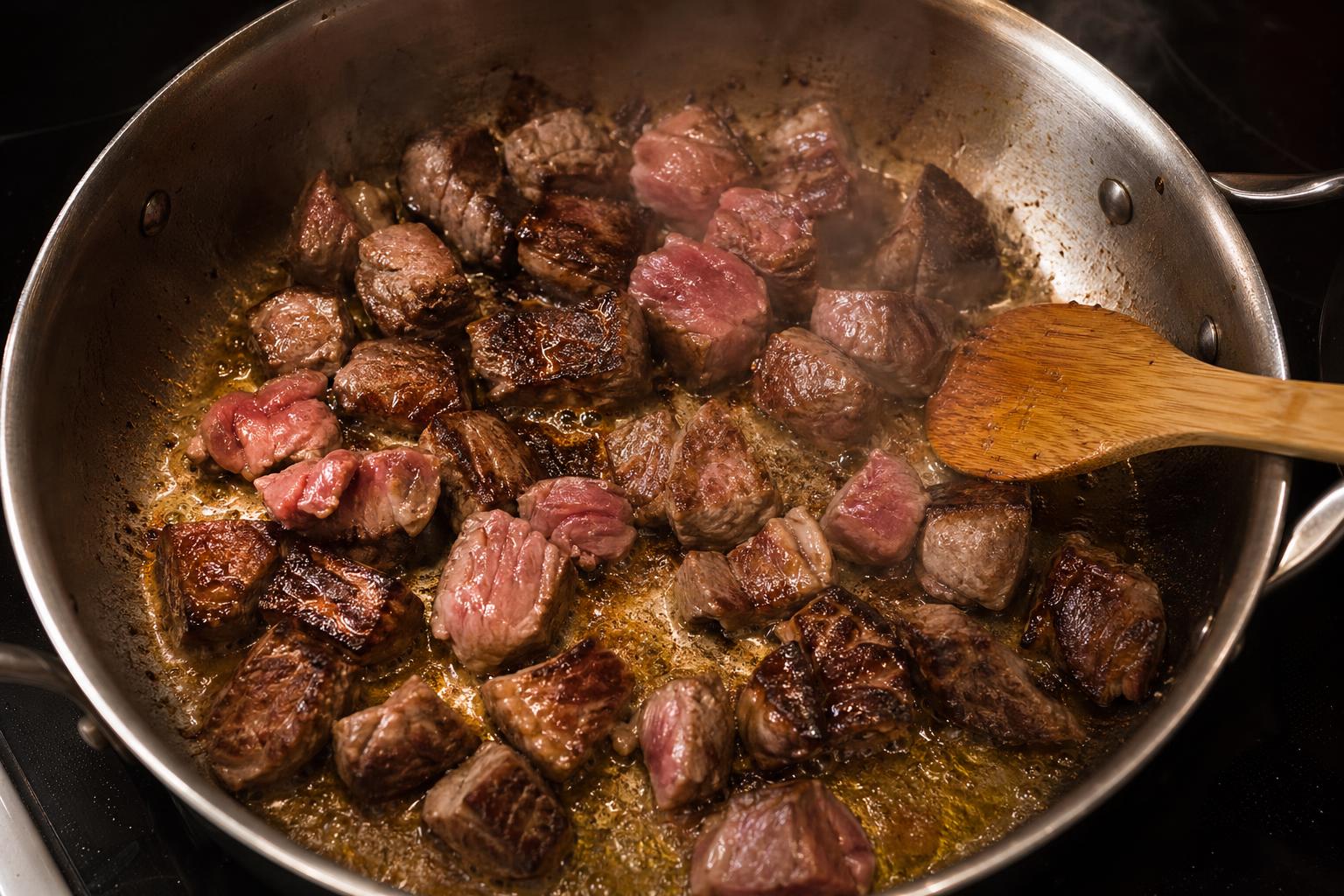 Step 1: browning 2-inch lamb-shoulder cubes in butter and olive oil — single layer, two batches if needed. — Graphic by NAR
Step 1 — Brown the lamb (10 minutes)
Heat 2 Tbsp olive oil and 2 Tbsp butter in the Dutch oven over medium-high heat. When the butter foams, add the lamb in a single layer. Do not crowd the pot — work in two batches if needed. Sear the cubes on at least two sides until deeply browned, about 5 minutes per batch. Browning is where the depth of flavor comes from; do not skip it.
Step 2 — Build the braise (1 hour)
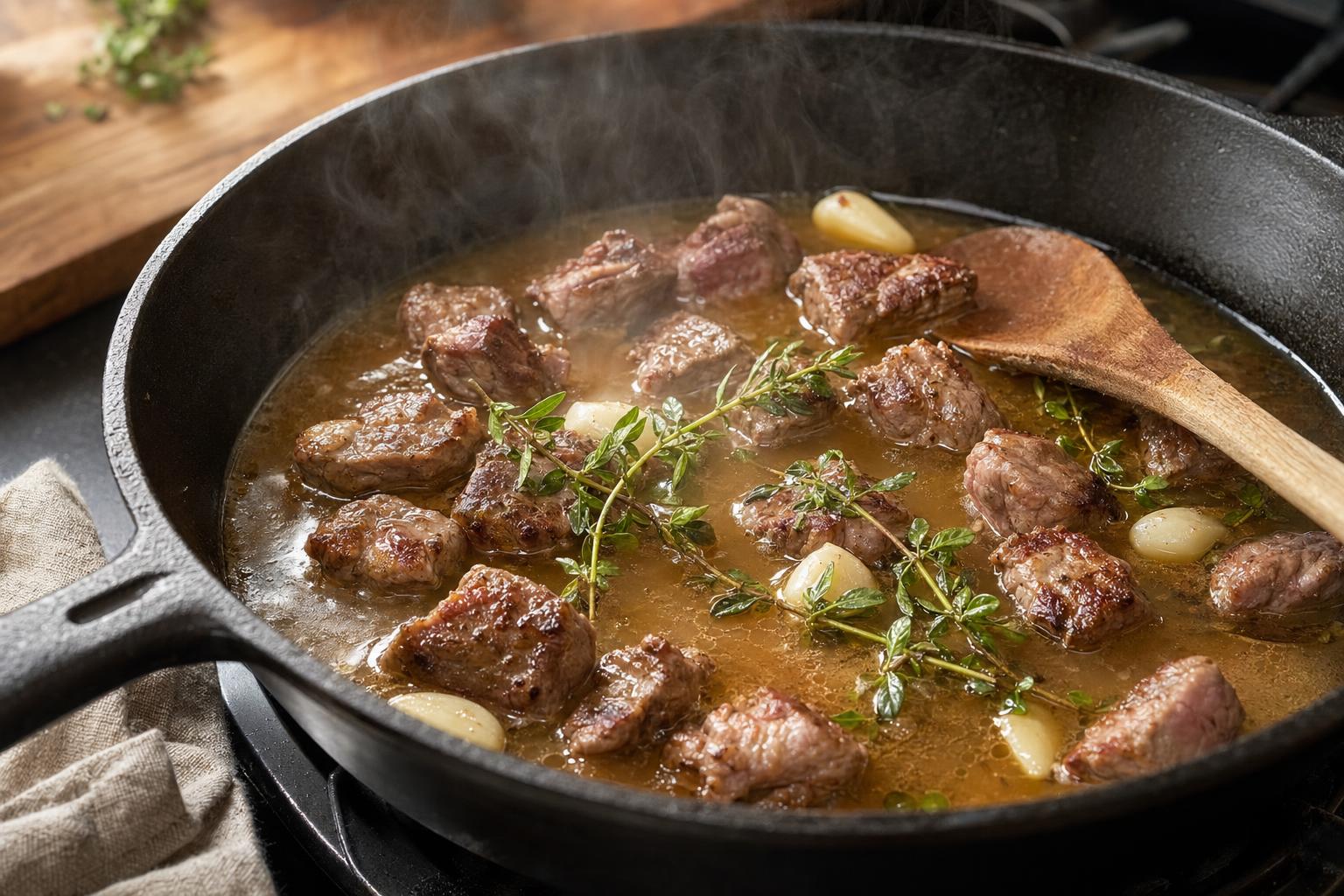 Step 2: braising the lamb with garlic, oregano, salt, and water for 50 minutes on low. — Graphic by NAR
Lower the heat to medium. Add the chopped garlic and stir 30 seconds, until fragrant — do not let it burn. Add the oregano, 1¼ tsp salt, ½ tsp pepper, and 1 cup water. Bring to a gentle simmer, cover, and cook on low for 50 minutes. The lamb should be tender enough to give to a fork but still hold its cube shape — it will finish cooking in the oven, so do not braise it to falling-apart.
Step 3 — Cook the rice (10 minutes)
Add ⅓ cup rice and ½ cup water to the pot with the lamb. Stir, cover, and cook 10 minutes — the rice should be just under al dente. It will finish in the oven. Remove from heat.
Step 4 — Transfer to the baking dish (5 minutes)
Heat the oven to 350°F (180°C). Use the remaining 2 Tbsp butter to grease the baking dish. Spoon the lamb, rice, and pan juices into the dish, spreading them in an even layer. There should be a small amount of liquid pooled at the bottom — that is correct. Set aside.
Step 5 — Make the roux (5 minutes)
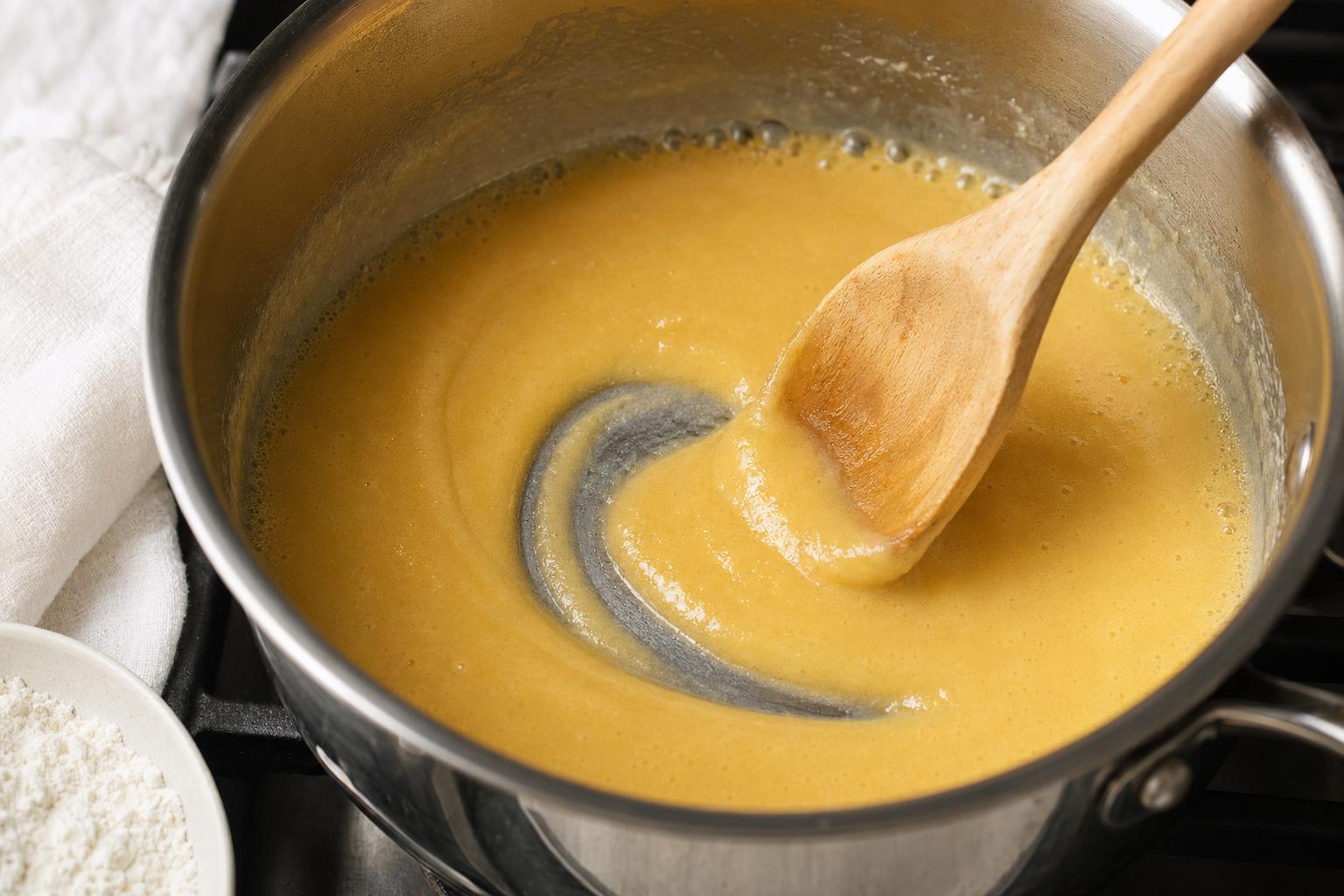 Step 5: a pale-gold butter-flour roux — whisked 2 minutes, then cooled for 5 before it meets the yogurt. — Graphic by NAR
In a small saucepan over medium-low heat, melt 3 Tbsp butter. Add 3 Tbsp flour and whisk constantly for 2 minutes, until the mixture is smooth, pale gold, and smells faintly nutty. Pull from heat. Let it cool for 5 minutes — this is the critical-path step. A hot roux poured into cold yogurt will scramble the eggs and break the topping.
Step 6 — Build the topping (5 minutes)
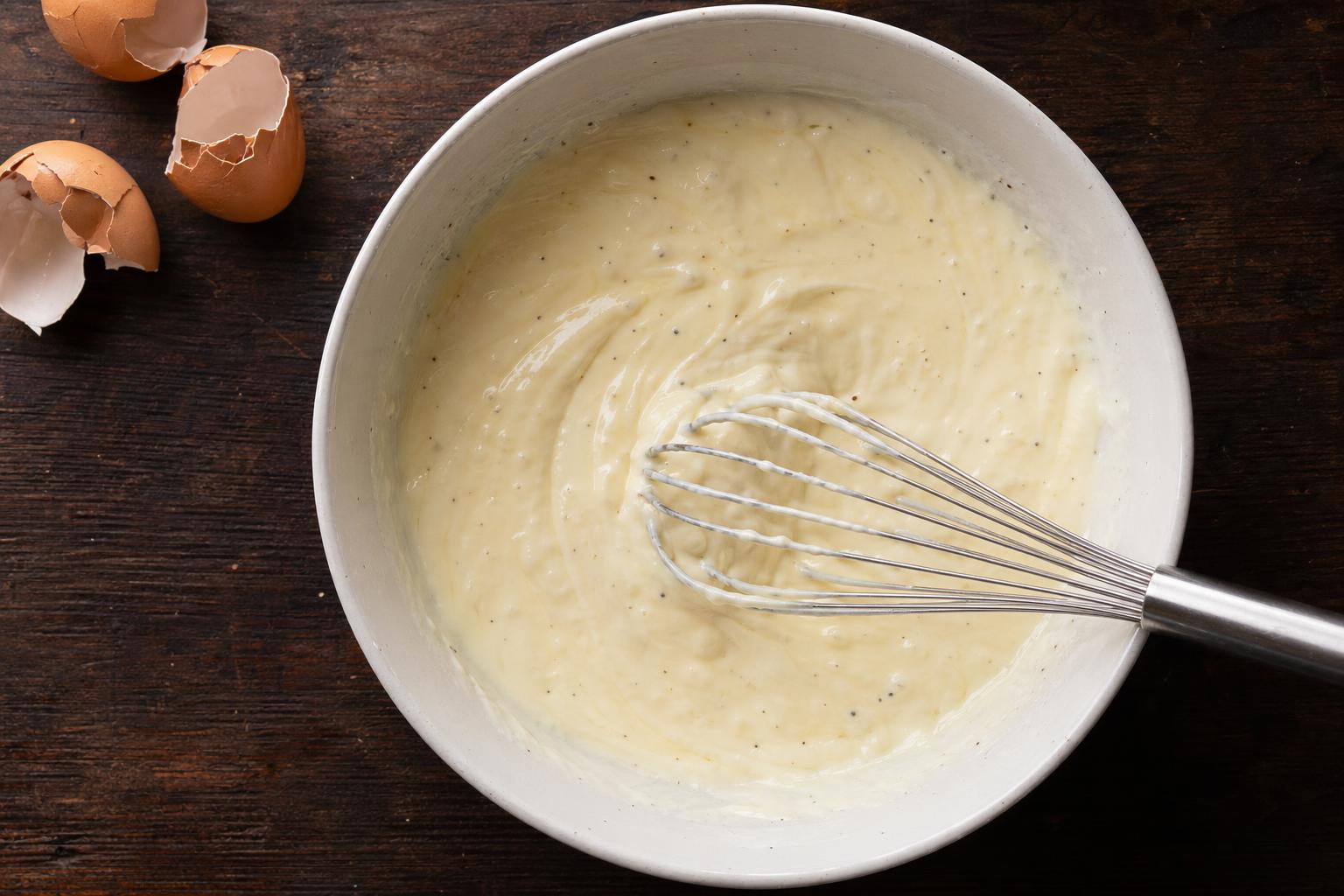 Step 6: the yogurt-egg topping whisked smooth, ready for the tempered roux to fold in. — Graphic by NAR
In a large bowl, whisk the 4 eggs until uniform. Add the 24 oz yogurt, ½ tsp salt, and ¼ tsp pepper. Whisk until smooth.
Now temper the roux: scoop one large spoonful of the yogurt mixture into the cooled roux and whisk to combine. Then scrape the warmed roux back into the bowl of yogurt and whisk everything together. The finished mixture should look like a thin pancake batter — pourable but with body. If it feels stiff, whisk in a tablespoon of water.
Step 7 — Pour and bake (40 minutes)
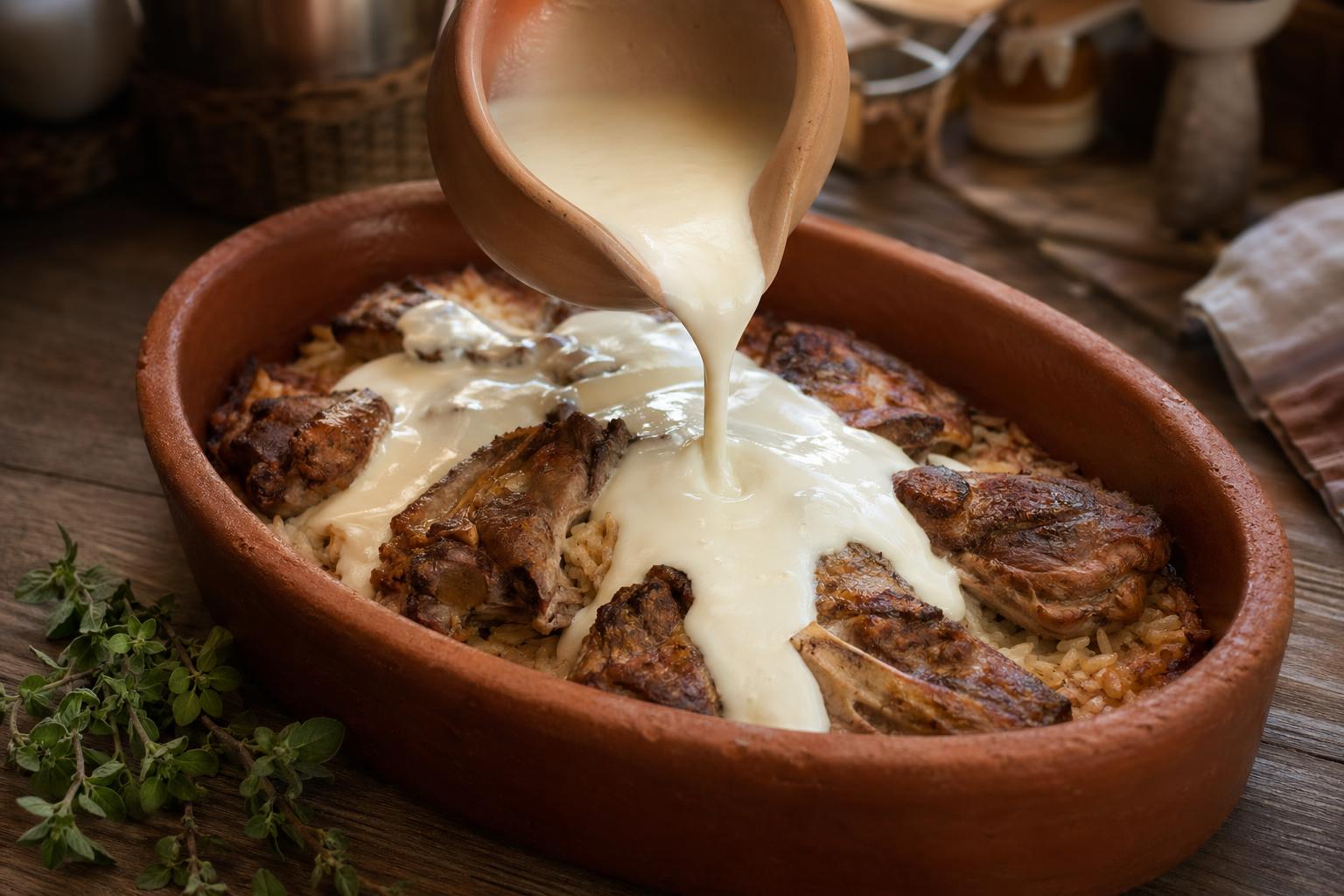 Step 7: pouring the yogurt-egg-roux topping over the lamb and rice before the 40-minute bake at 350°F. — Graphic by NAR
Pour the yogurt mixture evenly over the lamb and rice. Tap the dish gently on the counter to settle it. Sprinkle a generous pinch of dried oregano across the top.
Bake at 350°F (180°C) for 40 minutes. The dish is done when the top is deep golden, slightly puffed, and a knife slid into the center pulls clean — no liquid yogurt running back into the cut. If the top is pale at 40 minutes, move the dish to the upper third of the oven for 5 more minutes.
Step 8 — Rest, then serve (10 minutes)
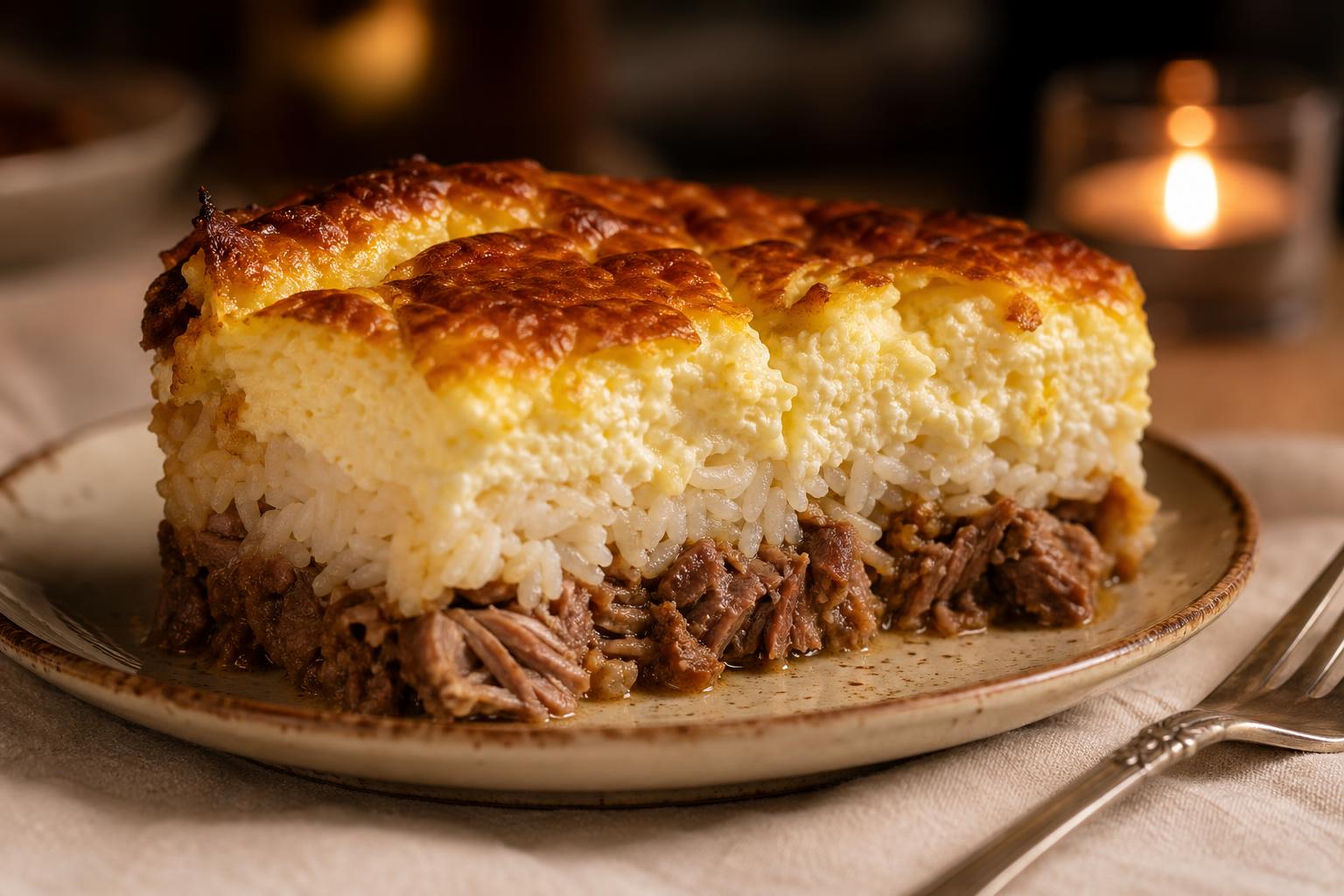 Step 8: cross-section after the 10-minute rest — three layers visible: lamb, rice, set yogurt-egg topping. — Graphic by NAR
Pull the dish from the oven and let it rest 10 minutes on the counter. Resting lets the topping set fully, which is what makes a clean wedge when you cut into it. Serve from the baking dish at the table.
Why This Recipe Works (Food-Science Note)
Yogurt alone cannot survive a 40-minute bake. The proteins in plain yogurt curdle and weep under sustained heat, leaving a grainy topping floating in whey. The roux and the eggs are what fix that.
The roux — flour cooked in butter — adds starch granules that swell and gel as they heat, trapping water and stabilizing the yogurt’s protein network. The eggs do double duty: they thicken on heating, and their proteins coagulate around the yogurt and starch, locking the structure into a sliceable custard.
This is the same logic Greek moussaka uses with béchamel on top. Tavë kosi swaps in yogurt — which is the older, more Balkan flavor — and lets the egg-and-roux do the structural work the béchamel would do otherwise. The result is a topping that puffs in the oven, browns on top, and cuts cleanly when it cools.
Variations
Tavë Elbasani vs. tavë kosi. Functionally the same dish. Tavë Elbasani names the place of origin; tavë kosi names the defining ingredient. Some Elbasan cooks omit the rice and lean harder on the lamb-yogurt ratio. Both versions are correct.
Chicken instead of lamb. A common diaspora adaptation, especially in parts of the US where good lamb is harder to source. Use 2 lb boneless, skinless chicken thighs, cut into similar 2-inch pieces. Reduce the braise time in step 2 to 30 minutes — chicken thighs hit tender faster than lamb shoulder. Everything else stays the same. The dish is lighter but still recognizable.
Vegetarian. Not traditional, but it works. Replace the lamb with 1½ lb mixed mushrooms (cremini and oyster, halved) and 2 leeks, sliced. Sear the mushrooms in butter to drive off moisture, add the leeks and garlic, then proceed with the rice step and the yogurt topping as written. The dish loses the lamb depth but keeps the structure.
Sized for a US Sunday lunch (12 people). Double every quantity. Use a 9×13-inch baking dish, at least 2½ inches deep. Add 10 minutes to the final bake — 50 minutes at 350°F (180°C) — and check for the clean-knife test before pulling. Two doubled pans baked side by side also works if your dish is shallower.
Serving and What to Pour Alongside
Tavë kosi is a centerpiece dish. It does not share the table with a competing main. What it does want around it:
- Crusty bread for sopping up the yogurt sauce. White bread, a country loaf, or fresh bukë.
- Sallatë. A simple chopped salad — cucumber, tomato, red onion, white feta, olive oil, red wine vinegar, salt. The acid cuts the richness of the topping.
- Red wine. A Mediterranean red is the right register. Albanian kallmet if available; otherwise a young Italian red, a Greek agiorgitiko, or any unfussy table red.
- Raki before the meal, in some families. A small glass, served chilled or room-temperature.
Tavë kosi shows up at darka (dinner) gatherings and at the major feast days — Easter, Eid, Christmas. This dish crosses religious lines. Catholic, Orthodox, Muslim, and Bektashi families all serve it. That makes it one of the few foods that travels across every line in Albanian-American life.
Common Mistakes
- Pouring hot roux into cold yogurt. This curdles the topping into a grainy, broken mess. Cool the roux for 5 minutes first, then temper it with a spoonful of the yogurt mixture before combining.
- Under-baking. A pale, jiggly top means the eggs have not set. The center should puff slightly and the surface should be deep golden. Use the clean-knife test, not the clock.
- Overcooking the lamb in the braise. Lamb that falls apart in step 2 will be stringy by the time the dish comes out of the oven. Stop the braise when the meat is tender to a fork but still cube-shaped.
- Skipping the rice. Some recipes leave it out. The rice absorbs the lamb juices and gives the bottom of the dish structure — without it, the lamb sits in a thin pool of liquid and the topping has nothing to bind to. Keep it.
- Using non-fat yogurt without adjusting expectations. 0% Greek yogurt will set, but the topping will be leaner and slightly chalkier. If using non-fat, do not also reduce the butter in the roux.
- Cutting too soon. The 10-minute rest is not optional. A hot, just-pulled topping has not finished setting; cutting into it lets the structure collapse.