Five waves, one diaspora
The U.S. Albanian diaspora is roughly 230,000 people by U.S. Census ancestry count, closer to a million by community estimates that include ethnic Albanians from Kosovo, North Macedonia, Montenegro, Çamëria, and the Arbëreshë regions. It came on different boats and planes between the 1880s and 1999 — five distinguishable waves with different origins, different politics, different American settlement patterns.
Five communities, not one. Any institution that treats the diaspora as a unified bloc pointed at Tirana will misalign with four of them.
The five waves
1. The Korçë Tosks of New England (1880s onward). Orthodox laborers from southern Albania, then Ottoman territory, settling in Boston, Worcester, Lowell, and the Connecticut River Valley. Vatra — the Pan-Albanian Federation — was founded in Boston in April 1912, seven months before Albania declared independence in Vlorë. The diaspora’s institution predated the state. Tosk dialect, Orthodox confession, urban-industrial settlement. Many of the foundational Albanian-American diaspora texts were written by people from this wave.
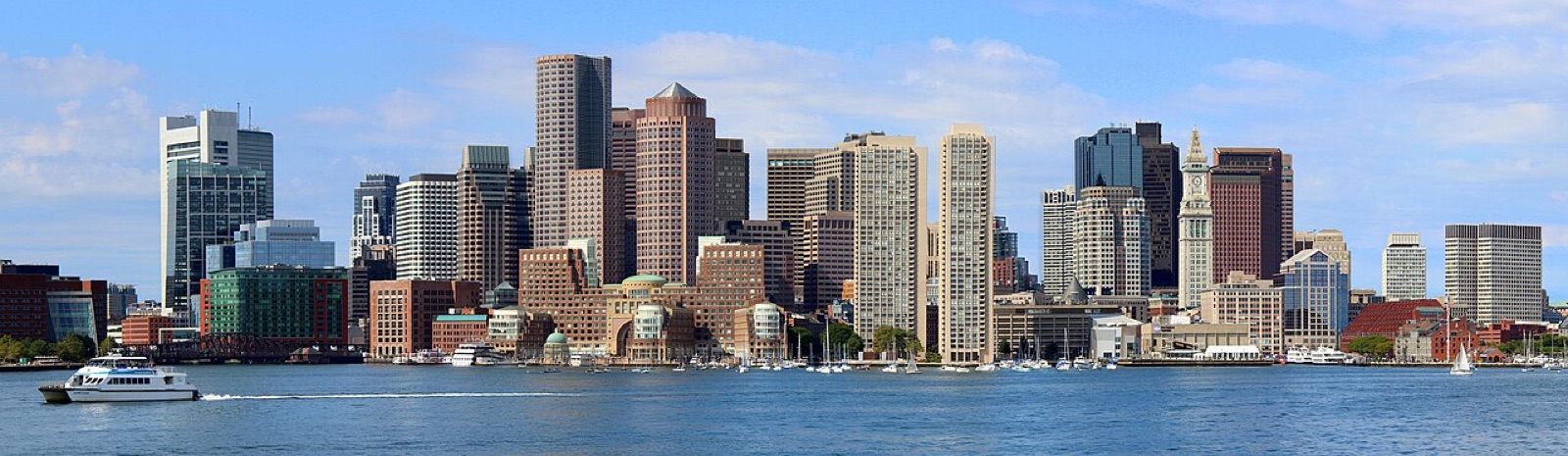 Boston downtown skyline from the harbor — founding city of Vatra (1912), Kombi (1906), and Dielli (1909); the institutional cradle of the Tosk-Orthodox first wave.
Photo: Wikimedia Commons / CC BY-SA 3.0
Boston downtown skyline from the harbor — founding city of Vatra (1912), Kombi (1906), and Dielli (1909); the institutional cradle of the Tosk-Orthodox first wave.
Photo: Wikimedia Commons / CC BY-SA 3.0
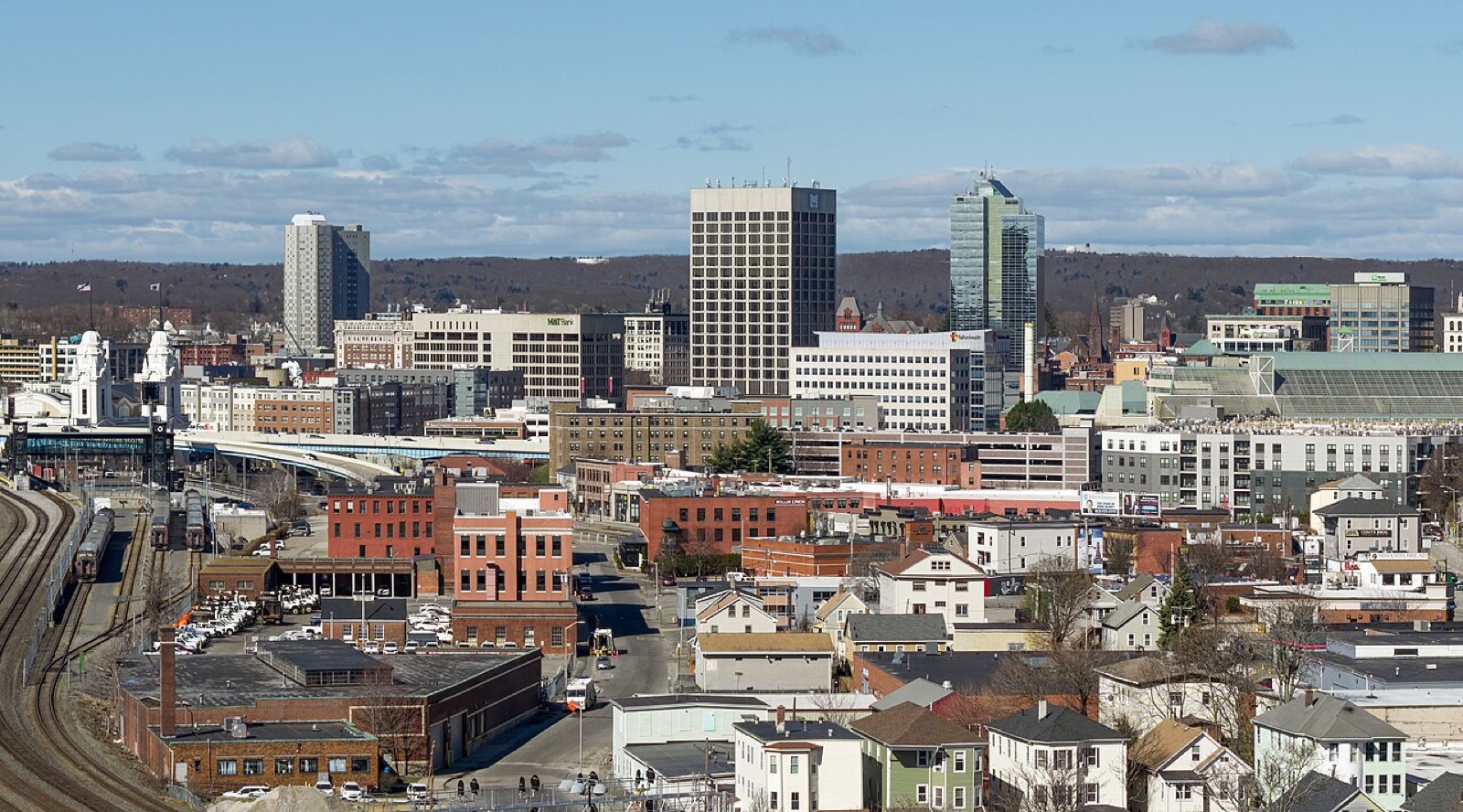 Worcester, Massachusetts — New England factory town with a longstanding Albanian Orthodox community and where the Albanian American National Organization (AANO) was founded in 1946.
Photo: Wikimedia Commons / CC BY-SA 3.0
Worcester, Massachusetts — New England factory town with a longstanding Albanian Orthodox community and where the Albanian American National Organization (AANO) was founded in 1946.
Photo: Wikimedia Commons / CC BY-SA 3.0
2. The post-WWII Catholic and anti-Communist refugees (1945-1960). A smaller wave. Northern Albanians fleeing the consolidation of Hoxha’s communist regime — often Catholic from the highlands, often connected to the prewar Zog government, always anti-Communist. Settlement in New York, Detroit, and Boston. Brought intelligentsia and clergy and a political orientation that persisted across generations.
3. The Yugoslav-Albanian Gheg wave (1960s-1980s). Pre-1990, but distinct from any Albania-from-Albania wave. Catholic, Sunni Muslim, and Bektashi Gheg-speaking families from Kosovo, North Macedonia, and Montenegro, leaving under Yugoslav state pressure that intensified after 1968 and again after 1981. They didn’t settle in the New England factory towns. They went where construction, restaurant, and small-business opportunities were: New York’s outer boroughs, New Jersey, Connecticut, and the Detroit metro. This is the largest Albanian-American population concentration outside the New York metro today. Macomb County, Michigan — especially Sterling Heights, Warren, and Hamtramck — is the geographic anchor.
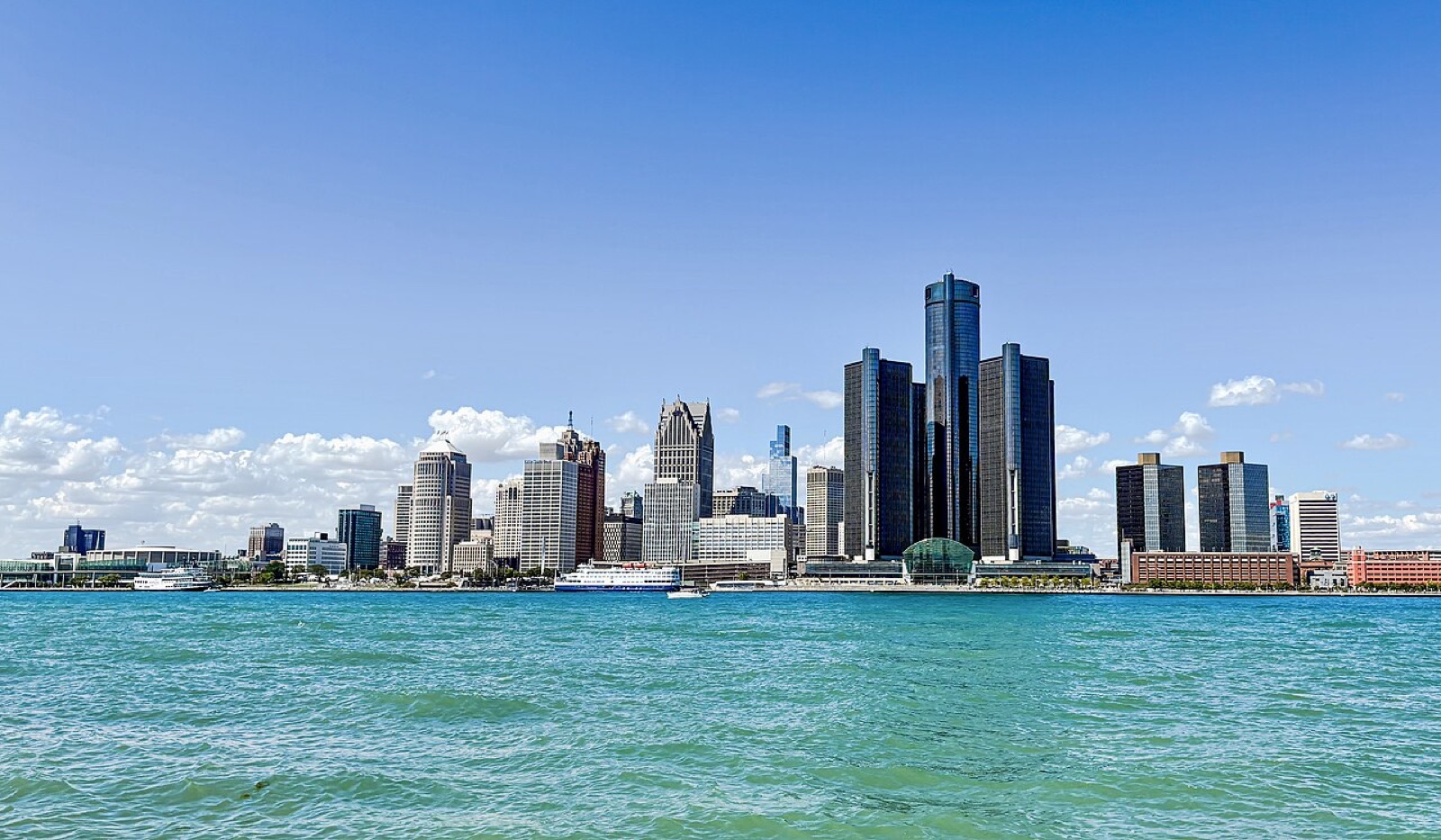 Detroit skyline from Windsor, Ontario, across the Detroit River, 2025 — the metro’s outer ring (Sterling Heights, Warren, Hamtramck, Macomb County) holds about 27,000–30,000 Albanian Americans, overwhelmingly Yugoslav-Albanian Gheg.
Photo: Wikimedia Commons / CC BY-SA 4.0
Detroit skyline from Windsor, Ontario, across the Detroit River, 2025 — the metro’s outer ring (Sterling Heights, Warren, Hamtramck, Macomb County) holds about 27,000–30,000 Albanian Americans, overwhelmingly Yugoslav-Albanian Gheg.
Photo: Wikimedia Commons / CC BY-SA 4.0
4. The post-1990 Albania-proper wave (1991-2000s). Albanians from Tirana, Vlorë, Fier, Korçë, Gjirokastër, Shkodër — leaving the post-Hoxha collapse and the 1997 pyramid-scheme civil unrest. Many settled in the New York metro. Brought the first cohort of Albanian-Americans whose primary political reference point was Tirana itself, because Tirana was where they were from.
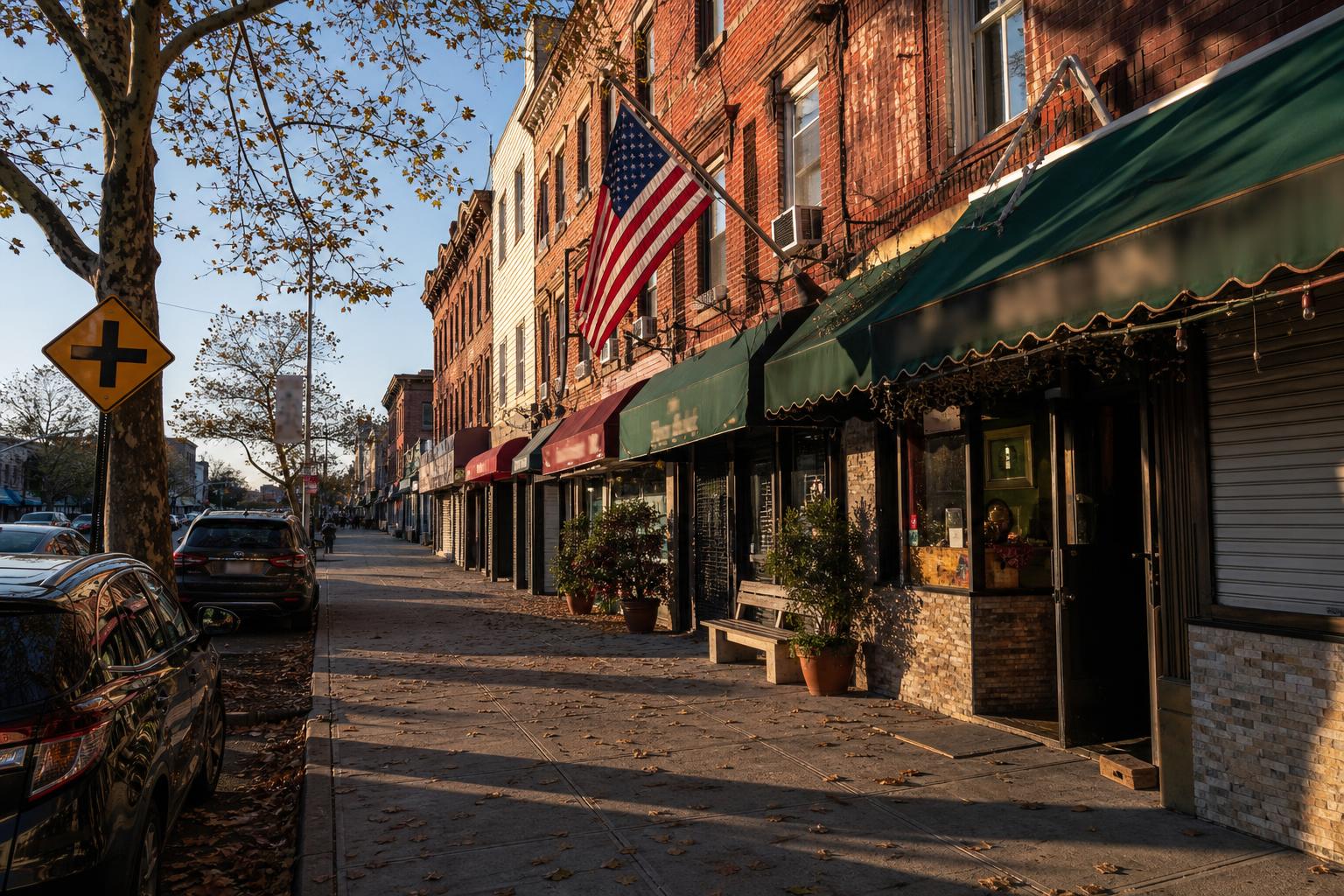
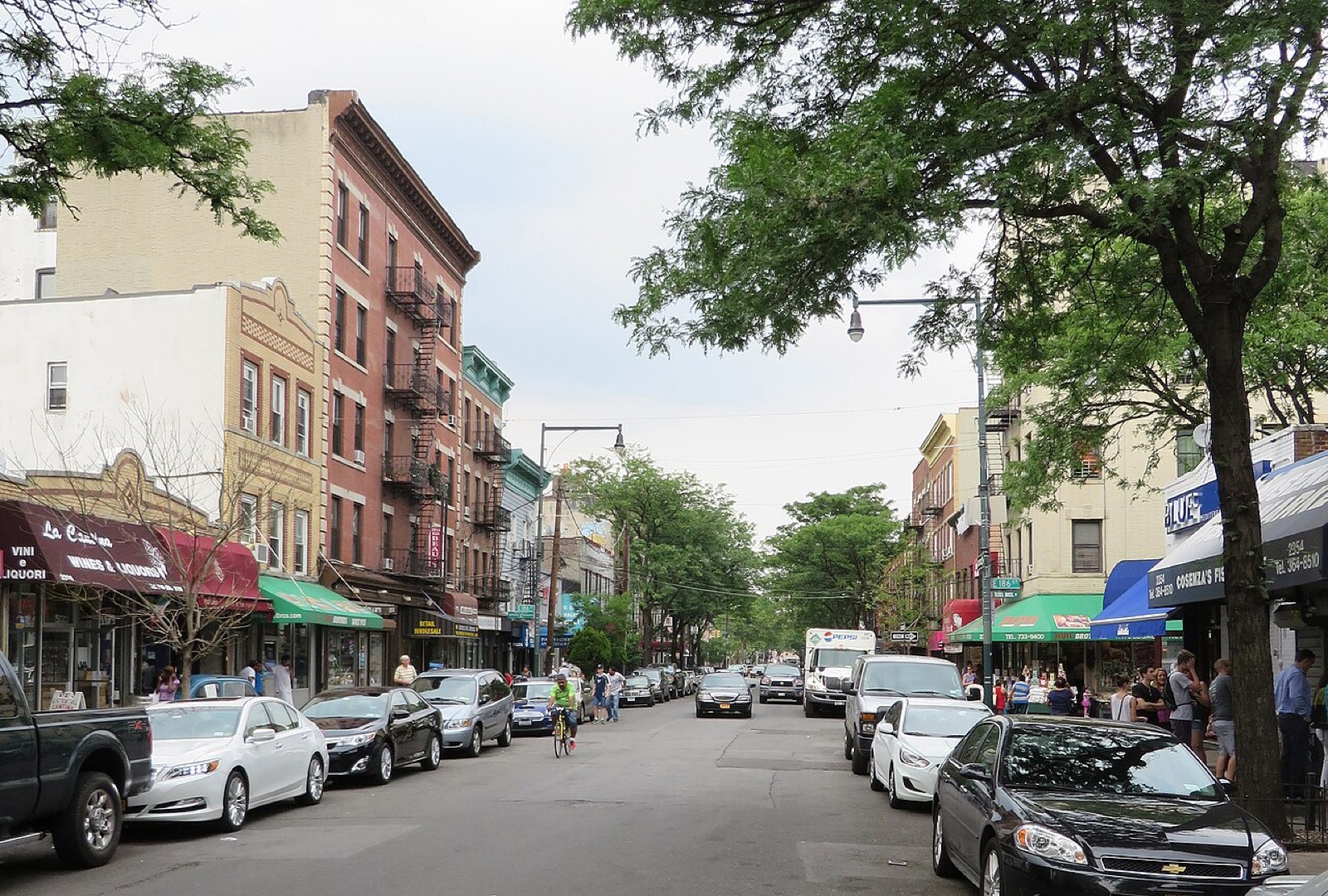 Arthur Avenue between 184th and 186th Street, Belmont, the Bronx — commercial spine of the largest Albanian neighborhood in the United States and an anchor of the post-1990 Albania-proper wave.
Photo: Wikimedia Commons / CC BY-SA 4.0
Arthur Avenue between 184th and 186th Street, Belmont, the Bronx — commercial spine of the largest Albanian neighborhood in the United States and an anchor of the post-1990 Albania-proper wave.
Photo: Wikimedia Commons / CC BY-SA 4.0
5. The 1999 Kosovar refugee resettlement. Concentrated, fast, U.S.-government-coordinated. Kosovars displaced by Serbian forces, resettled across U.S. communities by federal refugee programs (Catholic Charities, IRC, Lutheran Immigration & Refugee Service). The community’s foundational political experience was the Kosovo war and U.S. intervention; its political orientation is decisively Washington-facing.
Add the Çams — ethnic Albanians displaced from Greek Epirus during and after WWII, who continue to organize American congressional engagement on the Çamëria question — and the Arbëreshë, descendants of 15th-century refugees who settled in southern Italy, some of whom emigrated again to the U.S. in the 19th and 20th centuries. Each wave is still distinguishable in the diaspora’s structure today.
What the diaspora wants
Across all five waves and the two ancillary communities, the diaspora’s U.S. policy asks have been remarkably consistent for the past three decades:
- U.S. recognition and support for Kosovo’s independence — the defining diaspora policy ask. Achieved in 2008. Sustained since, against the backdrop of contested EU recognition.
- U.S. pressure on neighboring states (Serbia, North Macedonia, Montenegro, Greece) to protect Albanian-minority rights. Long-running, bipartisan.
- Counter-Russian and counter-Chinese influence in the Western Balkans. Newer emphasis, consistent with longstanding diaspora preferences.
- Bilateral economic and visa progress — investment access, visa-waiver questions, professional-credential recognition.
Tirana-internal politics — the Berisha-Rama dynamic, parliamentary coalitions — is followed closely by part of the post-1990 wave and is part of the diaspora’s political life. It isn’t the unifying organizing question across the multi-origin diaspora.
The institutions
Each wave has its institution. Vatra (Boston, 1912) anchors the Tosk-Orthodox foundational community. The Albanian American National Organization (AANO) and the Albanian American Civic League anchor the post-1990 Albania-proper wave; the Civic League has run congressional engagement since the Joseph DioGuardi era, and the National Albanian American Council (NAAC) was instrumental in Washington lobbying during the Kosovo war. Catholic, Sunni Muslim, and Bektashi parish and community networks across the New York metro and Detroit area carry the post-WWII and Yugoslav-Albanian Gheg communities. The Albanian American Women’s Organization and dozens of regional cultural centers cross-cut all of them.
Each serves its wave. None was built to be a meta-institution covering all five — that’s not what they were built for. The gap is the count across all of them: the data infrastructure that makes the multi-origin diaspora visible to itself and to the U.S. policy world that needs to engage with it.
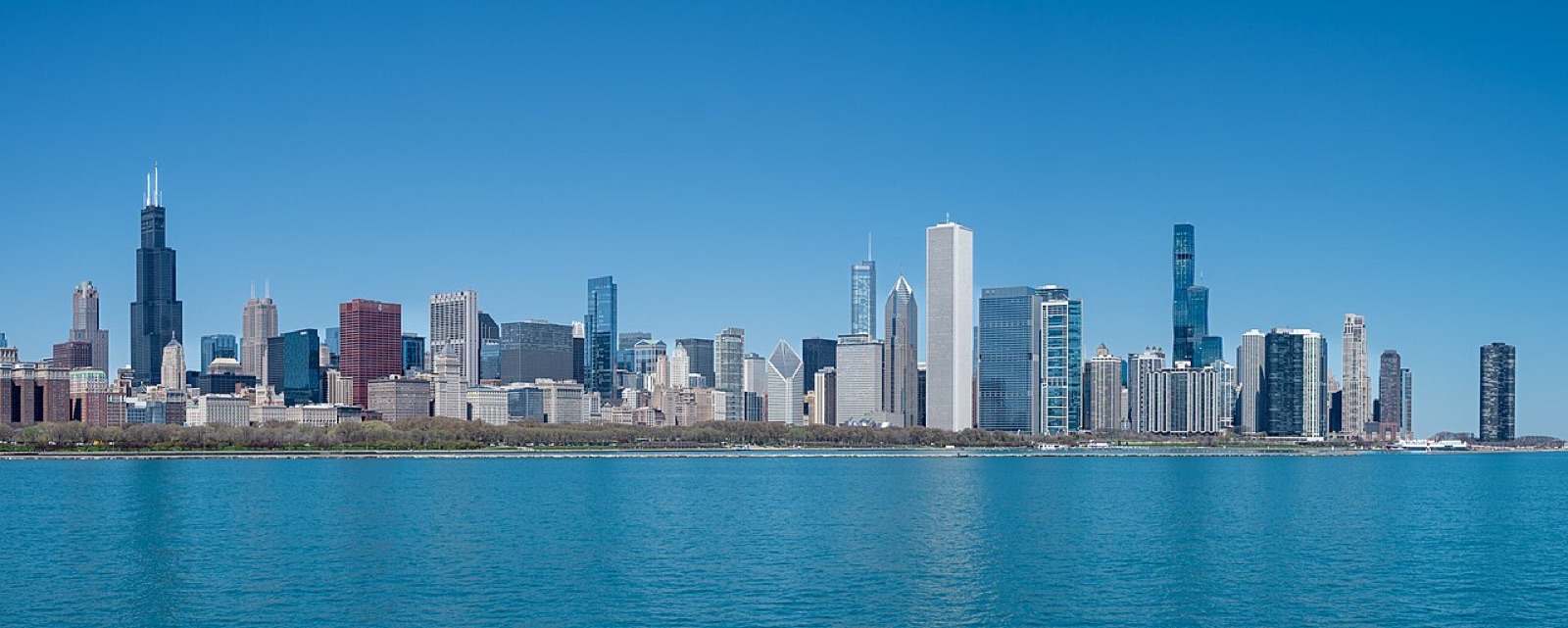 Chicago skyline, April 2024 — anchor of the Illinois Albanian-American community (~15,300 by 2024 ACS), with active Pan-Albanian and youth organizations across the northwest suburbs.
Photo: Wikimedia Commons / CC BY-SA 4.0
Chicago skyline, April 2024 — anchor of the Illinois Albanian-American community (~15,300 by 2024 ACS), with active Pan-Albanian and youth organizations across the northwest suburbs.
Photo: Wikimedia Commons / CC BY-SA 4.0
That’s the work the National Albanian Registry is doing. NAR counts the whole diaspora — Albanians from Albania, Kosovo, North Macedonia, Montenegro, Çamëria, the Arbëreshë, and the U.S.-born descendants of all of them. Not because we’re trying to flatten the differences. Because we’re trying to honor them.
What this looks like at scale
Other long-running American diaspora institutions show the shape: the Order Sons of Italy in America (1905), the Polish American Congress (1944), the American Jewish Committee (1906), UnidosUS (1968). None is a satellite of the homeland. All are American institutions for an American diaspora — counting their people, mapping their geography, engaging the U.S. policy system on their behalf.
The Albanian-American community is large enough, geographically dispersed enough, and politically engaged enough to need the same structural infrastructure. The count comes first. The count is what every other piece of the work depends on.
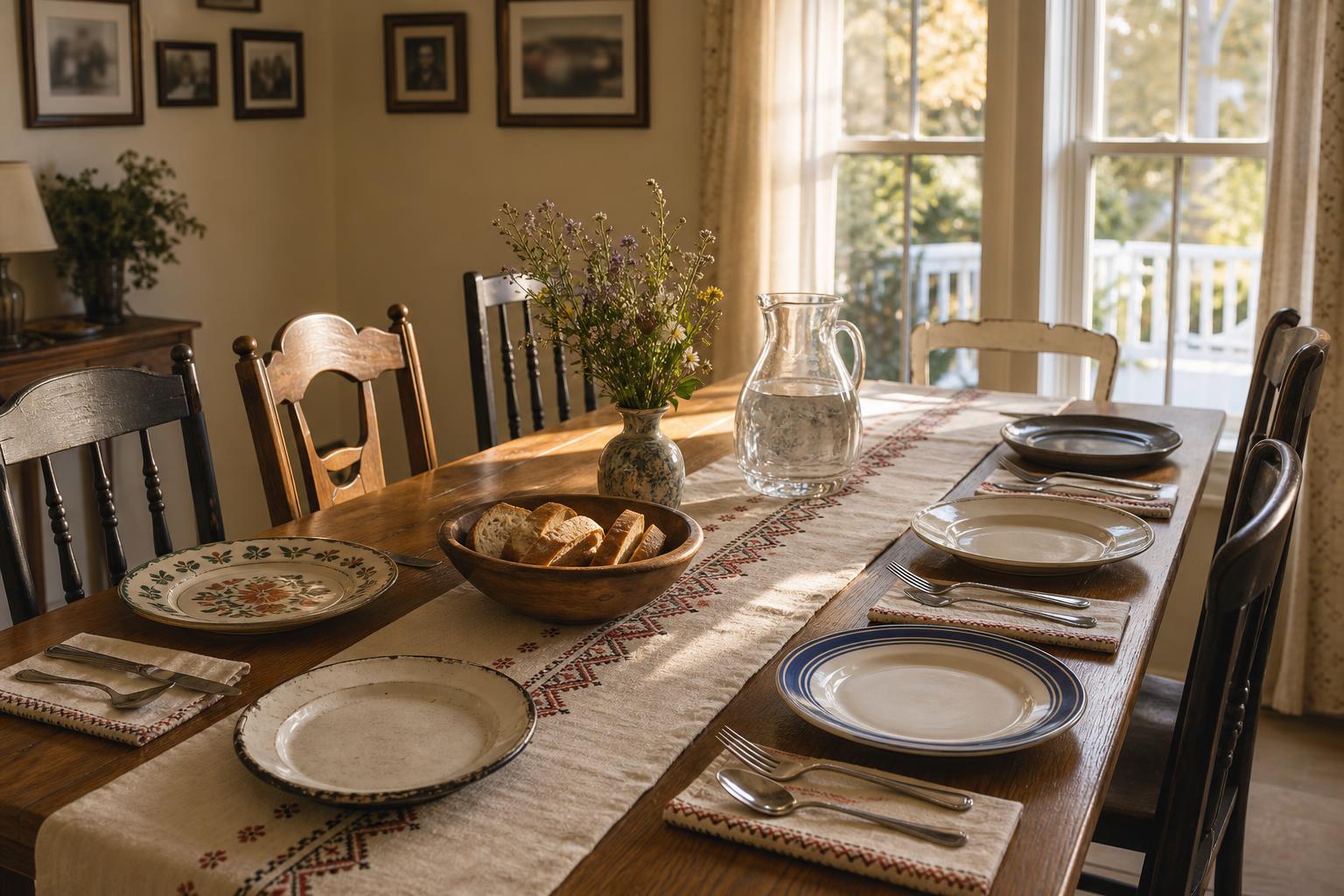 A multi-generational Albanian-American family table — the household scale at which the five waves overlap, intermarry, and pass down dialect, dress, and identity.
Graphic by NAR
A multi-generational Albanian-American family table — the household scale at which the five waves overlap, intermarry, and pass down dialect, dress, and identity.
Graphic by NAR
None of them is at the center. All of them are.
The Korçë Tosk family in Worcester whose great-grandfather got off the boat in 1894. The Mirdita Catholic engineer in Yonkers whose father escaped in 1948. The Çam real-estate operator in the Bronx whose grandparents came from Epirus in the 1950s. The Gheg restaurant family in Macomb County whose grandparents arrived from Kosovo, Macedonia, or Montenegro in the 1970s. The Tirana-born physician in Phoenix who came in 1999. The Kosovar refugee family in the New York suburbs who came that same year, fleeing a different war for a different reason. The Arbëresh-American whose surname has carried six centuries since the original crossing.
That’s the diaspora. That’s who NAR counts.
Where you come in
If you’re Albanian-American — by any of the five paths, by any combination, or because you self-identify as Albanian for any reason — be counted: register at albanianregistry.org. Take a minute. Put your household on the map.
If you organize in your community — at a cultural center, a religious institution, a business association, a regional advocacy group — become an ambassador.
If you’ve thought about what a national Albanian-American advisory board should look like — small business, professionals, healthcare, religious, non-profits, media — the founding twelve are forming now.
— National Albanian Registry, 2026