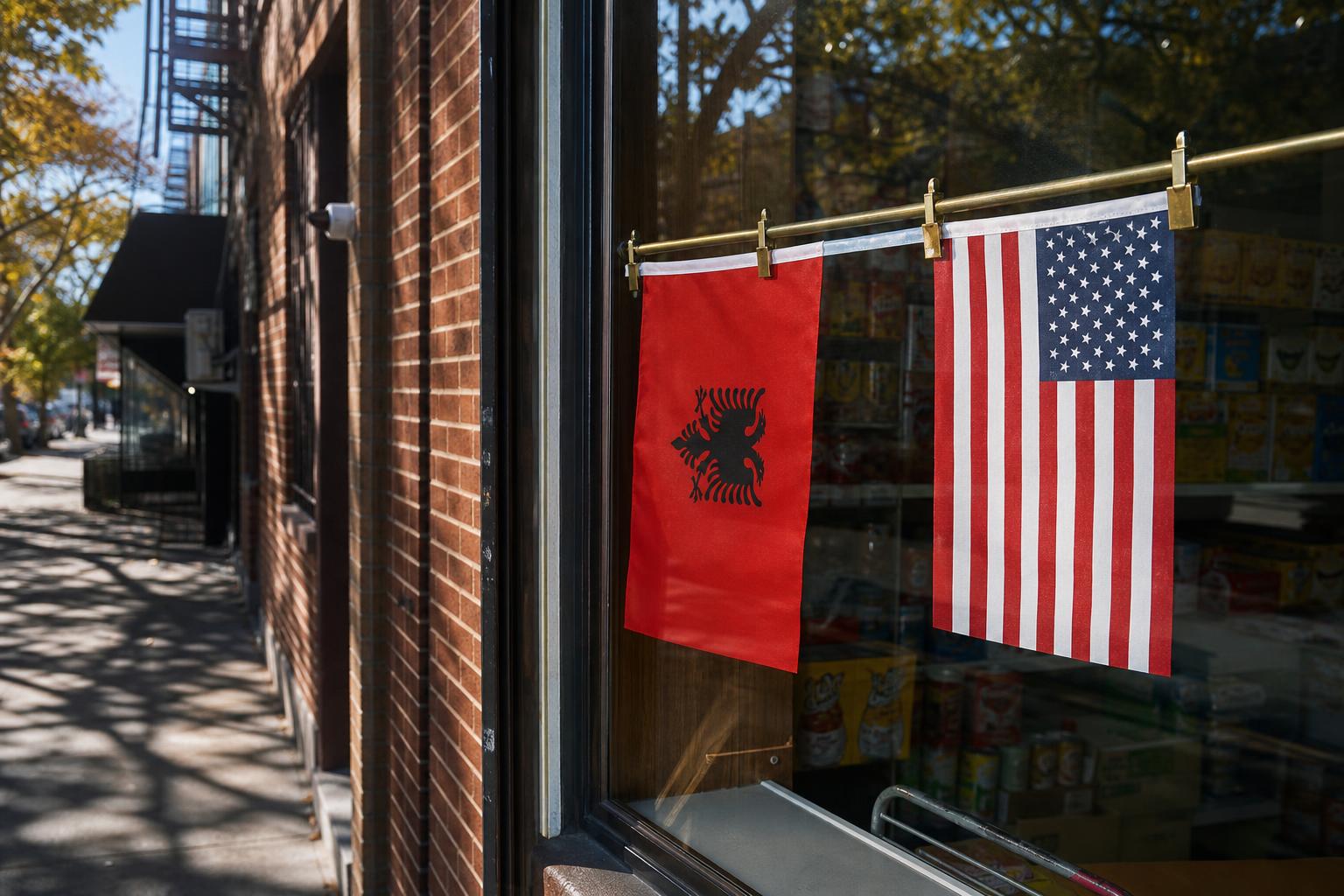
The US Census Bureau counts roughly 230,000 Albanian Americans as of the 2024 American Community Survey (ACS B04006). Community organizations, school enrollment numbers, parish rolls, and the visible footprint of Albanian-owned businesses tell a different story: the real number, once you include ethnic Albanians from Kosovo, North Macedonia, and Montenegro plus second- and third-generation Americans who don’t always check the “Albanian” box, is closer to one million.
That gap, between what the census sees and what the community knows, is the reason the National Albanian Registry exists. We wrote a separate piece on why the Census undercounts Albanian Americans and what the 2030 count changes. This one is the long answer to the questions we get most: how many Albanian Americans are there, where do they live, when did they arrive, and what holds them together.
How many Albanian Americans are there?
The official count is 230,000 (2024 ACS). That’s up from 47,710 in 1990 (U.S. Census Bureau, Ancestry: 2000, C2KBR-35). The growth reflects two things: more people arriving (especially after the 1990s collapse of communism in Albania and the 1999 Kosovo war) and more US-born Albanians choosing to write “Albanian” on the form.
Community estimates run higher. Uk Lushi, writing for Dielli in 2010, put the figure at 500,000 to 600,000 (Lushi, Dielli, 2010). Albanian-American organizations today estimate 750,000 to 1 million when ethnic Albanians from the wider Balkan diaspora and assimilated descendants are included.
The undercount is structural, not accidental. We’ll come back to why.
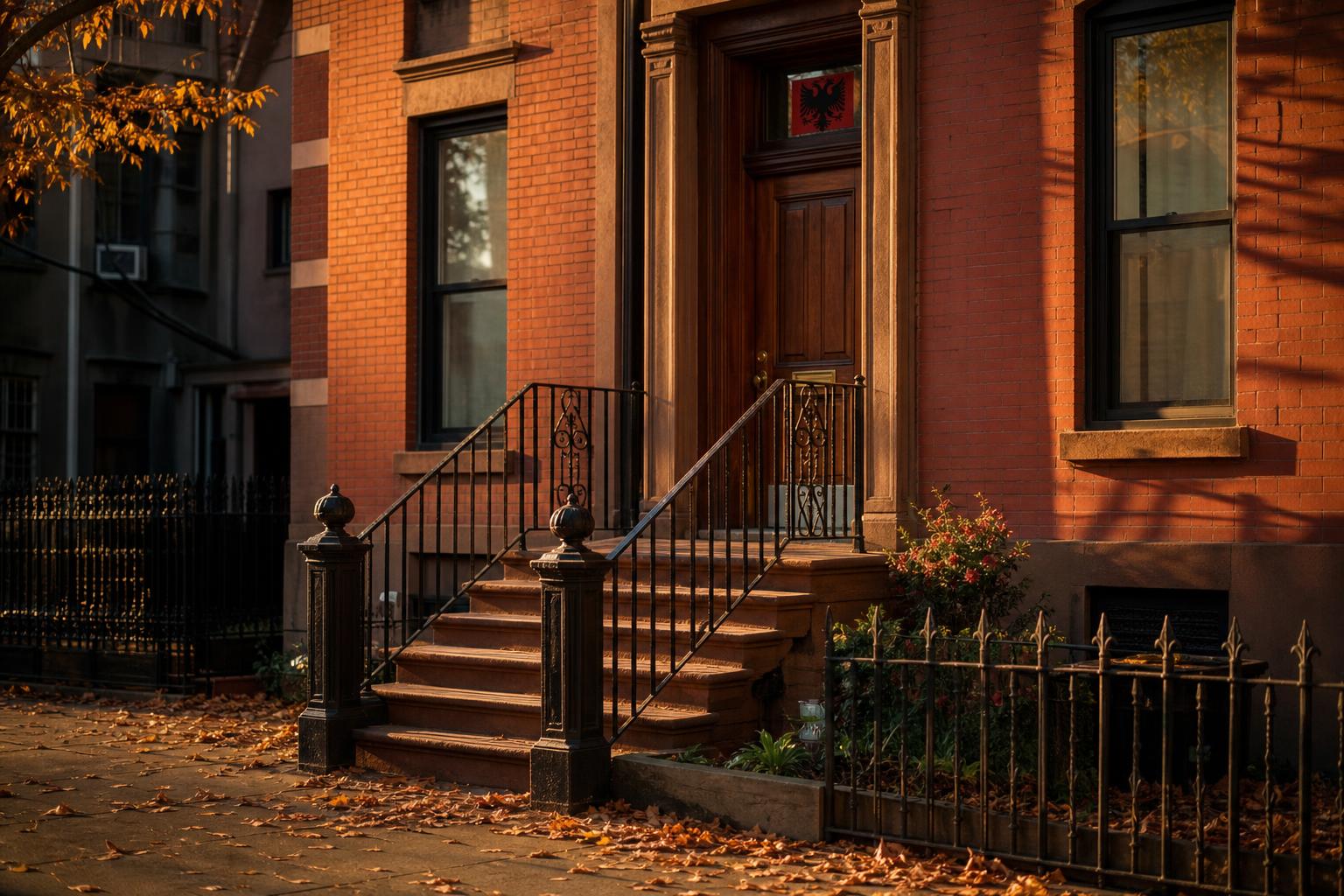 A Bronx residential block in the Belmont/Pelham Parkway corridor, the largest Albanian neighborhood in the United States.
Graphic by NAR
A Bronx residential block in the Belmont/Pelham Parkway corridor, the largest Albanian neighborhood in the United States.
Graphic by NAR
Where Albanian Americans live
Albanian-American settlement is concentrated in the Northeast and the Great Lakes, a footprint that traces almost perfectly to where the first wave found factory work in 1900. The population has grown and spread, but the centers of gravity have stayed put for over a century.
Top states by recorded population
Figures below are the ACS 2020–2024 five-year estimates (table B04006), the most stable published series.
- New York: 56,959
- Michigan: 26,598
- Massachusetts: 21,625
- New Jersey: ~15,500
- Florida: ~16,000
- Illinois: ~15,300
- Connecticut: ~12,000
- Pennsylvania, Texas, California, Ohio: smaller but established communities
The 2020 Census detailed tabulation, which counts write-in responses rather than sampling for ancestry, puts the same three states higher still: New York 61,668, Michigan 28,269, Massachusetts 20,957.
The neighborhoods, not just the states
If you’re looking for community where you live, here’s where it already is.
New York City. The Bronx is the largest Albanian neighborhood in the United States, concentrated in Belmont, Pelham Parkway, and the corridor around Arthur Avenue sometimes called Little Albania. Staten Island’s east side has a sizable Albanian and Kosovar population. Queens (Ridgewood) hosts the Fol Shqip school. Brooklyn and Westchester County extend the footprint.
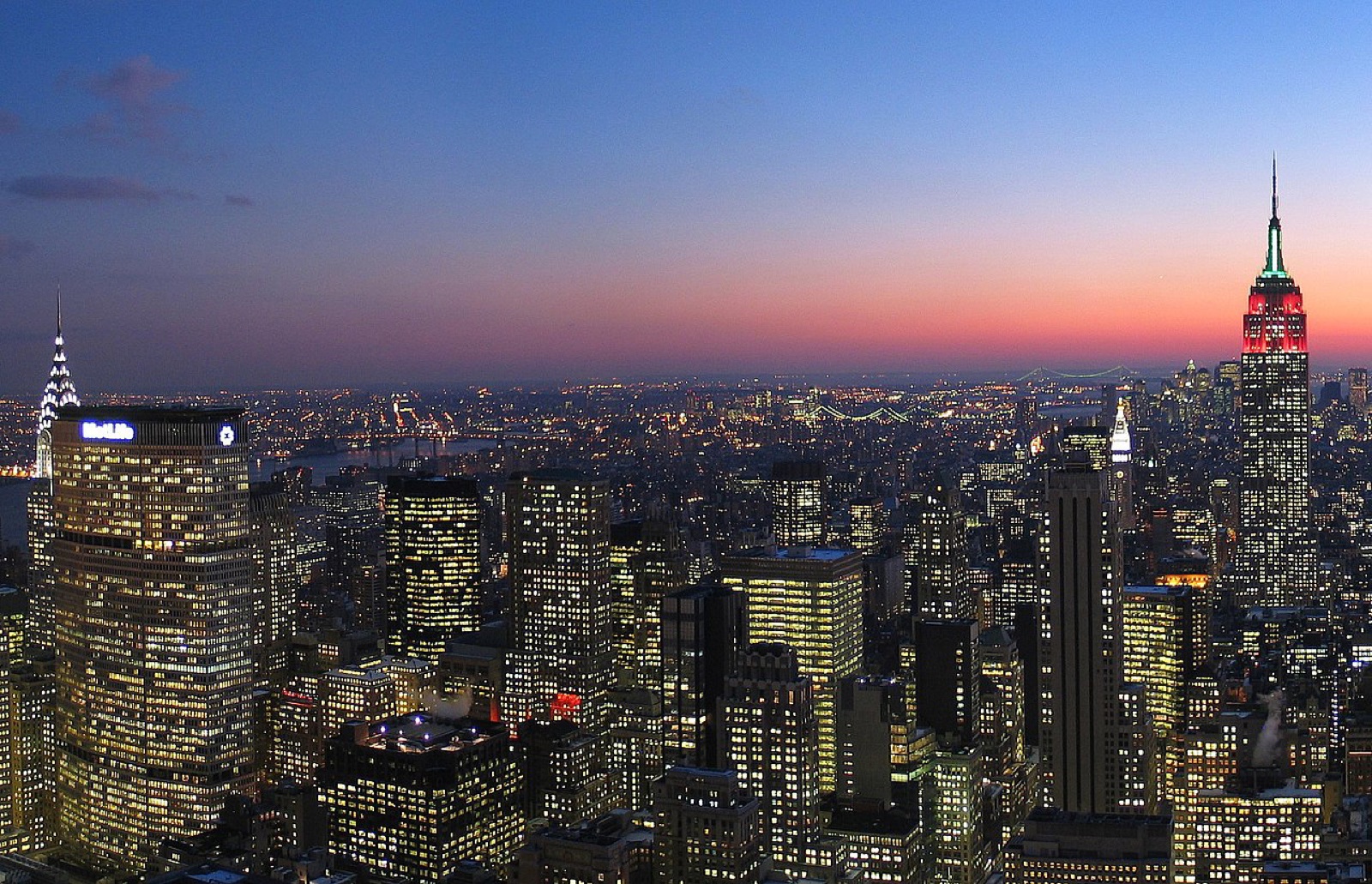 Manhattan skyline from Top of the Rock at Rockefeller Center, looking south toward Midtown and the Empire State Building. New York State records 56,959 Albanian Americans, the largest of any state, and the NYC metro is the heart of it.
Photo: Wikimedia Commons / CC BY-SA 3.0
Manhattan skyline from Top of the Rock at Rockefeller Center, looking south toward Midtown and the Empire State Building. New York State records 56,959 Albanian Americans, the largest of any state, and the NYC metro is the heart of it.
Photo: Wikimedia Commons / CC BY-SA 3.0
New Jersey. Paterson is the second-largest Albanian city in the country by community estimate. Garfield, Clifton, and the surrounding Passaic County towns absorbed much of the post-1999 Kosovar wave.
Connecticut. Waterbury, Bridgeport, and Hartford, old factory cities that received Albanians during the 1960s–1980s wave from Yugoslav-controlled territories.
Massachusetts. Boston (especially South Boston, where the Albanian Orthodox Archdiocese is headquartered), Worcester, Natick, Southbridge, Cambridge, and Lowell. Most of these are early-20th-century settlements that never lost their Albanian institutional core.
Michigan (Detroit metro). Sterling Heights, Hamtramck, Macomb County, Warren, Harper Woods, Taylor, and Beverly Hills. The Detroit-area community is unusual in that it’s overwhelmingly Gheg, meaning the families came from Kosovo, North Macedonia, or Montenegro, rather than from Albania proper. Detroit is the religious center for Albanian Catholicism (Our Lady of Albanians, St. Paul) and Albanian Bektashi Islam (the Taylor teqe).
Illinois. Chicago, particularly the northwest suburbs, with active Pan-Albanian and youth organizations.
Pennsylvania. Philadelphia and the surrounding suburbs.
Florida and Texas. Newer communities, growing fastest in Tampa, Orlando, Houston, and the Dallas–Fort Worth metroplex.
The pattern: Albanian Americans cluster. The community is not spread thinly across 50 states. It sits in maybe 15 metro areas, with deep institutional roots in most of them.
A brief history in five waves
Albanian immigration to the United States is recent by European standards. Almost no Albanians came before the 1880s. What we have is roughly five distinct waves, each shaped by a different push from the homeland and a different reception in America.
Wave 1: 1880s–1920s, the founding migration
The first documented Albanian immigrant in the United States was Kolë Kristofori (anglicized as Nicholas Christopher), who arrived in Boston in the early 1880s from the village of Katundi near Korçë (Lushi, Dielli, 2010; everyculture.com). Constantine Demo’s 1960 study, Albanians in America, documented sixteen additional early arrivals.
The wave that followed was almost entirely young, single men, Tosks (southern Albanians), mostly Orthodox Christian, mostly from the Korçë region, who came for factory work in New England. They lived in konaks, communal boarding houses run by an older man who handled cooking and rent. They worked in textile mills, leather plants, and shoe factories in Worcester, Natick, Southbridge, Cambridge, and Lowell.
A community-led 1907 census by Sotir Peçi counted 700 Albanians in Boston, 400 across Worcester and Southbridge, and 200 in Natick (Lushi, Dielli, 2010). The 1910 federal census recorded only 625 in all of Massachusetts, a striking undercount, partly because Christian Tosks were often filed under “Greek” by enumerators who didn’t know better and partly because pre-1912 Ottoman Albania did not exist as a country to declare on a form.
The institutional foundation laid in this wave is still visible:
- June 1906: Kombi, the first Albanian weekly newspaper, founded in Boston by Sotir Peçi.
- January 6, 1907: Besa-Besën, the first nationalist organization, founded by Fan Noli.
- February 15, 1909: Dielli (The Sun), which replaced Kombi and is still published today by Vatra. Fan Noli was its first editor; Faik Konitza took over as chief editor later that year.
- April 28, 1912: Vatra, the Pan-Albanian Federation of America, founded in Boston seven months before Albania declared independence.
Wave 1.5: the 1920s family reformation
In the early 1920s, many of the original single men either returned to Albania for good or returned briefly to bring back wives and children. Tens of thousands made the round trip between 1919 and 1925 (everyculture.com). The arrival of women and families transformed Albanian-American life from a network of boarding houses into a network of households, religious institutions, and schools, the bones of the diaspora as it exists now.
Wave 2: 1945–1960, anti-communist refugees
Enver Hoxha’s communist government took power in Albania at the end of World War II and sealed the country off for the next 45 years. The Albanians who got out before the gates closed, landowners, merchants, clergy, military officers, intellectuals, and their families, became the second wave. They came as refugees, often through Italy or Greece, and many settled where the first wave had already built institutions: Boston, Worcester, the Bronx.
This wave founded the Albanian American National Organization (AANO) in Worcester in 1946.
Wave 3: 1960s–early 1980s, Albanians from Yugoslavia
Albanians outside Albania proper, in Yugoslav-controlled Kosovo, North Macedonia, and Montenegro, had a different story. They were not behind Hoxha’s sealed border, but they were under Yugoslav state pressure that intensified after 1968 and again after 1981. This wave was overwhelmingly Gheg (northern Albanian dialect), mostly Catholic and Sunni Muslim, and it skipped the New England factory towns. It went where construction, restaurant work, and small-business opportunities were: New York’s outer boroughs, New Jersey, Connecticut, and the Detroit metro.
The Detroit-area Albanian community is largely a product of this wave. So is the Bronx Albanian-Catholic parish at Our Lady of Shkodra (founded 1969).
Wave 4: 1990–1998, post-communist Albania
The collapse of Albanian communism in 1990–1991 set off a second exodus from Albania proper. Five thousand Albanians fled through Western embassies in Tirana in mid-1990; another 20,000 crossed illegally to Italy by ship the following year (Lushi, Dielli, 2010). Many eventually reached the United States. Unlike Wave 2, these immigrants were younger, more secular, and arrived without much money or English, but with the family networks of a community that had been in America for a century.
Wave 5: 1998–1999, the Kosovar refugees
The 1998–1999 war in Kosovo displaced roughly a million ethnic Albanians. The United States admitted approximately 20,000 Kosovar refugees and resettled them across the country (Lushi, Dielli, 2010; everyculture.com). Some returned to Kosovo after the war ended; many stayed, joining family already in New York, New Jersey, Detroit, and Boston.
After 1999, immigration tapered. The 2010s and 2020s have seen continued family reunification and student/professional migration, but no further mass wave. The community now is shaped overwhelmingly by these five.
Religion: not one faith, one community
Albanian Americans are Catholic, Orthodox, Sunni Muslim, Bektashi, and secular, often within the same family. The 19th-century nationalist poet Pashko Vasa wrote, “the religion of the Albanian is Albanianism.” It was a political slogan, written to dampen Ottoman-era sectarian divides in the service of a unified national movement, not a literal description of how every Albanian feels about faith. Plenty of Catholic, Orthodox, Sunni, and Bektashi Albanian Americans hold their religion close. What the line still captures is that, in practice, the diaspora rarely lets denomination decide who counts as family.
A short tour of the institutional landscape:
Albanian Orthodox Archdiocese in America. Founded in 1908 by Fan Noli; parishes across several states, headquartered at St. George Cathedral in South Boston. The oldest local chapter is in Worcester (1911), which became St. Mary’s Assumption in 1915 (everyculture.com).
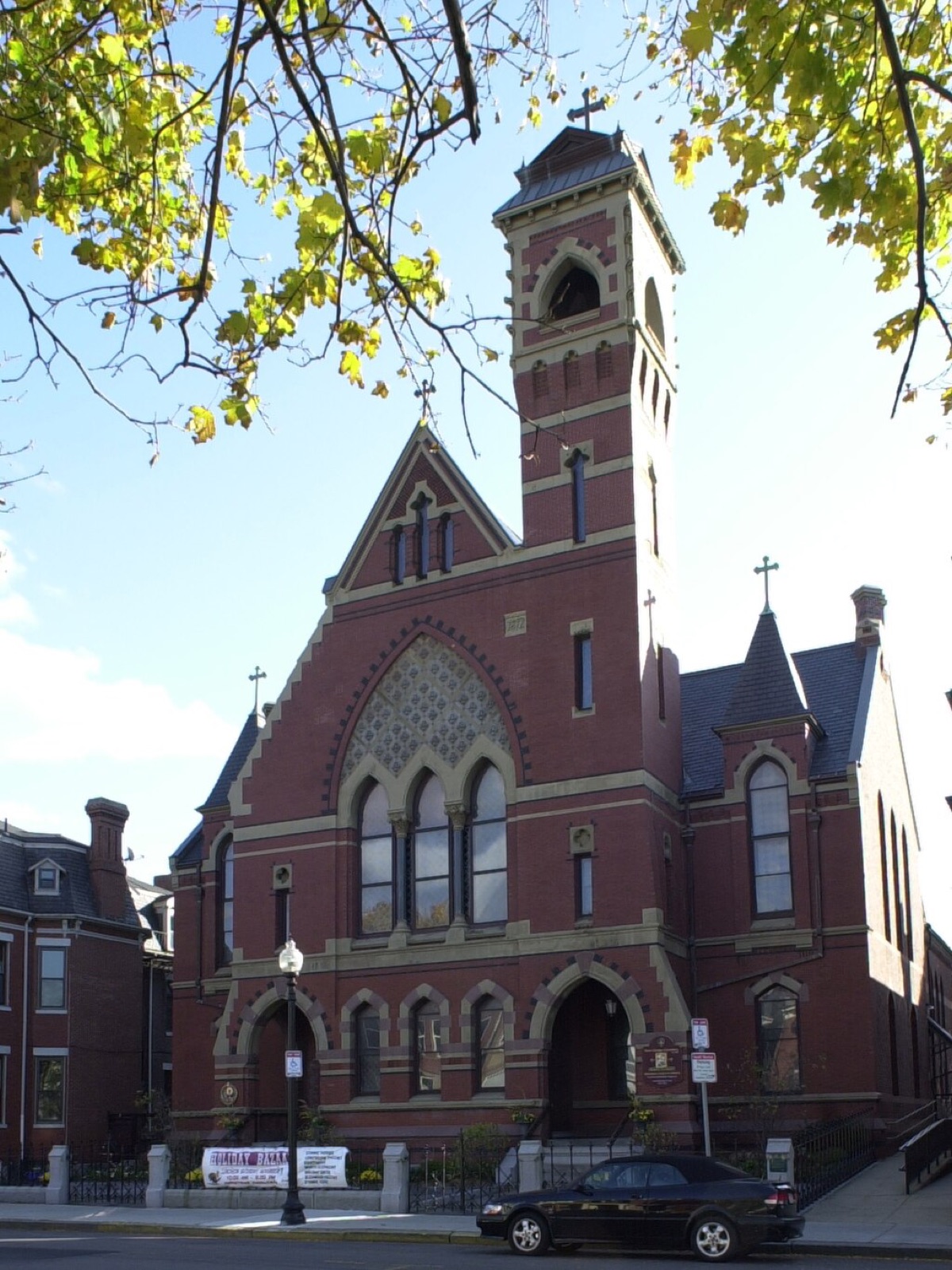 Cathedral of St. George Albanian Orthodox Church, South Boston, MA, seat of the Albanian Orthodox Archdiocese in America (founded 1908 by Fan Noli).
Photo: Wikimedia Commons / CC BY-SA 4.0
Cathedral of St. George Albanian Orthodox Church, South Boston, MA, seat of the Albanian Orthodox Archdiocese in America (founded 1908 by Fan Noli).
Photo: Wikimedia Commons / CC BY-SA 4.0
Our Lady of Shkodra (Bronx, NY). Founded 1969; the largest Albanian Catholic parish in the United States.
St. Paul Albanian Catholic Church (Warren, MI) and Our Lady of Albanians (Beverly Hills, MI). The Catholic centers of the Detroit-area community.
Albanian Islamic Center (Harper Woods, MI). Founded by Imam Vehbi Ismail; the seed of the Presidency of Albanian Muslim Community Centers (1992), which today coordinates 13 Albanian-Sunni centers across CT, PA, NY, NJ, FL, MI, and Ontario.
The First Albanian Bektashi Teqe (Taylor, MI). Founded 1954; the oldest Bektashi institution in the Western Hemisphere. The Bektashis are a Sufi-influenced Albanian-rooted Islamic order that includes a substantial share of the Albanian diaspora.
The pattern: a wedding in Sterling Heights might pull family from Catholic, Orthodox, and Muslim households without anyone needing to explain it. Denomination is real, and meaningful, but it sits below shared identity in the order of operations.
Language and the next generation
Albanian, shqip, the language of the shqiptar (Albanian self-name), is one of the older and more isolated branches of Indo-European. It exists in two main dialects: Tosk (southern, the standard literary form) and Gheg (northern, including Kosovo, North Macedonia, and most Detroit-area families). The Latin alphabet was adopted in 1908; standardized literary Albanian, blending Tosk and Gheg, was finalized in 1972.
The American Community Survey estimates roughly 200,000 Albanian speakers in the United States, which is most of the population that identifies as Albanian-American, though concentrated in the first and 1.5 generations.
The big challenge isn’t whether Albanian is spoken in the diaspora today; it’s whether it survives the third generation. A few signs of progress:
- NYC Public Schools added Albanian language instruction in the late 2010s.
- Fol Shqip School in Ridgewood, Queens, teaches roughly 60 children weekly.
- Mercy College offers Albanian-language coursework.
- Saturday schools at Albanian Orthodox, Catholic, and Muslim institutions across the Northeast and Detroit metro teach reading, writing, and history.
Language retention is the single most discussed worry inside the diaspora, the topic that comes up at every community meeting, every wedding, every family dinner once the kids leave the table. It is also the most concrete measure of whether the community holds.
Notable Albanian Americans
A short, deliberately non-exhaustive list, chosen to illustrate breadth, not to crown anyone.
- John Belushi and Jim Belushi. Sons of an Albanian immigrant from Qytezë; the family’s story sits at the cultural core of the second generation.
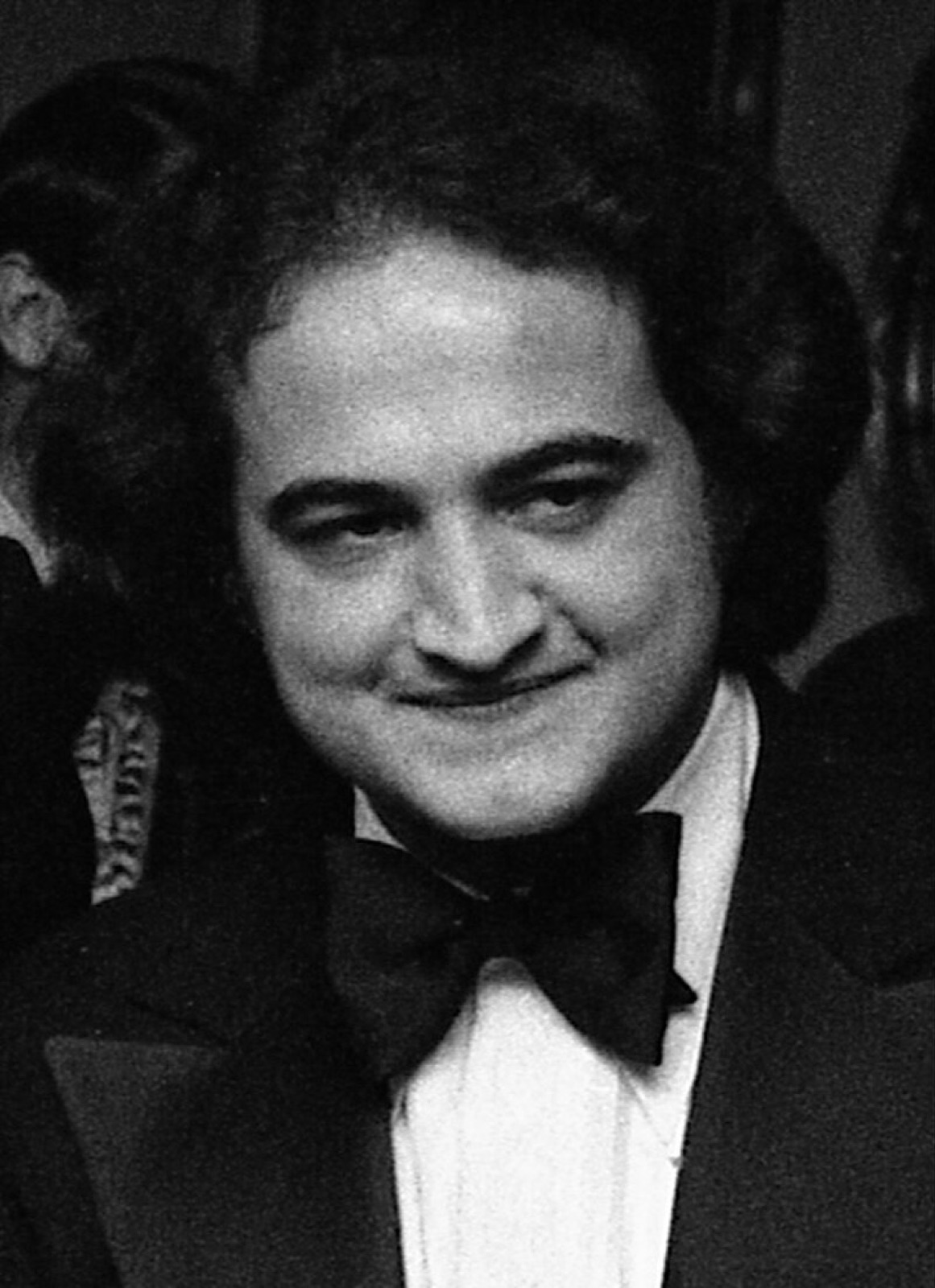 John Belushi at the 32nd Annual Radio and Television Correspondents Association Dinner, Washington DC, 1976. Son of Adam Anastos Belushi, who emigrated from Qytezë, Albania.
Photo: NARA via Wikimedia Commons / public domain
John Belushi at the 32nd Annual Radio and Television Correspondents Association Dinner, Washington DC, 1976. Son of Adam Anastos Belushi, who emigrated from Qytezë, Albania.
Photo: NARA via Wikimedia Commons / public domain
- Bebe Rexha. Born in Brooklyn to Albanian parents from North Macedonia; one of the most-streamed Albanian-heritage artists working today.
- Stan Dragoti. Director of Love at First Bite and Mr. Mom; a quieter but consequential figure in Hollywood’s Albanian roster.
- Joe DioGuardi. Former US Representative from New York; founder of the Albanian American Civic League (AACL) in 1989. The most visible Albanian-American in 20th-century US politics.
- Eliot Engel. Long-serving Bronx congressman; the most consistent Albanian-cause ally in Congress over his 32 years in office, particularly on Kosovo.
- Eliza Dushku. Boston-born actress (Buffy the Vampire Slayer, Dollhouse); her Boston-born father’s family came from Korçë.
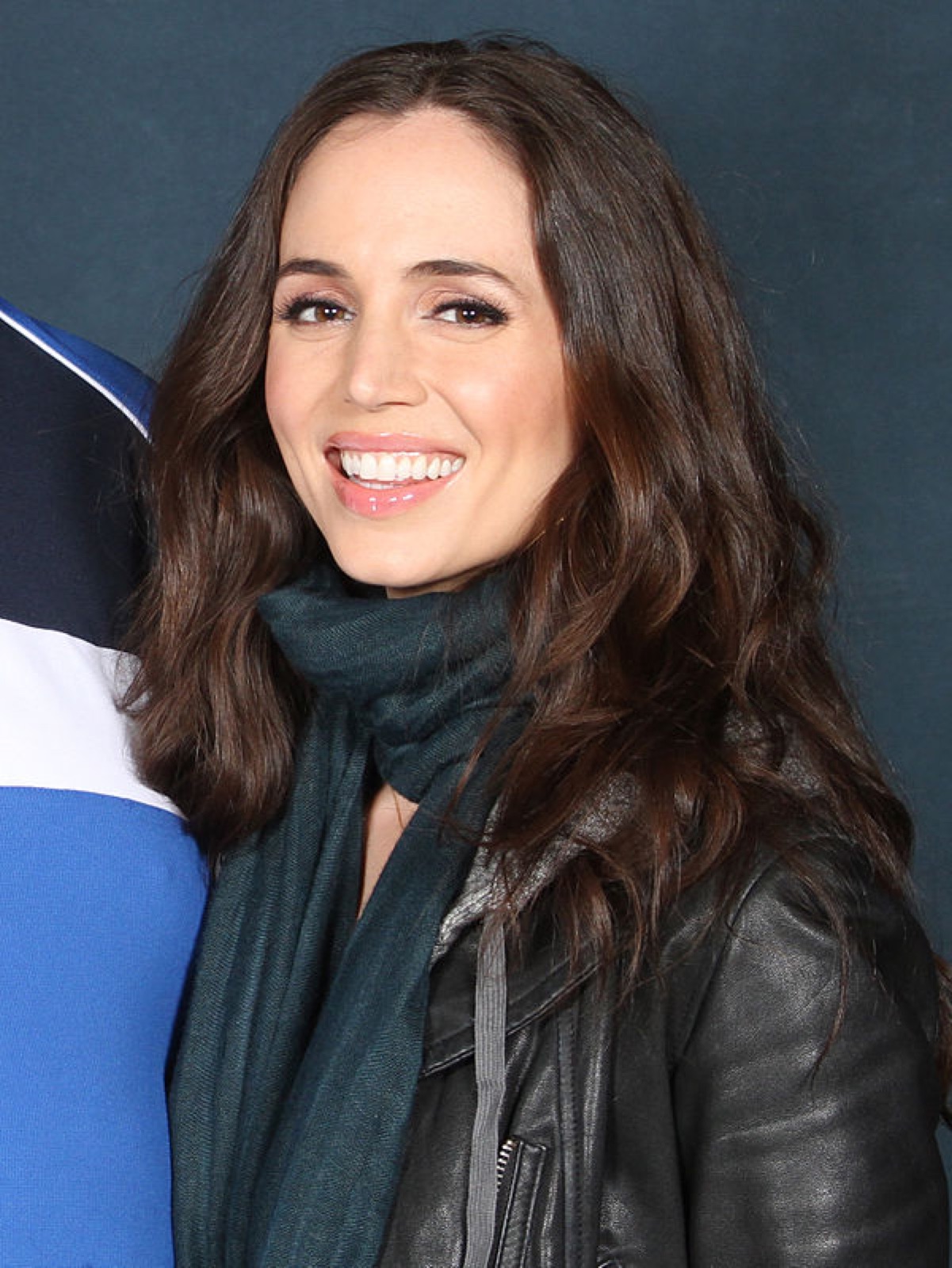 Eliza Dushku, 2012. Boston-born actress (Buffy the Vampire Slayer, Dollhouse); father Philip Dushku was also Boston-born, his parents emigrated from Korçë, southern Albania.
Photo: Wikimedia Commons / CC BY-SA 2.0
Eliza Dushku, 2012. Boston-born actress (Buffy the Vampire Slayer, Dollhouse); father Philip Dushku was also Boston-born, his parents emigrated from Korçë, southern Albania.
Photo: Wikimedia Commons / CC BY-SA 2.0
- Ferid Murad. Co-recipient of the 1998 Nobel Prize in Physiology or Medicine; Albanian-American on his father’s side.
Outside celebrity rolls, the community’s economic backbone is concentrated in real estate (especially Bronx Gheg and Kosovar families), restaurants, construction, and small professional firms. Albanian-American chambers of commerce operate in Michigan, Illinois, and the New York metro.
Community organizations to know
A short tour of the institutional map. Most readers will already know one or two of these; this is for the ones who don’t.
- Vatra, Pan-Albanian Federation of America (founded 1912, Boston; HQ moved to the Bronx, NY in the 1990s). The oldest. Publishes Dielli.
- AANO, Albanian American National Organization (1946, Worcester). Cultural and mutual-aid network out of New England.
- AACL, Albanian American Civic League (1989, Ossining, NY). Founded by Joe DioGuardi; strongest record of policy advocacy on Balkan issues.
- NAAC, National Albanian American Council (1996, Washington, DC). Policy and outreach.
- GKS Fund, Gjergj Kastrioti Scholarship Fund (Michigan). Scholarships for Albanian-American students out of the Detroit metro.
- AACI USA, Albanian-American Community of Illinois. Chicago-area cultural and civic hub.
- AAEA, Albanian American Educators Association (NY-area). Scholarships and educator support.
These organizations are not the same as the National Albanian Registry. We are a 501(c)(3) building one piece of infrastructure, a community-led count of Albanian Americans and the recognition certificate that comes with it, that can sit alongside everything these groups already do.
The undercount problem and why NAR exists
The 230,000 figure is real, in the sense that it is what 230,000 people put on a Census form. It is also incomplete in ways that have been documented for over a century.
Reasons the official count runs low:
- Yugoslav-era ancestry coding. Albanian Americans whose families came from Kosovo, North Macedonia, or Montenegro before those names existed have, for generations, sometimes reported ancestry as “Yugoslav,” “Kosovar,” “Macedonian,” or left the line blank. The ACS B04006 table picks up “Albanian” but misses these.
- Pre-1912 misclassification. The first wave’s Christian Tosks were often filed as “Greek” because the Ottoman Empire’s millet system filed Orthodox Christians under the Greek Patriarchate. Some of those families still appear in older records as Greek-American.
- Second- and third-generation drop-off. US-born Americans of partial Albanian ancestry sometimes leave the line blank or list a more recent ancestry. The ACS asks one or two ancestries; mixed families pick one.
- Self-identification language. Some Albanians from North Macedonia identify as shqiptar but write “Macedonian” on the form because that’s their country of birth.
Each of these is a small effect. Together, across 140 years of arrivals and four generations of US-born descendants, they add up to the gap between 230,000 and the community’s own estimate of close to a million.
There is a tell in the data. Across five consecutive Census releases covering 2010 through 2018, the recorded Albanian-ancestry figure sat at 191,021, then 190,992, then 191,463, then 191,263, then 191,264. Five readings, a spread of under 500 people, through a decade when the community was visibly growing. A population that is actually static does not look like that. A measurement instrument that has stopped resolving the thing it is measuring does.
The deadline for fixing it is closer than it looks. The 2030 Census is being designed now, and there is no Albanian checkbox on the form, only a write-in line most people skip. We wrote the full explanation of how the undercount works and what 2030 changes, including what the Armenian and Arab American communities did with the same problem.
The National Albanian Registry exists to close that gap with a count the community owns and runs.
NAR is not the Census. We are not a government agency, and our recognition certificate is not a government ID, not citizenship, and not legally binding. It is a recognition document that confirms you are part of the registry. What we do is straightforward: we let Albanian Americans add themselves to a community-run count and publish the aggregate numbers so researchers, journalists, and the community itself can see the diaspora’s full shape.
If you’re Albanian-American, even if you’ve never registered as anything before, even if your Albanian is rusty, even if you’re third-generation and not sure you “qualify”, getting counted is the most concrete way to make the community visible. Get counted, add yourself to a community-led count of Albanian Americans →
(For more on who is behind this work, see our /about page and the founding wall.)
Is the community growing?
Yes, but the growth is now generational, not migratory. Direct immigration from Albania, Kosovo, and North Macedonia has slowed since 2010. The growth in the count is coming from US-born Albanians: families having children, second-generation Americans claiming their ancestry on forms, and third-generation Americans rediscovering it.
Census figures have consistently shown the community younger than the US average, a sign of a population whose immigrant cohort is still relatively recent and whose growth is now coming from US-born generations.
The trajectory matters. A community that grows generationally, rather than through new immigration, holds together only if its institutions hold together. That is the work of the next ten years.
How to find your community
If you’ve made it this far, you might be looking for a starting point. A few practical entry points:
- Find your nearest parish or center. Most cities with significant Albanian populations have at least one Orthodox, Catholic, Muslim, or Bektashi institution serving the community. They are not gatekept, visitors are welcome.
- Plug into one of the national organizations above. AANO, AACL, NAAC, AAEA, and the regional chambers all maintain membership rolls and event calendars.
- Read the Albanian-American press. Dielli (Vatra, online at gazetadielli.com), Illyria (Bronx-based bi-weekly), and Albanian Times (Springfield, VA).
- Get counted in the National Albanian Registry. Register here. It takes about three minutes and costs nothing.