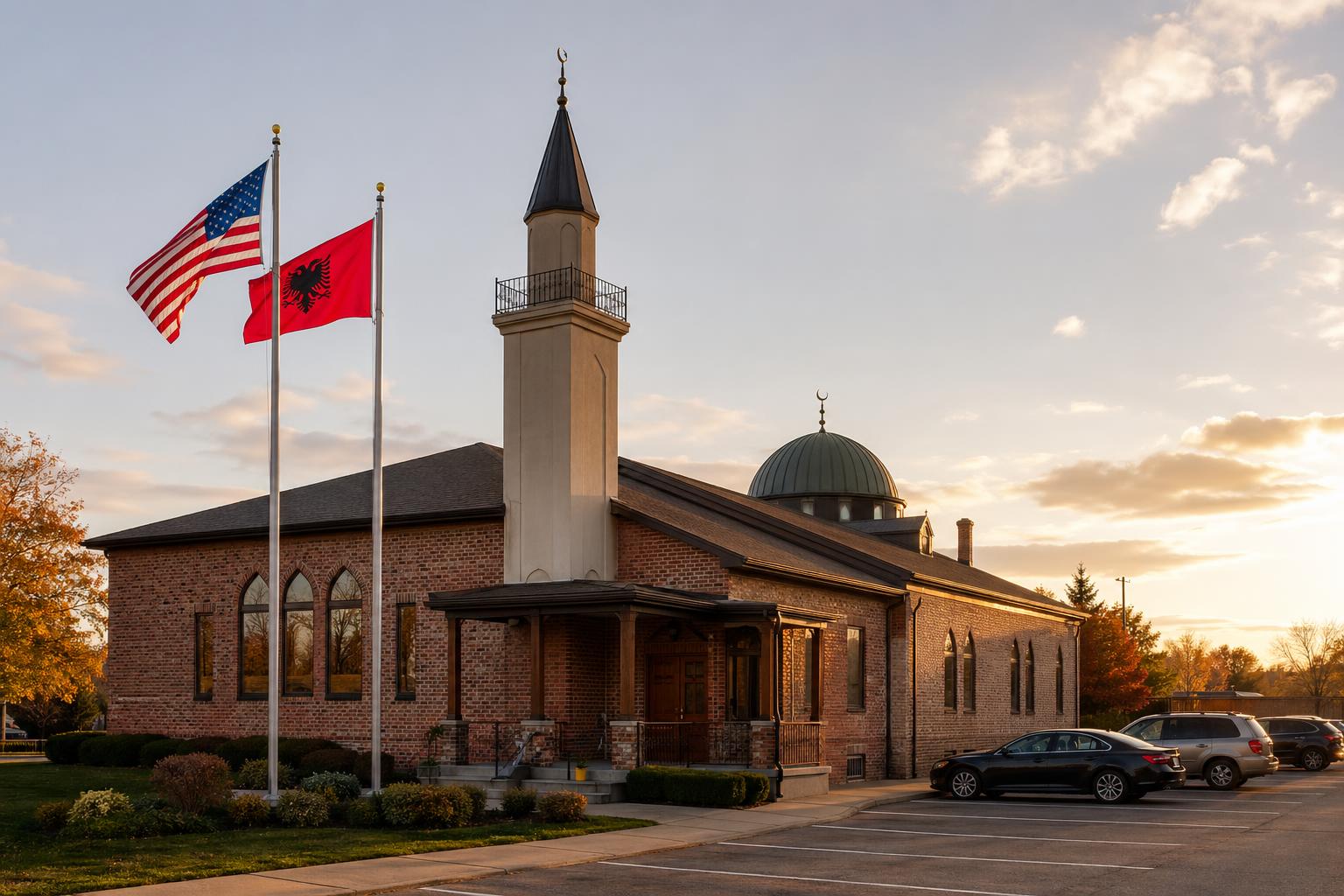
The Albanian-American Islamic Center anchors the largest organized network of Sunni Albanian Muslim congregations in the United States, alongside independent Albanian-American mosques from the Bronx to Chicago that operate outside any umbrella body. There are several centers that share variations of the name; the flagship — and the one most people are searching for — is the Albanian Islamic Center in Harper Woods, Michigan, founded by Imam Vehbi Ismail and consecrated on November 3, 1963.
Today, the institutional network is broader than one mosque. Thirteen-plus Albanian Islamic Centers and mosques affiliate with the Presidency of Albanian Muslim Community Centers — an umbrella body Imam Ismail helped establish in 1992 — across Connecticut, Pennsylvania, New York, New Jersey, Florida, Michigan, Illinois, and Ontario. Other Albanian-American Sunni congregations (Bronx, parts of Boston, Chicago, Connecticut, NJ) operate independently of the Presidency; the picture is plural.
This piece does three things: tells the founding story (Imam Vehbi Ismail, Detroit, 1949 to 1963), maps the network (every major Albanian Islamic Center we can verify, by metro), and answers the practical questions readers have — who’s Sunni, who’s Bektashi, what an Albanian Islamic Center does beyond Friday prayer, and how to find your nearest one.
We’ve written it factually and respectfully. Albanian-American religious life is plural — Catholic, Orthodox, Sunni, Bektashi, secular — and at NAR, we count all of it. This explainer focuses on the Sunni Islamic Center network because that’s the search query, but the broader picture matters and shows up where it should.
Imam Vehbi Ismail and the Detroit center
Vehbi Ismail (1919-2008) was born in Shkodër, the historic Catholic-and-Muslim city of northern Albania. His father served as a mufti — a senior Muslim jurist — which placed Vehbi in the Albanian religious establishment from the start. He studied at the Islamic Seminary in Tirana, then moved to Cairo in 1937 to continue his training at Al-Azhar University, one of the world’s oldest and most influential centers of Sunni learning.
When the communist takeover of Albania in the mid-1940s eliminated religious freedom and dismantled clerical institutions, his father urged him not to return. Vehbi spent the rest of the 1940s in Egypt as a writer and translator, producing Arabic versions of Albanian religious works and Albanian commentaries on Islamic texts.
In 1949 he arrived in Detroit. Albanian Muslims had been settling in the metropolitan area since the early 1900s — millworkers, restaurant operators, factory hands — and by the mid-1940s they had begun organizing a Muslim community (some accounts date an early Albanian Muslim society to 1945). Imam Ismail was invited to lead them on his arrival in 1949 and became the founding imam of the Albanian American Moslem Society. The community met at the International Institute of Detroit, briefly with the American Moslem Society in Dearborn, and in a former Armenian church on Hamilton Avenue (Building Islam in Detroit, University of Michigan).
Ground broke on the permanent mosque in 1962, built with a distinctly Balkan Ottoman silhouette — minaret, dome, arches, and color palette deliberately chosen to feel like home for Albanians who remembered the xhamia (mosques) of Shkodër, Tirana, and Durrës. The building includes a prayer hall, classrooms, a large social hall, a kitchen, and offices — designed from day one as a community institution, not just a place of prayer. The grand opening was November 3, 1963.
Imam Ismail led the Harper Woods mosque and the Albanian Muslim community in North America for more than fifty years. He published over thirty-five books on Islam and Albanian religious life, translated into more than twenty-five languages, and worked publicly through the Cold War to advocate for religious freedom in Albania, where the regime had declared the country officially atheist in 1967. He died in 2008. The Harper Woods center remains an active congregation today, serving several thousand Albanian-American Muslim families across Macomb County and the Detroit metro (Albanian Islamic Center; Building Islam in Detroit).
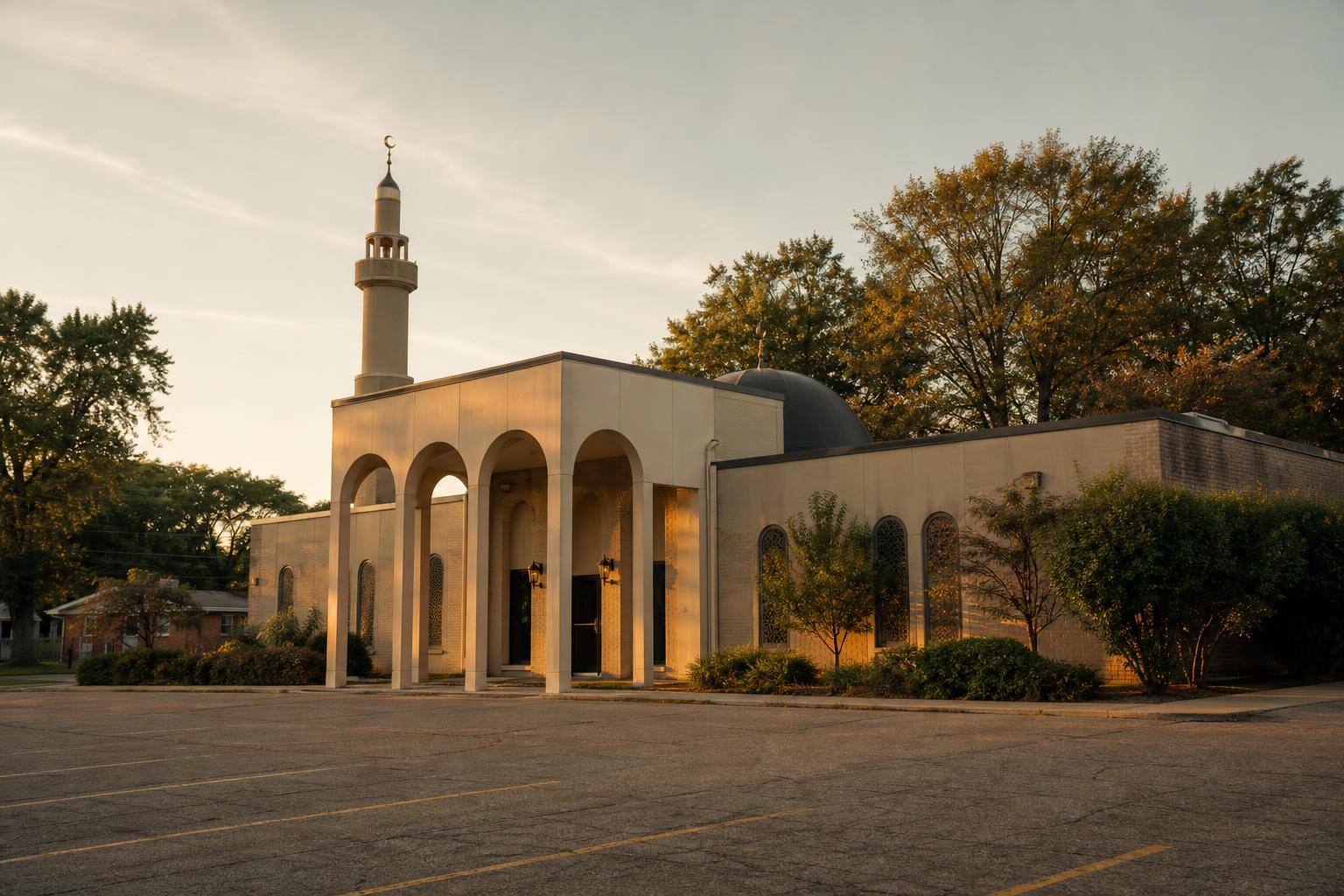 Stylized mihrab niche — the qibla-marking element at the heart of every Albanian-American xhami, including the Imam Vehbi Ismail-led Harper Woods flagship.
Graphic by NAR
Stylized mihrab niche — the qibla-marking element at the heart of every Albanian-American xhami, including the Imam Vehbi Ismail-led Harper Woods flagship.
Graphic by NAR
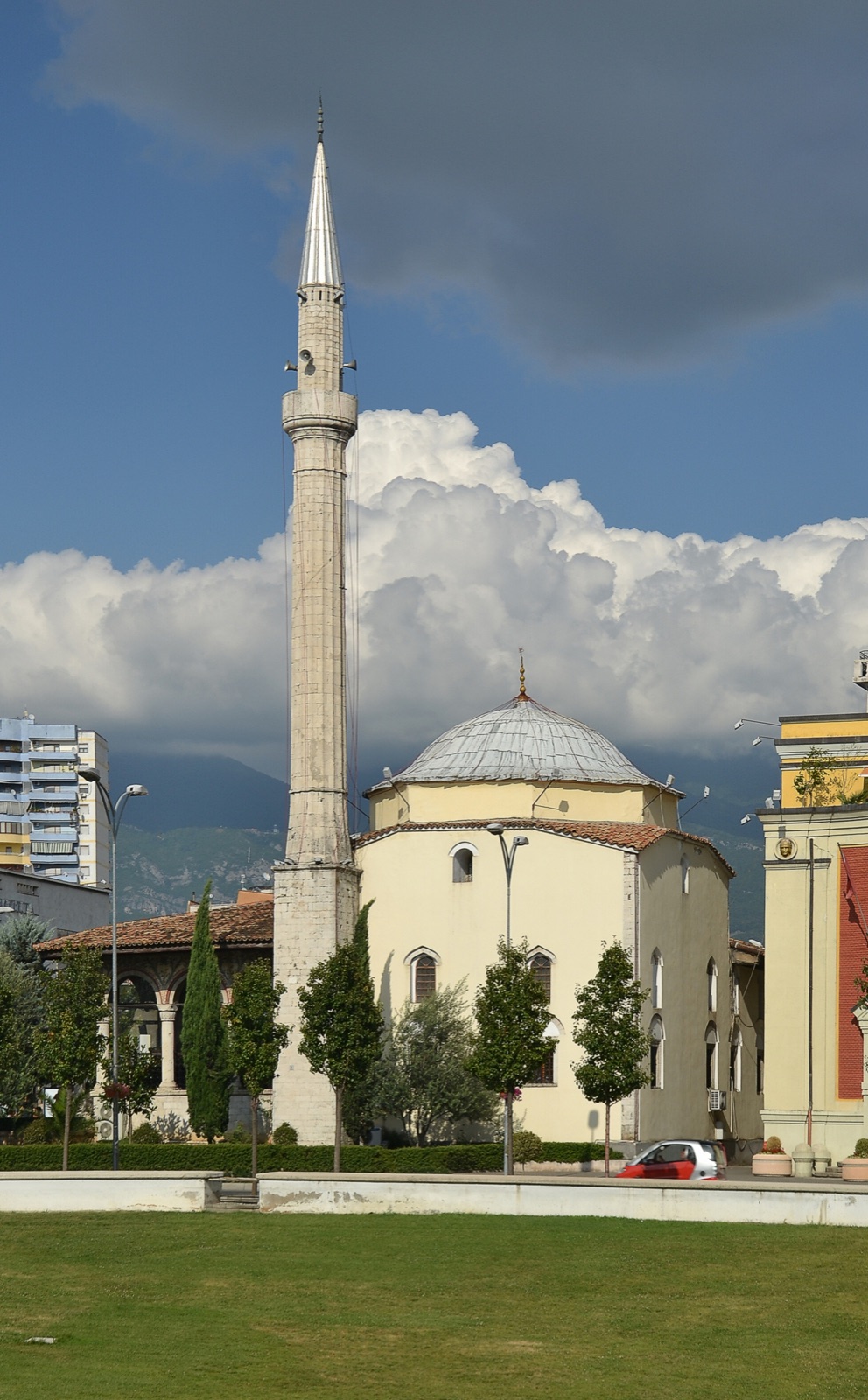 Et’hem Bey Mosque, Skanderbeg Square, Tirana — Ottoman-era Albanian Sunni xhami (built 1791–1821) whose minaret-and-dome silhouette informed the Harper Woods design.
Photo: Pudelek via Wikimedia Commons / CC BY-SA 4.0
Et’hem Bey Mosque, Skanderbeg Square, Tirana — Ottoman-era Albanian Sunni xhami (built 1791–1821) whose minaret-and-dome silhouette informed the Harper Woods design.
Photo: Pudelek via Wikimedia Commons / CC BY-SA 4.0
The Presidency of Albanian Muslim Community Centers
In 1992 — as Albania emerged from communism and a renewed wave of Albanian Muslims arrived in the US — Imam Ismail and a group of fellow Albanian-American imams formalized an umbrella structure now known as the Presidency of Albanian Muslim Community Centers (in earlier and overlapping references, the Presidency of the Albanian Muslim Community in the United States and Canada).
For its member centers, the Presidency does some of what diocesan structures do for Catholic and Orthodox parishes: coordinate clergy training, harmonize religious-education curriculum, set the calendar for shared observances, mediate inter-center disputes, and represent the network publicly. It does not replace local center boards — every member center remains independently governed — and it does not speak for non-member Albanian-American Sunni congregations, which set their own clergy, calendars, and public posture.
Headquartered historically in Harper Woods alongside the flagship mosque, the Presidency coordinates a network of thirteen-plus centers across the United States and Canada. Member centers receive imam placement support, share Eid prayer logistics, and contribute to a small fund for clergy in financial difficulty. The Presidency also engages with Albanian-government religious institutions — the Komuniteti Mysliman i Shqipërisë (Muslim Community of Albania) and the Bashkësia Fetare Islame (Islamic Religious Community) of Kosovo — when imams or curricula travel between countries.
The Presidency has spoken publicly on community matters when it judged a Sunni Albanian-American voice was needed — for example, after the 2007 Fort Dix incident, when several of those arrested were Albanian-American (the Presidency formally rejected extremism and emphasized the apolitical, civic posture of Albanian-American Sunni communities). That kind of representational work — speaking for the network so individual mosques don’t have to — is one of its core functions.
The directory: Albanian Islamic centers and mosques by metro
The list below covers the major Albanian Islamic Centers and mosques we can verify by name, address, or active web presence. Naming conventions overlap (Society / Center / Cultural Center / American), so we list each under its commonly searched name plus its metro and a short context note. Service times and congregation sizes change; treat them as approximate.
Detroit metro (Michigan)
The largest concentration of Albanian-American Sunni institutions in the country.
- Albanian Islamic Center — Harper Woods, MI (19775 Harper Ave). Founded by Imam Vehbi Ismail; consecrated 1963. Friday xhumaja with khutbah typically delivered in Albanian with English translation, increasingly bilingual. Several thousand families.
- Albanian American Islamic Society — greater Sterling Heights / Macomb County area. Serves the post-1990s Albanian Muslim wave concentrated in the northern Detroit suburbs.
- Albanian Cultural Islamic Center — Macomb County. Multipurpose center with prayer space, teqe-equivalent community-hall functions for weddings and funerals, and Albanian-language Saturday school.
The Detroit metro’s Albanian Muslim population is dense enough that several smaller xhamis and prayer rooms operate alongside the three above, often inside Albanian-owned community halls.
New York City metro
- Albanian Islamic Center of New York — Bronx. Long-established Sunni Albanian congregation serving the Belmont and Pelham Parkway communities. Independent of the Presidency network; mentioned to give an honest picture.
- Albanian American Islamic Center of Queens (AAICQ) — Staten Island and Queens locations have operated under closely related names. Serves Astoria and Queens-side Albanian Muslim populations. Friday prayer in Albanian with English translation. One of the larger Sunni Albanian congregations on the East Coast.
- Albanian Islamic Cultural Center — New York City. Community-facing hall with regular religious programming and a heavy youth-and-Saturday-school footprint.
- Bektashi Tekke (Albanian Sufi) — Brooklyn and elsewhere in the metro. Different tradition — Bektashi is its own Sufi order with separate clergy and institutions. Mentioned here for completeness; covered in the next section.
New Jersey
- Albanian Islamic Cultural Center of New Jersey — Garfield / Paterson area. Serves the Paterson Albanian community, one of the densest Albanian-American neighborhoods in the country, and the broader Bergen-Passaic concentration.
Connecticut
- Albanian American Muslim Community of Connecticut (AAMC-CT) — Waterbury area. Connecticut has the largest Albanian-American Muslim population per capita of any New England state. The center anchors Friday prayer, Saturday school, and Eid for the Waterbury / New Haven corridor.
Pennsylvania
- Albanian Cultural Center of Philadelphia — multipurpose center. Religious functions are part of a broader cultural footprint; the Philadelphia community is smaller than Detroit or New York but long-established, dating to early-twentieth-century immigration.
Florida
- Albanian Islamic Cultural Center of Clearwater — serves the Tampa Bay Albanian-American population, which has grown noticeably since the 2000s as Albanian-Americans have migrated south from the Northeast and Midwest for work and retirement.
Chicago
- Albanian American Islamic Center (Chicago) — xhami.org. Serves the Chicago metro Albanian Muslim community, including the substantial Albanian-American population in the western suburbs.
Ontario, Canada
- Albanian Muslim Society of Toronto — albmuslim.ca. One of the oldest organized Albanian Muslim institutions in North America. Included here because the Toronto community has deep cross-border ties to Detroit, Buffalo, and the broader US Albanian-American community.
- Bashkimi Islamic Center — Toronto area. Serves a large Albanian Sunni congregation with regular Friday prayer and community programming.
For each of the centers above, the practical pattern is similar: Friday xhumaja delivered primarily in Albanian with English translation (English alone or English-first is increasingly common at second- and third-generation centers), classes for children on weekends, Eid al-Fitr and Eid al-Adha prayers drawing the largest crowds of the year, and a community hall booked for weddings, iftarë during Ramadan, and family gatherings.
Albanian Sunni vs Bektashi: a respectful note
Most Albanian-American Muslims are Sunni. The classical estimate, drawn from twentieth-century census-style work in Albania, puts the Bektashi share of Albanian Muslims at roughly a quarter — a 1937 reference recorded “around 27% of the Muslim population in Albania” identifying as Bektashi (Wikipedia: Islam in Albania). In the US diaspora the ratio appears more strongly Sunni, partly because Detroit’s Sunni Albanian community organized earlier and more visibly.
The Bektashi order is a Sufi tradition with deep historical roots in Albanian religious life. It has its own clerical hierarchy — the baba, the dervish, the kryegjysh (head father) — and its own institutional network. The First Albanian Bektashi Tekke in America in Taylor, Michigan, was founded by Baba Rexheb in 1954 and is the first Bektashi teqe (lodge) ever built in the United States. (We don’t make the broader claim that it’s the oldest in the entire Western Hemisphere; we couldn’t verify it conclusively in writing this piece, and it deserves a careful answer.)
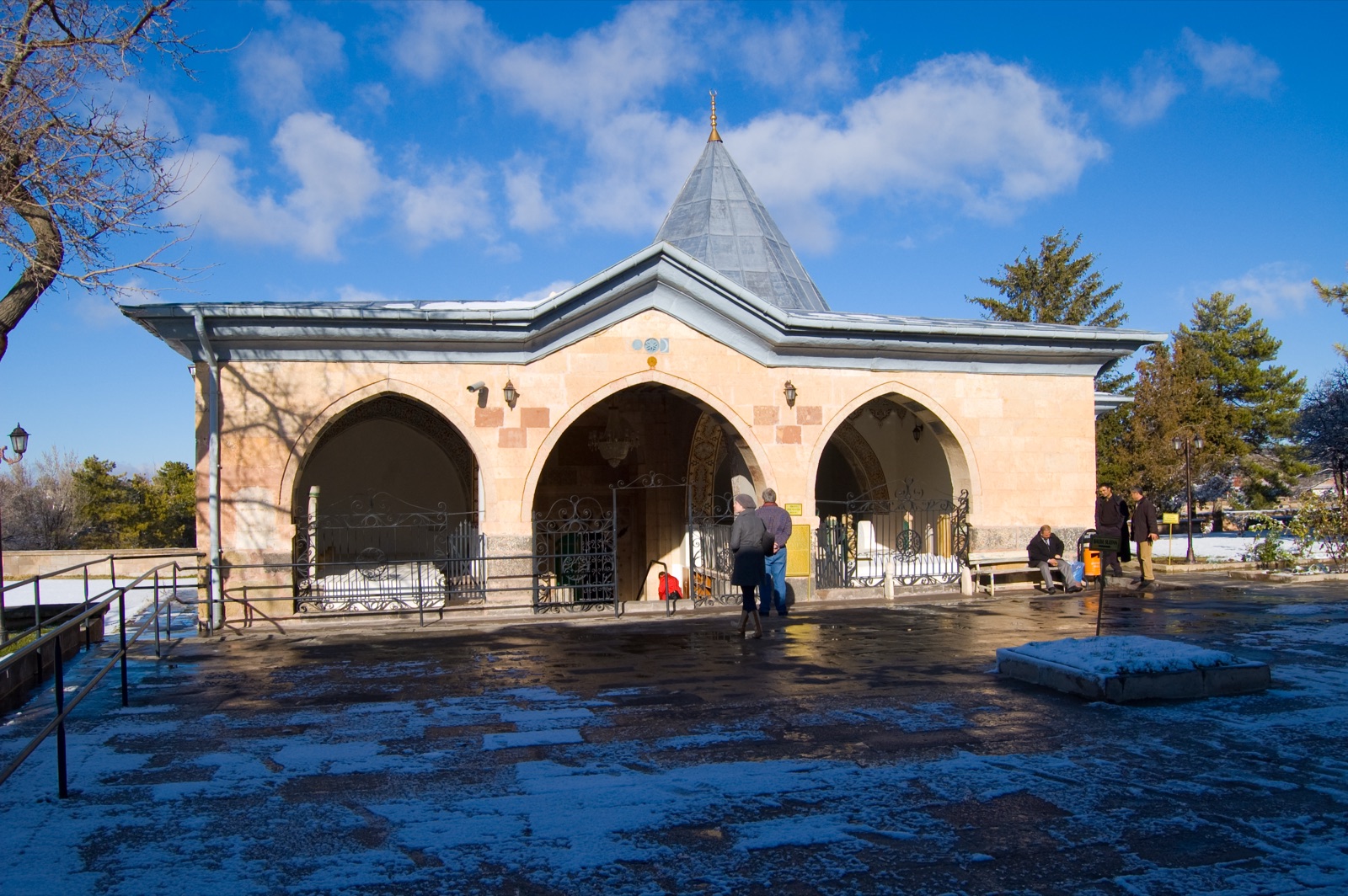 Hacı Bektaş Veli Complex, Hacıbektaş, Nevşehir Province, Turkey — tomb of the 13th-century Sufi saint whose teachings became the Bektashi order, central to a meaningful share of Albanian Muslims.
Photo: Superchango via Wikimedia Commons / CC BY-SA 3.0
Hacı Bektaş Veli Complex, Hacıbektaş, Nevşehir Province, Turkey — tomb of the 13th-century Sufi saint whose teachings became the Bektashi order, central to a meaningful share of Albanian Muslims.
Photo: Superchango via Wikimedia Commons / CC BY-SA 3.0
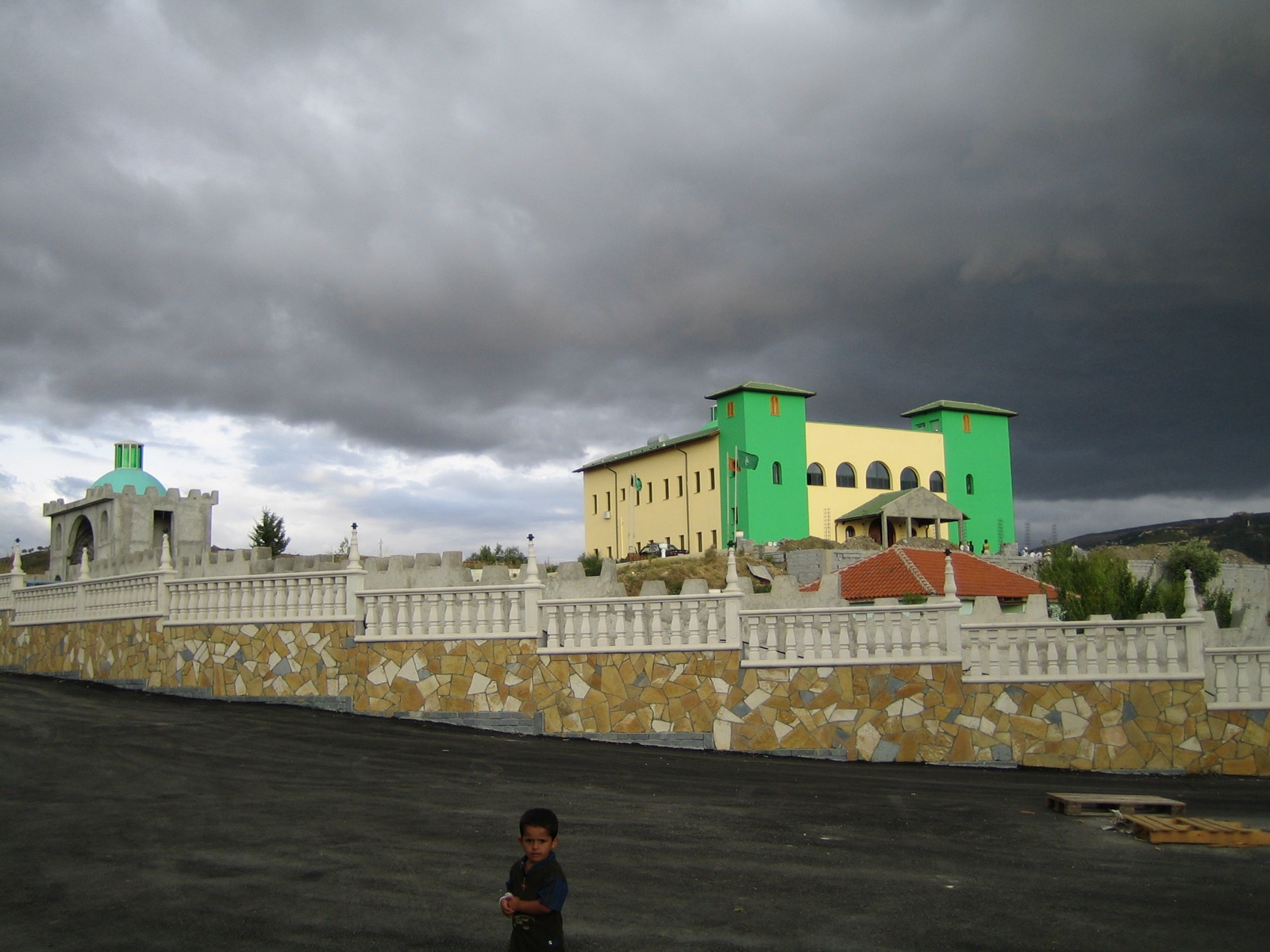 Kuz Baba Bektashi tekke on the hill above Vlorë, southern Albania — one of the historic teqes anchoring Bektashi practice in the country with the deepest Bektashi roots in the Balkans.
Photo: Wikimedia Commons / CC BY-SA
Kuz Baba Bektashi tekke on the hill above Vlorë, southern Albania — one of the historic teqes anchoring Bektashi practice in the country with the deepest Bektashi roots in the Balkans.
Photo: Wikimedia Commons / CC BY-SA
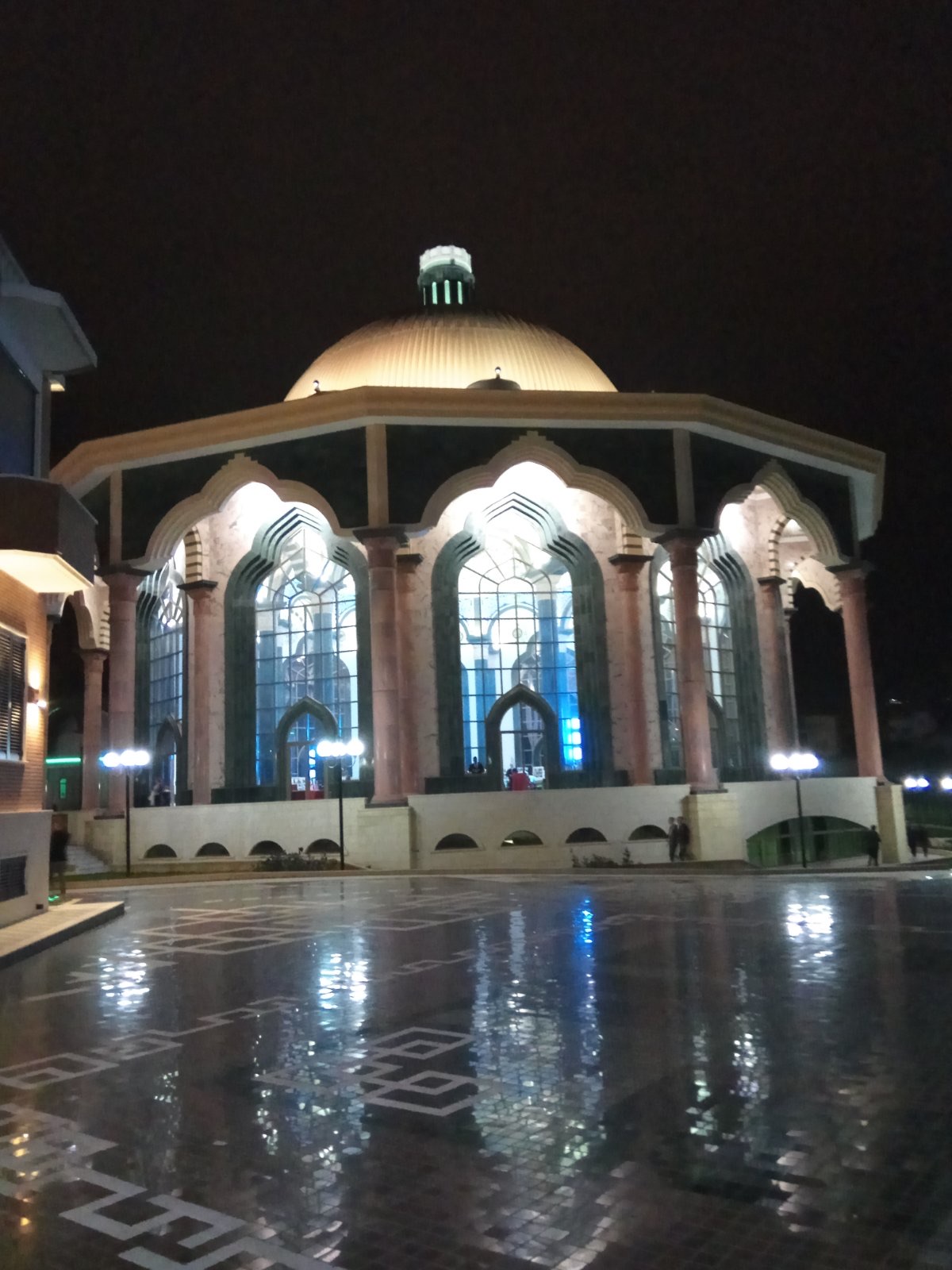 Kryegjyshata Botërore Bektashiane (World Bektashi Headquarters), Tirana — global seat of the order since it relocated from Turkey in 1925, when Atatürk’s secularizing reforms shut down Sufi lodges.
Photo: Wikimedia Commons / CC BY-SA
Kryegjyshata Botërore Bektashiane (World Bektashi Headquarters), Tirana — global seat of the order since it relocated from Turkey in 1925, when Atatürk’s secularizing reforms shut down Sufi lodges.
Photo: Wikimedia Commons / CC BY-SA
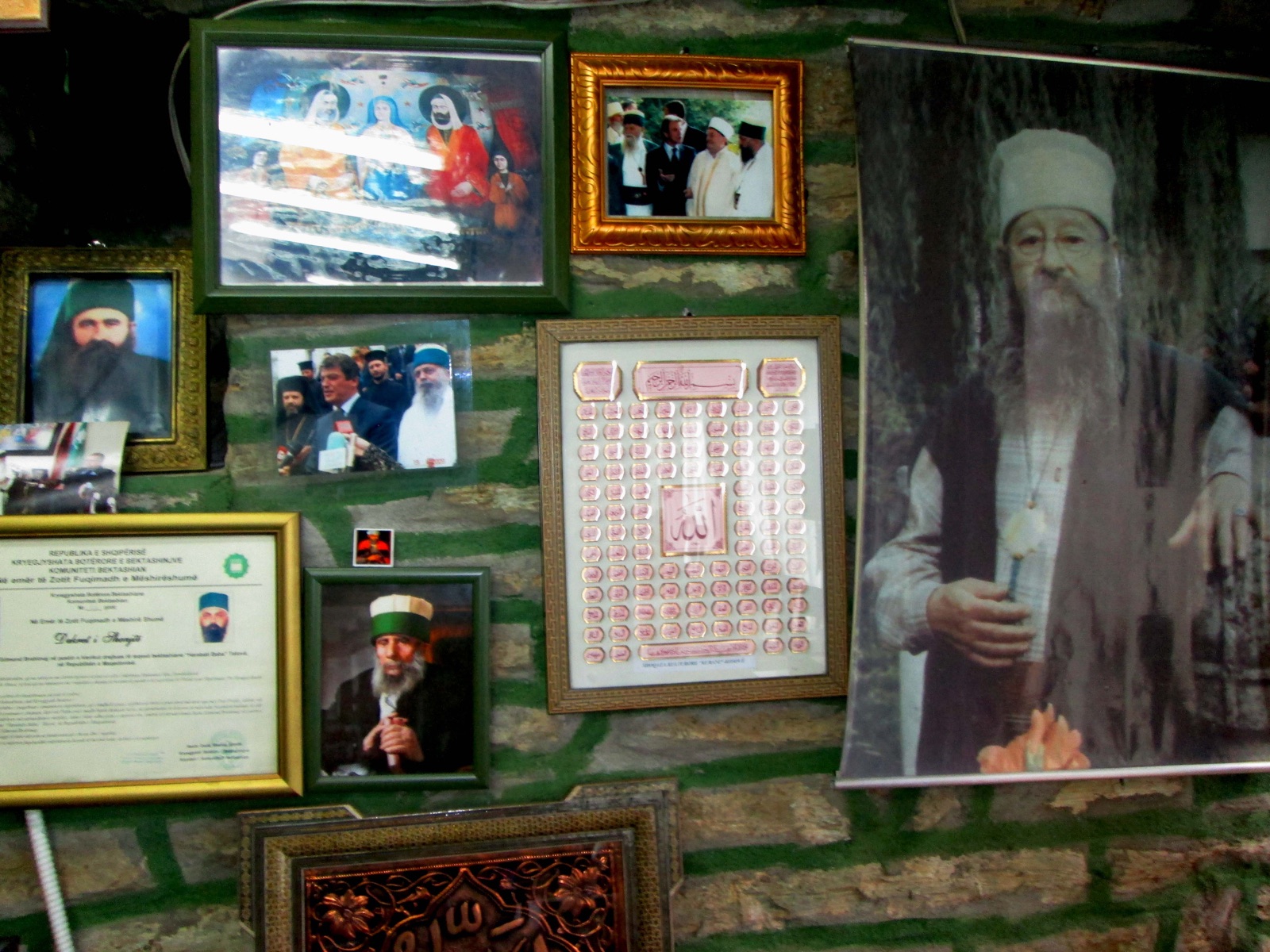 Interior of the Arabati Baba Tekke, Tetovo, North Macedonia — one of the largest surviving Bektashi complexes in the Balkans, founded in the late 18th century and still active for the region’s Albanian Bektashi community.
Photo: Wikimedia Commons / CC BY-SA
Interior of the Arabati Baba Tekke, Tetovo, North Macedonia — one of the largest surviving Bektashi complexes in the Balkans, founded in the late 18th century and still active for the region’s Albanian Bektashi community.
Photo: Wikimedia Commons / CC BY-SA
The two communities are organizationally distinct — separate institutions, separate clergy, separate religious schools — but cooperative at the community level. At Flag Day banquets, Independence Day commemorations, scholarship galas, and Albanian-American civic events, Sunni imams and Bektashi baballarë sit at the same head table, alongside Catholic priests and Orthodox clergy. That pluralism is a feature of Albanian community life, not an exception.
We do not take a position on Sunni-vs-Bektashi theology or on classifications that scholars themselves disagree about. Both traditions are part of the Albanian-American religious story, and both belong in any honest count.
What an Albanian Islamic Center does beyond worship
Walking into an Albanian Islamic Center on a non-Friday afternoon, the first thing you notice is that it doesn’t look like a single-purpose religious building. There are folding tables. A coffee urn. A children’s book corner. A whiteboard with class times.
Albanian Islamic Centers in the US function as community institutions, not strictly houses of worship. The footprint typically includes:
Community space. Wedding receptions, valle dancing at engagement parties, iftarë during Ramadan, bajram (Eid) banquets, funeral receptions and forty-day memorials. The big social hall in Harper Woods, the equivalent rooms in Queens and Waterbury and Sterling Heights — these are where Albanian-American family life happens for large stretches of the calendar.
Albanian-language Saturday school. Most centers run a weekend program for children — language, history, religious literacy, music. For second- and third-generation kids whose parents worry the language won’t survive another generation, this is where it gets transmitted. NAR’s broader work on the diaspora rests partly on the existence of these programs; without them, the count would shrink faster than it grows.
Immigrant integration support. New arrivals — especially after the 1990s collapse of communism, the 1999 Kosovo war resettlement, and the steady post-2000 migration — have leaned on Islamic Centers for housing referrals, English-class connections, employment leads, and translation help. The centers often partner with Albanian-American chambers of commerce on this work.
Halal certification and food networks. Albanian-American restaurants and butchers across Detroit, New York, Connecticut, and New Jersey rely on local imams for halal certification and slaughter supervision. The pipeline from Islamic Center to qebaptore (kebab shop) to Albanian-American family table is closer than outsiders realize.
Civic partnerships. Albanian Islamic Centers regularly partner with Albanian Catholic parishes, Albanian Orthodox churches, and Bektashi teqes on community-wide events. Flag Day (November 28), Independence Day for Albania and Kosovo, scholarship galas, and the New York Albanian Parade are joint programming. The shared identity is Albanian first; the religious institution is the venue, not the boundary.
This is why getting counted matters across religion. NAR’s registry isn’t asking you to identify a denomination — it’s asking you to be counted as Albanian. The Islamic Centers have done the institution-building work; the registry layers a national count on top.
How to find your nearest Albanian Islamic Center
Three honest paths:
- The Presidency of Albanian Muslim Community Centers keeps the directory of its member mosques. The flagship in Harper Woods (aicod.org) is the easiest first contact; they will refer you to the closest member center. For non-member Albanian-American Sunni congregations (the Bronx center, several in Boston, Chicago-area, and parts of CT/NJ), contact the local congregation directly.
- Albanian-American chambers of commerce in Michigan, Illinois, New York, and New Jersey maintain referral networks across religious and civic Albanian-American institutions. If you’re new to a metro, the chamber will know the imam.
- The National Albanian Registry is building a community-wide count that spans every tradition — Catholic, Orthodox, Sunni, Bektashi, civic, and cultural. If your community isn’t represented yet, contact us.
If you’re searching specifically for the largest Albanian Islamic Center in the US, the answer is the Albanian Islamic Center in Harper Woods, Michigan — the Imam Vehbi Ismail flagship.
Get counted, regardless of faith
NAR exists to count Albanian Americans. All of us — Sunni, Bektashi, Catholic, Orthodox, secular, mixed-heritage, fluent or not. The official US Census records 230,000 Albanian Americans (2024 ACS). The community estimate is closer to a million. Closing that gap is what we’re here for.
The US Census records about 230,000 Albanian Americans. The real number is closer to a million, because the count misses most of us for reasons we’ve documented at length: mixed country-of-birth answers, skipped ancestry write-ins, and whole branches of a family the form never reaches.
Getting counted takes about three minutes, costs nothing, and keeps your data private. Religion isn’t on the form — telling us you exist is what adds you to the count. Get counted →
Sources: Albanian Islamic Center (aicod.org); Building Islam in Detroit (University of Michigan, LSA); Archnet — Albanian Islamic Center, Harper Woods; America’s Islamic Heritage Museum — Imam Vehbi Ismail; Wikipedia — Islam in Albania; Wikipedia — First Albanian Bektashi Tekke in America; Wikipedia — Baba Rexheb. Where dates or congregation sizes are approximate, we’ve said so plainly.