The short answer: Albanians kept their language and customs through more than four centuries of Ottoman rule for different reasons in different places. In the northern highlands, distance, clan self-rule and the Kanun (the unwritten law of the highland clans) did much of the work, and Catholic priests from the north wrote the first books in Albanian. In the south, the Orthodox Church held on as a recognized community inside the empire. Conversion to Islam was real and widespread, but it came slowly and mostly through taxes and careers, and it never settled who counted as Albanian.
You hear a version of this story at a lot of Albanian tables. Most of Albania became Muslim, it goes, except the deep northern highlands around places like Theth, because the Ottomans could not get enough men up those mountains and never really tried. That is why the north stayed Catholic.
Part of that is right. The mountains mattered. But the Ottomans did march into the highlands, conversion reached the mountains too, and the Orthodox south kept its churches for reasons that had little to do with terrain. The full story belongs to every Albanian, Gheg or Tosk, Muslim or Christian.
The Ottomans did come into the mountains
In February 1638, the Ottoman governor of Bosnia led an army of about 15,000 men against the Kelmendi, a Catholic highland clan north of Shkoder whose raids had drawn complaints from merchants around Novi Pazar. Snow and rough ground slowed the army, and the soldiers plundered villages for food. The Kelmendi hid their families and livestock in a mountain cave.
The sources disagree on how it ended. Ottoman-side and later French accounts say the Kelmendi leaders were captured and executed and many survivors were moved to the hills around Pristina. Frang Bardhi, a northern Catholic bishop at the time, wrote that the army was surrounded and driven back.
So the mountains were not left alone. What they did was make direct rule expensive. A US Library of Congress country study of Albania says the mountain clans defended their independence through the centuries of Ottoman rule, that the Ottomans “never deemed it worthwhile to subjugate them,” and that taxes were hard to collect there.
The clans were organized into bajraks, a word that means “banners.” Each bajrak sent its men to fight under its own standard-bearer, the bajraktar, when it was called up. Mirdita, the largest Catholic clan region, could put up to 5,000 irregular troops in the field when the Ottoman state expected them, according to the historian George Gawrych. Inside their own valleys, the clans settled their affairs by the Kanun.
The Kanun kept a common law in Albanian
The Kanun is the customary law of the northern highlands. It is named for Leke Dukagjini, a 15th-century prince who lived at the same time as Skanderbeg, though the customs are older than him. For generations it was passed down by word of mouth. It covered family, property, marriage, hospitality, honor, besa (a promise that cannot be broken) and blood feud. The Franciscan priest Shtjefen Gjecovi collected it from highland elders, and the full text was published in Shkoder in 1933.
Two things about the Kanun of Leke Dukagjini matter for this story. Elders applied it in Albanian, in their own assemblies, for centuries when the language of the state was Ottoman Turkish. And it was not religious law. It applied to Catholic, Muslim and Orthodox highlanders alike, which is how families of different faiths in the same valleys could live by the same code.
Catholic priests wrote the first Albanian books
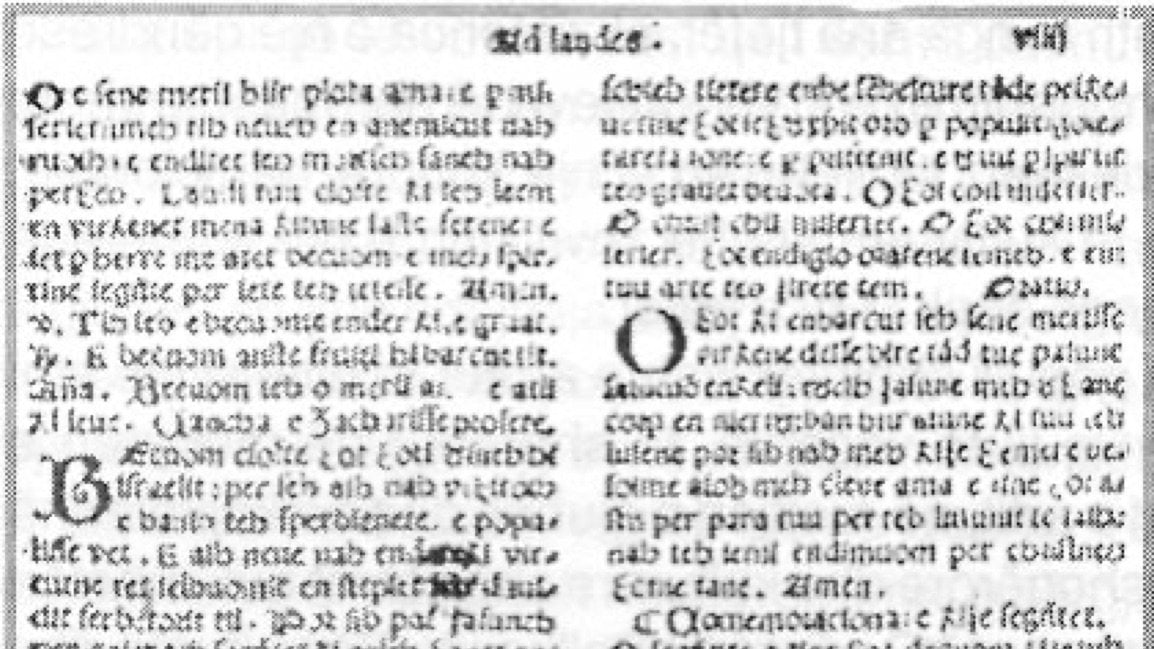
The oldest known written sentence in Albanian is a baptism formula noted down in 1462 by Pal Engjelli, the Catholic archbishop of Durres. The first printed book came about a century later: the Meshari, or Missal, a Catholic prayer book translated by a priest named Gjon Buzuku and dated 1555, in the northern Gheg dialect. Only one copy is known to survive, in the Vatican Library. It was found there in 1740, lost, and found again in 1909.
Three more northern Catholic clergymen followed:
- Pjeter Budi: born in the Mat region, he published his Christian Doctrine in Rome in 1618.
- Frang Bardhi: from the Zadrima region, he published the first Albanian dictionary in Rome in 1635, and a year later a defense of Skanderbeg as an Albanian.
- Pjeter Bogdani: his Cuneus Prophetarum (“The Band of the Prophets”) was printed in Padua in 1685.
These men wrote so that ordinary people who spoke only Albanian could pray and learn the faith in their own language. Bardhi wrote that he worried the language was being lost. Their books are a large part of why Albanian survives as a written language from that period at all. More on that tradition is in our piece on the Albanian Catholic Church.
Conversion came slowly, and for practical reasons
Islam did not sweep Albania in one wave. By one count of Ottoman records, the district of Shkoder was only about 4.5 percent Muslim in the 1500s. Conversion picked up in the 1600s and 1700s.
The reasons were mostly practical:
- Taxes: Christians paid a special head tax, the jizya, that Muslims did not, and it rose over the 1600s.
- Careers: converting opened the way to posts in the Ottoman army and government.
- Land: many old Albanian landowning families converted to keep their estates.
Towns and lowlands along trade routes converted first and most. The mountains converted more slowly, partly because of the terrain and partly because the Catholic Church pushed back.
But the mountains converted too. By some estimates, between a third and a half of northern Albania had become Muslim by the mid-1600s, and much of Kosovo had as well. Some families converted on paper and kept Christianity at home. They were called laramane: Muslim in public, Christian in the house. The core Catholic regions that remain today, Mirdita and the Malesia highlands, are where that pull was weakest.
How the south kept its churches
The Orthodox south is mountainous too, but its Christianity held for a different reason: the church had a legal place inside the empire. Under Ottoman law, all Orthodox Christians belonged to one recognized community, called the Rum millet, under the Patriarch of Constantinople. The church kept its own bishops, priests and schools. In southern Albania, Orthodox villages answered to the bishops of Ohrid in the southeast and Ioannina in the southwest. Northern Catholics looked to Rome instead, and Budi, Bardhi and Bogdani all printed their books in Italy.
That is also where the name “Greek Orthodox” comes from. The church used Greek for the liturgy and in its schools, so Albanian-speaking Orthodox families were called Greek Orthodox. It was a church label, not an ethnic one.
Conversion still reached the south, and in some districts it came late, in the 1700s and 1800s. The Permet region shows how mixed the result was. During the conversions of the 1700s, the Christian Albanian-speaking villages of the Rreze area, Hormove above all, held out strongly, as did the town of Permet. In 1778 the local Orthodox Church and Permet families living abroad paid for a Greek-language school in the town.
In the same district, the village of Frasher was home to the Frasheri brothers, Abdyl, Naim and Sami, who grew up in a Bektashi Muslim family and became leaders of the Albanian national awakening in the 1800s. Naim called for an Albanian Bektashism and backed Permet’s first Albanian-language school in 1890. Orthodox villages and Muslim and Bektashi families lived side by side in the same valleys.
My father’s side of the family comes from Grabova, a village near Permet, and they were what everyone called Greek Orthodox.
The Albanian Orthodox Church started in Boston
The Greek liturgy became a sore point once Albanians began building a nation. In Boston, Albanian immigrants had been going to the city’s Greek parish. After a series of problems with the local Greek priest, they asked for a priest of their own and chose Fan Noli.
Noli was ordained in New York in March 1908. On March 22, 1908, in a hall in Boston, he led the first Orthodox liturgy ever held in Albanian, in his own translation. A church congress in Berat declared an independent Albanian Orthodox Church in 1922, and the Patriarchate of Constantinople recognized it in 1937.
That is an Albanian American story. Immigrants in Boston helped give the Orthodox south its own church in its own language. The Albanian Orthodox Archdiocese in America still traces its start to that night.
Language is what held
Put the pieces side by side. Catholic priests in the north wrote Albanian down. The Kanun kept a shared law in Albanian across the highland faiths. Orthodox villages in the south kept their churches and, in time, an Albanian liturgy. Bektashi Muslims like the Frasheri brothers helped lead the national movement. In the late 1870s Pashko Vasa (also known as Vaso Pasha), a Catholic from Shkoder, gave it all one line: “Feja e shqyptarit asht shqyptarija,” the faith of Albanians is Albanianism. We wrote more about that line in The Faith of the Albanians Is Albanianism.
The mountains are part of the story. They are not the whole of it, and no single region, dialect or faith owns it. Albanian Americans come from all of it: Catholic families from Malesia and Mirdita, Orthodox families from Korce and Permet, Muslim and Bektashi families from across Albania, Kosovo and North Macedonia. The differences between Gheg and Tosk are real, and so is the shared language under them.
Official counts miss much of this community, for reasons we lay out in why the Census undercounts Albanian Americans. NAR is building the first community-led count of Albanian Americans, across every faith and region. Add your family. It takes about two minutes.
Sources
- Meshari and Gjon Buzuku, Wikipedia (1555 date, Gheg dialect, single surviving copy in the Vatican Library, found 1740, found again 1909).
- 1638 Ottoman expedition against Kelmendi, Wikipedia, citing Noel Malcolm (2020), Frang Bardhi, Lenormant (1866) and Pulaha (1978) (army size, disputed outcome, resettlement).
- Albania: A Country Study, Library of Congress Federal Research Division (highland clan independence, poll taxes and conversion, lowland concentration).
- Mirdita (tribe), Wikipedia, citing George Gawrych, The Crescent and the Eagle (2006), and Robert Elsie (2015) (bajraks, 5,000 irregular troops).
- Islamization of Albania, Wikipedia, citing Ramet (1998), Malcolm (2015), Skendi (1956, 1967) and Ottoman records (timing, jizya, careers, landowners, Shkoder district figure, slower highland conversion).
- Laramans, Wikipedia, citing Skendi, Duijzings and Malcolm (crypto-Christians, estimates of northern conversion by the mid-1600s).
- Formula e pagezimit, Wikipedia (Pal Engjelli’s 1462 baptism formula).
- Pjeter Budi, Frang Bardhi and Pjeter Bogdani, Wikipedia (dates and places of publication).
- Cuneus Prophetarum, Wikipedia (1685 Padua edition).
- Albanian Orthodox Church, Wikipedia (Rum millet, Greek liturgy and schooling, Ohrid and Ioannina, 1922 Berat congress, 1937 recognition).
- Permet, Wikipedia via Wikiwand (resistance to conversion in Rreze and Hormove, 1778 school, 1890 Albanian school).
- Naim Frasheri, Wikipedia (Frasher, Bektashi family, call for an Albanian Bektashism).
- Today in history: the first Albanian liturgy, Orthodox History (March 22, 1908 date and Noli’s own translation).