
The short version: Since October 13, students in Tirana have been protesting over the cost of university, conditions on campus, and what waits for them after graduation. Some protests have turned violent, and protesters and police officers have been hurt. Many Albanian Americans have family in those crowds. NAR does not take sides in Albanian politics. We do think the diaspora should listen before it acts, and we want to hear from you: there is a five-question poll on this page.
What is happening
The latest wave began on October 13, 2026, with a student rally over university conditions in Tirana (BIRN). It grew out of anti-government protests that had been running for months, sometimes called the Flamingo Revolution, and students had complained for months about the high cost of education and how few jobs wait for them after graduation (Al Jazeera).
Within days the protests spread beyond the campuses. Demonstrators broke into the Education Ministry and set a fire inside (Al Jazeera), other buildings in the city were set alight, and police officers and protesters have been injured (Al Jazeera). Prime Minister Edi Rama has said he will not resign (Reuters via U.S. News).
The story is moving fast, and some of what circulates on social media is wrong. We will stick to what established outlets report.
Why it hits home here
A lot of us are here for the same reasons these students are naming. Our parents or grandparents left because an education cost too much, or led nowhere, or both. When a 20-year-old in Tirana says they cannot see a future at home, many families in the Bronx, Detroit, Boston and Chicago know exactly what that means.
Our board put NAR’s position plainly on October 18: peaceful protest is a fundamental right, and so is the freedom to speak without fear. Those rights do not belong to any party. We hope for the safety of everyone on the streets, and for a response built on dialogue, not force (read the full statement).
Listen first
The diaspora has money, professional networks and decades of experience abroad. It also has a habit of telling people at home what they need.
The students in Tirana can speak for themselves. Before anyone here announces a plan, the useful questions are for them:
- What gets in the way of your education right now?
- What is missing for you after graduation?
- What would make you want to build your life in Albania?
Their answers will differ. A protest this size does not speak with one voice, and nobody in New York or Michigan should speak for it.
What the diaspora can offer
Some help is within reach. None of it replaces the institutions whose job this is.
- Mentoring. Albanian American doctors, engineers, teachers, lawyers and business owners can give a student an hour a month.
- Scholarships and school programs. Albanian American groups already fund scholarships for students here. The same model can reach students in Albania.
- Jobs and internships. Remote work, summer placements, and introductions to people who are hiring.
- Reliable information. Share reporting from established outlets, not rumors, and correct the ones you see.
Promise only what you can deliver. A program that launches with a press release and disappears in six months does more harm than no program at all.
What NAR will do
NAR’s job is to count and connect Albanians in the United States. That gives us one thing to offer right now: we can invite participants to share their priorities and use those responses as one input when considering future activities.
It starts with the poll on this page. We will publish the recorded responses and consider them alongside other community feedback when deciding what we organize next.
If you are worried about someone in Albania and they are a U.S. citizen, including a dual citizen, they can enroll at step.state.gov to get safety alerts from the U.S. Embassy in Tirana.
And if you are Albanian and living in the United States, get counted. The more of us NAR can reach, the more useful that connection becomes, here and at home.
Sources
- Al Jazeera, “‘Boiling point’: Why students are protesting against Albania’s Edi Rama,” October 15, 2026. aljazeera.com
- Al Jazeera, “Fire erupts at Albania’s Education Ministry as protests spiral,” October 14, 2026. aljazeera.com
- Reuters, “Albania’s Rama says he will not resign over protests,” October 15, 2026. usnews.com
- BIRN / Balkan Insight, “Albanian student protesters clash with police outside Ministry of Education,” October 13, 2026. balkaninsight.com
- National Albanian Registry, “A statement from the NAR board on the protests in Albania,” October 18, 2026. albanianregistry.org
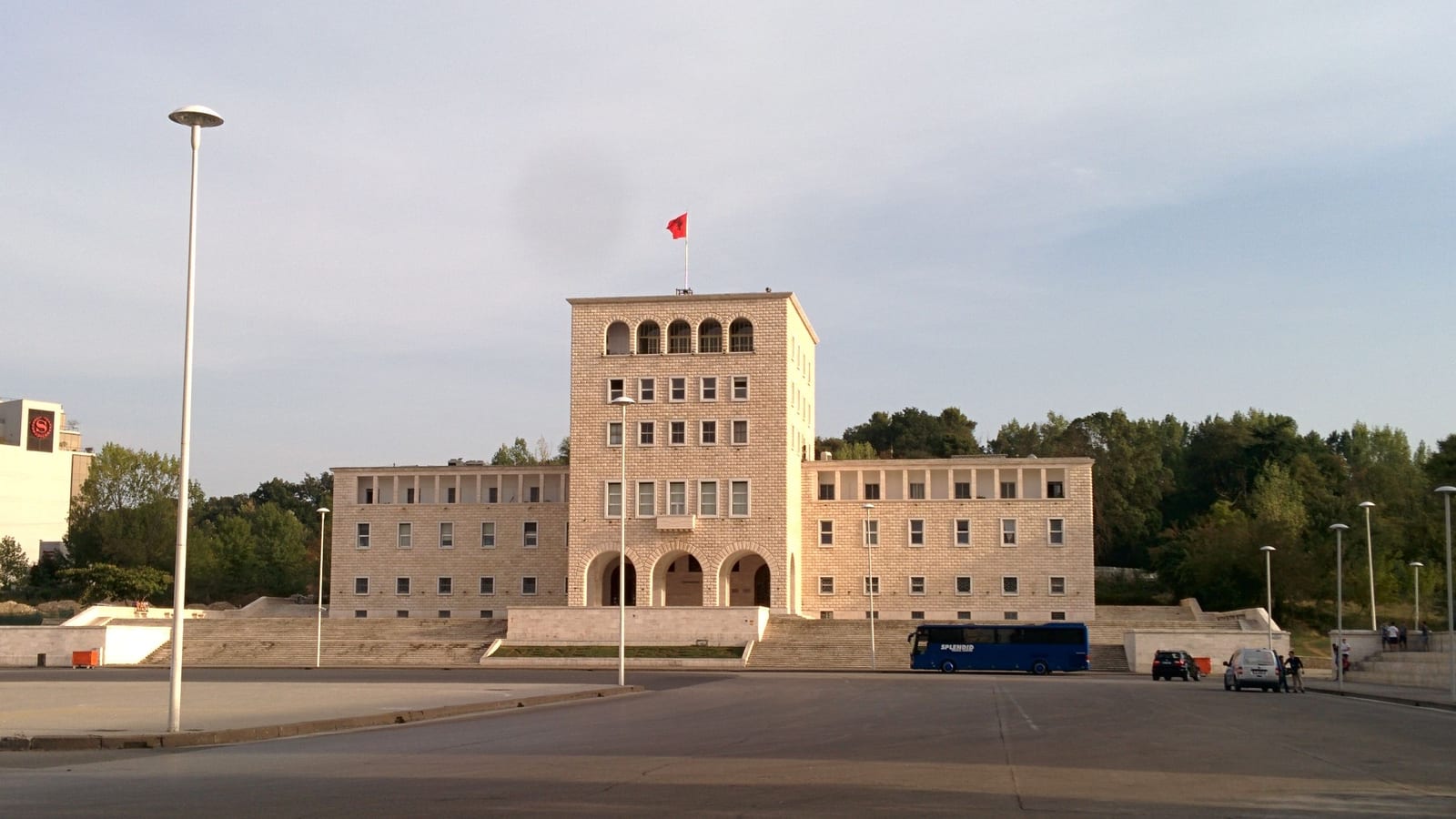
- Hero photo: “Tirana University and Mother Teresa Square” by Leeturtle, Wikimedia Commons, CC BY-SA 3.0. commons.wikimedia.org

Five questions for you
Participation is voluntary and takes about a minute. Results describe recorded responses, not a representative sample of the diaspora. Names are not displayed publicly, but signed-in answers are linked to NAR registrations. You can view results without answering, and you can also share it from albanianregistry.org/pulse.
November 2026 round · opened November 11
Question 1 of 6
Recorded responses
Counts and percentages for every option. Percentages are rounded. Each question has its own response total.
This is not a scientific poll. Participation is voluntary. Results describe recorded responses, not a representative sample of the diaspora. Location and diaspora membership are not verified.
How responses are counted
Changing an answer replaces the saved choice for that identity and question. Clearing cookies, changing browsers, or signing in after answering as a guest can create another response. The network limit may affect different people sharing a connection. Counts are not weighted; percentages use the recorded total for each question and may not add to 100% after rounding. For questions allowing multiple choices, each recorded response counts once in the denominator; percentages may total more than 100%.
Your name is not shown in public results. Signed-in answers are linked to your NAR registration. Otherwise, we use a browser identifier. We also store a hashed network identifier to help limit repeat submissions. These controls do not guarantee one response per person. Privacy details