
The short answer: Albanians are divided among four faiths — Sunni Islam, Bektashi Islam, Orthodox Christianity, and Catholicism — and have still understood themselves as one people. The 19th-century poet Pashko Vasa, himself a Catholic, gave that idea its permanent phrasing: the faith of the Albanians is Albanianism. National identity here was built on language and shared descent, not on religion — which is a large part of where Albanians actually come from, and why the community held together where others in the Balkans split apart.
There is a line almost every Albanian knows, and it was written by a Catholic.
“Feja e shqyptarit asht shqyptarija.” In modern Albanian, “Feja e shqiptarëve është shqiptaria” — the faith of the Albanians is Albanianism. It comes from the poem O moj Shqypni (“Oh Albania, poor Albania”), written around 1878–1880 by Pashko Vasa of Shkodër, and it became one of the rallying cries of the Rilindja, the movement that built a modern Albanian nation.
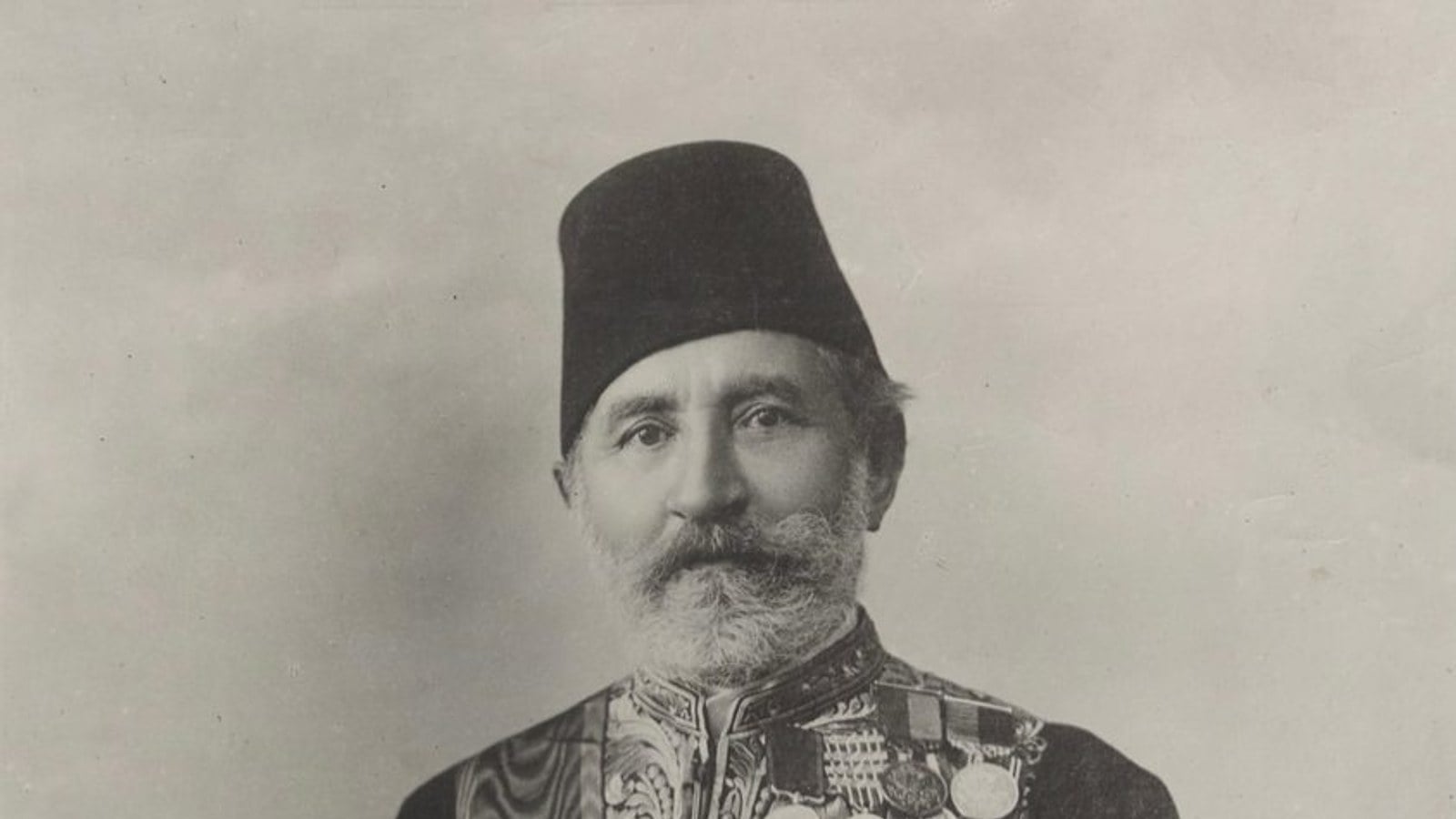
Sit with who wrote it. Pashko Vasa was a Catholic from the north. He spent his working life in the Ottoman administration and ended it as the sultan’s governor-general of Mount Lebanon. A Catholic, serving a Muslim empire, telling Albanians of every religion that the only thing they truly held in common was each other. He was not describing a fact so much as insisting on one — and the insistence stuck, because it matched how Albanians already lived.
Four faiths, one people
Line up the religions of the Albanians and you have most of the Balkans in a single nation.
Albania’s 2023 census reported roughly 46% Sunni Muslim, about 8% Catholic, about 7% Orthodox, and just under 5% Bektashi — with a very large remainder, close to a third of the country, either undeclared or claiming no denomination. Treat those numbers gently: the Orthodox and Bektashi communities have long contested the census as an undercount, and surveys suggest most Albanians do not actively practice any faith. Kosovo is overwhelmingly Muslim; the diaspora is its own mix. The precise percentages are soft in every direction.
What is not soft is the shape: there is no majority-faith that is the nation the way Orthodoxy is bound into Serbian or Greek identity, or Catholicism into Croatian, or Islam into Bosniak. An Albanian family reunion can hold a Sunni uncle, a Catholic grandmother, an Orthodox cousin, and a Bektashi in-law, and none of them experiences this as a mixed marriage of nations. They experience it as a family.
The Christian hero with the Ottoman name
The clearest single emblem of this is the national hero himself.
Gjergj Kastrioti is Albania’s Christian warrior-saint, the man who held off the Ottoman Empire for a quarter-century. And he is known to the world — and to Albanians — by the name the Ottomans gave him: Skanderbeg, from İskender Bey, “Lord Alexander,” a title he received as a young man taken into the sultan’s service before he turned against it. (Whether he arrived there through the formal child-levy or as a noble hostage is debated by historians; either way, the name is Ottoman Turkish.)
Think about how strange that should be, and is not. A nation’s Christian hero, resisting a Muslim empire, is remembered forever under a Turkish-Islamic honorific — and no Albanian has ever found this a contradiction worth resolving. That is not an accident or an embarrassment. It is the rule made visible: Albanians locate their nationhood in language and lineage, and a name’s religion simply does not threaten it. Skanderbeg is Albanian because he is Albanian, not because of which God his enemies prayed to.
Tirana, capital of the Bektashi
Religion did not merely fail to divide Albanians; one branch of it became distinctly, proudly Albanian. The Bektashi — a mystical, tolerant Sufi order that many awakening-era patriots belonged to — were banned in Turkey in 1925 when the new republic dissolved the Sufi orders. They moved their world headquarters to Tirana, and there it has stayed. Albania is the global center of Bektashism, which is its own quiet answer to anyone who imagines Albanian Islam as an import: a world faith keeps its capital on Albanian soil.
(In 2024 Albania’s prime minister went a step further and announced plans for a sovereign Bektashi micro-state inside Tirana, modeled on the Vatican. As of 2026 that remains a proposal — it needs a constitutional amendment and has not been established or recognized — so it is a sign of the order’s standing, not yet a fact on any map.)
Why it held
None of this means Albanians floated above religion, or that there was never friction. That would be its own myth, and honest history resists it: there were tensions, conversions under Ottoman pressure, and the communist state later seized Vasa’s line for a brutal campaign of forced atheism that had nothing to do with what he meant. The careful claim is comparative, and it is strong enough on its own — religion divided Albanian national identity far less than it divided the other nations around them.
It was noticed early. The Victorian traveler Henry Fanshawe Tozer, writing in 1869, observed that Albanians were reputed to let a sense of nationality prevail over religious creed. A foreign observer, with no stake in flattering them, saw the same thing Pashko Vasa would soon put into verse.
That inheritance is one of the most valuable things Albanian Americans carry, and one of the easiest to lose in a new country where the first question is often what are you. The answer that Vasa left is not a religion and not a border. It is a people — and the simplest way to keep a people is to count it, across every faith it contains. The Census records only about 230,000 of us; the real community is closer to a million. That takes about two minutes, and it says the one thing that has always been true: Albanian is the identity that holds the rest together.
Sources
- O moj Shqypni — Wikipedia (Pashko Vasa’s poem; the “Feja e shqyptarit asht shqyptarija” line; Rilindja slogan and later co-optation).
- Pashko Vasa — Wikipedia (Catholic from Shkodër; Ottoman governor-general of Mount Lebanon, 1882–1892).
- Religion in Albania — Wikipedia (2023 INSTAT census figures and their contested reception; low active practice).
- Skanderbeg — Wikipedia and Britannica (İskender Bey etymology; Ottoman service then Christian resistance).
- Sovereign State of the Bektashi Order — Wikipedia (announced 2024; proposal status).
- Henry Fanshawe Tozer, Researches in the Highlands of Turkey (1869) — period observation on nationality prevailing over creed.