
Ask the U.S. government how many Albanians live in America and you get a number around 230,000. Ask anyone who has stood in the crowd at the Albanian parade in New York, or tried to get a table at a hall wedding in Worcester, and you get a different answer. Community organizations put the real figure between 750,000 and a million. That’s not a rounding error. That’s most of us, missing from the official record.
I want to explain exactly why the gap exists, because once you see the mechanics, you’ll understand why it’s fixable, why 2030 is the deadline, and why what you write on one line of one form matters more than almost anything else you’ll do for this community.
There is no Albanian box
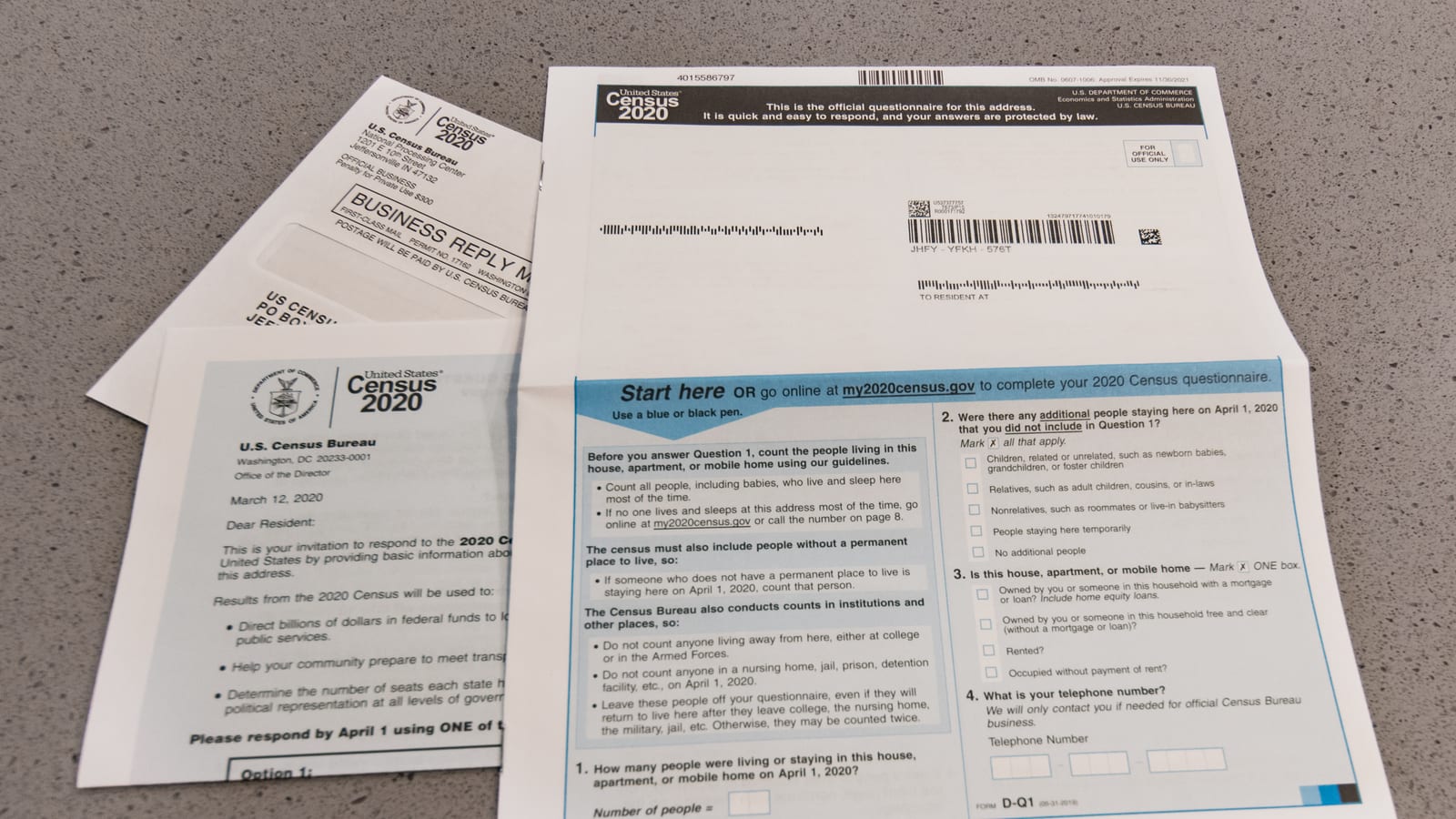
The census form works on checkboxes. White, Black, Chinese, Filipino, and so on. Some groups get a box with their name on it. We never have.
The only way an Albanian gets counted as Albanian is through the write-in field, a blank line where you can type your specific origin. Most people don’t. They check a box, skip the blank line, and move on. Every one of those people exists in the total population count, but as far as the record of Albanians in America is concerned, they vanish.
And the write-in line misses us in specific, predictable ways:
- Albanians from Kosovo, North Macedonia, and Montenegro often get recorded under those countries, or under old Yugoslav categories, instead of as Albanian.
- Generations of Orthodox Albanians were filed as Greek, a habit that goes back to Ottoman-era record keeping and never fully died.
- The kids and grandkids of immigrants, fully American, fully Albanian at every wedding and funeral, simply skip the ancestry line because nothing on the form asks them to think about it.
Add it up and you get the official numbers: 47,710 Albanians counted in 1990. About 113,000 in 2000. Roughly 230,000 today. The 2020 Census’s detailed tabulation, the one release that breaks the country down by specific origin, recorded 236,635. Meanwhile the Albanian American Civic League has used 750,000 for years, and our own estimate at NAR runs closer to a million.
The rules just changed in our favor
In March 2024, the federal office that sets the rules for how the government collects race and ethnicity data rewrote those rules for the first time in 27 years. Two changes matter to us.
First, race and ethnicity become a single combined question instead of two confusing separate ones.
Second, and this is the big one, the government is now required to collect and publish the detailed answers people write in, not just the big categories. Before, your “Albanian” write-in might or might not surface in published data. Under the new standard, detailed origins must be tabulated and reported.
In plain terms: the blank line just got real power. If Albanians write “Albanian,” the number becomes official, public, and permanent. If we don’t, we stay a rounding error inside “White.”
The new rules apply to the 2030 Census. Federal agencies have until 2029 to bring their other surveys into line, and the government’s big annual household survey has not switched to the new format yet.
One more thing happened in that 2024 revision worth noticing. Middle Eastern and North African communities got their own checkbox for 2030, after decades of organized campaigning. Checkboxes aren’t granted. They’re won, by communities that first prove their numbers through write-ins.
What other communities did with their blank line
We don’t have to guess whether organizing around a write-in works. Three communities ran the experiment in 2020.
The Armenians built a formal campaign called HyeCount, run by a complete-count committee they created themselves and registered as an official Census Bureau partner, with church bodies and the community press behind it and a social media challenge where families posted photos and tagged each other. Their argument was an undercount almost identical to ours: roughly a million Armenians in California by their own estimate, against fewer than 250,000 counted there. They’ve since pushed for a dedicated Armenian category on the form. The federal government declined it in 2024. They are still pushing.
The Arab American community ran “Yalla Count Me In,” a national campaign teaching people to write in their identity precisely because no box existed. It worked. The 2020 Census was the first to specifically ask for Middle Eastern and North African responses, and the first to produce detailed counts for those communities out of the complete-count race question rather than a sampled ancestry survey.
The Chaldeans in metro Detroit organized too, through their churches and community foundation. Their result shows the ceiling: the count rose, but still landed far below what the community knows is true, because a write-in campaign fights uphill against a missing checkbox. Which is exactly why the campaigns don’t stop at counting. They use the count to argue for the box.
And what did Albanians do in 2020?
Nothing. We went looking for any organized Albanian census campaign from 2020, in English and in Albanian, and found none. No slogan, no church letters, no coordinated push from any organization. The 236,635 who wrote “Albanian” did it entirely on their own, one kitchen table at a time.
Read that as good news. Unorganized, we produced almost a quarter million. Nobody has ever tried the organized version. The Armenians and Arabs have shown the playbook works, and the seat marked “Albanian” at that table is empty.
The clock that’s already running
The 2030 Census feels far away. The machinery that decides whether we’re counted in it is being assembled now:
- 2026 and 2027, right now: the window when community organizations start building the partnerships the Census Bureau counts through, and establishing themselves as the recognized voice for their community. The earlier a group plants that flag, the more it shapes what follows. This is when churches, nonprofits, and groups like ours claim their place.
- 2027: the Bureau begins asking local governments and organizations to check its address lists for gaps, a review that runs into early 2028.
- 2028: a full practice census in test locations.
- 2030: forms arrive in March. Whatever habits our community has by then are the habits that get counted.
Whichever organization steps up in the next year becomes the recognized voice for the Albanian American count for the next decade. That’s the seat NAR was built to fill, and we intend to fill it.
What you can do this week
Three things, none of which take more than a few minutes.
- Write “Albanian” every single time. The census, the annual government survey if it lands in your mailbox, school forms, hospital forms, anything that asks ancestry or origin. Teach your parents and your kids to do the same. Kosovo, Macedonia, Montenegro, Preshevë, wherever your family is from: the word that counts is Albanian. And write it in English. The census matches write-ins against English terms, so “Albanian” gets coded instantly while “Shqiptar” gambles on whether a coder recognizes it. On American forms, we write Albanian.
- Count yourself with us. The government’s next full count is four years out. Ours is open today at albanianregistry.org and takes two minutes. Every registration builds the number we’ll put on the table when we argue, as the Armenians are arguing right now, that a million people deserve their own box.
- Bring your organization. If you’re part of a church, mosque, cultural society, or student group, we want to talk before the 2030 committees form. The communities that got counted did it through exactly these institutions.
A checkbox sounds like a small thing. It decides whether we exist in the data that directs political attention, research, and money in this country. We’ve been writing our name in the margins for a hundred years. 2030 is the first census where the margins officially count, and the last one where the seat is still open.
Shkruaje. Write it down: Albanian.