

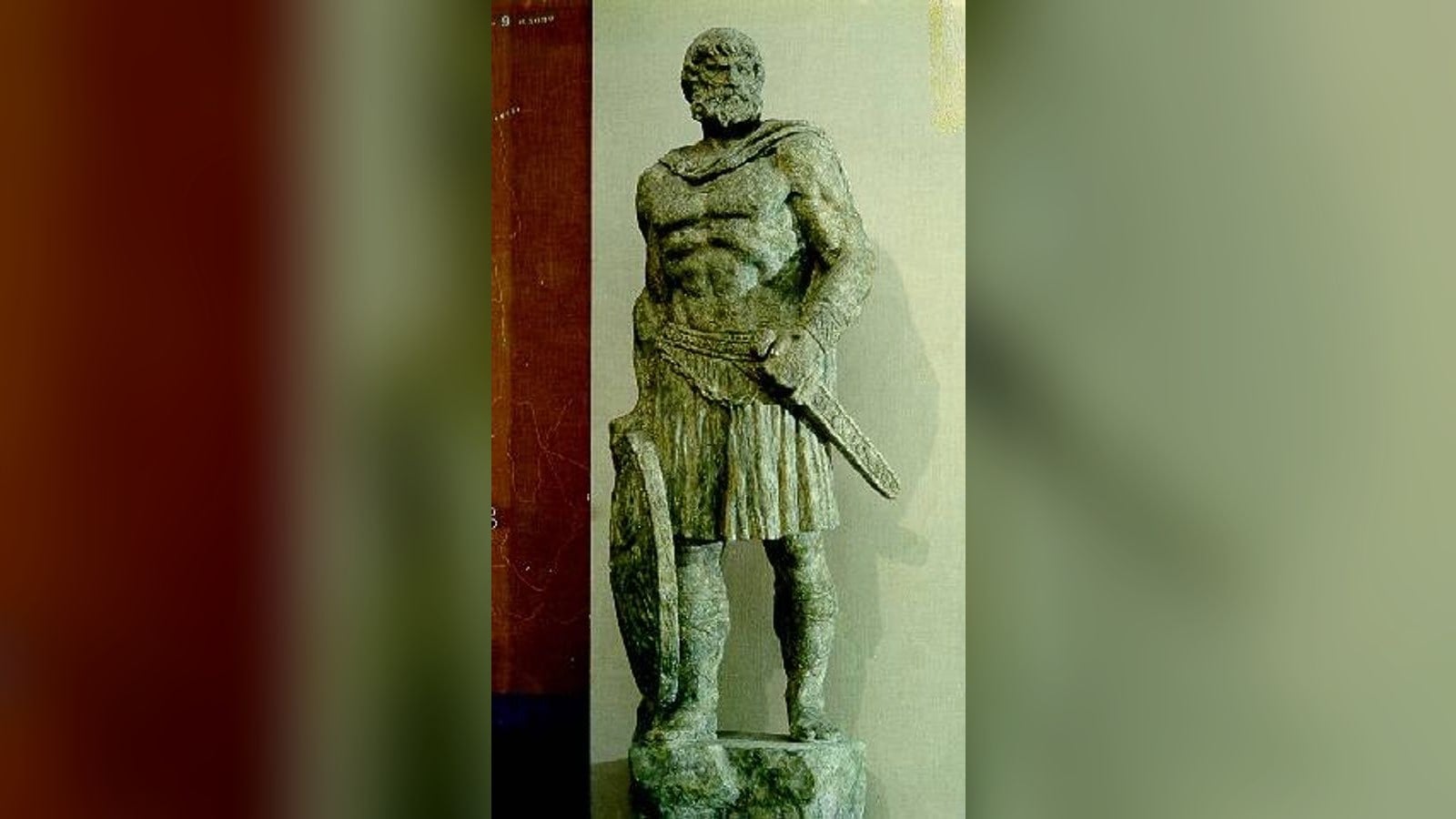
In AD 6, the Roman Empire was the strongest military power on earth and its hold on the western Balkans looked secure. The Illyrian Wars had ended more than 170 years earlier with the fall of King Gentius at Scodra. The Illyrian tribes — Daesitiates, Breuci, Dalmatae, Pirustae, and dozens more — had been absorbed into the Roman province of Illyricum, taxed, conscripted, and administered by governors appointed from Rome. There was no Illyrian army, no Illyrian state, no obvious structure from which a revolt could launch.
Then it launched.
What followed was a four-year war — the Bellum Batonianum, named for the two rebel leaders both called Bato — that tied down 15 Roman legions, threatened Italy itself, and caused the emperor Augustus, then 68 years old, to tell the Roman Senate it was the gravest foreign war since Rome fought Hannibal. The revolt united peoples who had never fought together before and would never fight together again. It was the last organized resistance the Illyrian world would ever raise.
Why the Illyrians revolted
Rome’s grip on Illyricum was administrative, not popular. After the final pacification campaigns of the late Republic and Augustus’s early reign, the province was governed by legates who extracted taxes and conscripts from peoples who had been independent within living memory. The burden fell hardest on the interior highlands — the Daesitiates in what is now central Bosnia, the Pirustae in the Drin valley of northern Albania and Kosovo, the Breuci in the Sava-Drava lowlands of modern Croatia.
The grievances were structural: heavy tribute, forced labor on Roman roads and mines, and the behavior of provincial officials who treated the province as a revenue extraction zone. Cassius Dio, writing about a century later, noted that the Illyrians had endured these conditions for years but that the pressure was building.
The trigger was conscription. In AD 6, Augustus was preparing a major campaign against Maroboduus, king of the Marcomanni, a powerful Germanic confederation in Bohemia. Roman commanders began mustering Illyrian and Pannonian auxiliary regiments to march north. The levies gathered armed men from across the province and concentrated them in one place — exactly the condition a revolt needs.
The Daesitiates refused to march. Under Bato, a chief whose Roman name masks an Illyrian identity we know almost nothing else about, they turned their weapons against the Roman forces sent to enforce the levy. Within weeks, the Breuci — led by another chief also named Bato, no relation — joined the uprising from the Pannonian lowlands. The revolt spread to the Dalmatae, the Andizetes, the Pirustae, the Liburnians, and the Iapydes. It was the only time the peoples of Illyricum fought together.
The revolt breaks out (AD 6)
The initial rebel successes were devastating. Bato of the Daesitiates defeated a Roman detachment and seized control of much of the Dalmatian interior. Bato of the Breuci overran parts of Pannonia, threatening the Roman colony at Sirmium (modern Sremska Mitrovica, Serbia) and raiding toward the Roman frontier along the Danube.
The scale of the uprising shocked Rome. Velleius Paterculus, a Roman officer who served in the war, wrote that the rebel population exceeded 800,000 and that they fielded roughly 200,000 infantry and 9,000 cavalry. These numbers are almost certainly inflated — ancient military figures routinely are — but even at half that size, the revolt was enormous. The rebel forces were not a mob: many of the fighters had served as Roman auxiliaries, trained in Roman tactics, and knew Roman weak points.
Augustus scrambled. The planned Marcomanni campaign was abandoned immediately — Tiberius, who had been assembling the invasion force, wheeled his legions south toward Illyricum instead. The emperor sent urgent requests for reinforcements from the eastern provinces. Marcus Plautius Silvanus brought five legions from the east. According to Suetonius, the war eventually required 15 legions and a proportional force of auxiliaries — close to half of Rome’s total military strength.
The threat to Italy itself was real. Rebel forces operated within 10 days’ march of the Italian frontier. Augustus, in a rare public admission of danger, told the Senate the enemy could be at the gates of Rome within that time. Veterans and freedmen were conscripted for emergency service — a measure Rome had not taken since the darkest days of the Second Punic War.
Two fronts, one war (AD 7)
The revolt split into two theaters. In the north, Bato of the Breuci and the Pannonian coalition fought across the Sava river lowlands. In the south, Bato of the Daesitiates held the Dalmatian mountains — terrain that favored guerrilla resistance and made Roman logistics miserable.
Tiberius, the future emperor, commanded the overall Roman response. Germanicus, his nephew and adopted son, led operations on one of the fronts. Marcus Valerius Messalla Messallinus fought an early engagement that prevented the Pannonian rebels from crossing into Italy. Aulus Caecina Severus, governor of Moesia, brought his legions west and fought the Breuci at the Battle of the Volcaean Marshes — a bloody, inconclusive engagement in the wetlands of Pannonia.
The war was grinding. The rebels could not match Rome in pitched battle over the long term, but they did not need to. The mountainous terrain of Dalmatia made siege warfare slow and expensive. Supply lines were long and vulnerable. Roman troops suffered from hunger, disease, and the difficulty of fighting in terrain they did not know. Velleius Paterculus, who was there, called it a war of “great difficulties of every kind and the utmost scarcity of supplies.”
Tiberius adopted a strategy of patient attrition rather than seeking decisive battle. He divided his forces into multiple columns, secured supply routes, and methodically reduced rebel-held positions one by one. It was unglamorous and effective.
Betrayal and endgame (AD 8–9)
The northern front broke first. In AD 8, Bato of the Breuci — under pressure from the systematic Roman campaigns and possibly motivated by personal calculation — surrendered to Tiberius. He handed over his forces and was pardoned.
Bato of the Daesitiates responded with the clarity of a man who understood what treachery cost. He captured the other Bato and had him executed for betraying the common cause. The act was simultaneously a military judgment and a statement: the revolt was not a negotiation.
But the collapse of the Pannonian front freed Roman legions to concentrate on Dalmatia. Through AD 8 and into AD 9, Tiberius and Germanicus ground down the remaining resistance. The Dalmatian strongholds fell one by one. The geography that had protected the rebels now trapped them — with no allies left in Pannonia, and no prospect of reinforcement, each fortress held out until it couldn’t.
In AD 9, Bato of the Daesitiates surrendered. He was taken to Tiberius, and the exchange that followed — if Cassius Dio’s account is accurate — produced one of the most quoted lines in the history of Roman provincial resistance.
Bato’s answer
Tiberius asked the captive chief why his people had revolted.
Bato answered: “You Romans are to blame for this; for you send as guardians of your flocks, not dogs or shepherds, but wolves.”
The line is too clean to trust fully — Cassius Dio was writing more than a century later, and ancient historians routinely composed speeches for their subjects. But the sentiment fits the record. Roman provincial administration in Illyricum had been extractive and often brutal. The revolt did not come from nowhere. It came from years of taxation, conscription, and the behavior of officials who governed as occupiers rather than administrators.
Bato was taken to Ravenna and imprisoned. He lived out his remaining years there — the sources do not record how long. He had led the largest military uprising the western Balkans would produce for centuries.
The aftermath
The revolt ended in AD 9. Five days later, on the other side of the empire, three Roman legions under Publius Quinctilius Varus were annihilated in the Teutoburg Forest by Germanic forces led by Arminius. The twin disasters of AD 9 — Illyricum and the Teutoburg Forest — made it the worst year for Roman arms since the Republic.
In the Balkans, Rome reorganized. The province of Illyricum was divided into two: Dalmatia, covering the mountainous interior and the Adriatic coast from the Adriatic hinterland down through modern Albania; and Pannonia, covering the northern Sava-Drava-Danube lowlands of modern Croatia, Hungary, and northern Serbia. Both provinces received permanent legionary garrisons. The division would shape the administrative geography of the region for the next four centuries.
The peoples who had revolted were absorbed more deeply into the Roman system. Many continued to serve as auxiliary troops in the Roman army — the same institution they had revolted against — and Illyrian and Pannonian soldiers would become some of Rome’s most valued provincial recruits. Within two centuries, soldiers from these provinces would begin ascending to the imperial throne itself. The Illyrian emperors — Aurelian, Diocletian, Constantine — were the long-term product of a region that Rome had fought hard to hold and eventually depended on to survive.
What the revolt means
The Bellum Batonianum sits at a hinge in the history of the western Balkans. Before it, the Illyrian peoples still existed as distinct communities with their own leaders and tribal identities — taxed and conscripted, but not yet fully dissolved into the Roman provincial population. After it, the process of Romanization accelerated. Latin became the language of administration, Roman towns replaced hilltop fortresses, and the tribal names gradually faded from the historical record.
For Albanian Americans, the revolt is part of the long Illyrian story that runs from the named tribes through the Roman centuries to the medieval emergence of Albanian-speaking communities in the same geography. The Daesitiates and Breuci were northern Illyrian and Pannonian peoples, not the southern tribes — Taulantii, Labeates, Dardani — most directly associated with Albanian continuity. But the revolt was a shared Illyrian event: the Pirustae of the Drin valley (modern northern Albania and Kosovo) joined, and the war’s aftermath — the creation of the province of Dalmatia — drew the administrative boundary that would define the region for centuries.
The revolt also left something less tangible. Bato’s reply to Tiberius — you sent wolves, not shepherds — carries a clarity that transcends its time. It is a line about what happens when an empire treats a province as a resource to be extracted rather than a people to be governed. The Illyrians who revolted in AD 6 lost the war. But the sentence survived.