

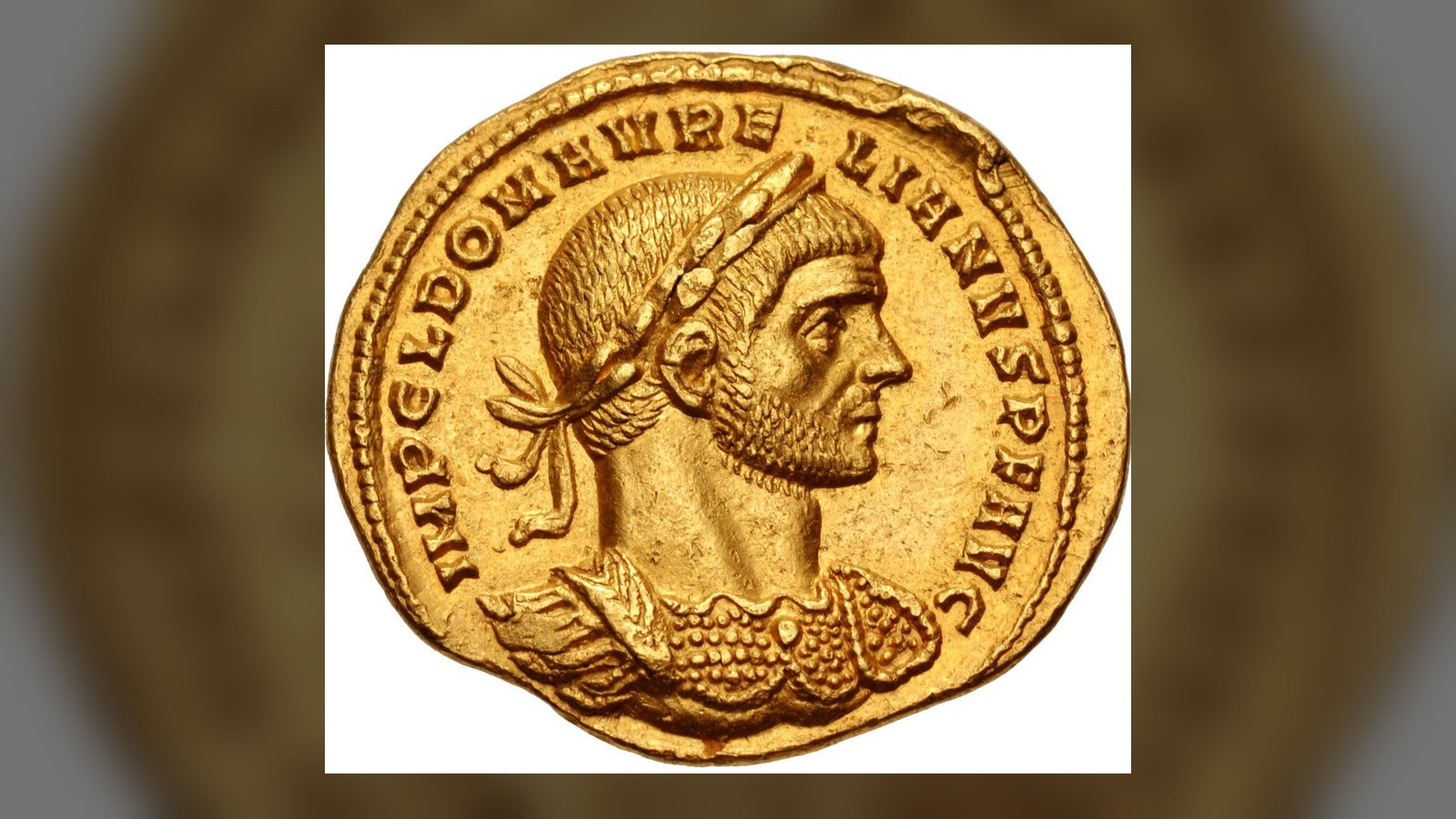
Between 235 and 284 CE, the Roman Empire nearly ceased to exist. Historians call it the Crisis of the Third Century: fifty years in which at least 25 men claimed the imperial title, most of them murdered within months. The frontiers buckled. The Gallic provinces broke away into a separate empire. The eastern provinces fell under Palmyrene control. Plague swept the legions. The currency collapsed.
The men who pulled Rome back from that edge came overwhelmingly from one region: the Illyrian provinces of the western Balkans. Modern Moesia, Pannonia, Dardania, Dalmatia — the territory that today encompasses Albania, Kosovo, Serbia, North Macedonia, Croatia, and Bosnia. From 268 CE onward, a succession of soldier-emperors born in these provinces defeated the barbarian invasions, reunified the empire, restructured its government, legalized Christianity, and laid the foundations of what became the Byzantine world. Two centuries later, another ruler from the same ground codified Western law and built Hagia Sophia.
This is their record, emperor by emperor, documented and sourced. For Albanian Americans, these emperors sit in the wider Illyrian civilization story — but where that article covers the ancient tribes and their kingdoms, this one covers the moment the children of those provinces ran the Roman world.
Why Illyricum produced emperors
The answer is geographic and military, not ethnic. By the mid-third century, Rome’s most dangerous frontier ran along the Danube. The provinces of Illyricum — Pannonia (roughly modern Hungary and western Serbia), Moesia (central Serbia and Bulgaria), Dardania (Kosovo and parts of North Macedonia), and Dalmatia (the Adriatic coast) — held the empire’s largest concentration of legions. The Dardanian heartland alone sat at the junction of every major invasion route between the Danube and the Aegean.
Soldiers from these provinces trained in continuous frontier warfare against Goths, Sarmatians, Carpi, and Alamanni. They were hardened, disciplined, and promoted on merit. When the Senate-appointed emperors failed — as they repeatedly did in the chaos of the 240s through 260s — the legions turned to their own commanders. The result was a generation of Illyrian-born soldier-emperors who rebuilt the state from the barracks up.
The Paleo-Balkan peoples who originally populated these provinces — Illyrians, Dardanians, Thracians — had been under Roman rule for three to four centuries by this point. The emperors who came from their soil were culturally Roman, Latin-speaking, and products of the military system. “Illyrian” in this context is a geographic and provincial label, not a claim of tribal affiliation. The men identified with their legions and their provinces, not with the pre-Roman tribal names.
Claudius II Gothicus (r. 268–270)
The Illyrian emperor tradition begins with Marcus Aurelius Claudius, born in 214 CE in the province of Moesia Superior — possibly at Naissus (modern Niš), possibly in the Dardanian zone. Sources disagree on the precise location, but the region is consistent: the central Balkans.
Claudius rose through the officer corps during the worst of the third-century crisis. When Emperor Gallienus was assassinated in 268, Claudius took the purple and immediately faced the most dangerous Gothic invasion the Balkans had yet seen. An enormous Gothic force — ancient sources exaggerate the numbers to 300,000, but modern estimates put the raiding army at roughly 20,000–30,000 warriors — had crossed the Danube and pushed deep into the empire.
At the Battle of Naissus in 268 or 269 CE, Claudius shattered the Gothic force. The victory was decisive enough that the Senate awarded him the title Gothicus — “conqueror of the Goths.” It bought the Danube frontier years of relative peace.
Claudius died of plague at Sirmium in January 270, after barely two years on the throne. His reign was short but its significance was outsized: he proved that a competent Illyrian general could stabilize the empire where decades of political appointees had failed. His successor would prove it again, on a larger scale.
Aurelian (r. 270–275): Restorer of the World
Lucius Domitius Aurelianus — Aurelian — was born on September 9, 214 or 215 CE, in the province of Moesia (later Dacia Ripensis), near the Danube. He was a career soldier who had served under Claudius Gothicus and was acclaimed emperor by the legions after Claudius’s death.
In five years, Aurelian accomplished what no emperor before him had managed: he reunified the Roman Empire. The Gallic Empire — a breakaway state controlling Gaul, Britannia, and Hispania since 260 — fell to his armies in 274 when he defeated Emperor Tetricus I at the Battle of Châlons. In the east, he crushed the Palmyrene Empire of Queen Zenobia in 272–273, recapturing Egypt, Syria, and the eastern provinces.
The Senate gave him a title that has stuck for 1,750 years: Restitutor Orbis — Restorer of the World. It was not flattery. The man had literally reconstituted the territorial integrity of the Roman state.
Aurelian also built the Aurelian Walls around Rome — the 19-kilometer circuit of fortifications that still stands today, the first time the capital had been walled since the early Republic. He reformed the currency, reorganized the mint, and established the cult of Sol Invictus as a unifying state religion.
He was assassinated by his own officers in 275, victim of a conspiracy fed by a secretary who forged a list of men marked for execution. The army regretted it immediately. The Senate, for once, agreed with the soldiers on what they had lost.
Probus (r. 276–282)
Marcus Aurelius Probus was born in 232 CE at Sirmium in Pannonia (modern Sremska Mitrovica, Serbia), the son of a Balkan military officer. He was the third Illyrian soldier-emperor in succession, acclaimed by the eastern legions after the brief and chaotic reigns of Tacitus and Florianus.
Probus spent his six-year reign fighting on every frontier simultaneously. He cleared Gaul of Germanic invaders, re-erected Hadrian’s limes between the Rhine and Danube, and settled defeated barbarian groups inside the empire as military colonists — an early version of the foederati policy that later became standard. He secured the Danube, pacified Isauria in Asia Minor, and put down at least four usurpations.
Beyond warfare, Probus promoted viticulture across the empire — lifting a restriction that had reserved wine-growing for Italy — and put his soldiers to work on infrastructure projects: draining marshes, building roads, reclaiming agricultural land. That last decision cost him his life. In 282, soldiers near Sirmium, resenting being detailed to canal-digging, killed him. The Historia Augusta reports that the army immediately regretted it and built him a monument inscribed: “Here lies the Emperor Probus, a truly worthy man, who conquered all barbarian nations.”
Diocletian (r. 284–305): The architect
Gaius Aurelius Valerius Diocletianus was born Diocles on December 22, 244 CE, near Salona in Dalmatia (modern Solin, Croatia). His family was not aristocratic — ancient sources describe modest origins, possibly the son of a freedman or a scribe. He rose through the legions on talent.
When Diocletian took power in 284, the empire had survived the crisis but remained structurally fragile. His response was the most comprehensive administrative reform in Roman history. He created the Tetrarchy — a system of four co-rulers, two senior Augusti and two junior Caesares, each responsible for a quarter of the empire. He doubled the size of the army, reorganized the provinces into smaller, more manageable units, reformed taxation, and issued the Edict on Maximum Prices in 301 to combat inflation.
The Tetrarchy itself was imperfect — it collapsed within a generation into civil war — but the administrative framework Diocletian built lasted centuries. He separated military and civil authority in the provinces, professionalized the tax system, and created the governmental structure that would underpin the Byzantine Empire until 1453.
In 305, Diocletian did something no Roman emperor had ever done: he voluntarily abdicated. He retired to the massive palace he had built near Salona — the structure that became the core of modern Split, Croatia — and reportedly spent his remaining years gardening. When urged to return to power, he said his cabbages were more interesting than the empire.
Constantine I (r. 306–337): The world-changer
Flavius Valerius Constantinus was born around 272 CE at Naissus, in the province of Moesia Superior (modern Niš, Serbia). His father, Constantius Chlorus, was a native of Dardania who rose through the military to become one of Diocletian’s four tetrarchs. His mother, Helena, was of humble birth — later tradition, possibly legendary, called her a stabularia (stable-keeper’s daughter).
Constantine’s impact on world history is difficult to overstate. Three decisions shaped the next 1,700 years of civilization:
The Edict of Milan (313 CE) ended the persecution of Christians throughout the empire and established religious toleration as imperial policy. Christianity did not become the sole state religion until Theodosius I in 380, but Constantine opened the door and walked through it himself — he was baptized on his deathbed in 337.
The Council of Nicaea (325 CE) was the first ecumenical council of the Christian church. Constantine convened it, presided over it, and enforced its conclusions. The Nicene Creed, still recited in churches worldwide, came out of that council.
Constantinople (330 CE) — Constantine refounded the ancient Greek colony of Byzantium as his new imperial capital, strategically positioned on the Bosporus between Europe and Asia. The city he built endured as the capital of the Eastern Roman (Byzantine) Empire for over a thousand years, until the Ottoman conquest in 1453. It remains Istanbul today.
Constantine was also the emperor who completed the administrative separation of the empire into eastern and western halves — a division that would become permanent after 395 CE.
The Valentinian dynasty (364–392)
The Illyrian military tradition continued after Constantine’s dynasty. Valentinian I (r. 364–375) was born in 321 at Cibalae in Pannonia (modern Vinkovci, Croatia), the son of Gratianus Funarius, a rope-seller’s son who became a senior military commander. Valentinian was the last great soldier-emperor of the western Roman Empire. He fought on the Rhine and the Danube, fortified the frontier, and died — reportedly of a stroke brought on by rage at Quadi envoys — in 375.
His brother Valens (r. 364–378) ruled the east and died at the Battle of Adrianople in 378, one of the worst Roman military disasters in history, when the Gothic cavalry annihilated two-thirds of the eastern army.
Their sons and successors — Gratian, Valentinian II — continued the dynasty until 392. All were Pannonians, children of the Illyrian frontier.
Justinian I (r. 527–565): The last Roman builder
Flavius Petrus Sabbatius Iustinianus was born around 482 CE at Tauresium, a village near modern Skopje, in the Roman province of Dardania. He was a Latin-speaking peasant’s son whose uncle Justin — born at nearby Bederiana — rose through the imperial guard to seize the throne as Justin I in 518. Justinian followed him to Constantinople and eventually succeeded him in 527.
Justinian’s reign produced three achievements that still structure the modern world:
The Corpus Juris Civilis (529–534) — Justinian’s legal commission, led by the jurist Tribonian, compiled, organized, and codified the entire body of Roman law accumulated over a thousand years. The result — the Codex, the Digest, the Institutes, and the Novellae — became the foundation of civil law in continental Europe. Every legal system in the French, German, Spanish, Italian, and Latin American traditions descends from Justinian’s codification. When law students anywhere in the civil-law world open their first textbook, they are reading his work.
Hagia Sophia (532–537) — after the Nika riots destroyed the old church, Justinian commissioned the architects Anthemius of Tralles and Isidore of Miletus to build a new one. The result was the largest enclosed space in the world for nearly a thousand years. Its dome — 31 meters across, floating 55 meters above the floor on pendentives — was an engineering achievement that influenced every major domed structure built after it, from the Blue Mosque to St. Peter’s Basilica to the U.S. Capitol.
The reconquest of the West — Justinian’s generals Belisarius and Narses recaptured North Africa from the Vandals (533–534) and Italy from the Ostrogoths (535–554), briefly reuniting the old Roman Empire under one ruler for the last time.
Justinian died in 565. The reunification did not outlast him — the Lombards invaded Italy three years later. But the law code and the cathedral endured.
The question of ancestry
Albanian national tradition counts these emperors — especially Constantine and Justinian — as part of the Albanian ancestral record. The claim rests on the Illyrian-Albanian continuity hypothesis: if modern Albanians descend from the ancient Illyrians (the mainstream scholarly position, with caveats), and these emperors were born in historically Illyrian provinces, then they share a geographic and possibly genetic ancestry with the modern Albanian people.
The honest version of this argument is strong: the provinces that produced these emperors — Moesia, Dardania, Pannonia, Dalmatia — overlap significantly with the territories where Albanian-speaking populations have lived continuously. The Dardanian heartland in particular sits squarely in modern Kosovo. Justinian’s birthplace near Skopje is in the zone where Albanian speakers live today.
Where the argument needs care is in the projection of modern national identity backward. These men were Roman citizens, Latin-speakers, products of the imperial military system. They did not call themselves Illyrian as an ethnic identity — the term was geographic by their era. And they certainly did not call themselves Albanian, a name that does not appear in the historical record until the 11th century. The ancestral connection is geographic and demographic — it is the ground, not the passport.
For the diaspora, what matters is this: the documented historical record places the birthplaces of some of the most consequential rulers in Western history inside the territory that Albanian-speaking Paleo-Balkan peoples have inhabited for millennia. That is not a small thing. It does not need to be inflated into something it is not in order to be significant.
What the record means for the diaspora
The Illyrian emperor tradition matters to Albanian Americans for a reason that has nothing to do with national mythology. It is documented. It is sourced. It is not contested by any serious historian. Claudius Gothicus, Aurelian, Probus, Diocletian, Constantine, Justinian — their birthplaces, their provincial origins, their achievements are recorded in multiple ancient sources and confirmed by modern archaeology.
When a third-generation kid in Worcester or a recent arrival in the Bronx asks what the Albanian ancestral record actually contains, this is part of the answer: the provinces that became Albania and Kosovo produced men who legalized Christianity for the Western world, codified the law that still governs most of Europe, and built one of the greatest architectural achievements in human history.
The ground your family comes from has a record. It is long, it is real, and it does not need embellishment.