

Albanian Americans don’t show up often on the podiums of US orchestras. The community is small, the classical-music industry is narrow, and the path from a Boston suburb or a Bronx apartment to a music director’s stand is long and unpaid for years. That makes the names that do show up worth knowing.
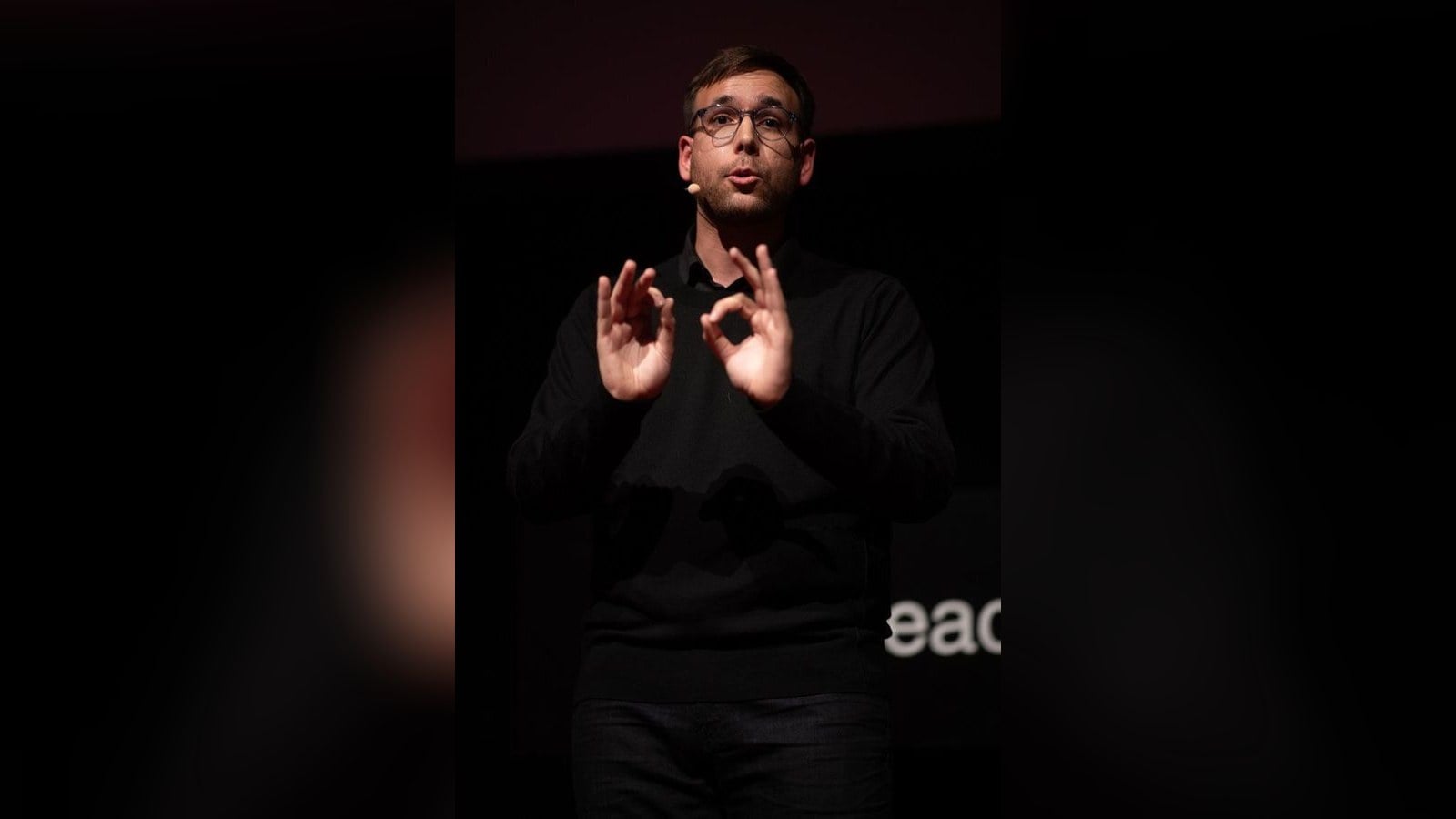
One of those names is Kristo Kondakci. He’s a Cambridge-based conductor of Albanian heritage, co-founder and Music Director of the Kendall Square Orchestra (K²O), and one of a small set of Albanian-American musicians working in the New England classical scene. He’s not a household name, and this article isn’t going to pretend he is. What he is, is a working conductor with Albanian roots running an ambitious volunteer orchestra in one of America’s strongest classical-music cities — and that’s a story Albanian-American readers should know.
This piece does two things. First, it sets out what’s verifiable about Kondakci and his work. Second, it puts that work in context: Boston’s classical-music ecosystem, Albania’s own classical tradition, the path from Tirana to Tanglewood, and what second-generation Albanian-American kids might take from a story like this.
Who Kristo Kondakci is — the verifiable bio
In 2018, Kristo Kondakci was engaged by a Kendall Square life-sciences company to help launch an orchestra for the area’s science and technology community. He co-founded the Kendall Square Orchestra (K²O) that year together with scientists Elena Spencer and Kelly Clark, and has served as its Music Director ever since, leading a volunteer orchestra whose roughly 96 musicians are drawn from more than 70 of Greater Boston’s science and technology institutions. He also teaches conducting at Berklee College of Music, serves as a Non-Resident Tutor in Music at Harvard, and has co-founded ensembles including the Eureka Ensemble and a Women’s Chorus for women experiencing homelessness in Boston.
He was born in Tirana, Albania, in 1991 — six years after Enver Hoxha’s death — and immigrated to the United States with his family at age five, arriving as political refugees during Albania’s turbulent post-communist transition. The family had endured severe persecution in the preceding decades under Hoxha’s regime: his maternal grandfather, Beqir Omari, was imprisoned for years for performing Western music, and other family members were executed or interned. He later earned his Bachelor of Music and Master of Music at the New England Conservatory, where he now serves on the President’s Council.
We’re not going to invent specifics beyond what’s documented. The detailed touring history and full list of guest appearances aren’t the point here. What is well-supported is the core: he was born in Tirana, trained at the New England Conservatory, co-founded an orchestra, and runs it as an Albanian-American working in one of the most competitive classical-music cities in the country.
For readers who want primary-source detail beyond this article, Kendall Square Orchestra’s website and the Wikipedia entries for Boston’s classical-music ecosystem are the right starting points.
The Kendall Square Orchestra and Boston’s classical music scene
To understand the Kendall Square Orchestra, you have to understand Boston. The city has the Boston Symphony Orchestra — one of the “Big Five” American orchestras — plus the Boston Pops, the Handel and Haydn Society (founded 1815, the oldest continuously performing arts organization in the United States), the New England Conservatory, the Boston Conservatory at Berklee, Longy School of Music, and a dense ecosystem of chamber groups, early-music ensembles, and university orchestras.
What that creates is a city full of trained musicians whose day jobs aren’t music. Software engineers who used to be conservatory cellists. Doctors who play viola at a professional level. Lawyers with conservatory diplomas. The civic-orchestra tradition — volunteer orchestras with high standards and ambitious programming — is how those musicians keep performing.
K²O fits that tradition, with its own twist: rather than drawing broadly on conservatory-trained adults, it’s built specifically from the scientists and engineers of Kendall Square and Greater Boston’s research institutions. It has taken on major symphonic repertoire — including Mahler’s Sixth Symphony at Sanders Theatre — without the budget of a professional orchestra, because the talent pool in the room can sustain it. A music director in this scene is part conductor, part artistic curator, part community organizer. You build the orchestra by attracting players, by programming concerts they want to play, and by making the rehearsal room a place worth returning to after a long workday.
For an Albanian-American conductor, Boston is also a city with a real Albanian community — concentrated in Worcester, the western suburbs, and parts of the metro area. The Albanian Orthodox Church has deep roots in Massachusetts; Bishop Fan S. Noli, the Albanian-American polymath who served as Albania’s prime minister in 1924, lived and worked in the Boston area for decades. The cultural infrastructure that produced Kondakci has been there for over a century.
The Albanian Diaspora in American Classical Music
Albanian-American classical musicians are a small but real cohort. The most internationally recognized name is soprano Inva Mula, who has sung at Teatro alla Scala, the Opéra Bastille, the Verona Arena, and other major European houses. Her recorded performance of the “Diva Dance” aria in the 1997 film The Fifth Element introduced her voice to a global audience that may not have known her name.
Beyond Mula, the Albanian-American footprint in classical music includes conservatory students at Juilliard, NEC, and Curtis with Albanian last names; chamber musicians working in regional orchestras; choir directors at Albanian Orthodox parishes; and a handful of conductors and composers like Kondakci who have built sustained careers. The community is small enough that those names recur in each other’s circles. Boston, New York, and Detroit are the metros where you’re most likely to see Albanian-American musicians on stage.
Compared to the visibility of Albanian Americans in pop music — Dua Lipa, Bebe Rexha, Rita Ora, Action Bronson — the classical-music presence is quieter. That’s largely a function of the industry, not the community. Classical music is a smaller stage, a longer training pipeline, and a thinner press footprint than pop. Albanian-American kids who go into it don’t get the same airtime, but they’re there.
This isn’t a “we need more representation” complaint. It’s a fact about the field. The cohort of Albanian-American classical musicians is small, working, and worth knowing.
Albania’s classical music tradition
Albania’s relationship with Western classical music is younger than most European countries’ but more substantial than outsiders assume. The modern infrastructure was built in the mid-20th century under what was, in cultural terms, a state-supported but ideologically constrained system.
The Tirana State Conservatory was founded in 1962 and later became part of the University of Arts, Tirana (established 1966). It produced most of the country’s professional musicians for the next half-century. The Theatre of Opera and Ballet opened in Tirana in 1953. State-supported orchestras operated in the major cities, and the country produced a generation of composers, conductors, and performers who trained at home and, where the regime allowed, in Moscow, East Berlin, and Prague.
Çesk Zadeja (1927–1997) is widely called the father of Albanian classical music. He composed the first Albanian symphony and early Albanian ballets, was among the founders of the Tirana Conservatory in 1962, and headed its composition department in its early years. Simon Gjoni (1925–1991) was a foundational orchestral conductor whose work shaped performance standards in the country. Other names worth knowing include composer Tonin Harapi, soprano Tefta Tashko-Koço (active in the 1930s), and pianist Lola Gjoka.
The system had the limitations any state-controlled cultural apparatus had — repertoire choices were politically constrained, and many musicians left or were silenced during the regime’s harshest years. But the technical training was real. When Albanians began emigrating in large numbers after 1991, that training came with them, and a generation of conservatory-trained Albanians became music teachers, choir directors, and orchestral musicians in cities from Boston to Düsseldorf.
From Albania to the US — how immigration shaped the next generation
Most Albanian-American classical musicians today are second-generation — children of parents who arrived in the post-1991 wave or earlier. The parents are often the carriers of the musical tradition. They might have studied at the Tirana Conservatory or at a regional music school, or they might simply have grown up in a country where every household had a few records of Tefta Tashko or Vaçe Zela alongside the operatic recordings the state ran on national radio.
When those families settled in Boston, New York, Detroit, Worcester, or Sterling Heights, music followed them. Children took piano lessons. Some auditioned for youth orchestras. The strongest enrolled at the New England Conservatory pre-college program, the Juilliard pre-college program, or local conservatory tracks. The pipeline that produces an Albanian-American conductor in Boston runs through that network — Saturday-morning lessons, summer festivals, all-state youth orchestras, and eventually conservatory or a university music program.
The cultural double-bind for these kids is familiar. Albanian-American parents tend to value education and stability, which often means a science or business degree, not a music conservatory. The kids who go all the way through the music pipeline have usually had to argue for it at home, sometimes for years. The ones who make it past that argument and into a working music career are not many. They are also, by definition, motivated.
Kondakci’s own path — arriving from Tirana and training at the New England Conservatory — is one example of that immigrant pipeline ending in a viable career. There are others — instrumentalists, composers, music educators — whose careers don’t make headlines but who are part of the same story. For an Albanian-American family weighing whether to support a kid who wants to study music seriously, examples matter. They are evidence that the path exists and ends somewhere real.
What Albanian-American kids can learn from this path
For Albanian-American parents and kids weighing classical music as a serious pursuit, three things from Kondakci’s story are worth absorbing.
First, the local infrastructure is the asset. Boston has the institutions; New York has them; Detroit and the New York metro area have them. Use them. Pre-college conservatory programs, all-state and all-region youth orchestras, summer festivals like Tanglewood, Aspen, and the National Youth Orchestra of the USA — these are the on-ramps. They’re competitive, but they’re publicly accessible and largely funded by need-based scholarships. An Albanian-American kid in Massachusetts has the same access to them as anyone else.
Second, conducting is a long path. It is not a path you start at 18; it is a path you start through being a serious instrumentalist, a serious score-reader, and a serious chamber musician for years before you ever stand in front of an ensemble. Conductors typically have a primary instrument, a deep knowledge of repertoire, conducting study at the graduate level, and years of assistant or cover-conductor work before they run their own orchestra. The community-orchestra tradition Kondakci works in is one of the few entry points where a younger conductor can build a real body of work.
Third, the model that scales is not the soloist model. Most working musicians, including Albanian-American ones, are not soloists. They are orchestra players, ensemble members, music teachers, choir directors, conductors, and arts administrators. The career exists; it doesn’t usually look like the marquee version of it. A kid who wants to spend their life in music has a real chance of doing so — and an Albanian-American kid has the same chance as anyone, with the additional advantage of a community network that takes pride in the achievement.
This is the practical takeaway. Not “everyone should be a conductor.” It’s “the path is real, and someone with your last name has walked it.”
Albanian-American Music Beyond Classical
To put the classical story in proportion, it’s worth naming the rest of the Albanian-American musical landscape.
In opera, Inva Mula is the highest-profile Albanian voice on a major international stage. In pop, the Albanian-American and Albanian-British presence is substantial: Dua Lipa, Bebe Rexha, Rita Ora, and Ava Max are among the most-streamed pop artists of the 2020s. In hip-hop, Action Bronson (Queens-born to an Albanian-Muslim father) and Gashi have built parallel English-language careers, and the Tirana and Pristina rap scenes — Capital T, Noizy, Tayna — have produced a generation of artists whose work reaches the US diaspora through streaming.
The range — from a soprano whose voice reached a global audience through a Hollywood film soundtrack to a Brooklyn-born rapper to a London-born pop superstar — is broader than most other small-population diaspora communities can show. Classical music is one quieter wing of a noisier whole.
Our Albanian Music guide walks through the longer history, from UNESCO-protected iso-polyphony in southern Albania to the modern pop wave, for readers who want the full picture.
Why this matters for Albanian-American identity
There is a habit, in small diaspora communities, of measuring success by the most visible names. The pop stars, the actors, the athletes. That’s reasonable as far as it goes — visibility is real, and a Grammy or a Premier League appearance lands harder than a Mahler symphony in a community orchestra concert in Cambridge.
But the long-term cultural footprint of a community is built differently. It’s built in classrooms, in choir lofts, in conservatory practice rooms, in the assistant conductor’s chair at a regional orchestra, and in the work of musicians whose names most people will never know. A conductor running a community orchestra in Boston for years is part of that long footprint. So is a violin teacher at a community music school in Worcester. So is a composition student at NEC writing a piece for string quartet that two dozen people will hear.
For Albanian Americans, this is a quiet kind of arrival. Not the highlight reel — the working life of the field. The community has been in the United States for over a century. We’ve moved past the wave of immigrants whose first job was to survive economically, and into a generation whose kids are professional artists, scholars, doctors, lawyers, engineers, and yes, conductors.
That generation is the answer to a question Albanian Americans rarely ask out loud: are we here, fully, in the cultural life of this country? The answer is yes, in pieces, in fields ranging from classical music to research science. Kondakci’s career is one piece of that yes.
We’ve covered the broader picture in our Albanian Americans overview and in the Albania in America piece on community institutions. The classical-music wing is one of the smaller threads in that fabric, and one of the harder ones to see, but it’s there and it’s been there.
If you’re an Albanian American who plays an instrument, sings in a church choir, runs an ensemble, teaches music to kids, or has a kid in conservatory — you’re part of the same story. Get counted, and we’ll know how many of us are doing this work.
The National Albanian Registry counts Albanian Americans across every field — pop, classical, sports, science, and the long quiet work of community building. If you’re Albanian-American and you’ve ever been on a stage, in a pit, or in a practice room, register at albanianregistry.org/register and get counted. The certificate is a recognition of your place in the community, not a government ID — and the count it builds is a community-led record of who we are.