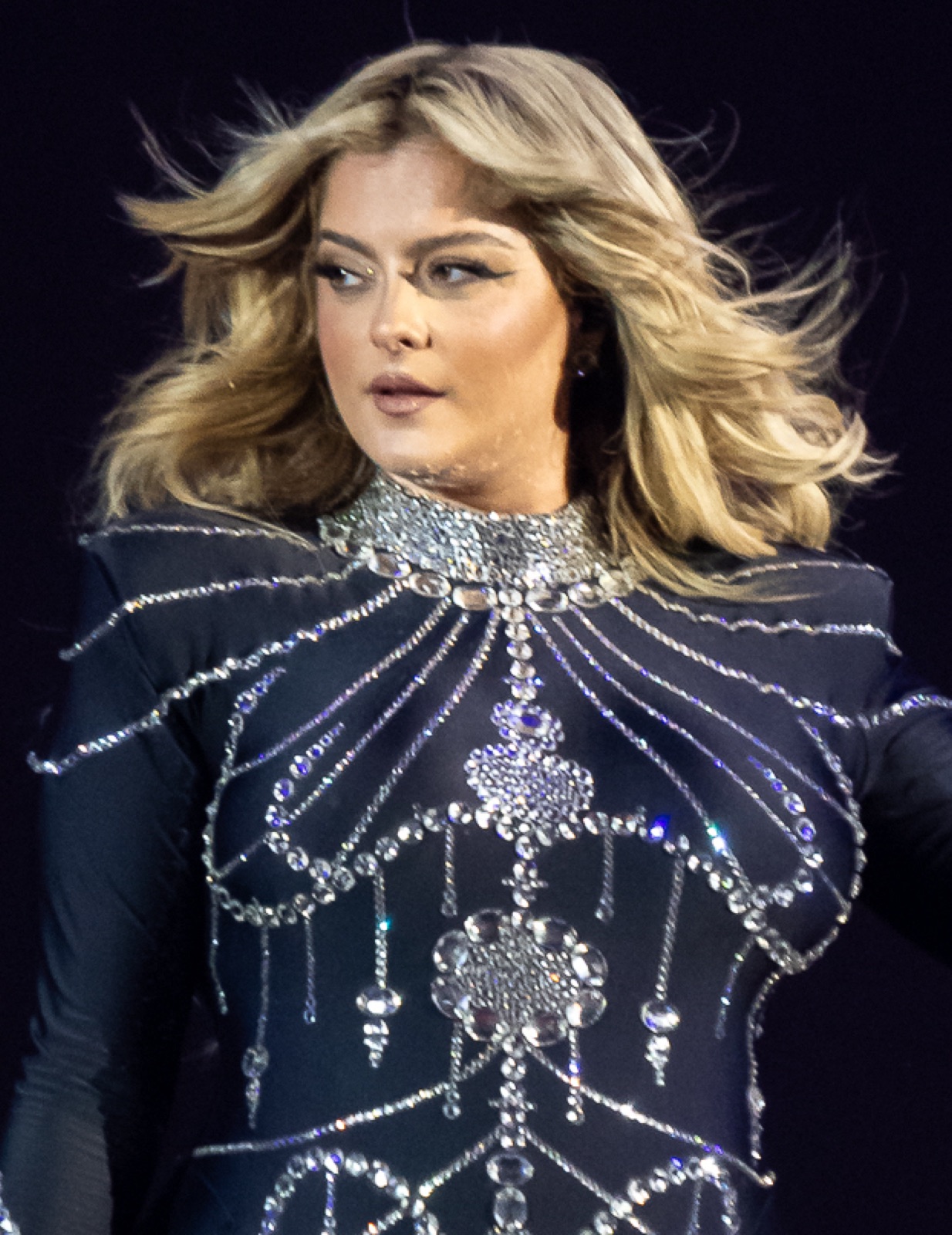
Bebe Rexha — born Bleta Rexha — is one of the most successful Albanian-American musicians in the world. Brooklyn-born to immigrant parents from Debar in what is today North Macedonia, she co-wrote Eminem and Rihanna’s Grammy-winning “The Monster” before launching her own career, scored the #1 single on Billboard’s Hot Country Songs chart for 50 consecutive weeks with “Meant to Be” (Florida Georgia Line, 2017), crossed over to the Hot 100 with David Guetta’s “I’m Good (Blue)” in 2022, and has built a public profile that includes consistent, vocal advocacy for Albanian heritage in mainstream American culture (Wikipedia: Bebe Rexha).
Three studio albums in — Expectations (2018), Better Mistakes (2021), and Bebe (2023) — she sits among the highest-visibility Albanian women in 21st-century pop, alongside Dua Lipa and Rita Ora. Her Albanian first name, her parents’ immigration story, and her use of Albanian in interviews and on social media have made her a recurring reference point in Albanian-American identity conversations on a scale very few entertainers have ever managed.
What follows is an account of her life, her songwriting and recording career, and her place in the Albanian-American diaspora this registry exists to count.
Family and early life: Brooklyn to Staten Island
Bleta Rexha was born on August 30, 1989 in Brooklyn, New York. Her father, Flamur Rexha, emigrated to the United States from Debar — a town in the western part of present-day North Macedonia (then Yugoslavia) with a long-established Albanian Muslim population. Her mother, Bukurije, was born in the United States to an Albanian family with roots in the same region (Wikipedia: Bebe Rexha).
The family lived in Brooklyn — Sheepshead Bay, the southern coastal neighborhood that has long absorbed first- and second-generation immigrant families — until Bebe was six. They then moved to Staten Island, where she would spend the rest of her childhood and teenage years.
She has an older brother, Florent.
The household was Albanian. Albanian was the family language; Albanian food, music, and tradition were the cultural backdrop. In subsequent interviews — across English-language press from The New York Times and Cosmopolitan to Albanian-language outlets in the diaspora — Rexha has consistently described her upbringing in those terms. She did not learn English as a first language at home; she was an Albanian-American kid in an Albanian-American household, and most of the cultural reference points she internalized in early childhood were Albanian (Wikipedia: Bebe Rexha).
This is the same shape that runs through a wide swath of Albanian-American family life. The community is concentrated in metropolitan New York, in Michigan, and in Massachusetts, with a heavy Brooklyn-and-Bronx-and-Staten-Island presence in the New York area specifically. Sheepshead Bay, Bay Ridge, and the south-coast Brooklyn corridor have been an Albanian-American landing zone for decades. The Rexhas were on that map. The detail that an Albanian immigrant family from Debar raised a daughter who would go on to write a Grammy-winning Eminem hook is, in miniature, the Albanian-American story.
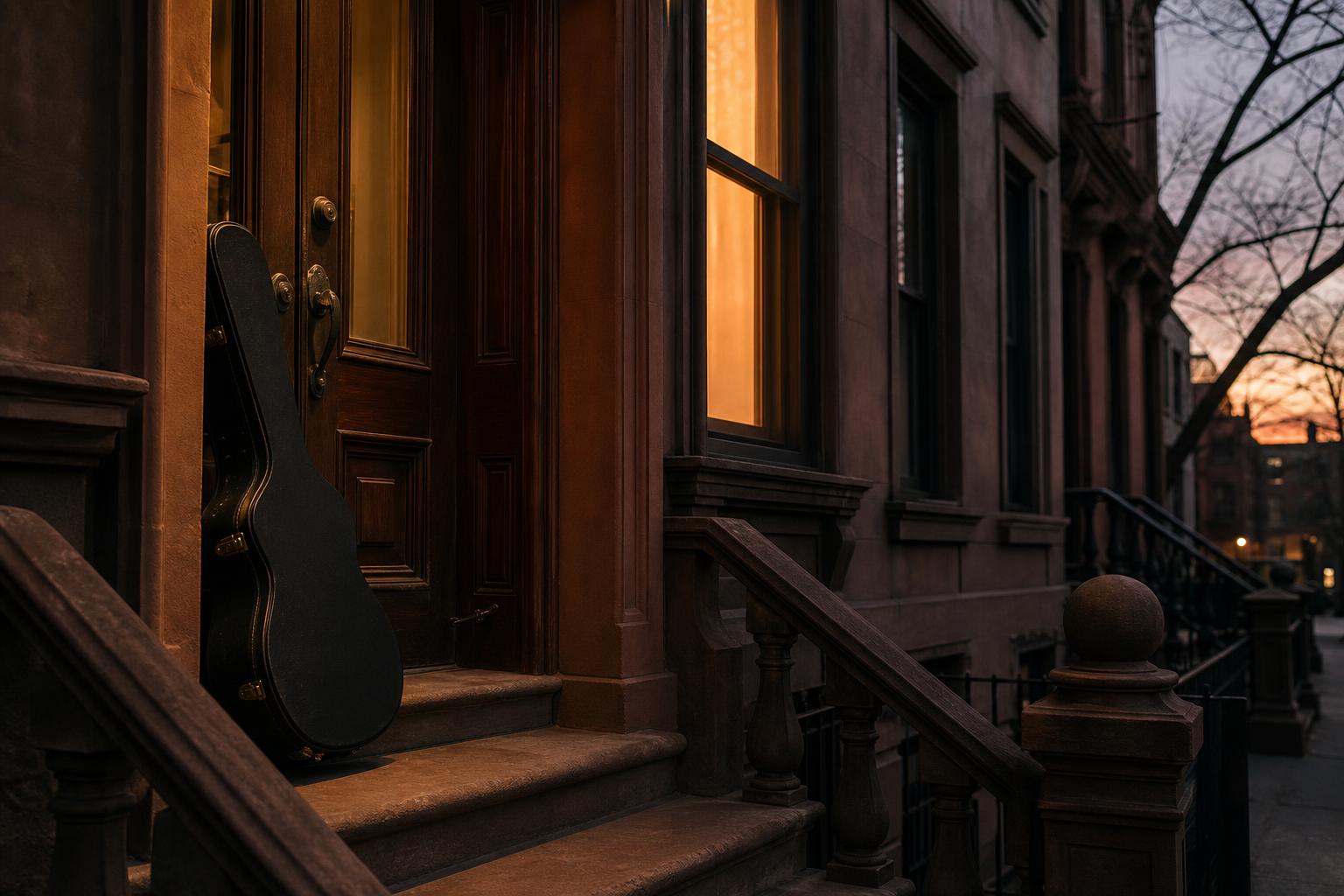 Brooklyn stoop evoking the south-coast Brooklyn corridor — Sheepshead Bay, Bay Ridge, Staten Island — where the Rexha family settled after emigrating from Debar, North Macedonia.
Graphic by NAR
Brooklyn stoop evoking the south-coast Brooklyn corridor — Sheepshead Bay, Bay Ridge, Staten Island — where the Rexha family settled after emigrating from Debar, North Macedonia.
Graphic by NAR
Education and early music: Tottenville to Warner
Rexha attended Tottenville High School on Staten Island (Wikipedia: Bebe Rexha). She joined the choir there, where her voice was identified as a coloratura soprano — the highest classical female voice classification, capable of agile runs and high-register ornamentation. She also participated in the school’s musicals.
At age 17, she won a “Best Teen Songwriter” award at a National Academy of Recording Arts & Sciences (NARAS) Grammy Career Day competition, beating out roughly 700 other entrants. The win caught the attention of music-industry talent scout Samantha Cox at BMI, who connected her to professional songwriting development tracks in Manhattan (Wikipedia: Bebe Rexha).
She enrolled briefly in songwriting classes and pursued studio work in the city. She has spoken in interviews about an early stretch of demoing tracks, writing for other artists, and learning the mechanics of pop songwriting — pre-chorus structure, hook construction, topline writing — under the kind of professional development structure that signs songwriters in their late teens and matches them with established producers.
By 2013, she had signed with Warner Bros. Records as a solo recording artist (Wikipedia: Bebe Rexha) — a deal that came on the back of the songwriting credit that would mark the start of her career as a recognized name: a co-write that ended up on an Eminem record.
Songwriting breakthrough: “The Monster” and “Meant to Be”
In 2013, Rexha was credited as a co-writer on “The Monster” — the Eminem track featuring Rihanna that anchored Eminem’s The Marshall Mathers LP 2. The song reached #1 on the Billboard Hot 100 in the United States and won the Grammy Award for Best Rap/Sung Collaboration at the 57th Annual Grammy Awards in 2015 (Wikipedia: Bebe Rexha). It is the songwriting credit that put her name on the record industry’s radar and is a foundational item in any account of her career.
The first single under her own name, “I Can’t Stop Drinking About You,” was released on March 21, 2014. From there she released a series of EP and feature tracks that built a touring profile and a streaming footprint — including the Martin Garrix collaboration “In the Name of Love” in July 2016, which became one of the most-streamed dance tracks of the late 2010s.
The career-defining commercial moment came on October 24, 2017, with the release of “Meant to Be” — a duet with country group Florida Georgia Line. The song:
- Spent 50 weeks at #1 on the Billboard Hot Country Songs chart — a record at the time (Wikipedia: Bebe Rexha)
- Peaked at #2 on the Billboard Hot 100
- Was nominated for Best Country Duo/Group Performance at the 61st Annual Grammy Awards
- Crossed Rexha over from pop-and-dance into country radio without losing her pop audience
The 50-week reign at #1 on Hot Country Songs is the kind of statistic that gets cited reflexively in any music-industry profile of her career. It also delivered something that’s rare in commercial music: a genuine genre-crossover by an artist whose previous work was primarily dance-pop, executed without any pretense that she was suddenly a country artist. The song’s writing — driven by Rexha — was structurally pop. Its production and feature artist made it country radio’s biggest hit of the year.
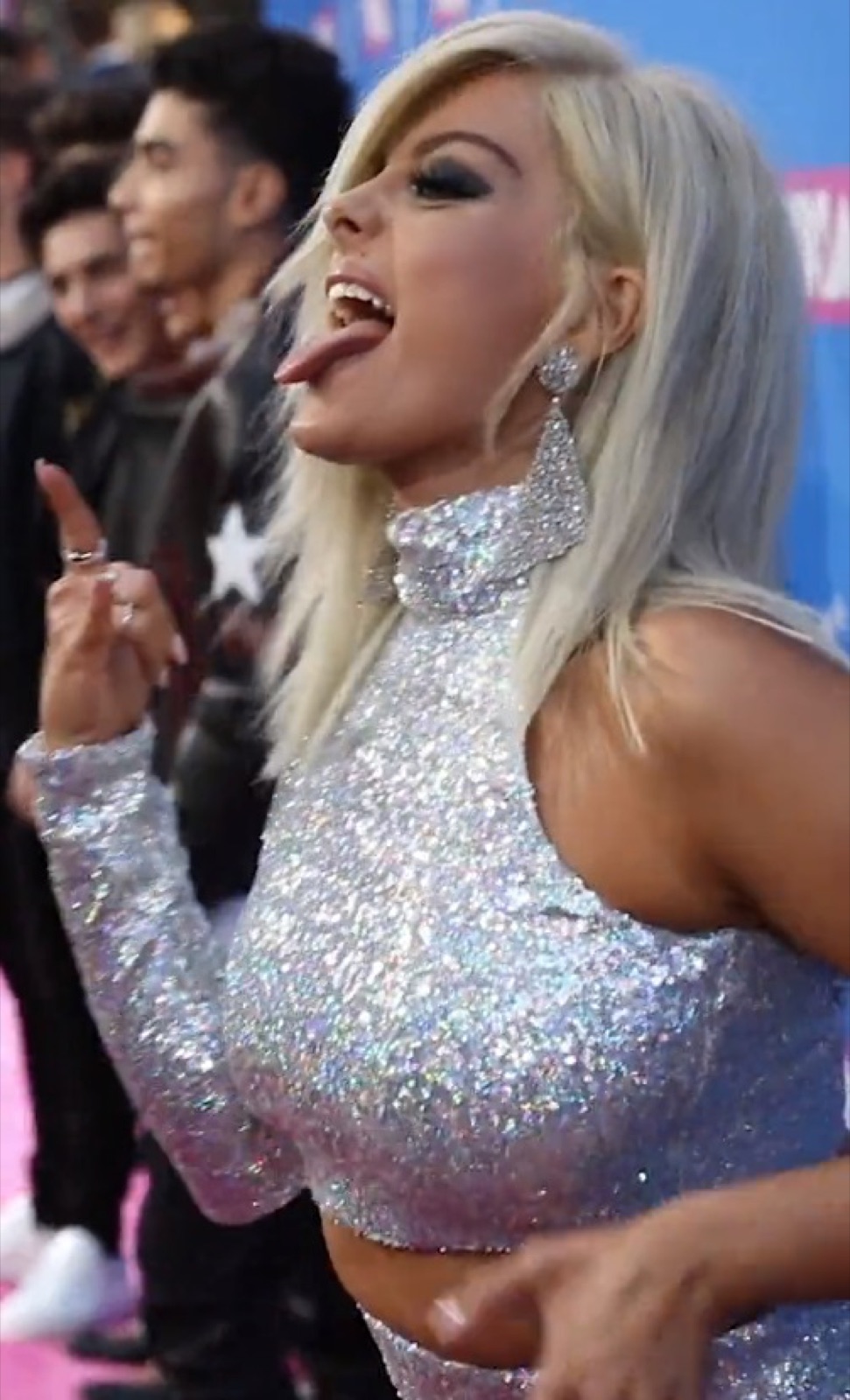 Photo: Nicole Alexander / Wikimedia Commons / CC BY 3.0
Albums and discography: Expectations, Better Mistakes, Bebe
Rexha has released three studio albums to date:
1. Expectations (June 22, 2018) — her debut studio album. It includes “I’m a Mess,” “Ferrari,” and the Meant to Be collaboration. The album peaked at #13 on the Billboard 200 (Wikipedia: Bebe Rexha).
2. Better Mistakes (May 7, 2021) — her second studio album. Includes “Baby, I’m Jealous” featuring Doja Cat and “Sacrifice.” Released during the late-pandemic stretch where touring was largely shut down.
3. Bebe (April 28, 2023) — her third studio album, with features from Dolly Parton and Snoop Dogg. Followed an active touring year.
A fourth album, Dirty Blonde, has been announced for June 12, 2026 (Wikipedia: Bebe Rexha).
Across her catalog, the consistent throughline is a sound that mixes pop, country crossover, EDM, and modern radio R&B — anchored by hooks that reflect her early training as a topline writer. Her highest-streaming and highest-charting tracks tend to be collaborations: with Florida Georgia Line, with Martin Garrix, with David Guetta. Her best-known solo singles — “I’m a Mess,” “I Got You,” “Last Hurrah” — sit in the contemporary-pop register that Warner built her catalog around.
The most commercially impactful track of her career outside “Meant to Be” is “I’m Good (Blue)” with David Guetta, released in August 2022. The song interpolates the 1998 Eiffel 65 hit “Blue (Da Ba Dee),” reached #4 on the Billboard Hot 100, and topped charts in more than 20 countries (Wikipedia: Bebe Rexha).
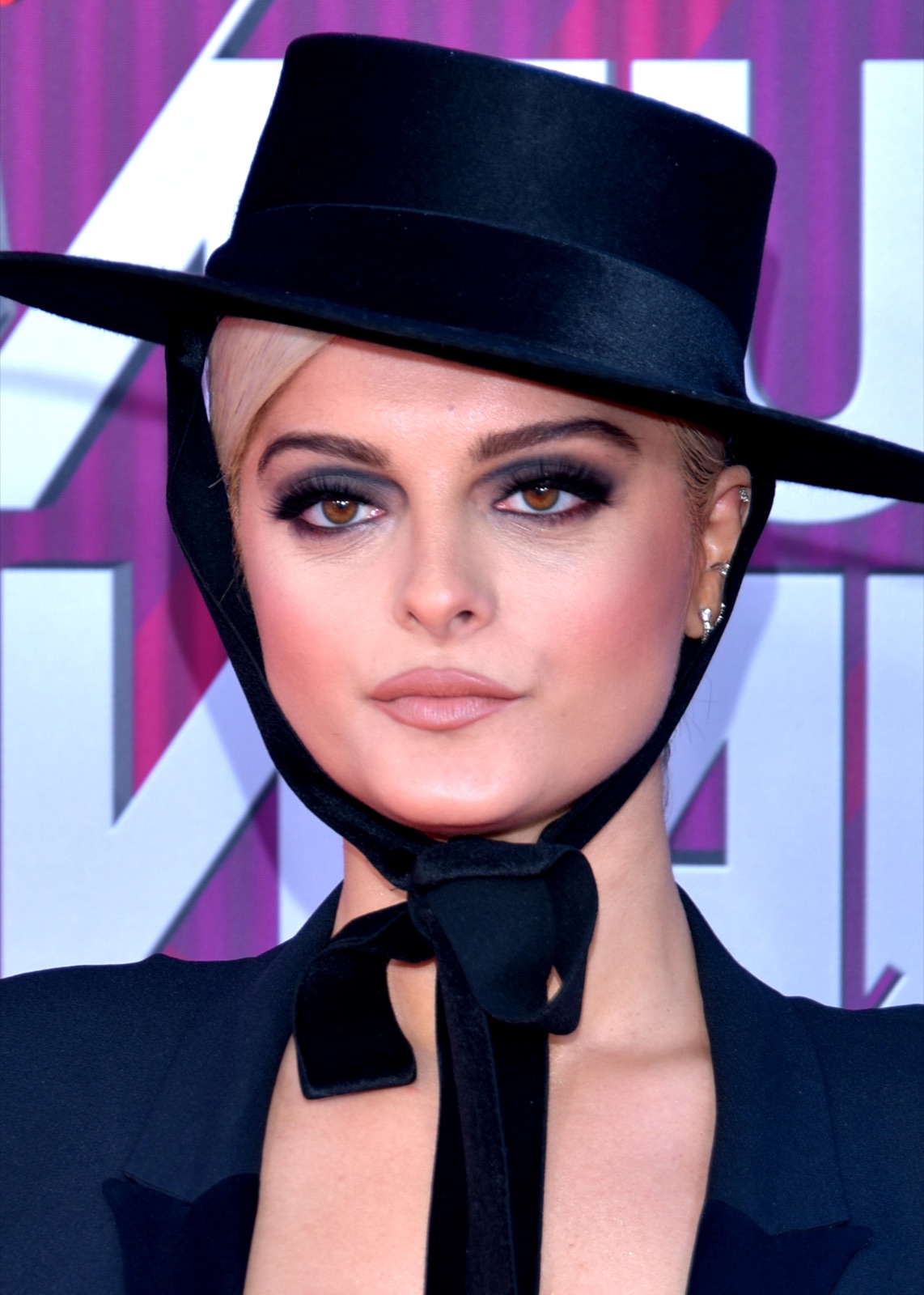 Photo: Glenn Francis (Toglenn) / Wikimedia Commons / CC BY-SA 4.0
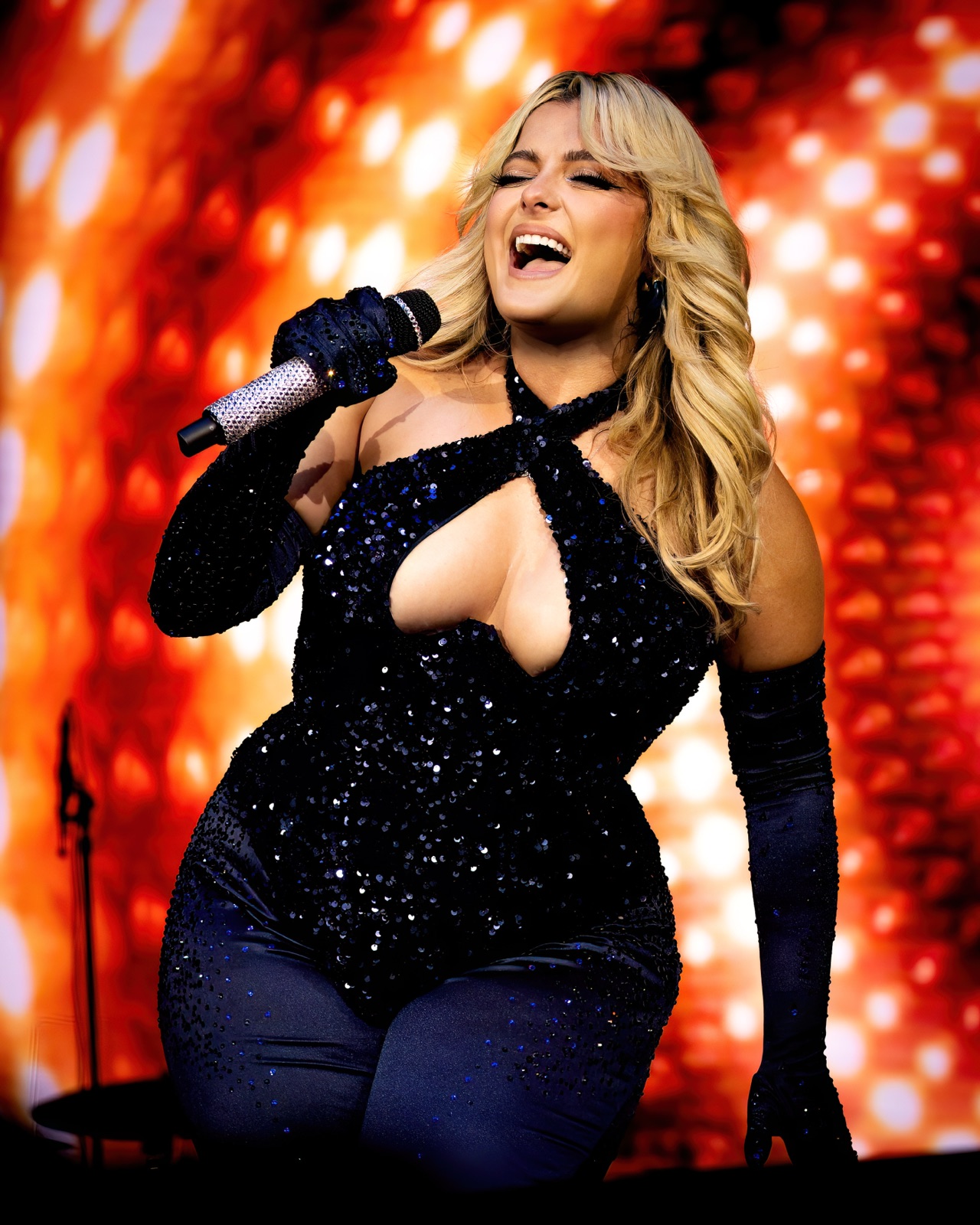 Photo: Justin Higuchi / Wikimedia Commons / CC BY 2.0
Albanian heritage and advocacy
Of all the contemporary high-visibility Albanian-American figures in entertainment, Rexha is the one who most consistently — and most publicly — claims Albanian identity in mainstream US media.
She regularly speaks Albanian in interviews, including with Albanian-language press in the diaspora. She posts in Albanian on her social platforms. She has performed at Albanian-American community events in the United States. She has visited Albania and Kosovo on multiple occasions, including for charity work in support of Albanian schools and youth programs.
The visibility matters in ways that go past PR. When Bebe Rexha mentions in a Cosmopolitan interview that her parents are Albanian — and that her real name is Bleta, which means “bee” in Albanian — the cost of claiming Albanian heritage falls a little for every other Albanian American watching. Diaspora visibility compounds. A second-generation Albanian-American teenager in Sheepshead Bay or Yonkers or Worcester sees one of the biggest pop stars of the decade say her name in Albanian, and the calculation around how much of their heritage to wear in public quietly shifts.
This is the pattern the Albanian-American community has recognized in figures like John Belushi, Eliza Dushku, and Action Bronson — and that we’ve seen accelerate with Dua Lipa and Rita Ora on the UK side of the diaspora. Rexha is the US-side anchor of that cohort. The Albanian-American media has profiled her extensively over the last decade, and Albanian-language press — both in Albania and across the European diaspora — treats her as a continuing news subject.
She is also frequently invited to perform at and headline Albanian Independence Day (Dita e Pavarësisë) celebrations and diaspora events tied to the November 28 anniversary that anchors the Albanian civic calendar. Her presence at those gatherings, alongside her US arena and festival schedule, signals a deliberate decision to keep one foot inside the diaspora’s own institutions even as her commercial career operates inside the global pop industry.
We’ve covered the broader cohort in our Famous Albanians piece. Rexha sits on it alongside Dua Lipa and Rita Ora as one of the three most globally visible Albanian women in 21st-century pop music.
Body image and mental health advocacy
In 2019, Rexha publicly disclosed a diagnosis of bipolar disorder, telling her audience plainly: “I’m not ashamed anymore” (Wikipedia: Bebe Rexha). The disclosure was made in the context of a broader conversation about mental health in the music industry, and it was — at the time — an unusually direct statement from a major-label pop artist at the height of a commercial run.
She has also been outspoken about industry pressures around women’s bodies. Across 2019 and the years that followed, she challenged the size-and-image expectations imposed on women in pop, and she has consistently posted body-positive content to her audience.
In 2023, she disclosed a diagnosis of polycystic ovary syndrome (PCOS) (Wikipedia: Bebe Rexha) — a hormonal condition that affects an estimated 8-13% of women of reproductive age and that has historically been under-discussed in mainstream media. Her disclosure put PCOS in front of a pop audience that, in many cases, had never heard of it.
Across all three areas — bipolar diagnosis, body-image advocacy, PCOS — the through line is the same: a public figure with a large platform talking openly about conditions and pressures her audience experiences but doesn’t usually see addressed at her level of fame. That kind of disclosure is its own form of advocacy, and it has been picked up in journalistic and academic discussion of how Albanian-American women in entertainment are reshaping conversations about identity, image, and health.
The Albanian-American context
Bebe Rexha is part of a broader cohort of Albanian-American and Albanian-heritage women succeeding in global entertainment.
The most-streamed list at the top of that cohort:
- Dua Lipa (b. 1995, London) — three-time Grammy winner; born in London to Kosovo-Albanian parents from Pristina; granted honorary Albanian citizenship by President Bajram Begaj in November 2022.
- Rita Ora (b. 1990, Pristina) — UK pop star; born in Pristina, raised in London; 13 UK top-ten singles.
- Eliza Dushku (b. 1980, Boston) — American actor; Albanian heritage on her father’s side, with family roots in Korçë; Faith on Buffy the Vampire Slayer and Angel; lead on Joss Whedon’s Dollhouse.
Together, this cohort represents the highest-visibility Albanian women in 21st-century pop culture — and Rexha is the US-side flagship. Her Brooklyn upbringing, her parents’ immigration from Debar, and her consistent public claim on Albanian identity make her an exact-fit subject for the kind of visibility work the Albanian-American diaspora has been doing across the last two decades.
The geographic shape of that cohort matters too. Rexha’s family is from Debar in North Macedonia. Dua Lipa’s and Rita Ora’s families are from Pristina in Kosovo. Eliza Dushku’s family is from Korçë in southern Albania. Between the four of them, the highest-profile women in Albanian-heritage pop culture trace their family roots to four different jurisdictions — Albania, Kosovo, North Macedonia, and the wider American diaspora — and represent, between them, almost the entire geographic span of the Albanian world. That’s the lens we ask readers to keep when they hear the word “Albanian”: it covers Albania, Kosovo, North Macedonia, Montenegro, the Italian Arbëresh, and the global diaspora that has existed for more than 600 years.
We’ve profiled all four in our Famous Albanians piece, and we’ll go deeper on each in their own dedicated entries.
Get counted
Diaspora-wide visibility is downstream of who claims their heritage publicly. When Bebe Rexha tells a Cosmopolitan interviewer that her parents are Albanian and that her name in Albanian means “bee,” the cost of claiming Albanian heritage falls a little for every other Albanian American watching.
You don’t need to top Billboard’s country chart for 50 weeks to be part of the count. You need 2 minutes.
Get counted at /register — free, encrypted, community-led. We mint a recognition certificate. We don’t sell anything. We never share data.
The community-led count of Albanian Americans starts with you adding your name.