

When Skanderbeg died in Lezhë on 17 January 1468, the Albanian resistance he had held together for twenty-five years began to unravel. Within a decade, the Ottoman Empire had taken the last major fortresses — Krujë fell in 1478, Shkodra in 1479. Albanian nobles, soldiers, and their families faced a choice: submit to Ottoman rule or leave.
Thousands left. Some settled as farmers and built the Arbëreshë communities that survive in southern Italy to this day. But a large number did something else. They crossed the Adriatic with their horses and their weapons and offered their services to the one power that would pay for what they knew how to do: fight. That power was Venice, and the soldiers were the stradioti — Albanian light cavalry whose battlefield skill would reshape how Renaissance Europe made war.
From refugees to mercenaries
The word stradioti (also rendered stratioti, stratiotes, or estradiots in French sources) derives from the Greek stratiōtēs (στρατιώτης), meaning soldier. But the men who carried the name were overwhelmingly Albanian. Venetian administrative records from the late 1400s list them by name, and the names — Bua, Spata, Klada, Gritti — are Albanian or Greek-Albanian. The soldiers themselves used Albanian among their ranks, and Venetian commanders described them as Albanesi or Epiroti.
Venice had been recruiting Albanian fighters since at least the Ottoman-Venetian War of 1463-1479, the same conflict that consumed the last years of Skanderbeg’s resistance. Venice held territories in Albania and Greece — Shkodra, Durrës, and a string of coastal outposts — and Albanian soldiers defended those outposts alongside Venetian garrisons. When the territories fell, the soldiers and their families had to go somewhere. Venice, which needed exactly the kind of fast, mobile cavalry these men represented, had an answer: come to our side of the Adriatic, bring your horses, and we will put you on the payroll.
By the 1480s, Venetian records document organized stradioti units on the Republic’s mainland territories in the Veneto and Friuli, as well as on Corfu, Crete, and the Greek Peloponnese. They were not integrated into the regular Venetian army. They fought under their own captains, used their own tactics, and were paid separately. They supplied their own horses and arms. Contemporary pay records vary, but some sources place their wages between 5 and 8 ducats per month.
How they fought
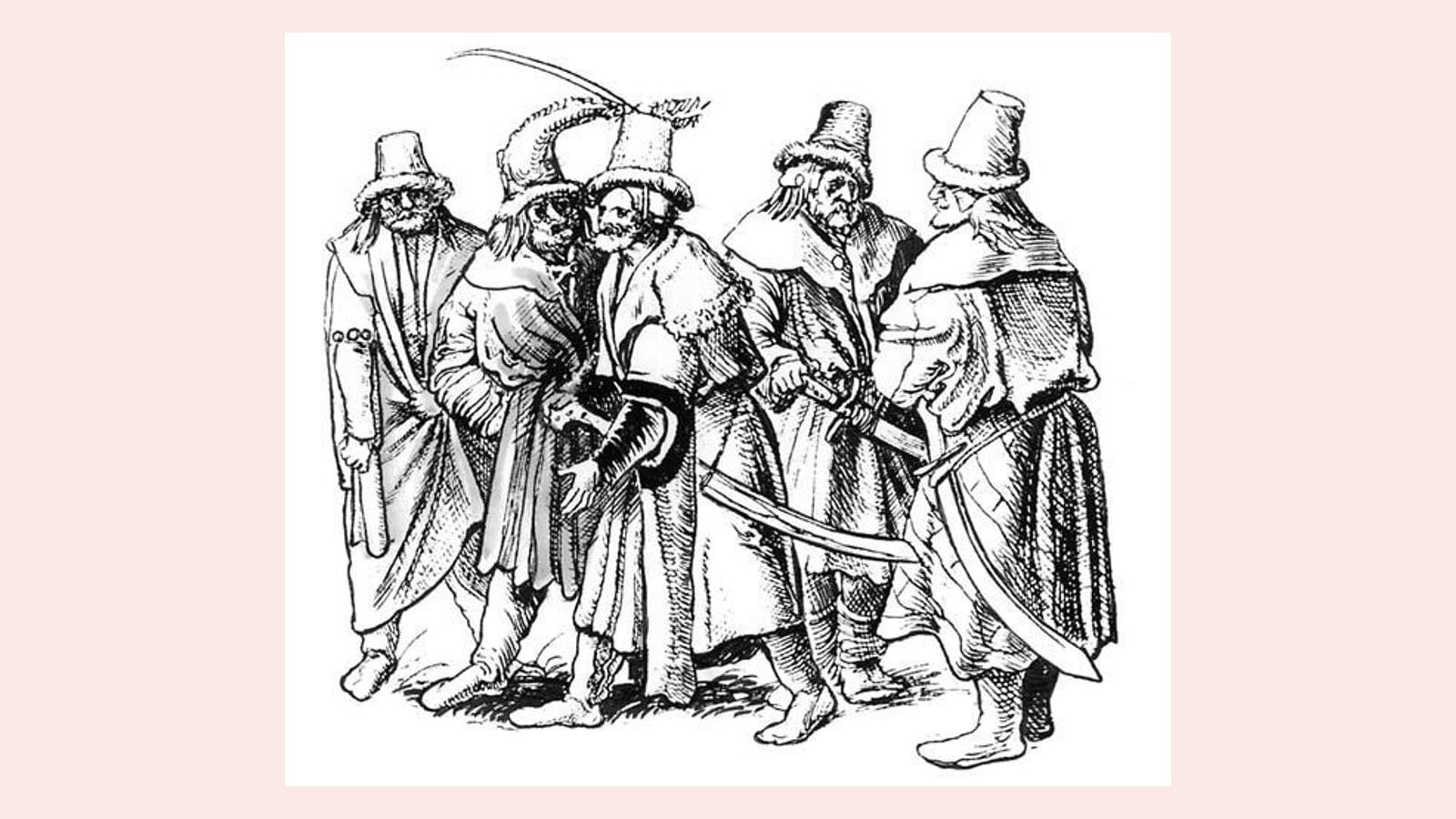
The stradioti were light cavalry in the truest sense. Western European armies of the late 1400s were organized around the gendarme — a heavily armored knight on a large warhorse, built for the shock of a head-on charge. The stradioti were the opposite of that. They rode smaller, faster horses. They wore light armor or none at all — contemporary illustrations show them in turbans, short cloaks, and mail shirts rather than full plate. Their weapons were lances, swords, maces, and javelins; some carried composite bows.
Their tactics came from the Balkan frontier, where decades of fighting against Ottoman sipahi and akıncı raiders had bred a particular kind of soldier. The stradioti excelled at reconnaissance — riding ahead of the main army to locate the enemy and report back. They raided supply lines and foraging parties. They harassed advancing columns with hit-and-run attacks, striking fast and pulling away before heavy cavalry could close with them. And when an enemy army broke and ran, the stradioti pursued — something heavily armored Western knights were not built to do.
This was not chivalric warfare. Western European contemporaries found the stradioti’s methods unsettling. Chroniclers noted that the stradioti took heads as proof of kills, a practice rooted in Ottoman frontier warfare where bounties were paid per head. Philippe de Commines, a French diplomat who witnessed them at Fornovo, described their effectiveness with a mix of admiration and discomfort. Western sources increasingly referred to this style of fighting as light cavalry — a category that barely existed in Italian warfare before the stradioti arrived.
The Italian Wars: Fornovo and beyond
The stradioti entered the mainstream of European military history at the Battle of Fornovo on 6 July 1495. King Charles VIII of France had invaded Italy with a large army, marched through the peninsula, and taken Naples. Now he was retreating north toward France. A coalition army under the command of Francesco II Gonzaga, Marquess of Mantua, moved to intercept him at the Taro River near Parma.
The battle itself was inconclusive — both sides claimed victory — but the stradioti played a distinctive role. While the heavy cavalry clashed in the center, stradioti units struck the French baggage train and camp followers in the rear. They captured an enormous amount of loot, including — by some accounts — Charles VIII’s personal sword, his seal, and a book of portraits. The French retreat continued, but the loss of the baggage was humiliating and strategically significant.
Fornovo demonstrated what the stradioti could do that gendarmes could not: exploit the flanks and rear of an engaged army, disrupt logistics, and turn a tactical stalemate into a strategic loss for the enemy. Over the next thirty years, stradioti units fought in nearly every major engagement of the Italian Wars:
- Cerignola (1503): Stradioti served under Spanish command as well as Venetian. The battle is sometimes called the first won by gunpowder small arms, but cavalry — light and heavy — still mattered on the flanks.
- Agnadello (1509): Venice’s defeat by the League of Cambrai saw stradioti units covering the Venetian retreat.
- Marignano (1515): French-allied stradioti harassed Swiss pike formations.
- Ceresole (1544): Stradioti served on the French side under François I and his successors, having been recruited directly by the French crown.
The pattern was consistent: wherever European powers fought in the 1500s, Albanian stradioti were present, usually as the fast-moving screening and pursuit element that heavy cavalry armies lacked.
Beyond Venice: France, Spain, and England
Venice was the first and largest employer, but the stradioti’s reputation spread fast. By the early 1500s, several European monarchs were recruiting Albanian cavalry directly.
France began hiring stradioti in the 1490s, during the Italian campaigns. French records from the reigns of Charles VIII, Louis XII, and François I list stradioti companies in the royal army. The French referred to them as estradiots and valued them for the same reconnaissance and raiding roles they performed for Venice. Some stradioti captains — notably Mercurio Bua, an Albanian nobleman who had served Venice before switching to French and then Imperial service — became figures of consequence at multiple European courts.
Spain employed stradioti in its Italian possessions, particularly the Kingdom of Naples. The Spanish jinete tradition of light cavalry had some parallels with stradioti tactics, and the two traditions influenced each other in southern Italy.
England under Henry VIII recruited stradioti for military campaigns in the early 1500s. English records refer to them as Albanoyses — a rendering of “Albanians” — and list them receiving wages alongside English and Burgundian troops.
The Holy Roman Empire also hired stradioti, particularly for campaigns against the Ottomans in Hungary. This brought the Albanian soldiers full circle: men who had fled Ottoman conquest in the Balkans were now fighting Ottomans again, but in the service of the Habsburg emperor rather than their own lords.
Mercurio Bua and other commanders
The stradioti produced several commanders whose careers illustrate the reach of this Albanian military diaspora.
Mercurio Bua (c. 1478-1542) was the most prominent. Born in Nafplion (Nauplia) in the Peloponnese into an Albanian noble family, Bua moved to Venice as a boy after his father’s death. He served Venice, then switched to French service, and later served the Holy Roman Emperor Maximilian I. His career spanned the Italian Wars, and he ended his life as a landed lord in the Veneto. His funerary monument in Treviso survives, inscribed with his Albanian-Greek lineage.
Teodoro Paleologo and other Albanian-Greek captains led stradioti companies that operated semi-independently, contracting with whichever power offered terms. This mercenary-captain model — the condottiere tradition — was well established in Italy, and the stradioti captains fit into it while maintaining their ethnic Albanian identity and fighting methods.
The military legacy
The stradioti’s most lasting impact was not any single battle but the tactical hole they exposed. Before the Albanian cavalry arrived in Italy, Western European armies had essentially abandoned light cavalry. The medieval tradition was the heavy mounted charge: plate-armored knights on destriers, designed to break an enemy line by sheer mass. Reconnaissance was an afterthought; pursuit was haphazard.
The stradioti demonstrated that a fast, mobile cavalry force could perform functions the heavy cavalry could not: screen the army’s front and flanks, gather intelligence, cut supply lines, harass a retreating enemy, and exploit gaps in a broken formation. Their effectiveness was so evident that every major European power began developing its own light cavalry in the early 1500s. The French chevau-légers, the German Reiters, and the Hungarian hussars who spread across European armies in the following century all owed something to the example the stradioti set.
Military historians — including Sir Charles Oman in A History of the Art of War in the Sixteenth Century — credit the stradioti with reintroducing light cavalry as a recognized tactical category in Western European warfare. It is a striking case of a refugee population shaping the military culture of the continent that took them in.
The stradioti and the Albanian diaspora
The stradioti were not just soldiers. They traveled with families. Venetian and Neapolitan records document entire Albanian communities — men, women, children — settled on lands granted by Venice in exchange for military service. These settlements overlapped with, and in some places were identical to, the Arbëreshë villages of southern Italy. The connection was direct: some Arbëreshë communities began as stradioti garrisons that, over generations, became farming villages.
In Venice’s Greek territories — Corfu, the Peloponnese, Crete — the stradioti settlements followed a similar pattern. Albanian soldiers were given land and local privileges in exchange for military obligation. Their descendants often remained even after the military function faded, becoming part of the local Greek-Albanian population.
The stradioti thus represent the armed branch of the same diaspora that the Arbëreshë represent culturally and linguistically. Both flowed from the same catastrophe — the Ottoman conquest of Albania — and both settled in the same regions of the Mediterranean world. The difference was that the Arbëreshë preserved language and liturgy, while the stradioti preserved a military tradition that made them useful to European states and, for a century and a half, kept an Albanian fighting presence on battlefields from the Taro River to the English Channel.
Decline and memory
By the mid-1600s, the stradioti as a distinct military force had largely disappeared. The original refugee generation was long gone. Their descendants, settled for five or six generations in Venetian territory, had assimilated into local populations. Western European states had built their own light cavalry. The tactical shift the stradioti had introduced was now standard.
But the memory persisted. In Corfu, where Venetian-era Albanian military families maintained a distinct identity for centuries, the stradioti are remembered as a founding population. In the Arbëreshë villages of Calabria and Sicily, the connection to the soldiers who first crossed the Adriatic is part of the community origin story.
For the Albanian diaspora in the United States, the stradioti fit into a longer narrative of what it has meant, across centuries, to be Albanian and far from home. They were not the first Albanian soldiers to fight in foreign service — Albanian mercenaries appear in Byzantine records centuries earlier. And they were not the last — Albanian Americans served in every US war from World War I forward. But the stradioti were the largest, most organized, and most consequential Albanian military diaspora before the modern era. They proved, on battlefields across Renaissance Europe, that a small people driven from their homeland could reshape the way a continent fought.
The stradioti left no monuments in Albania. They left something more durable: a reputation, carried in Venetian archives and French chronicles and English pay ledgers, for being the horsemen you wanted on your side when the battle turned and the real work began.