
A 500-year-old Albanian community in Italy
The Arbëreshë (singular: Arbëresh) are descendants of Albanians who fled the western Balkans in the late medieval period and settled in southern Italy and Sicily. Most arrived in waves between the 13th and 16th centuries; the largest came after the death of Gjergj Kastrioti Skanderbeg in 1468 and the fall of his stronghold at Krujë in 1478.
Today there are roughly 100,000 active Arbëresh speakers across about 50 villages in seven Italian regions — Calabria, Sicily, Basilicata, Molise, Apulia, Abruzzo, and Campania. The broader Arbëreshë heritage population, including those who no longer speak the language fluently, is significantly larger. Italian state estimates have ranged as high as 260,000.
What makes this community remarkable is not just its age. It is the linguistic time capsule they carry. Arbëresh preserves a form of Albanian from the pre-Ottoman period — phonetics, vocabulary, and grammatical features that have been smoothed away in modern standard Albanian. When a contemporary speaker from Tirana visits a village in Calabria, they hear something familiar but archaic: their own language, but the way it sounded six centuries ago.
The Arbëreshë are also the oldest of the major Albanian diasporas. Long before the Albanian-American communities of Boston and Detroit, long before the post-1991 migration to Germany and Switzerland, there were Albanian villages in southern Italy that had stood for hundreds of years and intended to stay. UNESCO classifies the language as definitely endangered, but the community itself — its churches, its festivals, its bilingual road signs, its eparchies in communion with Rome — is very much alive.
This explainer is for anyone who wants the honest version of the Arbëreshë story: who they are, when and why they left the Balkans, what they preserved, and how that 500-year-old community connects to the modern Albanian world.
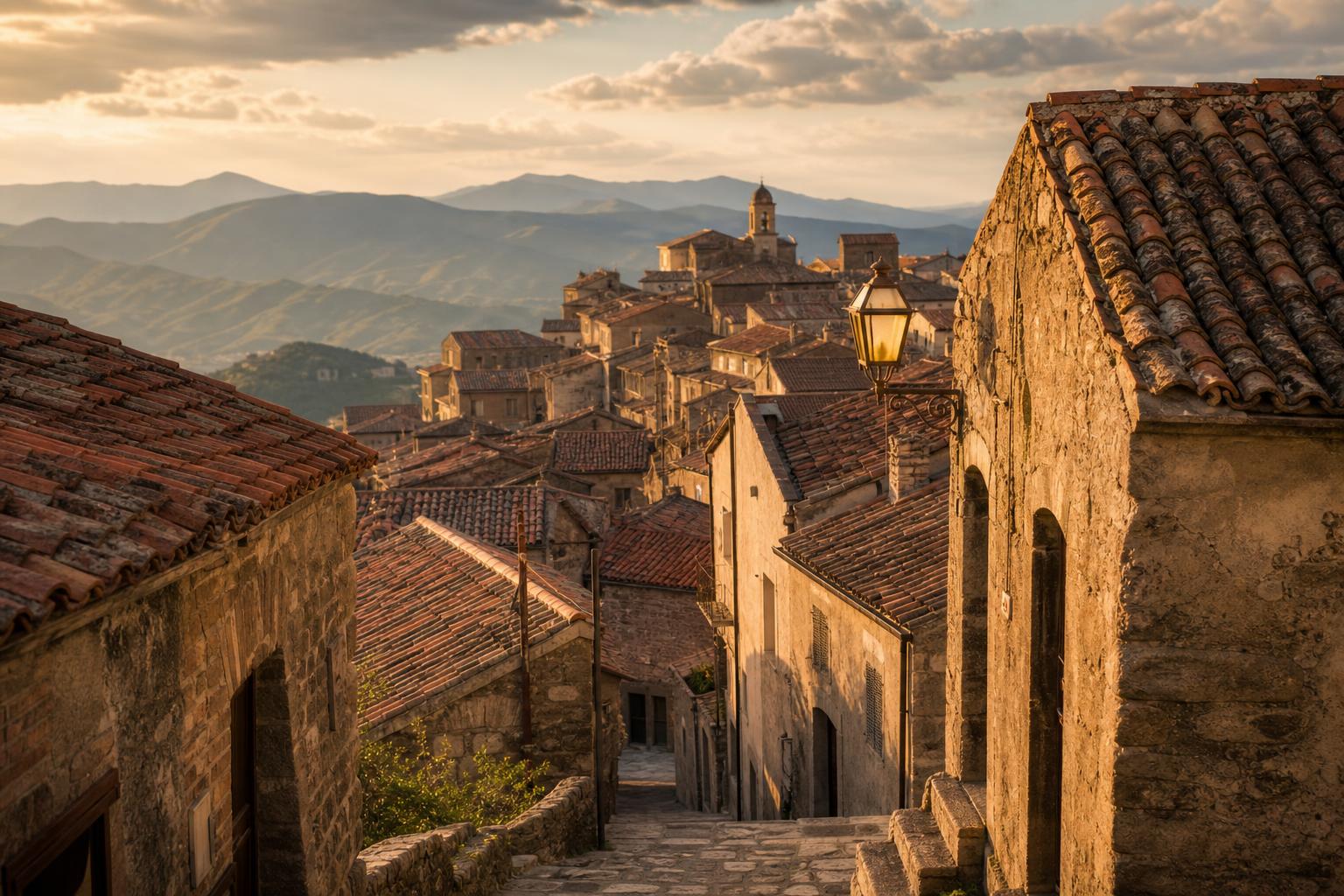 Typical Arbëresh hill village in Calabria — the kind of mountain commune founded by 15th-century refugees from Krujë and held by their descendants for more than 500 years.
Graphic by NAR
Typical Arbëresh hill village in Calabria — the kind of mountain commune founded by 15th-century refugees from Krujë and held by their descendants for more than 500 years.
Graphic by NAR
Who the Arbëreshë are today
The community is concentrated in southern Italy and Sicily, in roughly fifty villages spread across seven regions. The largest single cluster is in Calabria, where dozens of communes — San Demetrio Corone, Lungro, Spezzano Albanese, Civita, Frascineto, San Cosmo Albanese, and others — have been continuously Arbëreshë for five centuries. The second major cluster is in Sicily, anchored by Piana degli Albanesi (in Albanian: Hora e Arbëreshëvet), about thirty kilometers south of Palermo.
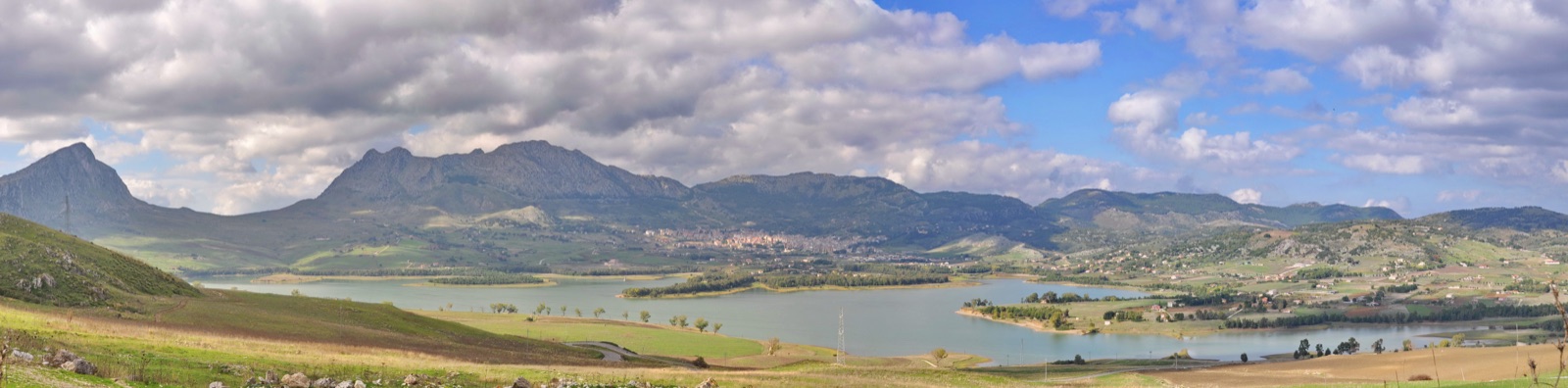 Piana degli Albanesi (Hora e Arbëreshëvet) outside Palermo, Sicily — founded in 1488 by Albanian refugees from the Peloponnese and now the seat of the Sicilian Italo-Albanian eparchy.
Photo: Wikimedia Commons / CC BY-SA
Piana degli Albanesi (Hora e Arbëreshëvet) outside Palermo, Sicily — founded in 1488 by Albanian refugees from the Peloponnese and now the seat of the Sicilian Italo-Albanian eparchy.
Photo: Wikimedia Commons / CC BY-SA
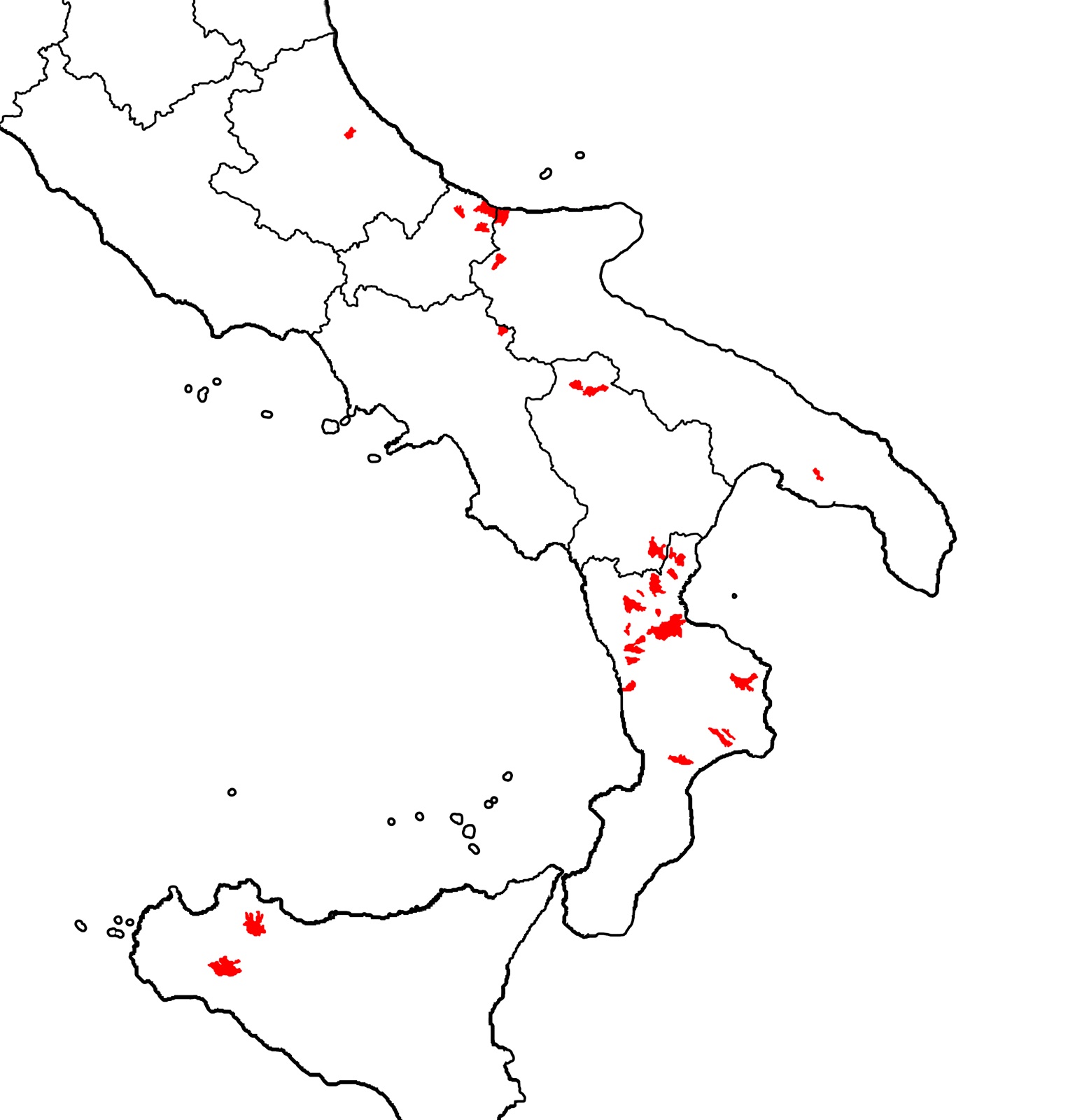 The roughly 50 surviving Arbëreshë communes across seven southern Italian regions: Calabria, Sicily, Basilicata, Molise, Apulia, Abruzzo, and Campania.
Map: Wikimedia Commons / CC BY-SA
The roughly 50 surviving Arbëreshë communes across seven southern Italian regions: Calabria, Sicily, Basilicata, Molise, Apulia, Abruzzo, and Campania.
Map: Wikimedia Commons / CC BY-SA
The other five regions — Basilicata, Molise, Apulia, Abruzzo, and Campania — host smaller pockets, often a single village or a short chain of neighboring communes. The geographic distribution roughly matches the historical migration waves: Calabria received the earliest organized settlement in 1448, Apulia received Skanderbeg’s own troops in 1461, and Sicily later absorbed refugees from the Greek-Albanian communities of the Peloponnese.
Population estimates vary because the Italian national census does not collect data on minority languages. The most-cited figure is around 100,000 active speakers of Arbëresh, with a broader heritage population of perhaps 250,000 to 260,000 who identify culturally as Arbëreshë whether or not they still use the language at home.
The demographic trend is the same one facing most European linguistic minorities: younger generations are shifting toward Italian. Daily-use Arbëresh remains strongest among speakers over 50, in rural villages, and inside the church. In larger towns, in mixed marriages, and among children educated entirely in Italian, the language is receding. Several Arbëreshë communes are now actively pushing back through bilingual schooling, university programs, and protected-minority status — but the structural pressure is real.
How the Arbëreshë got to Italy: five centuries of migration waves
The Arbëreshë did not arrive in one event. Their story is the cumulative result of at least five distinct migration waves spread across more than two centuries.
The 13th-century mercenaries
The earliest documented Albanian presence in southern Italy dates to the 13th and 14th centuries, when Albanian soldiers crossed the Adriatic to serve as mercenaries in the chronic wars of the Italian south. They were valued for their cavalry tradition, their loyalty when contracted, and their willingness to take frontier postings. Many of these early arrivals integrated into the local Italian population. They left a Catholic, Italianized trace rather than a distinct Arbëreshë community — but they established the route.
The 1448 wave: Skanderbeg’s troops in Calabria
The first organized settlement happened in 1448, when King Alfonso V of Aragon of the Kingdom of Naples requested Albanian military help to suppress a baronial revolt in Calabria. Skanderbeg, who had been resisting the Ottomans in Albania since 1444, sent a force commanded by Demetrio Reres. After putting down the revolt, many of the soldiers and their families were granted lands in Calabria as payment. They settled in roughly twelve villages and stayed.
This is the foundational Arbëreshë community. The descendants of the 1448 settlers still inhabit those Calabrian communes today.
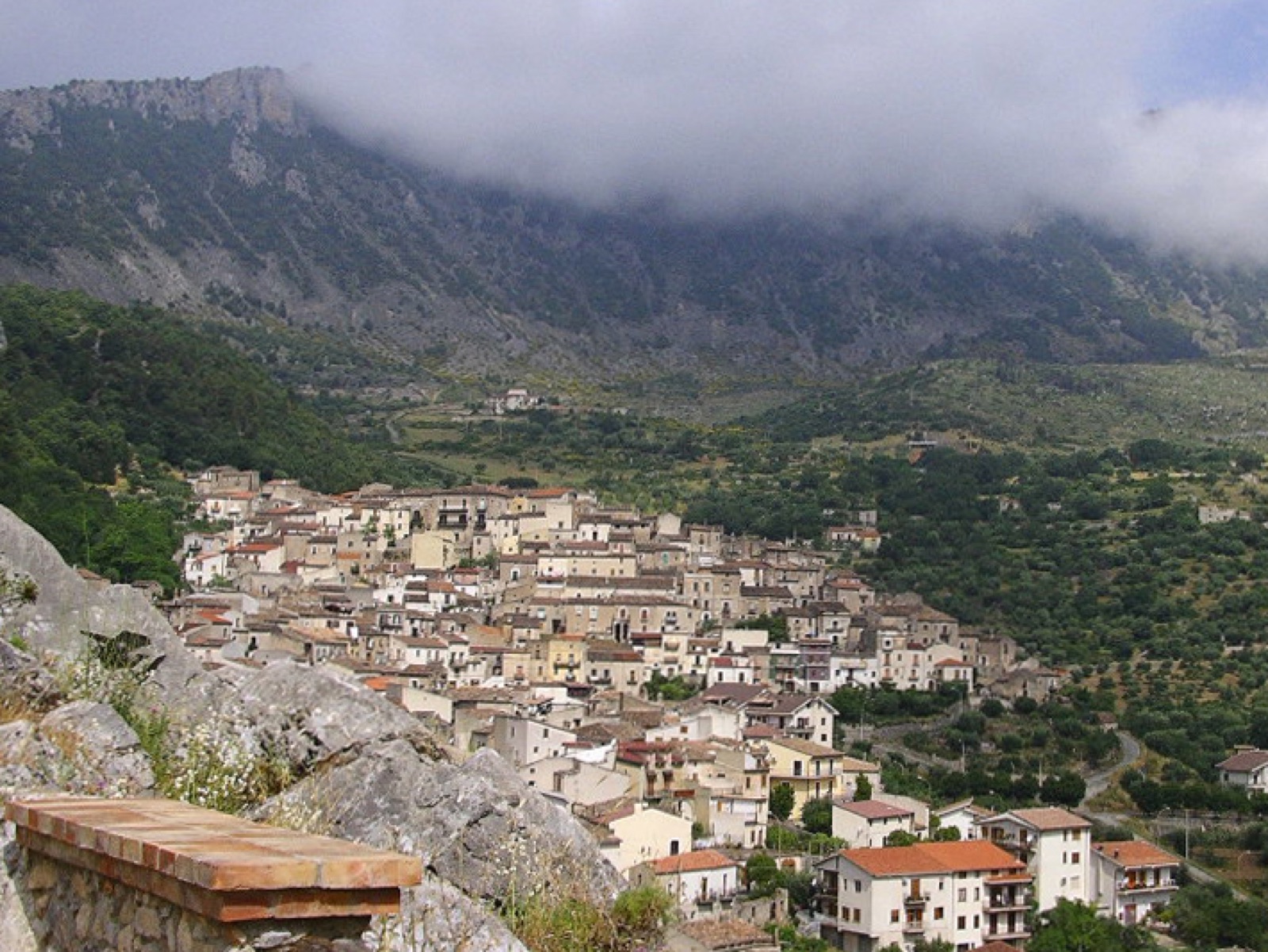 Civita (Çifti) in Calabria — one of the twelve original Arbëreshë communes settled by Demetrio Reres’s troops after the 1448 Aragonese mission, perched above the Raganello canyon in Pollino National Park.
Photo: Wikimedia Commons / CC BY-SA
Civita (Çifti) in Calabria — one of the twelve original Arbëreshë communes settled by Demetrio Reres’s troops after the 1448 Aragonese mission, perched above the Raganello canyon in Pollino National Park.
Photo: Wikimedia Commons / CC BY-SA
The 1461 wave: Apulia
In 1461, Skanderbeg crossed the Adriatic in person to support Ferdinand I of Naples (Alfonso’s son) against the rival Angevin claimant. After helping defeat the Angevin forces, Skanderbeg received recognition and lands in Apulia. A second Albanian community took root there — about fifteen villages — and several of those Apulian communes remain Arbëreshë today.
The post-1468 and Krujë-fall waves
When Skanderbeg died in January 1468, the resistance to the Ottoman advance lost its center of gravity. Albanians who had fought alongside him, or whose villages he had protected, faced a stark choice. Many fled to Italy. The Aragonese kings of Naples — who had benefited from Skanderbeg’s military partnership — formally welcomed them and granted lands.
The migration continued through the fall of Krujë (1478) and the eventual capitulation of Shkodër (1479) and Durrës (1501), the last Albanian holdouts. Roughly a third of the surviving Albanian population is estimated to have moved west during this period, with most going to Italy, Sicily, and Dalmatia.
The 16th-century Peloponnese refugees
A final, often-overlooked wave in the early 16th century came not directly from Albania but from the Peloponnese. Albanians had been settling in southern Greece since the 14th century — the ancestors of the Arvanites — and when the Ottomans expanded into the Peloponnese, Spanish naval support helped some of those communities evacuate to Sicily. This is part of why Sicilian Arbëreshë sometimes show subtle linguistic and ritual differences from their Calabrian cousins: parts of their migration route ran through Greek lands.
Italian noble protections
A pattern across all these waves: Italian noble families granted Arbëreshë communities formal protection and self-governance in exchange for their settlement. Arbëreshë villages typically retained their language, their Eastern Christian liturgy, their customary law, and even a degree of administrative autonomy — under feudal lords who valued loyal, militarily-capable tenants on frontier lands. That arrangement is the structural reason the community survived as a distinct group rather than dissolving into the surrounding Italian population.
The Arbëresh language: a medieval Albanian preserved
Arbëresh — Arbërisht in the language itself — is the most striking thing the community carries. It is recognizably Albanian, but it is medieval Albanian: a 15th-century snapshot, frozen in southern Italy while the language continued to evolve in the Balkans.
What it preserves
Arbëresh is descended from Tosk Albanian, the southern dialect group. It retains features that have shifted or disappeared in modern standard Albanian. The most-cited example involves consonant clusters: where modern standard Albanian palatalized /kl/ and /gl/ to /q/ and /gj/ sometime after the 15th century, Arbëresh kept the older sounds. The standard Albanian word for “language” is gjuhë; the Arbëresh word is gluhë — the same word, but on the older side of the sound change.
This kind of conservatism runs through the vocabulary, the grammar, and the morphology. For linguists, Arbëresh is a window into pre-Ottoman Albanian that does not exist anywhere else.
What it absorbed
Five hundred years of life in Italy left their mark. Arbëresh has substantial Italian and Sicilian loanwords — pincar (to think), from Sicilian pinzari; qaca (town square), from Sicilian chiazza — and a smaller layer of Greek loanwords that came from the Peloponnese-route migrations and from the Byzantine liturgical tradition: parkalés (please) from Greek parakalō, hora (village) from Greek chōra.
What Arbëresh largely does not have is the Ottoman Turkish loanword layer that runs through modern Balkan Albanian. The community left before that period of contact happened. This is part of why a modern Albanian speaker hearing Arbëresh sometimes describes it as “purer” — a loaded word, but a real intuition.
Status and protection
Arbëresh was, for most of its history, a primarily spoken language. A literary tradition exists — Girolamo De Rada’s 19th-century epic poetry is the most famous example — but routine writing in Arbëresh is recent.
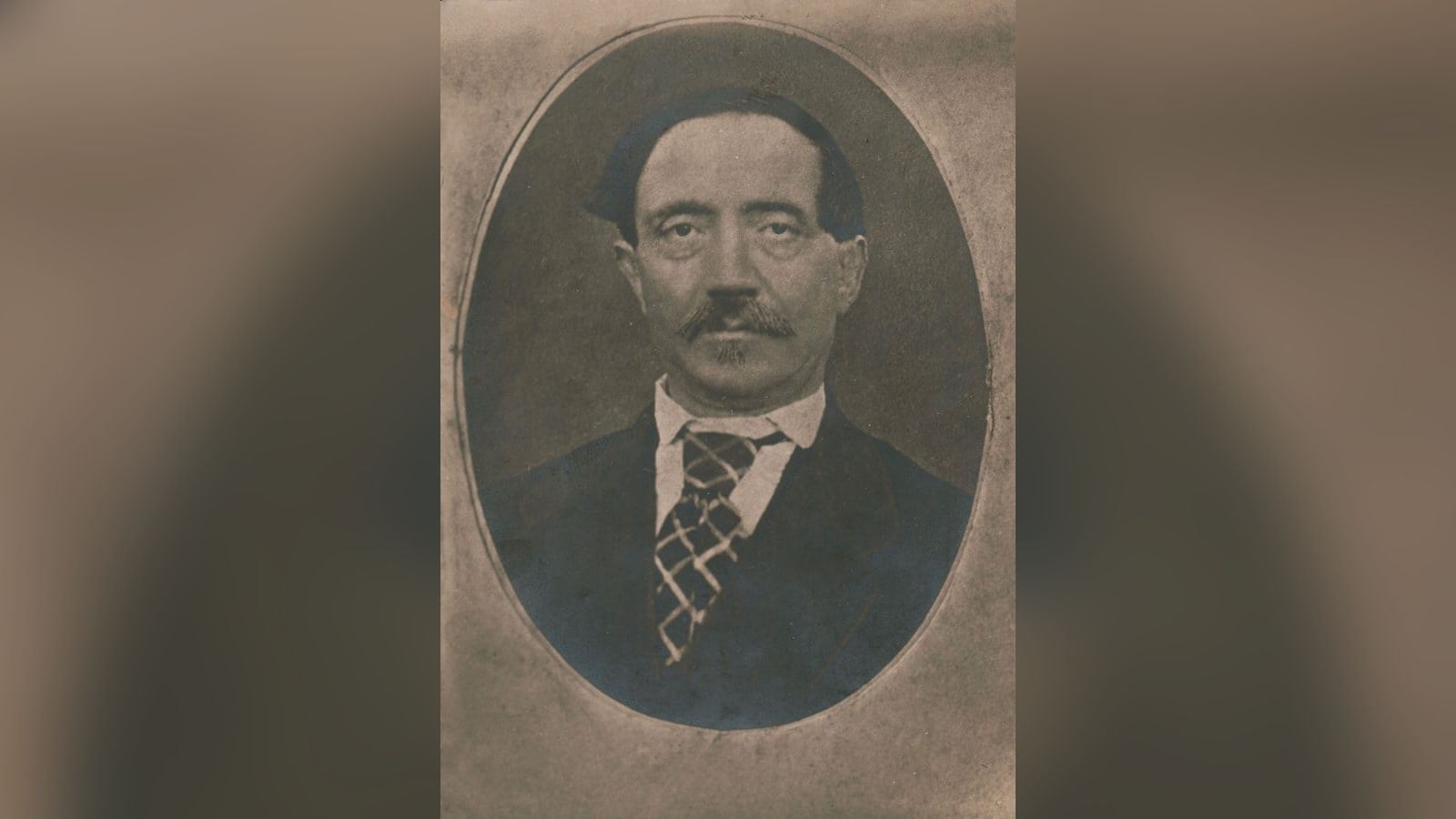
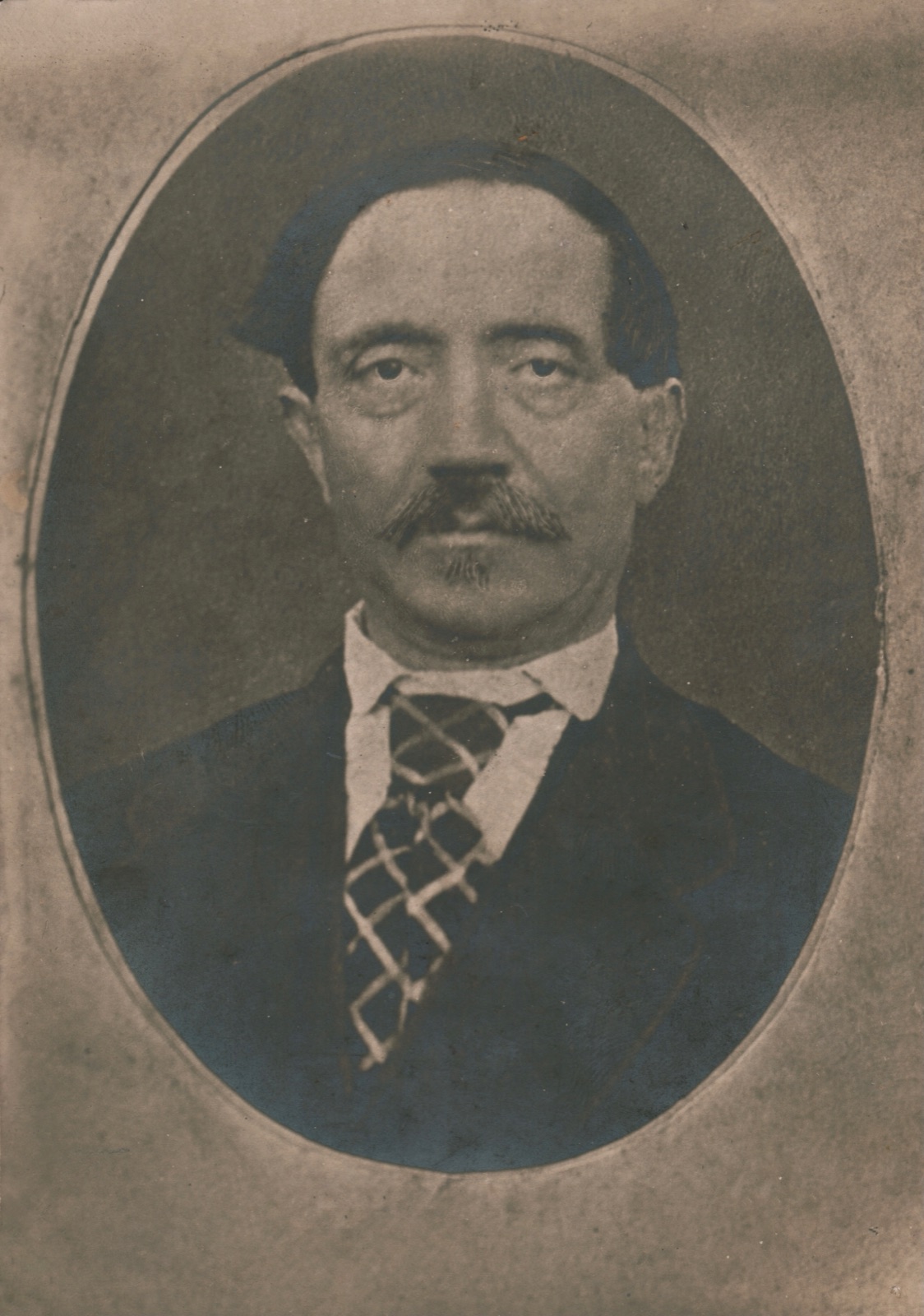 Girolamo de Rada (1814-1903), Arbëresh poet from Macchia Albanese, Calabria — editor of Fiamuri Arbërit and the diaspora anchor of the Albanian Rilindja.
Photo: Wikimedia Commons / public domain
Girolamo de Rada (1814-1903), Arbëresh poet from Macchia Albanese, Calabria — editor of Fiamuri Arbërit and the diaspora anchor of the Albanian Rilindja.
Photo: Wikimedia Commons / public domain
In 1999, Italian Law 482 (Norme in materia di tutela delle minoranze linguistiche storiche) formally recognized Arbëresh as one of twelve historic linguistic minorities of Italy, alongside Catalan, German, Greek, Slovenian, Croatian, French, and others. The law mandates support for minority languages in education, public broadcasting, and signage. Implementation has been uneven, but bilingual road signs and Arbëresh classes in primary schools are now visible across the seven regions.
UNESCO’s Atlas of the World’s Languages in Danger classifies Arbëresh as definitely endangered. The principal threats are familiar: dialect fragmentation between villages (some local varieties are mutually difficult, pushing speakers toward Italian as a regional lingua franca), education conducted primarily in Italian, intermarriage with non-Arbëreshë Italians, and the simple gravitational pull of a national language with 65 million speakers.
Religion and the Italo-Albanian Catholic Church
The religious institution most associated with the Arbëreshë is the Italo-Albanian Catholic Church (Chiesa cattolica italo-albanese). It is one of the 23 sui iuris Eastern Catholic churches in full communion with Rome, and it is one of the smallest — approximately 60,000 members — but its liturgical and cultural weight inside the community is enormous.
Eastern liturgy, Western communion
The Italo-Albanian Catholic Church uses the Byzantine Rite: services follow the Divine Liturgy of St. John Chrysostom, are celebrated in Albanian (and historically Greek), and look and sound Eastern Christian. Iconostases divide nave from sanctuary. Married men can be ordained as priests, following the Eastern tradition. Holy days follow Eastern dates. To a visitor, a Sunday liturgy at Piana degli Albanesi or San Demetrio Corone feels far closer to an Orthodox service than to a Roman Catholic Mass.
The doctrinal commitment, however, is to Rome. The Pope is recognized as the head of the church. The Italo-Albanian Catholic Church is fully Catholic in the dogmatic sense; it preserves the Eastern form of Catholicism that the Albanian settlers brought with them in the 15th century, before the Counter-Reformation tightened the visual unity of the Latin Church.
Three institutional pillars
The church operates through three main institutions:
- The Eparchy of Lungro (Calabria), erected 1919, covers the mainland Arbëreshë communities.
- The Eparchy of Piana degli Albanesi (Sicily), erected 1937, covers the Sicilian Arbëreshë.
- The Territorial Abbacy of Santa Maria di Grottaferrata (Lazio), founded in 1004 by Greek monks and elevated to a territorial abbey in 1937, serves as the monastic and spiritual center.
Together they form the institutional backbone that has kept the Arbëreshë culturally distinct for half a millennium. When linguists, anthropologists, or visiting Albanian officials want to find the heart of the community, they go to one of these three places.
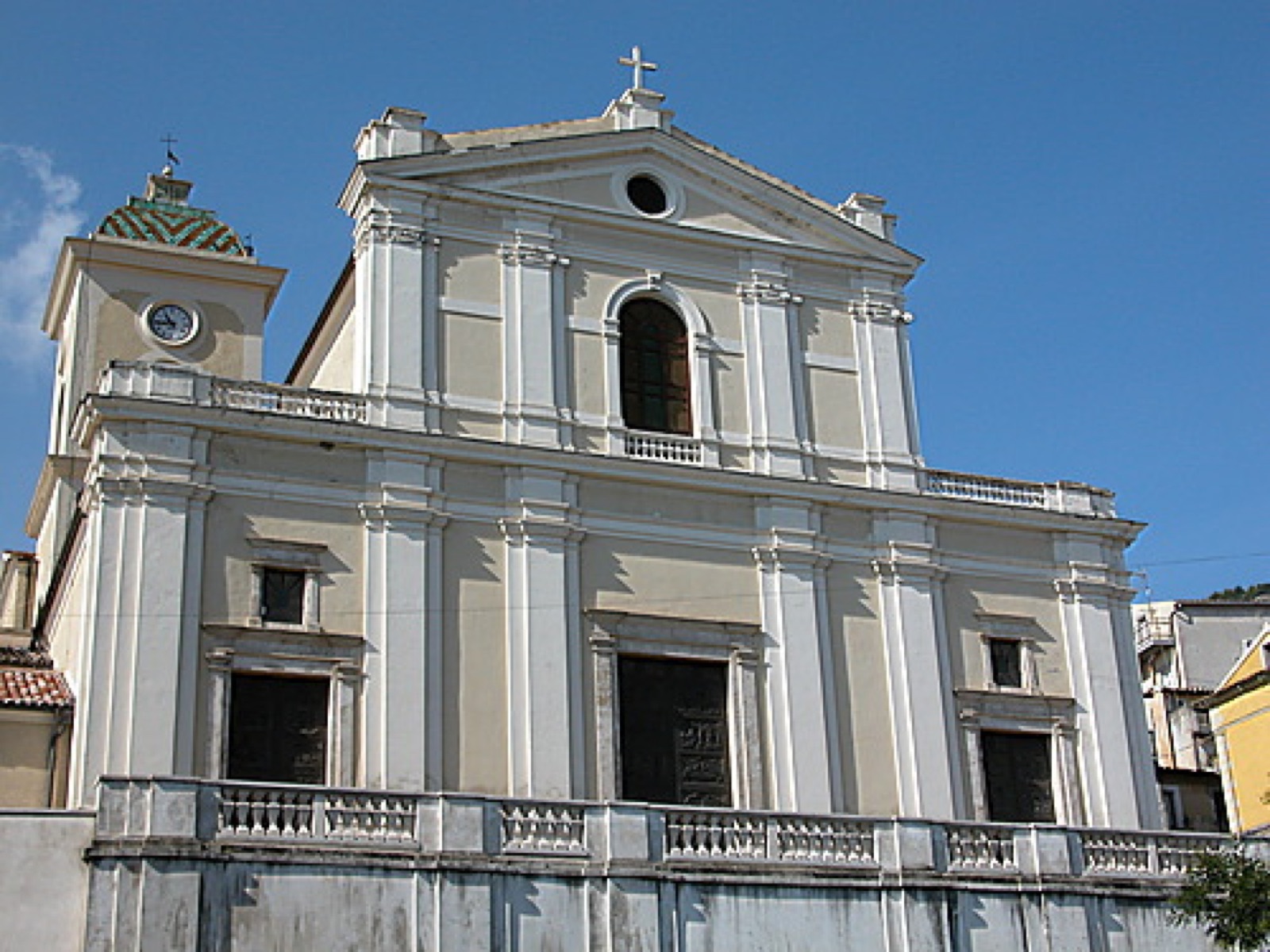 Cathedral of St. Nicholas of Myra in Lungro, Calabria — built 1721, raised to cathedral status when the mainland Italo-Albanian eparchy was erected in 1919.
Photo: Wikimedia Commons / CC BY-SA
Cathedral of St. Nicholas of Myra in Lungro, Calabria — built 1721, raised to cathedral status when the mainland Italo-Albanian eparchy was erected in 1919.
Photo: Wikimedia Commons / CC BY-SA
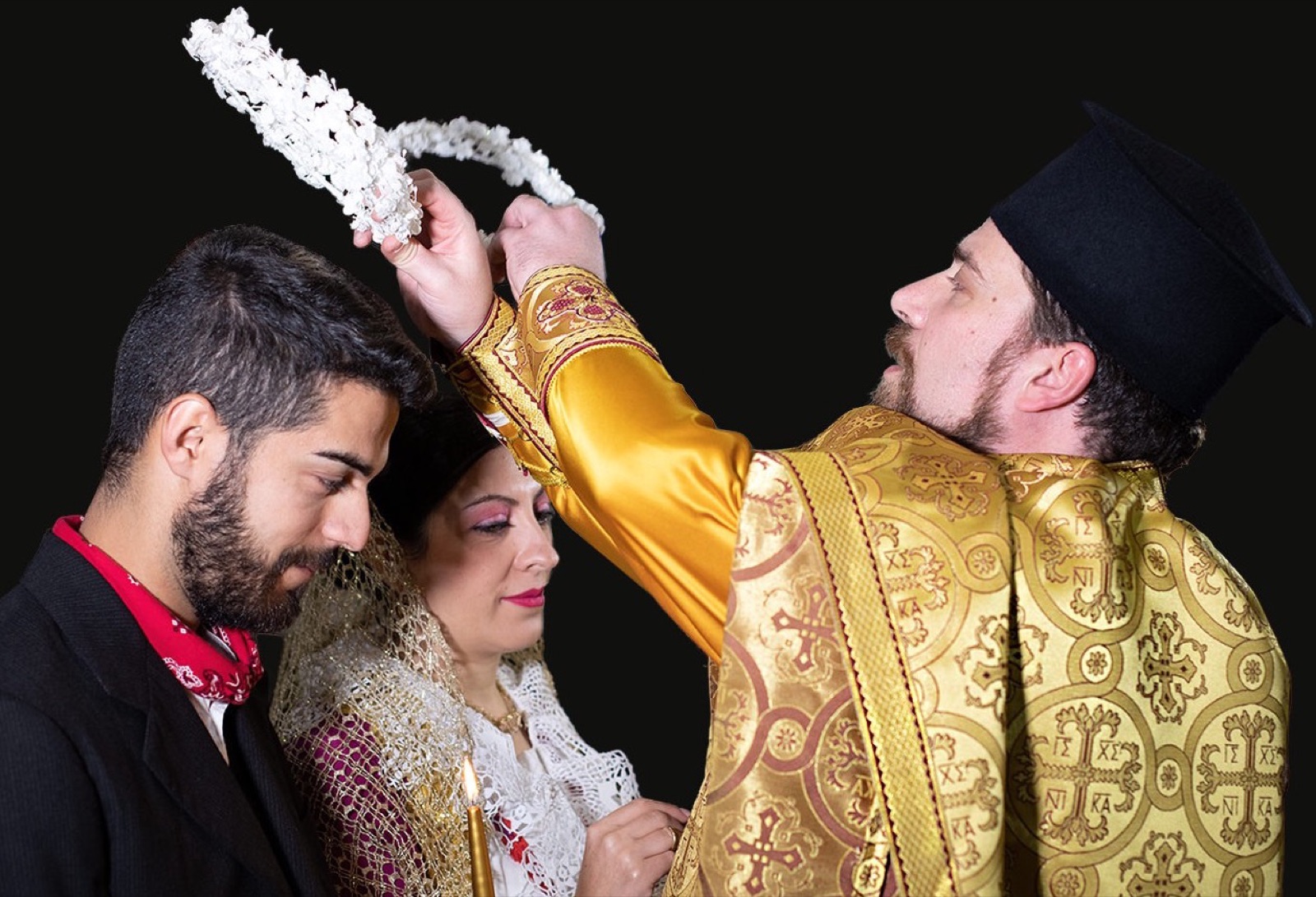 The crowning rite during a Byzantine-rite Italo-Albanian wedding in Calabria — a sacramental tradition the Arbëreshë carried from the medieval Albanian Orthodox world.
Photo: Wikimedia Commons / CC BY-SA
The crowning rite during a Byzantine-rite Italo-Albanian wedding in Calabria — a sacramental tradition the Arbëreshë carried from the medieval Albanian Orthodox world.
Photo: Wikimedia Commons / CC BY-SA
Culture and traditions
Beyond the church, a thicker layer of folk culture has carried the Arbëreshë identity from village to village.
Vajtime — funeral laments. Sung primarily by women, the vajtime are extended sung dirges for the dead — improvised, formulaic, and structurally close to lament traditions found across the Balkans and the Mediterranean. The form is now mostly preserved at older funerals and in cultural performance, but its melodic patterns are unmistakably Albanian.
Traditional clothing. Arbëreshë women’s traditional dress is among the most visually distinctive in southern Italy: long pleated skirts, red and gold embroidered bodices, gold thread on cuffs and collars, and elaborate headpieces. The dress is still worn at weddings, religious feasts, and major civic events, and it remains one of the strongest visual signals of Arbëreshë identity.
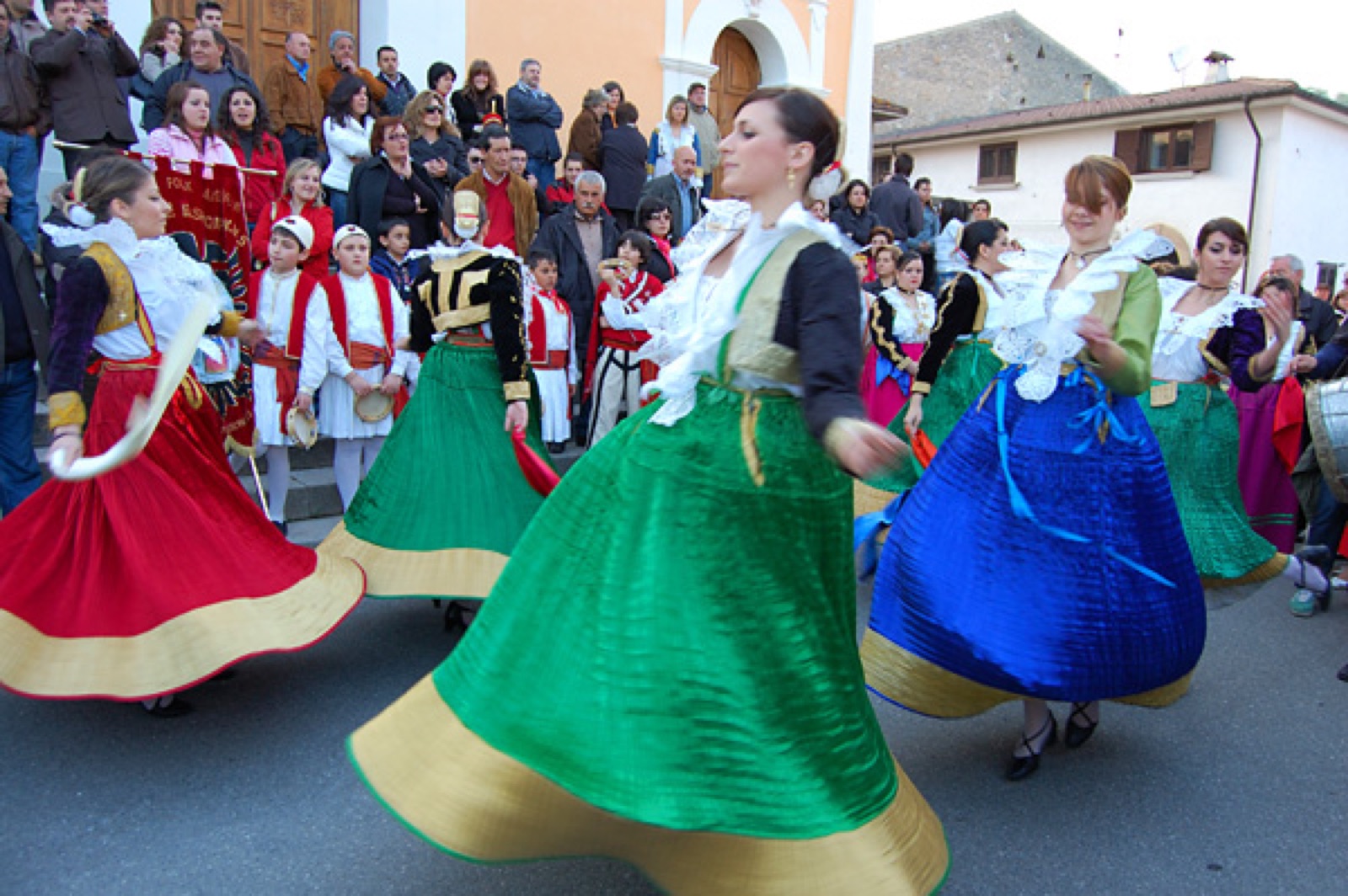 Traditional Arbëreshë women’s dress from San Basile, Calabria — pleated skirts, red-and-gold embroidered bodices, and the elaborate headpiece still worn at weddings and feasts.
Photo: Wikimedia Commons / CC BY-SA
Traditional Arbëreshë women’s dress from San Basile, Calabria — pleated skirts, red-and-gold embroidered bodices, and the elaborate headpiece still worn at weddings and feasts.
Photo: Wikimedia Commons / CC BY-SA
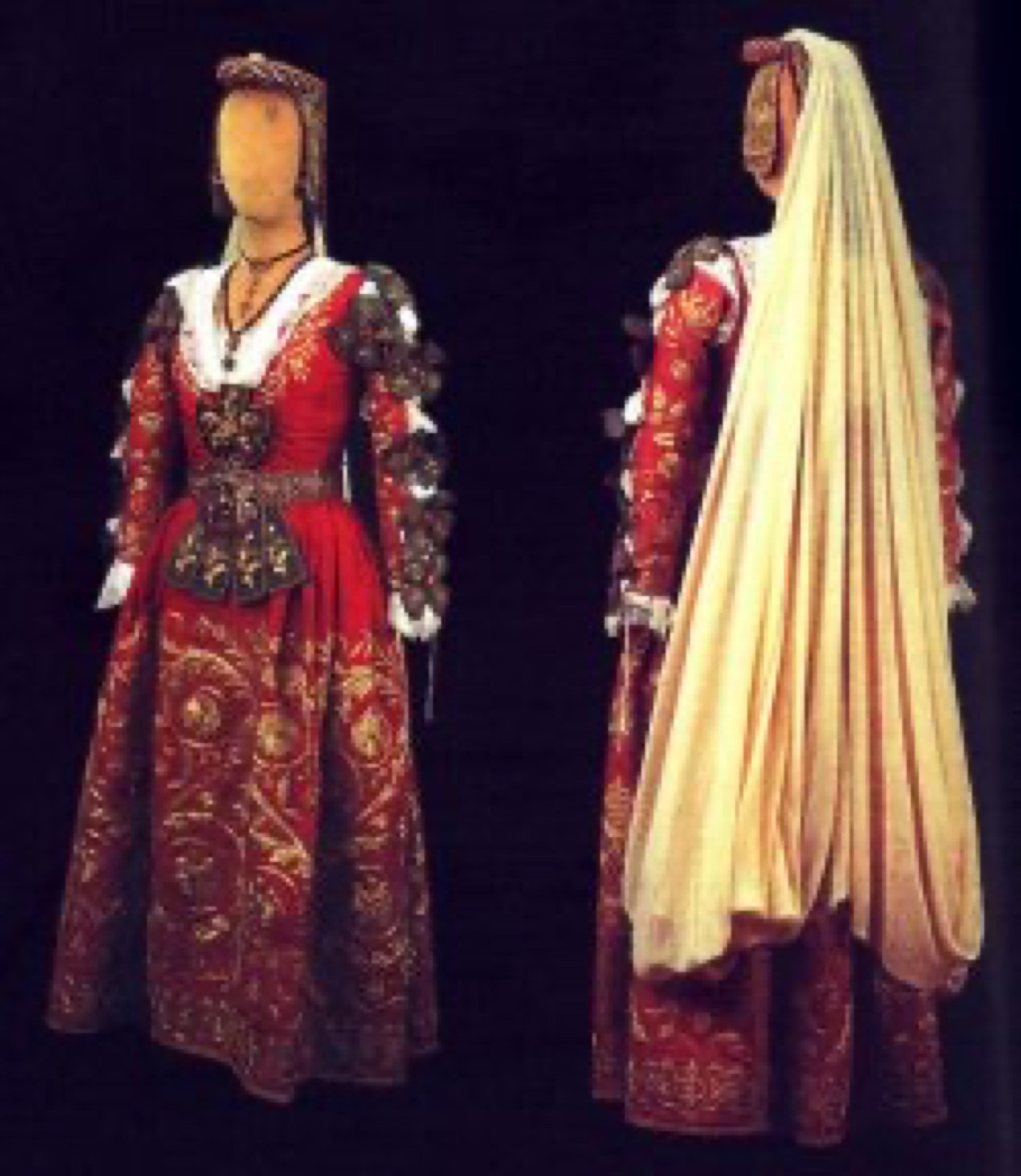 The ncilona, the Arbëreshë wedding dress of Piana degli Albanesi, Sicily — worn at the Byzantine-rite Catholic ceremony that anchors the community’s largest annual gatherings.
Photo: Wikimedia Commons / CC BY-SA
The ncilona, the Arbëreshë wedding dress of Piana degli Albanesi, Sicily — worn at the Byzantine-rite Catholic ceremony that anchors the community’s largest annual gatherings.
Photo: Wikimedia Commons / CC BY-SA
Easter celebrations. Easter (Pashkët) is the largest event in the Arbëreshë calendar. Piana degli Albanesi in particular is famous for its Easter rituals: Byzantine-rite processions, communal blessings of red eggs, and the bishop’s blessing of the faithful in full Eastern liturgical regalia. Tourists come from across Italy to witness it.
Valle and other dance traditions. The valle — circle and line dances common across the Albanian-speaking world — survives in regional Arbëreshë variations. Specific dances are tied to specific feasts; the Easter Tuesday valle in some Calabrian villages reenacts events from local Arbëreshë history, with women in traditional dress dancing through the village in a long human chain. It is one of the few diaspora dance traditions in Europe still routinely performed by ordinary villagers rather than only by folk-revival ensembles.
Famous Arbëreshë
The Arbëreshë community has produced figures whose names register in Italian and Albanian history far out of proportion to its size.
Francesco Crispi (1818-1901) was born in Ribera, Sicily, into an Arbëreshë family. He became one of the architects of Italian unification, served twice as Prime Minister of Italy (1887-1891 and 1893-1896), and remains one of the most consequential Sicilian politicians of the 19th century.
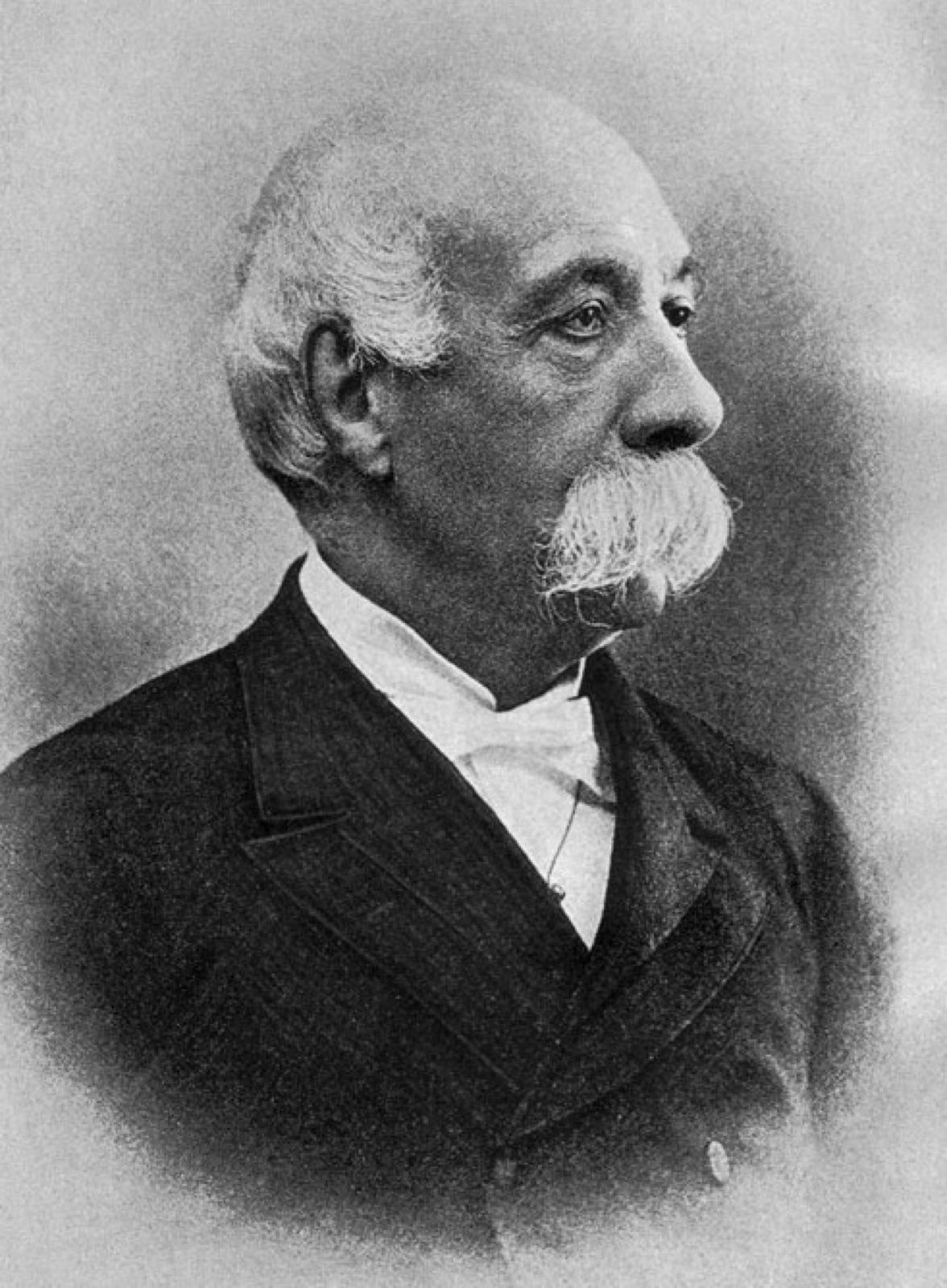 Francesco Crispi (1818-1901), born to an Arbëreshë family in Ribera, Sicily — twice Prime Minister of Italy (1887-1891, 1893-1896) and a central architect of Italian unification.
Photo: Wikimedia Commons / public domain
Francesco Crispi (1818-1901), born to an Arbëreshë family in Ribera, Sicily — twice Prime Minister of Italy (1887-1891, 1893-1896) and a central architect of Italian unification.
Photo: Wikimedia Commons / public domain
Antonio Gramsci (1891-1937), the Sardinian-born Marxist philosopher whose Prison Notebooks shaped 20th-century political theory, had an Arbëreshë father — Francesco Gramsci, whose family believed they had emigrated from Albania around 1821 (his mother, Giuseppina Marcias, was Sardinian, from a landowning family in Sorgono, Nuoro province).
Costantino Mortati (1891-1985), born in Corigliano Calabro, Calabria, to a family with Arbëreshë roots on both sides (San Basile on his mother’s side, Civita on his father’s), became one of Italy’s foremost constitutional scholars, helped draft the 1948 Italian Constitution, and served on the Italian Constitutional Court.
Giorgia Meloni, who became Prime Minister of Italy in 2022, has publicly spoken about her maternal grandmother’s Arbëreshë roots in Sicily.
This is far from the full list — Arbëreshë surnames recur through Italian academia, the Catholic clergy, the military, and the arts — but it captures the pattern. A community of 100,000 active speakers in a country of 60 million has shaped Italian public life for two centuries.
Connection to modern Albania and the wider diaspora
For most of the modern era, the Arbëreshë and the rest of the Albanian-speaking world existed in near-total separation. The Ottoman period closed the Adriatic; the communist period in Albania (1945-1991) sealed the border completely.
That changed after 1990. With Albanian communism collapsing and the Italian-Albanian academic relationship reopening, formal exchange programs began between Albanian universities and the Arbëreshë cultural centers. The University of Tirana has hosted Arbëreshë students; the University of Calabria runs a respected Albanian-studies program; bilateral cultural agreements between Albania and Italy explicitly recognize the Arbëreshë heritage as a shared inheritance.
The Republic of Albania today treats the Arbëreshë as part of the broader ethnic Albanian community. The 2020 Albanian Citizenship Law (No. 113/2020) grants automatic citizenship by descent to anyone with at least one Albanian parent, with no residence requirement, and Albanian law generally permits dual citizenship. That descent path does not reach back further than a parent (a grandparent connection instead reduces, but does not eliminate, the residency requirement for naturalization) — so for Arbëreshë whose only Albanian ancestry is centuries back, standard naturalization rather than automatic descent is the relevant route.
For the Albanian American diaspora, the Arbëreshë story is a useful parallel. Most Albanian Americans descend from late-19th- and 20th-century migration to the United States. The Arbëreshë descend from late-medieval migration to Italy. The two communities share a single ancestral homeland, a single language family, and a similar set of structural diaspora questions — language transmission across generations, religious institutional life in a host society, political representation, and the slow pull of assimilation. They answered those questions five centuries earlier than American Albanians did, and watching how their answers have held up — across language, faith, and identity — is instructive.
Add yourself to the count
The Arbëreshë are the oldest continuously-existing Albanian diaspora. They have been speaking Albanian in southern Italy since before the United States existed and before the modern Albanian and Italian states took their current form. The community is changing, the language is endangered, and the next generation will determine how much of the inheritance survives — but the inheritance is real, and it is shared.
For Albanian Americans curious about their place in this much longer story, the National Albanian Registry treats Arbëreshë heritage as one valid path to Albanian identity, alongside ancestry from Albania, Kosovo, North Macedonia, Montenegro, and the Cham and Arvanite communities. If your family line includes Arbëreshë roots — even at multiple generations’ remove — you are part of the count.
The US Census records about 230,000 Albanian Americans. The real number is closer to a million, because the count misses most of us for reasons we’ve documented at length: mixed country-of-birth answers, skipped ancestry write-ins, and whole branches of a family the form never reaches. Arbëreshë descent counts.
You can add yourself at albanianregistry.org/register.