
The short answer: No. “Northern Epirus” is a term from Greek irredentism, not a neutral name for southern Albania. There is a recognized Greek minority in the south — its existence is real and its rights matter — but the region overall has had an Albanian-speaking majority throughout the modern period. A minority living somewhere is not the same as that place belonging to another country. This is part of our guide to where Albanians come from.
Most of the myths used against Albanians come from the north and east — the Serbian-nationalist side. This one comes from the south. It’s worth answering with the same care, and with an honest acknowledgment the others don’t require: unlike the Caucasus story, there is something real underneath this one.
Start with what’s true
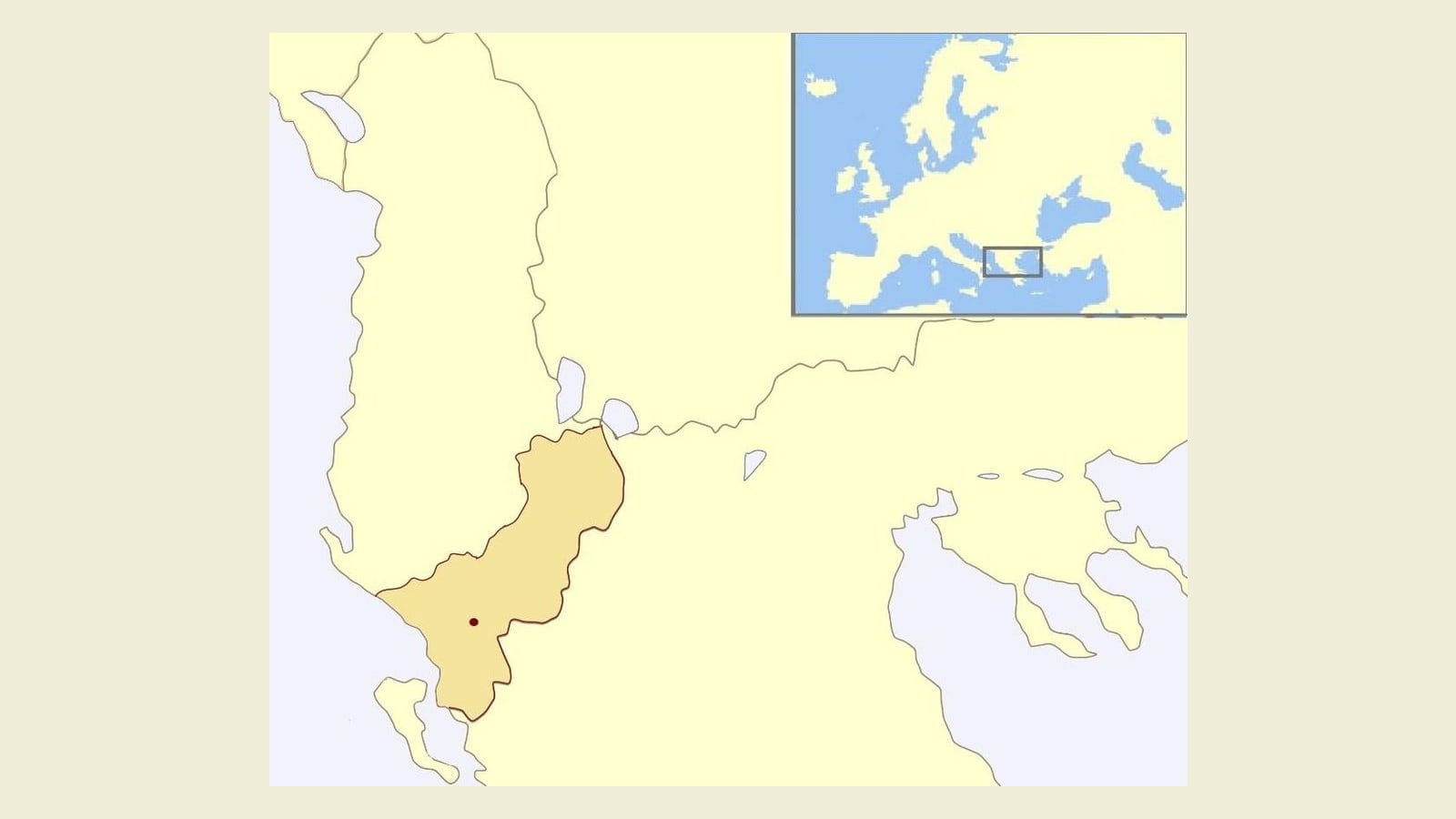
There is a Greek minority in southern Albania. It is a recognized national minority, concentrated around Gjirokastër, the Dropull valley, Sarandë, and Himarë. It has churches, schools, and a distinct identity, and under any decent standard it is entitled to full minority rights — language, education, representation.
NAR’s position on that is not complicated: a recognized minority is real, and its protections should be real too. Nothing in this piece argues otherwise.
The dishonest move is the leap from “a Greek minority lives in southern Albania” to “southern Albania is Greek.” Those are different claims, and the second does not follow from the first.
What ‘Northern Epirus’ actually means
“Northern Epirus” (Vorio Epirus) is not an administrative region or a neutral geographic term. It is the name Greek nationalism gives to southern Albania.
Ancient Epirus was a region straddling what is now the Greek-Albanian border. When the 1913 settlement drew Albania’s southern boundary — the Protocol of Florence — it placed the northern part of that old region inside the new Albanian state. “Northern Epirus” reframes that Albanian territory as a Greek land on the wrong side of a line.
The term is inseparable from a specific event: in 1914, local Greeks proclaimed an Autonomous Republic of Northern Epirus, which won brief autonomy under the Protocol of Corfu and then dissolved in the chaos of the First World War. That short-lived episode — not any continuous status — is what the modern claim reaches back to.
The demographics
The maximalist claim requires southern Albania to be essentially Greek. It isn’t, and hasn’t been in the modern period.
Population figures for the Greek minority are genuinely contested and politically loaded: Albanian census counts are on the lower end, Greek estimates on the higher end, and the honest answer is that the true number sits somewhere in a disputed range. But even the higher estimates describe a minority concentrated in specific districts, not a majority across the south. The region’s towns and countryside are, and have long been, majority Albanian-speaking.
So the picture is a real minority in a majority-Albanian region — which is exactly what minority-rights frameworks exist to handle. It is not the picture of a Greek territory under foreign rule.
A minority is not a deed
This is the heart of it. Minorities live in almost every country, often concentrated in border regions with a neighboring state — Hungarians in Romania, Germans in Italy’s South Tyrol, and yes, Greeks in southern Albania and Albanians in Greece and across the border in Kosovo, Montenegro, and North Macedonia.
The existence of a minority creates obligations — to protect its language, culture, and rights. It does not create a claim by the neighboring state to the territory. If it did, the map of the Balkans would have no stable borders at all, in any direction, and Albanians — a people split across five states by the 1913 borders — would have some of the largest claims of anyone.
The consistent principle, and the one NAR holds, is the fair one: protect minorities everywhere, respect borders everywhere. “Northern Epirus” asks you to apply that principle in one direction only.
Why the myth gets used
Like the others, this claim is aimed at the present. Reframing southern Albania as “Northern Epirus” keeps a territorial question rhetorically alive and casts Albanian sovereignty over the south as provisional. It trades on a real minority to imply an unreal ownership.
The accurate version respects everyone in it: a recognized Greek minority with real rights, living in a region that is part of Albania and has long been majority Albanian. Both halves of that sentence are true. The myth needs you to drop the second one.
For the full picture — Illyrian origins, the DNA evidence, and the other myths built to deny Albanian belonging — read Where Do Albanians Come From?. And if you’re Albanian American, the National Albanian Registry exists to count you — add your name, free and in about two minutes.