
Albanian history is older than the borders of Albania.
The people who became Albanians have lived in the western Balkans for at least 2,000 years of recorded presence, descended at least partially from the Illyrians — an Indo-European group whose kingdoms ruled the eastern Adriatic before Rome did. From there, the line runs through Byzantine Christianization, Slavic-era retreat into mountain refugia, the medieval Principality of Arbanon, Skanderbeg’s 25-year resistance to the Ottomans, four centuries of Ottoman rule and conversion, the 19th-century Rilindja Kombëtare (National Renaissance), independence at Vlora in 1912, the turbulent 20th century of monarchy, fascist invasion, and 45 years of communism, and the post-1991 era — Kosovo’s war and independence, the EU candidacies, and the modern diaspora that now stretches across five continents (Wikipedia: History of Albania).
This is the compressed version. We’ve written it for diaspora readers who want the full arc on one page, and for curious outsiders who want a non-tourist, non-romantic overview with sources. We move chronologically and we name what’s contested rather than papering over it. The point is not to celebrate or condemn — Albanian history contains plenty of both — but to give the shape of how a people went from Illyrian frontier kingdoms to a 7-10 million strong global community.
A note on framing: the National Albanian Registry treats Albanian history as one continuous story across borders. Albanians from the Republic of Albania, Kosovo, North Macedonia, Montenegro, the Preševo Valley, the Italian Arbëreshë villages, the Greek Arvanites, and the modern Western diaspora share the historical record below. Where the record is unsettled, we say so.
Act 1 — Illyrian roots (pre-Roman through 200 BC)
Before there was Albania, there was Illyria.
The Illyrians were a cluster of Indo-European peoples who inhabited the western Balkans from at least the second millennium BC — a swath running roughly from the Istrian peninsula in the north down through modern-day Albania and into Epirus. They were not a single state but a confederation of tribes and kingdoms, organized around fortified hilltop settlements, coastal trading cities, and the Adriatic shipping lanes (Wikipedia: History of Albania).
The most prominent Illyrian polities along what is now Albanian territory:
- The Encheleae — among the earliest documented Illyrian groups, centered in the southern lakes region around Lake Ohrid.
- The Taulantii — a major kingdom in central-coastal Illyria. Their late-4th-century BC king Glaucias intervened in Epirote dynastic affairs and sheltered the young Pyrrhus of Epirus.
- The Ardiaei — by the 3rd century BC, the Ardiaean kingdom under King Agron and Queen Teuta was the dominant Illyrian power, controlling territory from the Neretva River south to the borders of Epirus.
The decisive moment in Illyrian history came around 231 BC, when Queen Teuta assumed the regency after Agron’s death. Ardiaean ships ranged the Adriatic and harassed Roman commercial shipping. Rome demanded restraint, Teuta refused, and the Illyrian Wars (229-168 BC) followed. Across three campaigns, Roman forces progressively dismantled Illyrian independence. The final Illyrian king, Gentius, was defeated and captured in 168 BC, and the Illyrian kingdoms were absorbed into the Roman provincial system (Wikipedia: History of Albania).
The linguistic legacy is what matters most for the Albanian story. The Albanian language is the sole surviving member of the Albanoid branch of Indo-European. Scholarly consensus, while debated in detail, accepts that Albanian descends at least partially from a Paleo-Balkan substrate that included Illyrian — preserved through long, continuous regional presence. Place names in Albania carry through directly from antiquity: the Drin river, Durrës (ancient Dyrrhachium), Shkodër (Scodra). Messapic, an extinct language of southern Italy spoken by Illyrian descendants, provides the closest linguistic parallels to Albanian and is the strongest external evidence for the Illyrian-Albanian link (Wikipedia: Origin of the Albanians).
Britannica notes plainly that “the origins of the Albanian people are not definitely known,” which is a fair representation of where the field stands. What is not in dispute: by the time Rome controlled the Balkans, the linguistic ancestors of the Albanians were already there.
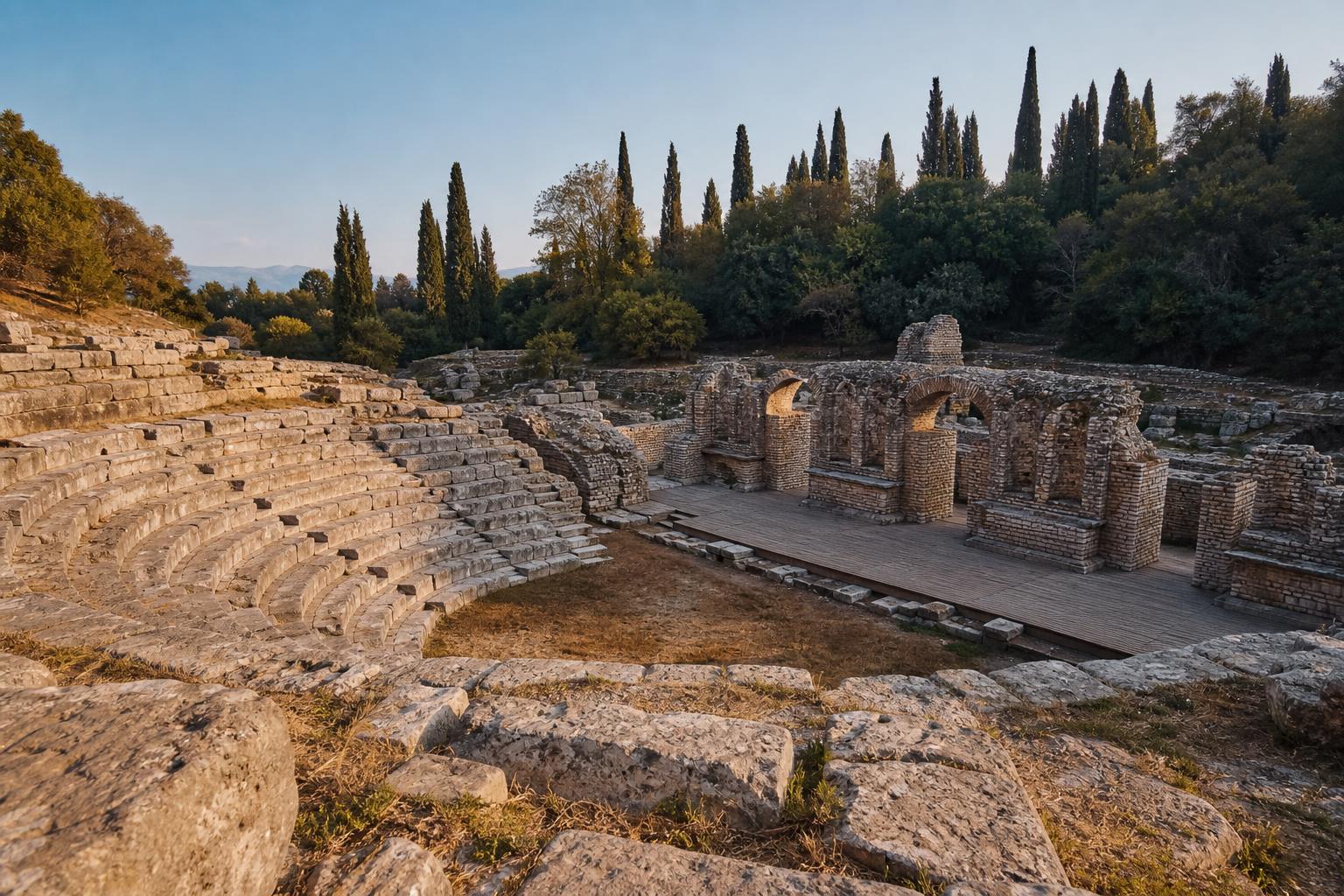
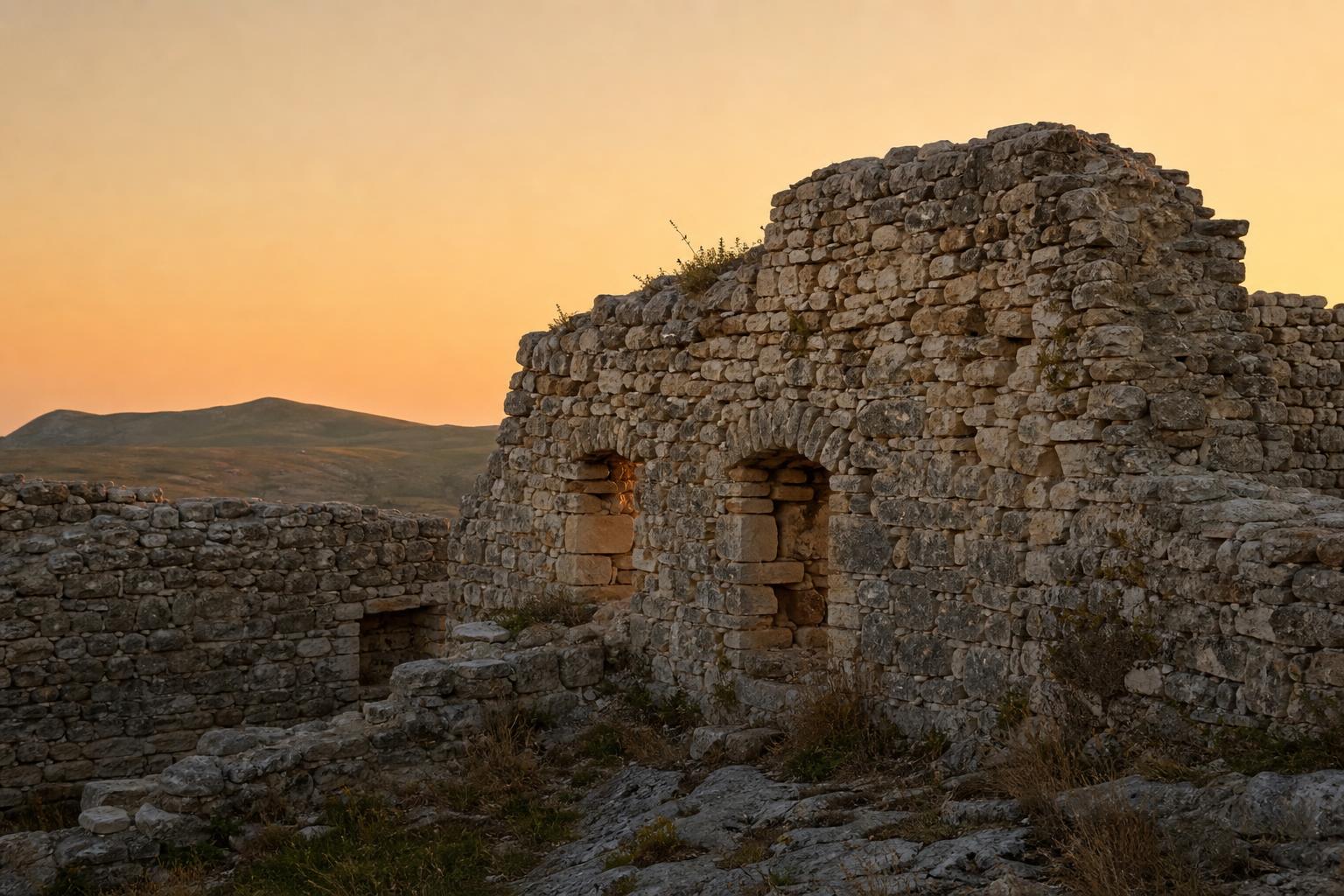 Illyrian fortress ruins, western Balkans — the kind of hilltop strongholds the Encheleae, Taulantii, and Ardiaei built across present-day Albania before Roman conquest.
Graphic by NAR
Illyrian fortress ruins, western Balkans — the kind of hilltop strongholds the Encheleae, Taulantii, and Ardiaei built across present-day Albania before Roman conquest.
Graphic by NAR
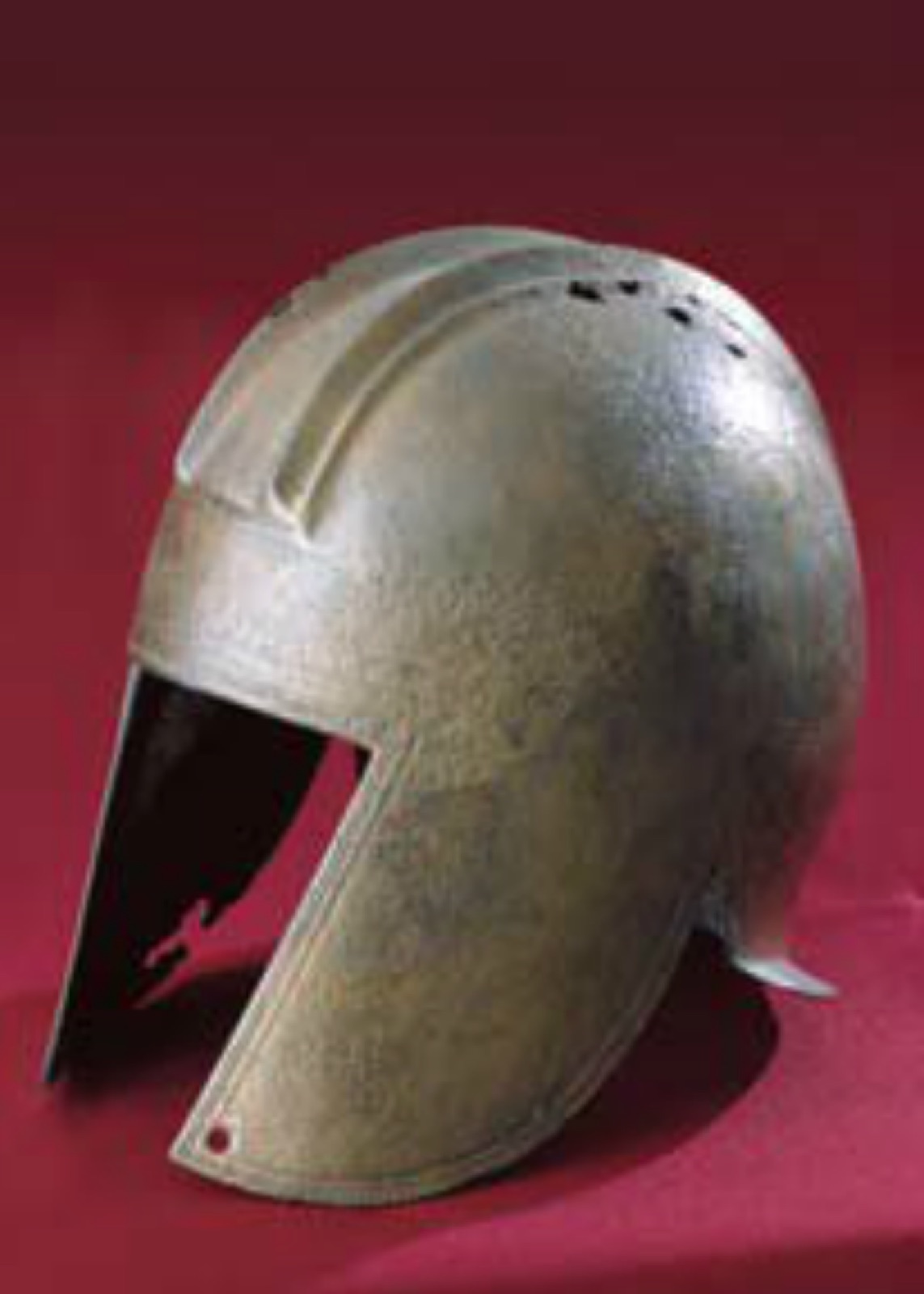 Illyrian-type bronze helmet, 4th century BC, excavated at Budva on the Montenegrin coast — the standard cavalry helmet of Illyrian warriors across the western Balkans.
Photo: Wikimedia Commons / public domain
Illyrian-type bronze helmet, 4th century BC, excavated at Budva on the Montenegrin coast — the standard cavalry helmet of Illyrian warriors across the western Balkans.
Photo: Wikimedia Commons / public domain
Act 2 — Roman through Byzantine (200 BC – 1100 AD)
Roman administration of Illyria began in earnest after 168 BC and was consolidated under the Empire into a set of provinces — Illyricum, Dalmatia, Epirus Nova, and later Praevalitana — covering what is today Albania, Kosovo, Montenegro, and adjacent territories. The Roman period was long and structurally transformative: roads (the Via Egnatia ran across central Albania from Durrës to Thessaloniki and on to Constantinople), cities, Latin loanwords absorbed into the proto-Albanian language, and gradual Christianization from the late Empire onward.
The pivotal political moment came in 395 AD, when the Roman Empire was permanently divided between Eastern (Byzantine) and Western halves. Albanian-speaking lands fell on the Eastern side, becoming part of the Byzantine Empire — and they would remain in the Byzantine sphere, in one form or another, for the next thousand years (Wikipedia: History of Albania).
The 6th and 7th centuries brought the Slavic migrations. Slavic-speaking peoples moved south into the Balkans in waves, eventually settling across what are today Bulgaria, Serbia, North Macedonia, and inland Greece. The proto-Albanian-speaking population was pushed into the mountainous refugia of the central-northern western Balkans — the highland spine running through modern Albania, Kosovo, and western North Macedonia. It is in this terrain that the language survived. The pattern is well-documented archaeologically and linguistically: lowland Albanian-speaking populations shifted to Slavic, Greek, or Latin/Romance over centuries; highland populations retained Albanian.
The archaeological bridge between late-antique Illyria and the medieval Albanians is the Komani-Kruja culture (4th-9th c. AD) — a Latin-Illyrian assemblage spread across central and northern Albania, southern Montenegro, and western North Macedonia. Excavations at Komani and the nearby Dalmace hillfort have turned up imported objects from across the Byzantine world, Sicily, the northern Balkans, Hungary, and Crimea — evidence of active trade contacts rather than an isolated refugee population, and this population is understood to have fed directly into the later medieval principality of Arbanon (Wikipedia: Origin of the Albanians).
Albanians enter the written historical record under their own ethnic name in 1078-1079 AD, in the writings of the Byzantine historian Michael Attaleiates (c. 1022-1080), who refers to “Arbanitai” as a distinct ethnic group active in the western Balkans (Wikipedia: Origin of the Albanians). This is the first unambiguous Byzantine reference to Albanians as Albanians. Earlier sources — Ptolemy’s “Albanoi” tribe in the 2nd century AD, scattered classical-era references — describe Illyrian populations in the same geography but cannot be tied directly to the medieval ethnonym without inference.
By 1100 AD, then: a Christianized, Byzantine-administered, mountain-anchored, Albanian-speaking population is in place across the central western Balkans, with a documented ethnic identity recognized by its imperial neighbors.
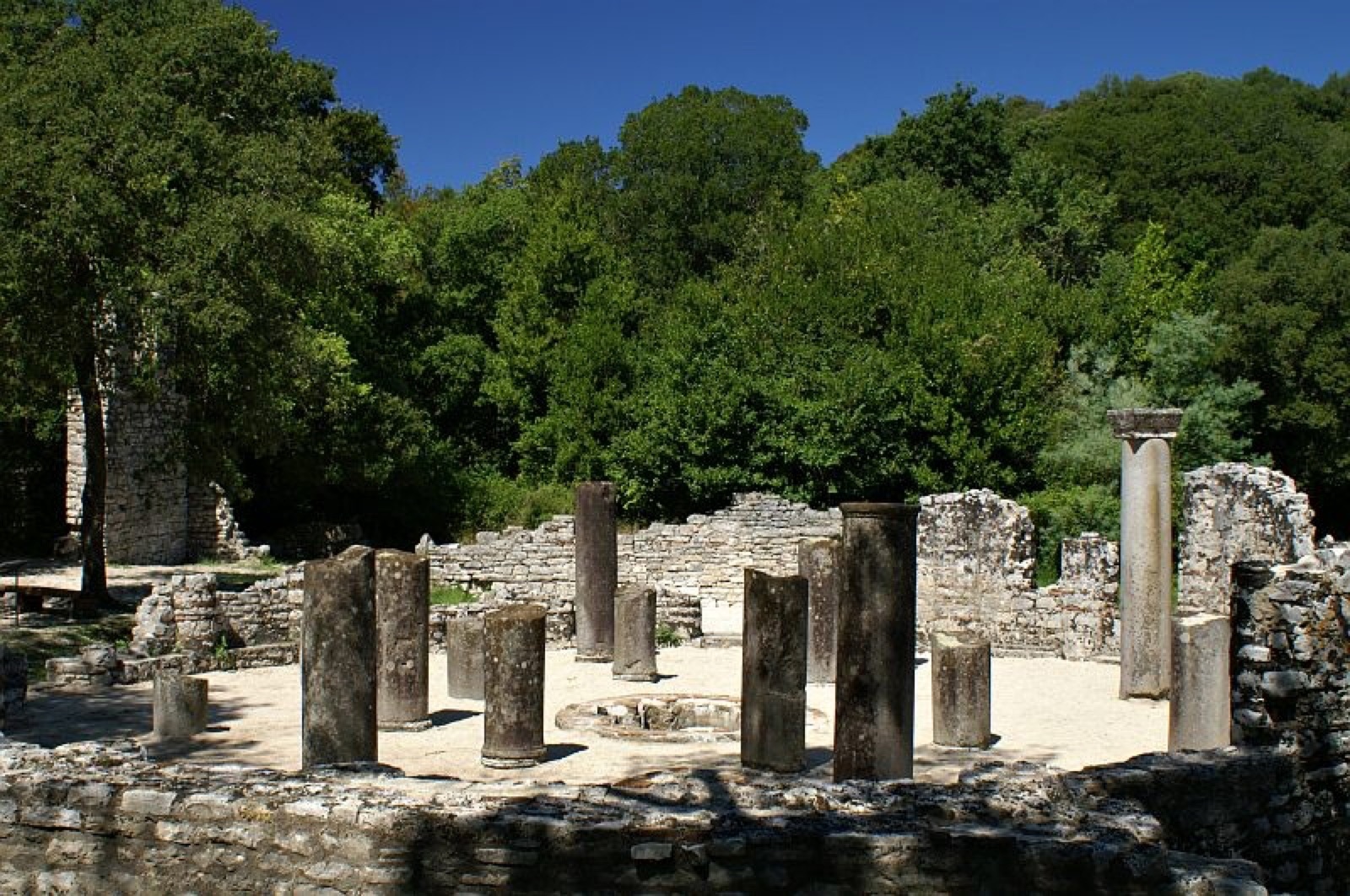 Baptistery mosaic floor at Butrint, southern Albania, 5th century AD — one of the largest surviving late-Roman Christian complexes on the eastern Adriatic, now a UNESCO World Heritage site.
Photo: Wikimedia Commons / CC BY-SA
Baptistery mosaic floor at Butrint, southern Albania, 5th century AD — one of the largest surviving late-Roman Christian complexes on the eastern Adriatic, now a UNESCO World Heritage site.
Photo: Wikimedia Commons / CC BY-SA
Act 3 — Medieval Albanian principalities (1100-1400)
The first Albanian polity to enter the historical record is the Principality of Arbanon, founded around 1190 AD by an archon named Progon in the highland region around Krujë in central-northern Albania (Wikipedia: History of Albania). Arbanon was a small mountain principality, vassal at various points to the Byzantine Empire and its successor states, but it gave the Albanian-speaking population its first named political existence on the medieval map. After the Sack of Constantinople in 1204 by the Fourth Crusade, Arbanon achieved a brief stretch of effective independence within the broken Byzantine world.
The 13th-14th centuries were turbulent. Rule over Albanian-speaking territory passed in turn through:
- The Despotate of Epirus (Greek-Albanian successor state to Byzantium, 1205-onward).
- The Sicilian Kingdom of Albania (1258-1274) under Charles of Anjou, a short-lived Western feudal experiment based in Durrës.
- The Serbian Empire under Stefan Dušan (1331-1355), which absorbed most Albanian territory into a Greater Serbian polity that fragmented at Dušan’s death.
Out of the fragmentation came the great age of Albanian feudal principalities. By the late 14th century, Albanian-speaking territory was a patchwork of noble houses, each controlling a fortress, a stretch of coast, or a mountain valley. The principal families:
- Thopia — central Albania around Krujë and Durrës.
- Muzaka — Berat and the central plain.
- Balsha — northern Albania and Montenegrin coast.
- Kastrioti — the small mountainous principality around Mat and Dibra in the central north (the family Skanderbeg would emerge from).
- Arianiti — the south.
- Dukagjini — the northern highlands. (The customary law code Kanuni i Lekë Dukagjinit takes its name from a 15th-century Dukagjini chieftain.)
Some of these houses were Catholic, some Eastern Orthodox; all spoke Albanian; all paid varying tribute or fealty to Venice, the Byzantine emperors, the Serbian crown, or — by the early 15th century — the rising Ottoman Empire (Wikipedia: History of Albania).
The first surviving Albanian-language written document is the Formula e Pagëzimit (Baptismal Formula), recorded in 1462 by Pal Engjëlli, archbishop of Durrës — a single sentence of Albanian text in a Latin pastoral letter, instructing priests on how to baptize parishioners in the local language. It is to Albanian what Beowulf is to English: not a literature, but a documented anchor proving the language was actively spoken and used in religious life. Pope Pius II’s correspondence in the same period regularly refers to “Albanenses” as a distinct people.
This was the world Skanderbeg was born into. A pluralistic patchwork of Catholic and Orthodox Albanian noble houses — proud, fractious, militarily competent at the regional scale, and increasingly squeezed by the Ottomans expanding northwest out of Anatolia.
Act 4 — Skanderbeg and the Ottoman conquest (1400-1500)
If Albanian history has a single hinge figure, it is Gjergj Kastrioti Skanderbeg (c. 1405-1468). We’ve written about Skanderbeg in detail at Skanderbeg; here we cover the role of the Ottoman wars in the broader arc.
Born around 1405 to Gjon Kastrioti, prince of the small mountain principality of Kastrioti, Skanderbeg was sent as a hostage to the Ottoman court as a child — the standard device by which the Ottomans kept vassal princes obedient. He was raised as a Muslim Ottoman officer, distinguished himself in the field, and rose to the rank of sanjakbey of Dibra by 1440 (Wikipedia: History of Albania).
In November 1443, during the Battle of Niš between Hungarian-led Christian forces and the Ottomans, Skanderbeg defected. He returned to his ancestral fortress of Krujë, raised over its walls the red banner with the double-headed black eagle of the Kastrioti family, renounced Islam, and declared the principality of Kastrioti restored. On 2 March 1444 at the League of Lezhë, he convened the major Albanian noble houses — Thopia, Muzaka, Arianiti, Dukagjini, Spani, Balsha — and was elected commander of a unified Albanian field army.
What followed was a 25-year resistance unlike anything else in 15th-century Balkan military history. With a core army of around 10,000 men drawn from the Albanian highlands, Skanderbeg defeated successive Ottoman campaigns over a quarter-century. Major engagements included the Battle of Torvioll (1444), the Battle of Albulena (1457), the First Siege of Krujë (1450) — at which Sultan Murad II personally led approximately 100,000 men against a 1,500-man Albanian garrison and was forced to lift the siege — and the Second Siege of Krujë (1466-1467) under Sultan Mehmed II, the conqueror of Constantinople, who likewise failed to take the city (Wikipedia: History of Albania).
Pope Calixtus III named Skanderbeg Athleta Christi (Athlete of Christ) in 1457. Pope Pius II planned to make him captain-general of a pan-European crusade in 1463, a plan cut short by Pius II’s own death.
Skanderbeg died of malaria in Lezhë on 17 January 1468, at age 62. He had been continuously in arms against the Ottoman Empire for 25 years and four months.
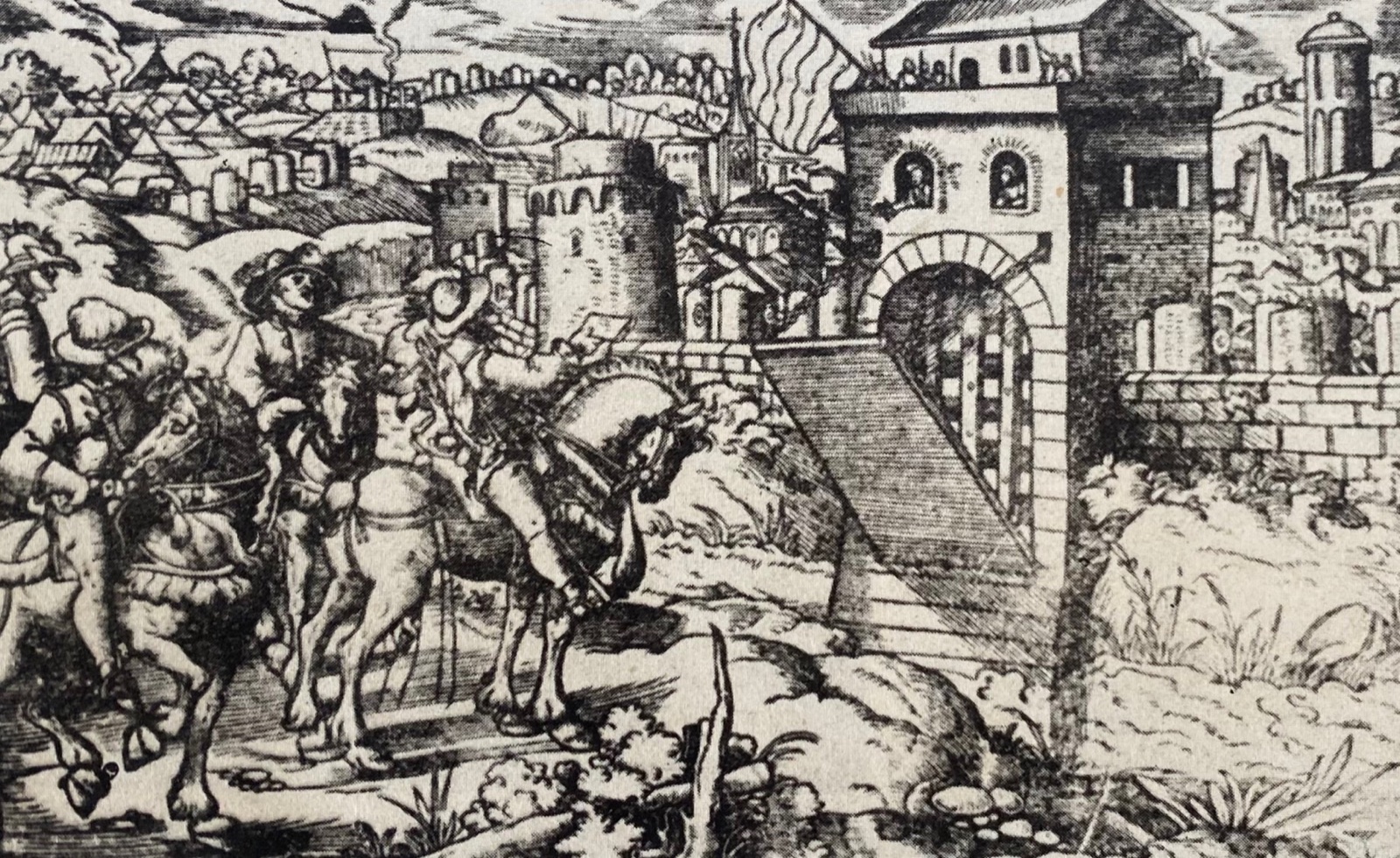 Skanderbeg’s return to Krujë, 1444 — the moment he renounced Ottoman service, raised the red Kastrioti banner with the double-headed black eagle, and opened the 25-year resistance.
Woodcut: Jost Amman, 16th century / Wikimedia Commons / public domain
Skanderbeg’s return to Krujë, 1444 — the moment he renounced Ottoman service, raised the red Kastrioti banner with the double-headed black eagle, and opened the 25-year resistance.
Woodcut: Jost Amman, 16th century / Wikimedia Commons / public domain
The resistance survived him by a decade. His son Gjon Kastrioti II inherited the title; his lieutenants held the central highlands. But without Skanderbeg’s unifying authority, the league fractured. Krujë fell to Ottoman forces in 1478, eleven years after his death. Lezhë fell soon after, Shkodër in 1479 (after a famous Venetian-Albanian defense), and Durrës — the last holdout — in 1501. Ottoman conquest of Albanian-speaking territory was complete.
What followed was the first great Albanian migration. Contemporary accounts and modern demographic estimates suggest that roughly one-quarter of the Albanian population fled rather than live under direct Ottoman rule. Most went to the Kingdom of Naples and to Sicily, where King Ferdinand I — whose throne Skanderbeg had helped secure during a 1461-62 Italian expedition — settled them in mountain villages of Calabria, Basilicata, Apulia, Sicily, and Molise. Their descendants are the Arbëreshë — the Italian-Albanian communities still present today, more than 500 years later, in roughly 50 villages across southern Italy. They speak a 15th-century form of Albanian (arbërisht), retain Byzantine-rite Catholicism, and remain culturally distinct from their Italian neighbors.
The Ottoman conquest closed one chapter of Albanian history and opened another that would last 400 years.
Act 5 — Ottoman Albania (1500-1878)
For four centuries, Albanian-speaking territory was part of the Ottoman Empire — administered as a set of sanjaks (provinces) within the larger Rumelia vilayet, governed from Istanbul, and increasingly Islamic in religious composition.
The slow conversion to Islam is the most consequential social fact of Ottoman Albania. It was not instantaneous, not uniform, and not entirely voluntary. Drivers included:
- Tax pressure: non-Muslims paid the cizye (poll tax) and faced legal disabilities under Islamic law. Conversion erased these.
- Career ladders: the Ottoman administrative and military elite was open to Muslim subjects, including converts, on terms unavailable to Christians.
- Direct pressure in some regions and periods, particularly during 17th-century crackdowns on Catholic populations near the Venetian frontier.
- The devshirme system — the “blood tax” that took Christian boys, converted them to Islam, and trained them as Janissaries or palace officials — produced a generation of Albanian-origin Muslims at the highest levels of imperial service.
- Bektashism — the heterodox Sufi order that combined Islamic, Christian, and pre-Islamic elements — spread widely among Albanians as a religious accommodation that allowed continuity with older practices.
By the late 17th century, around two-thirds of Albanians were Muslim, with significant Catholic communities surviving in the northern highlands (Mirdita, Malësi e Madhe, the Shkodër region) and Orthodox communities in the south (Korçë, Berat, Gjirokastër, the Tosk-Orthodox heartland). The Tosk south stayed substantially more Christian than the Gheg north for the entire Ottoman period (Wikipedia: History of Albania).
The unique Albanian achievement of the Ottoman period was the disproportionate prominence of Albanians in imperial government. More than 40 Grand Viziers came from Albanian families across four centuries — most famously the Köprülü family, whose successive Grand Viziers (Mehmed Köprülü and Fazıl Ahmed Köprülü) presided over much of the Ottoman Empire’s 17th-century military resurgence. Muhammad Ali Pasha, born in the Ottoman port of Kavala (now in Greek Macedonia) around 1769, most likely into a family of Albanian origin — though his exact ethnic background is not documented with certainty — with a family tradition tracing his ancestral roots to the Korçë region, founded a dynasty that ruled Egypt and Sudan from 1805 into the mid-20th century, leaving a substantial Albanian-descent community in Egypt that survived into the 20th century. Albanian troops and officers were a recognized component of the Ottoman military system — arnaut in Turkish meant “Albanian,” and by extension “tough irregular soldier.”
The dialect divide between Tosk (south of the Shkumbin River) and Gheg (north) consolidated during the Ottoman centuries — partly because the river served as an administrative boundary, partly because the Gheg north was more Catholic and Muslim, the Tosk south more Orthodox.
By the 18th century, the central Ottoman state was visibly weakening, and several semi-independent Albanian pashaliks emerged in the late Ottoman period. The Bushati family dominated northern Albania from 1757 to 1831 from their seat in Shkodër. Ali Pasha Tepelena ruled southern Albania and northern Greece from his court at Janina (Ioannina) between 1788 and 1822, conducting his own foreign policy with the British, French, and Russians until Mahmud II’s central government crushed him in 1822.
The 19th century was the slow burn before the explosion. Ottoman reforms (the Tanzimat) failed to reverse imperial decline. The Russo-Turkish War of 1877-1878 ended in catastrophic Ottoman defeat at the Treaty of San Stefano, which proposed to partition large stretches of Albanian-inhabited territory between Bulgaria, Serbia, Montenegro, and Greece. Albanians had been an Ottoman nation; the Ottoman framework was now visibly collapsing, and no one had asked them what should happen next.
The next chapter answered that question.
Act 6 — Albanian Renaissance and Independence (1878-1925)
Faced with the partition prospect of San Stefano, 47 Albanian beys assembled at Prizren (in modern Kosovo) on 18 June 1878 and founded the League of Prizren — the first organized expression of modern Albanian political identity. The League’s Kararname declaration asserted that Albanians were a distinct nation, demanded territorial autonomy within whatever framework remained, and resisted the Slavic and Greek partition plans (Wikipedia: History of Albania). The League fought a series of small wars across 1878-1881 to hold contested territory before being suppressed by the Ottoman state. Its founding figure, Abdyl Frashëri, was imprisoned 1878-1885 and exiled until his death.
The League of Prizren was the political opening of the Rilindja Kombëtare — the Albanian National Renaissance — a 40-year cultural and political awakening that produced the modern Albanian identity. Key figures included the Frashëri brothers (Abdyl, Naim, Sami) — Naim a poet, Sami a polymath who wrote the first Albanian-language encyclopedia in Ottoman Turkish — Pashko Vasa, whose 1880 poem O moj Shqypni gave the line “The religion of the Albanians is Albanianism,” Jeronim de Rada, the Italian-Arbëresh writer who anchored Albanian Renaissance literature in the diaspora, and Faik Konica, who would later edit the Albanian-American newspaper Dielli in Boston.
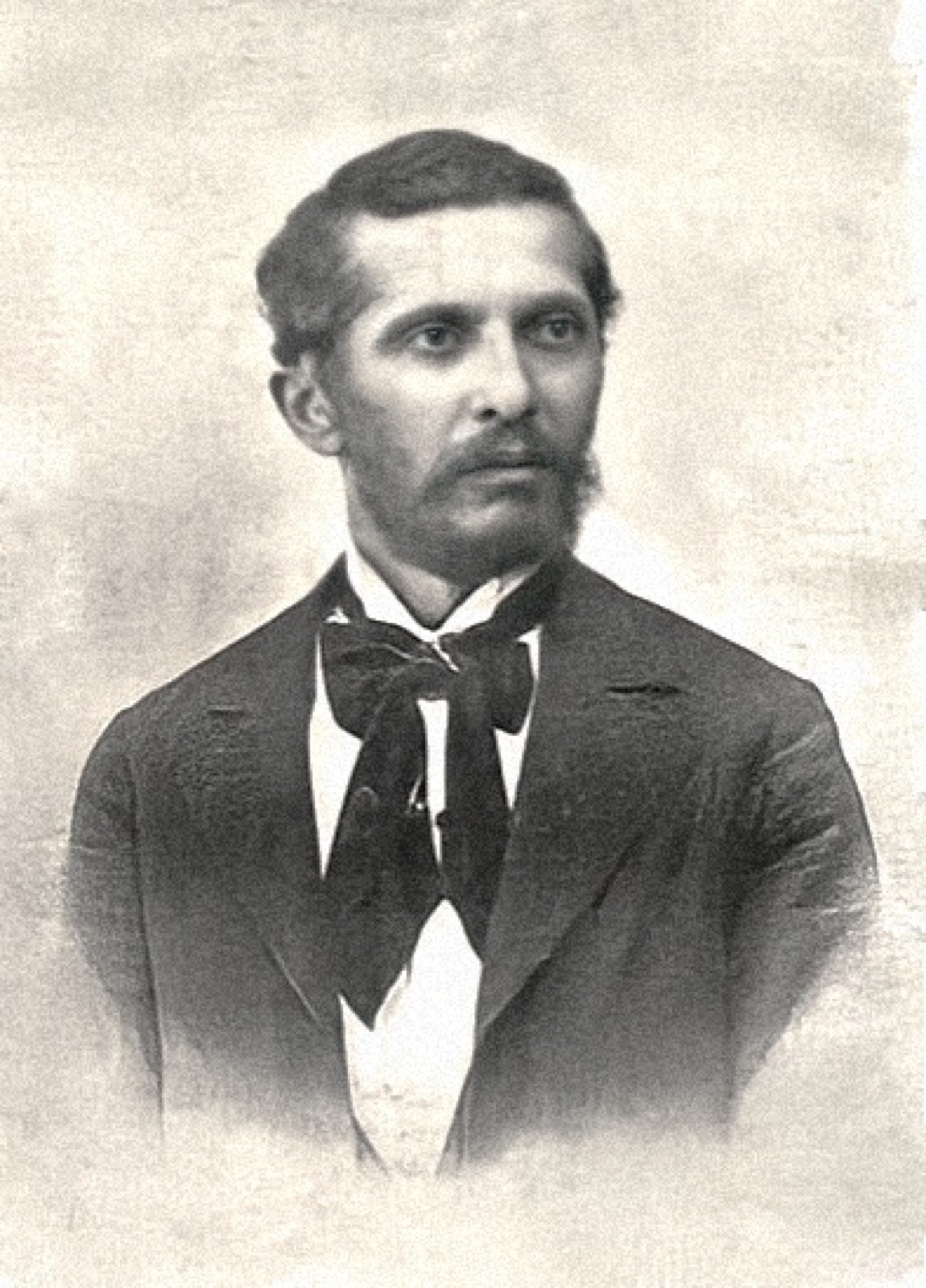 Naim Frashëri (1846-1900), Bektashi poet of the Rilindja and author of the 11,500-line Skanderbeg epic that shaped the modern Albanian self-image; today on the 200-lekë banknote.
Photo: Wikimedia Commons / public domain
Naim Frashëri (1846-1900), Bektashi poet of the Rilindja and author of the 11,500-line Skanderbeg epic that shaped the modern Albanian self-image; today on the 200-lekë banknote.
Photo: Wikimedia Commons / public domain
The Congress of Manastir (Bitola) in November 1908 standardized the Latin alphabet for written Albanian — a decisive act that displaced the competing Greek, Arabic, and Cyrillic scripts that different communities had used. The Manastir alphabet, with 36 letters and its characteristic digraphs (dh, gj, ll, nj, rr, sh, th, xh, zh), is the same alphabet used today across Albania, Kosovo, and the broader Albanian-speaking world.
The political endgame came fast. The First Balkan War (October 1912 - May 1913) saw Bulgaria, Serbia, Greece, and Montenegro jointly attack the Ottoman Empire and seize most of its remaining European territory. With Ottoman authority collapsing in the Balkans and Serbian, Greek, and Montenegrin armies advancing into Albanian-inhabited regions, Ismail Qemali — an Albanian statesman of long Ottoman service — convened a national assembly at Vlora on 28 November 1912 and declared Albanian independence, raising Skanderbeg’s red-and-black double-headed eagle banner as the national flag (Wikipedia: History of Albania).
The diplomatic catch came almost immediately. The Conference of London (July 1913) and the subsequent Treaty of Bucharest (August 1913) recognized Albanian independence but drew the new state’s borders to leave more than half of the ethnic Albanian population outside Albania — Kosovo to Serbia, Çamëria to Greece, parts of present-day North Macedonia and Montenegro to neighboring states. The Principality of Albania (1914) under the briefly reigning Prince William of Wied was overwhelmed within months by internal revolts and the outbreak of World War I, during which Albania was occupied at various times by six different armies — Italian, Austro-Hungarian, Greek, Serbian, French, and Bulgarian — without itself being a combatant.
Albania survived. Post-war, Albanian sovereignty was reaffirmed by the Congress of Lushnja (1920), the country was admitted to the League of Nations in 1920, and a parliamentary government took shape under Ahmet Zogu as prime minister.
Act 7 — Monarchy through World War II (1925-1944)
Ahmet Zogu declared Albania a republic in 1925 with himself as president. Three years later, in 1928, he restyled the country a kingdom and himself King Zog I. He ruled as an authoritarian modernizer through the 1930s, leaning increasingly on Italian financial and political support (Wikipedia: History of Albania).
The Italian relationship turned to occupation on 7 April 1939, when Mussolini’s Italy invaded Albania. Zog fled into exile (he would die in France in 1961). Italy formally annexed Albania into a personal union under Victor Emmanuel III. After Italy’s collapse in 1943, Nazi Germany occupied Albania for the war’s final two years.
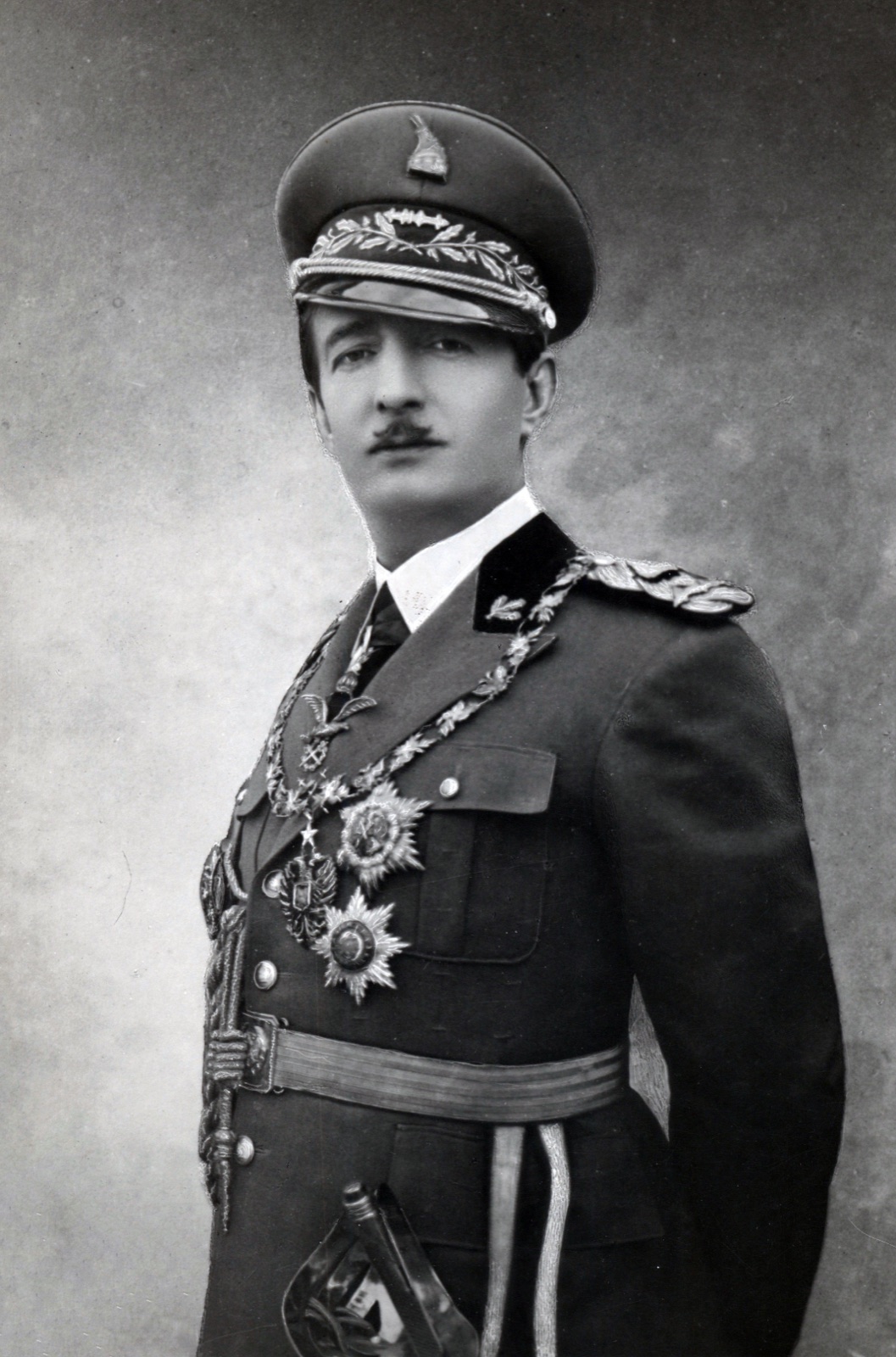 King Zog I (Ahmet Zogu, 1895-1961) photographed in 1939, the year Mussolini’s Italy invaded Albania and ended his reign; Zog died in exile in France in 1961.
Photo: Wikimedia Commons / public domain
King Zog I (Ahmet Zogu, 1895-1961) photographed in 1939, the year Mussolini’s Italy invaded Albania and ended his reign; Zog died in exile in France in 1961.
Photo: Wikimedia Commons / public domain
Resistance during World War II split between three factions: the Albanian Communist Party, founded in November 1941 and led by a former French-educated schoolteacher named Enver Hoxha; the nationalist Balli Kombëtar (National Front); and the royalist Legaliteti. The communists, with British Special Operations Executive support, emerged as the dominant resistance force — a pattern that played out across much of the wartime Balkans.
A historical fact worth noting: Albania is the only country in Nazi-occupied Europe whose Jewish population grew during the war. The Albanian customary code of besa — the binding word, the obligation of hospitality to a guest — obligated Albanians to shelter Jewish refugees from Italian and German forces. Roughly 200 Albanian Jews lived in the country before the war; nearly 2,000 lived there at war’s end, sheltered across confessional lines by Catholic, Muslim, Orthodox, and Bektashi families.
When German forces withdrew in November 1944, the communist partisans took Tirana. Enver Hoxha became the country’s leader at age 36. The monarchy was formally abolished in January 1946, replaced by the People’s Republic of Albania.
The 45-year communist period had begun.
Act 8 — Communist Albania (1944-1991)
Enver Hoxha ruled Albania for 41 years — first as Prime Minister, then as First Secretary of the Party of Labour — until his death on 11 April 1985. His successor, Ramiz Alia, presided over the regime’s final six years and its eventual collapse (Wikipedia: History of Albania).
A defining feature of Hoxha-era Albania was its succession of breaks with every major communist ally and progressive international isolation:
- 1948: Broke with Yugoslavia after the Tito-Stalin split, choosing the Soviet Union over Tito’s Yugoslavia.
- 1961: Broke with the Soviet Union under Khrushchev, after Hoxha rejected de-Stalinization. Albania left the Warsaw Pact in 1968.
- 1978: Broke with the People’s Republic of China, Hoxha’s last major ally, after Deng Xiaoping’s reforms violated Hoxha’s orthodox Marxism-Leninism.
By the early 1980s, Albania had broken with each of its major communist allies and was substantially isolated even from its socialist neighbors. The official ideology described the country as the world’s only true Marxist-Leninist state.
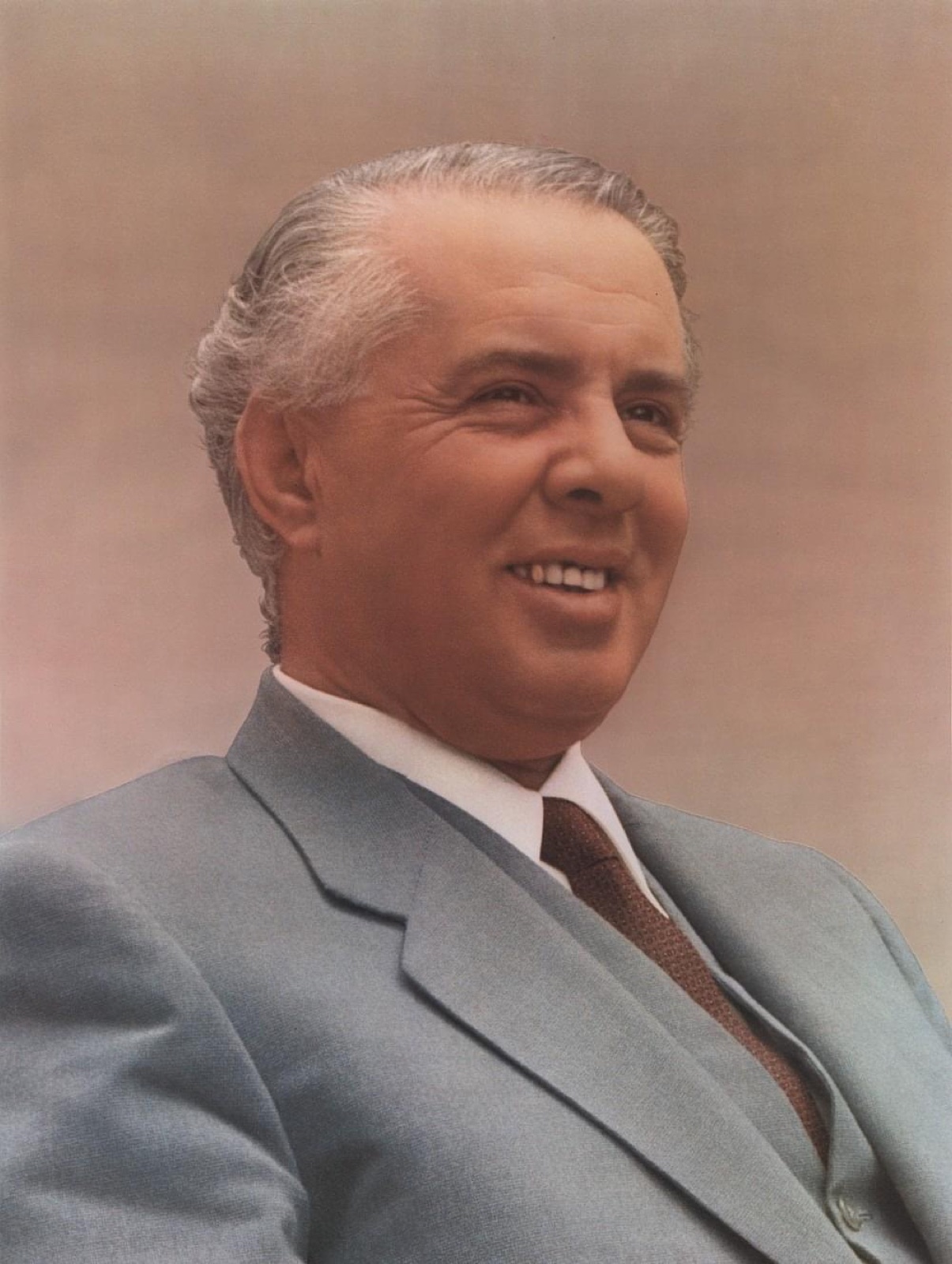
Domestically, the regime enforced the most thoroughgoing communist transformation in Europe. Land was collectivized. Industry was nationalized. The Sigurimi (state security) ran an extensive surveillance and political-prison system; estimates of those imprisoned, interned, or executed for political reasons across the 45-year period run into the tens of thousands.
In 1967, Hoxha declared Albania the world’s first atheist state and banned all religion. Mosques, churches, and the Bektashi teqes were closed, repurposed, or destroyed. Clergy of all four faiths were imprisoned, executed, or driven into private practice. The atheism policy was formalized in the 1976 constitution and remained in force until 1990.
The most physically visible legacy of the Hoxha period is the bunker program. Beginning in 1967 and continuing through the early 1980s, the regime built an estimated 173,000 to 750,000 concrete pillboxes and bunkers across the country, sized for one to three soldiers, designed to mount a partisan defense against an anticipated invasion that never came. Many remain today, scattered across mountainsides, beaches, and farmland — the most distinctive landscape feature of communist Albania.
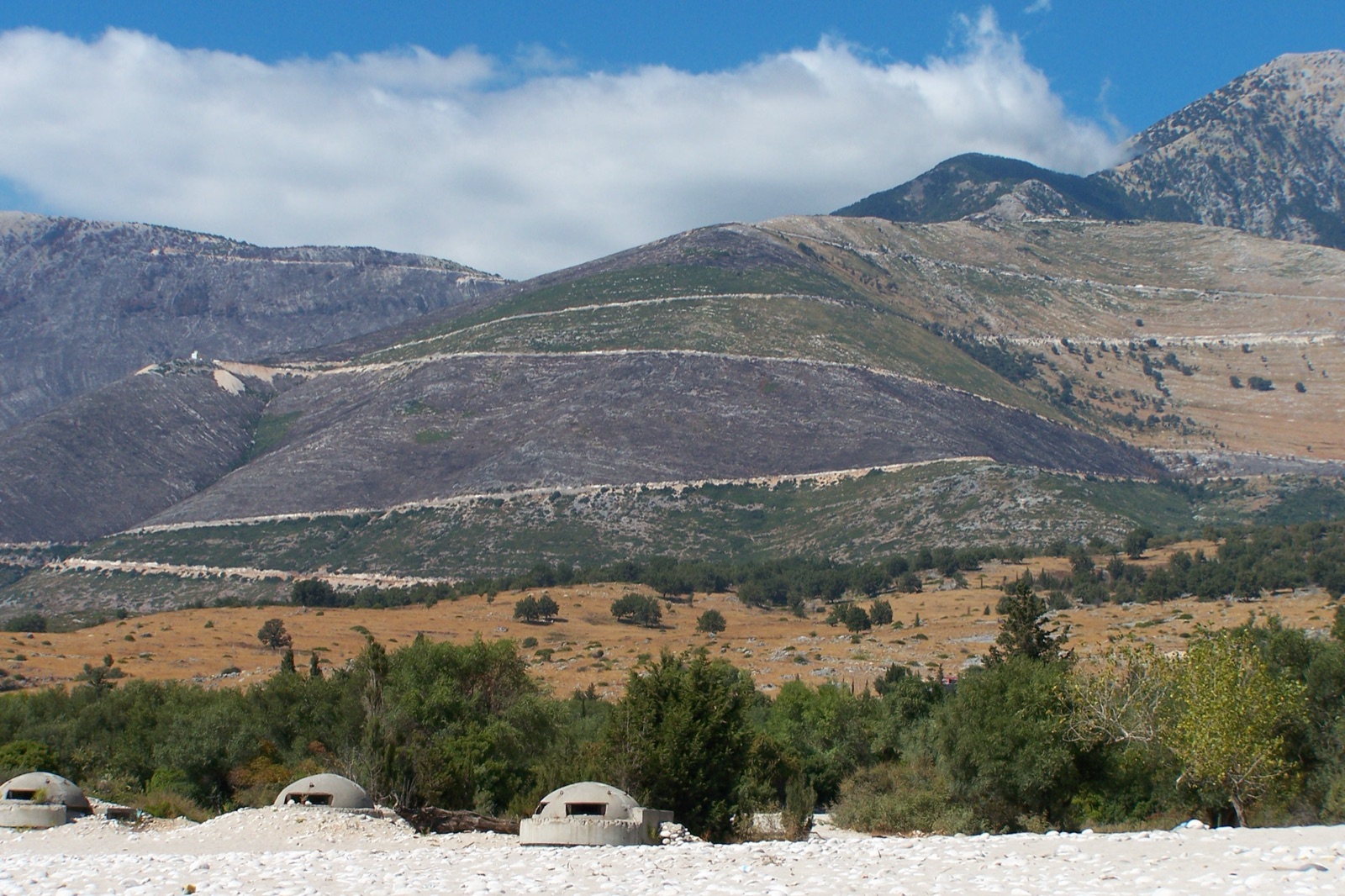 Concrete pillboxes at Dhërmi on the Albanian Riviera — survivors of the 173,000-to-750,000 bunker program Hoxha built between 1967 and the early 1980s against an invasion that never came.
Photo: Wikimedia Commons / CC BY-SA
Concrete pillboxes at Dhërmi on the Albanian Riviera — survivors of the 173,000-to-750,000 bunker program Hoxha built between 1967 and the early 1980s against an invasion that never came.
Photo: Wikimedia Commons / CC BY-SA
The economy collapsed by the late 1980s. Living standards were the lowest in Europe outside Romania. Food rationing tightened, electricity supply broke down, and the self-sufficiency model had stopped delivering. Ramiz Alia, succeeding Hoxha in 1985, attempted modest liberalization but could not save the system. Mass demonstrations in 1990-1991, the toppling of Hoxha’s statue in Skanderbeg Square in Tirana on 20 February 1991, and the first multiparty elections in March 1991 ended the communist period.
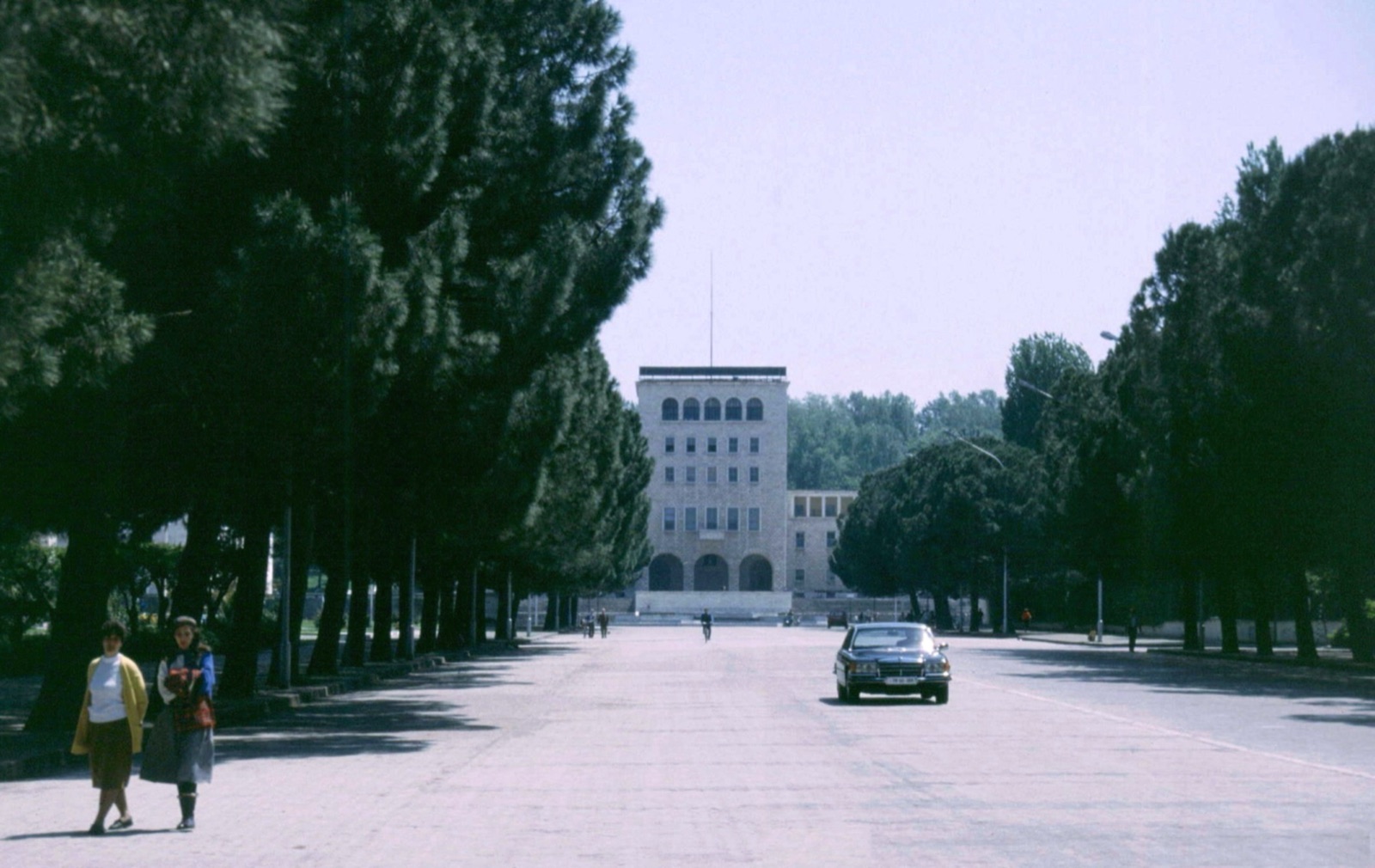 Tirana’s main boulevard, 1991 — the year mass demonstrations toppled Hoxha’s statue in Skanderbeg Square (20 February) and the first multiparty elections (March) ended 47 years of communist rule.
Photo: Wikimedia Commons / CC BY-SA
Tirana’s main boulevard, 1991 — the year mass demonstrations toppled Hoxha’s statue in Skanderbeg Square (20 February) and the first multiparty elections (March) ended 47 years of communist rule.
Photo: Wikimedia Commons / CC BY-SA
The post-communist era began.
Act 9 — Post-communist Albania, Kosovo war, modern era (1991-present)
The 1990s were chaotic. The collapse of the planned economy triggered mass emigration — by some estimates, more than a quarter of the population left the country in the decade after 1991, settling in Italy, Greece, Germany, Switzerland, the United Kingdom, and the United States. The first multiparty government under Sali Berisha (elected 1992) attempted shock-therapy economic reforms.
The 1997 pyramid-scheme collapse is the second great trauma of the post-communist period. Across 1996-1997, fraudulent investment schemes — vot Sudja, Xhaferri, Populli, VEFA, and others — absorbed roughly half of the country’s GDP in deposits before collapsing. The collapse triggered nationwide civil unrest, the partial breakdown of state authority, the looting of military arsenals (an estimated 656,000 small arms entered civilian circulation), and an Italian-led international intervention to stabilize the country. The Berisha government fell; Fatos Nano of the Socialist Party returned to power.
Across the border, the Kosovo War (February 1998 - June 1999) was the second great Albanian crisis of the decade. Tensions had been building since Slobodan Milošević revoked Kosovo’s autonomy in 1989 and Serbian authorities imposed parallel legal and education systems that excluded Kosovo’s roughly 90% Albanian population from public institutions. Albanian-Kosovar resistance organized initially under Ibrahim Rugova’s non-violent League for a Democratic Kosovo, then under the Kosovo Liberation Army (KLA) in the late 1990s. After the failure of the Rambouillet talks in March 1999 and as Serbian forces escalated forced-displacement operations, NATO conducted a 78-day air campaign against Yugoslav military targets. The campaign ended with the Kumanovo Agreement (June 1999), the withdrawal of Serbian forces from Kosovo, and the establishment of UNMIK (UN administration) in Kosovo (Wikipedia: History of Albania).
Nine years of UN administration followed before Kosovo declared independence on 17 February 2008. Kosovo is recognized today by approximately half of UN member states — including the United States, the United Kingdom, France, Germany, and most NATO countries — but not by Serbia, Russia, China, or several EU member states.
Both states moved into the Euro-Atlantic framework.
- Albania joined NATO on 1 April 2009, alongside Croatia.
- Albania was granted EU candidate status in June 2014; accession negotiations opened in 2022.
- Kosovo applied for EU candidate status in December 2022.
- The Tirana-Pristina dialogue, mediated by the EU since 2011, has produced incremental agreements on freedom of movement, civil registration, and license-plate recognition; full normalization between Kosovo and Serbia remains unresolved.
Modern Albania, 35 years after isolation, is one of Europe’s most rapidly opening societies. Tirana is unrecognizable from its 1990 self. Albanian-American organizations, the Pan-Albanian Federation Vatra, and the broader diaspora maintain dense civic ties between the homeland and the global community.
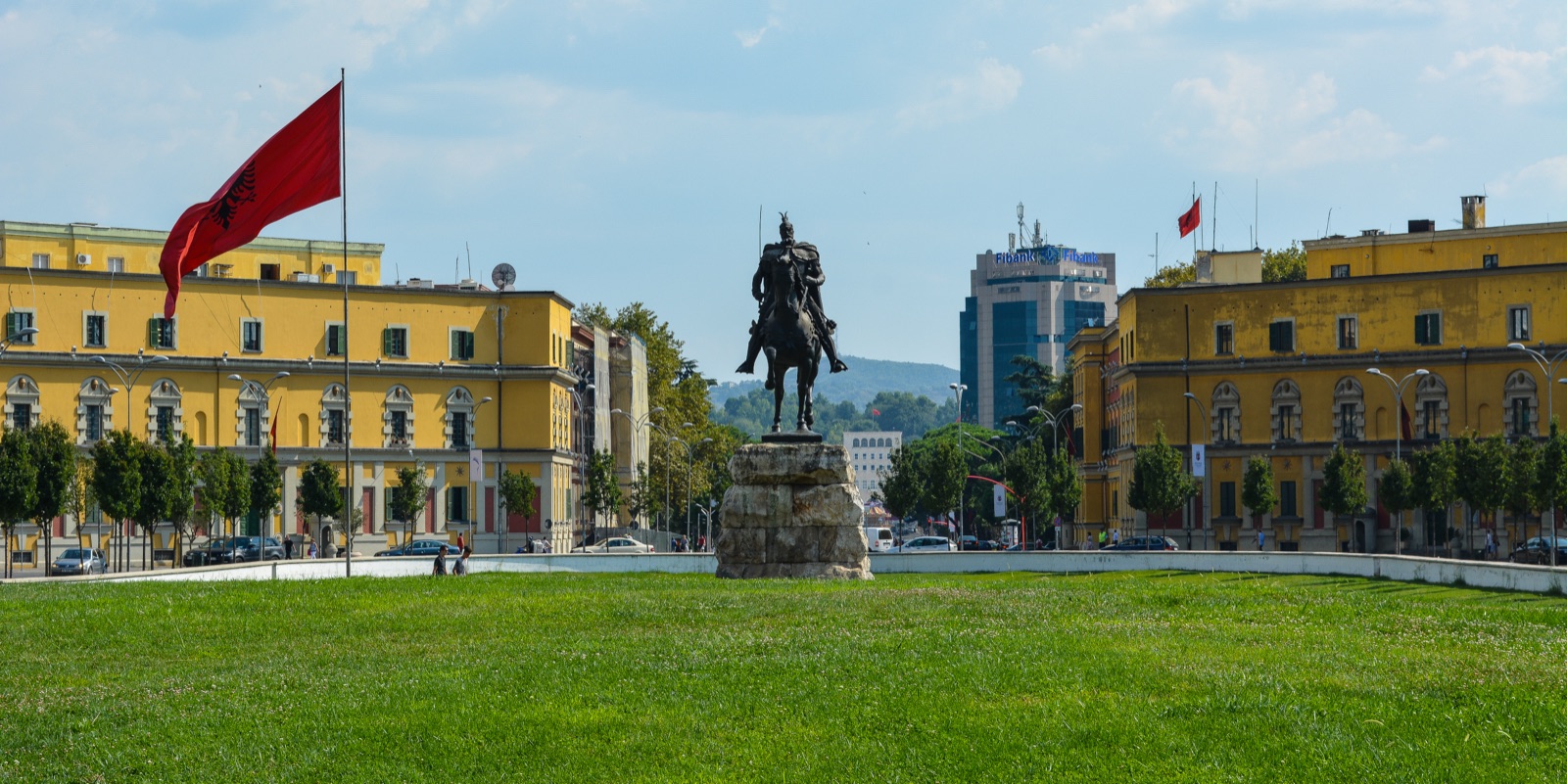 Skanderbeg Square, Tirana, 2016 — the central plaza after the post-communist pedestrianization that replaced the cleared Hoxha-era monumental axis.
Photo: Wikimedia Commons / CC BY-SA
Skanderbeg Square, Tirana, 2016 — the central plaza after the post-communist pedestrianization that replaced the cleared Hoxha-era monumental axis.
Photo: Wikimedia Commons / CC BY-SA
We present this section without partisan framing. The Kosovo recognition question, Greek-Albanian relations, the North Macedonia naming question, and the politics of EU accession are politically active topics; the National Albanian Registry’s role is to record what the historical record contains, not to advocate.
The diaspora is part of Albanian history
A clean ending to Albanian history would put us back at Albania’s borders.
The history doesn’t end there. The Albanian diaspora is not external to Albanian history — it is part of it, and has been for at least 600 years.
The first wave was the Arbëreshë flight to Italy and Sicily in the 13th-15th centuries, accelerating after Krujë fell in 1478. Arbëreshë communities — roughly 50 villages today, with around 100,000 active speakers — preserve a 15th-century form of Albanian and a Byzantine-rite Catholic identity that has continued for over five centuries.
A second movement, the Arvanites of southern Greece, saw Albanian settlers move into Attica, Boeotia, Euboea, and the Peloponnese during the 13th and 14th centuries; their descendants became foundational to the populations that would, much later, build the modern Greek state.
In the 18th-19th centuries, smaller Albanian communities took root in southern Croatia (the Arbanasi near Zadar) and southern Ukraine.
The late 19th through early 20th century brought the original Albanian-American communities in Boston, New York, Detroit, and the Connecticut River Valley — anchored by Fan S. Noli’s founding of the first Albanian Orthodox parish in Boston in 1908 and the founding of Vatra (the Pan-Albanian Federation of America) in 1912.
The largest wave is the most recent. Post-1991 emigration has built the modern German, Swiss, Italian, Greek, British, and second-generation Albanian-American communities — and has put Albanian-origin populations in the United States at roughly 230,000 in the American Community Survey and approximately 1 million by community-led estimate. We’ve written that story in detail at Albanian Americans.
The diaspora is where a substantial share of Albanian history is now being written. The communities that the National Albanian Registry exists to count are part of an unbroken story that runs from Illyrian frontier kingdoms, through Skanderbeg’s banner over Krujë, through 400 years of Ottoman rule, through the Renaissance, the partitions, the wars and the bunkers, to a third-generation kid in Worcester whose grandfather came from Korçë and a researcher in California who just learned where her great-grandmother was born.
Two thousand years, briefly. Continuing.
If you’re Albanian — by any of the routes described above, from any of these centuries — the National Albanian Registry exists to count you. Adding your name takes about 2 minutes, the certificate of recognition is free, and your data is yours.