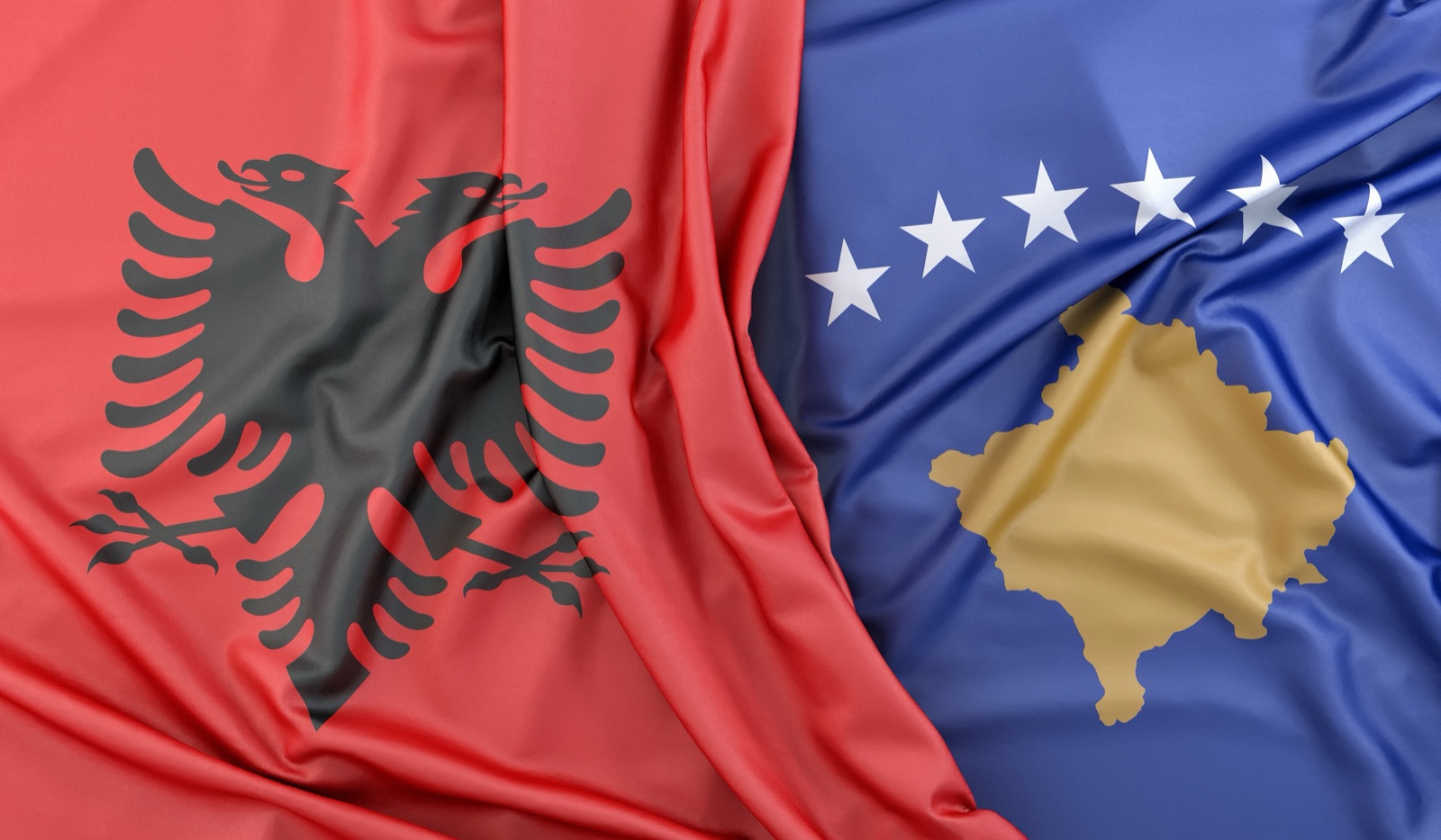
Kosovo is a small country. About 1.8 million people live inside its borders, and a diaspora of broadly similar size lives in Switzerland, Germany, the United Kingdom, the United States, and across Scandinavia. For a population that size, the names it has produced travel a long way — an Olympic gold medalist, the President who built a parallel state with no army, two of the most-streamed pop musicians of the 2020s, a generation of Swiss-Kosovar footballers playing in the Premier League and at World Cups, and a New York rapper whose Viceland show ate its way through the Bronx and Tirana. The country has been independent only since 17 February 2008, and many of the most internationally recognized Kosovars made their names abroad before there was a Kosovar passport to put their face on.
This list is narrower than NAR’s broader famous Albanians piece. That one ranges across the whole Albanian-speaking world — Albania proper, Kosovo, North Macedonia, Montenegro, the Italian Arbëresh, and the global diaspora. This article tightens the focus to people born in Kosovo or of Kosovar heritage, plus one American diplomat whose name belongs in any honest accounting of why modern Kosovo exists. We have stuck to verifiable biographical facts. Where the political record is contested, we describe what the person did and stop there.
If you are reading from the United States, the relevant context is that roughly 4,000 Kosovar Albanian refugees passed through Fort Dix, New Jersey, during the summer of 1999 — part of a nationwide US resettlement of about 14,000 Kosovar war refugees that year — and that thousands more arrived in earlier and later waves. Many of those families stayed. The Kosovar American community today is concentrated in the Bronx, Yonkers, Staten Island, and pockets of New Jersey and Michigan, and the people on this list — particularly the diaspora figures — are part of how that community sees itself in mainstream American life.
How “famous Kosovar Albanian” gets defined
The category is messier than it sounds. Kosovo declared independence in 2008. Many of the most globally recognized Kosovars were born before that, in what was then Yugoslavia, on what was then officially a Serbian autonomous province. Some were born in Kosovo and emigrated as children. Some were born in the diaspora — London, Brooklyn, Basel, Pristina-by-way-of-the-Bronx — to Kosovar Albanian parents. A few were born in Kosovo, made their careers there, and never left.
For this list we have included three groups. Born in Kosovo is the simplest case: Rita Ora (Pristina), Majlinda Kelmendi (Peja), Era Istrefi (Pristina), Xherdan Shaqiri (Gjilan), Ibrahim Rugova (near Istog), Adem Jashari (Prekaz), Hashim Thaçi (Burojë). Of Kosovar heritage covers the diaspora-born: Dua Lipa (London), Granit Xhaka (Basel), Action Bronson (Queens). Honorary is reserved for William Walker, the American diplomat whose 1999 report from Račak helped trigger the NATO intervention and who is named on streets and schools across Kosovo.
We use shqiptar (the Albanian self-name, plural shqiptarë) and Kosova (the Albanian name for Kosovo) where they are the right word, glossed inline. Diacritics are correct: Hashim Thaçi, Adem Jashari, Majlinda Kelmendi, Era Istrefi, Granit Xhaka, Xherdan Shaqiri.
Politics and statecraft: Rugova, Jashari, the postwar generation
Ibrahim Rugova (1944-2006)
Ibrahim Rugova is the central political figure of late-20th-century Kosovo. A literary scholar who studied in Paris at the École Pratique des Hautes Études under Roland Barthes, he co-founded the Democratic League of Kosovo (LDK, Lidhja Demokratike e Kosovës) on 23 December 1989, in response to the revocation of Kosovo’s autonomy by Slobodan Milošević. Through the 1990s he led a parallel state — Albanian-language schools, clinics, taxation, foreign representation — under a doctrine of nonviolent resistance modeled on Gandhi and on the Eastern European dissident tradition. He was widely called the Gandhi of the Balkans.
Rugova served as president of the unrecognized parallel government from 1992 and as the first internationally recognized President of Kosovo from March 2002 until his death from lung cancer on 21 January 2006 — two years before the 17 February 2008 declaration of independence. Roughly 500,000 mourners attended his funeral. The international airport in Pristina bears his name, as does a national park outside the capital. Kosovars commonly refer to him as Ati i Kombit — the Father of the Nation.
Adem Jashari (1955-1998)
Adem Jashari is the central armed-resistance figure in Kosovar Albanian memory. A founding commander of the Kosovo Liberation Army (KLA, Ushtria Çlirimtare e Kosovës), he was killed on 7 March 1998 along with more than 50 members of his extended family during a three-day Serbian police and military assault on the Jashari family compound in Prekaz, in the Drenica region. Children, women and elderly relatives were among the dead. The Prekaz attack is widely regarded inside Kosovo as the moment the war could no longer be contained, and the family compound is preserved today as a national memorial. Jashari is referred to in Kosovo as Komandanti Legjendar — the Legendary Commander.
Hashim Thaçi (born 1968)
A founding political figure of the postwar Republic, Thaçi served as Prime Minister of Kosovo from 2008 to 2014 and as President of Kosovo from 2016 until his resignation in November 2020. In June 2020 the Kosovo Specialist Prosecutor’s Office, an internationally backed court seated in The Hague, announced it had filed an indictment against him. A pre-trial judge confirmed the indictment on 26 October 2020; Thaçi resigned the presidency and surrendered to the court on 5 November 2020, the day the confirmed indictment was made public. As of 2026 his trial at the Kosovo Specialist Chambers in The Hague remains ongoing. NAR is a 501(c)(3) and takes no position on the political and legal questions surrounding the proceedings; we record what the public record shows.
The postwar generation
Kosovo has cycled through several heads of state and prime ministers since 2008. Atifete Jahjaga (born 1975), a former deputy director of the Kosovo Police, served as President from 2011 to 2016 and was the first woman, the first non-partisan figure, and the youngest person to hold the office. Vjosa Osmani (born 1982), a constitutional law scholar, has served as President since 2021. Albin Kurti (born 1975), a longtime activist and leader of the Vetëvendosje movement, has served as Prime Minister in two governments. We mention them factually and move on; this article is a who’s-who, not a political ledger.
The diaspora superstars: Rita Ora, Dua Lipa, Era Istrefi
The single most visible category of famous Kosovars is pop music, and almost all of it is diaspora-born or diaspora-raised.
Rita Ora (born 1990)
Rita Sahatçiu Ora was born in Pristina on 26 November 1990. Her parents — Vera, a psychiatrist, and Besnik, a pub owner who had studied economics — fled to the United Kingdom about a year later as conditions in the province deteriorated. The family settled in west London, where Rita attended the Sylvia Young Theatre School and signed her first record deal in her late teens. Her debut album Ora (2012) topped the UK Albums Chart and produced two UK number-one singles, R.I.P. and How We Do (Party). Subsequent hits include I Will Never Let You Down (2014), Anywhere (2017) and Let You Love Me (2018). She has expanded into film and television (Fifty Shades, The Voice Australia and UK, Twisted Metal) and married New Zealand filmmaker Taika Waititi in 2022. The family surname Ora is the Albanian word for hour, shortened from Sahatçiu, which derives from the Turkish word for clock — itself a small linguistic record of Ottoman-era trade names that survived into the Kosovar Albanian present.
Dua Lipa (born 1995)
Dua Lipa was born in London on 22 August 1995 to Kosovar Albanian parents who had left Pristina earlier in the decade. Her father Dukagjin Lipa is a former rock musician who runs the Sunny Hill Foundation; her mother Anesa is a tourism professional. After the war the family returned to Kosovo, and Dua spent part of her secondary schooling in Pristina before moving back to London on her own at 15 to pursue music. Her self-titled debut (2017) produced New Rules and IDGAF. Her second album Future Nostalgia (2020) won the Grammy Award for Best Pop Vocal Album in 2021 and produced the global hits Don’t Start Now, Physical, and Levitating. Radical Optimism (2024) was her third number-one album in the UK.
She received Albanian citizenship from President Ilir Meta in 2022 and Kosovar citizenship in 2024. With her father she co-founded the Sunny Hill Festival, an annual music festival held in Pristina (and, in earlier years, Tirana) that has brought international headliners to Kosovo and has become one of the most visible diaspora-Kosovo cultural bridges. She is, by streaming and revenue, the most globally consequential ethnic Albanian working in popular music.
Era Istrefi (born 1994)
Era Istrefi was born in Pristina on 4 July 1994 into a family of musicians — her older sister Nora Istrefi is a Kosovar pop star in her own right; their mother Suzana Tahirsylaj is a longtime Kosovar television and music presenter. Era’s 2016 single BonBon, sung in Albanian, became a global streaming hit and was widely compared to Sia and Rihanna’s vocal phrasing. She performed Live It Up, the official song of the 2018 FIFA World Cup, alongside Will Smith and Nicky Jam. She is the most internationally recognized artist who built a career out of Kosovo rather than from a diaspora base.
For Albanian Americans, the broader picture also includes Bebe Rexha, the Brooklyn-born pop hitmaker whose Albanian family came from Debar in present-day North Macedonia. Her heritage is Albanian rather than Kosovar specifically, but she shares the cohort and is part of the same generational arrival of Albanian women into Anglo pop.
Sport: Kelmendi and the Swiss-Kosovar football pipeline
Majlinda Kelmendi (born 1991)
Majlinda Kelmendi was born in Peja on 9 May 1991. A judoka in the women’s -52 kg category, she came up through the Ippon Peja club and trained for years under coach Driton Kuka. She won world championships in 2013 and 2014 and European championships in 2014, 2016 and 2017. At the 2016 Rio Olympics, competing under the Kosovar flag for the first time at a Summer Games, she won the gold medal in the women’s -52 kg event — the first Olympic medal of any color won by Kosovo as an independent nation. She carried the Kosovo flag at the Rio opening ceremony and again at the 2020 Tokyo Games. She retired from competition in 2021 and is the most decorated athlete in Kosovar sporting history.
Granit Xhaka (born 1992)
Granit Xhaka was born in Basel, Switzerland, on 27 September 1992 to Kosovar Albanian parents from the Drenica region. His father Ragip Xhaka was a political prisoner in Yugoslavia in the 1980s before the family emigrated. Granit came up through Basel’s youth system, captained the Swiss U-21 side to the final of the 2011 UEFA European Under-21 Championship (runners-up to Spain), and went on to a senior career at Borussia Mönchengladbach (2012-2016), Arsenal (2016-2023), Bayer Leverkusen (2023-2025, where he won the 2023-24 Bundesliga with the unbeaten Neverlosen side), and Sunderland (2025-present). He has captained the Switzerland senior national team and become one of the most-capped Swiss players in history. His brother Taulant Xhaka plays for the Albanian national team.
Xherdan Shaqiri (born 1991)
Xherdan Shaqiri was born on 10 October 1991 in Gjilan, then in Yugoslavia (today Kosovo), and emigrated to Switzerland with his family as an infant. He came up through Basel and made his name across Bayern Munich, Inter Milan, Stoke City, Liverpool (where he was part of the 2018-19 UEFA Champions League winning squad), Lyon, and Chicago Fire. He has played for Switzerland in multiple World Cups and European Championships. His celebration after scoring against Serbia at the 2018 World Cup — making the Albanian double-headed-eagle gesture with his hands — drew global attention and a FIFA fine.
The wider pipeline
The Swiss-Kosovar football pipeline is a category in itself. Valon Behrami (born in Mitrovica, longtime West Ham and Watford midfielder), Blerim Džemaili, Admir Mehmedi, Adnan Januzaj (Belgian international of Kosovar Albanian descent), Milot Rashica, and the rising Ardon Jashari all trace to Kosovar Albanian families who left during the Yugoslav era. Beyond Switzerland, Adnan Januzaj played for Manchester United, and Kosovo’s own national team, recognized by FIFA only in 2016, has since assembled a credible roster largely from the diaspora.
Music and rap: Action Bronson, Era Istrefi, the New York connection
Action Bronson (born 1983)
Ariyan Arslani — better known as Action Bronson — was born on 2 December 1983 in Flushing, Queens, to an Albanian American father of Kosovar Albanian origin and a Jewish American mother. He worked as a chef in New York before turning to rap; his breakout mixtapes Dr. Lecter (2011) and Blue Chips (2012) established him as a heavyweight, in both senses, of New York hip-hop. His Vice Media food-and-travel show Fck, That’s Delicious* ran for several seasons and traveled extensively in Albania and through Albanian American neighborhoods of New York. He is one of a small number of mainstream US rappers who have spoken publicly and consistently about Albanian heritage, and one of the most visible Kosovar Albanian Americans in popular culture.
The New York Albanian rap pocket
Beyond Bronson, the New York metro area — particularly the Bronx and Yonkers — supports a small but persistent Albanian American rap scene. Producer-rapper Tinashe Kachingwe is occasionally miscategorized as Albanian (she is not). Working Albanian American rappers and producers in the New York pocket include Genc Faruku and members of the broader Albanian American hip-hop community whose audiences are largely diaspora-internal. The cohort is small enough that Bronson is the household name; the rest is a working ecosystem rather than a list of household names.
Era Istrefi and the Kosovar-language pop wave
Inside Kosovo, a generation of Albanian-language pop and rap artists — Era Istrefi, Nora Istrefi, Dafina Zeqiri, Genta Ismajli, the rapper Mozzik — built audiences across the Albanian-speaking world via YouTube and streaming. Their reach is more regional than global, but they form the cultural feedstock that diaspora figures like Dua Lipa frequently reference and collaborate with at events like Sunny Hill.
Science, academia, and unsung names worth knowing
The Kosovar Albanian scientific and academic record is younger than the political and cultural one — Albanian-language higher education in Kosovo was constrained for much of the Yugoslav period, and the modern University of Pristina dates to 1970. Names worth knowing include:
- Eqrem Çabej (1908-1980) — born in Eskişehir in the Ottoman Empire (present-day Turkey) to a family from Gjirokastër in southern Albania, his linguistic work on Albanian dialectology, including the Gheg dialects spoken in Kosovo, shaped the academic study of the Kosovar Albanian language. He is a foundational figure read across Albania and Kosovo.
- Rexhep Qosja (born 1936) — Kosovar literary critic, novelist and politician, longtime member of the Kosovo Academy of Sciences and Arts, and one of the most influential Albanian-language essayists of the late 20th century.
- Edi Rama is not Kosovar — he is the Prime Minister of Albania and is included in Famous Albanians; we mention him here only to head off the mix-up.
- Ardian Adzanela, Shukrije Gashi and a generation of Kosovar legal scholars and human-rights researchers have contributed to international jurisprudence on the post-1999 Balkans.
The diaspora produces its own academic class — Kosovar Albanian American doctors, engineers and researchers staffed across US hospitals and universities — but most are not household names and we will not invent rankings where the public record does not support them.
American allies in Kosovo’s story — William Walker, Bob Dole, Madeleine Albright
No accurate accounting of who matters to Kosovo skips the American officials whose decisions shaped its existence. We include them not as Kosovars but as figures Kosovo has formally honored.
William Walker (born 1935)
William Graham Walker, an American career diplomat who had previously served as US ambassador to El Salvador, was appointed in 1998 to head the OSCE Kosovo Verification Mission. On 16 January 1999 he walked into the village of Račak the morning after a Serbian police and military operation and publicly identified the killing of 45 Kosovar Albanian civilians as a massacre. His on-the-record statement that day — delivered with the bodies still in the gully — broke the international diplomatic deadlock and is widely credited with forcing the Rambouillet talks and, when those failed, the NATO air campaign that began on 24 March 1999. Streets, schools and a square in Kosovo carry his name. He is recognized in Kosovar memory as an honorary national figure.
Bob Dole (1923-2021)
The longtime Kansas senator and 1996 Republican presidential nominee was, beginning in the late 1980s, one of the earliest US political voices to publicly raise Kosovar Albanian human rights as a foreign-policy concern. Dole visited Kosovo multiple times and was the principal Senate champion of pre-war Kosovar Albanian advocacy in Washington. After his death in 2021 the Kosovo government held a public memorial; a boulevard in Pristina bears his name.
Madeleine Albright (1937-2022)
US Secretary of State during the 1999 NATO intervention, Albright was the most senior US official driving the air campaign. The intervention was widely referred to inside the State Department as “Madeleine’s war.” She was honored at multiple state events in Kosovo before her death.
The fuller account of how the United States shaped post-1999 Kosovo — Camp Bondsteel, the Bill Clinton statue and boulevard in Pristina, the 2008 recognition, the diaspora resettlement through Fort Dix — is laid out in Kosovo and the United States: a foundational alliance.
Why Kosovar Americans punch above their numbers
The Kosovar American community is small — perhaps 60,000 to 80,000 people of Kosovar Albanian heritage in the United States, depending on how you count second and third generations and how you separate Kosovar Albanians from the broader Albanian American population. The 2024 American Community Survey records roughly 230,000 people of Albanian ancestry in the United States, of which Kosovars are a meaningful subset.
For a community that size, the cultural footprint is conspicuous. Part of that is the diaspora’s geographic concentration in the New York metro area, where media density is high and where second-generation Kosovar Albanians grew up alongside the Italian, Jewish and Irish American cultural pipelines that produced previous generations of US celebrities. Part of it is a genuine generational cohort effect — Rita Ora, Dua Lipa, Era Istrefi, Action Bronson and the Swiss-Kosovar footballers all came of age in the 2000s and 2010s, the first generation to hit international audiences after the war.
And part of it is that the war itself produced a global recognition of the name Kosovo that gave subsequent figures a built-in conversational hook. Most cultural figures from small countries spend the first 30 seconds of any interview explaining where they are from. A Kosovar American does not.
NAR exists to count this community accurately — to put real numbers next to a population that the US Census persistently undercounts and that often gets folded into “Albanian” or “former Yugoslav” with no further granularity. Every Kosovar American who registers is a thread in the diaspora story that helped put Kosovo on the world stage. Get counted at /register.