
The short answer: A remarkable share of the heroes of the 1821 Greek War of Independence — the admiral Andreas Miaoulis, the financier family Kountouriotis, much of the revolutionary fleet from Hydra and Spetses — were Arvanites, Greek patriots who spoke a dialect of Albanian at home. This is not a claim on Greece. It is a piece of shared heritage that both nations’ nationalists prefer to leave out. It belongs to the larger story of where Albanians actually come from and of the Arvanites of Greece.
Say it plainly and it still sounds unlikely: the fleet that fought the sultan’s navy so that Greece could exist was crewed, in large part, by men who spoke Albanian.
This is not a provocation — it is in the standard account of the period. The revolutionary fleet drew most of its sailors from the Albanian-speaking islands of the Saronic Gulf, and Arvanitika was effectively its working language. The men who won Greece its navy prayed in Greek and, a great many of them, spoke Albanian at home.
Their descendants are Greek, and think of themselves as nothing else. So before anything else, be clear about what this article is and is not. It is not a claim that Athens is “really” Albanian, or that Greece owes anyone an apology, or that the Arvanites were a secret Albania inside Greece. They were not. They were Greek patriots. The honest history is simply more tangled than the flag-waving version — on both sides of the border — and the tangle is worth knowing.
The admiral
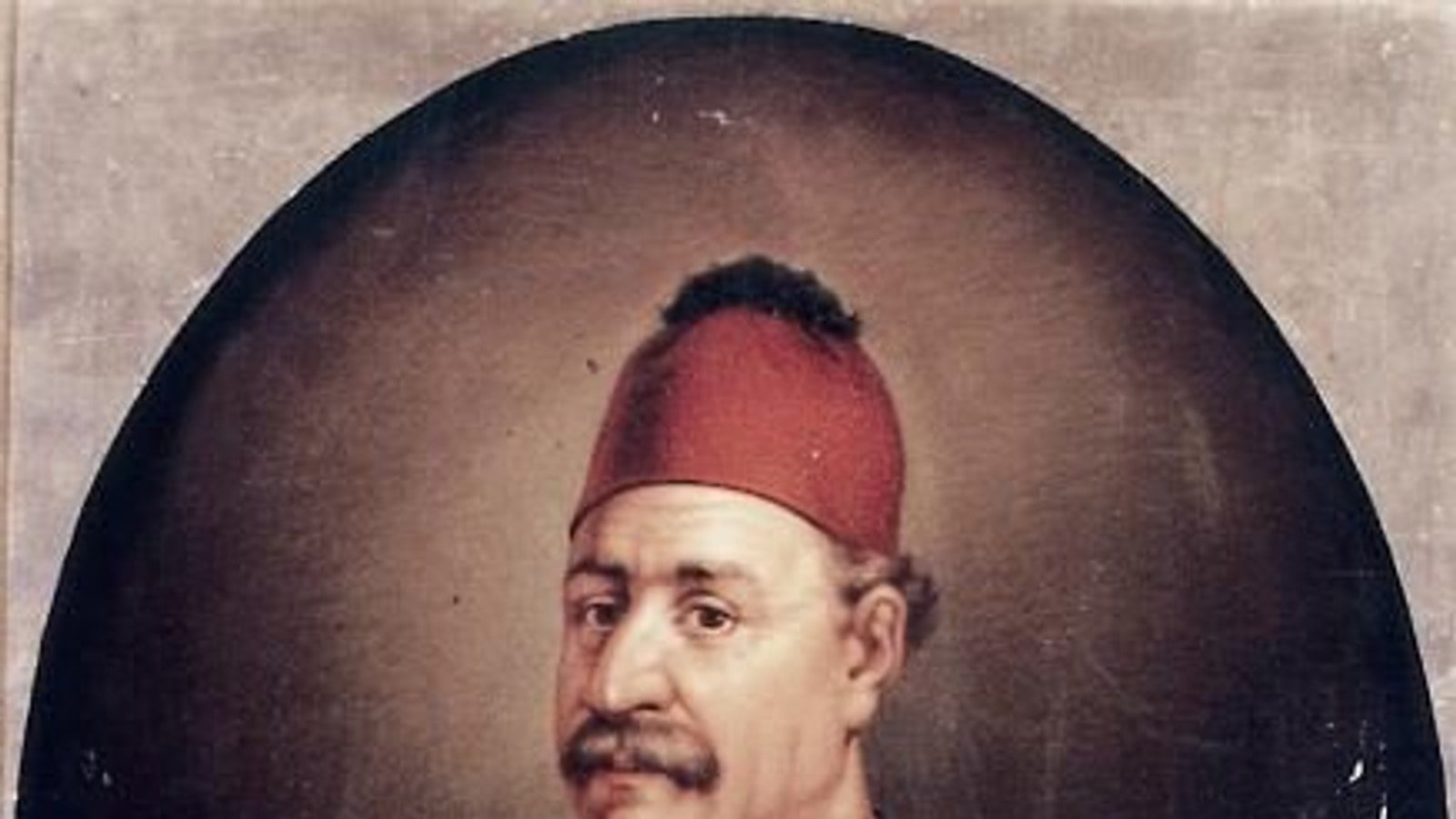
Andreas Miaoulis was born on Hydra in 1765, into an Arvanite family. Hydra was a rock of an island that turned to the sea, grew rich running cargo through wartime blockades, and then spent that wealth and those ships on the revolution. In 1822 Miaoulis was made admiral of the insurgent fleet, and for the next years he was the man who kept the Ottoman navy from strangling the uprising — fireships in the night, running battles in the Aegean, a blockade broken more than once.
He is not a footnote in Greek memory. He is one of its founding faces: the Hellenic Navy has named a string of ships after him since the 1800s — a cruiser, later a destroyer — and his statue and street signs are everywhere. The admiral of the Greek fleet came from a household that spoke Albanian.
The fleet and the money
Miaoulis was not an exception on his island; he was typical of it. Hydra, Spetses, and Salamis were Arvanite communities, and it was their sailors — and their money — that made a navy possible.
The clearest case is the Kountouriotis family of Hydra. They descended from an Albanian settler who arrived in the early 1700s, and by the revolution they were perhaps the wealthiest family in what became independent Greece. Georgios Kountouriotis headed the revolutionary executive from 1823 and later served as prime minister of the Greek state; by the accounts that survive, he spoke Greek only with difficulty and handled much of his correspondence in the Albanian dialect of Hydra. His brother Lazaros poured most of a very large fortune into the war effort. A man who was more comfortable in Albanian than in Greek helped run the government that founded modern Greece.
The woman most associated with the Hydra–Spetses world, Laskarina Bouboulina, fitted out her own warship and took it into the fighting. Her exact ancestry is debated — some sources count her among the Arvanites, others dispute it — so she belongs in this story as an illustration of that milieu rather than as a settled example. The families around her are the surer ground.
The Souliote and his dictionary
Away from the islands, in the mountains of Epirus, were the Souliotes — an Orthodox Christian, Albanian-speaking community whose fighters became legends of the revolution. Their most famous son, Markos Botsaris, died leading a night attack at Karpenisi in 1823 and is buried at Missolonghi among the icons of the war.
Botsaris left something quieter behind, too. In 1809, in Corfu, the teenage Botsaris compiled a Greek–Albanian lexicon at the urging of François Pouqueville, Napoleon’s consul at the court of Ali Pasha. Historians are careful to say he did not produce it alone — it was drafted with older relatives who knew both tongues — but the manuscript is real, it survives in the national library of France, and it exists for a simple reason: the language of these Greek revolutionaries, at home, was Albanian. A hero of Greek independence sat down to write his mother tongue, and his mother tongue was a form of Albanian.
Why this belongs to everyone, not to a border
It would be easy, and wrong, to turn this into ammunition. The temptation on the Albanian side is to read it as a hidden ownership of Greece. The reflex on the Greek side is to deny it entirely, or to insist these families were “always really Greek.” Both moves miss what the record actually shows.
What it shows is entanglement. Peoples in the Balkans did not live in the sealed boxes that 19th-century nationalism drew around them afterward. An Orthodox Christian could carry an Albanian mother tongue and a fierce Greek patriotism at the same time, and thousands did, and some of them founded a country. The Arvanites are not evidence for a map. They are evidence against the idea that language, faith, and nation must always line up — the same lesson that runs through how Albanians have always defined themselves.
That is a more useful thing than a grievance. It is a reason to get the history right, and to keep it — which is the whole idea behind being counted. A community that records its own story, honestly and including the complicated parts, is one that no one else gets to summarize away.
Sources
- Andreas Miaoulis — Wikipedia (Arvanite origin; admiral of the revolutionary fleet, 1822).
- Arvanites — Wikipedia (Hydra/Spetses/Salamis as Albanian-speaking; Arvanitika as the main language of the Greek fleet).
- Georgios Kountouriotis and Lazaros Kountouriotis — Wikipedia.
- Markos Botsaris — Wikipedia (Souliote; native Albanian speaker; 1809 Greek–Albanian lexicon compiled at Pouqueville’s request, held at the BnF).
- Souliotes — Wikipedia (Orthodox Christian, Albanian-speaking community of Epirus).
- Laskarina Bouboulina — Wikipedia (descent debated).