Hiding in plain sight
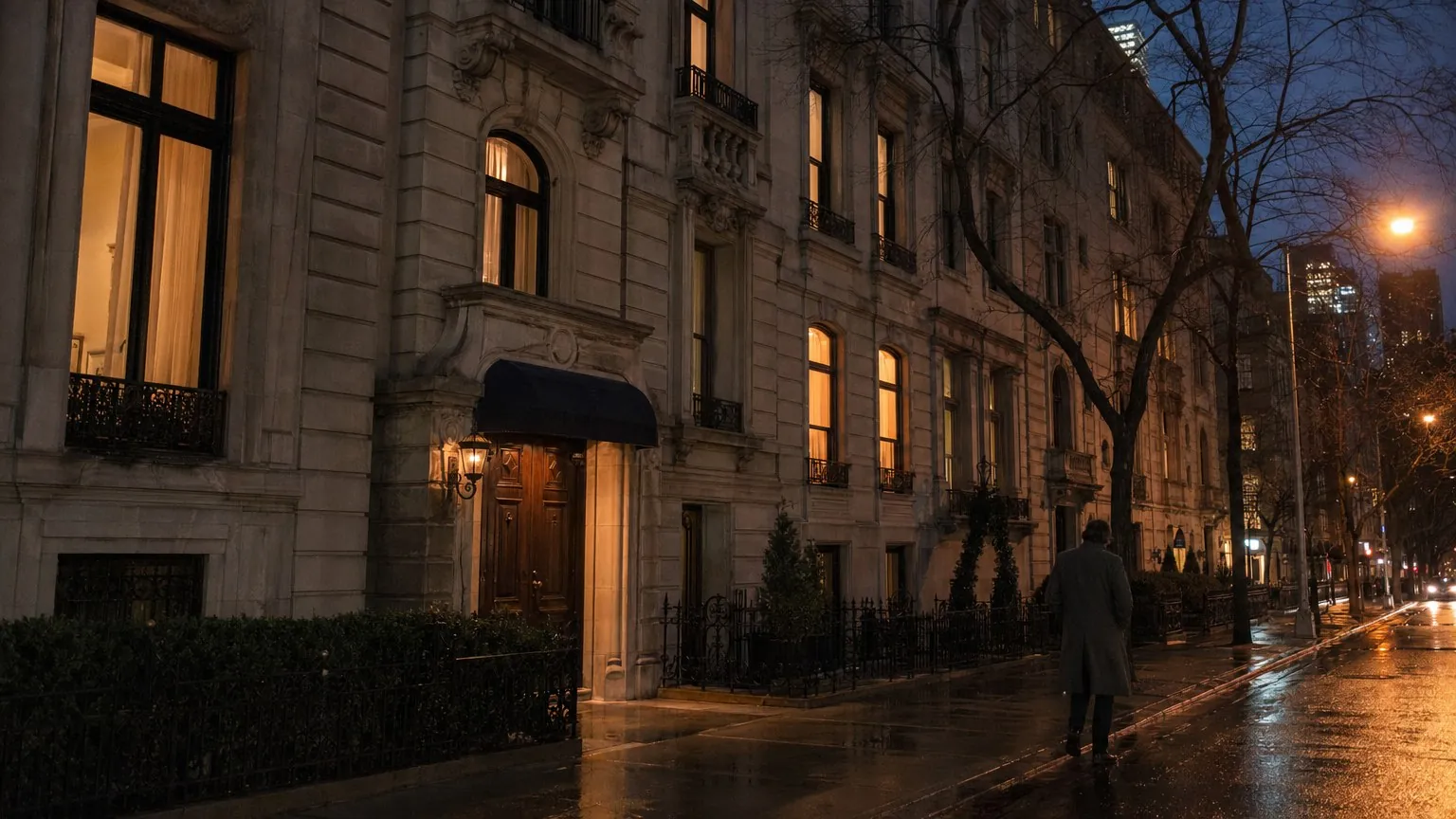
Four doors east of Fifth Avenue, on a quiet block of East 60th Street, sits an eight-story Stanford White limestone clubhouse the average New Yorker walks past without noticing. The institution it houses opened in 1852, founded by six German-Jewish men recently refused membership at the Union Club a few blocks south.
That institution is the Harmonie Club — 173 years old, survivor of two world wars and the Holocaust, one of the anchors of German-Jewish cultural life in the United States. It is not famous outside the people it serves.
Every successful American immigrant community eventually builds an institution of this kind. The Italians built Tiro a Segno in 1888 — the nation’s first chartered Italian organization, founded by artists and businessmen of the South Village, now at 77 MacDougal Street. The Poles built the Kosciuszko Foundation in 1925, with Vassar’s president Henry Noble MacCracken among its architects. The Greeks turned Astoria’s Athens Square, a city park, into their civic and cultural gathering place. The Sephardim opened the American Sephardi Federation in 1973. Each emerged at roughly the same point in its community’s American lifecycle — about seventy years after the first significant wave.
By that arithmetic, Albanian-Americans are at the moment to build ours.
What “flagship” means
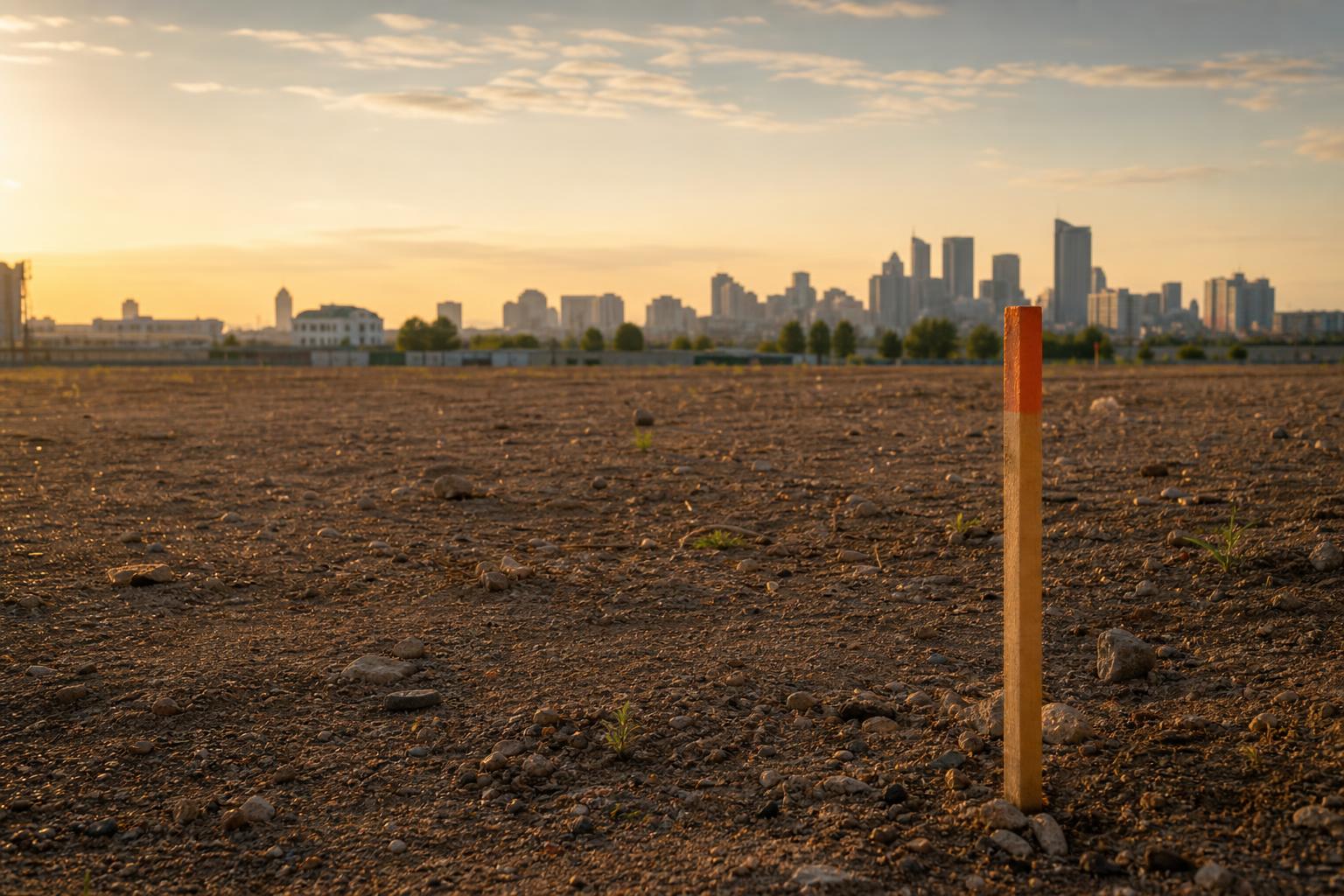
A flagship institution is more than a club, restaurant, or cultural center. It is a building — usually a single address — that becomes the anchor of a community’s commercial, civic, and cultural life in its city of greatest concentration.
The Harmonie Club has anchored German-Jewish civic and social life in New York for more than 170 years; the Federation of Jewish Philanthropies, founded in 1917, is now the umbrella for billions a year in coordinated giving. The Kosciuszko Foundation runs the Polish-American scholarship program and hosts the Polish ambassador on New York visits. Tiro a Segno is where Italian-American capital has met for a century, and where members from Caruso to LaGuardia to Iacocca have walked the same staircase.
Each of these institutions does four things at once:
- Anchors capital. Wealthy members have a permanent reason to give back, with their names on a wall and a place to bring their grandchildren.
- Legitimizes leadership. When the institution endorses a candidate, signs a letter, or hosts a foreign dignitary, the gesture carries weight no single organization can muster alone.
- Transmits culture across generations that no longer share the language and regions that no longer share the village.
- Serves as the address — where an outsider goes to find the community when it needs to be found.
The political scientist Robert Putnam has spent decades documenting how social capital — the trust and civic ties a community sustains through its institutions — shapes a community’s outcomes over time.
Where Albanian-Americans are
“Albanian-Americans” here means the entire Albanian diaspora in the United States — from Albania, Kosovo, North Macedonia, Montenegro, Çameria, the Arbëreshë lines that crossed the Adriatic in the 15th century, and the U.S.-born generations who never lived in any of those places. The Census collapses that into one box. The community itself never has.
There were five waves: Orthodox laborers from Korçë in the 1880s settling in Boston and Worcester; a small post-WWII wave of northerners displaced by the rise of Hoxha; Gheg-speaking Catholic and Muslim families from Kosovo, North Macedonia, and Montenegro who came under Yugoslav pressure from the 1960s and built the Detroit metro community; the post-1990 wave from Albania-proper; and the 1999 Kosovar refugee resettlement.
Each brought its own dialect, confession, city of arrival, and reason for leaving. The third generation now — children and grandchildren of the post-1990 arrivals plus great-grandchildren of the 1880s arrivals — is the first U.S.-born majority Albanian generation in our history.
We have built a great deal. Vatra — the Pan-Albanian Federation of America — was founded in Boston in 1912 and helped shape Albanian independence itself. The Albanian American Civic League runs congressional engagement in Washington. NAAC and AANO have been advocating in Washington and Albany for thirty years. Illyria has been publishing weekly out of 481 8th Avenue since 1991. The Albanian Institute of New York runs a respected lecture program. The Albanian American Cultural Center of Texas and Albanians For America carry the work in DFW and Washington. Parish networks anchor cultural life across the Northeast and Detroit metro.
The Albanian-American business class — concentrated in real estate, restaurants, trucking, and increasingly in finance and law — controls a meaningful share of the New York metro economy. Albanian-American landlords are a fixture of Bronx multifamily housing — repeatedly singled out in local reporting — though no census or city agency has published a verified ownership share.
What we don’t yet have, on top of all of that, is a flagship building — one address where Albanian-American capital, expertise, and cultural memory sit in the same room, where members of Congress meet the community, where the Albanian, Kosovar, and Montenegrin consulates send commercial-affairs officers, and where the names of the families who built this community are carved on a wall.
The community in 2026 has built strong organizations for advocacy and culture. The next layer is a patient-capital institution that endows them.
Why the flagship hasn’t been built yet
Three reasons, none of them permanent.
The post-1990 wave is still in arrival posture. Refugees from the Hoxha collapse have spent thirty-five years on first-generation work: papers, schools, first businesses, money sent home, the wars in Kosovo and North Macedonia. First generations build the businesses that later fund flagship institutions; they rarely build the institutions themselves. The Germans waited seventy-plus years for the Harmonie Club; the Poles a century. By that timeline, we are on schedule.
The existing organizations were built for advocacy and culture, not endowment. Vatra, NAAC, AANO, the Civic League, AACCT, Illyria — each was built around a specific mission, and each has executed it. None was designed to be the patient-capital vehicle. We have raised money for cause-specific campaigns — diaspora relief, Kosovo recognition, post-earthquake reconstruction — without ever raising the patron capital that endows a permanent institution.
The community’s self-image lags its demographics. “Still arriving” was accurate in 1990. It is less accurate every year. There are now Albanian-American hedge fund principals, venture capitalists, and senior partners at major American law firms, plus a US-born third generation that has never lived under Communism and does not carry the inherited deference its parents do.
The German-Jewish community made the call in 1852, the Italians in 1888, the Poles in 1925, the Sephardim in 1973. The demographic curve says we are at the same point.
What it requires
Three things: a building, patient capital, and a clear-enough mission to last a hundred years.
The building is the easy part. Manhattan has landmark townhouses, Tribeca cast-iron, and converted commercial properties on the market at any moment between $50–150M. The Albanian-American HNW pool in the New York metro numbers in the hundreds of households at the giving levels required, before counting families willing to write transformational gifts.
The capital is the medium-hard part. A small founding group must underwrite the building before any return — naming-wall capital, in nonprofit-fundraising language. The Italians did it with a few hundred founding sportsmen and clubmen in 1888; the Germans with eight men in 1852; the Poles with Mizwa, MacCracken, and a network of Polish-American academics between 1923 and 1925. A founding circle of around fifty patrons at the levels typical of comparable launches can be closed in two private invitation-only dinners.
The mission is the hard part. The community has to decide what the institution is for. A hospitality club for the elite does not justify the work; a community center for the poor does not earn the patron capital. American immigrant flagships have always been both — where the wealthy host dinners and pay for scholarships, where dignitaries are received and language classes happen, where political fundraisers are held and the cultural archive is curated. Serving only one of those functions loses either the patrons or the purpose.
The next decade
The 2030 Census, the 2028 election cycle, and Albania’s 2020 Citizenship Law — which makes Albanian citizenship recoverable for any descendant up to a great-grandparent — are all forcing functions arriving inside this window. They reward the community that has gotten its institutional house in order before the moment.
The patron generation is alive now; most will retire from active leadership before 2040. The third generation is reaching the age at which its children start asking identity questions the community can answer well or poorly.
The work is to build something that, a century from now, an Albanian-American great-grandchild walks past on a quiet block of Manhattan, sees the brass plaque, and knows — without anyone explaining it — that this is the place where her people made their stand.
The Harmonie Club has stood for 173 years. There is no reason ours can’t stand as long.
Where we begin
The count is the prerequisite for the building. Patient capital does not flow toward a community whose size is contested and whose names are not collected anywhere durable. That is the work of the National Albanian Registry — complementary to Vatra, AANO, the Civic League, and every other organization already in the field — and it can be completed in the next thirty-six months, well before a brick is laid.
If you are Albanian-American, the simplest thing today is to be counted: register at albanianregistry.org, take one minute, put your household on the map. The tens of thousands of registrations the community gets in the next two years are the ground the rest of this is built on.
For founding-patron-level support, the founding-circle briefing is here. To see how the org is structured so no individual can run away with it, read the bylaws and governance model — anti-authoritarian by design. We grew up under one-party rule; we know what we are protecting against.
The count is this year’s work. The flagship is the decade’s. Same project.
— National Albanian Registry, 2026