

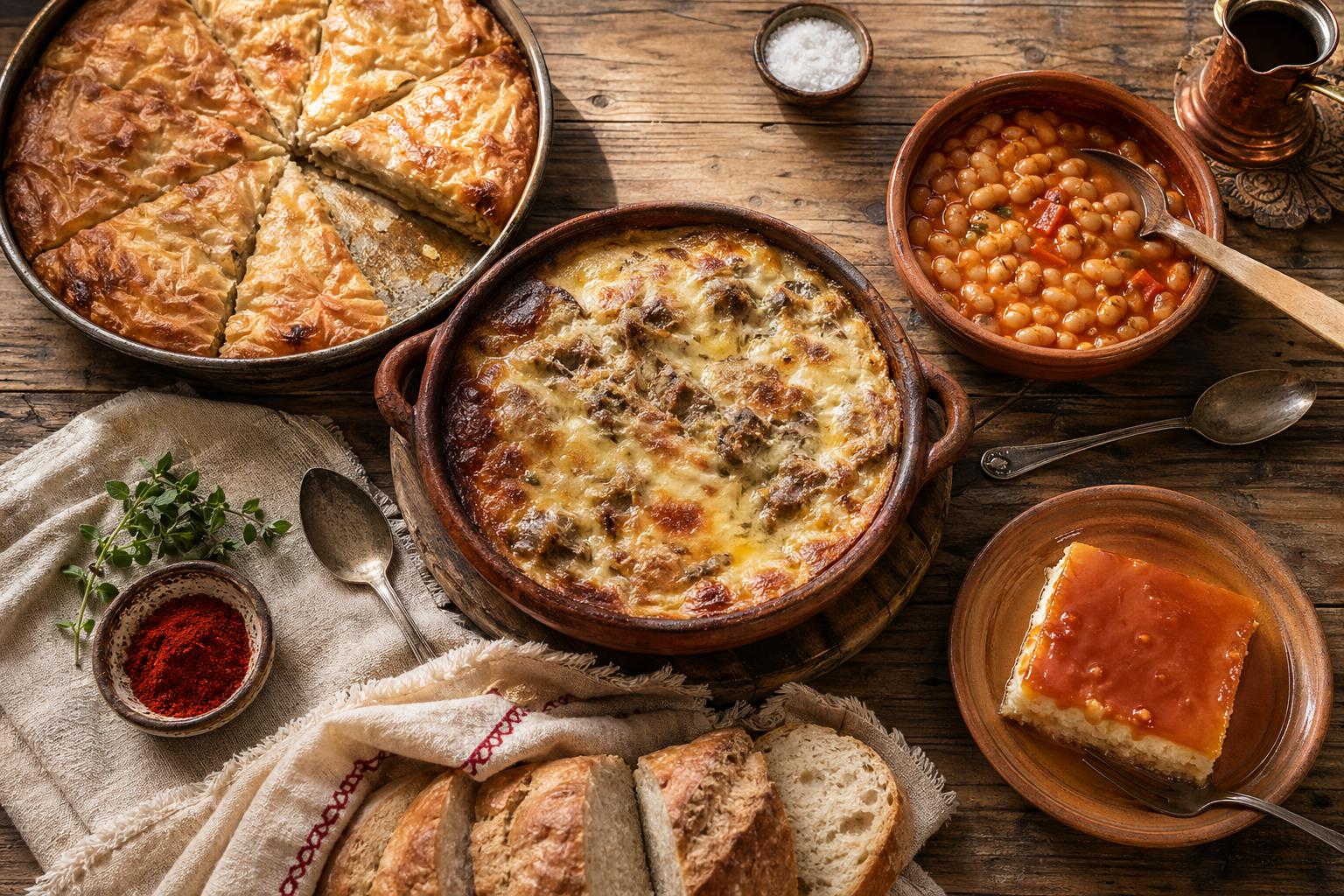
On one side: lamb, olive oil, oregano, garlic, and the long Adriatic coastline. On the other: yogurt, baked casseroles, filo pastry, slow stews, and the Ottoman pantry that ran across the region for five centuries. The result is a cuisine that looks familiar to anyone who has eaten Greek, Turkish, or Italian food, and is unmistakably its own once you sit at the table.
For Albanian Americans, food is the part of the culture that traveled best. Names changed, accents softened, kids stopped speaking the language — but the byrek still came out of the oven on Sunday, the raki still got poured before dinner, and the tavë kosi still showed up at Easter. This is the food-pillar root page for albanianregistry.org. Thirty dishes, organized by category, with short notes on what each one is, how it’s eaten, and where it comes from. Some link to full recipe articles. The rest are anchored here so the next generation has a reference that does not require a phone call to a grandmother in Vlorë.
A note on spelling: Albanian uses ë (schwa) and ç (ch). We keep the diacritics. Words appear in italics on first mention with an inline gloss in English.
What Albanian food is
Albania is small, but its cooking is regionally distinct. The rough split is north and south — Gheg and Tosk in linguistic terms — with a third coastal-Mediterranean register in between (Wikipedia: Albanian cuisine).
The north — the mountains of Shkodër, Kukës, Tropojë, and across into Kosovo — leans heavier. More red meat, more bread, more dairy, more long-cooked stews. Flija, the layered crepe-like pancake, is a Gheg signature. The south — Berat, Gjirokastër, Korçë, Sarandë — leans lighter and more vegetable-forward. More olive oil, more wild greens, more citrus, more seafood along the coast. The southern lakror is thinner and crispier than its northern cousins.
Yogurt — kos — runs through everything. Albanian kos is tangier and thicker than American supermarket yogurt; it cools the chili in fërgesë, binds the topping on tavë kosi, thins into tarator, and shows up plain in a bowl next to almost any meal.
Bread — bukë — is the literal center of the table. The Albanian phrase for “going to eat” translates word-for-word as “going to eat bread” (Wikipedia: Albanian cuisine). Bread is what you sop the sauce with, what you wrap the meat in, what you serve with the cheese and olives at the start of the meal. No bread, no meal.
And then there is meze — the small-plate hospitality format that opens any serious gathering. Olives, gjizë (fresh ricotta-style cheese), pickled peppers, sujuk, white feta, tarator, byrek triangles, raw onion, dry-cured sausage. Hospitality (mikpritja) is fundamental in Albanian culture (Wikipedia: Albanian cuisine), and the meze table is how it gets expressed.
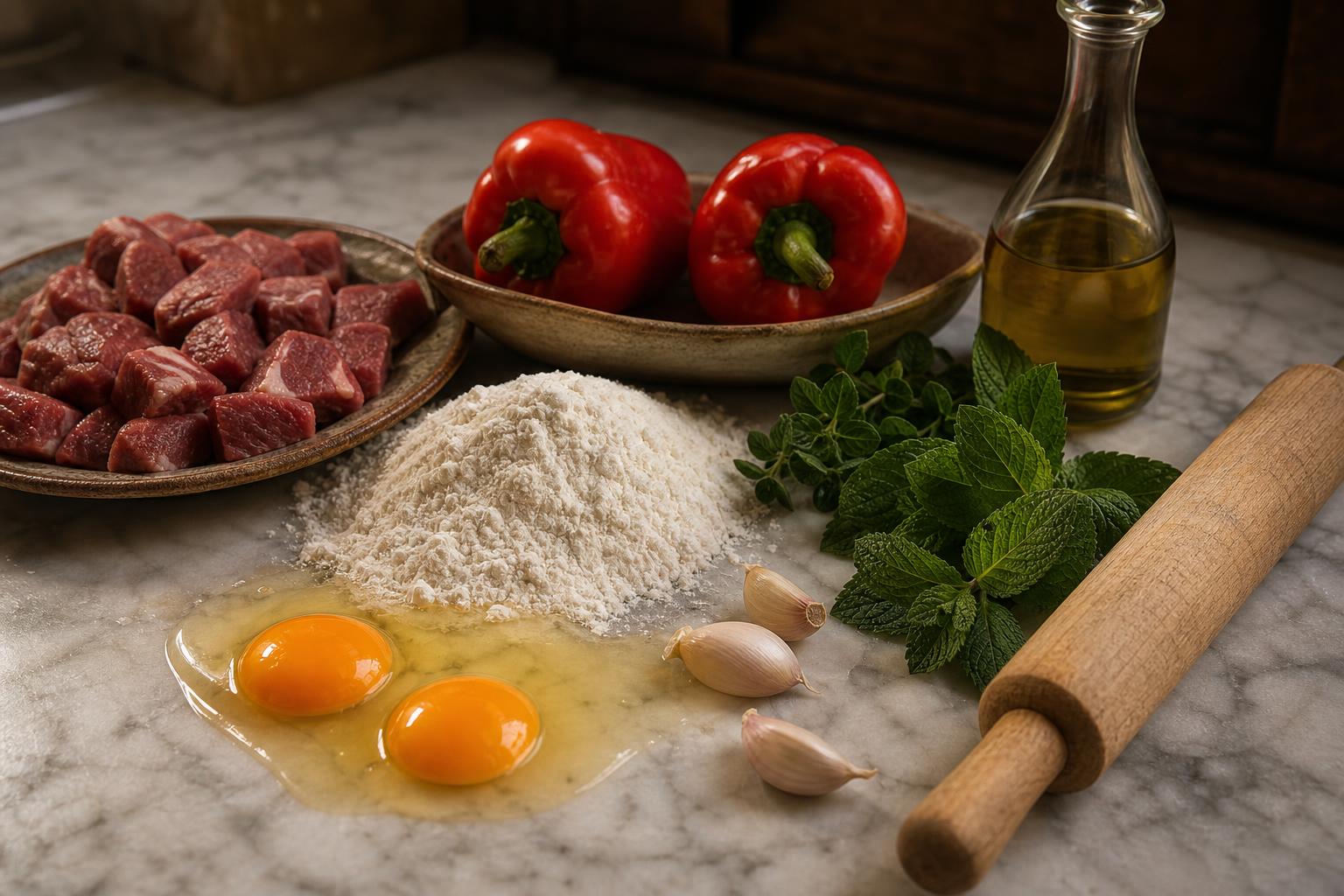 The base pantry of Albanian cooking — flour, eggs, lamb, peppers, mint, oregano, garlic, and olive oil. — Graphic by NAR
Pies and Pastries
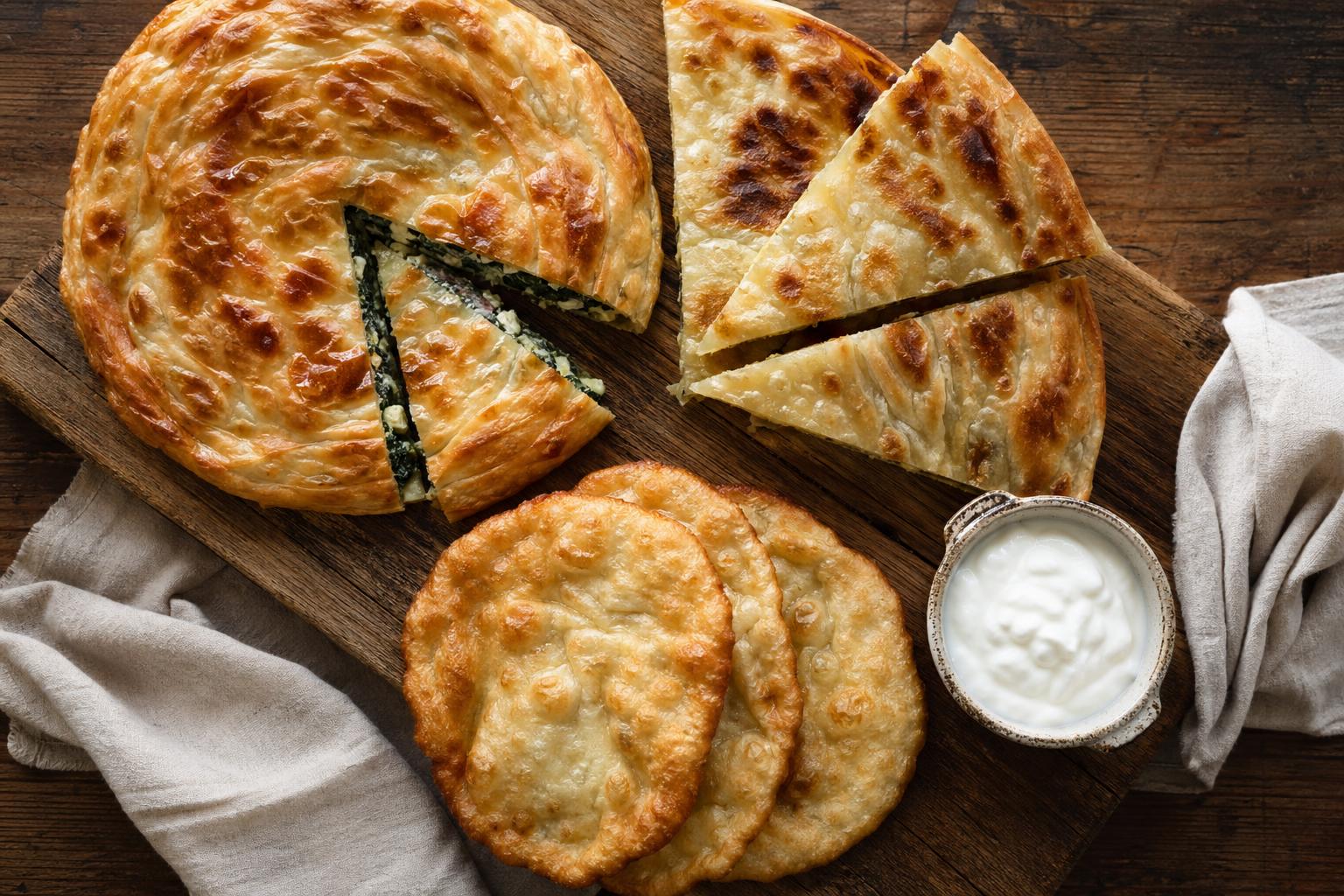 Pies and pastries — byrek, lakror, and petulla. The filo-based workhorse category of Albanian cooking. — Graphic by NAR
The pie family is the workhorse of Albanian cooking. Layers of filo dough (petë) wrapping a savory or sweet filling, baked until the top crackles. Every region has a version. Every cook has an opinion on dough thickness.
Byrek
The everyday Albanian pie. Layers of thin filo wrapped around a filling — most commonly white cheese (byrek me djathë), spinach (me spinaq), leek (me presh), or ground meat (me mish). Baked in a round or rectangular pan, cut into wedges or squares. Byrek has Ottoman-era roots and is a staple across Albania, Kosovo, and the diaspora (Wikipedia: Albanian cuisine). Eaten hot for breakfast, room-temperature with yogurt for lunch, or cold from the fridge at midnight. Albanian-American kids grew up on this. Full recipe coming at /blog/byrek.
Lakror
A southern Albanian specialty, especially associated with Korçë. Lakror uses a thinner, more delicate dough than byrek and is traditionally baked under a saç — a heavy lid covered in embers — which gives it a crisp, smoky bottom (Wikipedia: Albanian cuisine). Common fillings: wild greens, leeks with eggs, pumpkin, or a tomato-onion mix. Where byrek is utility food, lakror is festival food in many southern households.
Pite me Lakra
A green-pie variant — pite (pie) with lakra (greens). The filling is wild or cultivated greens, usually a mix of spinach, chard, dill, scallions, and parsley, bound with a little egg and crumbled feta. Cut into squares and served warm with yogurt or pickled vegetables on the side. Pite is named by many Albanians as the national food (Wikipedia: Albanian cuisine), in part because every region claims a version.
Petulla
Fried dough — small puffs or flat rounds, lightly sweetened or plain, dropped into hot oil until golden. Petulla is breakfast food and street food. It gets served three ways: dusted with powdered sugar, drizzled with honey, or — the savory version — with crumbled feta and a glass of yogurt. Sundays in many Albanian-American households still start with a plate of petulla and a phone call to relatives in Albania.
Krofne
The Albanian doughnut. A yeasted, slightly sweet fried pastry, usually filled with jam, vanilla cream, or chocolate, dusted with powdered sugar. Krofne came in through Austro-Hungarian and Italian influence — the name traces to the German Krapfen — and settled into Albanian bakeries especially in the north. Carnival and pre-Lent celebrations are the traditional occasion, but krofne show up in bakery windows year-round.
Mains
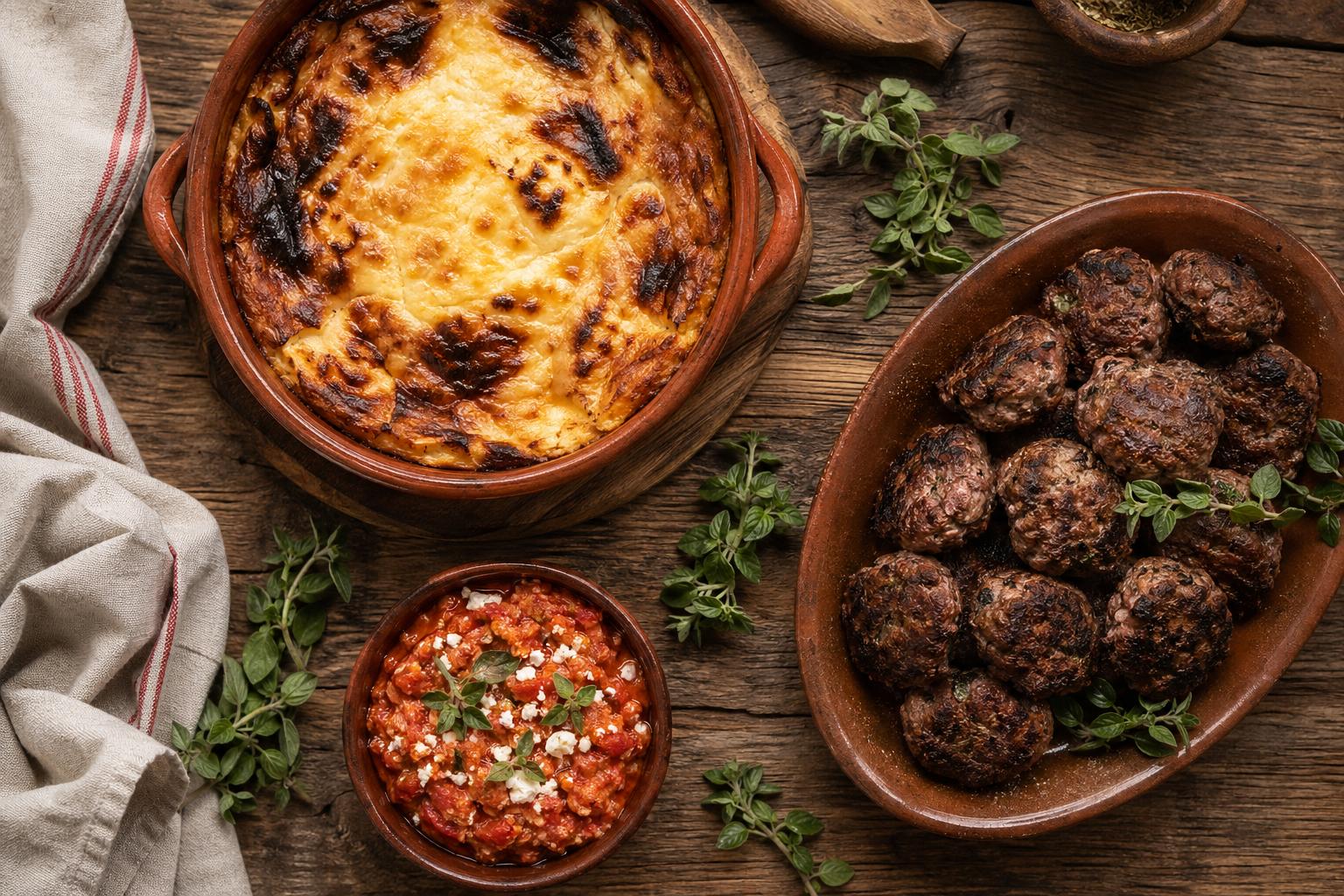 Mains — tavë kosi, qofte, and fërgesë in clay dishes. Lamb-forward, oregano-heavy, baked or pan-finished. — Graphic by NAR
The main-course tradition is built around lamb, slow-cooked stews, and casseroles that come to the table in their baking dish.
Tavë Kosi
The dish most often named Albania’s national dish (Wikipedia: Albanian cuisine). Lamb braised in garlic and oregano, layered with rice, then baked under a yogurt-egg-roux topping that puffs and browns like a soufflé. Associated with Elbasan in central Albania (also called tavë Elbasani). What Albanian-American families serve when the day matters: Easter, Eid, Christmas, Sunday lunch with the whole family. Full traditional recipe at /blog/tave-kosi.
Fërgesë e Tiranës
The defining dish of Tirana and central Albania (Wikipedia: Albanian cuisine). Sweet peppers, tomatoes, and onions cooked down with gjizë (Albanian fresh ricotta) and sometimes liver or veal, finished in a clay pan. Served bubbling, scooped up with bread. There is a summer version (peppers and tomatoes) and a winter version (with meat). Fërgesë is what you order at a Tirana meze table to anchor the spread.
Qofte të Fërguara
Albanian fried meatballs (Wikipedia: Albanian cuisine). Minced lamb or beef seasoned with onion, garlic, mint, oregano, and a soaked-bread binder, shaped into small ovals, dredged in flour, and pan-fried. Eaten hot with yogurt, lemon, and sallatë. Qofte is the universal Albanian street food and the dish every Albanian American can make from memory. Variations include qofte në tavë (baked in tomato sauce) and the long, kebab-style qofte korçare from Korçë.
Mish me Patate
“Meat with potatoes.” The plain-name dish that defines Albanian home cooking. Bone-in lamb or veal, cubed potatoes, onion, garlic, tomato, oregano, olive oil, all layered in a deep pan and slow-roasted until the potatoes are caramelized and the meat falls off the bone. Sunday lunch in northern Albanian households. The recipe varies by family — some add carrots, some add red wine, some keep it strictly meat-potato-tomato — and each variation is the correct one.
Tavë Dheu
“Earth pan.” Lamb or veal liver and offal cubed and slow-cooked in a clay pan with butter, oregano, peppers, and tomatoes, served sizzling. The name refers to the clay vessel — dheu means earth — which gives the dish a slightly smoky, grounded character. Tavë dheu is meze food: it arrives at the table while the raki is still being poured and gets eaten in small forkfuls between sips and conversation.
Soups and Stews
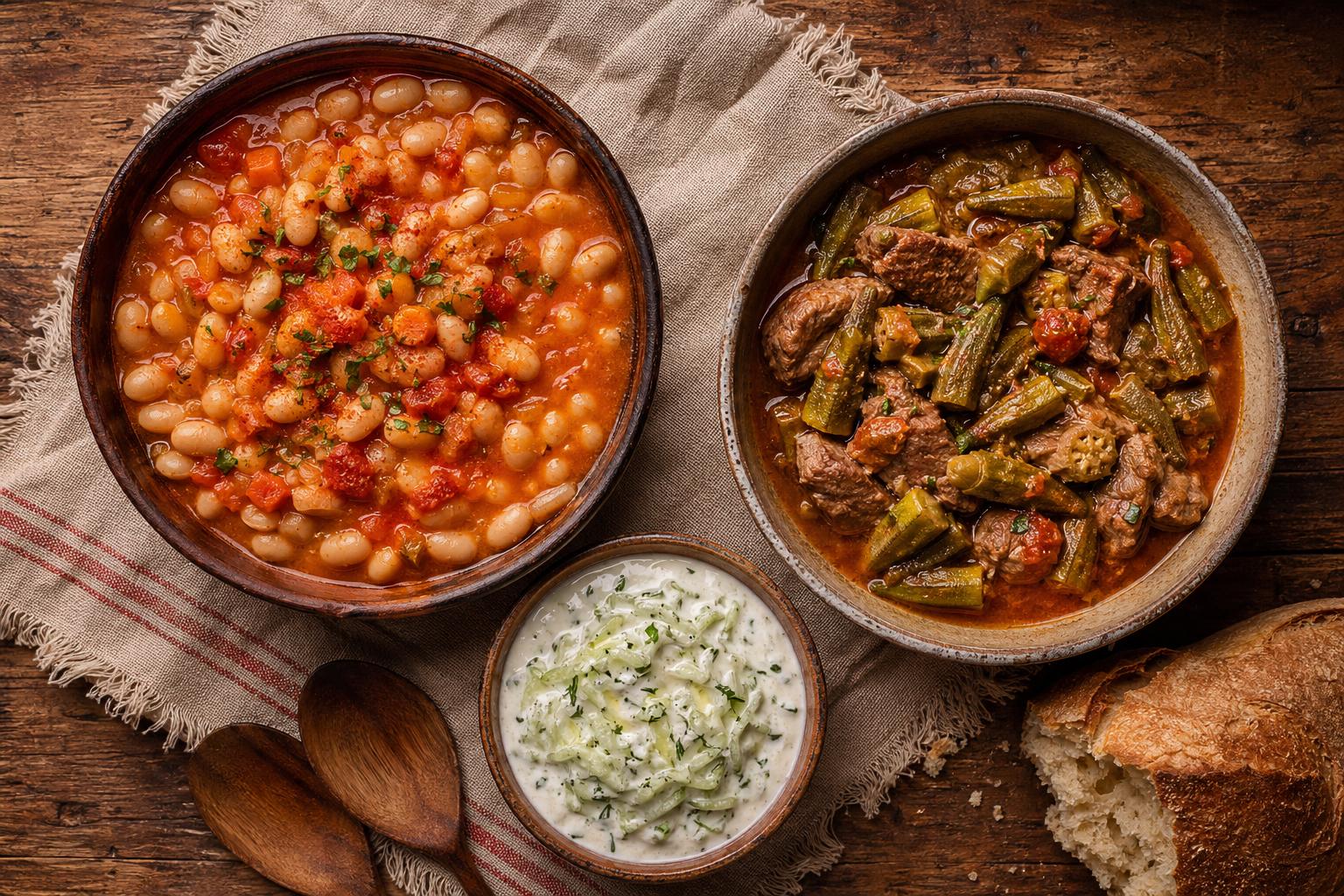 Soups and stews — fasule (white-bean), bamje (lamb-and-okra), and tarator (cold yogurt-cucumber). — Graphic by NAR
Soups carry Albanian cooking through the cold months and the holiday calendar. They run from peasant-thrifty bean stews to the once-a-year tripe soup that marks Easter.
Fasule
White-bean stew. Dried navy or great-northern beans simmered with onion, carrot, garlic, paprika, olive oil, and (in many versions) smoked sausage or lamb bones. Fasule is the cheapest, most filling, most weekday-Albanian dish there is. Served with raw onion, pickled peppers, crumbled feta, and a hunk of bread. Vegetarian versions are common during Orthodox Lent. In the diaspora, fasule is the dish that survived best — beans, onions, paprika, and time are available everywhere.
Bamje
Lamb-and-okra stew. Small, fresh okra pods (bamje) braised with cubed lamb, onion, tomato, garlic, and lemon. The lemon and the okra’s natural pectin give the stew a bright, slightly sticky body. Bamje is a late-summer dish, when okra is in season at Albanian and Greek markets. In US cities with Albanian groceries (Bronx, Sterling Heights, Astoria), frozen okra from the Balkans is the year-round substitute.
Paçë
Easter tripe soup. Lamb head, feet, and tripe simmered for hours with garlic, vinegar, and salt, finished with a roux-thickened broth and sometimes egg. Paçë is eaten at dawn on Easter morning in Orthodox Albanian households — a hangover cure, a feast-breaker, and a ritual rolled into one bowl. It is divisive: people who love it love it for life; people who don’t, never come around. In the diaspora, paçë is the dish most likely to skip a generation.
Supë me Mish
“Soup with meat.” A clear lamb or beef broth with pulled meat, rice or fine noodles (petite), carrots, celery, and parsley, finished with a squeeze of lemon and sometimes an egg-and-yogurt liaison (tarator-style). It is the everyday Albanian soup — what you make when someone is sick, what you serve before the tavë on a holiday, what you stretch into two days of dinners.
Çomlek
A long-braised onion stew with lamb or beef. The defining ingredient is the volume of onions — sometimes more onions by weight than meat — slowly caramelized into a sweet, nearly jam-like base. Albania ranks fifth in the world in per-capita onion consumption (Wikipedia: Albanian cuisine), and çomlek is part of why. The name traces back through Ottoman Turkish (çömlek, clay pot) and the dish belongs to the broader Balkan family of slow-cooked meat stews.
Salads, Sides, Vegetables
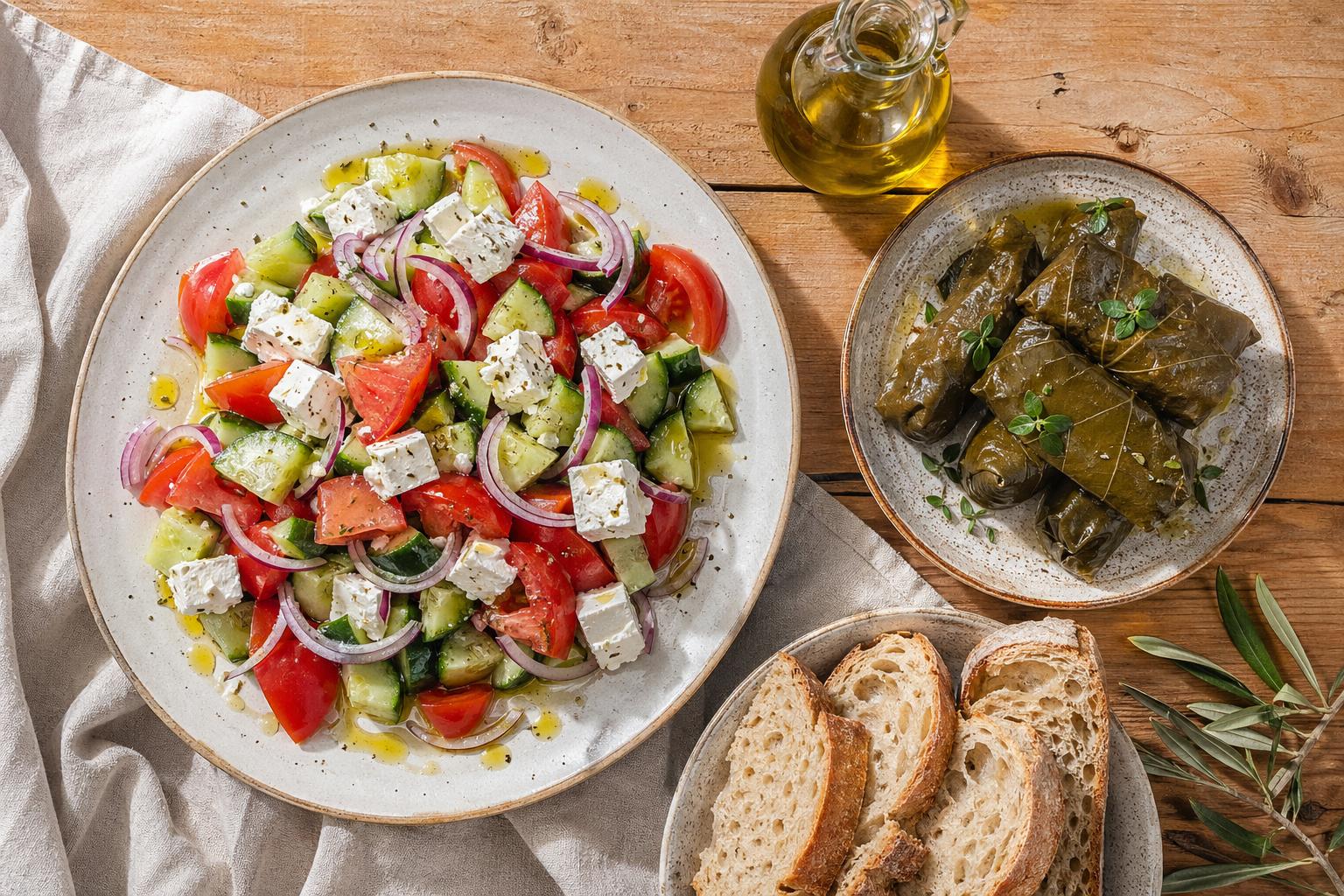 Salads and sides — sallatë (chopped cucumber-tomato-feta) and dolma (stuffed grape leaves) with olive oil. — Graphic by NAR
Albanian vegetable cooking is older than the meat tradition and sits at the center of every meal — meze, lunch, side dish, fasting meal during religious seasons.
Sallatë (Albanian Chopped Salad)
The default Albanian salad. Cucumber, tomato, red onion, green pepper, parsley, white feta, olive oil, red wine vinegar, salt. No leafy greens. Sometimes olives, sometimes hot pepper. Cut small enough to scoop with bread. Sallatë shows up at every Albanian table — meze, lunch, dinner, summer, winter. The acid and the feta cut through the richness of whatever main is on the table.
Dolma
Stuffed vegetables. The most common Albanian dolma is dolma me gjethe rrushi — grape leaves stuffed with rice, onion, herbs (mint, dill, parsley), and sometimes minced lamb, rolled tight and simmered with lemon and olive oil. Served warm with yogurt or cold as meze. The Ottoman family of stuffed-vegetable dishes runs across the Balkans and the Middle East; the Albanian version leans heavier on dill and lemon.
Burani me Spinaq
A baked spinach-rice casserole. Spinach, scallions, dill, parsley, and short-grain rice cooked together with olive oil, then layered into a pan and baked until the top is set and the rice has absorbed the green liquor. Burani is fasting food in Orthodox households and an everyday vegetable side everywhere else. Versions exist with chard, leeks, or wild greens depending on what the season offers.
Speca të Mbushura
Stuffed peppers. Sweet bell peppers (or the long, thin Albanian speca) hollowed out and filled with rice, ground lamb or beef, onion, tomato, parsley, and dried mint, then baked or simmered in a tomato-yogurt sauce. Speca të mbushura is Sunday family food and a standard freezer-meal in Albanian-American households — the kind of dish a mother sends her kids back to college with.
Tarator
Cold yogurt-cucumber soup, served in summer (Wikipedia: Albanian cuisine). Whisk full-fat yogurt thin with a splash of cold water, stir in finely diced cucumber, crushed garlic, dill, salt, and a slick of olive oil. Some families add walnuts, especially in southern Albania. Drink it from a glass, eat it from a bowl with bread, or use it as the cooling counterpart to a heavy lamb dish. Tarator is the Albanian answer to August.
Sweets and Pastries
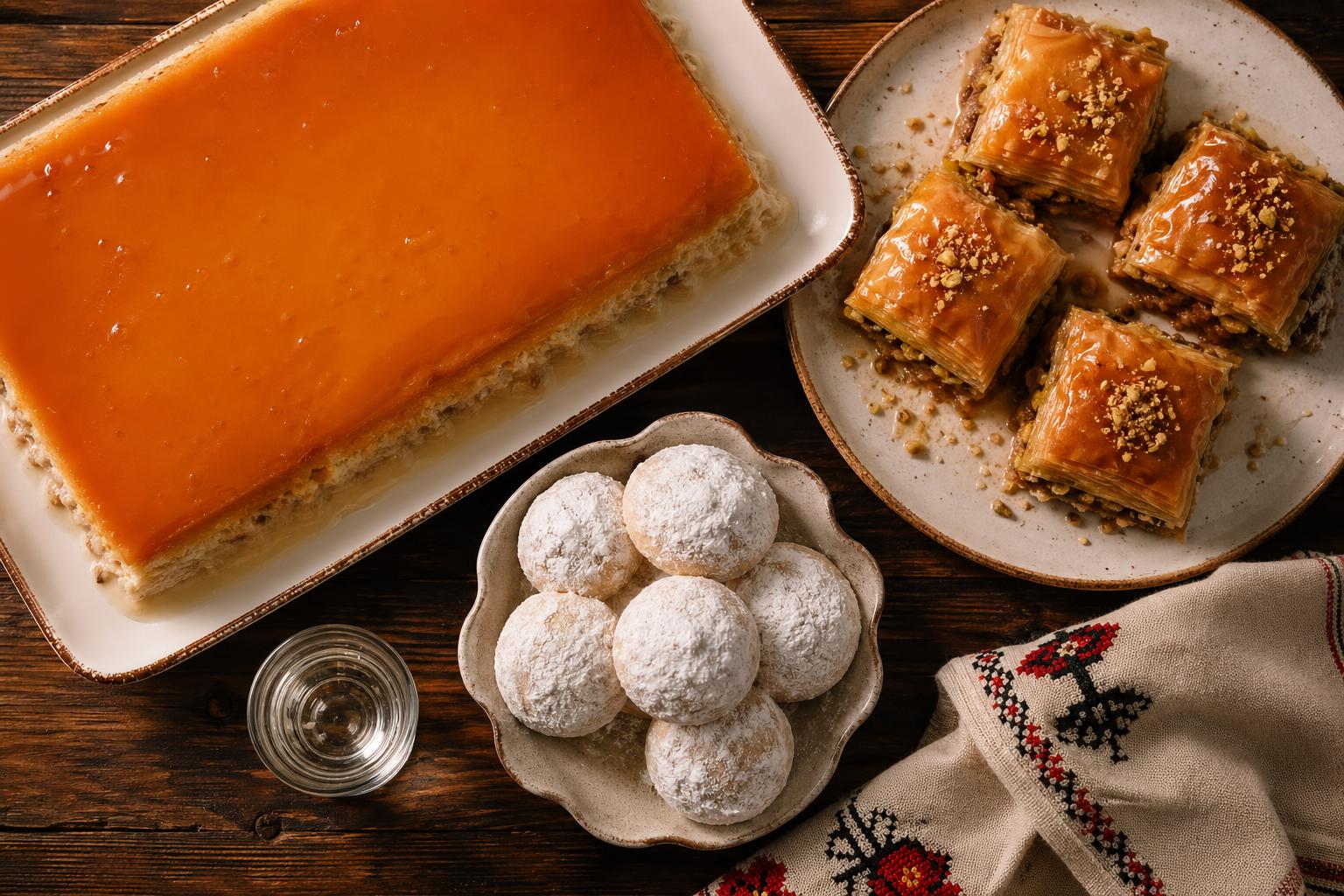
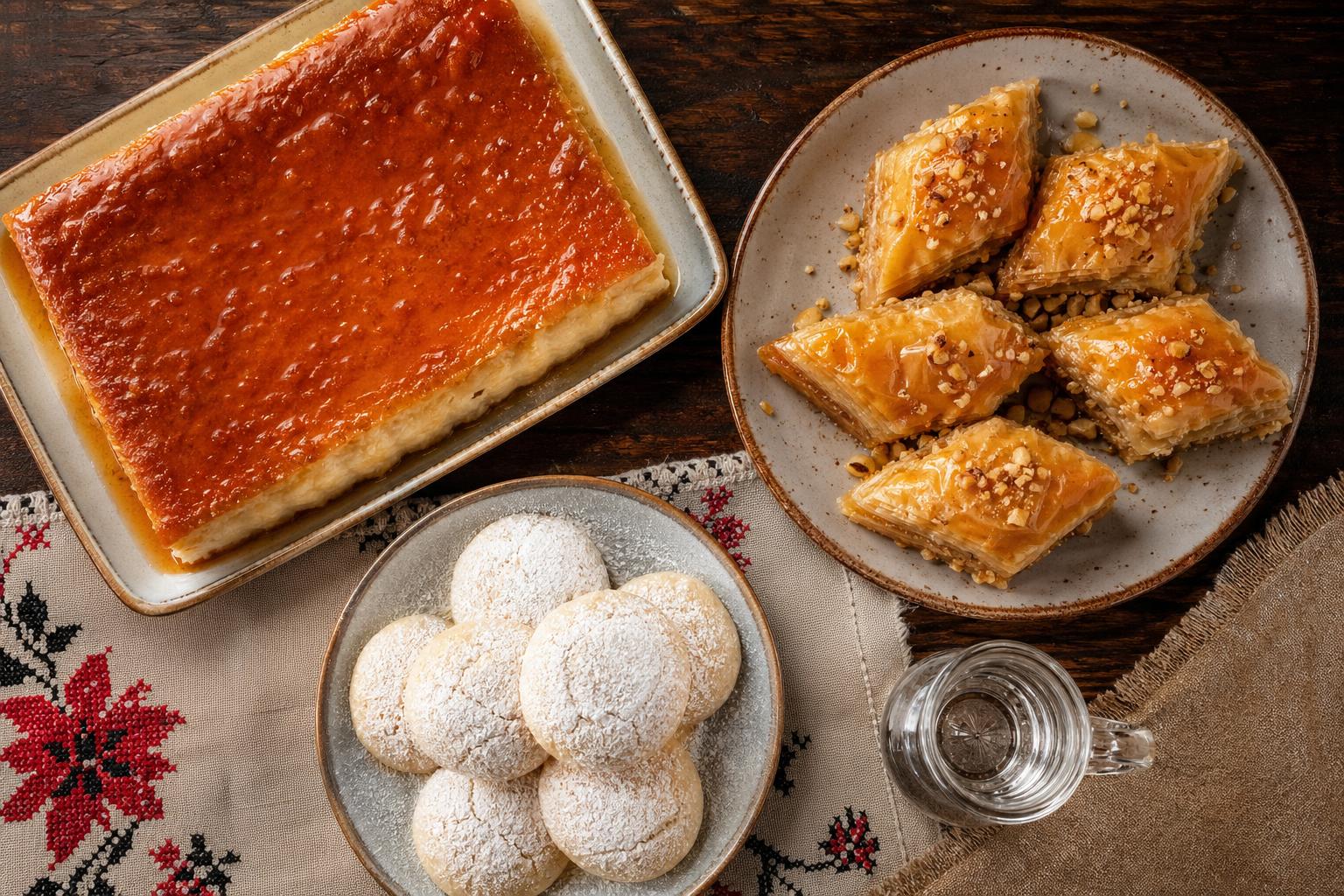 Sweets — trilece (three-milk cake), baklava, and kurabie shortbread, with a small glass of raki. — Graphic by NAR
Albanian sweets come out at the end of the meal, with coffee, and at the major holidays. Most have Ottoman roots; one — trilece — has a more recent and disputed origin.
Trilece
A dense, soaked sponge cake — three milks (whole, condensed, evaporated) poured over baked sponge, finished with a thin caramel top. Many Albanians claim trilece was first introduced to the Balkan region through Albania (Wikipedia: Albanian cuisine), adapted from the Latin American tres leches. Whatever its precise path, trilece is now the dessert most associated with modern Albanian restaurants and Albanian-American bakeries. Full recipe coming at /blog/trilece.
Baklava
Layered filo, walnuts or hazelnuts, butter, baked, then drenched in lemon-scented syrup (Wikipedia: Albanian cuisine). Albanian baklava tends to use walnuts more often than pistachios and is cut into diamonds. Made in big trays for Eid, Christmas, Easter, weddings, and any occasion where the relatives are coming. Every Albanian grandmother believes her baklava is the correct baklava.
Kadaif
Shredded filo pastry — long thin threads layered with crushed walnuts and butter, baked, and soaked in syrup (Wikipedia: Albanian cuisine). Crisper and lighter on the tooth than baklava. Sometimes rolled into individual logs (kadaif me arra), sometimes baked as a sheet and cut. A staple of the Albanian sweet-pastry case alongside baklava and trilece.
Halva
A sweet, dense paste made with semolina or sesame, sugar, butter, and pine nuts or walnuts. Albanian halva runs in two main directions: the cooked semolina version (warm, fudgy) and the pressed sesame version (crumbly, often imported from Turkey). Halva shows up at religious holidays, fairs, and memorials (Wikipedia: Albanian cuisine), where it has a specific commemorative role in some Muslim and Bektashi households.
Kurabie
Buttery shortbread cookies, often pressed with a pattern, dusted with powdered sugar, sometimes filled with walnut or jam. Kurabie is the cookie that lives in a tin on top of the refrigerator for any guest who shows up unannounced. Every Albanian-American kid remembers reaching for one before lunch and getting their hand swatted.
Drinks and Pantry Staples
 Drinks and pantry staples — raki, kos (yogurt), a copper xhezve for Albanian coffee, and sliced sujuk. — Graphic by NAR
These are not dishes in the strict sense, but they define the Albanian table as much as any tavë.
Raki
The Albanian national spirit (Wikipedia: Albanian cuisine). A clear distillate, usually from grapes (raki rrushi), but also plums (raki kumbulle), mulberries (raki mani), or blackberries. ABV runs 40 to 60 percent in homemade versions. Raki is poured before the meal — never with — in small shot glasses. Toast with gëzuar (“cheers”). In Albanian-American households, the homemade raki a relative carried over in a plastic water bottle is the prize possession of the liquor cabinet.
Boza
A fermented, low-alcohol grain drink — usually maize and wheat — thick, slightly sour, lightly sweet (Wikipedia: Albanian cuisine). Drunk cold, often with sweets or for breakfast. Boza runs across the Ottoman world (Turkey, Bulgaria, Macedonia, Albania) with regional variations. In the diaspora it is harder to find — Albanian and Bulgarian groceries in Astoria and the Bronx sometimes stock bottled versions.
Salep
A hot, milky drink thickened with the powdered tubers of wild orchids, sweetened, and topped with cinnamon. Salep is winter-morning food, sold by street vendors in Tirana and at bakeries across the diaspora. Modern salep is often made with cornstarch or other thickeners since wild orchid harvest is restricted, but the flavor profile — milk, vanilla, rosewater hints, cinnamon — stays.
Kos (Yogurt)
Albanian yogurt is its own ingredient and its own side dish. Tangier and thicker than American supermarket yogurt; closer to strained Greek yogurt or Bulgarian kiselo mlyako. Served plain in a small bowl alongside byrek, fasule, qofte, speca të mbushura, and most main dishes. Drained overnight in cheesecloth, kos becomes gjizë-like cheese. In the US, full-fat plain Greek yogurt is the workable substitute; Albanian and Balkan groceries often carry imported kos in plastic tubs.
Sujuk (Suxhuk)
A dry, hard, spiced cured sausage — beef, garlic, paprika, cumin, and coriander pressed into a casing and air-dried for weeks. Sujuk is meze food: sliced thin, served with cheese, olives, raw onion, and raki. Also fried with eggs for breakfast (vezë me sujuk) — the Albanian version of bacon and eggs. The Turkish sucuk, Armenian sujukh, and Balkan sudžuk are cousins; the Albanian version is its own cured-meat tradition.
Where to find Albanian ingredients in the US
The five biggest concentrations of Albanian Americans, and the places to shop:
Bronx, New York — Arthur Avenue and Belmont. The historic Italian-American neighborhood now has a strong Albanian footprint. Italian delis on Arthur Avenue carry filo, lamb, feta, and olive oil; Albanian-owned bakeries and butchers nearby stock byrek, sujuk, kos, and Korçë beer. Walk in, ask. Most owners speak Albanian.
Sterling Heights and Warren, Michigan. Metro Detroit holds the second-largest Albanian American population (~30,200 statewide, per Wikipedia: Albanian Americans). The strip along Van Dyke and Mound Road has multiple Albanian groceries, butchers, and bakeries. Gjizë, fresh byrek, lamb shoulder, and imported raki are easy to find.
Astoria and Ridgewood, Queens. Older Italian and Greek groceries cover most of the basics; smaller Albanian-owned shops along Steinway Street and in Ridgewood stock the harder-to-find items. Boza and salep show up at Bulgarian and Turkish groceries here too.
Paterson and Garfield, New Jersey. Northern New Jersey has a long-established Albanian community. Bakeries in Garfield carry fresh byrek by the tray. Halal butchers up and down Main Avenue handle lamb to your spec.
Waterbury, Connecticut. Smaller community than the Bronx or Detroit, but with deep roots and a few Albanian-owned bakeries and groceries that carry the full range of dairy, dried beans, and raki.
If we are missing your city — Worcester, Boston, Hamtramck, Philadelphia, Houston, Dallas, Austin, Phoenix — let us know. We are building this map in public.
A note for the next generation
Recipes are how a culture survives the move. The grandmother who made the byrek without measuring is not always going to be there to call. Writing the numbers down, naming the dishes the way they are named, keeping the ë on tavë and the ç on fërgesë — that is part of the work.
If you are Albanian American and we have not counted you yet, we would like to. The National Albanian Registry is a community-led count of the Albanian American community — over 1 million strong, only ~230,000 captured by the 2024 American Community Survey (B04006 Albanian ancestry). Our goal is to close that gap. Get counted at /register. It takes 2 minutes. Your name stays private. The number — and the food traditions behind it — get the recognition they deserve.