

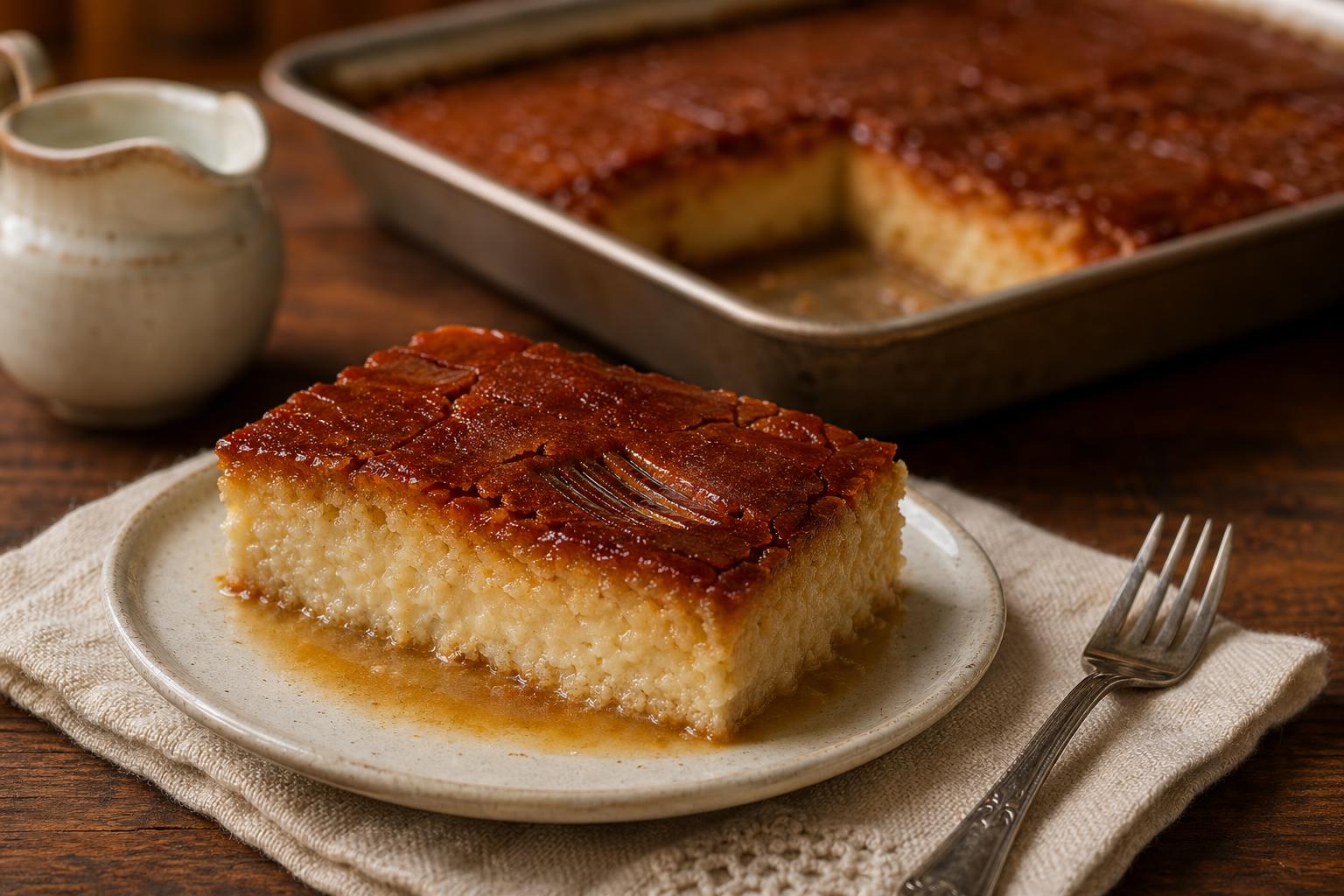
Trilece — also written trileçe — is the Albanian three-milk cake. A vanilla sponge soaked thoroughly in three milks (evaporated, sweetened condensed, and whole milk or cream), topped with a thick layer of amber caramel, cut into slabs and served cold. It is, alongside baklava, the most-served dessert at Albanian-American weddings, holidays, and Sunday dinners.
Whether the dish is genuinely Albanian or a 20th-century borrowing from Latin American tres leches is debated. What’s certain is that the diaspora has made it its own — heavier on the caramel than its Mexican cousin, served in slabs not portions, and culturally embedded in the cadence of community meals from Astoria to Sterling Heights.
This is the traditional recipe at home-kitchen scale, with the origin debate explained and the critical-path notes nailed down. It serves twelve to fifteen and takes about an hour of active work plus an overnight rest.
What Trilece Is
Trilece is a four-layer dessert built bottom to top: a tall vanilla sponge cake, a milk soak that saturates the crumb completely, a poured caramel layer that sets to a glossy amber sheet, and an optional garnish of cinnamon, crushed walnuts, or whipped cream. The cake is baked in a 9×13 pan and cut into squares.
Texture is the point. Done right, the sponge gives up almost no resistance — it parts under a fork the way a wet biscuit would, holding the milk in suspension without going mushy. The caramel snaps slightly under the spoon, then melts. Underneath, the soaked cake is dense, custard-like, intensely milky.
Flavor runs in two directions at once. From the top, deep caramelized sweetness with a faint bitterness from the cooked sugar. From the soak, milky vanilla — the three milks layered for complexity, the evaporated giving body, the condensed providing sweetness, the whole milk or cream lightening the whole thing. Albanian families that take the dish seriously argue about ratios more than ingredients: how much cream versus whole milk, whether the caramel gets cinnamon, whether the top deserves a dusting of crushed pistachio.
What trilece is not: a quick cake. The soak needs four hours minimum, ideally overnight. The caramel needs to cool before it goes on. This is a dessert you start the day before you serve it.
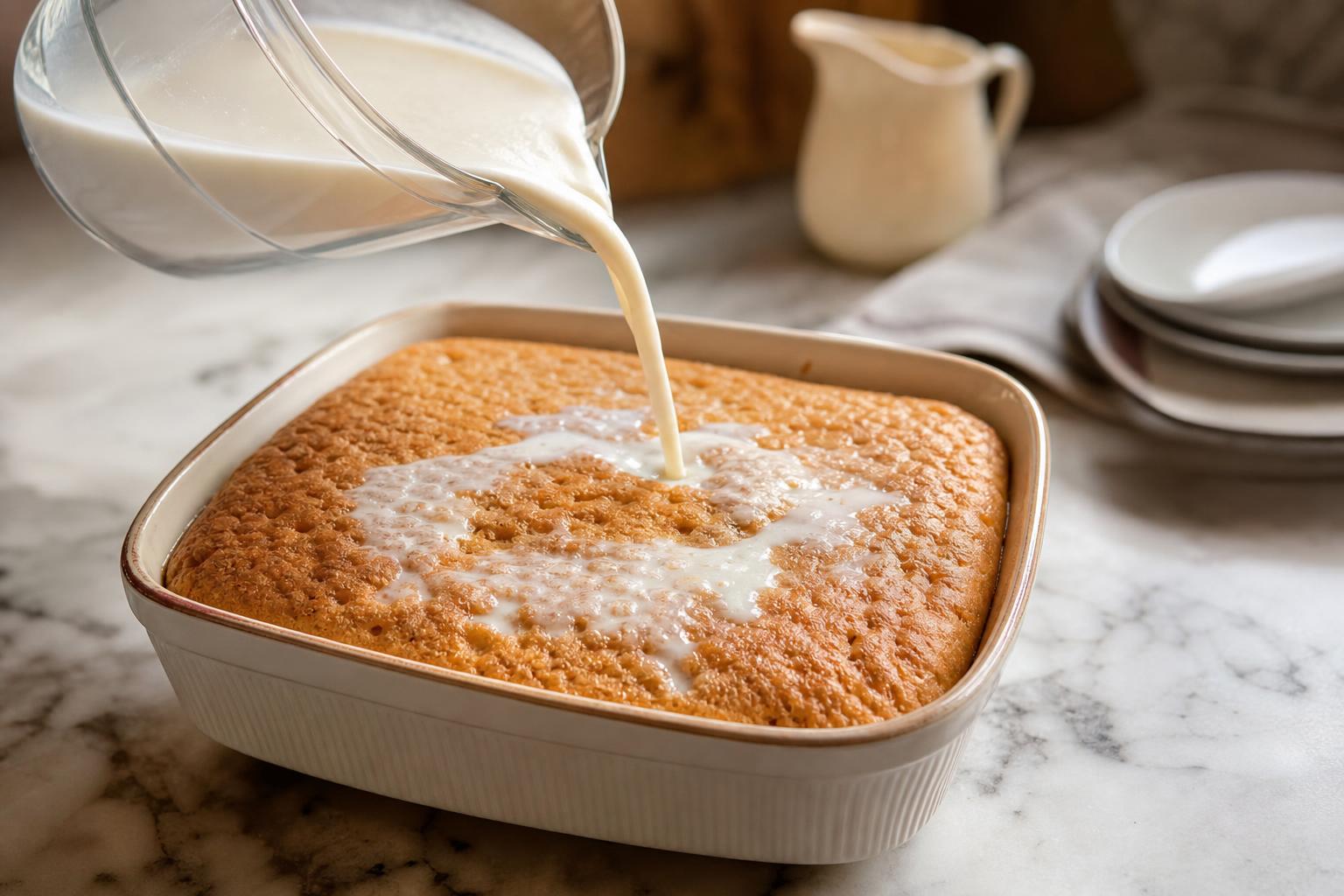 The three-milk soak — evaporated, sweetened condensed, and whole milk or cream — poured slowly across the cooled sponge. — Graphic by NAR
The Origin Debate
Three theories circulate, and the honest answer involves all three.
Latin-American origin. Tres leches — literally “three milks” — appears to have originated in Mexico or Nicaragua in the mid-twentieth century, possibly tied to evaporated-milk marketing campaigns by Nestlé. From Latin America the dessert spread to Spain, then across the Mediterranean, eventually reaching Albania as the country opened to outside culinary influence after the fall of communism. The word trileçe is a phonetic rendering of the Spanish phrase. The cake spread through Tirana bakeries and crossed to the diaspora through returning relatives and Albanian-American pastry chefs.
Ottoman-Balkan origin. Milk-soaked cakes are not new to the region. Ekmek kadayıfı — a syrup-soaked Ottoman bread pudding — has cousins across Anatolia, Greece, and the Balkans. Some food historians argue trilece could have entered Albania through Greek or Turkish neighbors centuries before any Latin-American influence, with the modern name a rebranding when the tres leches trend arrived.
Convergent invention. Albania has its own tradition of syrup- and milk-soaked sweets — shendetlie (a honey-walnut cake soaked in syrup, not milk), qumësht me oriz (rice pudding) — and may have developed something similar to the modern trilece independently before adopting the Spanish-derived name.
The defensible answer: the version Albanians eat today is Latin-American in form but distinctly Albanian in execution. The caramel topping, the pan format, and the place trilece holds in diaspora wedding traditions are not borrowed from Mexico City or Managua. Whatever the origin, the dish is now firmly Albanian.
Ingredients
Yields one 9×13 pan, serves 12-15.
For the sponge cake:
- 6 large eggs, room temperature
- 1 cup (200g) granulated sugar
- 1 cup (125g) all-purpose flour
- 1 tsp baking powder
- ¼ tsp salt
- 1 tsp vanilla extract
- 2 Tbsp whole milk
For the three-milk soak:
- 1 can (12 oz / 354 ml) evaporated milk
- 1 can (14 oz / 396 g) sweetened condensed milk
- 1 cup (240 ml) heavy cream OR whole milk
For the caramel topping:
- 1 cup (200g) granulated sugar
- ¼ cup (60 ml) water
- 2 Tbsp unsalted butter
- 2 Tbsp heavy cream
A note on the eggs: room temperature is required. Cold eggs will not whip to the volume the cake needs, and the cake’s height comes entirely from beaten eggs — there is almost no chemical leavening at work. Pull the eggs out an hour before you start.
A note on the milks: the cans are the standard supermarket sizes. Don’t substitute one for the other — they are not interchangeable. Evaporated milk is unsweetened, condensed milk is heavily sweetened, and the recipe depends on both.
Equipment
- A 9×13 inch baking pan, at least 2 inches deep
- A stand mixer or hand mixer with a whisk attachment
- A fine sieve for sifting the dry ingredients
- A fork or wooden skewer for poking holes
- A heavy-bottomed saucepan for the caramel (light pans burn the sugar)
- A whisk
- A pitcher or large measuring cup for the milk soak
How to Make Trilece
Step 1 — Prep the pan and oven (5 minutes)
Heat the oven to 350°F (175°C). Grease the 9×13 pan with butter or neutral oil. Don’t line with parchment — the cake needs to stay in the pan all the way through serving.
Step 2 — Beat the eggs (7 minutes)
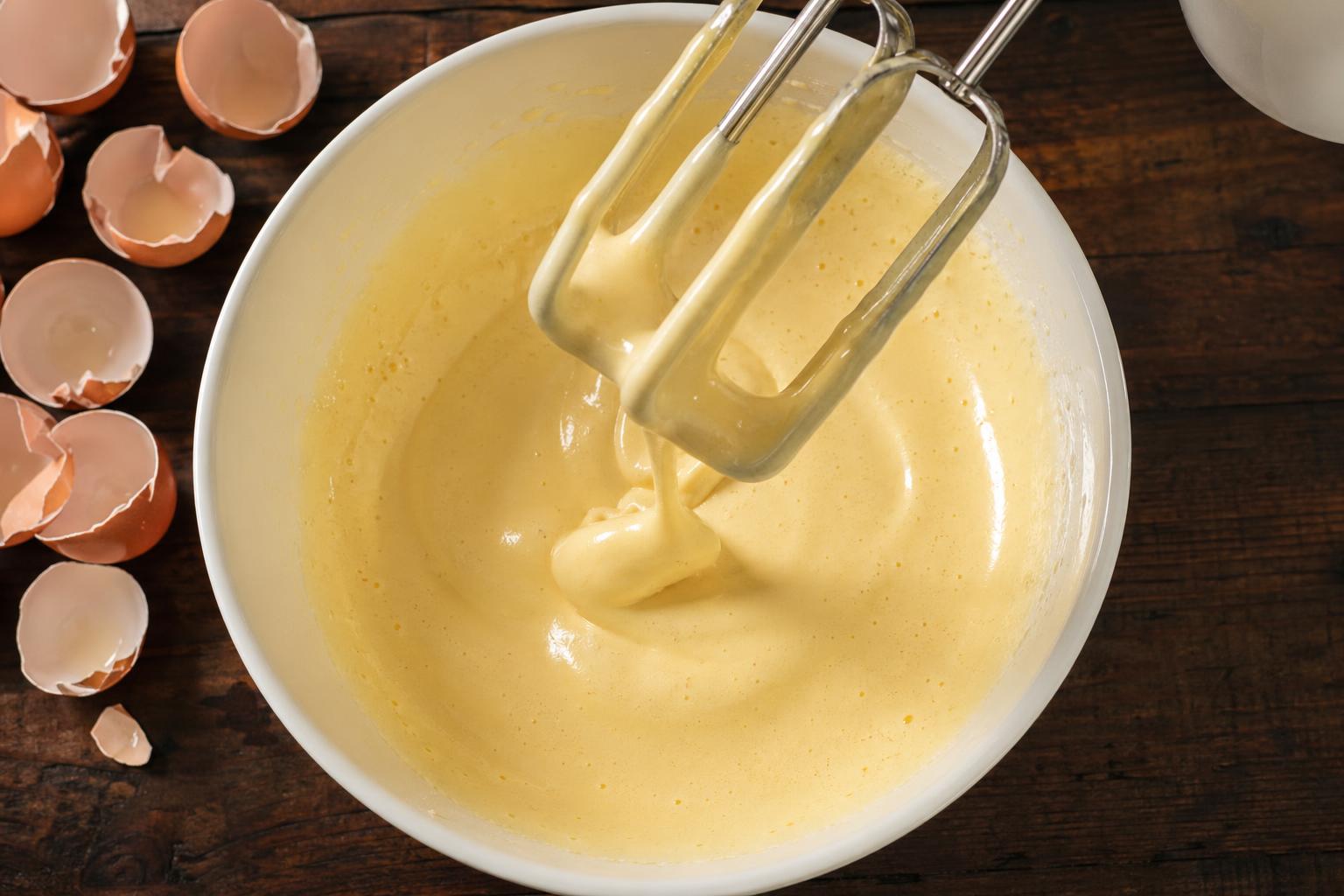 Step 2: eggs beaten the full 5 minutes to the ribbon stage — pale yellow, tripled in volume. The cake’s height comes from this air, not baking powder. — Graphic by NAR
Crack the 6 room-temperature eggs into the mixer bowl. Beat on high for 5 full minutes — set a timer. The eggs should triple in volume and turn pale yellow, almost ivory. The mixture should fall from the whisk in thick ribbons that hold their shape on the surface for several seconds.
This is the structural step. Trilece’s height comes from the air whipped into the eggs, not from baking powder. Under-beat by even 90 seconds and the cake will be dense, the crumb will be tight, and the milk will not soak through. Beat the full 5 minutes.
Step 3 — Add the sugar (2 minutes)
With the mixer running on medium-high, add the sugar in a slow stream over about 30 seconds. Beat 2 more minutes until the mixture is glossy and the sugar is fully dissolved — rub a bit between your fingers to check.
Step 4 — Fold in the dry ingredients (3 minutes)
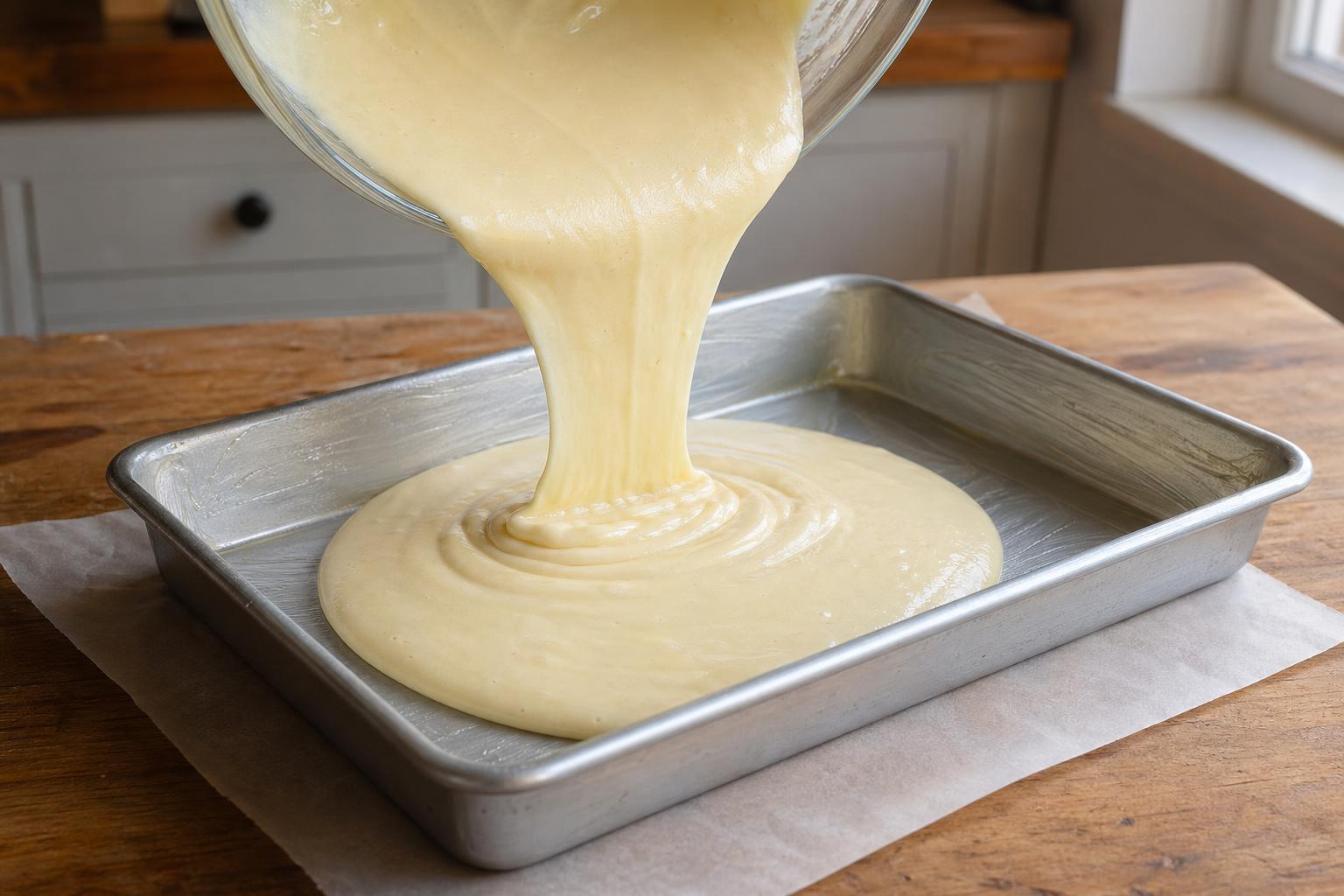 Step 4: the folded batter goes into the greased 9x13 pan — still airy from the egg foam. — Graphic by NAR
Sift the flour, baking powder, and salt together into a bowl. Add to the egg mixture in three additions, folding gently with a rubber spatula after each. Do not stir or beat — folding preserves the air. The batter should still look airy when the flour is fully incorporated.
Add the vanilla extract and the 2 Tbsp whole milk. Fold to combine.
Step 5 — Bake (25-30 minutes)
Pour the batter into the prepared pan and smooth the top. Bake at 350°F (175°C) for 25 to 30 minutes. The cake is done when the top is light golden, springs back to a light touch, and a toothpick inserted in the center comes out clean.
Pull from the oven. Cool completely in the pan, on a wire rack, for at least 1 hour. The cake must be fully cool before the soak — pouring cold milk over warm cake leaves the texture gummy.
Step 6 — The soak (10 minutes)
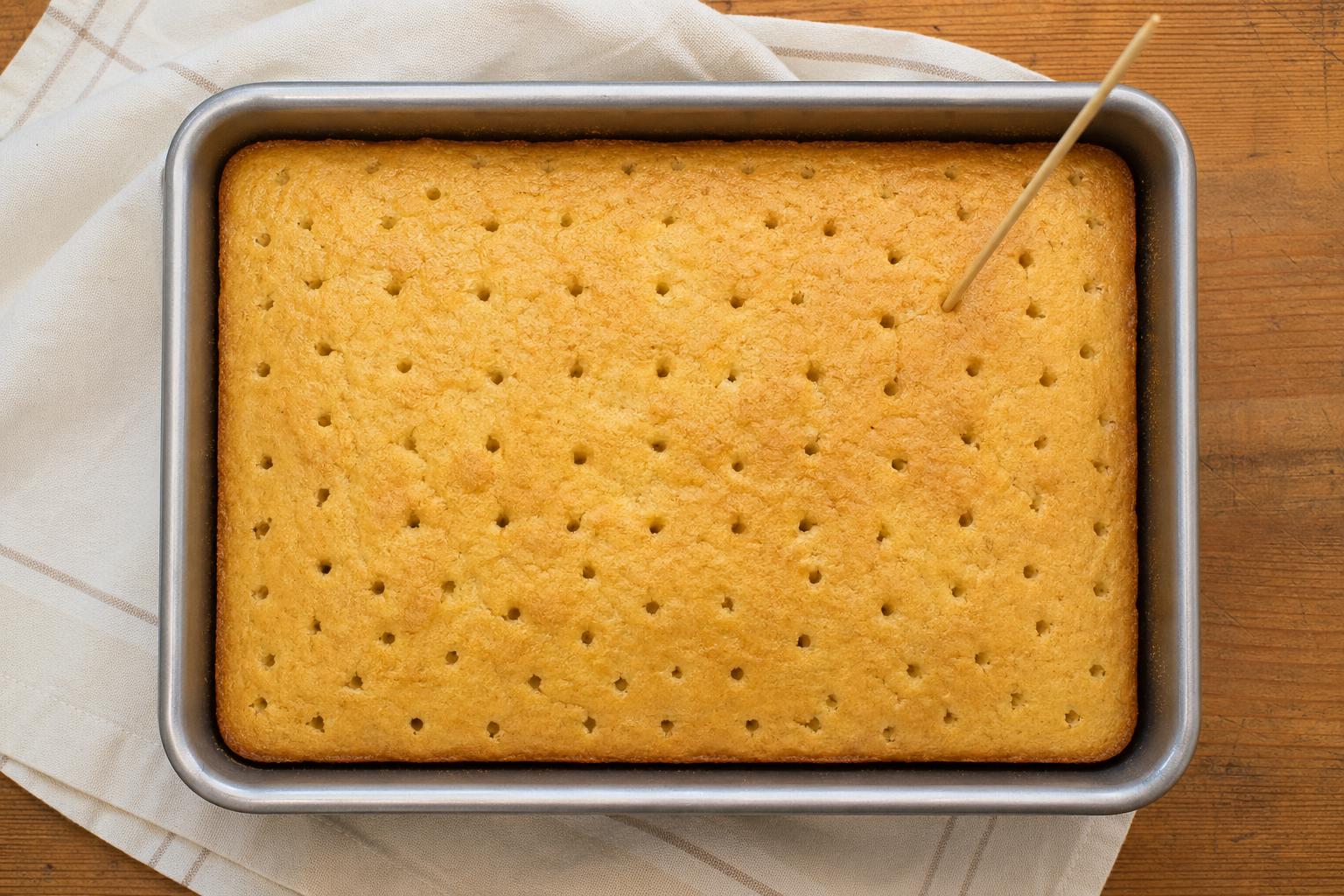 Step 6: holes poked every half inch across the cooled sponge so the milk reaches the bottom layer. — Graphic by NAR
Combine the evaporated milk, sweetened condensed milk, and heavy cream (or whole milk) in a pitcher. Whisk until smooth.
Take a fork or skewer and poke holes all over the cooled cake — every half inch across the entire surface. The holes should go three-quarters of the way through. This is what lets the milk reach the bottom layer.
Slowly pour the milk mixture over the cake. Move the pitcher in a steady spiral, pausing every few ounces to let the milk absorb before adding more. Use all of it. The cake should look saturated, with a thin film of milk pooling on top — that’s correct. It will absorb within an hour.
Step 7 — Refrigerate (4 hours minimum, ideally overnight)
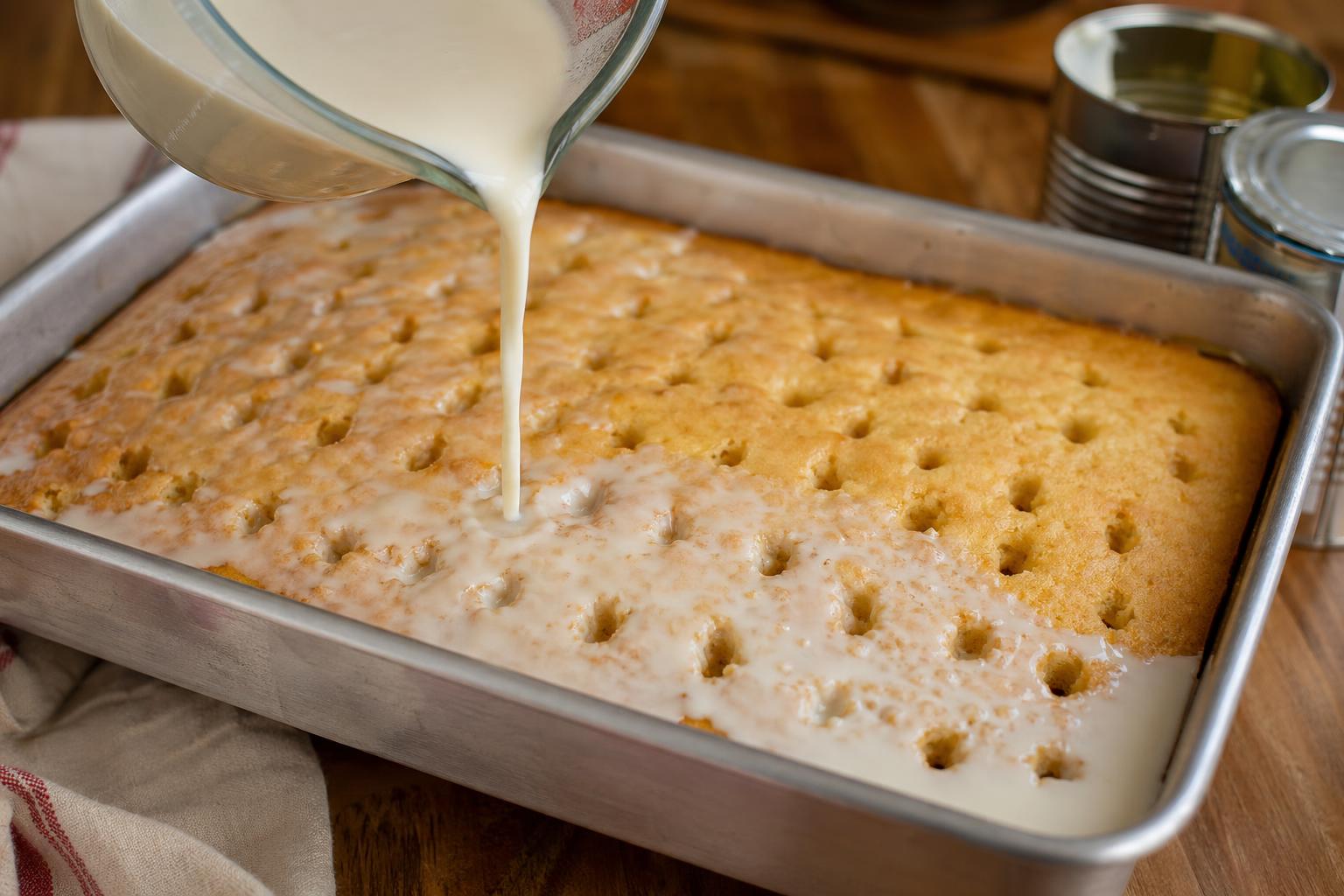 Step 6 cont.: the milk mixture poured in a slow spiral, pausing every few ounces to let it absorb. — Graphic by NAR
Cover the pan with plastic wrap or a fitted lid and refrigerate at least 4 hours, ideally overnight. The cake needs time to absorb the soak fully and chill through. Skipping this step is the most common reason home cooks end up with a soggy, uneven trilece.
Step 8 — Make the caramel (12 minutes)
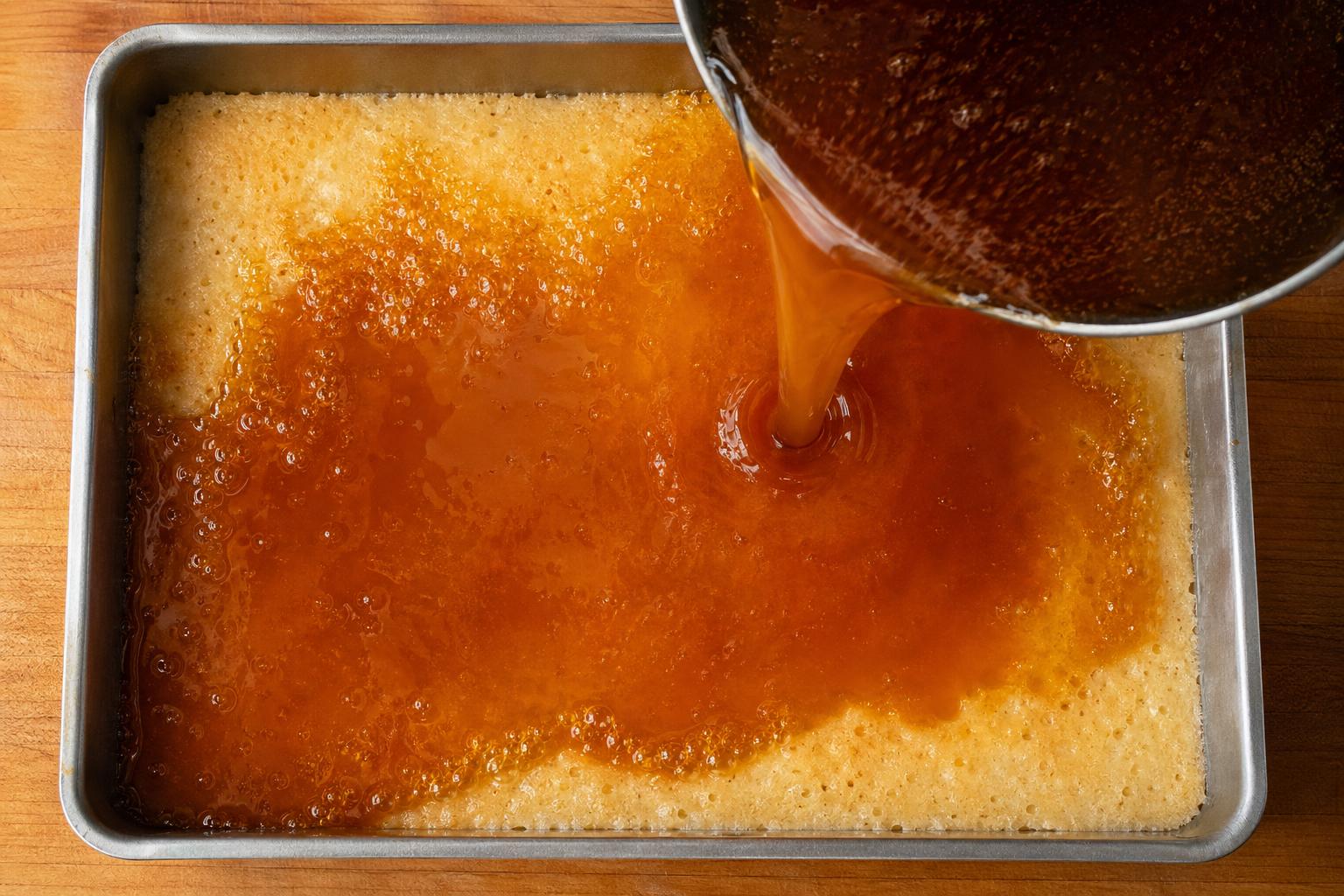 Step 8: the amber caramel — sugar cooked to copper-penny color, finished with butter and cream — poured warm over the cold soaked cake. — Graphic by NAR
Combine the 1 cup sugar and ¼ cup water in a heavy-bottomed saucepan. Cook over medium-low heat without stirring. Swirl the pan gently if the sugar starts to color unevenly. The syrup will go through stages: clear, thick and clear, pale yellow, deep amber. Total cooking time is 10 to 12 minutes, but watch the color, not the clock.
Pull the pan off the heat the moment it hits a deep amber — the color of a copper penny. Past amber, caramel burns in seconds.
Off the heat, whisk in the 2 Tbsp butter and the 2 Tbsp cream. The mixture will foam aggressively — keep whisking. Once smooth, let the caramel cool for 5 minutes until it’s pourable but still warm.
Step 9 — Glaze and set (35 minutes)
Pour the warm caramel evenly over the cold cake. Tilt the pan to spread it across the surface, or use the back of a spoon to coax it into corners. Don’t let it pool deeply in one spot — a uniform sheet is what you want.
Refrigerate uncovered for 30 minutes to let the caramel set firm.
Step 10 — Cut and serve (5 minutes)
Cut into 12 to 15 squares with a sharp knife, wiping the blade between cuts. Serve cold, straight from the pan.
Why This Recipe Works (Critical-Path Notes)
Three steps decide whether trilece succeeds or fails.
Egg-beating is everything. The cake’s airy structure comes entirely from the air whipped into the eggs. Under-beat and the crumb is dense; the milk sits on top instead of soaking through. Beat the full 5 minutes, watch for the ribbon stage, and don’t try to shortcut by adding extra baking powder.
The soak has to be complete. A trilece that hasn’t fully absorbed its milk is just a wet sponge cake. Poke holes every half inch. Pour slowly. Let the cake sit overnight if you can. The cake should look saturated when you pull it from the fridge — the surface slightly glossy, the crumb visible through the milk film.
Caramel goes from done to burnt in 30 seconds. Cook on medium-low, never stir once the sugar has dissolved, and pull the pan off the heat the instant the syrup turns deep amber. Carryover heat in the pan finishes the cook. If you wait for dark brown, it’s already past — the caramel will taste bitter and burnt.
The dish improves with rest. Trilece made the day before tastes better than trilece made the morning of. The flavors marry in the fridge.
Variations
Without caramel. A more Latin-American take: skip the caramel layer, top with sweetened whipped cream and a generous dusting of cinnamon. Lighter, less rich, more like the Mexican original.
Cinnamon caramel. Add 1 tsp ground cinnamon to the caramel after the butter and cream go in. The warm spice pairs with the milky sponge underneath — common in Albanian-American bakeries that lean Ottoman-influenced.
With nuts. Sprinkle ½ cup crushed walnuts or pistachios over the caramel layer just after pouring, while it’s still tacky. The nuts set into the surface and add textural contrast.
Mini trilece. Bake the sponge in lined muffin tins (about 18 minutes at 350°F), then soak each individually with about 2 Tbsp of the milk mixture per cake. Top with a small spoonful of caramel. Popular in Albanian-American bakeries for catering and weddings.
Coffee trilece. Add 2 Tbsp brewed espresso to the milk soak. A modern variation — not traditional, but increasingly common among diaspora cooks who grew up with American coffee culture.
Where to Find Trilece in the US
Trilece is sold by most Albanian-American bakeries and restaurants in cities with concentrated diaspora populations:
- Astoria, Queens, NY — multiple bakeries on Broadway and Steinway Street carry trilece year-round, serving one of New York City’s most visible Albanian communities.
- Belmont and Pelham Parkway, Bronx, NY — the largest Albanian neighborhood in the United States, with bakeries that cater weddings and First Communions.
- Sterling Heights, MI — the Albanian-American hub of the Detroit metro, anchoring the second-largest community in the US.
- Worcester, MA — Massachusetts has the third-largest Albanian-American population, with trilece on most diaspora wedding menus.
Most Albanian-American wedding cakes in the US are tiered trilece — sponge soaked, caramel set, stacked, and served by the slab to several hundred guests. If you’ve been to an Albanian wedding in the last decade, you’ve eaten this cake.
Trilece as Cultural Anchor
Recipes are how diaspora communities keep their bearings. Tavë kosi anchors Sunday lunch. Byrek anchors weekday breakfast. Trilece anchors the ceremony — the wedding, the baptism, the Christmas table, the Eid dessert tray.
For families a generation or two from Albania, trilece is one of the few foods that travels intact. The ingredients are available at any US supermarket. The technique is teachable. The result is recognizable to anyone who grew up Albanian-American: this taste, this texture, this slab of cold sponge under amber caramel, is what dessert is supposed to be when the day matters.
The National Albanian Registry exists to count, connect, and document the US Albanian diaspora — the community that keeps these recipes alive across generations. If trilece is part of how your family marks the holidays, register and get counted. The community-led count of Albanian Americans only works if every household shows up.