
On 15 October 1891, in a rented building in the Ottoman-ruled town of Korce, two siblings from a Protestant Albanian family welcomed a small group of girls into a classroom and began teaching them to read and write in Albanian. The building was modest. The cohort was small. The Ottoman authorities had not authorized the school in writing. None of that stopped the Qiriazi family from opening the door.
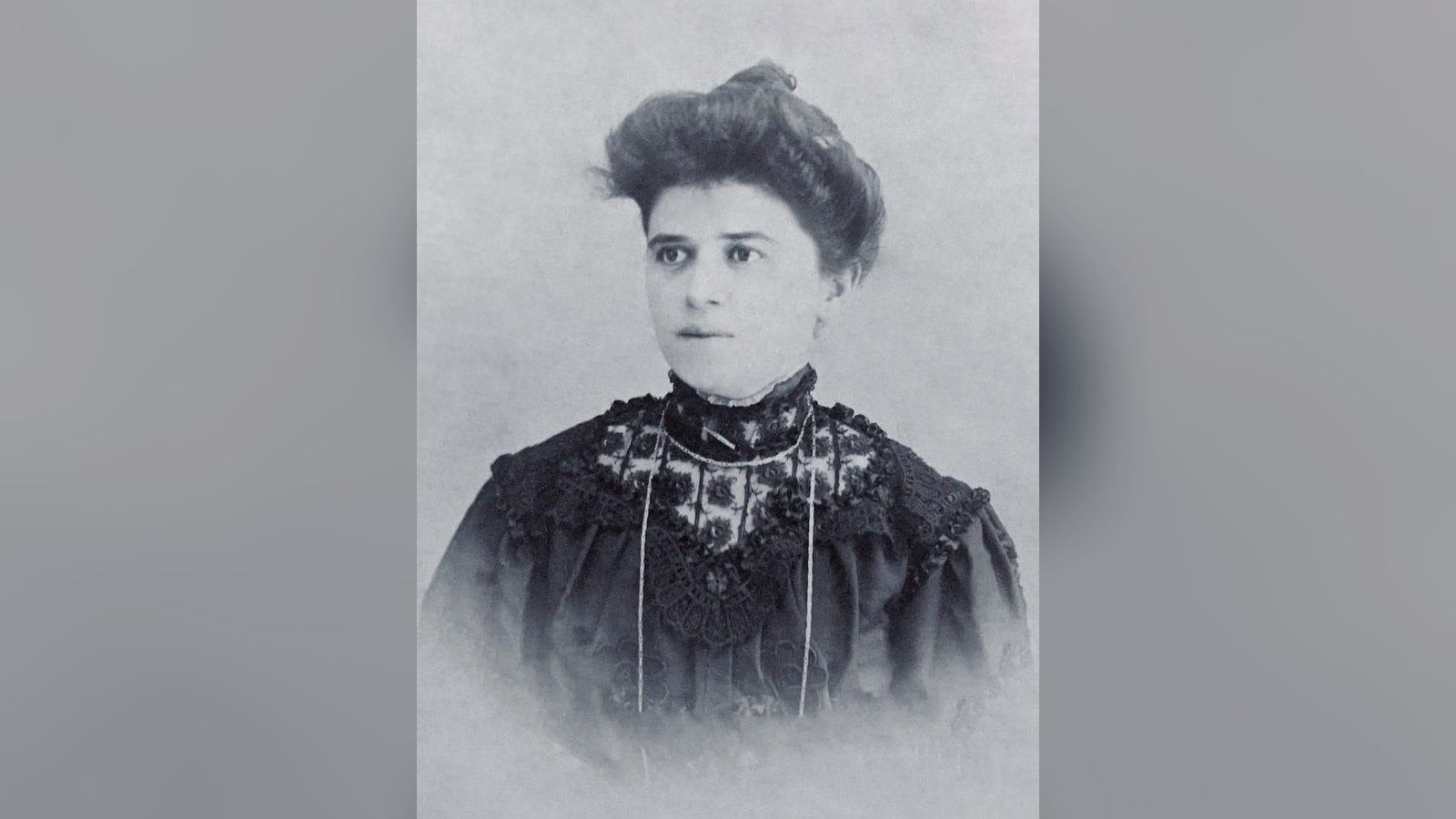
The school was the Shkolla Femerore e Korces - the Korce Girls’ School - and it was the first formal Albanian-language school for girls in the modern era. Until that morning, almost no Albanian women had been taught in their own language, in any organized setting, anywhere. The two siblings at the head of the room were Gjerasim Qiriazi, a Protestant evangelical educator then in his early thirties, and his younger sister Sevasti Qiriazi, who had just returned from teacher training at the American College for Girls at Constantinople. A few years later their youngest sister, Parashqevi Qiriazi, would join the project as a teacher in her own right.
This piece is a profile of Motrat Qiriazi (the Qiriazi sisters) - Sevasti and Parashqevi - and the older brother Gjerasim whose work set the stage for theirs. It covers the family’s Protestant background in Manastir, the founding and closing of the Korce school, Parashqevi’s role at the Paris Peace Conference in 1919, the sisters’ time in and contact with the United States, the abetare primers and literacy materials they helped produce, and what their work means today to Albanian-American families teaching children to read shqip (the Albanian language) in their own kitchens.
The Qiriazi family: Protestants from Manastir
The Qiriazi family came out of Manastir, the multi-ethnic Ottoman administrative city now called Bitola, in modern North Macedonia. In the second half of the 19th century Manastir was one of the four Ottoman vilayet capitals that the Albanian National Awakening - the Rilindja Kombetare - claimed as Albanian-inhabited territory, alongside Janina, Shkoder, and Kosovo. The Qiriazis were ethnic Albanians, originally from the Korce region in southern Albania, who had moved north to Manastir for work and education.
Religiously, the Qiriazis were unusual. They were Protestants in a region where the Albanian population was roughly 70% Muslim, 20% Orthodox, and 10% Catholic, with no large native Protestant community of any kind. The family had been brought into the Protestant fold through the work of the American Board of Commissioners for Foreign Missions, which had been active in the Ottoman Balkans since the mid-19th century and had established missions, schools, and Bible-translation projects across Macedonia, Bulgaria, and Albania.
The eldest of the three Qiriazi siblings, Gjerasim Qiriazi (1858-1894), was the family’s first major educational figure. Gjerasim was born in Manastir, educated in Protestant mission schools, and ordained as an evangelical minister. He spent his short adult life as a teacher, preacher, and translator. He worked on Albanian-language religious and educational materials at a time when the Ottoman state still forbade Albanian-language printing inside the Albanian vilayets, and he saw schooling as the central tool for raising Albanian national consciousness across religious lines.
Gjerasim’s death in 1894, at the age of thirty-five, left the family’s educational project in his sisters’ hands. By that point the Korce girls’ school had been operating for three years, and Sevasti had become its de facto head.
Sevasti Qiriazi (1871-1949)
Sevasti Qiriazi was born in Manastir in 1871, the second of the three siblings. She received her early education in Protestant mission schools in Manastir, and as a teenager was sent to the American College for Girls at Constantinople - a mission school for women founded by the Woman’s Board of Missions, distinct from the neighboring Robert College (a men’s institution the two schools did not merge with until 1971) and one of the most influential institutions in the late Ottoman Empire for educating women across the empire’s many ethnic and religious communities. She trained as a teacher there and returned to the Albanian-speaking south determined to bring the same kind of education to Albanian girls.
When the Korce girls’ school opened in October 1891, Sevasti was twenty years old. She was the lead teacher from the start. The school taught Albanian language, arithmetic, geography, history, basic sciences, and needlework, and added grades as the first cohort advanced. The curriculum was demanding by the standards of late-19th-century girls’ schooling anywhere in the Balkans, and it was conducted in shqip at a moment when Ottoman law still treated Albanian-language schooling as illegal in most contexts.
Sevasti ran the school through years of pressure from both Ottoman authorities and Greek ecclesiastical authorities in the south, who saw Albanian-language schools in Orthodox-majority districts as a threat to Greek-language religious education. The school was harassed, observed, and intermittently disrupted, but it kept teaching. According to the standard biographical accounts of Sevasti Qiriazi, including the Wikipedia summary of her life, the school maintained an average yearly enrollment of forty-seven students from 1891 to 1913, and continued operating until 1914, when wartime conditions and Greek hostilities in Korce finally forced its closure.
Sevasti married Kristo Dako, an Albanian publicist and educator who later served briefly in early Albanian governments. Together they continued teaching and organizing in the years before and after Albanian independence in 1912. After the disruptions of the Balkan Wars and the First World War, Sevasti helped re-establish girls’ education in the new Albanian state, including teaching at and helping to lead the Qyteza girls’ boarding school in Tirana in the 1920s and 1930s.
She lived through the Italian occupation of Albania in 1939, the wartime years, and the early period of communist rule. She died in 1949, after nearly six decades of teaching Albanian women.
Parashqevi Qiriazi (c. 1880-1970)
Parashqevi Qiriazi, the youngest of the three siblings, was born in Manastir around 1880 (English- and Albanian-language sources give birth years as far apart as 1880 and 1886), roughly a decade after Sevasti. She followed her sister’s path: Protestant mission schooling at home, then teacher training at the American College for Girls at Constantinople in the early 1900s. By the time she finished her training and returned to Korce, Sevasti had been running the girls’ school for more than a decade.
Parashqevi joined the school as a teacher and quickly became a public figure of the Rilindja in her own right. She is widely credited with contributing to or producing an Albanian abetare - the foundational reading primer that Albanian children, then and now, use to learn the alphabet. The primer she helped produce was used in Albanian-language schools across the south and in diaspora communities, and it was one of the standard tools for spreading literacy in Albanian during the last years of Ottoman rule.
Parashqevi is also documented as a delegate or observer at the Congress of Manastir in November 1908 - the eight-day assembly in Bitola that settled the modern 36-letter Latin-script Albanian alphabet. NAR’s longer treatment of that congress lives in the Albanian Renaissance (Rilindja) article. The Manastir congress brought together fifty delegates from twenty-three cities; the Qiriazi family was represented there both by Parashqevi and by Gjergj Qiriazi, a Protestant relative active in the broader Qiriazi educational network who sat on the eleven-member commission that chose the alphabet.
During the First World War, Parashqevi was in Boston, where from 1917 to 1920 she edited and published the diaspora periodical Yll’ i Mengjezit (Morning Star), covering Albanian politics, society, history, and folklore for readers in the United States. In 1919 she traveled to the Paris Peace Conference, where she was one of a small number of Albanian women representing Albanian interests as the wartime victors negotiated the country’s postwar borders. Her appearance in Paris is one of the earliest documented instances of an Albanian woman taking part in the country’s international diplomacy. The standing she carried into that setting came from her decades of public work as a teacher and primer author, not from any party affiliation or government position - which is itself a useful fact about how the early Albanian national project thought about who counted as a participant in its diplomacy.
Parashqevi continued working with the Albanian-American diaspora in Boston and the surrounding northeast into the early 1920s. She lived through the Italian occupation and the early communist period in Albania, and died in Tirana in 1970.
The Korce girls’ school: what existed before, what changed
To understand why the Korce school of October 1891 was a turning point, it helps to know what schooling for Albanian girls looked like immediately before. In most of the Albanian-speaking territory of the Ottoman Empire, formal girls’ education simply did not exist. Where it did exist for girls in the Orthodox south, it was conducted in Greek - because the Orthodox parish schools of the Patriarchate of Constantinople were the main source of literacy in those districts, and they did not teach Albanian. In Muslim communities, basic religious literacy for boys was sometimes available through mekteb schools attached to mosques; girls’ equivalents were rare.
The Korce school changed three things at once. It taught girls. It taught them in their own language. And it taught a secular curriculum - language, arithmetic, geography, history, science - alongside the religious content that defined most existing schools in the region. None of those three things on its own was unprecedented in the late Ottoman Empire. The combination was.
The school’s first cohort was small. Records of its precise opening enrollment vary across sources, but the standard accounts put the initial class at around a dozen students and describe growth through the 1890s into a school with multiple grades and dozens of students. By the late 1890s the school had produced a small first cohort of Albanian women who could read and write in Albanian - a quietly historic outcome, because nothing comparable had existed in any Albanian-inhabited part of the Ottoman Empire before.
Parallel to the girls’ school, the first secular Albanian-language school for boys had opened in Korce four years earlier, on 7 March 1887 - the Mesonjetorja e Korces, founded under an Ottoman irade (imperial decree) secured by Sami Frashëri in Istanbul. Today 7 March is celebrated as Teachers’ Day (Dita e Mesuesit) in Albania. The girls’ school four years later completed the picture: Korce by the mid-1890s had both a boys’ and a girls’ school operating in Albanian, in a region where the language had been formally barred from the classroom for centuries.
The Abetare and the literacy materials
The Qiriazi siblings’ best-known contribution to Albanian literacy outside the classroom was their work on the abetare - the Albanian-language reading primer. The abetare is to Albanian what Dick and Jane was to mid-20th-century American children: the first book a child holds, the first place they encounter the alphabet, the bridge between the spoken language at home and the written language on the page.
Parashqevi Qiriazi is the family member most often associated with the abetare itself. She is credited with producing an Albanian-language primer that was used in southern Albanian schools and diaspora communities in the years before and during the early Albanian state. The exact print history of the primer she edited - which print runs, which publishers, which revisions - is one of the more contested details in the Qiriazi scholarship, and the standard biographies disagree at the margins.
Gjerasim Qiriazi, in his short life, contributed translation and Bible-related work in Albanian. His pedagogical materials drew on the Protestant tradition of mass literacy as a religious obligation - the assumption that every believer should be able to read scripture in their own language - and that assumption shaped the way the family approached secular schooling as well. The Qiriazis took for granted that every Albanian child, including girls, should be able to read and write in Albanian. In 1891 that assumption was a minority view inside Albanian society itself.
The abetare tradition the Qiriazis helped build is still in active use. The 36-letter Albanian alphabet finalized at the Congress of Manastir in November 1908 is the same one Albanian children learn from the abetare today, in Tirana, Pristina, Skopje, the Italian Arberesh villages, and the Saturday and Sunday Albanian schools of the US diaspora. NAR’s longer treatment of the alphabet is at The Albanian Alphabet.
The Congress of Lushnje and Albanian women’s political voice
The Congress of Lushnje met from 21 to 31 January 1920 in the central Albanian town of Lushnje. Albania had declared independence at Vlore on 28 November 1912, but the country had been partly occupied during the First World War by Italian, Greek, Serbian, Montenegrin, French, and Austro-Hungarian forces at various times, and the postwar settlement at the Paris Peace Conference threatened to partition Albanian territory among neighboring states.
The Lushnje assembly was the response. Roughly fifty delegates from across Albanian-inhabited territory met for ten days, rejected partition, reaffirmed the 1912 declaration of independence, established a new provisional government, drafted the so-called Kanuni i Lushnjes (the Lushnje Statute) as a transitional constitutional framework, and moved the capital from Durres to Tirana - a decision that has held ever since.
No women appear among the fifty-plus named delegates and commission members of Lushnje - the Albanian political institutions of 1920 were almost entirely male, and women had no electoral rights in the new Albanian state. Almost no woman had held a public position of any kind during the late Ottoman period either. Parashqevi Qiriazi’s own documented political milestone from that same window came the year before Lushnje, in Paris, where she represented Albanian interests at the Peace Conference on the strength of her decades of educational work, not as a political appointee.
Her appearance in Paris does not by itself mark the beginning of Albanian women’s political participation. The vote for women came in 1945, under the communist government that took power at the end of the Second World War. But the Paris Peace Conference sits in the historical record as one of the earliest instances of an Albanian woman taking part in the country’s diplomacy, and Parashqevi Qiriazi is the figure attached to it. For diaspora women’s organizations that take their name from the Qiriazi sisters, that moment is one of the touchstones.
The diaspora connection: Parashqevi in the United States
The Albanian diaspora in the United States was, by the 1910s, one of the central institutional bases for the Rilindja project. The Boston-area community had founded the newspaper Dielli in 1909 and the Pan-Albanian Federation of America, Vatra, in 1912 - the same year as Albanian independence. The Albanian Orthodox parish founded in Boston in 1908 by Fan S. Noli is the direct ancestor of every Albanian Orthodox church in North America. Albanian-American organizing and Albanian-American money were behind much of the educational, journalistic, and lobbying work that produced and protected Albanian independence.
Parashqevi Qiriazi spent several years in the United States during the 1910s and early 1920s, working alongside the Boston-area Albanian-American community. Her time in the US connected the educational work she had started in Korce with the diaspora’s organizing on behalf of Albanian independence. She lectured, organized, and wrote, and she helped tie the Albanian women’s-education project she had inherited from her brother Gjerasim into a transatlantic network that included American Protestant educators, Albanian-American newspaper editors, and the women’s auxiliaries that had begun to form around Vatra.
The diaspora connection has carried forward into the present. Several Albanian-American women’s organizations operate under or are associated with the name Motrat Qiriazi. The largest visible one in the US is the Albanian American Women’s Organization “Motrat Qiriazi,” based in the New York metropolitan area, which functions as a high-trust women’s professional and cultural network in the Albanian-American community. Similar groups exist in Kosovo and in Albania itself, all drawing on the same founding image: two sisters who built schools where none existed.
Closing schools and political pressure
The Korce girls’ school did not run without interruption in spirit, even though it did not formally close its doors for more than two decades. Like its companion school for boys, it operated through years of pressure from the Ottoman state and from Greek ecclesiastical authorities in the south - harassed, watched, and periodically disrupted - before wartime conditions and Greek hostilities in Korce finally forced its closure in 1914.
The Balkan Wars of 1912-1913 and the First World War that followed brought further disruption. Korce itself changed hands several times in the 1910s. The Qiriazi family’s educational work was interrupted, displaced, and rebuilt. Sevasti and Kristo Dako moved between Korce, Tirana, Romania, and other cities at various points in the wartime and interwar period, teaching where they could and re-establishing institutions when conditions allowed.
The article does not take a side on the broader 19th- and early-20th-century debate over Greek-Albanian relations in the southern Balkans, which is contested and continues to be politically sensitive. The factual record on the Korce school is straightforward: the school was Albanian-language in a region where Greek-language schooling was the established alternative, and it operated under pressure from authorities who preferred the alternative. The Qiriazis taught through that pressure for decades.
By 1920, the educational network she and her sister had helped build had survived two Balkan wars, a world war, multiple changes of regime, and the loss of the brother who had started the family’s work. That survival is the institutional fact the Qiriazi name carries.
Legacy: what the Qiriazi sisters mean to Albanian women’s education
The most direct legacy of the Qiriazi sisters is institutional. Before October 1891, the formal education of Albanian women in their own language was essentially non-existent. By the time Sevasti Qiriazi died in 1949, Albania had a state-run system of compulsory schooling that included girls, a generation of Albanian women had completed secondary and higher education, and the literacy gap between Albanian men and women - which had been close to total in 1891 - was on its way to closing. The communist government’s mass literacy campaigns of the late 1940s and 1950s did the bulk of the quantitative work, but they built on a foundation the Qiriazis and their contemporaries had laid in the previous half-century.
The 1945 grant of the vote to Albanian women, the 1965 Family Code’s gender-equal marriage and divorce rules, the 1994 ratification of CEDAW (the UN Convention on the Elimination of All Forms of Discrimination Against Women), the 2006 domestic violence law, and the 2008 gender equality statute with its 30% candidate-list quota all sit downstream of a longer arc that includes the Qiriazi schools. NAR’s longer reference on the legal arc is at Albanian Women’s Rights.
The symbolic legacy is broader. The Qiriazi sisters are the founding image used by Albanian women’s organizations on three continents. They are the figures pictured on classroom walls, on commemorative postage, and in the names of streets and schools in Tirana, Korce, Pristina, and Bitola. They are taught in Albanian primary school as standard national figures - alongside the Frasheri brothers, Fan Noli, and Ismail Qemali - rather than as a separate women’s-history category.
For Albanian-American families, the Qiriazi legacy is most useful as a working model. Two sisters from a small Protestant family in a provincial Ottoman city built, with very little institutional support, an Albanian-language school that produced the first generation of Albanian women teachers. They did it by showing up every morning, teaching the children in front of them in the language of the home, and refusing to switch to the language of the surrounding state. That is also the description of what works in diaspora language transmission today, as covered in NAR’s guide to teaching kids Albanian.
How diaspora families and heritage schools carry the work forward
The Qiriazi project - teach Albanian children to read in Albanian, in the language of the home, and keep doing it across generations - is now a diaspora project. Inside Albania and Kosovo, shqip is the language of school, government, and daily life, and literacy is taken for granted. In the US diaspora, it is not. The same arithmetic that defined Korce in 1891 - a child surrounded by a dominant non-Albanian language all day, with Albanian available only at home and at organized weekend school - defines the lives of most Albanian-American children today.
The Saturday and Sunday Albanian schools that operate out of parishes, mosques, and cultural centers across the US are the institutional descendants of the Korce schools. Programs in Ridgewood, Queens (Fol Shqip); the broader NYC area under the Albanian American Educational Association (AAEA); Detroit-area Saturday schools tied to Albanian Orthodox and Catholic parishes; Worcester, Massachusetts community schools; and AACI Chicago programs all follow the basic Qiriazi model: a teacher, a primer, a classroom, and the patience to do it again next Saturday. NAR’s longer treatment of these programs is in the diaspora-parent guide at How to Teach Your Kids Albanian.
The women’s organizations that have taken the name Motrat Qiriazi - including the Albanian American Women’s Organization in the NYC area - sit in the same lineage. The Qiriazi name is being used in 2026 the same way it was being used in 1920: to mark an institutional commitment to building, teaching, and counting Albanian women.
The Qiriazi sisters spent their lives building the institutions that taught Albanian children to read in their own language. The National Albanian Registry continues that institution-building today - get counted and help make the modern Albanian-American community visible to itself.