
In June 1878, the Congress of Berlin convened to redraw the Balkans after the Russo-Turkish War. The Treaty of San Stefano, signed three months earlier, had assigned more than half of all Albanian-inhabited territory to Bulgaria, Serbia, and Montenegro. No Albanian delegate was seated. The Congress confirmed transfers of Albanian-claimed land to Montenegro (Nikšić, Podgorica, Bar, and the Plav-Gusinje districts), Serbia, and Greece — handing out territory whose inhabitants had not been consulted and whose nation, on the diplomatic record of the time, was not recognized as existing.
By the metrics a 19th-century European chancellery used to count nations, the Albanians did not look like one. There was no Albanian state, no standardized Albanian alphabet, no Albanian-language school inside the Ottoman Empire, no Albanian-language newspaper, and a population of perhaps 1.5 million divided across four Ottoman vilayets — Kosovo, Shkodër, Manastir, Janina — and split roughly 70% Muslim, 20% Orthodox, 10% Catholic, with literacy under 10%.
Thirty-four years later, on 28 November 1912, Ismail Qemali raised Skanderbeg’s red banner with the double-headed black eagle over Vlorë and read out the proclamation of Albanian independence. In between, a generation of writers, schoolteachers, parish priests, military officers, exile newspaper editors, and one Catholic Ottoman governor of Lebanon built the cultural and political machinery that turned a stateless people into a nation. They called what they were doing the Rilindja Kombëtare — the National Rebirth.
This is the compressed version of how that machinery got built, who built it, and why most of it was assembled outside Albanian borders. It is the chapter our longer Albanian history piece covers in two paragraphs. Diaspora readers in particular should know it: the Rilindja was the first time anyone tried, on a continent-wide scale, to organize a community of Albanians who lived in three different empires and a half-dozen different countries into a single people that could speak with one voice. The National Albanian Registry’s project — counting Albanian Americans, on our own terms, outside any state’s census — is a direct continuation.
Where the Rilindja started: 1830s reforms and the failure of the Pashaliks
By 1830, two semi-autonomous Albanian polities — both nominally Ottoman, both effectively independent — had already shown what an Albanian state-within-a-state could look like.
The Pashalik of Shkodër under the Bushati family (1757–1831) ran northern Albania from a fortified base above Lake Shkodër. The Pashalik of Janina under Ali Pasha Tepelena (1788–1822) ran southern Albania and northern Greece from his court at Ioannina, conducting his own foreign policy with the British, French, and Russians. Both maintained Albanian-staffed armies; both eventually conducted wars against Istanbul; both were suppressed by the central Ottoman state — Ali Pasha killed in 1822, the last Bushati pasha defeated in 1831.
The pashaliks were not yet nationalism. They were old-style provincial autonomy of a kind the Ottoman Empire had tolerated for centuries. But their suppression coincided with the start of the Tanzimat reforms (1839 onward) — the Ottoman attempt to modernize and centralize the empire — which produced new taxes, conscription quotas, and bureaucratic intrusion into communities that had previously paid Istanbul little attention. The reaction was a string of revolts: Kolonjë and Dibër (1833), the Berat-Vlorë-Delvinë-Çamëria uprisings of the 1840s, and the 1847 revolt under Zenel Gjoleka and Rapo Hekali in southern Albania.
These were tax revolts, not yet a national movement. But by the late 1840s the rhetoric was changing. Albanian leaders were beginning to articulate that what bound them together was not just opposition to the vergi tax — it was language, custom, and a sense of common history that crossed the Catholic/Orthodox/Muslim line. In 1844, an Orthodox Albanian merchant named Naum Veqilharxhi published a primer in a 33-letter alphabet of his own invention — deliberately neither Latin nor Greek nor Arabic, to avoid the religious associations of any of the three. He died in 1854, the alphabet did not catch on, and his primer survived in only a handful of copies. But it was the first organized argument that Albanian needed to be written, taught, and printed in its own script.
The pre-Rilindja groundwork was laid. What was missing was a political crisis large enough to force the question.
The League of Prizren (1878–1881): organized nationalism arrives
That crisis arrived in 1878.
The Russo-Turkish War of 1877–1878 ended in catastrophic Ottoman defeat. The Treaty of San Stefano (3 March 1878) proposed a Greater Bulgaria stretching from the Black Sea to the Adriatic and assigned large blocks of Albanian-inhabited territory to Bulgaria, Serbia, Montenegro, and Greece. Roughly half of all Albanians faced absorption into other Balkan states without consultation.
The Albanian response was organized within months. On 10 June 1878 — three days before the Congress of Berlin convened — approximately 80 delegates from the vilayets of Kosovo, Manastir, and Janina (no delegates came from Shkodër) met in Prizren in modern Kosovo and founded the League for the Defense of the Rights of the Albanian Nation, known to history as the League of Prizren.
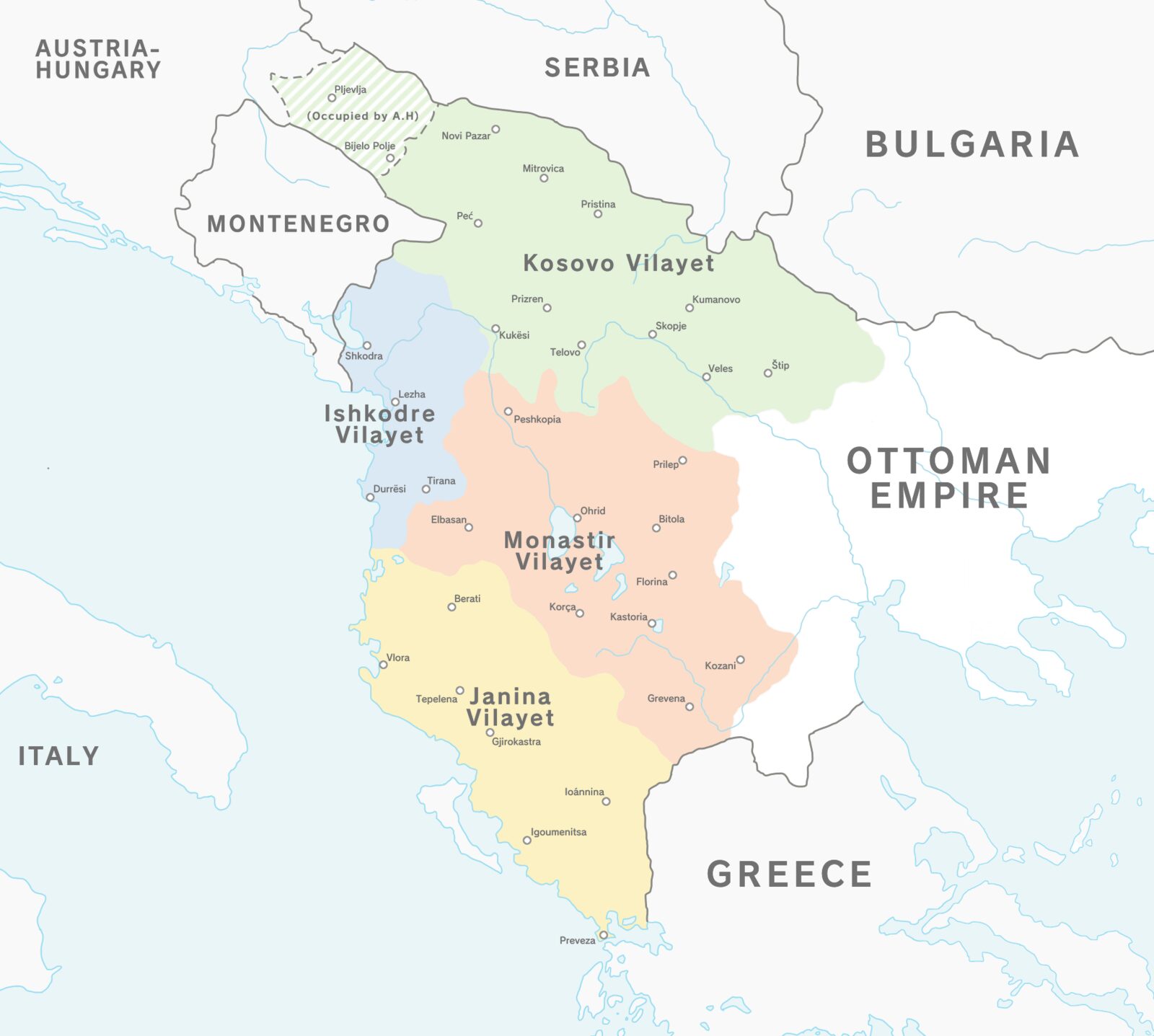 The four Ottoman vilayets — Kosovo, Shkodër, Manastir, and Janina — that the League of Prizren claimed as Albanian-inhabited territory at its founding on 10 June 1878.
Map: Wikimedia Commons / public domain
The four Ottoman vilayets — Kosovo, Shkodër, Manastir, and Janina — that the League of Prizren claimed as Albanian-inhabited territory at its founding on 10 June 1878.
Map: Wikimedia Commons / public domain
The League’s founding Kararname declaration asked first for the simplest thing — that Albanian-inhabited territory not be transferred to other states — and second for the recognition of Albanians as a distinct nation within whatever framework remained of Ottoman rule. Abdyl Frashëri, the eldest of the three brothers from Frashër, emerged as its leading political figure. He led the southern committee from Janina and personally argued the Albanian case in Berlin, Vienna, Paris, and Rome during the summer of 1878.
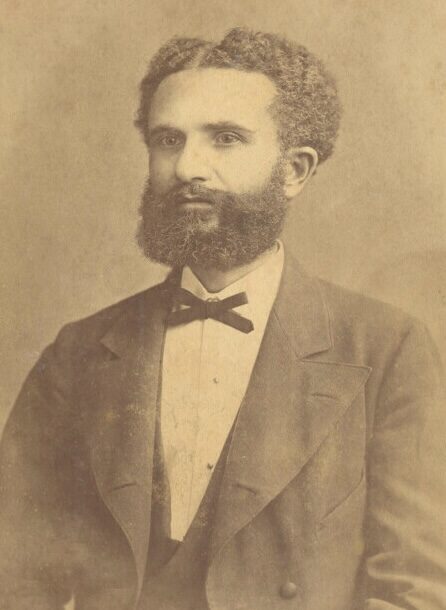 Abdyl Frashëri (1839-1892), eldest of the three Frashëri brothers and lead political organizer of the League of Prizren — arrested when Prizren fell to Ottoman forces in 1881, imprisoned to 1886, died in 1892.
Photo: Wikimedia Commons / public domain
Abdyl Frashëri (1839-1892), eldest of the three Frashëri brothers and lead political organizer of the League of Prizren — arrested when Prizren fell to Ottoman forces in 1881, imprisoned to 1886, died in 1892.
Photo: Wikimedia Commons / public domain
The Congress of Berlin ignored the petition and confirmed territorial transfers to Montenegro, Serbia, and Greece. The League then did what it had said it would: it organized armed resistance. From 1878 through 1881, Albanian fighters held the contested districts of Plav and Gusinje against Montenegrin forces, refused to surrender Ulcinj until November 1880 (and only when an international naval demonstration forced the issue), and resisted Greek annexation of southern Epirus. One European observer wrote that the Albanian frontier was “floating on blood.”
By 1880, the League had moved past pure resistance and toward a positive program: administrative unity of all four Albanian vilayets into a single autonomous Albanian province, official status for the Albanian language, and Albanian-language schools. The Ottoman state, which had tolerated the League while it served as a bulwark against further partition, now saw it as a separatist threat. Dervish Turgut Pasha was sent in with regular Ottoman forces. Prizren fell in April 1881. Abdyl Frashëri was arrested, sentenced to death, commuted to imprisonment, and held until 1886; he died in 1892, having never seen the country he had spent his life arguing into existence.
The League had failed as a state-building project. As a precedent it had succeeded completely. For the first time, Albanians from Kosovo, Shkodër, Korçë, and Janina had organized across regional and religious lines around the proposition that they were one people. That proposition was now in writing, in the Kararname, in petitions to four European capitals, and on the dispatches of three European foreign ministries. The next thirty years would be spent making it true.
The cultural Rilindja: alphabets, schools, and the Frashëri brothers
If the League of Prizren was the political opening of the Rilindja, the cultural Rilindja was the slow, decade-long work of giving the Albanian nation the institutions a 19th-century European nation was supposed to have: a standardized written language, schools that taught it, literature written in it, and a press that spread it.
The first move was institutional. In 1879, the year before Frashëri was arrested, his younger brother Sami Frashëri founded the Shoqëria e të Shtypurit Shkronja Shqip — the Society for the Printing of Albanian Writings — in Istanbul. It was deliberately cross-confessional: founding members were Muslim, Orthodox, and Catholic. The Society’s first major output was a Latin-script primer of the Albanian language (the Stamboll alphabet, 1879), drafted by Sami with input from the Orthodox theologian Kostandin Kristoforidhi. Naim Frashëri, the middle brother and a Bektashi mystic, wrote and edited textbooks for the new schools that did not yet exist.
Naim was the poet of the Rilindja. His Bagëti e bujqësia (“Cattle and Agriculture,” 1886) was a pastoral epic that did for Albanian what Mistral had done for Provençal — proved that the language could carry serious literature. His Lulet e verësë (“Summer Flowers,” 1890) was a lyric collection that schoolchildren memorized. And his Histori e Skënderbeut (“History of Skanderbeg,” 1898), a monumental verse epic published two years before he died, gave the modern Albanian national imagination its central hero. Naim died in Istanbul in 1900 of tuberculosis, in poverty, and is now on the 200-lekë banknote.
Sami Frashëri — the polymath of the three — wrote the political treatise that articulated Rilindja goals more clearly than any other single document: Shqipëria — ç’ka qenë, ç’është e ç’do të bëhetë (“Albania — what it was, what it is, what will become of it”), published in Bucharest in 1899. The book argued that Albania needed to leave the Ottoman framework, become independent within its ethnic boundaries, and adopt European-style institutions. Sami wrote it in Albanian. He also wrote a six-volume Ottoman Turkish-language encyclopedia (the Kamûs al-A’lâm, 1889–1898) and an Ottoman Turkish-language dictionary (the Kamus-i Türkî, two volumes, 1899–1900) — both standard reference works in the late Ottoman Empire — without which the Turkish lexicographic tradition is hard to imagine. He died in Istanbul in 1904.
The same generation included other figures whose names sit on every street corner in Tirana today. Pashko Vasa (1825–1892) was a Catholic Albanian from Shkodër who joined the Ottoman administrative service, served as Ottoman governor (mutasarrif) of Mount Lebanon from 1882 until his death, and somewhere between his official duties wrote, in 1880, a poem called O moj Shqypni (“Oh poor Albania”). It contains the line that became the founding principle of secular Albanian nationalism:
Feja e shqyptarit asht shqyptaria. The faith of the Albanian is Albanianism.
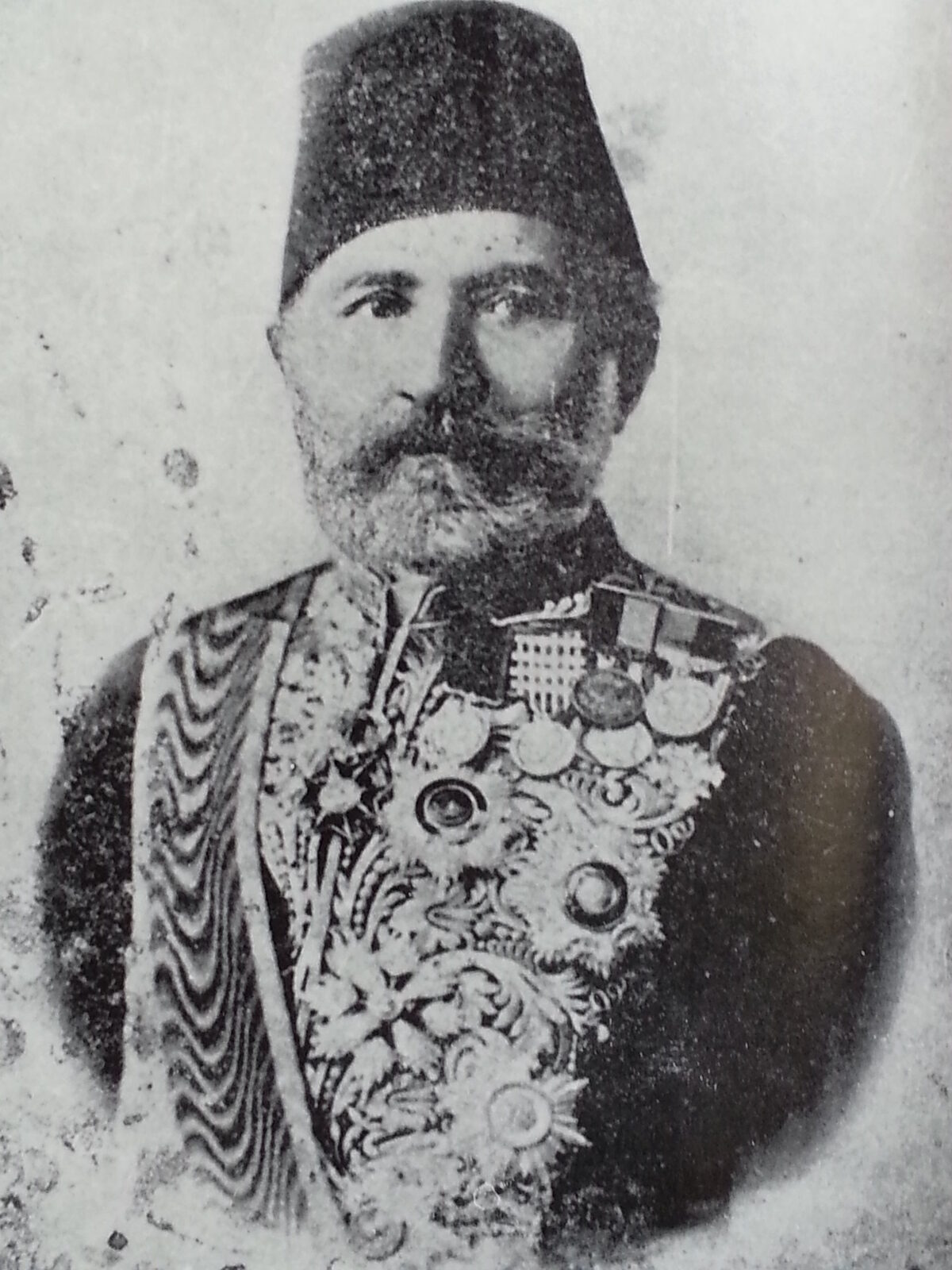 Pashko Vasa (Wassa Pasha, 1825-1892), Catholic Albanian from Shkodër who served as Ottoman governor of Mount Lebanon (1882-1892) and wrote O moj Shqypni — the poem that gave secular Albanian nationalism its founding line.
Photo: Wikimedia Commons / public domain
Pashko Vasa (Wassa Pasha, 1825-1892), Catholic Albanian from Shkodër who served as Ottoman governor of Mount Lebanon (1882-1892) and wrote O moj Shqypni — the poem that gave secular Albanian nationalism its founding line.
Photo: Wikimedia Commons / public domain
It is a strange biography. The line that defined the secular Albanian nationalism of the 20th century was written by a Catholic colonial governor of a province in modern Lebanon, and circulated for years in manuscript and reprint before its authorship was even confirmed. That is exactly the texture of the Rilindja: its work happened in odd corners of the Ottoman Empire and the diaspora, and only became a single coherent project in retrospect.
The Italian-Arbëresh writer Jeronim de Rada (1814–1903) was the diaspora anchor. Born in Macchia Albanese, Calabria — five centuries after his ancestors fled the Balkans for Italy — de Rada wrote in arbërisht (the 15th-century Albanian preserved by the Italian Albanian villages), edited the journal Fiamuri Arbërit (“The Albanian Flag,” 1883–1888), corresponded with Naim Frashëri, and provided the Rilindja with the proof that Albanian literature did not need an Albanian state to exist. He had been writing in Albanian his entire adult life, in southern Italy, with no help from anyone.
The other major Rilindja poet of the second generation was Andon Zako Çajupi (1866–1930) — a lawyer educated in Egypt and France, who wrote from Cairo for most of his career. His collection Baba-Tomorri (1902) — named for the sacred southern mountain — produced the lines schoolchildren in Albania still memorize, including the satirical Vasha shqiptare and the patriotic anthem Vatani. Çajupi was the Rilindja’s voice from the Egyptian Albanian community, a now-disappeared diaspora of perhaps 50,000 descended from the Ottoman-era Muhammad Ali dynasty’s Albanian troops.
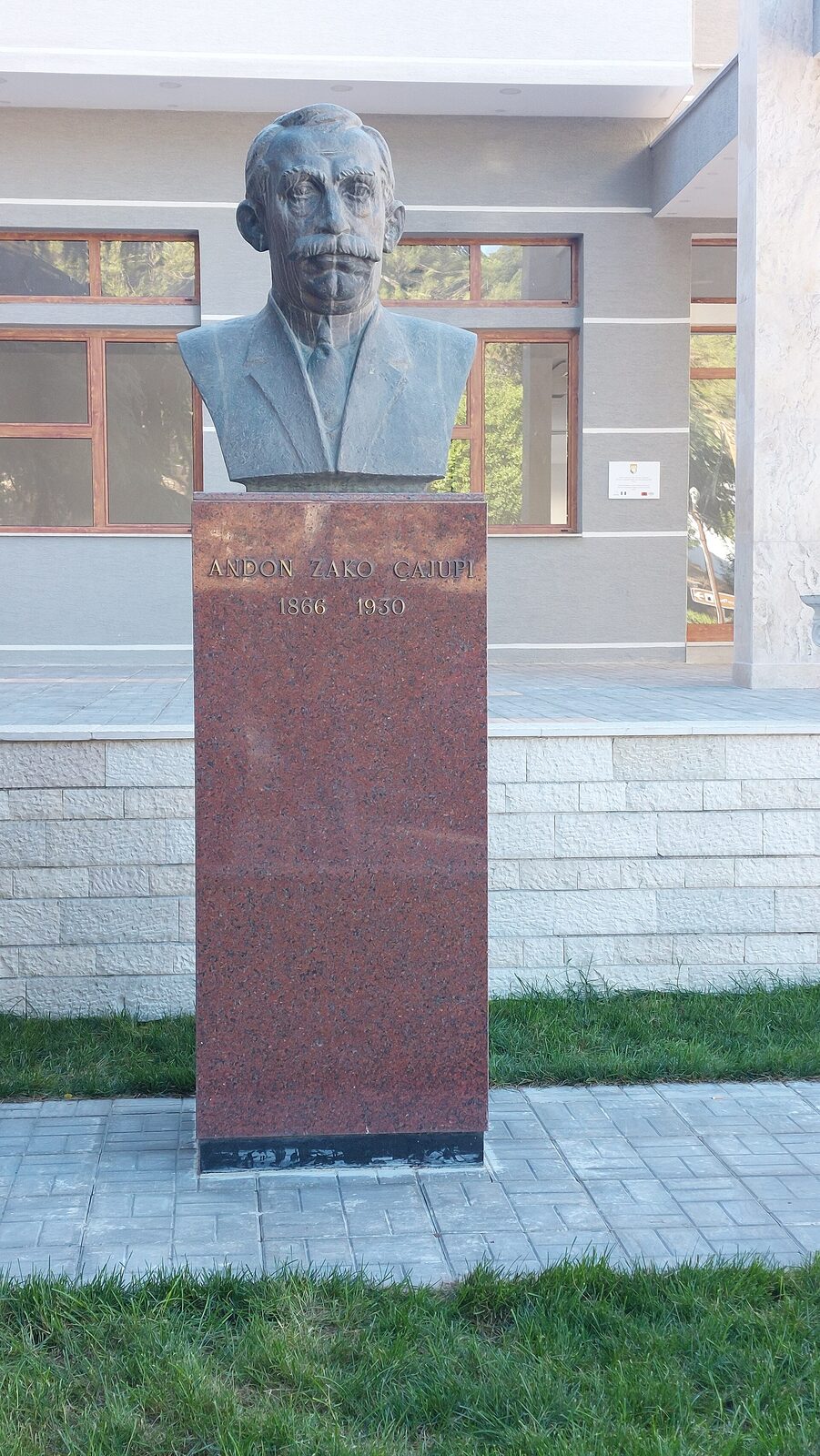 Andon Zako Çajupi (1866-1930), Rilindja poet and playwright who wrote from Cairo for the now-disappeared Egyptian-Albanian diaspora of roughly 50,000 descended from Muhammad Ali’s Albanian troops.
Photo: Wikimedia Commons / public domain
Andon Zako Çajupi (1866-1930), Rilindja poet and playwright who wrote from Cairo for the now-disappeared Egyptian-Albanian diaspora of roughly 50,000 descended from Muhammad Ali’s Albanian troops.
Photo: Wikimedia Commons / public domain
The first Albanian schools: Korçë, 1887 and 1891
A national language and a national literature need readers. The Rilindja’s hardest practical problem in the 1880s was that there were no Albanian-language schools inside the Ottoman Empire, and the state was actively prosecuting any attempt to start one.
The break came in Korçë in 1887. Sami Frashëri, working from Istanbul, secured an iradé (an imperial decree) from Sultan Abdul Hamid II authorizing a single Albanian-language school in Korçë — at least according to the standard account; the historian’s record is messy here, and the school may have operated briefly without explicit authorization before the decree caught up. Either way, on 7 March 1887, the Mësonjëtorja e Korçës opened its doors in a building donated by the Albanian patriot Diamant Tërpo, with Pandeli Sotiri as its first director and around 200 students in its first year.
It was the first secular Albanian-language school in the modern era. It taught Albanian language, geography, history, and arithmetic — in Albanian — to boys whose previous schooling, if any, had been in Greek (in the Orthodox south) or Turkish (in the Muslim majority). Today 7 March is celebrated as Teachers’ Day (Dita e Mësuesit) in Albania.
Four years later, on 15 October 1891, Gjerasim Qiriazi and his sister Sevasti Qiriazi opened the first Albanian-language girls’ school in the same city — the Shkolla Femërore e Korçës. Sevasti, who had been educated at the Robert College for Girls in Istanbul, ran the school for years; her sister Parashqevi later joined as a teacher. The Qiriazi sisters’ school produced the first generation of Albanian women teachers — a quiet revolution in a society where almost no Albanian women had been formally educated in any language before 1891.
Both Korçë schools were closed by Ottoman authorities between 1902 and 1904 as part of a broader crackdown — the Sultan had given Sami Frashëri an inch in 1887 and was now taking it back. They reopened after the Young Turk Revolution of 1908, by which point the schools-from-nothing model had been replicated across southern Albania and Kosovo.
The diaspora press: Bucharest, Sofia, Brussels, Boston
Almost everything published in Albanian between 1879 and 1908 was printed outside the Ottoman Empire’s Albanian-inhabited territory. Ottoman law forbade Albanian-language printing inside those vilayets. The Rilindja was therefore physically a diaspora project: typeset in one country, smuggled into another.
The major diaspora print centers, in chronological order:
- Istanbul (1879 onward) — Sami Frashëri’s Society for the Printing of Albanian Writings was the founding institution. Operated under the protection of Albanian Ottoman officials inside the imperial capital.
- Bucharest (1884 onward) — The Albanian community in Romania, established in the Ottoman period and reinforced by 19th-century émigrés, founded the Drita society and published the journals Drita and Dituria. Sami Frashëri’s Shqipëria (1899) was printed here.
- Sofia (1901–1908) — After the Ottoman state cracked down on the Bucharest press, the Albanian-language Drita was relaunched in Bulgaria under editor Shahin Kolonja with printer Kosta Luarasi. Among the most influential Albanian-language papers of its decade, partly funded by the Vienna foreign ministry as a counterweight to Russian-backed Slavic press in the Balkans.
- Brussels and London (1897–1909) — Faik Konica edited the journal Albania from Brussels and London. Konica — born in Konitsa (then in the Janina vilayet of the Ottoman Empire, now in Greece), educated at a Jesuit college in Shkodër, then Galatasaray in Istanbul, secondary school in France, the University of Dijon, and Harvard — was the most cosmopolitan of the Rilindja editors, in correspondence with Apollinaire and Tristan Tzara. He converted from Islam to Roman Catholicism in 1895, taking the name Dominik. Albania set the Rilindja’s intellectual standard.
- Cairo (1880s onward) — The Egyptian-Albanian community supported a smaller cluster of journals; Çajupi’s literary work circulated through it.
- Boston (1906 onward) — The Albanian-American community in Boston founded the Besa-Besën society and launched the newspaper Dielli (“The Sun”) in 1909, with Faik Konica as editor when he moved from Europe to the United States in autumn 1909. Fan S. Noli, an Orthodox priest born in Ibrik Tepe (Qyteza), a village near Adrianople (Edirne) in Ottoman Thrace, founded the first Albanian Orthodox parish in Boston in 1908 and went on to become Albania’s prime minister briefly in 1924. On 28 April 1912 — eight months before independence — Konica, Noli, and others founded Vatra (the Pan-Albanian Federation of America) in Boston. Dielli and Vatra are still operating today.
There is a pattern in this list. Every major Rilindja institution was founded in a city where there was no Albanian state and no Ottoman censor: Istanbul (under tactical patronage), then Bucharest, Sofia, Brussels, Cairo, Boston. The political work of declaring Albania independent eventually had to happen on Albanian soil. The intellectual work of inventing what Albania was had to happen everywhere else.
The Congress of Manastir (1908): one alphabet, finally
The single biggest unresolved question of the cultural Rilindja, by 1900, was which alphabet Albanian was supposed to be written in.
By the time of the Congress of Manastir, at least three competing Latin-script alphabets were in active use: the Stamboll alphabet (Sami Frashëri’s 1879 system, used by the Istanbul Society and the Bucharest press), the Bashkimi alphabet (developed in 1899 by the Bashkimi society in Shkodër under Gjergj Fishta, simpler and closer to standard Western typography), and the Agimi alphabet (a third northern variant). Older texts had been printed in Greek script (Orthodox south), Arabic script (Muslim writers), and various invented scripts (Veqilharxhi 1844, Kristoforidhi’s Greek-script work). For practical purposes, Albanian had no settled written form.
The Young Turk Revolution of July 1908 opened a brief window. The new Ottoman government lifted bans on Albanian-language schools and publishing. Within four months, on 14–22 November 1908, fifty delegates from twenty-three cities convened the Congress of Manastir in Bitola (then in the Manastir vilayet, today in North Macedonia). Mid’hat Frashëri — Naim’s nephew — chaired. Delegates included Gjergj Fishta, Ndre Mjeda, Bajram Curri, Hysni Curri, Shahin Kolonja, and the Catholic priest Gjergj Qiriazi — managers of the Sofia and Brussels press, schoolteachers from Korçë, mountain chieftains from Kosovo, and clergy from all three Albanian confessions sitting together for eight days.
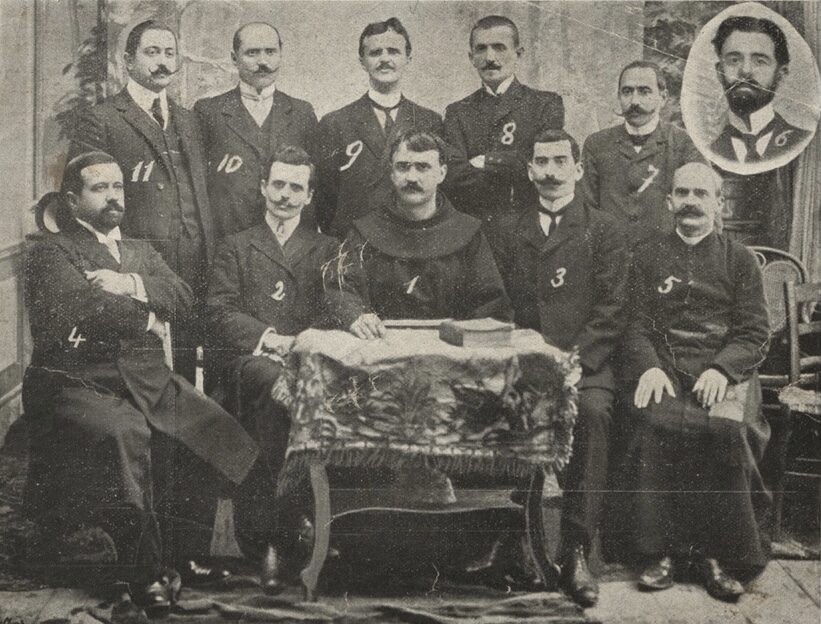 The Alphabet Commission at the Congress of Manastir, Bitola, 14-22 November 1908 — fifty delegates from twenty-three cities settling the Latin-script Albanian alphabet still in use today.
Photo: Wikimedia Commons / public domain
The Alphabet Commission at the Congress of Manastir, Bitola, 14-22 November 1908 — fifty delegates from twenty-three cities settling the Latin-script Albanian alphabet still in use today.
Photo: Wikimedia Commons / public domain
The Congress chose a Latin-script alphabet over the Greek-, Arabic-, and Cyrillic-script alternatives still in use at the time, settling on a compromise between the two leading Latin systems already in circulation: it kept the Bashkimi alphabet (developed in Shkodër, closer to Western typography and easier to print on existing presses) as the structural base, while permitting the older Stamboll alphabet to continue in transitional use in Istanbul. The 36-letter modern standard with the characteristic Albanian digraphs (dh, gj, ll, nj, rr, sh, th, xh, zh) and the diacritics (ë, ç) descends from the Bashkimi line solidified at Manastir, though the final shape was refined in subsequent decades. The Stamboll alphabet fell out of use after independence; Bashkimi is the direct ancestor of the alphabet every Albanian word is printed in today.
22 November is now celebrated as Alphabet Day (Dita e Alfabetit) in Albania, Kosovo, North Macedonia, and across the Albanian diaspora. The alphabet question — open since at least 1844 — was settled for good.
The Manastir alphabet decision matters for one reason beyond the technical: it was the first time the Rilindja’s leadership had assembled in person, on Albanian-inhabited soil, to settle a unified question for the entire Albanian-speaking world. Manastir 1908 was a dress rehearsal for Vlorë 1912.
From Manastir to independence: 1908–1912
The Young Turk window closed almost as fast as it had opened. By 1909, the new Ottoman government had reverted to centralization: dissolving Albanian cultural societies, closing schools, and attempting to impose the Arabic script on Albanian writing through religious appeals to Muslim Albanians. The result was four years of escalating armed revolt.
1910: An uprising under Isa Boletini and Idriz Seferi in Kosovo against Young Turk centralization captured Pristina and Ferizaj before being driven back by Ottoman regulars under Şevket Turgut Pasha. 1911: A second revolt in Mirditë, organized by Terenzio Tocci and the Albanian National Committee, formally proclaimed Albanian independence at Orosh on 26–27 April 1911 — the first time the flag had been raised since Skanderbeg’s death — and was suppressed within weeks. In June 1911, tribal leaders adopted the Greçë Memorandum in Montenegro, signed by 22 chieftains, demanding parliamentary representation, Albanian-language schools, ethnically Albanian administrators, and military service confined to Albanian territory in peacetime.
1912: The Albanian Revolt of January–August was the largest of the cycle. Albanian Ottoman officers and conscripts deserted in units. Revolutionaries captured Skopje — the administrative center of the Kosovo vilayet — on 9 August 1912 and presented fourteen demands. The Ottoman state, fighting an exhausting Italian war in Libya and seeing Bulgaria, Serbia, Greece, and Montenegro mobilizing against it, accepted the demands on 4 September 1912. The autonomy granted, however, was structured across the four vilayets separately rather than as a unified Albanian province — disappointing the central nationalist demand of the League of Prizren generation.
It would be the last decision the Ottoman state made about Albania.
The First Balkan War opened on 8 October 1912. By early November, Ottoman forces in Europe had collapsed. Serbian armies had reached the Adriatic coast in northern Albania. Greek forces were advancing into the south. Bulgarian troops were closing in from the east. With Ottoman authority gone and partition imminent, the Rilindja’s leadership called the assembly the project had been working toward for thirty-four years.
On 28 November 1912, in a building on the Vlorë seafront, Ismail Qemali — a veteran Ottoman statesman, now sixty-eight years old and lately returned from years of exile in Europe — convened a national assembly of eighty-three delegates from across Albanian-inhabited territory. They proclaimed Albanian independence, raised over the building Skanderbeg’s red banner with the double-headed black eagle, and elected Qemali head of a provisional government.
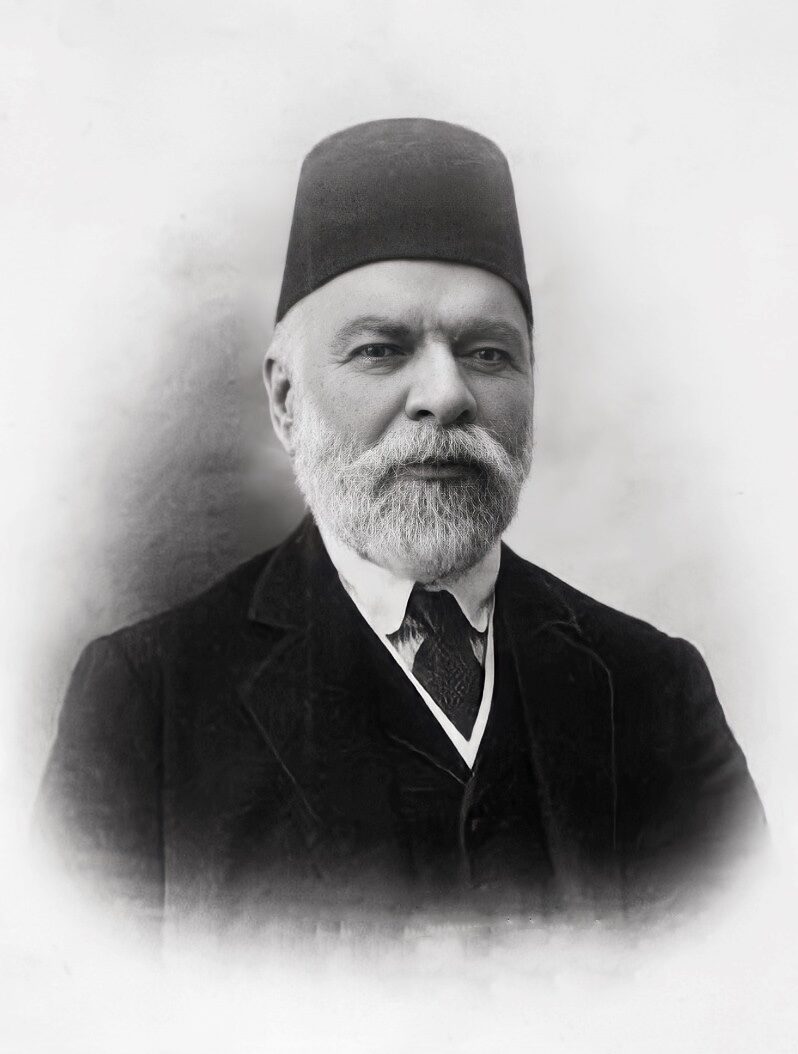 Ismail Qemali (1844-1919), veteran Ottoman statesman who returned from exile in Europe to convene the 83-delegate national assembly at Vlorë and proclaim Albanian independence on 28 November 1912.
Photo: Wikimedia Commons / public domain
Ismail Qemali (1844-1919), veteran Ottoman statesman who returned from exile in Europe to convene the 83-delegate national assembly at Vlorë and proclaim Albanian independence on 28 November 1912.
Photo: Wikimedia Commons / public domain
The Conference of London (December 1912 – August 1913) recognized Albanian independence in principle and drew the new state’s borders in practice — leaving Kosovo to Serbia, Çamëria to Greece, and substantial Albanian populations in modern North Macedonia and Montenegro outside the new state. More than half of all ethnic Albanians remained outside Albania. The Rilindja generation’s central political demand — administrative unity of all Albanian-inhabited territory — was not achieved in 1913 and has not been achieved since.
Ismail Qemali’s government lasted thirteen months before collapsing under European protectorate pressure. Albania survived the world war that followed only barely, occupied at various times by six different armies without itself being a combatant. But the Rilindja’s central project — that there was an Albanian nation with the right to a state of its own — had been recognized, however incompletely, by the Great Powers and was on the diplomatic record. From there, no one disputed it.
What the Rilindja built and what it left
The thirty-four years between Prizren and Vlorë produced, from a starting position of nothing, a working national infrastructure:
- A Latin-script alphabet chosen at Manastir 1908 over Greek, Arabic, and Cyrillic alternatives — the Bashkimi-line ancestor of the 36-letter modern standard.
- A literary canon anchored by the Frashëri brothers, Pashko Vasa, Çajupi, Fishta, and de Rada — translated, anthologized, and taught in every Albanian school since.
- A diaspora press spanning Istanbul, Bucharest, Sofia, Brussels, Cairo, and Boston, with editorial standards comparable to any small European national press of the period.
- Schools — first Korçë (1887, 1891), then a network across the southern vilayets after 1908.
- A political tradition that ran from the Kararname of 1878 through the Greçë Memorandum of 1911 to the Vlorë proclamation of 1912 — coherent in argument across thirty-four years.
- Diaspora institutions — Vatra (1912) and Dielli (1909) in Boston, the Sofia and Brussels presses, the Albanian Orthodox parish founded by Fan Noli — that would carry Albanian national life through the world wars, the communist period, and into the present day.
What the Rilindja did not build, and could not build in a single generation, was a state that included all Albanians. The Conference of London left more than half the Albanian population outside Albania’s borders. The borders that emerged from the 1913 Treaty of Bucharest are the borders of today’s Republic of Albania — and Kosovo, despite independence in 2008, remains a separate state, while the Albanian populations of North Macedonia, Montenegro, southern Serbia, and the Greek Çamëria diaspora remain outside any Albanian state. The Rilindja’s unfinished business is the political map of the modern Balkans.
It also could not, by the nature of its project, finish the cultural work it started. A national identity built through schools, newspapers, and literature is a thing that has to be re-built every generation. The Rilindja generation knew this — that is why so much of their work was educational and literary. The work continues today: in Albanian-language Saturday schools in Worcester and Detroit, in Dielli still publishing in Boston after 117 years, in Vatra still operating after 114, in the bilingual EN/SQ pages of every modern Albanian-American institution, and — at small scale — in the National Albanian Registry.
The diaspora is where the Rilindja still happens
A clean ending to the Rilindja story would put us in Vlorë on 28 November 1912, with the flag going up.
The story doesn’t end there. The Rilindja was a diaspora project from the start — Bucharest, Sofia, Brussels, Boston — and the diaspora is where the inheritance lives. The Albanian-American community that funded and edited Dielli in 1909 is the direct ancestor of the roughly 230,000 Albanian Americans counted in the American Community Survey, and of the community estimate closer to 1 million including ethnic Albanians and second- and third-generation descendants. Vatra is still in Boston. Dielli still publishes. Every Albanian Orthodox church in North America traces back to Fan S. Noli’s 1908 parish.
A first-generation Albanian American in the Bronx whose grandmother came from Korçë after the 1997 pyramid-scheme collapse is part of the Rilindja’s continuing work. So is a Kosovar-American in Detroit whose family arrived after the 1999 war. So is a third-generation Worcester resident whose great-grandfather came over in 1923. The point of the Rilindja was that there is one Albanian people, organized across borders, recognizable to itself.
That recognition has never been built by an Albanian state, and it can’t be — most Albanians don’t live in one. It has always been built by the diaspora institutions that the Rilindja founded: the press, the schools, the parishes, the federations, the cultural societies. The National Albanian Registry exists in that lineage. We count Albanian Americans because no one else is counting Albanian Americans, the same way nobody was counting the diaspora that funded Drita in Sofia in 1903.
In 1878, the Great Powers at Berlin partitioned Albanian-claimed land without consulting the people who lived there, on the working assumption that an Albanian nation did not exist on the diplomatic record. The Rilindja’s answer — recognizing Albanians as one people, recording them, teaching their children, publishing in their language — is the work that any community-led count of Albanian Americans is also doing.
If you’re Albanian, by any of the routes the Rilindja knew about — Tosk south or Gheg north, Catholic or Orthodox or Muslim or Bektashi or secular, Kosovo or Albania or North Macedonia or Montenegro or Italy or the third generation in Brooklyn — the National Albanian Registry exists to count you. It takes about 2 minutes, the certificate of recognition is free, and your data is yours.
Bashkë jemi më të fortë.