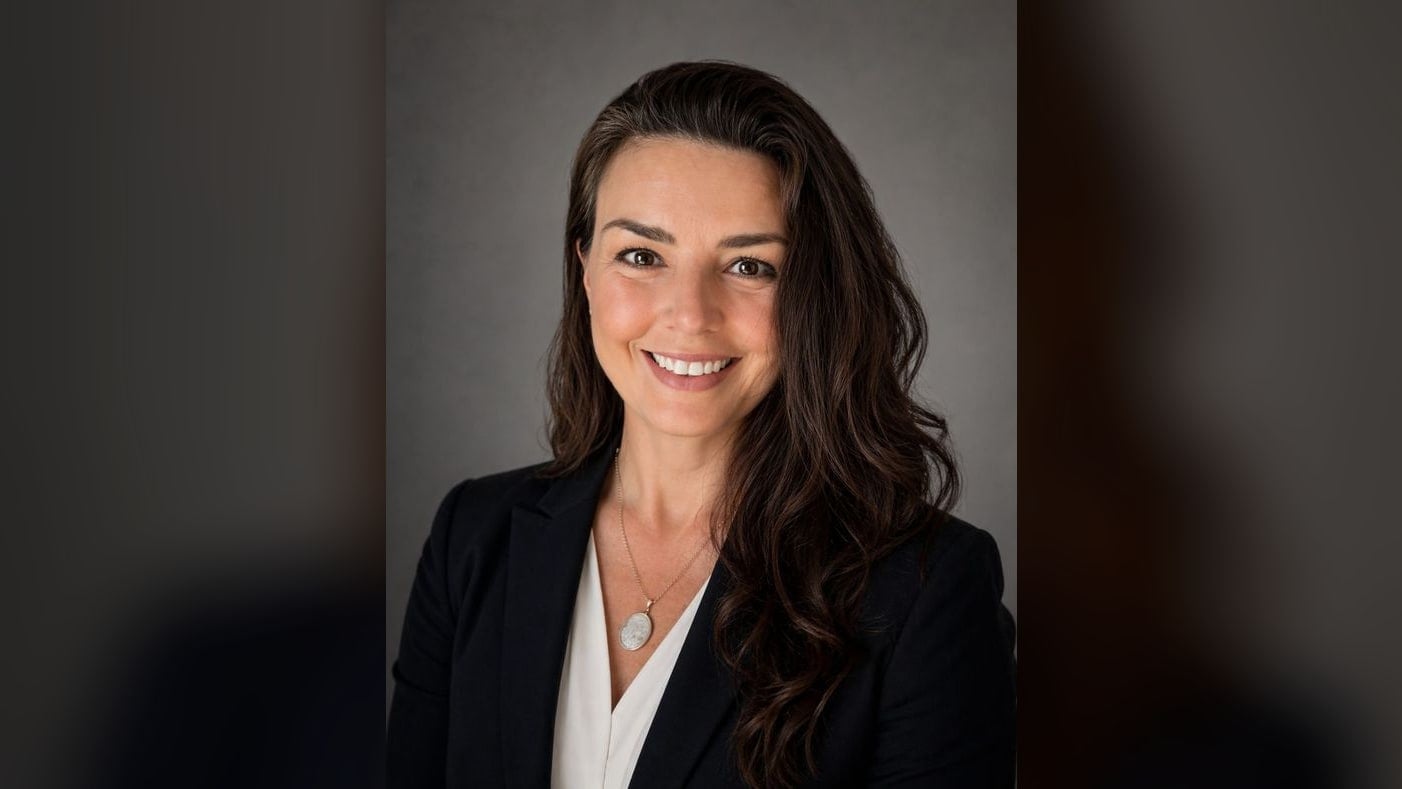
Iliriana Sela is a Physician Assistant, a healthcare operations executive, and the Director of Community Outreach for the National Albanian Registry. She is also my wife, which is why I am writing this profile myself rather than asking someone else to. Readers who would rather hear about her from a more distant voice are welcome to skip ahead to the Wikipedia-style facts further down. Everyone else: bear with me. There are details about her work — and about how she came to NAR — that I think are worth putting on the record.
The short version
Iliriana was born and raised in New York. Her family immigrated to the United States in 1961 from Dibra, the Albanian-speaking region across the Albanian–North Macedonian border. She is second-generation Albanian American — close enough to the old country to speak the language at home and to know the regional cuisine the way the grandmothers cooked it, far enough into the American experience to have built a career inside the US healthcare system.
By training she is a Physician Assistant. By role, today, she is Senior Director of Specialty Programs at Advanced Reconstruction Surgery Alliance, where she leads specialty program development, operational growth, and strategic expansion across multiple markets. Earlier in her career she ran teams of more than 250 people across clinical, operational, and administrative functions. She also came up through a family construction background before clinical training, which is one of the small unusual facts that ends up mattering: she thinks about a healthcare program the way someone who has watched a building go up thinks about a project. Drawings, sequencing, materials, schedule, and the people whose names are on the work.
She serves on NAR’s Executive Board as Director of Community Outreach. The role is straightforward in description and harder in practice: build awareness of the registry inside the Albanian-American community, strengthen partnerships with the religious institutions, civic associations, business networks, and family chains that the community actually runs on, and help families understand why being counted matters. NAR’s job is to count Albanian Americans accurately, in one place. Her job inside NAR is to make sure the count reaches the people the count is for.
Family and origin: Dibra to New York
The 1961 immigration date matters. Most of what Americans now think of as the Albanian-American community arrived after 1990 — after the fall of one-party rule in Albania and the wars in Kosovo. The pre-1990 community was much smaller, mostly Italian-Albanian (Arbëresh) families with roots in southern Italy, mid-century Kosovar and Macedonian-Albanian arrivals, and a handful of political refugees. Iliriana’s family came in 1961, well inside that earlier wave.
Dibra is the historical Albanian region that straddles the current Albania–North Macedonia border. The town the family came from is in present-day North Macedonia, where ethnic Albanians are roughly a quarter of the country’s population and the majority in the western municipalities. For an Albanian-American household, that origin shapes a lot of small things: the dialect spoken at the kitchen table, the dishes that appear at holidays, the regional religious institution and association networks the family stays connected to in the United States.
Iliriana grew up inside that household in New York — the largest Albanian-American population center in the country (a 2015 statistical profile of the community by researcher Ljubica Nedelkoska, published through Harvard’s Center for International Development, put the New York State Albanian-American population at roughly 52,000 to over 60,000; community estimates including ethnic Albanians from Kosovo, North Macedonia, and Montenegro put the real number considerably higher). She is part of the generation of second-generation New York Albanians who built professional careers in finance, healthcare, real estate, law, hospitality, and the trades, while keeping the language and the family connections alive at home. That is the demographic NAR is, in part, trying to make legible.
A family of community builders
The Outreach role at NAR is not a new direction for her — it is the same work, in the same family, in a different decade. She comes from patriotic households on both her mother’s and her father’s side, and both shaped how she shows up for the community today.
Her grandfather, Ekrem Klobocista, was the first Albanian to settle on Staten Island. As the postwar wave of ethnic Albanians arrived from Macedonia and Montenegro — most of them Muslims fleeing pressure on their communities — Ekrem opened his house to the newcomers. He helped them find work, taught them how to navigate American life, and made sure the language and the heritage traveled with them rather than getting set aside. When the community grew large enough that a religious institution became necessary, he organized the founding of a mosque on Staten Island — which from the start doubled as a school, teaching religion and Albanian language so the next generation could keep both.
Her father, Baudin Sela, took up a similar role in a different decade. Through the 1980s and 1990s — the years that built up to Kosovo’s war for independence — he led demonstrations in New York, organized events that pulled the Albanian-American community together, and worked publicly on Kosovo’s behalf when that work carried real political weight. When the 1999 Kosovo solidarity rally was being organized, he told Iliriana, then 17, that it was time for the next generation to speak up while the older generation held the floor. That is how she ended up at the front of a large crowd in New York City, speaking publicly about what was happening in Kosovo at an age most people are still figuring out how to write a college essay.
So when she walks into a room of Albanian-American families today with NAR’s pitch, she is the third generation of her household doing some version of that work. Her grandfather organized the first wave on Staten Island. Her father organized the diaspora through Kosovo. She is organizing the count.
Career: from construction to clinical to operations
Iliriana’s professional path is less linear than most healthcare-executive biographies. She came up through a family construction background, then trained clinically as a Physician Assistant, then moved into operations and program leadership inside healthcare.
The combination is unusual and load-bearing. Physician Assistants who go into operations usually arrive at it through clinical management — they run a practice, then a service line, then a multi-site service line. A construction-and-PA background means a different default mental model. She sees a healthcare program the way a builder sees a building: a stack of decisions about scope, sequencing, materials, the cost of changing your mind late, and the trades you need at the right point in the schedule. That mindset translates well to specialty-program development, where the work is genuinely closer to building a system than to running a clinic.
Across her career she has helped build and scale multimillion-dollar healthcare initiatives, specialty programs, and operational models from scratch. Today, at Advanced Reconstruction Surgery Alliance, she leads specialty program development, operational growth, and strategic expansion across multiple markets. The teams under her have included 250-plus people across clinical, operational, and administrative functions. The work she is known for inside those organizations is the work that takes years: changing the culture, building the trust, and developing the people who are running the place after she has moved on.
Helping Albanian-American professionals come up alongside her has been a constant. Healthcare operations is a field where the names on the schedule matter — who you can call, who will pick up, who has the bandwidth to do the favor for a candidate they have never met. Over the years she has opened doors inside healthcare and operations for Albanian-American candidates who deserved a shot, mentored them through the next role, and watched them grow into people who now do the same for others. That is the kind of mentorship that does not show up in a LinkedIn headline. It is also the kind of work NAR exists to surface.
NAR: Director of Community Outreach
The National Albanian Registry was founded by eight Albanian-American founders to build a community-led count of Albanian Americans in the United States. The US Census Bureau records roughly 230,000 Americans of Albanian ancestry in the 2024 American Community Survey. Community estimates, including ethnic Albanians from Kosovo, North Macedonia, and Montenegro and the second and third generations the Census tends to undercount, put the real figure closer to 900,000 to 1 million. The gap between the two numbers is the entire point of building NAR.
Iliriana sits on the Executive Board as Director of Community Outreach. The role is part of the operating team, distinct from the Managing Board (founding directors) and the Advisory Board (national and state advisors). Officers serve four-year terms ratified at the first board meeting on May 1, 2026.
The Outreach role is the one that has to land the registry inside the community as it actually exists — which is to say, inside thousands of families, congregations, family-run businesses, regional associations, and WhatsApp threads that have nothing to do with a website. NAR’s strategy is the inverse of the usual nonprofit launch: build the data infrastructure first, then go out and meet the community where it already is, not the other way around. Iliriana’s job is to lead the second half of that. The partnerships with Albanian-American organizations, the introductions to regional ambassadors, the family-network outreach — these are the channels through which the count actually gets done.
The reason I asked her to take the role, and the reason she said yes, comes down to a simple test: can the person in this seat sit at the kitchen table with an Albanian-American family on a Sunday afternoon, drink the coffee, and explain — in plain language, in either English or Albanian, depending on the room — what counting is for and why it matters? Many people can do half of that. The job needs both halves.
Eight years on the APEN board
NAR is the current chapter. The longer record is more useful for understanding how Iliriana works.
For close to eight years she served on the board of the Albanian-American Professionals & Entrepreneurs Network (APEN), one of the longer-running Albanian-American professional associations in the New York area. APEN’s reason for existing is to put Albanian-American professionals, entrepreneurs, and founders in regular contact with one another — for mentorship, hiring, partnerships, and the simpler stuff like new arrivals finding the people who can tell them how an industry works in the United States. An eight-year board tenure is a long time; the people who stay that long are usually the people doing the operational work that keeps the lights on between the headline events.
This is the same pattern the Klobocista house represented in the 1960s and the Sela demonstrations represented in the 1990s, scaled to the present-day Albanian-American professional class. The labels change. The work doesn’t.
Molla Entertainment and Redline Talk Show
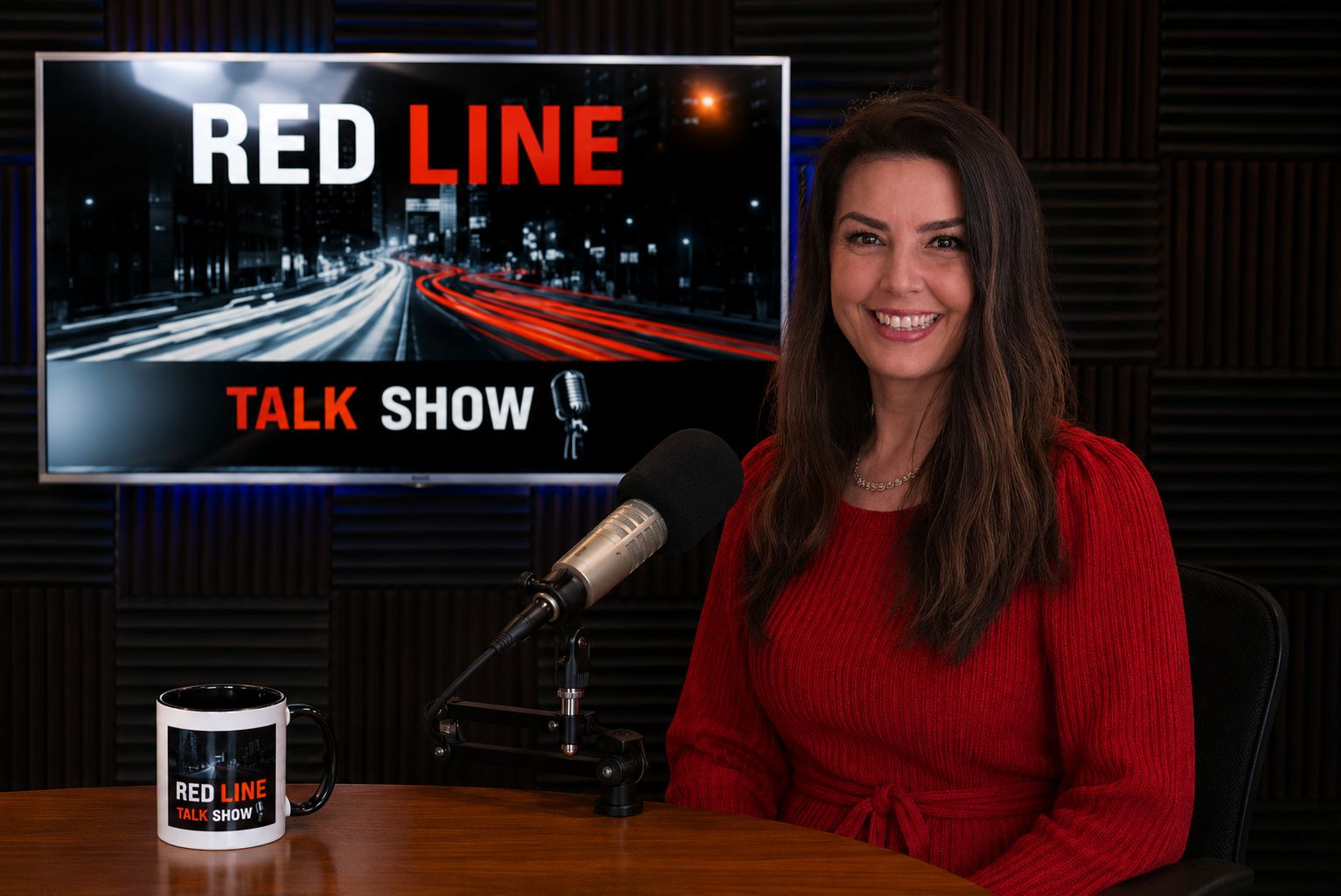
Outside her clinical and operational work, Iliriana and I built Molla Entertainment together — a small Albanian-American media company focused on stories the community knows but the broader press rarely covers. Its flagship project is Redline Talk Show, a long-form interview series with Albanian-American founders, artists, athletes, and operators. We have shot 85-plus episodes in English and Albanian.
The reason I bring up Molla here, in a NAR profile, is that the work was already pointing at the same problem NAR is built to solve: the community is large enough to support a serious media slate, and the people inside it are doing serious work, but the English-language press treats Albanian America as either an organized-crime story or a punchline. The work of Redline, and the work of NAR, are different answers to the same question. Who is going to write the better story, and where are the audiences who will read it?
A note on personal life and public roles
Iliriana is my wife. We have built a life together in New York, balancing professional work with raising our family, supporting each other’s projects, and taking on the time-eating board and community roles that come with being two adults whose careers are at the stage they are at. None of this is unique. It is the standard arithmetic of Albanian-American family life for a couple in their forties: there are professional jobs, there are kids, there are parents, there are community obligations, and the calendar does not negotiate.
I mention it here because public-facing NAR copy does not usually publish private detail about board members. That is the right default. The carve-out for this profile is that I am the one writing it, and I am writing about my wife — which is a different question than what NAR’s institutional voice publishes about a director the public has not met. If you want the institutional version, it is the short paragraph at the top of this piece. Everything below the fold is me.
What her work means for the registry
NAR is going to live or die on whether the community shows up. The data infrastructure, the certificates, the bilingual website, the board, the audit trail — all of it is real work, and none of it matters if the count stays small.
The reason I asked Iliriana to take Director of Community Outreach is that the people who will move the count are the people the community already trusts. The professional networks she helped build over eight years at APEN. The healthcare colleagues she mentored. The Albanian-American families who watched her stand up at the Kosovo rally in 1999. The audience that watches Redline Talk Show on Sunday afternoons. None of those are databases. They are people, and they answer because they know her, and that is the work that turns a number on a page into 900,000 names counted properly.
If you are Albanian American — first generation, second, third, all four grandparents or one — register. If your family has been part of the New York or Michigan or Massachusetts Albanian-American community for decades and has never been counted in a public way, this is the place to start. And if you want to see how NAR is structured — the Managing Board, the Executive Board (where Iliriana sits), and the Advisory Board — the governance page is the public record.
— Ervin Toro President, National Albanian Registry