

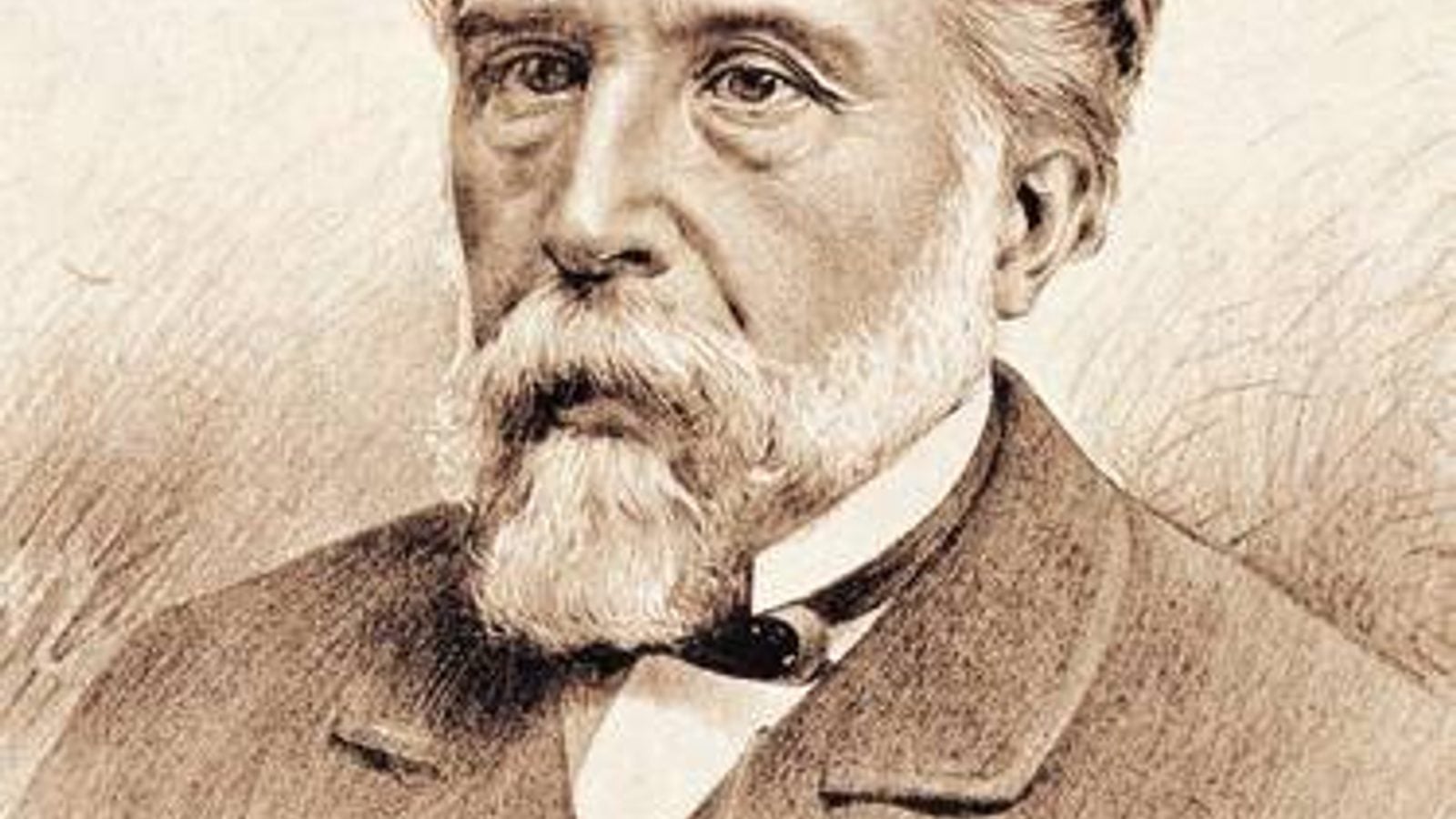
The Ghica family crest hangs in the National Museum of Art of Romania in Bucharest. The family it represents — known in Albanian as Gjika — traced its roots to Albania, and between the 1650s and the 1850s its members governed both Romanian principalities. They were not the only Albanians in Romania. They were the most powerful, but beneath them lay a merchant community that had been crossing the Danube since at least the late 1500s, and that community would later build one of the most important publishing networks of the Albanian National Awakening.
Romania’s Albanian community is small today — the 2021 census recorded 645 people identifying as ethnically Albanian. But its historical weight is out of proportion to its current size. For two centuries, Albanian families held political power in the principalities. For another half century, Bucharest served as a safe harbor for Albanian-language publishing that the Ottoman Empire would not permit on its own soil. The broader Albanian diaspora has many chapters; the Romanian one is among the oldest and, for the Rilindja period, among the most consequential.
The Ghica dynasty
Gheorghe Ghica (c. 1600–1664) was born in Köprülü (present-day Veles, North Macedonia) into a family of Albanian origin. He rose through the commercial and political networks of the Ottoman Balkans. In 1658, the Ottoman Porte appointed him Prince of Moldavia. A year later, he was transferred to the Principality of Wallachia, where he moved the capital from Târgoviște to Bucharest — a decision that shaped Romania’s geography permanently. He served as prince of Wallachia until 1660.
The dynasty he founded governed both principalities repeatedly over the next two centuries. At least ten members of the Ghica family served as Prince of Moldavia or Wallachia between the 1650s and the 1850s. The family’s Albanian origins were well known to contemporaries and later Romanian historians; the surname itself is a romanization of the Albanian Gjika.
After Romania’s unification in 1859, the Ghica family transitioned into the politics of the new state. Ion Ghica (1816–1897) served repeatedly as prime minister in the 1860s and 1870s. The family’s political influence extended well into the twentieth century.
The merchant community
The Ghicas were the apex of a broader Albanian presence in the Romanian lands. Albanians had been crossing into Wallachia since at least the late sixteenth century. Around 1595, during the campaigns of Mihai Viteazul (Michael the Brave) against Ottoman forces, an estimated 15,000 Albanians crossed the Danube into Wallachia — soldiers, camp followers, and families fleeing the instability. By 1628, Albanian merchants are documented in Bucharest’s commercial records.
Through the 1700s and 1800s, the Albanian community in Romania grew steadily. Many Albanians worked as merchants, confectioners, and artisans. By 1820, there were roughly 90 Albanian confectionery merchants operating in Bucharest alone — a specific enough trade that “Albanian confectioner” became a recognized category in the city’s commercial life. By 1893, one contemporary estimate put the total Albanian population in Romania at approximately 30,000.
The community was concentrated in Bucharest but not limited to it. Albanian merchants and tradesmen operated in other Wallachian and Moldavian cities, and the community maintained social institutions — churches, mutual-aid societies, and eventually political organizations — that kept Albanian identity alive across generations.
Drita and the Albanian publishing network
The Ottoman Empire banned Albanian-language printing for most of the nineteenth century. Books, newspapers, and textbooks in Albanian could not legally be published or distributed within Ottoman borders. This created a problem for the Albanian National Awakening (Rilindja), which depended on a literate Albanian-speaking public to build national consciousness.
Romania, as an independent state outside Ottoman jurisdiction, offered a solution. The cultural and publishing society Drita (Albanian: “The Light”) was established in Bucharest in the mid-1880s. Nikolla Naçi (1843–1913), a merchant from Korçë who had settled in Bucharest, became chairman of the society and expanded its publishing program into a systematic operation. Under his leadership, Drita produced Albanian-language textbooks, newspapers, and literary works that could not have been printed inside the Ottoman Empire.
The society’s most significant contribution was publishing works by Naim Frashëri (1846–1900), the poet whose writing became foundational to Albanian literary culture. Frashëri lived in Istanbul, where he could write in Albanian but not easily publish. Drita provided the press. His major works — including Bagëti e Bujqësi (1886) and Istori e Skënderbeut (1898) — reached Albanian readers through the Bucharest publishing network.
Drita was not the only Albanian organization operating from Romania. The community supported multiple cultural associations and contributed to the broader constellation of diaspora activism that sustained the Rilindja. But Drita was the most organized and the most productive, and its location in Bucharest — close enough to the Ottoman Balkans for distribution, far enough for legal safety — made it strategically important.
Parliament and politics today
Romania recognizes nineteen national minorities, each entitled to a reserved seat in the Chamber of Deputies if their community does not win a seat through the general election threshold. The Albanian community holds one such seat.
The first Albanian organization to win the reserved seat was the Union of Albanians in Romania (UCAR), which received 8,722 votes in the 1996 elections. In 2000, the League of Albanians of Romania (ALAR), founded a year earlier in Craiova, took the seat. ALAR has held it in every parliamentary election since, representing the community’s political and cultural interests at the national level.
The reserved seat gives Romania’s Albanian community a degree of institutional representation that most diaspora communities lack. It also reflects Romania’s broader framework for minority recognition — one of the more structured systems in Europe, modeled in part on interwar precedents.
A small community with a long record
Romania’s 2021 census recorded 645 people identifying as ethnically Albanian — far fewer than the 8,722 who voted for the Albanian minority party in 1996, which suggests many families with Albanian roots no longer select the Albanian ethnicity category on census forms. Either way, the community is a fraction of its nineteenth-century peak.
But the record is unusually deep for a community this size. A dynasty that governed two principalities. A merchant network that operated for three centuries. A publishing society that kept a national movement’s literature in print when the ruling empire forbade it. And a seat in parliament that has been continuously held for nearly three decades.
The Albanian presence in Romania is not large. It is old, and what it produced — from Bucharest’s capital status to Naim Frashëri’s published works — shaped outcomes far beyond its numbers.