
What Albanian traditions are, and why they survive
Albanian traditions are layered. Underneath sits an Illyrian and Paleo-Balkan substrate older than the arrival of Greeks, Romans, and Slavs. On top of that, a millennium of Mediterranean and Byzantine Christianity. On top of that, five centuries of Ottoman Islam, Bektashi Sufism, and Catholic resistance in the northern highlands. On top of that, the 20th century — communism, mass emigration, post-1991 diaspora.
The traditions that survived all four layers are the ones that were practiced, not preserved. A wedding is rehearsed every weekend somewhere in the diaspora. A funeral is observed because someone has died. A byrek is made because the family is hungry on Sunday. These are not museum pieces.
A second-generation Albanian American in Massachusetts may not know the historical reason for the jav’ e nuses (marriage week), but she will recognize that her cousin’s wedding lasted seven days. The reason it lasts seven days is older than her grandfather. She does not need to know that for the tradition to keep working.
What follows is a diaspora-first walk through the customs, holidays, and daily practices that show up in Albanian-American homes today.
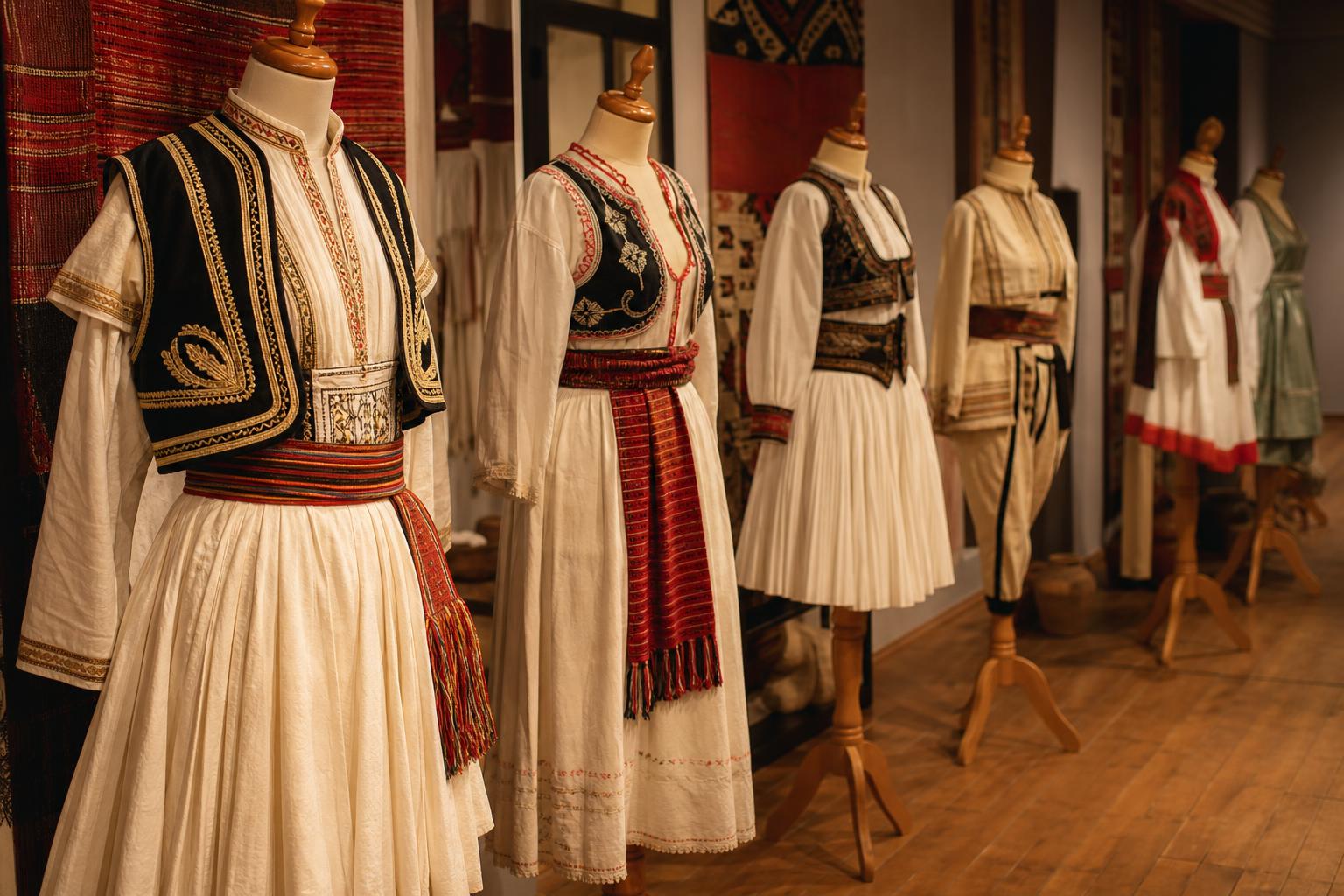 Regional Albanian folk costumes on display — fustanella, xhubleta, plis, and embroidered vests from across the country’s regions. — Graphic by NAR
Hospitality and besa: the rules of the threshold
Albanian hospitality (mikpritja — literally “the receiving of the guest”) is not a service standard. It is a defense obligation, rooted in the Kanun, the customary law that governed northern Albanian highland society for centuries.
The traditional rule: once a guest crosses your threshold, you are obligated to feed and protect them. If armed enemies of your guest follow them to your house, you defend the guest before yourself. If you cannot afford to feed your own family that week, you still feed the guest first. To fail at this is pa besë — without honor — and is the most serious social label a household can carry.
The mechanism behind the rule is besa, the Albanian code of honor — a given word, binding to the death, transferable across generations. We’ve written a full explainer on besa at /blog/albanian-besa; the short version is that besa is what makes hospitality enforceable in the absence of a state.
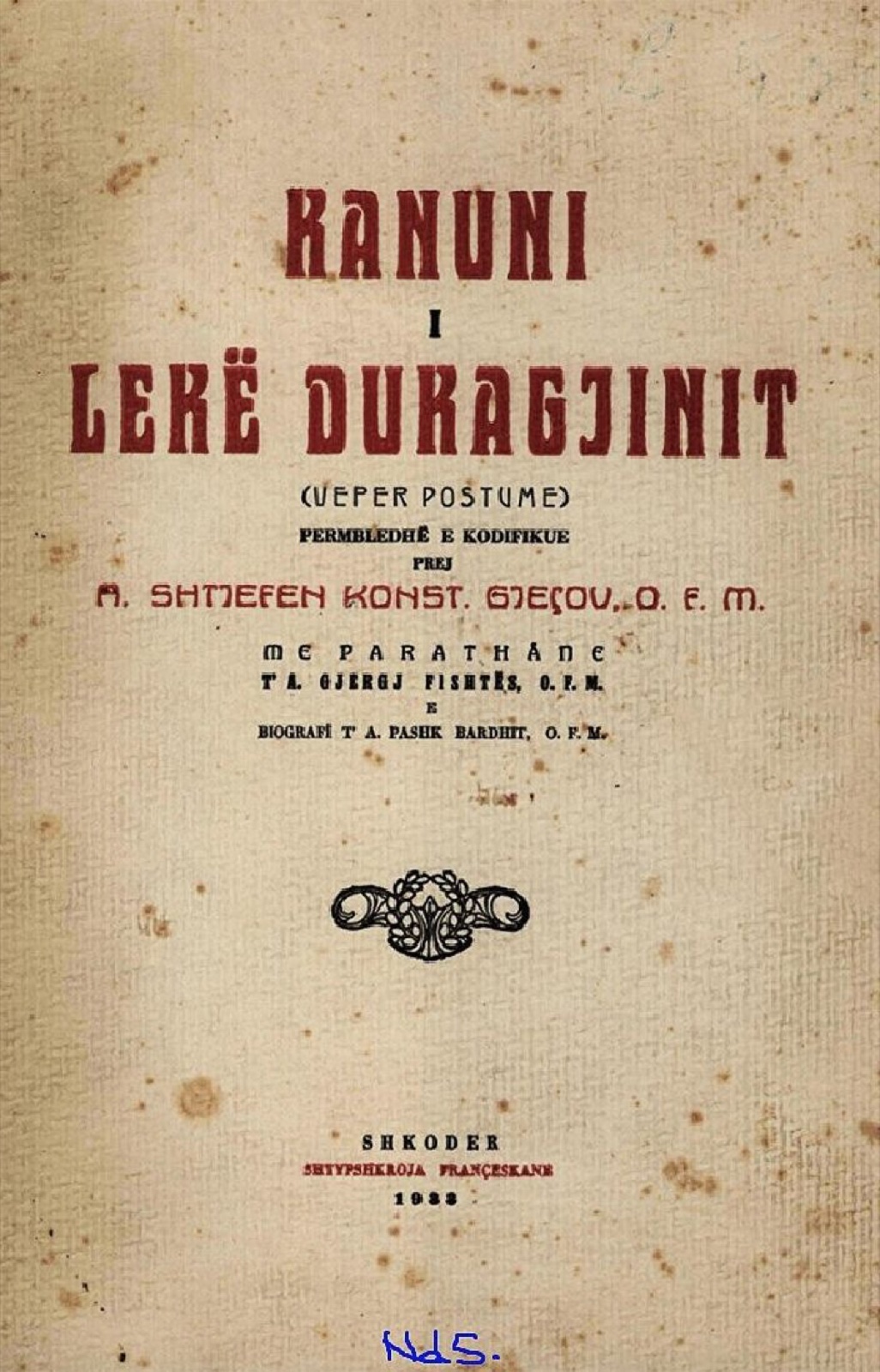 The Kanuni i Lekë Dukagjinit — the medieval customary code of the northern highlands, first compiled in print by Father Shtjefën Gjeçovi in the early 20th century. Image: Wikimedia Commons / public domain.
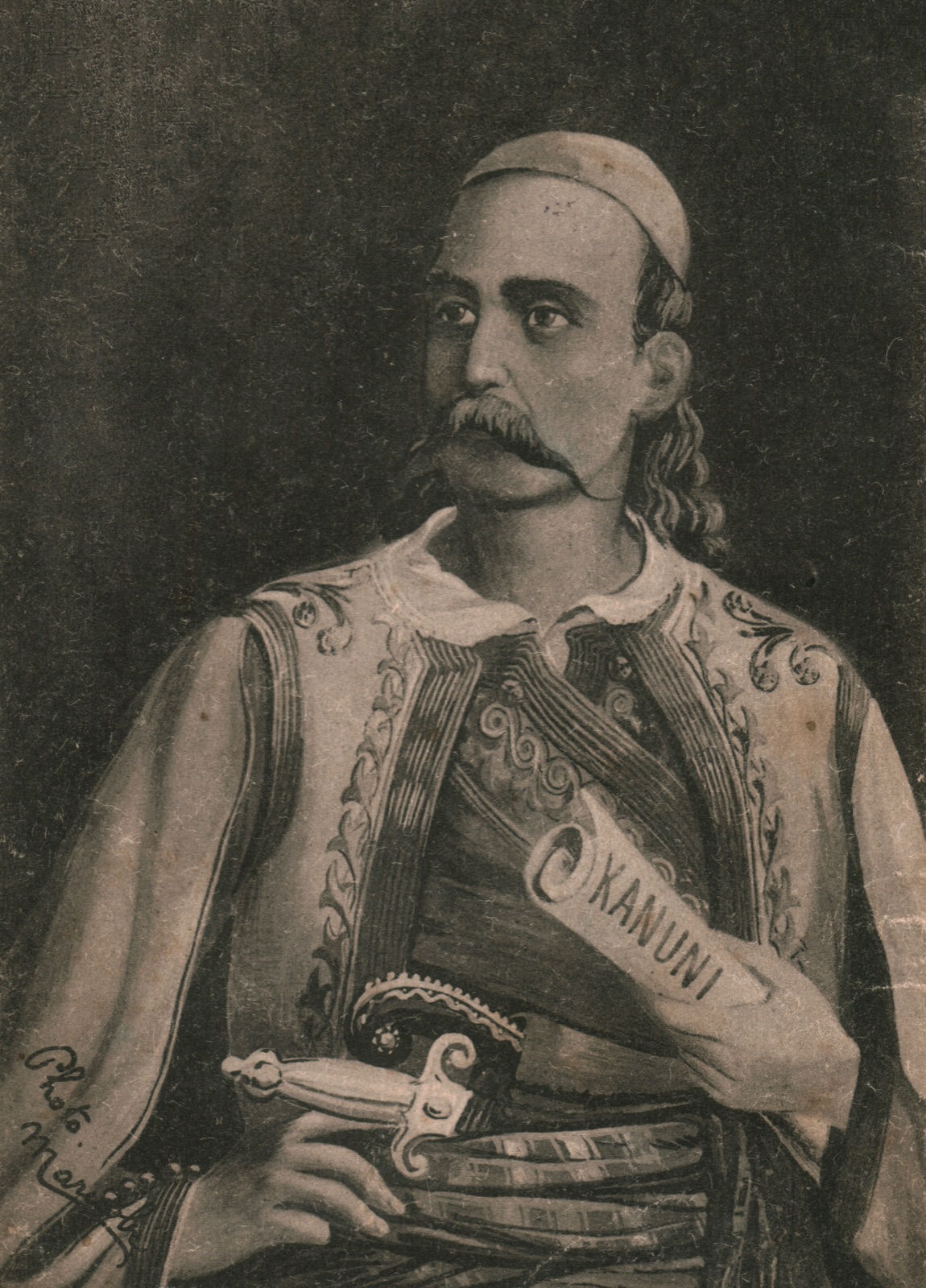 Lekë Dukagjini (1410–1481), the 15th-century northern prince whose name the Kanun carries. 19th-century postcard illustration. Image: Wikimedia Commons / public domain.
In an Albanian-American home today, mikpritja shows up at the door. A guest is met with coffee, raki, and something to eat — even if the visit was unannounced. To refuse food at an Albanian’s house is mildly insulting. To not be offered food is a sign that the household is not well. The rules have softened from the Kanun’s letter, but the shape of them is still recognizable.
Wedding traditions: a week, not a day
Albanian weddings are long. The traditional cycle is jav’ e nuses — “the bride’s week” — a sequence of pre-wedding events that build to the ceremony itself. Even compressed for diaspora schedules, an Albanian-American wedding rarely fits in a single afternoon.
The cycle usually starts with the fejesa (engagement). The groom’s family travels to the bride’s with sweets, gifts, and a formal request. Once accepted, the engagement is sealed with the kufeta exchange — sugared almonds (Albanian kufeta, from the Italian confetti) given out to relatives and neighbors as a public announcement.
The week itself layers on more rituals. The nata e kanagjegjit (henna night) is a women’s gathering at the bride’s home, with henna applied to her hands as a symbol of fertility and protection. In Catholic and Orthodox households the henna element is sometimes lighter, but the structure of a women-only pre-wedding evening is shared across confessions.
The vellam — sometimes spelled vëllam — is the groom’s best man, but the role is heavier than the English term. Vellam literally means “blood-brother.” Historically, the vellam stood with the groom under the Kanun’s procedures, was responsible for protecting the bride during transit between households, and remained a quasi-family member for life. In modern weddings the vellam is still a serious appointment, not a casual one.
Dowry practices have softened almost everywhere, but the paja — the trousseau the bride brings to her new home (linens, embroidered textiles, clothing she has often made herself) — survives in most Albanian households as a tradition of pride rather than economic transaction. A grandmother’s hand-embroidered pillowcase passed down through three brides is a paja item, not a dowry payment.
The wedding day itself involves the groom’s party traveling to collect the bride, music and gunfire announcing the procession (the gunfire is now mostly diaspora-symbolic, replaced with car horns), and a formal reception that runs for hours.
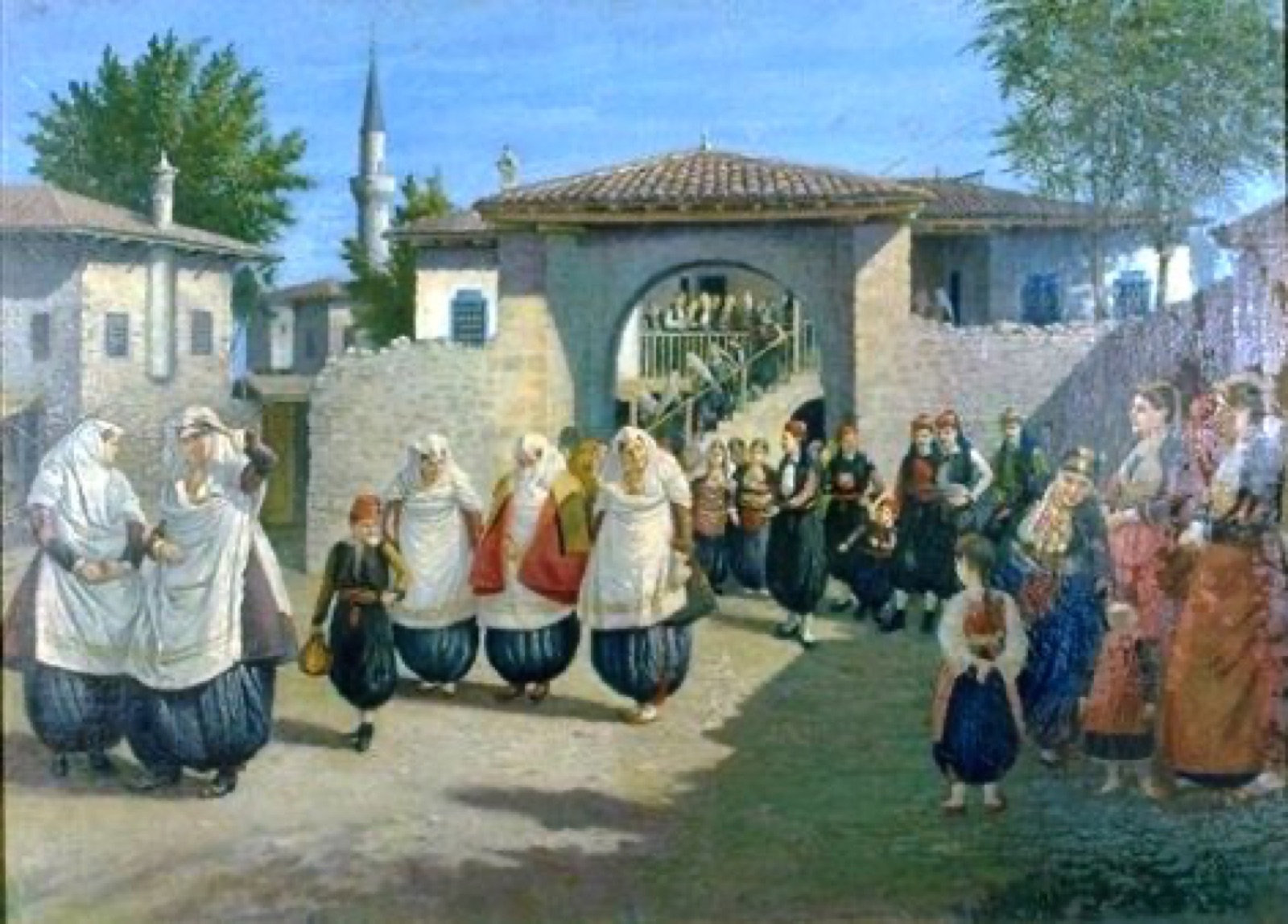 Dasma Shkodrane (A Shkodra Wedding), Kolë Idromeno, 1924 — the canonical depiction of the northern Albanian wedding procession. Image: Wikimedia Commons / public domain.
The bride’s coin throw closes the threshold sequence. On entering her new home as a wife, she scatters coins, candies, or rice across the doorway. The meaning is unmistakable — she brings prosperity, sweetness, and abundance into the household. In some northern regions she also breaks bread, eats honey, or steps over a threshold object placed by her mother-in-law. The variations are regional. The gesture is near-universal.
Birth and naming traditions
When an Albanian baby is born, the news travels with a tip. The siharik — the announcement-bearer’s gift — is the small payment given to the person who arrives first to bring the news. It can be cash, a piece of jewelry, or a meaningful object. The custom acknowledges that good news, in Albanian tradition, has a finder’s fee.
When visitors come to see the baby in the first days, the household offers petulla — fried dough, eaten warm with cheese, honey, or jam. The visit is not a quiet check-in. It is a small celebration, and the petulla is the marker.
To protect the baby from the syri i keq — the evil eye — many households still attach a kuleta or amulet to the crib. Common forms: a blue glass bead, a small religious medal, a scrap of red ribbon, a tiny bag of garlic or salt. The blue-bead amulet is shared with Turkish, Greek, and broader eastern-Mediterranean tradition. Albanian households across all confessions take the eye seriously enough to act on it.
Naming customs split by faith. Albanian Orthodox families traditionally celebrate the name day — the feast of the saint after whom the child is named — as a more important annual occasion than the birthday. A St. Nicholas (Shën Kolli) will receive guests, food, and gifts on December 6 every year, often with the parish priest visiting for a blessing.
Catholic Albanian families lean on baptism (pagëzimi) as the central infant ritual, with godparents (kumbarë) taking on a lifelong, near-familial role. In Sunni Muslim households, the akika sacrifice and the formal naming on the seventh day after birth are traditional. Bektashi households integrate elements depending on family practice.
Funeral and mourning: the days
Albanian mourning is structured around ditët — “the days.” Three milestones organize the cycle:
- The third day (dita e tretë) — the funeral itself in many regions, or the first major gathering after burial.
- The seventh day (dita e shtatë) — a return of mourners to the home for a meal, prayer, and memory.
- The fortieth day (dita e dyzetë) — the formal close of the mourning period.
Close family wear black throughout. Widows have historically worn black for a year, sometimes for life — a practice that has loosened in the diaspora but is still observed in older generations. Mirrors are sometimes covered, music is paused in the household, and the family does not host celebratory events until the forty days are complete.
The communal meal — dreka e të vdekurit, “the meal of the dead” — is central. Neighbors and relatives bring food to the family rather than the other way around. The household does not cook for itself; the community cooks for the household. This is the same logic that drives mikpritja in reverse: when grief makes hosting impossible, the besa-shaped obligation moves outward.
The kafja e zezë — “the black coffee” — is served unsweetened to mourners. Black coffee at a mourning visit is the emblematic image of an Albanian funeral household: small cups, no sugar, no chatter, presence over conversation.
Major holidays
Albanian holidays cross every confessional line — that is the point of most of them.
November 28 — Dita e Flamurit (Flag Day / Independence Day). The most universally observed Albanian holiday. Marks the 1912 declaration of independence in Vlora by Ismail Qemali. Celebrated across faith and region; in the diaspora, parades in New York, Detroit, and Boston are now multi-thousand-person events. Full explainer at /blog/albanian-flag-day.
March 14 — Dita e Verës (Summer Day / Spring Day). A pre-Christian seasonal celebration marking the end of winter. Centered in Elbasan, where it is the city’s signature holiday; the traditional food is ballokume, a butter-and-corn-flour cookie. Largely Albania-domestic; the diaspora observes it lightly.
Easter — Pashkë. Observed by Albanian Orthodox families on the Eastern calendar and Catholic families on the Western. The cross-confessional Albanian custom is the dyeing of red eggs (vezët e kuqe), the symbolic blood of Christ, and the egg-cracking game where the unbroken egg “wins.”
Ramadan and Bajrami i Madh (Eid al-Fitr). Observed by Sunni and Bektashi Albanians. Ramadan is the month of fasting; Bajrami i Madh — “the Big Bajram” — is the three-day feast that ends it. The larger US Albanian mosques host community iftars and morning Bajram prayers.
Bajrami i Vogël (Eid al-Adha). “The Little Bajram” — the Feast of Sacrifice, roughly two months after Bajrami i Madh. A sheep or lamb is traditionally sacrificed and shared. In the diaspora this is often a community-coordinated halal butcher arrangement, but the meal-sharing element survives.
Krishtlindja (Christmas). December 25 for Albanian Catholics, January 7 for the Orthodox calendar in some parishes. Centered on a family meal and church attendance.
Sultan Nevruz — March 22. The Bektashi New Year, marking the spring equinox and the birth of Imam Ali in Bektashi tradition. Centered at the Bektashi World Center in Tirana and observed by diaspora Bektashi teqes (lodges).
The pluralism on this list is the point. A single Albanian household will often celebrate Pashkë and Bajram in the same calendar year without anyone treating it as unusual.
Folk dance and music
Albanian dance and music are the part of the culture that travels best.
Valle is the line dance — sometimes a circle, sometimes an open chain, always led by the eldest or the most senior dancer holding the lead position. The lead dancer improvises; the rest of the line follows in synchronized steps. Different regions have distinct valle — valle e Tropojës, valle e Kosovës, valle e Devollit. At an Albanian wedding, the valle will run for hours, with the lead position passed from elder to elder, and the line growing as guests join.
Kângë kreshnikësh — “songs of the frontier warriors” — are the epic oral poems of the northern highlands and Kosovo. Sung in long-meter Gheg Albanian and accompanied by the lahutë (a one-string fiddle), they tell the deeds of the legendary Mujo and Halili. The closest Western parallel is the Homeric oral tradition; the 20th-century recordings by Milman Parry and Albert Lord at Harvard are part of how the modern academic study of oral poetry was built.
Iso-polyphony is the southern Albanian counterpart — multi-voice unaccompanied singing where two or three soloists carry distinct melodic lines over a sustained drone (iso) held by the rest of the group. UNESCO proclaimed Albanian iso-polyphony a Masterpiece of the Oral and Intangible Heritage of Humanity in 2005, then formally inscribed it on the Representative List of the Intangible Cultural Heritage of Humanity in 2008.
Traditional instruments include the çifteli (a two-string long-necked lute, the emblematic northern instrument), the lahutë, the def (frame drum), and the zumarë (double-pipe reed). The çifteli is the one most diaspora Albanian Americans recognize from family weddings.
Traditional dress
Modern Albanians dress like their neighbors. The traditional costumes come out for weddings, Flag Day events, folk-dance performances, and church or mosque processions — not for daily life. They survive because they are worn often enough to remain real, not because anyone is trying to preserve them.
Fustanella — the white pleated skirt historically worn by men in southern Albania (and shared with Greek tradition), often with an embroidered vest, sash, and tasseled cap. Heavier and more pleated than the modern Greek version in most Albanian regional variants.
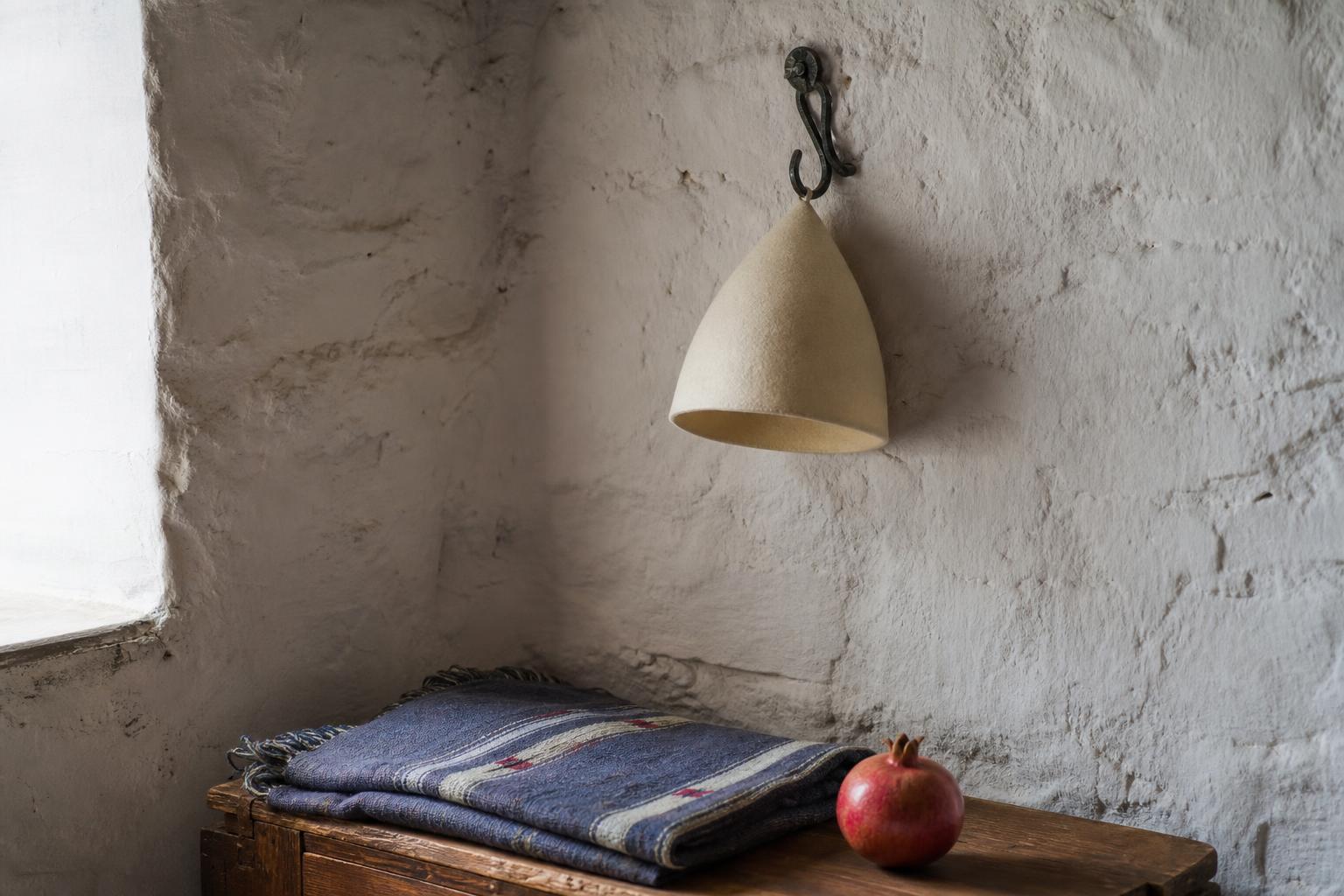
Plis (sometimes qeleshe) — the white felt skullcap worn across northern Albania and Kosovo. Made from beaten white wool; the shape and crown style vary by region. The plis is worn at Flag Day events and in folk dance, and elder men in some northern villages still wear it daily.
Xhubleta — the women’s bell-shaped, heavily-pleated felt skirt-coat from the northern Albanian highlands. UNESCO inscribed the xhubleta on its List of Intangible Cultural Heritage in Need of Urgent Safeguarding in 2022, recognizing both its craft tradition and the vanishing population of women who still know how to make one. A xhubleta can take months to construct.
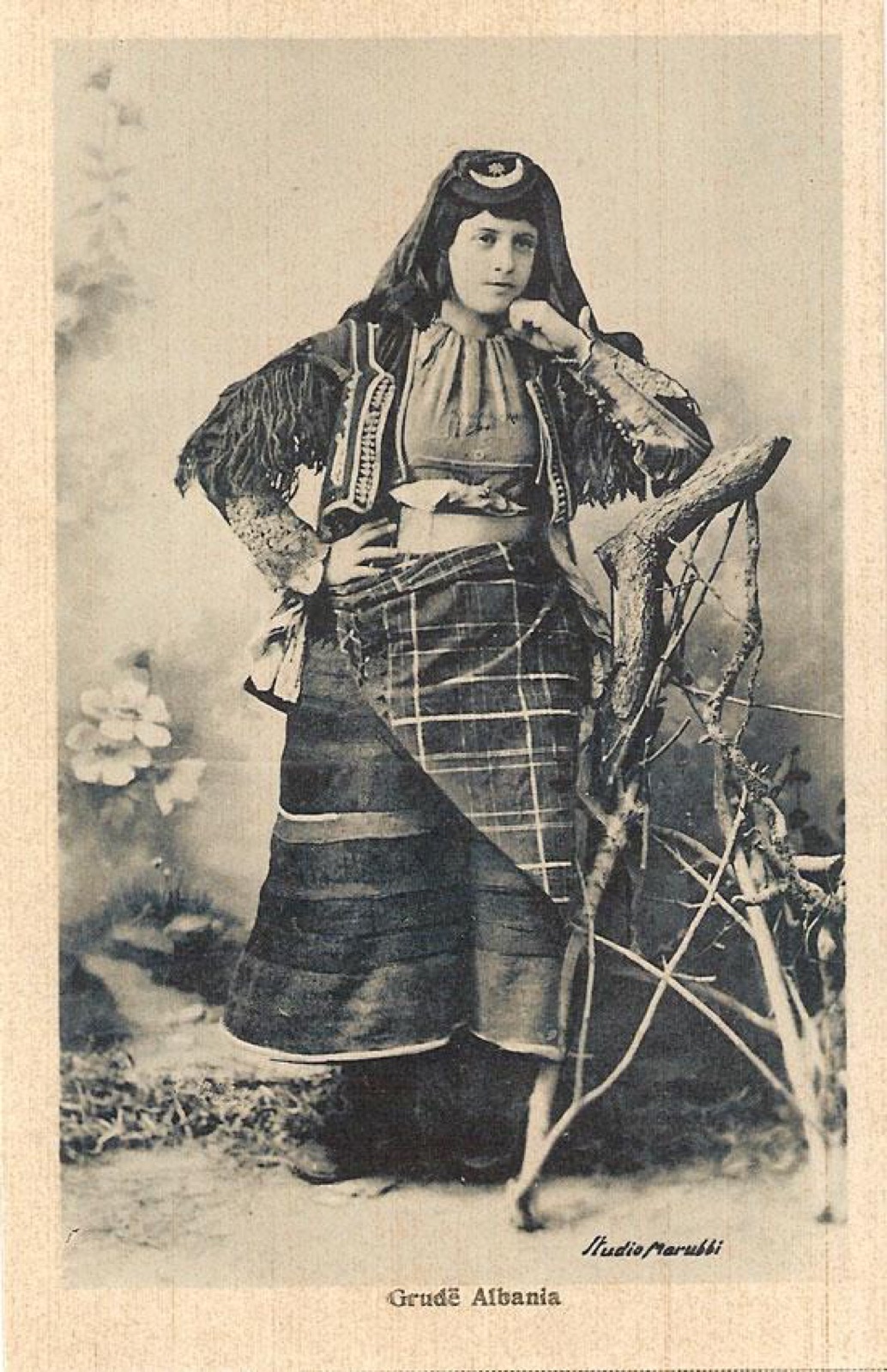 A woman from Grudë in full xhubleta — 19th-century photograph by Pietro Marubi, the Italian-born Shkodra studio photographer. UNESCO Urgent Safeguarding list, 2022. Image: Wikimedia Commons / public domain.
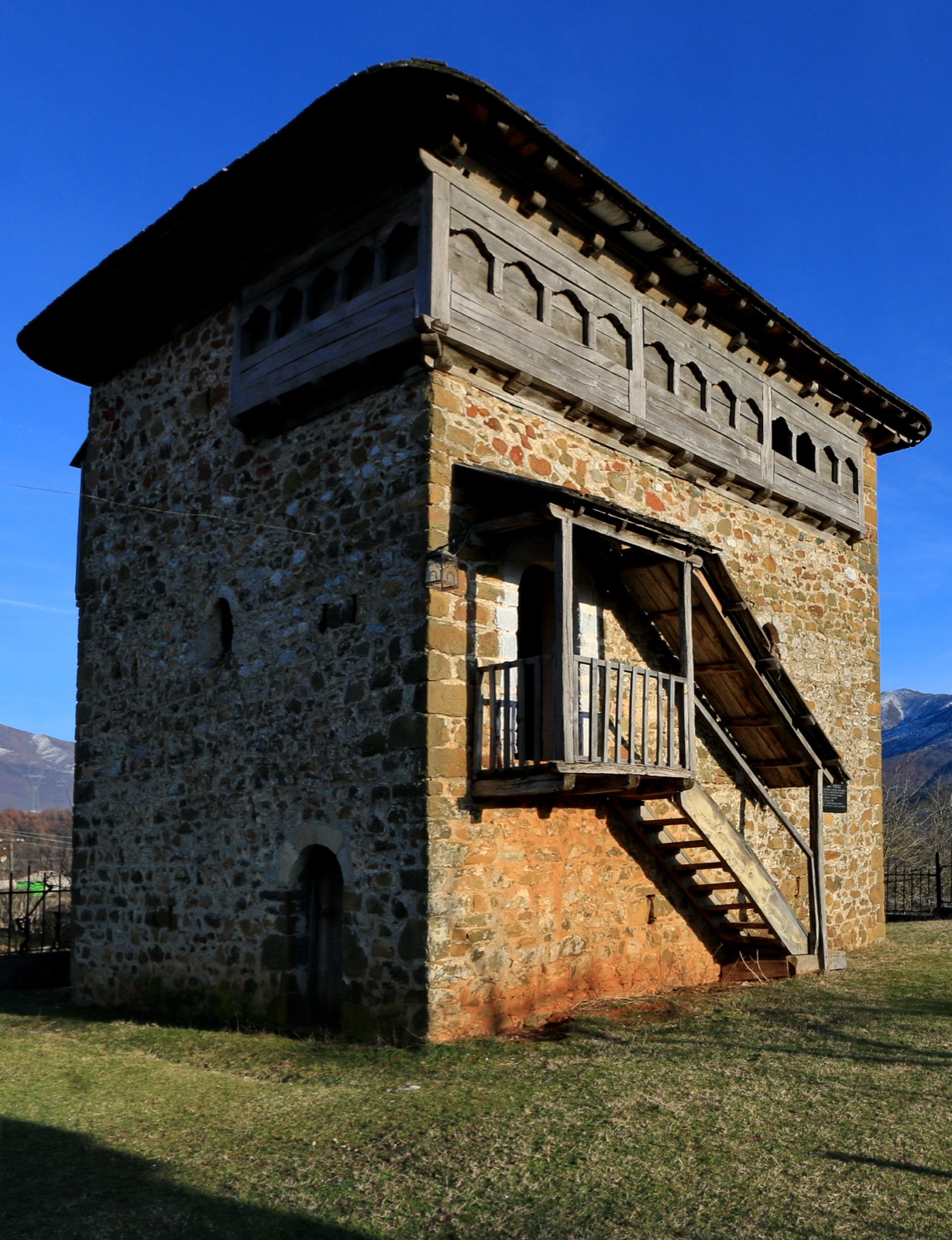 The Kulla e Mic Sokolit in Bujan, Tropojë — northern Albanian stone tower house, the architectural form built around the Kanun’s hospitality and defense rules. Photo: Wikimedia Commons, CC BY-SA.
Regional variation runs deep. The Tropojë costume is not the Korçë costume is not the Arbëresh costume preserved in southern Italy. Albanian-American folk dance troupes — the Vatra ensembles in Boston, the AANO ensembles in New York, the Albanian Cultural Center in Detroit — each rotate through several regional sets at performances.
Daily and social customs
Outside the big rituals, daily Albanian life has its own grammar.
Sunday lunch is the institution. Drekë e së dielës gathers extended family weekly — parents, grandparents, cousins — around a long, slow meal. Byrek (savory layered filo pastry, with spinach, cheese, leek, or meat) is the closest to a universal Sunday food. Long-form at /blog/byrek. The Sunday meal is where the children learn the language by listening to the adults argue.
Raki is the homemade fruit brandy — usually grape, sometimes plum (kumbull) or mulberry (mani). A guest is offered raki within minutes of sitting down, served in a small glass, drunk slowly with food rather than as a shot. The toast is Gëzuar — “let it be joyful.” A small sip is sufficient if you don’t drink.
Kafja — Albanian coffee, brewed in a long-handled copper xhezve (called ibrik in some regions), served in small cups. The coffee is finely ground, simmered to a foam, and poured without filtering — the grounds settle in the cup. It is the quiet conversation drink of every Albanian household.
Greetings. A close greeting is a kiss on each cheek — the standard is two, some regions do three. The cheek kiss is gendered less strictly than in some Mediterranean cultures.
Respect for elders is enforced socially. Standing when an elder enters a room, offering the seat, pouring their coffee first, and using respectful language (the formal Ju rather than informal ti) are still the default in most Albanian households. Children who break these rules are corrected, often publicly. The diaspora has softened the formality but kept the structure.
The diaspora layer: what travels, what fades
Some traditions survive intact in second- and third-generation Albanian-American homes. Others fade. The pattern is predictable.
What travels: Hospitality. Sunday lunch. The cheek-kiss greeting. Raki at gatherings. Coffee culture. Wedding length. Funeral structure (the forty days). Flag Day. The valle line dance. The byrek recipe.
What thins out: The jav’ e nuses full week (compressed to a weekend). The henna night (selectively observed). The fustanella and xhubleta (now performance-only outside Albania and Kosovo). The full Kanun-era hospitality script (softened into ordinary politeness). Daily speech in Albanian (the third generation often understands but does not speak fluently).
What partially survives: Saturday-school shkollë shqipe programs — run by Vatra in Boston, AANO and AACL in New York, the Albanian American Community Center in Detroit, AAEA across multiple states — teach reading, writing, history, and folk dance to second- and third-generation children. The Saturday school is the single most reliable mechanism for transmitting language and tradition together. A kid who attends shkollë shqipe through middle school will know the Flag Day speech, the basic valle, and enough Albanian to talk to a grandparent.
Tradition does not preserve itself in the diaspora. It is preserved by the families who keep doing it, the parishes and mosques and teqes that host the holidays, and the Saturday schools.
What this has to do with the registry
The National Albanian Registry counts Albanian Americans — by ancestry, by region, by community ties — to give the diaspora a number it has never had. The traditions on this page are part of why the count matters. A community that practices a 600-year-old hospitality code, observes a forty-day mourning cycle, and runs Saturday schools across a dozen states is not a community that should disappear in the demographic margins of an ACS form.
If you’re Albanian — by any of the routes that brought our community to the United States — you can add yourself to the count at albanianregistry.org/register. It takes about a minute. The certificate is free. The data is yours.
That is besa applied to a registry. We give our word. You give yours back.