
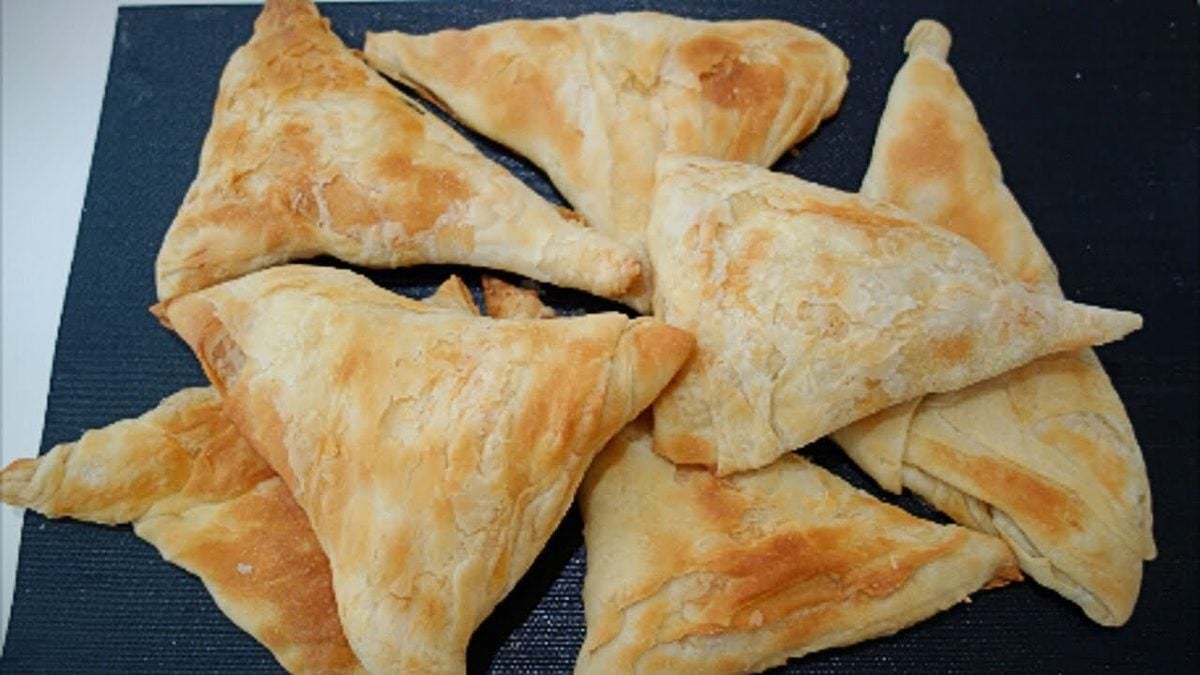
Pite me djathë (pie with cheese) is the version of the Albanian filo pie that lives closest to the everyday table. The meat pie is for Sundays. The pumpkin pie is for autumn. The cheese pie shows up at breakfast, at lunch with a glass of ayran, in lunchboxes wrapped in foil, on the meze spread before dinner, and on holiday tables next to its meat-filled cousin. In many Albanian-American kitchens it is the first byrek a new cook attempts, because the filling is forgiving and the ingredients are easy to find.
The pie sits inside a family of layered savory pastries that traces back to the Turkish börek of the Ottoman court kitchens, which spread across the empire and took on a different shape in every region it landed in (Wikipedia: Byrek). What arrived in the Albanian-speaking lands was a technique — thin sheets of dough, a filling, oil between the layers, a round pan, a hot oven. Albanian cooks made it their own with olive oil, sheep-milk cheese, hand-rolled petë (thin pastry sheets), and a wide flat pie cut into wedges rather than the rolled forms common further east.
This piece covers what pite me djathë is, where it comes from, the cheese and dough that define it, regional variations across Albania and Kosovo, how the pie gets built and baked, common mistakes, how it is served, and how the dish survives in the US diaspora.
What Pite me Djathë Is
Pite me djathë is a layered filo pie built around a savory cheese filling. The structure is consistent across every Albanian region. A stack of thin pastry sheets lines the bottom of a round metal pan. The cheese filling — almost always djathë i bardhë (white brined cheese), sometimes loosened with gjizë (fresh whey cheese), eggs, and a little yogurt — spreads across the dough in an even layer. Another stack of sheets goes on top. Olive oil, occasionally with a little melted butter, brushes between each layer. The pie bakes at moderate-high heat until the top is deep golden and the layers shatter under a knife.
Two Albanian words name this category of dish. Pite (Albanian layered savory pie) and byrek (the broader Albanian filo-pie family) overlap heavily — byrek tends to describe the thin paper-layered modern version, while pite often carries the older country-kitchen sense of fewer thicker dough rounds — but most US kitchens use them interchangeably. Pite me djathë and byrek me djathë describe the same pie at almost every table.
The naming follows a fixed pattern across the whole filo-pie family: pite me [filling] or byrek me [filling]. Me mish is with meat. Me spinaq is with spinach. Me kungull is with pumpkin. Me djathë is with cheese. The cheese version is one of the two or three most-cooked variants in Albanian households, alongside the spinach-and-cheese mix and the meat-and-onion pie covered in our pite me mish guide.
Two related Albanian pies belong in the same family but are not the same dish. Lakror, the southeastern pie from the Korçë region, is a near cousin — fewer dough sheets, a wetter filling, sometimes baked under a saç (heavy iron lid heated with embers); the lakror tradition runs heavier in greens and meat than in cheese. Fli (also written flija), the northern highland celebration pie, is built differently — no filling at all, just layer after layer of batter cooked under a saç until the whole thing rises into a striated cake.
A Short History of the Cheese Pie
The layered phyllo pie is older than any of the modern Balkan states. Its origins sit in the Turkish börek of the Ottoman palace kitchens, where filo pies became a staple of court cooking and spread across the empire (Wikipedia: Byrek). The technique reached the Albanian-speaking territories sometime under Ottoman rule, and over the generations that followed Albanian cooks shaped it around local ingredients — sheep- and goat-milk cheese, the olive oil of the south, hand-rolled petë, and the round tepsi (metal baking tray).
Cheese was the Albanian household’s most reliable protein for most of recorded history. The pastoral economy of the highlands — sheep and goats grazing the summer mountain pastures — produced more cheese than meat, and cheese kept far longer than fresh milk. The djathë i bardhë tradition of brined white cheese aged in wooden barrels or clay vessels reaches back centuries in the Albanian highlands, though no surviving record fixes an exact starting point. A cheese pie was the practical use of what most households already had: a chunk of brined cheese, some flour, a few eggs, and an hour at the oven.
By the time independent Albania existed in 1912, the cheese pie was a weekly fixture in most regions. It belonged to the same culinary cluster that produced Bosnian sirnica, Bulgarian banitsa with sirene, Greek tiropita, and Turkish peynirli börek. Each country’s version diverged with local taste, but the technique is shared across the post-Ottoman Balkans.
Two influences shaped the Albanian cheese pie specifically. The Orthodox, Catholic, and Bektashi fast calendars all restricted meat on certain days, which meant pite me djathë often took the place of pite me mish on the fasting table. And Albania’s south sits inside the Mediterranean olive belt, which kept olive oil as the primary fat between the layers in the south, while the dairy-rich north often added butter alongside.
When Albanians arrived in the United States in larger numbers over the 20th century — Çam migrations, Kosovar arrivals in the 1990s, post-1990 migrations from Albania itself — they brought the pie with them. The cheese version traveled well because the filling kept longer than meat and the ingredients were easy to source in American supermarkets.
The Cheese: Djathë i Bardhë and Its Partners
Djathë i bardhë (white brined cheese) is the anchor of the filling. It is a sheep-milk or sheep-and-goat-milk cheese aged in salty brine, with a firm crumble and a salty tang that intensifies as it ages. Brined white cheeses are common across the eastern Mediterranean — feta in Greece, sirene in Bulgaria, beyaz peynir in Turkey — and djathë i bardhë is the Albanian member of that family.
A traditional pite me djathë rarely uses djathë i bardhë alone. The classic filling pairs it with gjizë (fresh whey cheese, similar in texture to ricotta), which carries the body. The brined cheese carries the salt and the tang; the fresh cheese carries the volume and the soft binding. A pie with only brined cheese comes out sharp, salty, and grainy. A pie with only fresh cheese comes out flat. The mix is the point. Most Albanian recipes call for roughly two parts brined to one part fresh, adjusted to taste.
Two more ingredients show up in many regional fillings. Eggs bind the cheese and set during the bake, producing the slightly custardy interior under the crisp top. Yogurt — thick, strained, full-fat — adds richness and a faint sourness that balances the saltiness. Some northern Albanian and Kosovar versions push the yogurt heavily; some southern Albanian and Çam versions skip it.
For Albanian-American kitchens, the substitution map is well-established. The closest supermarket match for djathë i bardhë is good Greek-style feta in brine, particularly the Bulgarian and French varieties that lean firmer and saltier. The closest match for gjizë is whole-milk ricotta. A 60/40 mix of feta to ricotta is the diaspora standard, sometimes with a few tablespoons of plain Greek yogurt worked in.
Two things to avoid. Pre-crumbled feta in plastic tubs is treated with cellulose stabilizers that turn the filling chalky — buy a block in brine, drain it, crumble by hand. Low-fat or part-skim ricotta is mostly water; whole-milk ricotta is non-negotiable. The full landscape of Albanian cheeses lives on the Albanian cheese page.
The Dough: Petë and Store-Bought Phyllo
Two paths produce the dough. The traditional path is petë — Albanian filo rolled by hand on a large wooden board with a long thin pin called an okllai. A skilled cook produces sheets thin enough to read newsprint through. The dough is flour, water, salt, sometimes an egg, sometimes a splash of vinegar to relax the gluten. Resting matters — at least thirty minutes covered — and rolling is a learned skill that takes years to do well. The result is slightly thicker and chewier than commercial phyllo, with a flavor that pairs well with a salty cheese filling.
The diaspora path is supermarket frozen phyllo. Athens, Apollo, and Krinos are the brands most commonly stocked in US supermarkets and Mediterranean grocers. The sheets need an overnight thaw in the refrigerator to handle cleanly. Phyllo is thinner than hand-rolled petë, so most diaspora cooks stack more sheets per side — eight to twelve on the bottom and the same on top — than a Korçë or Shkodër grandmother would use with handmade rounds.
Between the layers, fat. The southern and coastal Albanian tradition leans heavily on olive oil. The northern tradition often uses a mix of olive oil and melted butter, sometimes with a splash of milk in the brush to help the layers brown. Cheese pies tend to take a little more fat between the sheets than meat pies because the cheese filling carries less of its own fat. A heavy hand pools fat at the bottom and turns the pie greasy; a light hand keeps the layers crisp.
The single most-broken rule about phyllo is letting it dry out. Once the box is open, the sheets need to stay under a slightly damp kitchen towel. Five minutes of phyllo uncovered turns the top sheets into something that cracks the moment it gets unfolded. The damp towel is not optional.
Regional Variations
Albanian cooking is not one cuisine. The country splits geographically and culturally between the south and the north, and the cheese pie splits with it.
South Albania (Tosk-style). The south leans olive oil, lighter fillings, and a higher ratio of fresh cheese to brined. A southern pite me djathë often runs closer to a 50/50 split of feta-style brined cheese and gjizë, with two or three eggs and sometimes a handful of fresh dill or mint folded in. Dough is brushed with olive oil alone; butter is rare. The pie is lighter and brighter. Korçë and Gjirokastër pies sometimes carry small amounts of crumbled kaçkavall — the firmer aged sheep cheese — for added depth.
North Albania (Gheg-style). The northern cheese pie is richer and denser. The ratio pushes higher — often two-thirds djathë i bardhë to one-third gjizë — and yogurt enters the filling more readily, sometimes a full half-cup of strained yogurt for a custardy interior. Melted butter alongside olive oil is common between the layers. The pie pairs with the heavier Gheg table of corn bread, stews, and lamb dishes.
Kosovo. Kosovar cooking shares the northern register but adds its own touches. Cheese pies are everyday food, often built thicker and sometimes in the spiral coiled shape (byrek i mbledhur) that resembles Bosnian burek. Cottage-style fresh cheeses appear alongside the brined white. The line between Kosovar byrek me djathë and Bosnian sirnica gets thin in some kitchens — the dishes share a border and a history.
Çam. The Çam Albanians, originally from northwestern Greece, carry a distinct version with a higher proportion of fresh cheese and often a small amount of wild greens — nettles, dock, young dandelion — folded into the cheese for a pie that sits between pite me djathë and pite me lakra (greens pie).
Village versus city. The village version trends toward fewer, thicker dough sheets and a rougher build, with the cheese sometimes broken into larger crumbles rather than mashed into a uniform filling. The urban version, particularly in Tirana and Pristina, trends thinner phyllo, smoother filling, and a faster bake. Neither is more authentic. The diaspora blends these registers — a Kosovar family in the Bronx and a Tosk family in Worcester often cook with the same supermarket phyllo and the same block of feta, and the regional tells get fainter with each generation.
How the Pie Gets Built
The pan is a round metal tepsi — 12 to 14 inches across, two inches deep. A 12-inch round cake pan with high sides works as a substitute. The order of operations is consistent across every Albanian-American kitchen.
- Heat the oven to 375°F (190°C). Brush the pan with olive oil on the bottom and sides.
- Make the filling. Crumble the drained brined cheese into a large bowl. Add the ricotta or gjizë, the eggs, and the yogurt if using. Mix with a fork until uniform but not pasty. Season with freshly ground black pepper. The filling should look thick and slightly tacky, not wet.
- Lay down the first stack of dough sheets, brushing each with a thin layer of oil. Eight to twelve sheets for phyllo; three or four thicker rounds for petë. The sheets will overhang the pan — that is correct.
- Spread the cheese filling across the dough in an even layer all the way to the edges. A thick spot in the middle bakes slow and stays wet; a thin edge dries out and burns.
- Lay the second stack of dough sheets on top, brushing each with oil. Brush the very top sheet with a slightly heavier coat — that produces the deep-gold finish.
- Tuck the overhanging dough down into the sides of the pan.
- Score the top into wedges with a sharp knife. Cut through the upper dough layers only — not down to the filling.
Bake at 375°F (190°C) for 35 to 45 minutes, until the top is deep golden and the pie pulls slightly from the sides of the pan. Some northern recipes push the heat higher — 400°F (205°C) for 30 minutes — for a sharper crisp. Lower than 375°F and the layers do not separate cleanly. Three signs say the pie is done: deep gold, almost mahogany at the edges; a visible quarter-inch pull from the sides of the pan; a knife slipped down into the scored line meets resistance.
Resting matters as much as baking. Let the pan sit on the counter for ten minutes before cutting. The cheese-and-egg filling needs that time to firm up.
Common Mistakes
The cheese pie is forgiving compared to the meat pie, but a handful of mistakes show up in almost every new cook’s first attempt.
Wet filling. The single most common failure. Feta in brine holds water. Ricotta holds water. Yogurt is mostly water. A filling that has not been drained well leaks moisture into the lower phyllo sheets and turns the bottom into a soft mat while the top still crisps. Drain the brined cheese on paper towels for fifteen minutes before crumbling. If the ricotta looks loose, set it in a fine-mesh strainer for thirty minutes. Use thick strained Greek-style yogurt. The finished filling should hold its shape on a spoon, not pour off.
Drowning the layers in oil. A heavy hand with the brush is the second-most common mistake. Pooled oil sits at the bottom of the pan, prevents the layers from puffing, and turns the base greasy. The brush should glide across each sheet, not flood it. A correctly oiled sheet looks slightly translucent, not pooled.
Skipping the score. Cutting a baked phyllo pie without scored top layers shatters the surface. Score before baking, cutting through the top sheets only.
Cutting hot. A pie cut immediately out of the oven collapses; the cheese-and-egg filling has not set. The ten-minute rest is what makes clean wedges.
Microwaving leftovers. The microwave steams the filo and turns the layers into a soft mat. Reheat in a 350°F oven for eight to ten minutes instead.
The full set of byrek mistakes across cheese, spinach, meat, and pumpkin fillings is collected on the byrek page.
How Families Serve It
Pite me djathë comes to the table in the pan, sometimes tipped onto a wooden board, cut into eight or twelve wedges. Some families serve it warm straight from the oven after the ten-minute rest; others let it cool fully and serve it at room temperature, which is how the pie reaches most meze tables. The cheese pie tastes as good cold the next day, which is why it travels so well in lunchboxes and at picnics.
The classic accompaniments are short and consistent. A bowl of cold kos (Albanian-style plain yogurt) on the side — full-fat, sometimes thinned with cold water and a pinch of salt to make kos i rrahur (beaten yogurt), the Albanian cousin of Turkish ayran. A chopped salad of cucumber, tomato, white onion, and a little crumbled feta with olive oil and red wine vinegar. Olives, particularly the small black olives from the Vlorë region. Sometimes a small dish of turshi (pickled vegetables) for contrast.
Before dinner, the cheese pie often shows up as meze — a few wedges cut small, served with a glass of chilled raki (the Albanian grape or plum brandy). The pie is also a standard breakfast food across much of Albania and the diaspora, served with a strong Turkish-style coffee. In Kosovar and northern Albanian households, breakfast pie with a glass of ayran is an ordinary weekday rhythm.
Leftovers keep three to four days in the refrigerator, covered. Reheat in a 350°F oven for eight to ten minutes; never microwave. Larger pies freeze well — cut into wedges, wrap each in foil and a freezer bag, reheat from frozen at 350°F for 15 to 20 minutes.
A Home-Kitchen Version
A full step-by-step recipe with photographs lives on the main byrek page. The shape of a home-kitchen pite me djathë is short enough to outline here.
Filling. Crumble 1 pound of feta in brine (drained on paper towels for fifteen minutes) into a large bowl. Add 1 cup of whole-milk ricotta, 3 large eggs, and a quarter-cup of thick strained Greek-style yogurt. Mix with a fork until uniform, leaving some small crumbles visible. Season with freshly ground black pepper — the feta carries most of the salt.
Dough. One pound of frozen phyllo (Athens, Apollo, or Krinos), thawed overnight in the refrigerator. A half-cup of olive oil for brushing, optionally with two tablespoons of melted butter mixed in. A 12-inch round metal baking pan brushed lightly with oil.
Build. Eight to ten phyllo sheets on the bottom, each brushed with oil. Filling spread evenly to the edges. Eight to ten more sheets on top, each brushed. Heavier coat on the top sheet. Tuck the overhang into the sides of the pan. Score into eight wedges through the top sheets only.
Bake. 375°F (190°C) for 35 to 45 minutes, until the top is deep gold and the pie pulls from the pan. Rest 10 minutes. Cut along the scored lines. Serve warm or at room temperature with cold kos and a chopped salad.
The technique transfers directly between cheese, spinach, and meat fillings — once a household has made one good phyllo pie, the others follow without new skills. The first cheese byrek almost always has one problem; the second corrects most of it.
Why the Diaspora Keeps Making It
The cheese pie is one of the most-passed-down recipes in Albanian-American families, and one of the most commonly lost when nobody writes it down. The pie requires no special equipment beyond a round pan and a brush. The ingredients are easy to find in American supermarkets. The dish shows up on Catholic, Orthodox, Muslim, and Bektashi tables without modification. Children eat it. Adults eat it. It travels in lunchboxes. It freezes.
The thing that gets lost first is the technique. The cheese ratio. The yogurt-or-no-yogurt question. The damp towel discipline. The light hand with the oil. The ten-minute rest. None of these are obvious, and all of them matter. When the grandmother who knew the rhythm is gone and no one wrote it down, what survives is a memory of a pie, not the pie itself.
Many Albanian-American families have found their way back to the cheese pie through writing things down — recipe cards, family group chats with phone photos, video calls to the village where the older generation still cooks weekly. The pie that gets passed forward is rarely identical to the one that came over. It is usually adapted to American supermarket cheese, a little simpler in the dough, a little more measured. But it is recognizably the same pie.
In the United States, where the 2024 American Community Survey records roughly 230,000 Albanian Americans and community estimates reach around a million when ethnic Albanians and the second and third generations are included, the cheese pie is one of the few dishes that travels everywhere the community goes — across every regional and religious line.
If keeping the Albanian-American community on the map matters to you — its recipes, its families, its institutions — being counted is how the diaspora keeps its shape. Register with the National Albanian Registry. Free, neutral, your data stays yours. The recognition certificate is a record of where your family stands today.