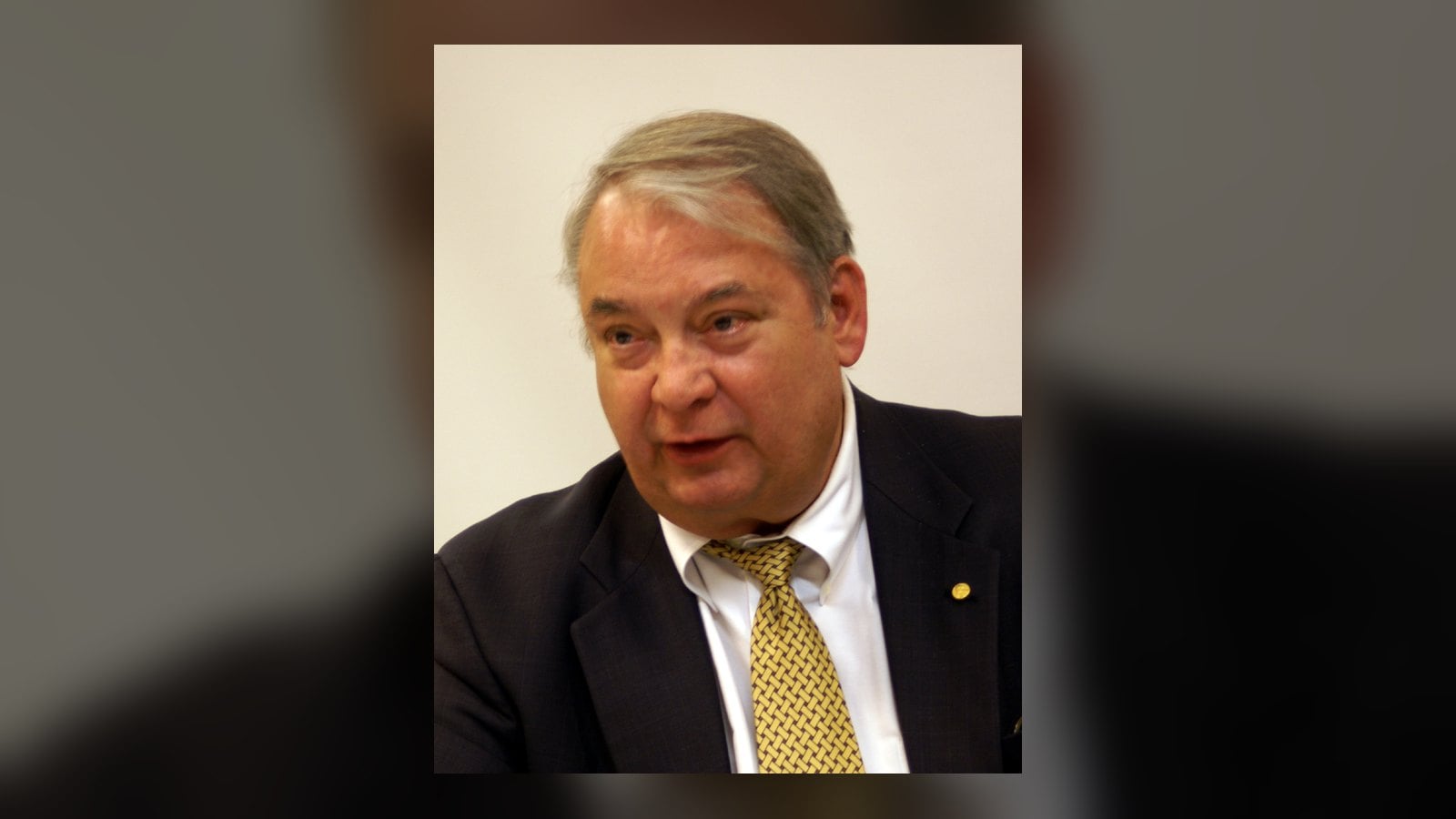
Ferid Murad (1936-2023) was the Albanian-American physician and pharmacologist who shared the 1998 Nobel Prize in Physiology or Medicine for discovering that nitric oxide functions as a signaling molecule in the cardiovascular system. The discovery is the scientific basis for the drug Viagra and for an entire generation of treatments for heart disease, hypertension, pulmonary hypertension, and erectile dysfunction.
He is one of two Albanian Nobel laureates. The other is Mother Teresa, who received the 1979 Nobel Peace Prize.
Murad’s father was an Albanian immigrant from Gostivar — in what is today North Macedonia — who arrived at Ellis Island in 1913 and ran a restaurant in Whiting, Indiana. His mother was American. Murad spent his career in US academic medicine, with senior appointments at the University of Virginia, Stanford, the University of Texas Health Science Center at Houston, and George Washington University. He identified publicly as Albanian-American, received an honorary doctorate from the University of Tirana in Albania, and was honored extensively in North Macedonia and Kosovo — his father’s home region — including honorary citizenship of Skopje’s Çair Municipality and of Kosovo. In nearly every Albanian-American diaspora speech of the last quarter-century, his name is invoked as evidence that the community has produced scientific work at the highest level the world recognizes.
What follows is an account of his life, his research, and his legacy in the Albanian-American community we exist to count.
Early life: an Albanian immigrant family in Indiana
Ferid Murad was born on September 14, 1936, in Whiting, Indiana — a small steel and oil-refining town on the south shore of Lake Michigan, just outside Chicago.
His father, Xhabir Murat Ejupi, was an Albanian immigrant from Gostivar, a town in the western part of present-day North Macedonia with a long-established Albanian Muslim population. Xhabir arrived in the United States through Ellis Island in 1913, and — like millions of immigrants processed there — left with a different name on his paperwork: he became John Murad (Wikipedia: Ferid Murad).
His mother, Henrietta Josephine Bowman, was American, from a Baptist family in Alton, Illinois.
The family ran a restaurant in Whiting. Ferid was the eldest of three boys. The household was bilingual in spirit if not always in practice — English was the working language, but the cultural orientation was distinctly Albanian-American. The Murad children were raised Catholic and Ferid was later baptized Episcopalian during his college years (Wikipedia: Ferid Murad).
This is a familiar shape for early-20th-century Albanian-American family life. The first wave of Albanian immigration to the United States ran from roughly 1900 through the early 1920s, drew heavily from the Korçë region of southern Albania and from the Albanian-populated districts of what was then Ottoman and later Yugoslav territory — Gostivar, Tetovo, Debar, Skopje — and concentrated in industrial Northeast and Midwest cities: Boston, Worcester, Detroit, Chicago, the steel belt of northern Indiana. Whiting, with its Standard Oil refinery and steady working-class jobs, was on that map. So was the small Albanian restaurant economy that absorbed many first-generation arrivals.
The detail that John Murad changed his name at Ellis Island and went on to run a small business while raising a Nobel laureate is, in miniature, the immigrant story this registry exists to count. Murad consistently identified as Albanian-American throughout his career, and Albania, North Macedonia, and the Albanian-American civic world all claim him as their own (Wikipedia: Ferid Murad).
Education: DePauw, then Case Western Reserve
Murad enrolled at DePauw University in Greencastle, Indiana, where he studied chemistry and pre-medicine and earned his BS in 1958.
He then enrolled at Case Western Reserve University in Cleveland, where he was a student in what was at the time a brand-new combined MD/PhD program — the kind of dual-degree pipeline now standard at every research-medicine school in the United States, but in the late 1950s still experimental. He completed both degrees in 1965: an MD and a PhD in pharmacology (Wikipedia: Ferid Murad).
His PhD dissertation work focused on the mechanisms by which catecholamines — adrenaline and related signaling molecules — regulate cyclic AMP, an early-generation second messenger inside cells. This is the methodological lineage from which his later nitric oxide work would emerge: a career-long interest in how cells decode chemical signals from their environment.
After Case Western, Murad completed clinical training as an intern and resident at Massachusetts General Hospital in Boston (1965-1967), then took a research position at the National Heart and Lung Institute at the National Institutes of Health (1967-1970). The combination — clinical medicine at MGH and basic research at NIH — gave him the dual identity he would carry the rest of his career: a working physician and a working laboratory scientist, simultaneously.
The nitric oxide research, 1970s-1980s
In 1970, Murad joined the faculty of the University of Virginia as an associate professor of medicine and pharmacology, and was promoted to full professor not long after (Wikipedia: Ferid Murad).
It is at Virginia, in 1977, that he made the discovery the Nobel committee would later cite.
To understand what was at stake, it helps to know what doctors already knew — and didn’t know — about a small molecule called nitroglycerin.
Nitroglycerin had been used to treat angina (chest pain from cardiac ischemia) since 1879. Doctors knew it relaxed blood vessels, increased blood flow to the heart muscle, and reliably stopped an angina attack. They did not know how it worked. For more than a century, the molecular mechanism was a black box. Other “nitrovasodilator” drugs — sodium nitroprusside, amyl nitrite — were known to do the same thing, with the same mystery.
Murad’s lab approached the problem biochemically. He showed that nitroglycerin, nitroprusside, and several related compounds all shared a single end-state behavior: they liberated nitric oxide (NO) gas, and the gas in turn activated an enzyme called guanylate cyclase, which produced cyclic GMP, which was the actual intracellular signal that relaxed the smooth muscle of the vascular wall.
The intellectual leap is hard to overstate. Until that point, nitric oxide was known to chemistry as an air pollutant — a component of car exhaust and acid rain, toxic to inhale, of no particular biological relevance. The idea that the human body might be manufacturing nitric oxide on purpose, releasing it deliberately, and using it as a routine signaling molecule between cells was, to put it plainly, weird. Gases were not supposed to do that. Hormones, neurotransmitters, and peptides did that. Murad’s hypothesis re-categorized an entire class of biology.
His finding was confirmed and extended in parallel by two other labs. Robert F. Furchgott, working at the State University of New York Downstate Medical Center in Brooklyn, identified an “endothelium-derived relaxing factor” produced by the cells lining blood vessels — and over the course of the 1980s, that factor was identified as nitric oxide, the same molecule Murad had pinpointed. Louis J. Ignarro, at UCLA, did much of the experimental work that nailed the identification. The three labs converged on the same answer from three different angles (Wikipedia: Ferid Murad).
The implications are still unfolding more than 45 years later. Nitric oxide is now understood to be involved in vasodilation, immune defense, neurotransmission, platelet aggregation, and tumor biology. Drug classes built on the discovery include the phosphodiesterase-5 inhibitors — Viagra (sildenafil, approved 1998), Cialis (tadalafil), and Levitra (vardenafil) — which work by amplifying the cyclic GMP signal Murad described; nesiritide, a recombinant peptide used in acute heart failure; and the inhaled-nitric-oxide and PDE-5-inhibitor regimens that are now standard treatment for pulmonary hypertension in newborns and adults. The nineteenth-century practice of giving angina patients nitroglycerin was, it turns out, primitive nitric oxide therapy. Doctors had been treating their patients with the right molecule for a hundred years before anyone knew its name.
The 1998 Nobel Prize
On October 12, 1998, the Royal Swedish Academy of Sciences announced that the Nobel Prize in Physiology or Medicine would be awarded jointly to Robert F. Furchgott, Louis J. Ignarro, and Ferid Murad “for their discoveries concerning nitric oxide as a signaling molecule in the cardiovascular system” (Wikipedia: Ferid Murad).
The committee’s accompanying statement called the work “completely unexpected” and “of fundamental importance” — strong language by Stockholm’s standards, where the prose tends toward the dry. The basis for that language was the same intellectual leap described above: a free gas, previously known only as pollution, turned out to be one of the most important small-molecule signals in human biology.
Murad accepted the prize in Stockholm in December 1998, alongside Furchgott and Ignarro. The Nobel lecture he delivered that week — Discovery of Some of the Biological Effects of Nitric Oxide and Its Role in Cell Signaling — has been cited in the cardiovascular and pharmacology literature thousands of times since.
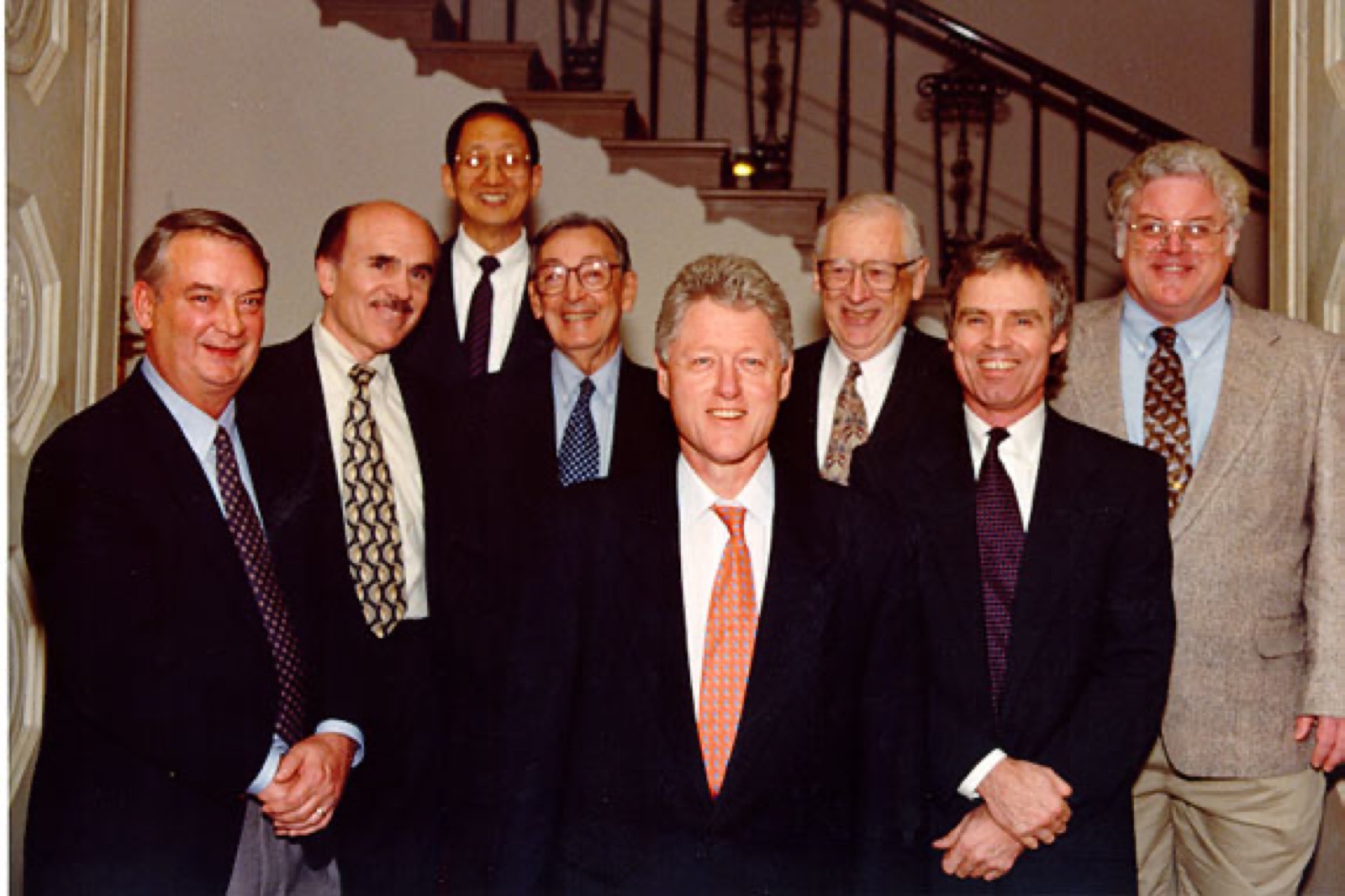
The prize was preceded by, and confirmed, a string of major recognitions. Murad and Furchgott had jointly received the Albert Lasker Award for Basic Medical Research in 1996 — the Lasker is widely treated in US medicine as the predictor of Nobels to come. He held the Ciba Award from the American Heart Association (1988) and was a member of the National Academy of Sciences (Wikipedia: Ferid Murad).
Career: Stanford, Abbott, Houston, George Washington
Murad’s professional life was a steady alternation between high-end university research, university administration, and one significant detour into pharmaceutical industry leadership.
After Virginia, he joined Stanford University in 1981 as Chief of Medicine at the Palo Alto Veterans Administration Medical Center, holding that role through 1988.
In 1988 he left academia for Abbott Laboratories, where he served as Vice President of Pharmaceutical Discovery until 1993 — a five-year tour of duty inside one of the largest US pharmaceutical companies of the era. The trajectory is unusual at that level of academic distinction; most Nobel-track researchers stay close to the bench.
He returned to academia in 1997 as the founding chairman of the Department of Integrative Biology and Pharmacology at the University of Texas Health Science Center at Houston (now the McGovern Medical School), a role he held until 2011. This was the period during which his Nobel was awarded.
In 2011 he moved to George Washington University in Washington, DC, as a professor at the GWU School of Medicine and Health Sciences, holding that position through 2017. He returned to the Palo Alto VA Medical Center for the final stretch of his career, from 2017 until his death in 2023 (Wikipedia: Ferid Murad).
Across all of these institutions he was simultaneously a senior research scientist running an active laboratory and a senior university administrator running a department. The dual identity was unusual; it was also deliberate, and it shaped how a generation of pharmacologists trained under him learned to balance the lab and the institution.
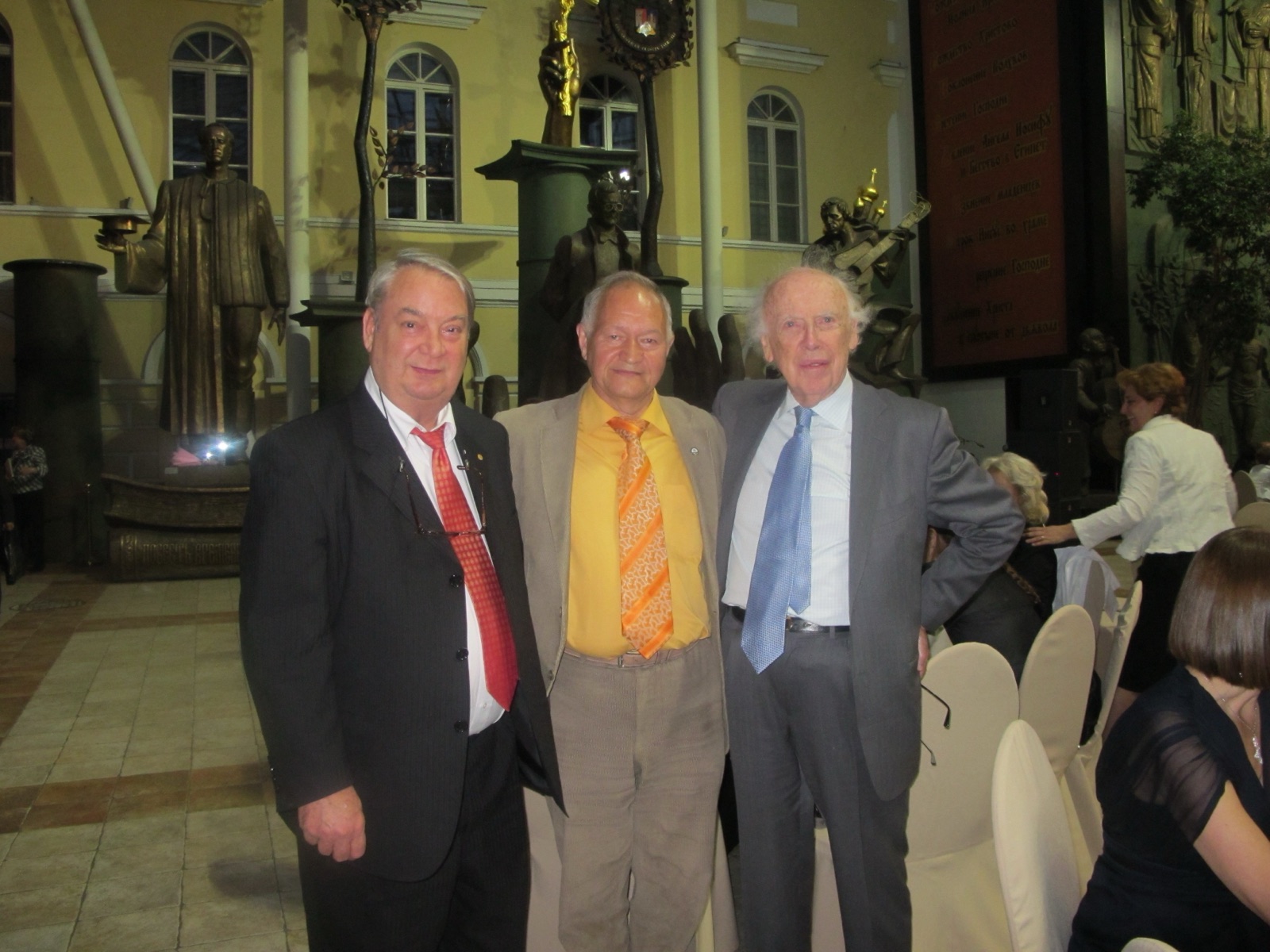 Photo: Vera Knorre / Wikimedia Commons / CC BY-SA 4.0
Legacy in the Albanian-American community
Murad was honored repeatedly by Albania and by the Albanian-American civic world.
He received an honorary doctorate from the University of Tirana in Albania. He was honored even more extensively in North Macedonia and Kosovo, tied to his father’s home region of Gostivar: he was named an honorary citizen of Skopje’s Çair Municipality and an honorary citizen of Kosovo, received an honorary doctorate of sciences from the State University of Tetovo (2012), was made an honorary academician of the Kosovo Academy of Sciences and Arts, and had a street in Skopje and the general hospital in Gostivar named after him.
In Albanian-American public discourse — in diaspora-pride speeches, in Albanian-language press in the United States, in school presentations to second- and third-generation Albanian-American children — Murad is the standard example of what the community has produced at the very top. He sits alongside Mother Teresa as one of the two figures who reliably carry the answer to the question “have Albanians won Nobel Prizes?”
That kind of visibility matters in ways that go beyond rhetoric. Diaspora communities are counted, in part, by who claims them and who is claimed by them. The fact that one of the two Albanian Nobel laureates was an American-born child of an Albanian immigrant from Gostivar — running a restaurant in a steel town in Indiana — is the registry’s story in compressed form. The diaspora produces consequence.
Death and continued influence
Ferid Murad died on September 4, 2023, at age 86, in Menlo Park, California (Wikipedia: Ferid Murad).
His scientific legacy is durable in the most concrete sense: the research he led continues to be cited tens of thousands of times across the pharmacology, cardiology, and physiology literature, and the drug classes built on the nitric oxide / cyclic GMP pathway remain among the most prescribed in modern medicine. The Nobel committee’s 1998 description of his discovery as “of fundamental importance” has aged into understatement.
For the Albanian-American community, his death closed a chapter. It did not change the fact that, for a generation that grew up hearing that an Albanian-American physician had won the Nobel Prize in Medicine — and had been honored across Albania, North Macedonia, and Kosovo for it — the ceiling of what was possible got measurably higher.
Get counted
Diaspora-wide visibility is downstream of who shows up in the count. We exist to produce a community-led count of Albanian Americans, and Murad’s life is the kind of story that count is meant to hold: a Whiting, Indiana kid whose father came through Ellis Island from Gostivar in 1913, who ended up in Stockholm collecting a Nobel Prize on behalf of a community that was almost entirely uncounted in any formal sense at the time.
You don’t need a Nobel Prize to be part of this. You need 2 minutes.
Get counted at /register — free, encrypted, community-led. We mint a recognition certificate. We don’t sell anything. We never share data.
The community-led count of Albanian Americans starts with you adding your name.