
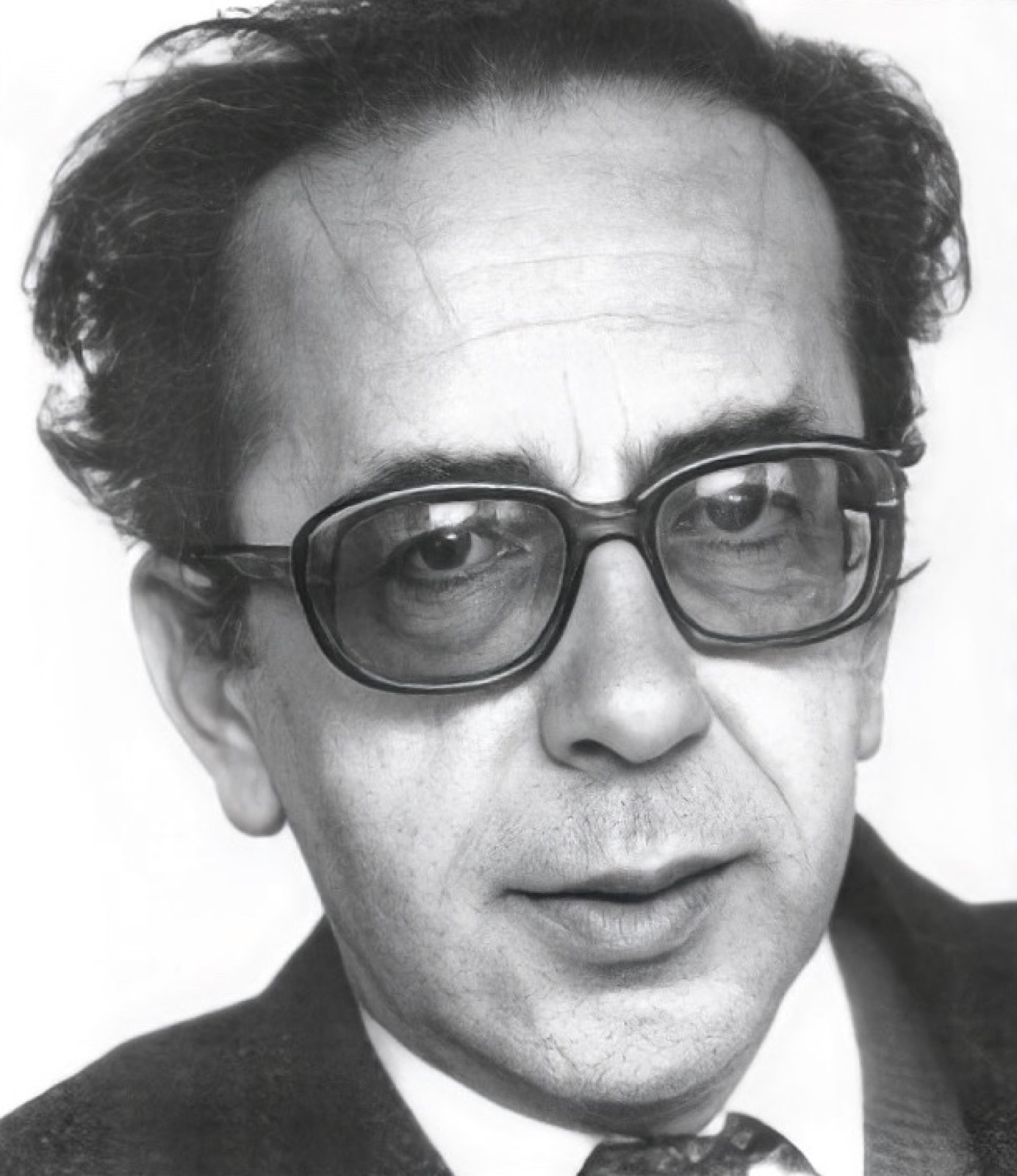
Ismail Kadare — born 28 January 1936 in Gjirokastër, died 1 July 2024 in Tirana — is the most translated Albanian author in history. Over six decades of fiction, poetry, and essay, he produced a body of work that navigated the inside of communist Albania more closely than any other writer who lived through it, and that has been translated into 45 languages. He won the inaugural Man Booker International Prize in 2005. He was a perennial Nobel candidate — nominated, by various counts, at least 15 times — and never won. The novels most readers know him for are The General of the Dead Army (1963), Broken April (1980), and The Palace of Dreams (1981).
He is the writer through whom most non-Albanian readers have, at any point in the last 60 years, encountered Albania at all.
For the Albanian-American diaspora, Kadare matters in a specific way. He is one of the few Albanians whose name is recognized inside English-language literary culture — taught in university Balkanology and comparative-literature courses, stocked at independent bookstores, reviewed in the New York Review of Books and the Times Literary Supplement. When second- and third-generation Albanian Americans want to point a non-Albanian friend at something that explains where the family came from, the path runs through Kadare more often than through anyone else.
This is his life: where he came from, what he wrote, how he survived four and a half decades of one of Europe’s most paranoid dictatorships while still publishing work that today reads as obvious dissent, what the prizes were, what the controversies were, and what he means now.
Gjirokastër, 1936
Kadare was born in Gjirokastër, a stone city of stepped Ottoman houses in the southern Albanian highlands. The city is a UNESCO World Heritage site today; in 1936 it was a provincial capital of the Kingdom of Albania under King Zog, with a population of roughly 15,000, perched above the Drino valley. Its most famous son before Kadare was Enver Hoxha, the future communist dictator, born in the same city in 1908 — a coincidence Kadare returned to throughout his career.
His father, Halit Kadare, worked as a court clerk. His mother, Hatixhe Dobi, came from a wealthier Gjirokastër family. They were Muslim by background, secular by practice, middle-class by Albanian standards of the period. Kadare was an only son with one sister.
The Italian fascist invasion of Albania in April 1939 put Gjirokastër under Italian occupation when Kadare was three. The German occupation followed in 1943. The communist partisan victory of November 1944 brought Hoxha’s regime to power in the year Kadare turned eight. Most of Kadare’s first decade — the years a writer later draws on for childhood memory — was spent in a Balkan frontier city changing hands between three regimes.
He drew on it directly in Chronicle in Stone (Kronikë në gur, 1971), the most autobiographical of his novels. The narrator is a small boy in a stone house in an unnamed mountain city under Italian and then German occupation, watching his world rearrange itself around adult anxieties he doesn’t fully understand. The book is one of the works that introduced the texture of mid-century Albania to non-Albanian readers, and it remains one of his most accessible entry points.
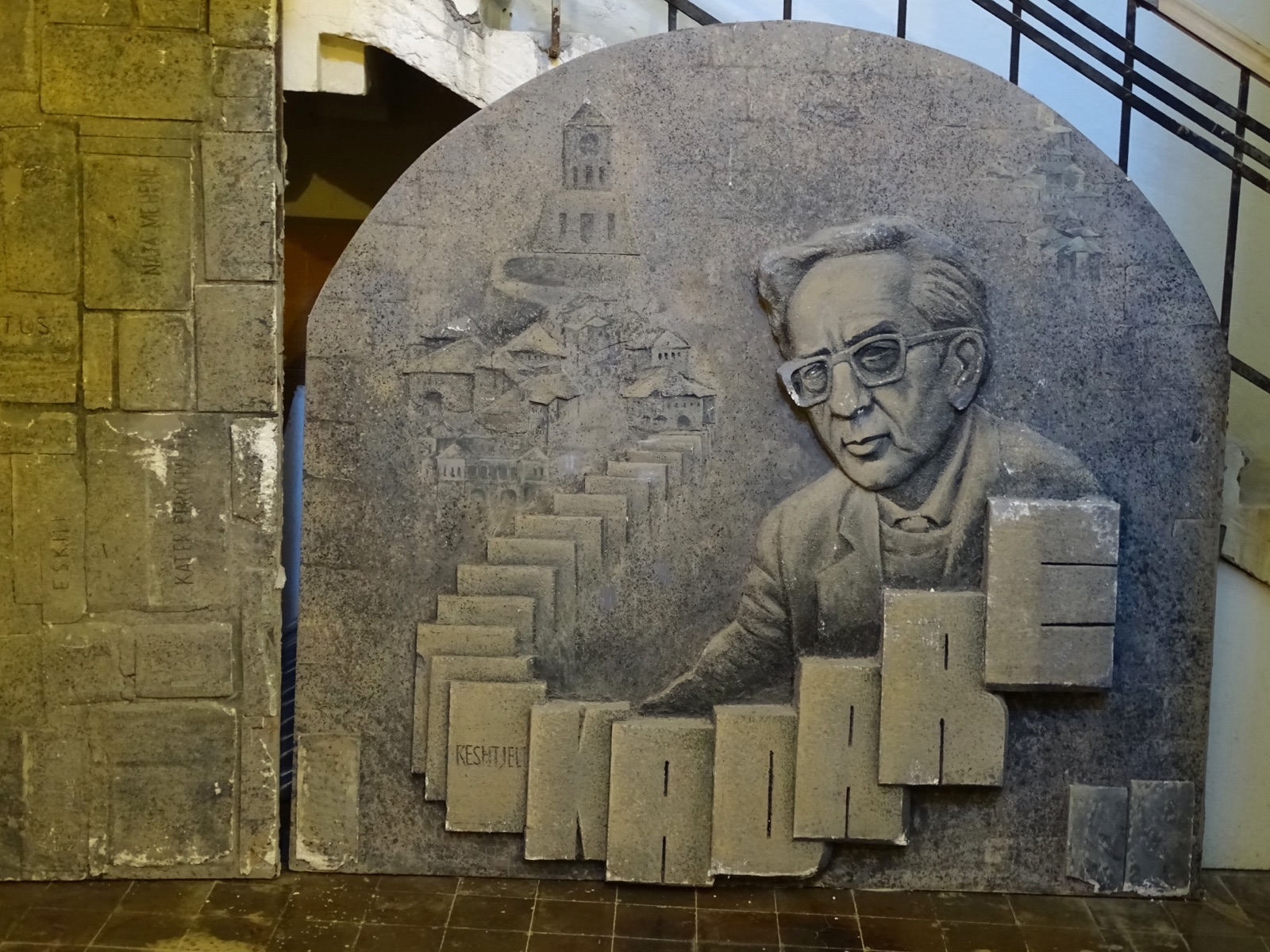 Photo: Adam Jones / Wikimedia Commons / CC BY-SA 2.0
He attended the University of Tirana, studying Albanian language and literature, and graduated in 1956. He had already begun publishing poetry as a teenager. In 1958, after winning a poetry competition, he was selected to study at the Maxim Gorky Institute of World Literature in Moscow — the prestigious Soviet writers’ academy, the same institution that had trained writers across the Eastern bloc. He spent two years there, 1958-1960, until the Albania-Soviet split — Hoxha’s break with Khrushchev over de-Stalinization — closed the program to Albanian students. Kadare returned to Tirana in 1960. He later said the Moscow years had been, on balance, useful: he saw socialist realism’s machinery up close, and he saw the writers around him producing work of varying degrees of quiet defiance, which would inform what he tried to do at home.
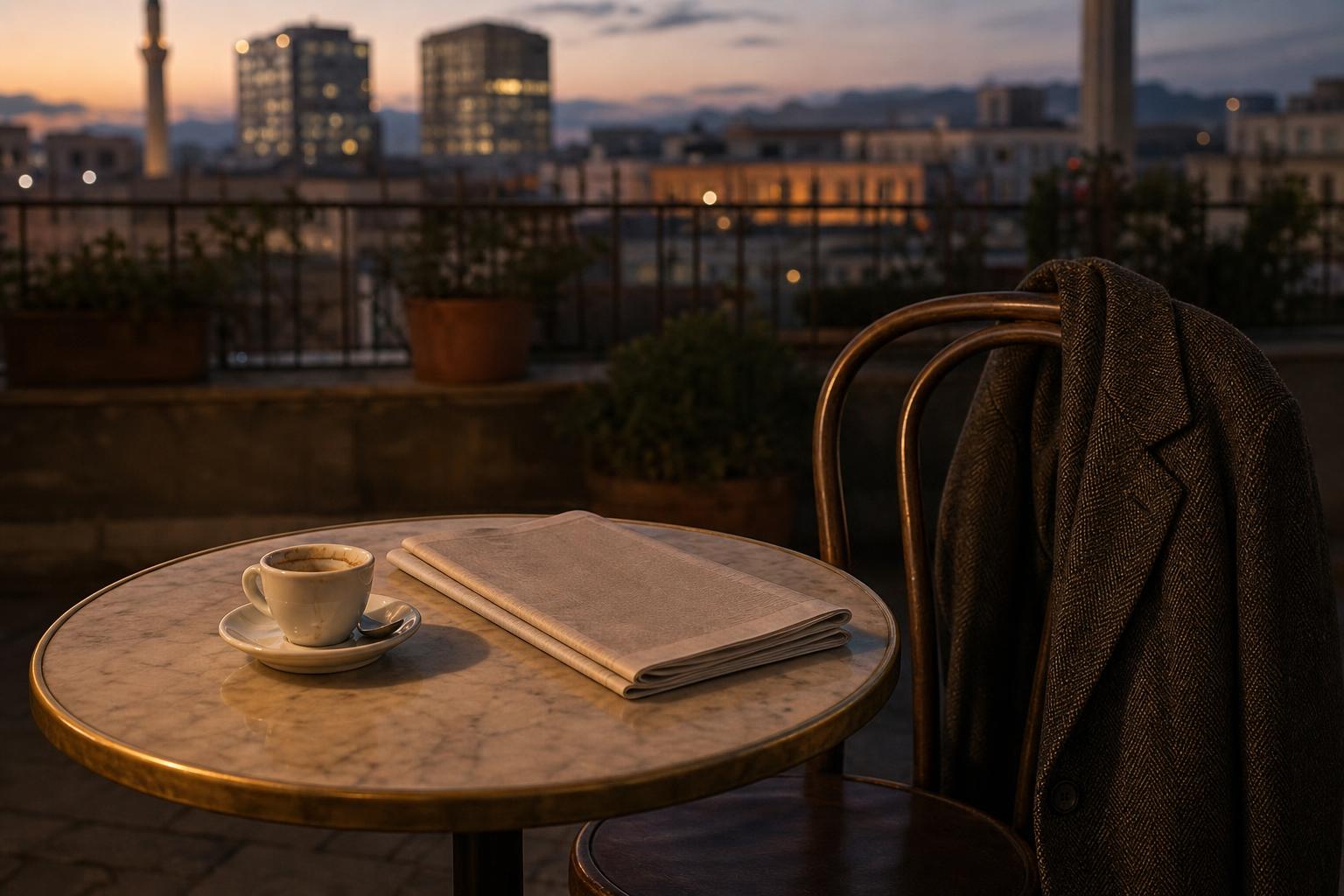 Tirana cafe scene evoking the post-Moscow years (1960 onward) when Kadare returned to Albania and began writing under the Hoxha regime.
Image: NAR/gpt-image-2
Tirana cafe scene evoking the post-Moscow years (1960 onward) when Kadare returned to Albania and began writing under the Hoxha regime.
Image: NAR/gpt-image-2
Writing under Hoxha
Kadare came back to a country that was about to enter four decades of one of the most isolated, most controlled regimes in Europe. By 1968, Hoxha had broken with the Soviet Union over de-Stalinization. By 1978, he had broken with China — Albania’s last major ally. From the late 1970s onward, the country was effectively closed: bunkers along every road, no foreign travel, foreign books a state crime, the Sigurimi secret police running an informant network estimated at one in three adults.
Inside this system, Kadare published prolifically.
He worked through the Albanian Writers’ Union, the state-controlled body that published, distributed, and policed Albanian literary output. His career proceeded by a pattern that became distinctive: a novel would appear, would be praised by the regime as a contribution to socialist Albanian culture, and would also — to any reader paying attention — read as obvious allegorical critique. He wrote about Ottoman bureaucracies, medieval sieges, Egyptian dream-archives, dead generals, and walled cities. The reader was supposed to understand that the subject was Hoxha’s Albania.
How he survived doing this is a question Kadare himself addressed repeatedly. The standard answer has three parts.
First, he was useful to the regime. Hoxha wanted Albania to have a writer of international stature — a sign that Albanian socialism produced culture, not just bunkers. Kadare’s growing French and English readership through the 1970s and 1980s gave the regime something it could point to. Hoxha read Kadare and reportedly considered him a national asset.
Second, Kadare was careful. He used historical and mythological frames that allowed plausible deniability. A novel about a medieval Ottoman siege of an Albanian fortress (The Castle, 1970) could be read as nationalist celebration of Albanian resistance — and could also be read, if you were inclined, as a study of Hoxha’s siege mentality and self-imposed isolation. He let both readings stand.
Third, he was occasionally punished anyway. Three of his books were banned during the Hoxha years. The Palace of Dreams (1981) was withdrawn from circulation shortly after publication for being too obviously about totalitarian surveillance. Kadare was reportedly placed under informal restriction for stretches; he was not allowed to publish certain works at all and had to smuggle manuscripts of his most dangerous material — including some of his post-1990 novels — out of Albania to be deposited in a Paris bank vault for safekeeping.
In October 1990, with Hoxha dead five years and the regime visibly collapsing, Kadare and his family — wife Helena Gushi, also a writer, and their two daughters — sought political asylum in France. He kept an apartment in Paris for the rest of his life, though he returned frequently to Tirana from the mid-1990s onward and considered both cities his home. The asylum was not a renunciation of Albania — he wrote and spoke in Albanian throughout the rest of his life, and continued to publish in Albanian first — but it was a recognition that some of what he wanted to say could only be said from outside.
Major works
Kadare published more than 80 books across novels, novellas, poetry, essays, and memoirs. Six titles do most of the work in English-language reception.
The General of the Dead Army (1963)
The book that made his international reputation. An Italian general, accompanied by a priest, travels through Albania two decades after WWII to retrieve and repatriate the bodies of Italian soldiers killed during the wartime occupation. What begins as a logistical exercise becomes a slow accumulation of memory, guilt, and incomprehension. Translated into French in 1970, then into English, the novel established the template for Kadare’s mature style: spare, allegorical, weighted with Balkan history, written in a register that critics compared to Kafka and Camus. It has been adapted as a film twice and remains his most widely read book outside Albania.
The Siege / The Castle / The Drums of Rain (1970)
Originally published in Albanian as Kështjella. A medieval Ottoman army lays siege to an unnamed Albanian fortress; the novel rotates between the besieging commanders and the besieged defenders. On the surface, a work of historical nationalism well-suited to Hoxha-era cultural priorities. Underneath, a portrait of self-isolation, paranoia, and the texture of life inside a closed state. Translated into English variously as The Castle, The Drums of Rain, and most recently The Siege (2008, by David Bellos from the French).
Chronicle in Stone (1971)
Kronikë në gur. The Gjirokastër novel — Italian and German occupation seen through a child’s eyes. Less politically risky than the allegorical works and probably the most personal book Kadare wrote. A common entry point for non-Albanian readers because the politics are background and the texture of small-town wartime Balkan life is foreground.
The Three-Arched Bridge (1978)
Ura me tri harqe. A medieval chronicler narrates the construction of a stone bridge in 14th-century Albania, complete with a folkloric human-sacrifice subplot. The bridge stands in for a stage of Balkan history; the chronicler’s voice is the most precise rendering Kadare ever produced of how an intelligent observer talks about events he is not allowed to talk about directly.
Broken April (1980)
Prilli i thyer. The novel about the Kanun — the medieval Albanian customary code that governed blood feuds in the northern highlands. A young man kills the man who killed his brother and now has 30 days of guaranteed safety before he, in turn, must die. Probably the single Kadare book most often taught in US comparative-literature courses, because the Kanun framing makes it legible to readers with no background in Albanian history. The Brazilian filmmaker Walter Salles adapted it as Behind the Sun (Abril Despedaçado, 2001), set in the Brazilian sertão.
The Palace of Dreams (1981)
Pallati i ëndrrave. The book that came closest to getting Kadare in serious trouble. An Ottoman bureaucracy collects, sorts, and interprets the dreams of every subject of the empire, looking for political signal. The metaphor for Hoxha’s surveillance state was too thin to miss. The novel was withdrawn from Albanian bookstores within weeks of publication. It has since become one of his most internationally celebrated works and is the book most often invoked when critics compare him to Kafka, Borges, and Orwell.
The Successor (2003)
Pasardhësi. A late-career novel based on the December 1981 death of Mehmet Shehu, the longtime Albanian prime minister found shot in his bedroom in what the regime called suicide and most observers believed was a Hoxha-ordered killing. Kadare structures the novel as a Rashomon-style investigation, with Shehu’s death narrated and re-narrated from multiple angles. It is the most direct Kadare ever became about the inside of the regime — and he wrote it after the regime was gone.
Style and themes
Kadare’s voice is recognizable across all of these books, and it does not travel quite like any other writer’s. Critics have most often reached for Kafka, Borges, Gogol, and Orwell as comparisons; Kadare himself acknowledged the Kafka influence and dismissed most of the others.
The recurring elements are consistent. Mythological and folkloric frames — sieges, blood feuds, dream-bureaucracies, three-arched bridges, the dead returning — give the books a register that is older than the political circumstances they describe. Balkan history is the ground tone: Ottoman administration, Albanian medieval principalities, WWII occupation, the long shadow of empire. Allegory does the political work, and is built carefully enough that the surface story carries on its own. Bureaucracy is a near-constant subject — the dream-palace, the writers’ union, the chronicler’s office — because Kadare was interested, throughout his life, in what happens when institutions decide to interpret human interior life on behalf of a state.
The prose itself is spare. Kadare writes short paragraphs, plain sentences, accumulating detail rather than describing. Translators have remarked that the Albanian texts are tighter and odder than the French translations make them sound — the French route adds a layer of literary polish the originals do not always have — but the architecture is the same in any language.
Beneath the style is a distinctly Albanian voice that the world-literature framing sometimes obscures. Kadare drew constantly on the Kanun, on Albanian oral tradition, on the geography of the highlands, on Gjirokastër street life, on the rhythms of the language itself. He is not a writer who happens to be Albanian. He is an Albanian writer whose subject is Albania, made legible to a world readership.
Awards and recognition
The case for Kadare’s place in 20th-century world literature rests on the prize record (Wikipedia: Ismail Kadare).
- Man Booker International Prize, 2005 — the inaugural recipient, when the prize honored a body of work rather than a single book. The shortlist that year included Gabriel García Márquez, Saul Bellow, Doris Lessing, Philip Roth, and Günter Grass. Kadare won.
- Prince of Asturias Award for Letters, 2009 — Spain’s top literary honor for foreign authors.
- Jerusalem Prize for the Freedom of the Individual in Society, 2015.
- Park Kyong-ni Prize, 2019 — South Korea’s leading international literary award.
- Neustadt International Prize for Literature, 2020 — sometimes called “America’s Nobel,” awarded biennially by the University of Oklahoma.
He was elected to the Académie des Sciences Morales et Politiques in France in 1996 — one of the rare foreign members. He held honorary doctorates from universities in Paris, Saint-Étienne, and Tirana. He was nominated for the Nobel Prize in Literature at least 15 times, and was a long-running bookmaker’s favorite who never won. The Nobel never came. The body of work is what’s left.
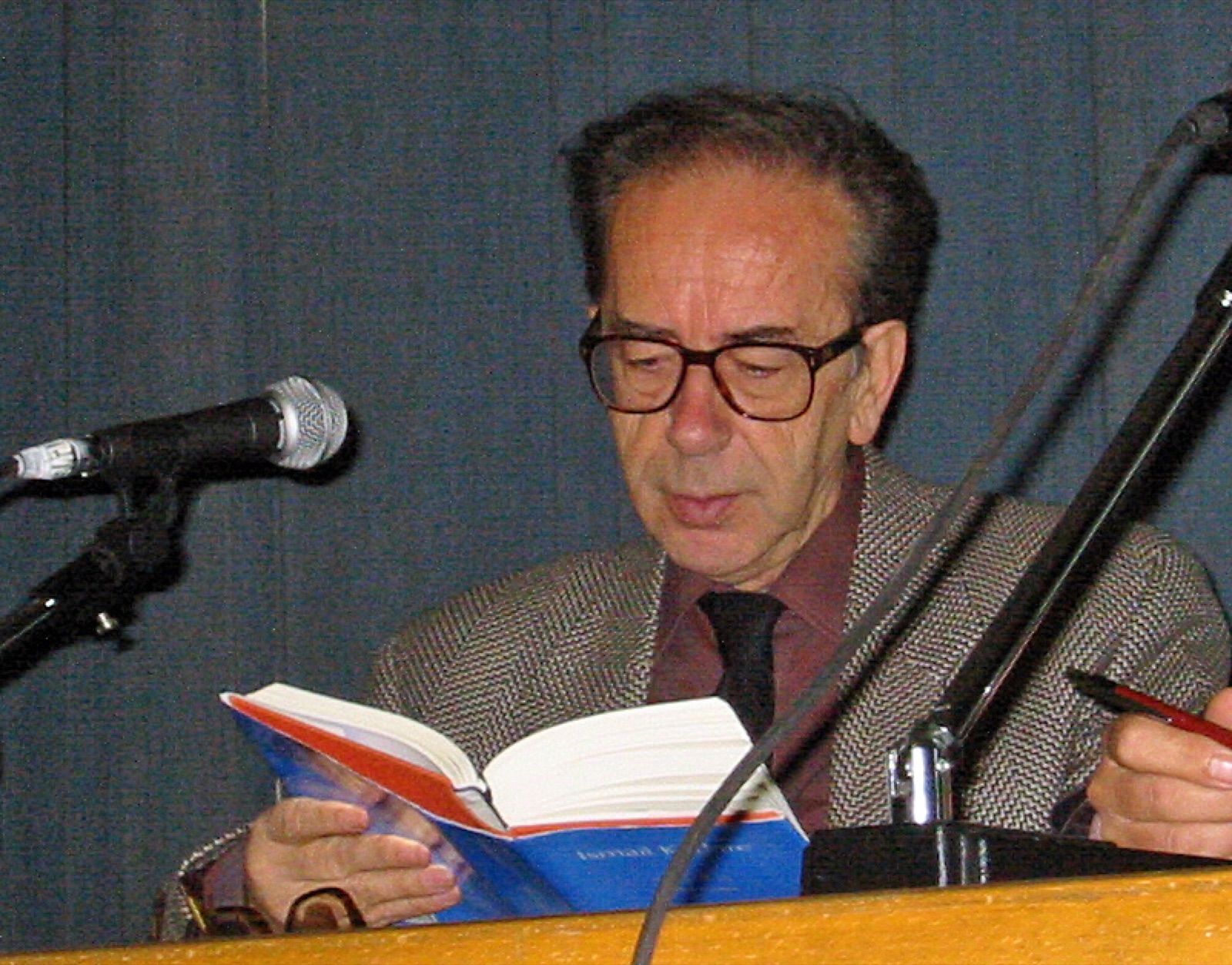 Photo: Lars Haefner / Wikimedia Commons / CC BY-SA 3.0
The translation question
Kadare wrote in Albanian throughout his life. Almost every English-language reader who has ever read him has read him in translation, and for most of his career the translation route ran Albanian → French → English.
The dominant English translator of Kadare from the French is David Bellos, the Princeton scholar best known for biographies of Georges Perec and Jacques Tati and for his book Is That a Fish in Your Ear? on the philosophy of translation. Bellos translated, among others, The Successor, The Pyramid, The Siege, Agamemnon’s Daughter, and The Fall of the Stone City into English. He has been consistently praised for the quality of the prose and consistently critiqued, in academic Albanology, for the choice to work from French rather than from the Albanian originals.
The critique has two parts. First, every translation of a translation drifts further from the original; some of Kadare’s specifically Albanian register — the Kanun rhythm, the Gjirokastër idiom, the bureaucratic Albanian of the regime — does not survive the French intermediate. Second, the French editions of the most politically charged Kadare novels were sometimes published in versions that softened or recast the most direct Hoxha-era content; reading an English Kadare translated from a softened French is reading a Kadare twice removed.
A newer generation of translators, including John Hodgson, has begun working directly from Albanian — Hodgson’s The Traitor’s Niche (2017) is the most prominent example. The direct-from-Albanian Kadare reads, by general agreement, harder and stranger than the Bellos-via-French Kadare. Both routes will continue to coexist on US bookshelves.
Death and legacy
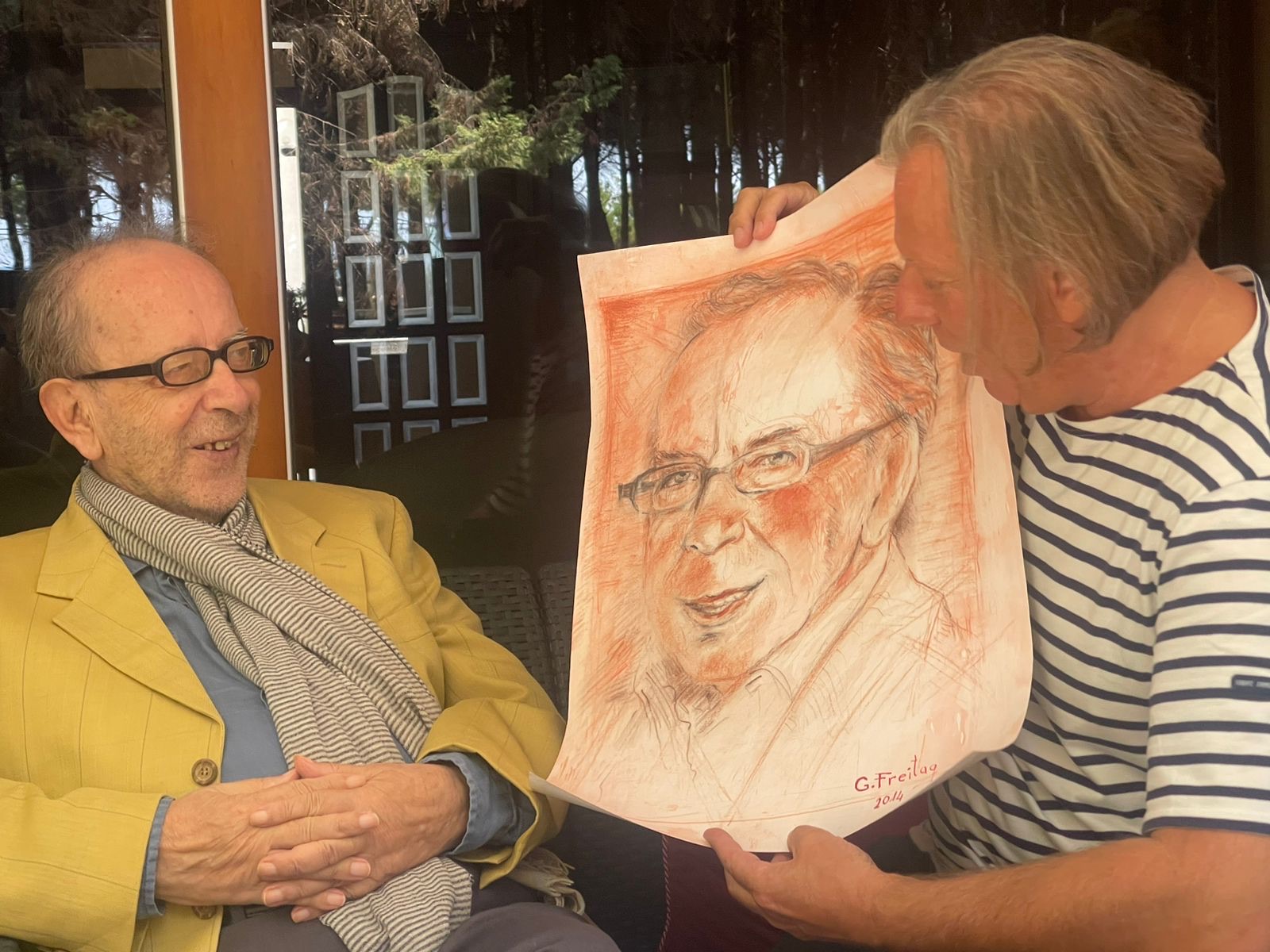 Photo: Bujar Hudhri / Wikimedia Commons / CC BY-SA 4.0
Kadare died on 1 July 2024 in Tirana, of a heart attack, at age 88. He had been working until close to the end. The Albanian government declared a period of national mourning. He was given a state funeral and is buried in Tirana.
Tributes came from across world literature: PEN International, the Académie française, the Frankfurt Book Fair, the New York Times, the Guardian, Le Monde. Inside Albania, the response was — for once — almost wholly without political rancor. Kadare had outlived the regime he had written under, the regime that came after, and most of his contemporaries. He died as Albania’s most internationally recognized cultural figure, and the country knew it.
His legacy in Albania is ongoing. The Ismail Kadare International Literature Prize — established by the Kadare Foundation in 2017 — continues to award Albanian-language writers. His Tirana apartment has been preserved as a study museum. His widow Helena and his two daughters — including Besiana Kadare, who served as Albania’s UN ambassador — have managed his literary estate.
For the diaspora, his death closed a chapter. Kadare was the bridge that older Albanian Americans had crossed to bring younger family members into Albanian literary culture. There is no obvious successor at his scale.
Kadare for the Albanian-American diaspora
Inside the Albanian-American community, Kadare functions as a point of reference and a point of pride.
He is recognized in mainstream American letters in a way no other Albanian writer has been. His novels are stocked at independent bookstores in New York, Boston, Chicago, and the West Coast — usually under “World Literature” or “Eastern European Fiction.” Used copies of The General of the Dead Army and Broken April circulate widely on AbeBooks and at library sales. His books are taught in Columbia University’s Balkanology program, in Slavic and East European departments at Yale, Indiana, and Berkeley, and in comparative-literature courses across the US that need a 20th-century European writer outside the standard rotation.
For Albanian-American parents trying to share Albanian culture with US-born children who may not read Albanian, Kadare in English translation is one of the most reliable bridges. Chronicle in Stone gives them a child’s-eye view of mid-century Albania. Broken April explains the Kanun. The General of the Dead Army explains the wartime layer. The books work as both literature and social history, and the readers who pick them up at age 18 sometimes come back to Albanian as a language because of them.
Smaller US publishers and university presses have kept Kadare in print: Arcade Publishing, Counterpoint Press, and the New Press have all carried significant portions of his backlist. The diaspora community has not built a Kadare reading culture as visible as some others (no annual prize cycle, no Albanian-American literary festival on his name), but the books are there, and they continue to find readers.
If you’re an Albanian American who has never read Kadare, Chronicle in Stone is the easiest entry. Broken April is the most teachable. The Palace of Dreams is the most ambitious. The General of the Dead Army is the one that started it all.
The National Albanian Registry is building the first community-led count of the Albanian-American diaspora — names, places, and stories of the families who came over and stayed. If you have not been counted, you can register here. It takes about a minute, and it adds one more name to the record.