About this event
The Essentials
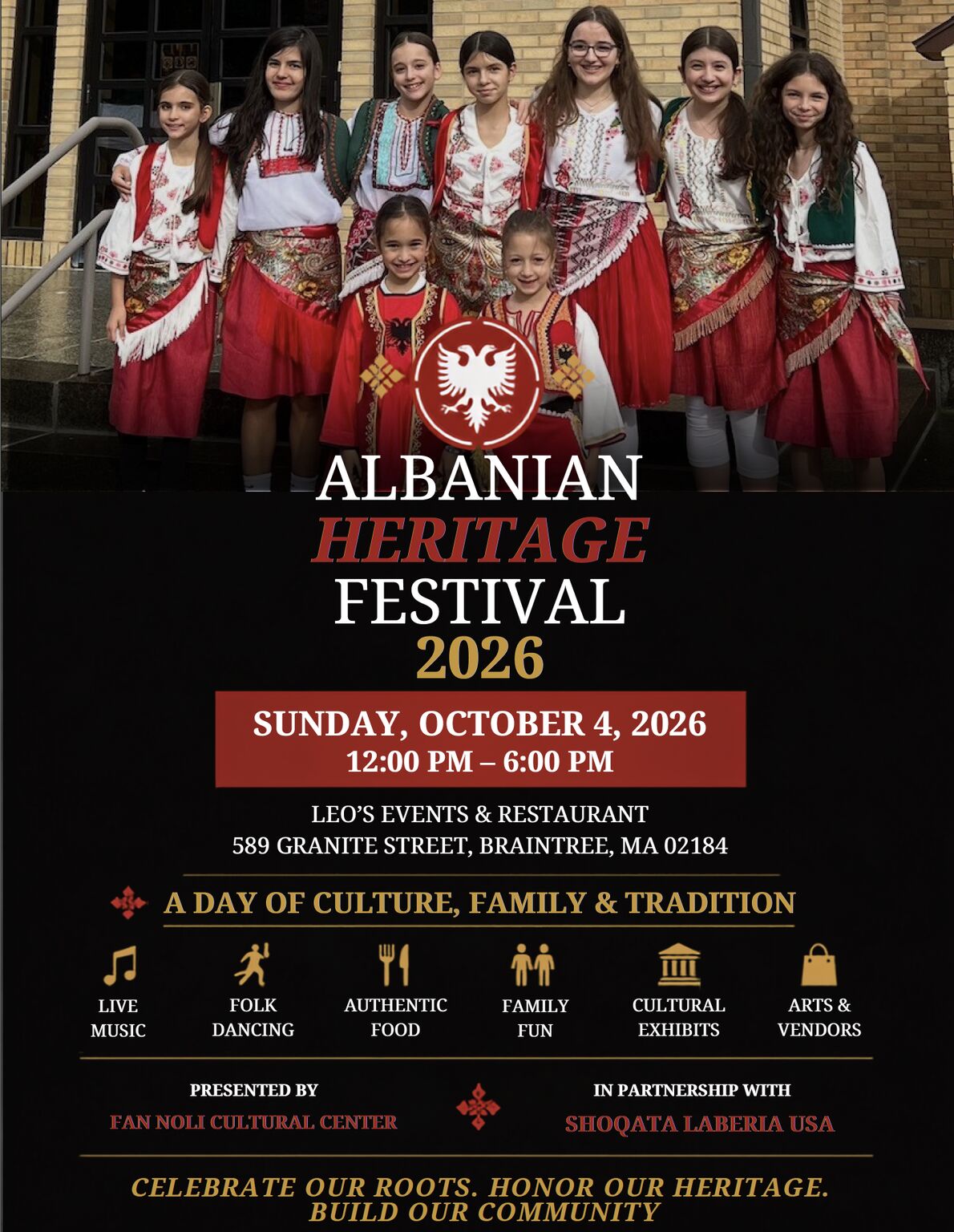
The Albanian Heritage Festival 2026 is hosted by the Fan Noli Cultural Center of South Boston, in partnership with Shoqata Laberia USA. The flyer lists live music, folk dancing, authentic food, family fun, cultural exhibits, and arts and vendors, under one line: "Celebrate our roots. Honor our heritage. Build our community."
- Date: Sunday, October 4, 2026.
- Time: 12:00 PM to 6:00 PM.
- Place: Leo's Events & Restaurant, 589 Granite Street, Braintree, MA 02184.
- Cost: Admission was not announced on the flyer, and the Fan Noli Cultural Center has not posted a ticket price. Check with the organizer at fannoliculturalcenter.org/calendar before you go, rather than assume it is free or paid.
- Weather: Leo's is an indoor events restaurant, so the festival runs rain or shine. October around Boston sits in the low 60s during the day, so a light jacket covers the walk in and out.
Getting There
Leo's sits on Granite Street in Braintree, near the South Shore Plaza. By car it is roughly 20 minutes south of downtown Boston, down I-93 and onto Route 37. Leo's offers validated parking at the venue, and the South Shore Plaza garages a short way up Granite Street add thousands of free spaces if the lot fills during the midday hours.
Without a car, the nearest rapid transit is Braintree station, the southern end of the Red Line and a stop on the Fall River/New Bedford and Kingston commuter rail lines. From Braintree station, Leo's is a short rideshare, or you can take the MBTA Route 236 bus, which runs the Granite Street corridor between Braintree station and the South Shore Plaza. Give yourself extra minutes on a Sunday, when buses come less often.
One local note: Granite Street and Route 37 carry heavy shopping-plaza traffic on weekends. Leave a cushion if you are driving in around noon.
What to Expect
The doors are open for six hours, from noon to 6:00 PM, long enough to eat, watch, shop, and let the kids move. The flyer promises live music and folk dancing, the two anchors of any Albanian gathering. Expect valle, the circle dances where a line links hands and moves together, often to a çifteli or a clarinet lead.
The partner behind the day, Shoqata Laberia USA, is named for Labëria, the region of southern Albania known for iso-polyphonic singing, the layered a cappella harmony that UNESCO added to its list of intangible cultural heritage. That tradition is part of what a heritage festival keeps alive, alongside the dancing and the food.
Cultural exhibits fill the middle of the room. This is where the Fan Noli Cultural Center does its steady work: photographs, books, and the kind of family history that usually lives in someone's attic. The center runs an oral-history program called "From the Heart" and a book series named for Peter and Naum Prifti, so the exhibit tables tend to carry real material, not decoration.
Arts and vendors line the edges. Independent makers, small Albanian-owned businesses, and community groups sell crafts and goods, and that is where cash goes furthest. A children's area keeps the youngest guests busy while parents browse.
A rough rhythm for the day: come hungry at noon, eat first, catch the dancing in the early afternoon, walk the exhibits and vendor tables, and let the kids run before the 6:00 close.
The Food
Albanian food is the reason a lot of people show up, and a heritage festival is where the home cooking comes out. Start with byrek, the flaky layered pie filled with cheese, spinach, or meat, sold by the slice and easy to eat standing up.
From there, look for qofte, the seasoned meatballs, and tavë kosi, the baked dish of lamb or veal set in a tart yogurt-and-egg custard that many Albanians treat as the national plate. Speca të mbushur, peppers stuffed with rice and herbs, and fërgesë, a skillet of peppers, tomato, and cottage cheese, round out the savory side.
Save room for dessert. Baklava carries the table, layered with walnuts and soaked in syrup, next to revani, a semolina cake, and petulla, fried dough dusted with sugar or drizzled with honey. Wash it down with a small cup of strong Turkish-style coffee, the way most Albanian gatherings wind down. Bring cash, since food and vendor stalls at community festivals often run cash-first.
Boston's Albanian Community and Why This Festival Matters
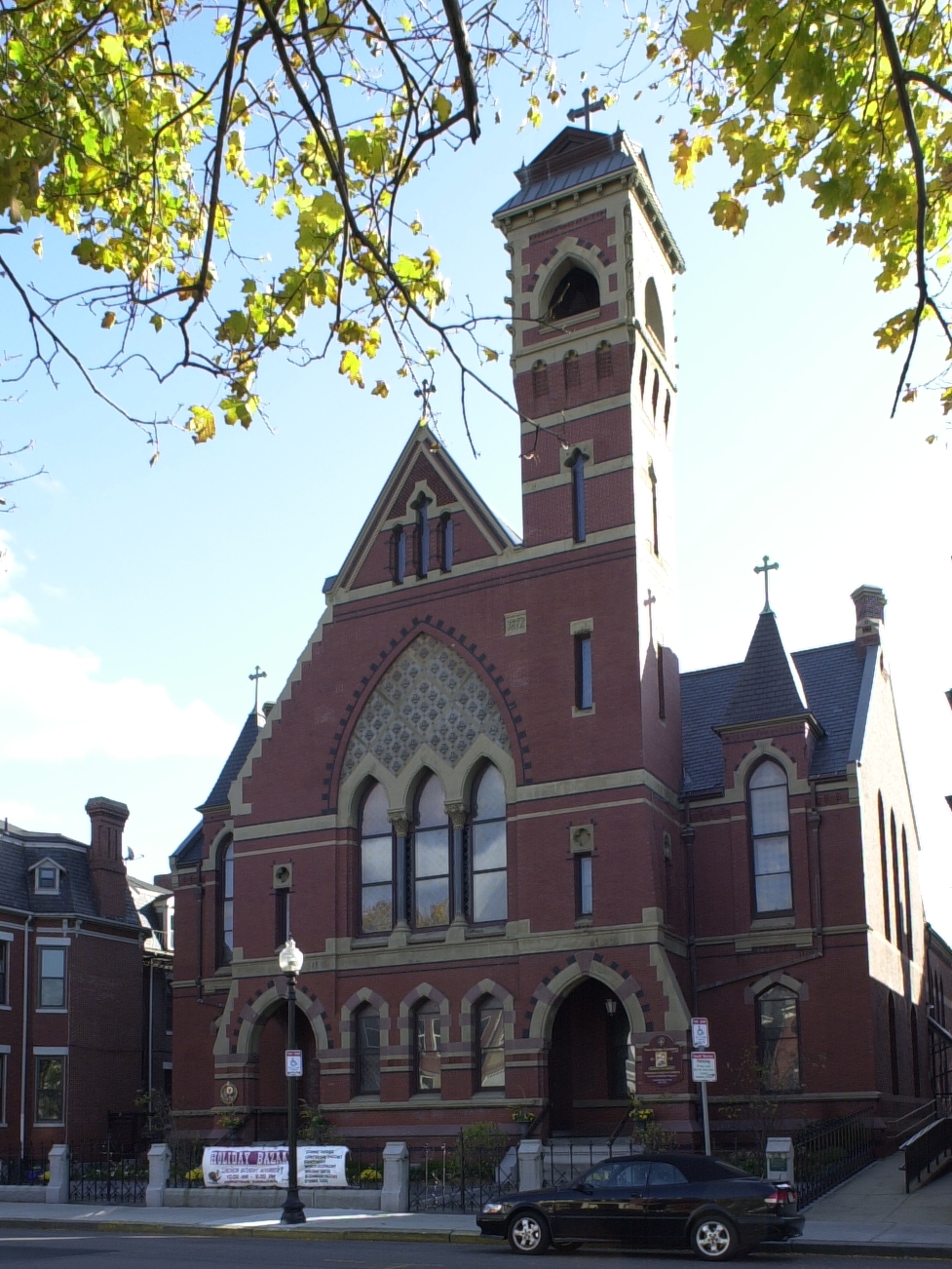
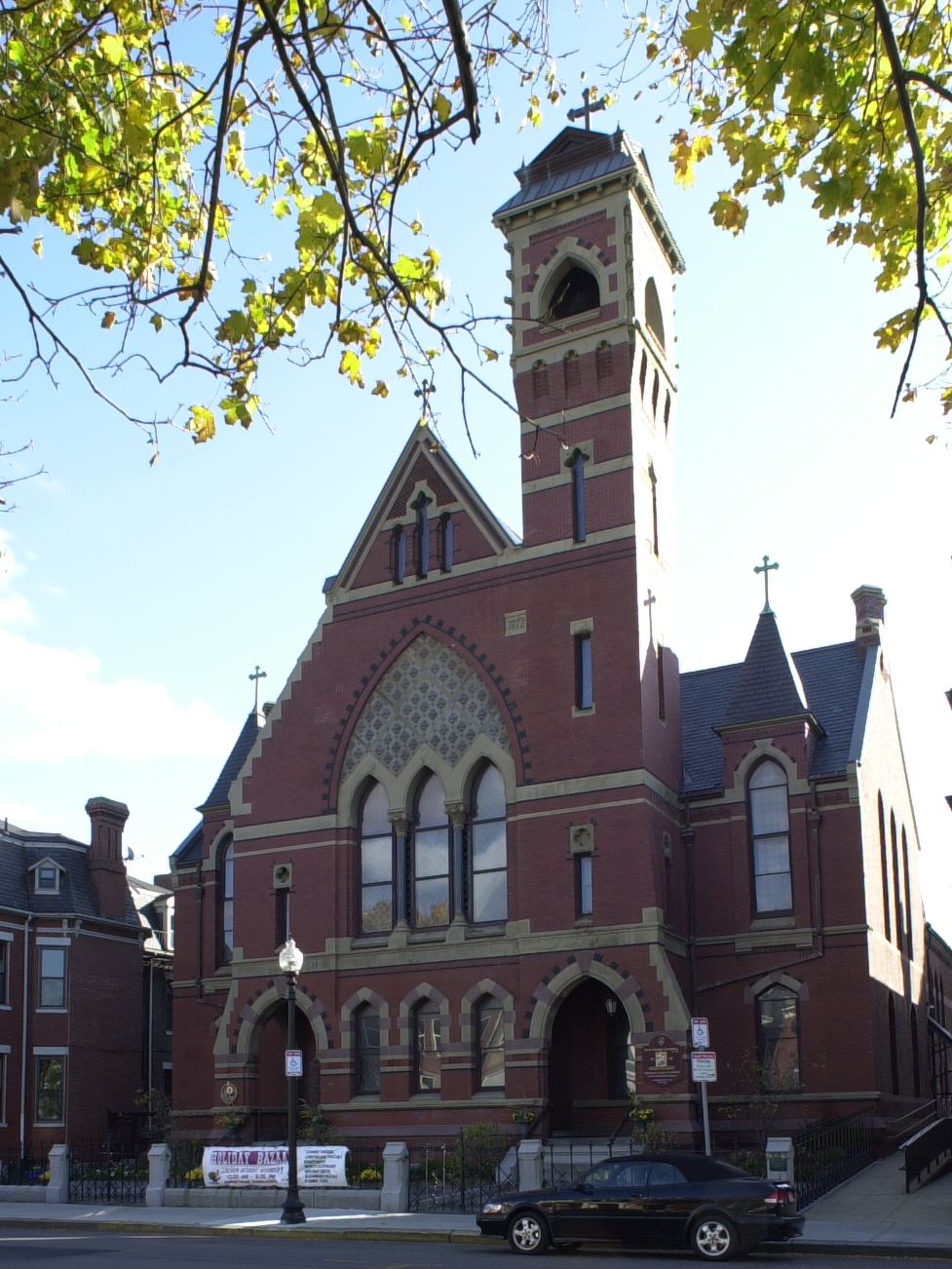
Greater Boston holds one of the oldest Albanian-American communities in the country. St. George Albanian Orthodox Cathedral, on East Broadway in South Boston near the Fan Noli Cultural Center, was founded in 1908 by Fan Noli, the priest, scholar, and briefly prime minister of Albania who celebrated the first Orthodox liturgy in the Albanian language there. Its congregation still draws from more than 40 towns across Massachusetts. The state records about 21,000 Albanian Americans, one of the three largest state populations after New York and Michigan.
Here is where the count comes in. The U.S. Census records about 230,000 Albanian Americans. The real number is close to a million, once you include Albanians from Kosovo, North Macedonia, Montenegro, and Çamëria, second and third-generation families, and people who no longer speak the language but carry the heritage. That gap is why the National Albanian Registry exists. NAR is a 501(c)(3) nonprofit building a community-led count that runs beside the Census, not instead of it. The Census stays essential; NAR is the parallel count next to it.
A festival like this one is where the count gets real. A room full of families in Braintree is exactly the community the number is supposed to describe, and the people the Census misses most are often the ones who show up on a Sunday afternoon like this. Getting counted is not an ID, and it is not tied to citizenship. It takes about two minutes, and every branch of the heritage counts, whether your family came a century ago through South Boston or last year on a green card.
What to Bring
- Cash in small bills, for food stalls, vendors, and craft tables that may not take cards.
- A light jacket or layers for a low-60s October day and the move in and out of an indoor hall.
- A stroller if you have little ones. The venue is an indoor events space with room to move, and the day runs long.
- An appetite, plus a container in the car in case you carry byrek or baklava home.
- Your phone for photos, and the address saved for parking: 589 Granite Street, Braintree.
- A little patience for Sunday plaza traffic on Granite Street and Route 37.