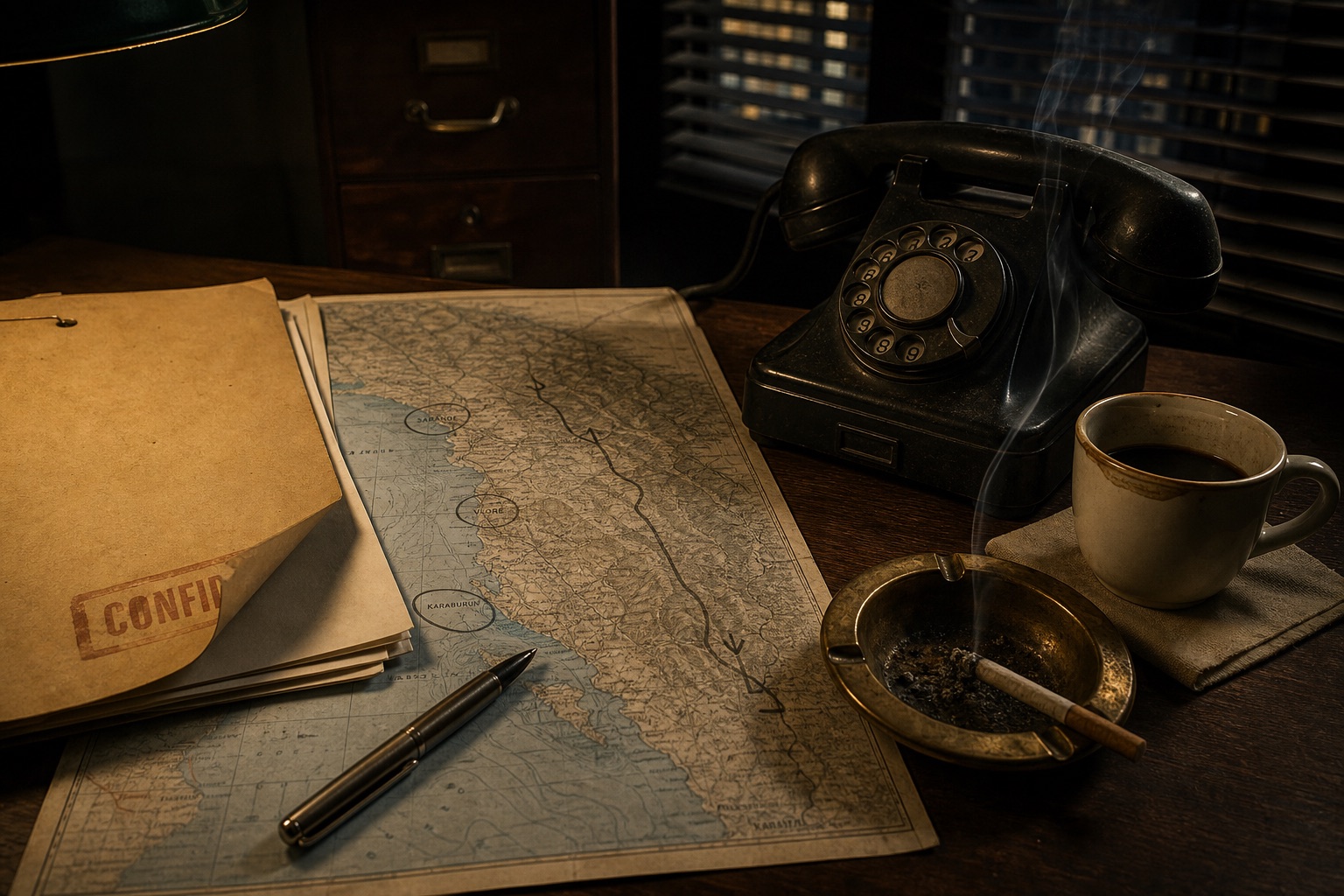
Between 1949 and 1953, the United States and the United Kingdom ran a joint covert operation to overthrow the communist government of Albania. The operation had two cover names — Operation Valuable on the British side and Project Fiend on the American side — and it was, on paper, the first serious Anglo-American attempt at “rollback” in the Cold War: not containment, but the active removal of a Communist government from power (Wikipedia: Operation Valuable).
The story is usually told from the angle of the spies. Kim Philby, the MI6 liaison in Washington, was a Soviet double agent who fed the operation’s plans to Moscow. The Albanian security service, the Sigurimi (the state security service of the People’s Republic of Albania), was waiting at most of the landing sites. Almost every team inserted by sea or by parachute met capture, interrogation, show trial, or execution. Within four years the operation was wound down without ever coming close to its objective.
The angle that less often gets told is whose lives were on the line. The political leadership of the operation was the National Committee for a Free Albania, an exile organization headquartered in New York with a Paris office, founded in August 1949 and chaired first by Midhat Frasheri and then by Hasan Dosti (Wikipedia: Free Albania Committee). The recruits were Albanian-born men drawn out of displaced-persons camps in Germany and Italy and out of the Albanian-American diaspora itself. A meaningful share had brothers, cousins, and parents already settled in the United States.
This article is the diaspora-side reading of that history. The aim is not a full operational chronicle — for that, Nicholas Bethell’s The Great Betrayal (1984) and Stephen Dorril’s MI6 (2000) remain the standard references. The aim is to set down, plainly, what the operation was, how it pulled directly on Albanian-American families, and why a Cold War episode that ended seventy years ago is still part of the diaspora’s living record.
What Operation Valuable Was
In its simplest description, Operation Valuable was a four-year covert paramilitary operation, run jointly by the Special Operations Branch of MI6 and the newly created Office of Policy Coordination inside the CIA, with the goal of destabilizing and ultimately overthrowing the government of Enver Hoxha in Tirana (Wikipedia: Operation Valuable).
The British were first. Planning inside MI6 began in 1948, and the first sea-borne infiltration of Albanian agents took place in October 1949. The Americans came in shortly after, and by 1950 the operation was a joint enterprise with shared political leadership through the Free Albania Committee, separate training pipelines, and a divided geography of operations: British inserts mostly came in by sea from Malta, while American inserts increasingly came in by parachute from bases in West Germany and Greece.
The plan was layered. Small armed teams would infiltrate the country, link up with anti-communist sympathizers inside Albania, conduct reconnaissance, encourage and coordinate uprisings in the highlands, and — in the optimistic version — trigger a popular collapse of the Hoxha regime that the West would then move to support. The optimistic version did not happen. The realistic version did not happen either. By the end of 1953, with mounting casualties and no internal momentum, both services agreed to wind the operation down.
It is worth being precise about what the operation was not. It was not a full invasion. It was not an open military campaign. It was not even, in any meaningful sense, a publicly admitted policy of either government — declassification took decades, and most of what is now public came out through journalism and post-Cold-War archival work rather than through formal disclosure.
Why Albania, and why 1949
To understand why Albania became the first Cold War rollback target, the postwar geography matters. Albania in 1949 was the smallest, poorest, and geographically most isolated of the new communist states in Europe. It bordered Yugoslavia to the north and east and Greece to the south. The Adriatic separated it from Italy. There was no shared border with the Soviet Union.
Two events made it look exposed in Western analyst eyes. The first was the Tito-Stalin split in June 1948, which broke Yugoslavia from the Soviet bloc and turned the Yugoslav-Albanian border into a frontier between two hostile communist governments. After 1948, Albania could no longer be supplied or reinforced overland from the Soviet sphere through Yugoslav territory. The second was the Greek Civil War, which the communist side lost in October 1949 — closing off Albania’s southern flank as well.
From a Western planning perspective, Albania looked like a peninsula that had become an island: surrounded by hostile or non-aligned territory, dependent on a long maritime supply line through the Adriatic, and ruled by a small, recently consolidated party-state under Hoxha. If any communist government in Europe could be peeled off without triggering a wider war with the Soviet Union, the argument ran, this was the one.
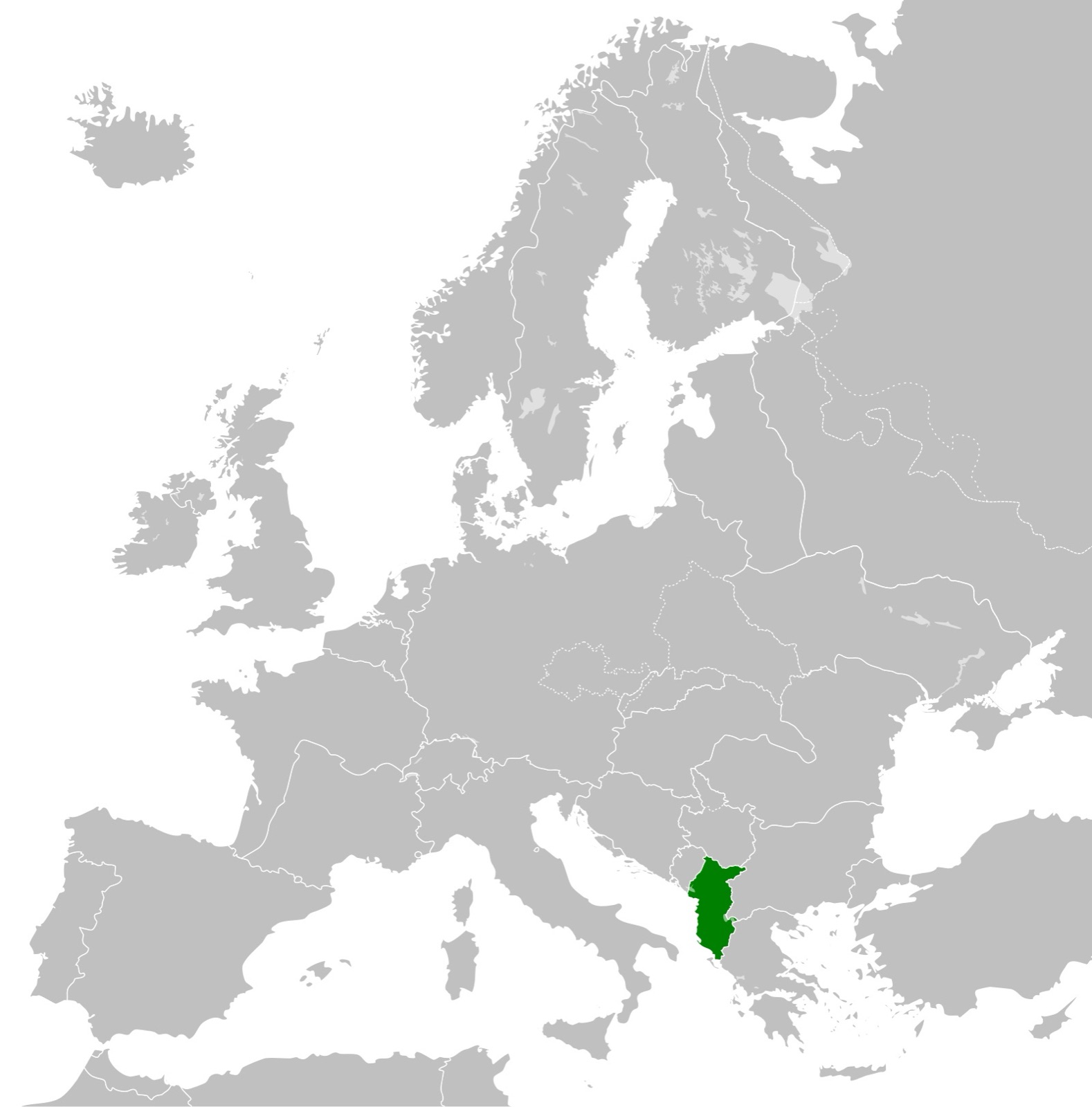 Map: TRAJAN 117 / Wikimedia Commons / CC BY-SA 3.0.
The argument turned out to be wrong, but it was not unreasonable on its face in 1949. The wager was that internal Albanian resistance — the remnants of Balli Kombetar, the royalist Legaliteti faction loyal to King Zog, and the highland clan structures of the north — could be reactivated and supported from outside. The wager misread how thoroughly Hoxha’s security apparatus had already penetrated those networks by the time the first teams went in.
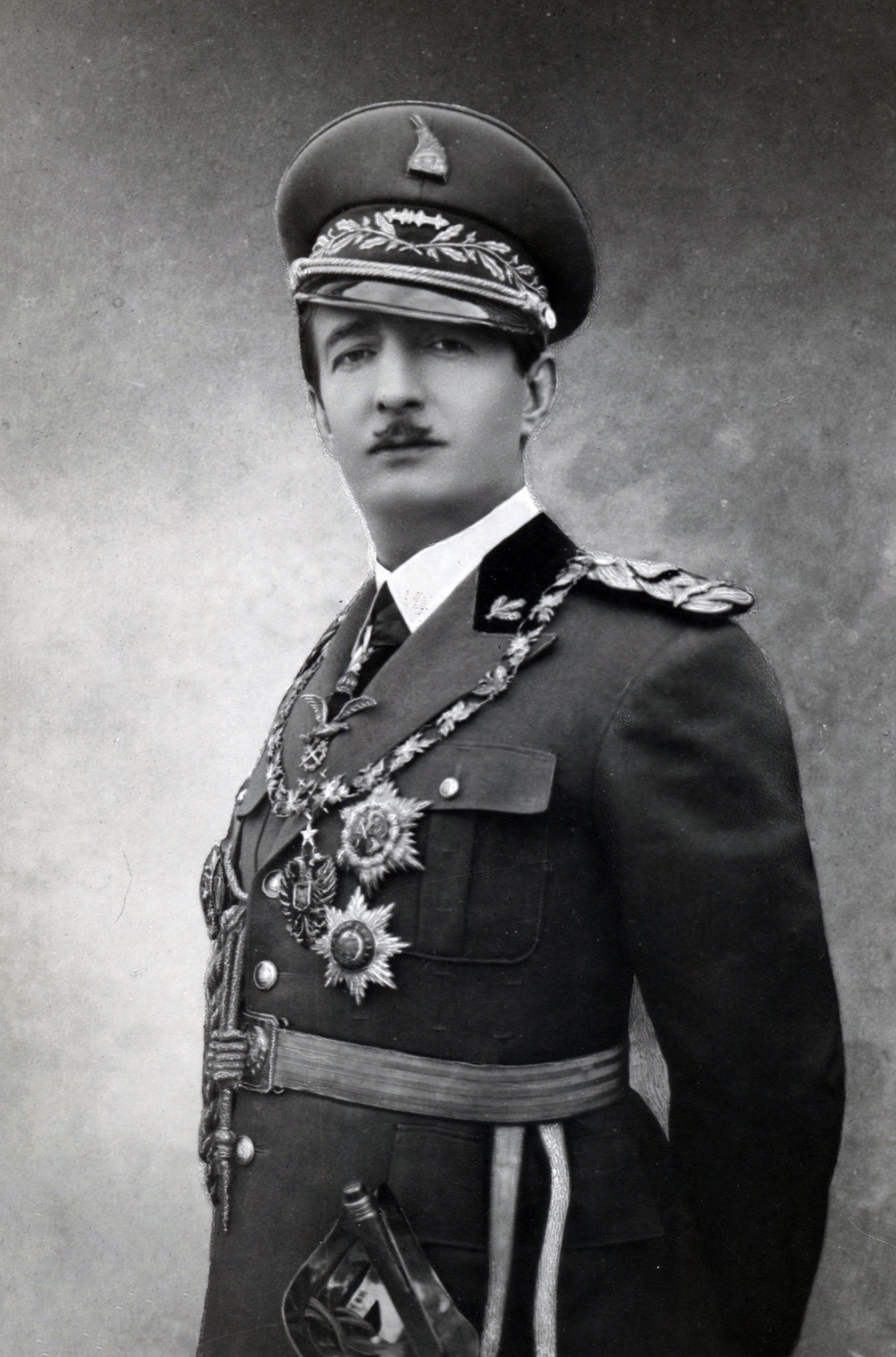 Photo: Wikimedia Commons / Public Domain (US, pre-1989, no copyright notice).
The Albanian-American recruitment pipeline
The political face of the operation was the National Committee for a Free Albania, founded at a meeting in Paris in August 1949 and headquartered in New York City (Wikipedia: Free Albania Committee). Its first chair was Midhat Frasheri (1880-1949), the wartime political leader of Balli Kombetar, a respected writer, and a former Albanian diplomat (Wikipedia: Midhat Frasheri). Frasheri died of a heart attack at the Lexington Hotel in Manhattan in October 1949, weeks into the role.
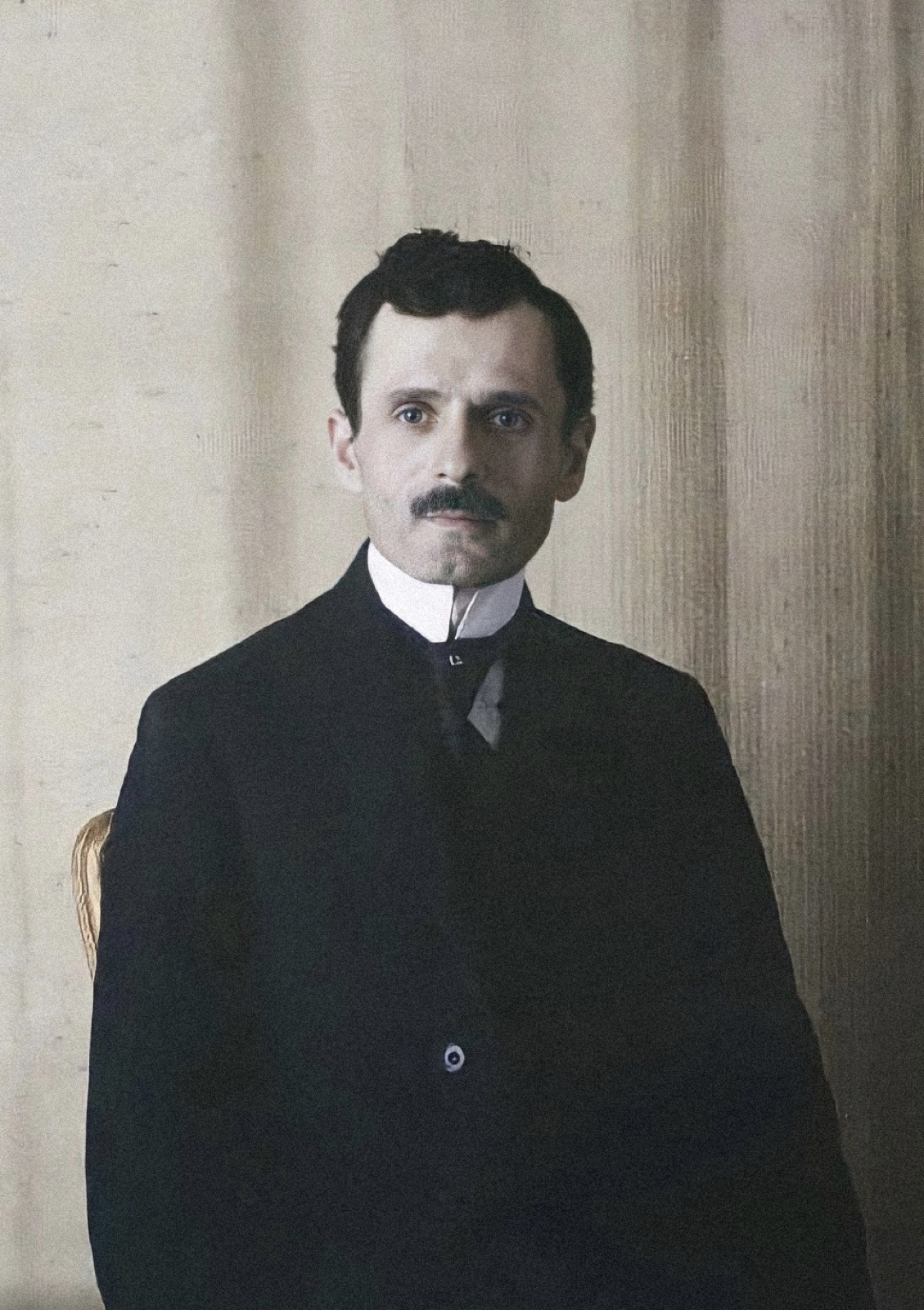 Photo: Auguste Leon, Albert Kahn Collection / Wikimedia Commons / Public Domain.
He was succeeded by Hasan Dosti (1895-1991), an Albanian jurist and former minister of justice (Wikipedia: Hasan Dosti). Dosti chaired the committee through the active years of the operation and remained one of the most prominent figures in postwar Albanian-American political life until his death in California. The committee also included representatives of the royalist Legaliteti movement under Abas Kupi and figures from the Agrarian Party and other prewar political streams. Internal disagreements between Balli Kombetar and Legaliteti were a constant feature of the committee’s life.
The recruits — the men who actually went into Albania — came from a wider pool than the committee’s New York office. The largest single source was the displaced-persons camps in occupied West Germany and Italy, where thousands of Albanian wartime refugees had ended up after 1944. Western recruiters worked through these camps to identify men with prior military experience, surviving family ties inside Albania, or strong ideological commitment to the anti-communist cause.
A second pipeline ran through Albanian-American communities in New York, Boston, Worcester, and Detroit, where a network of mutual-aid societies, parishes, and political clubs had been in continuous operation since the early twentieth century. Through the Free Albania Committee, the operation drew on names, family connections, and language assets that those communities had been quietly maintaining for decades. The recruits trained in Britain — at sites in Malta and on the Mediterranean coast — and in West Germany. The agents themselves were sometimes called “the Pixies” inside the operation, a code name that has stuck in the historiography.
The infiltrations: sea, air, and the Stormie Seas
The first infiltrations were sea-borne. On the British side, a converted yacht named the Stormie Seas, sailing out of Malta, ran the first teams into the Albanian coast in October 1949 (Wikipedia: Operation Valuable). The yacht’s profile was civilian — its cover story was that of a private vessel cruising the Mediterranean — and it landed teams at remote points along the Albanian shoreline at night, then withdrew.
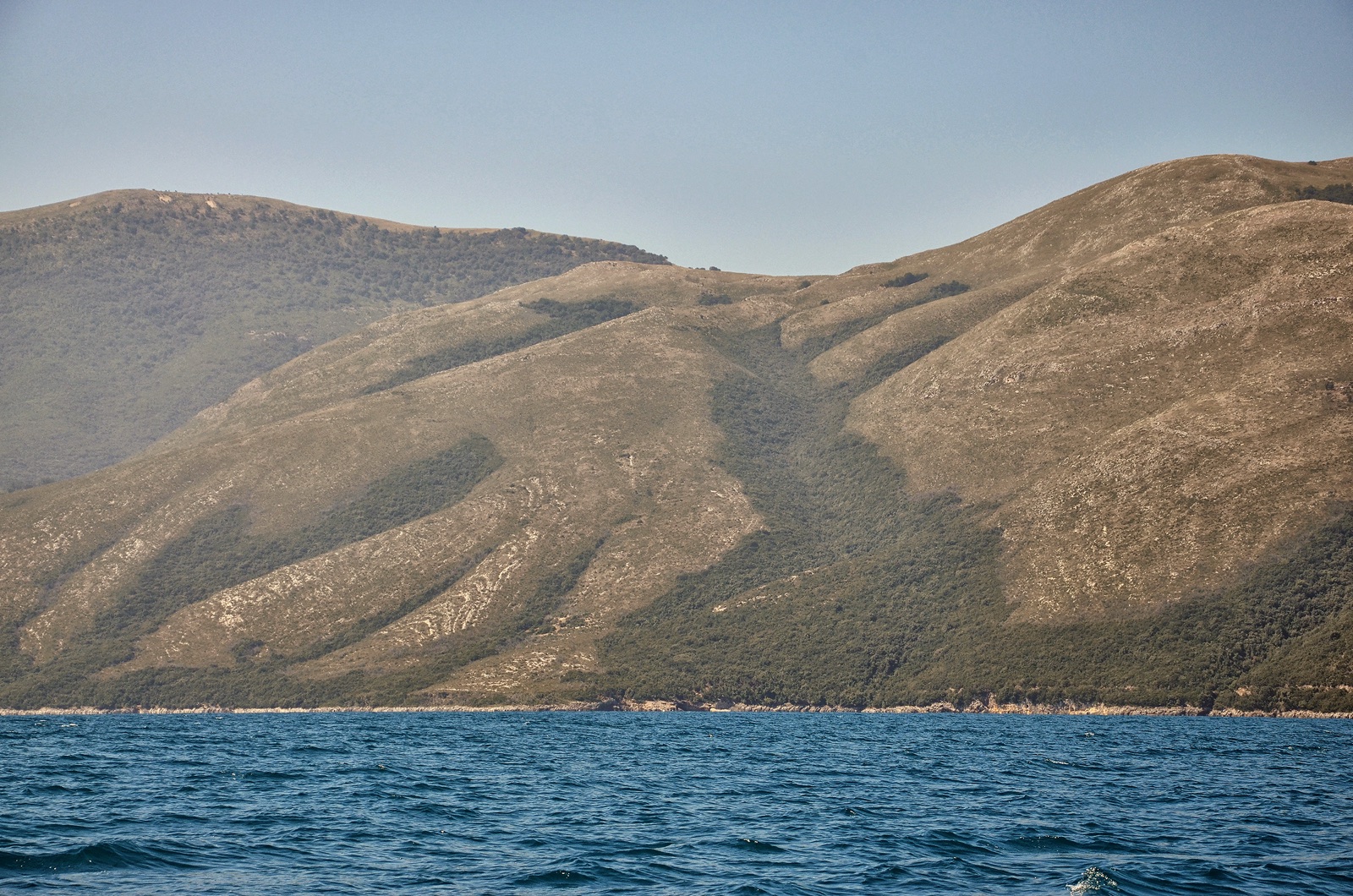 Photo: Pasztilla (Attila Terbocs) / Wikimedia Commons / CC BY-SA 4.0.
The first sea landings produced casualties almost immediately. Some teams were intercepted on the beach. Others made it inland and were rolled up within days. A small number escaped overland to Greece or Yugoslavia and reported back what they had seen: the Sigurimi appeared to know that landings were coming, and in some cases appeared to know roughly where.
The Americans, coming in slightly later, leaned more on parachute drops. CIA-flown aircraft operating out of bases in West Germany and the Athens area dropped small teams into the Albanian interior, with the goal of linking up with internal resistance in the northern highlands and along the Greek border. The pattern of failure was the same. Teams dropped in were often met on the ground, captured within hours or days, and either killed in the field or transported to Tirana for interrogation.
A handful of teams operated for weeks or months before being rolled up. None achieved the operational goals — establishing durable internal networks, encouraging armed uprisings, or producing actionable intelligence on a scale that justified the losses. By 1952 the casualty pattern had become impossible to ignore on either side of the Atlantic, and by 1953 both services were drawing the operation down.
Kim Philby, signals leaks, and the Sigurimi
The single most consequential reason for the failure is now part of the standard Cold War record. Harold Adrian Russell “Kim” Philby, a senior MI6 officer, served as the British intelligence liaison in Washington from September 1949 to June 1951 (Wikipedia: Kim Philby). In that role he was the principal conduit between MI6 and the CIA on joint operations including Operation Valuable. He was also a long-standing Soviet agent who had been recruited at Cambridge in the 1930s and who had passed sensitive material to Moscow continuously since.
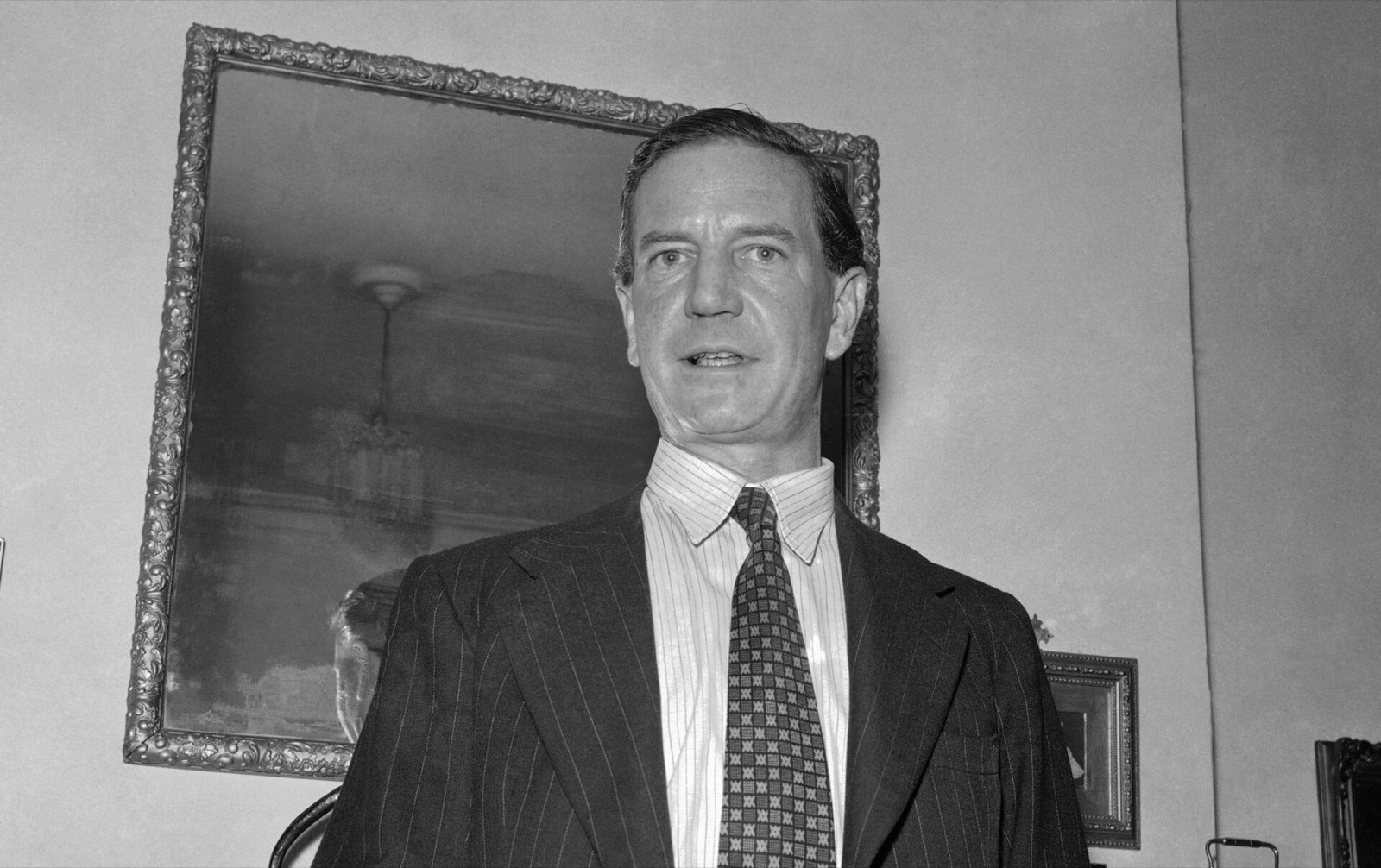 Photo: 1955 press photo / Wikimedia Commons / Public Domain (US, pre-1989, no copyright notice).
The standard account, supported by Bethell’s research and by post-Soviet acknowledgments, is that Philby passed the operational planning of Valuable — broad goals, specific landing windows, identities of teams where he had access — to his Soviet handlers, and that the Soviets shared the relevant material with Hoxha’s security service. The Sigurimi was therefore in a position to anticipate landings and infiltrations in ways that were not the result of Albanian counter-intelligence work alone.
Philby was not the only leak. The operation suffered from a long list of secondary security weaknesses: emigre political organizations in Europe were known to be penetrated, radio communications were vulnerable, and the prewar political networks the recruits were meant to link up with had themselves been compromised by the Sigurimi well before 1949. Even without Philby, the operation faced steep odds. With Philby, the odds were closer to none.
The exposure of Philby’s role came after the operation ended. Two of his fellow Cambridge spies, Burgess and Maclean, defected to the Soviet Union in 1951, and Philby himself was recalled from Washington and slowly forced out of MI6 over the following decade. He defected to Moscow in 1963. The full reconstruction of his role in the Albania operation came later, primarily through Bethell’s interviews with surviving participants in the early 1980s.
The human cost
The exact numbers are contested, and sources do not even agree on what to count. Some accounts describe a core of a few hundred agents actually landed inside Albania. Wikipedia’s own infobox for the operation gives a far larger initial strength — roughly 500 agents and 2,000 paramilitary recruits assigned to the effort — and total losses of roughly 300 agents dead and 961 agents and paramilitaries killed or captured between 1949 and 1954 (Wikipedia: Operation Valuable). The casualty rate is universally described as severe under any accounting.
The fates of those captured followed a pattern. Smaller numbers were executed in the field on capture. The larger group was transported to Tirana for interrogation by the Sigurimi. Some were turned and used in radio-back deception operations against MI6 and the CIA, lengthening the period in which Western planners believed teams were still operational on the ground. Others were tried in public show trials — the most prominent staged in Tirana in 1954 — and executed by firing squad. A smaller number received long prison sentences in the Albanian internment system and survived into the 1960s and 1970s.
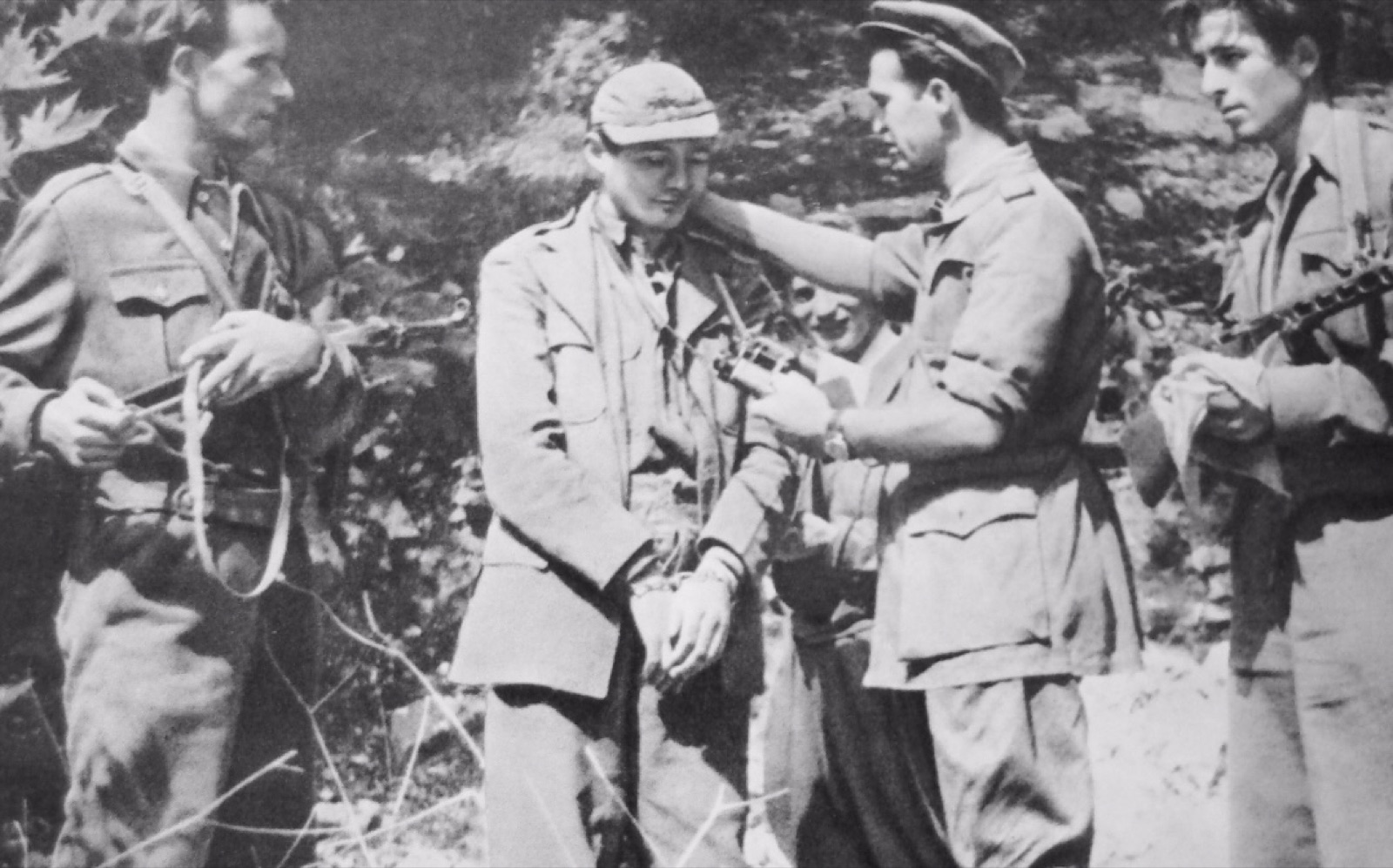 Photo: Sigurimi (Albanian Directorate of State Security) / Wikimedia Commons / CC BY-SA 4.0.
The cost did not stop with the agents. Hoxha’s government used the captured recruits’ family connections as a basis for collective punishment under the doctrine of biografia e keqe (the “bad biography”) that governed access to education, employment, and housing in communist Albania. Family members of confirmed or suspected Western agents were frequently interned in the regime’s internal-exile camps. The shadow of those internments fell on relatives — including relatives in the United States — for decades.
The exile families absorbed losses that they could not publicly mourn. In some Albanian-American households, the death of a brother or cousin inside Albania was known by 1953 but could not be safely confirmed until declassification work began in the 1980s. In others, the absence of a body and the absence of a published trial record left a permanent ambiguity about what had actually happened on the ground.
What the operation meant for the diaspora
Operation Valuable left a mark on Albanian-American life that long outlived the operation itself. Three threads are worth naming directly.
The first is a chilling effect on community-level political organizing. The Free Albania Committee continued to operate after 1953, but its credibility as the political voice of the diaspora was damaged by the human cost of the operation it had publicly endorsed. Internal disagreements between the Balli Kombetar and Legaliteti factions deepened. New exile organizations formed. Older mutual-aid societies took a step back from explicit anti-Tirana political work for years.
The second is a pattern of cautious cooperation between Albanian-American communities and US intelligence and law-enforcement agencies that lasted into the 1990s. The lesson many community leaders drew from Operation Valuable was that promises of operational security made by Western agencies could not be relied on — not because of bad faith on the American side, but because compartmentalization had failed at the highest levels. Cooperation was not refused. It was offered with shorter, narrower commitments and more skepticism.
The third is harder to measure. It is a generational scarring of trust inside Albanian-American families themselves. Households that lost a relative in 1950 or 1951 raised children and grandchildren on a story that could not be fully told. Households that did not lose a relative still grew up next to those that did. The episode is part of the inherited material of mid-twentieth-century diaspora life in a way that is not always visible from outside.
For Albanian-Americans reading now, the practical takeaway is not political. It is that the postwar generation of the diaspora carried weight that the public record only began to acknowledge in the 1980s, and that anyone reconstructing a family history from that period should consider the possibility that an unexplained absence or a gap in family memory may sit inside this story.
Legacy and historical reckoning
The serious historical reconstruction of Operation Valuable began in the 1980s. Nicholas Bethell, a British historian and member of the House of Lords, published The Great Betrayal: The Untold Story of Kim Philby’s Biggest Coup in 1984. The book drew on interviews with surviving participants on the British, American, and emigre sides and set the standard narrative — including the casualty estimates and the role of Philby — that most subsequent accounts work from.
Stephen Dorril’s MI6: Inside the Covert World of Her Majesty’s Secret Intelligence Service, published in 2000, went further into the operational record on the British side and corrected and extended Bethell at several points (Wikipedia: Operation Valuable). Albanian-language scholarship developed in parallel, particularly after the fall of the Hoxha government in 1991, when the Sigurimi archives became partially accessible to researchers.
US declassification has been gradual. Materials related to the operation continue to surface through CIA historical reviews and through the National Archives. The Free Albania Committee’s records, scattered across multiple repositories in New York and Washington, are still being catalogued. A full archival history of the operation has not been written.
For the Albanian government, the legacy is complicated. The post-1991 democratic governments in Tirana have not adopted Hoxha’s framing of the operation as foreign aggression, but they have also not formally rehabilitated the agents who died inside Albania between 1949 and 1953. Many of the executed remain buried in unmarked graves. The 1954 show-trial verdicts have been administratively superseded by the post-communist legal system, but the project of identifying remains and notifying surviving families is ongoing and incomplete.
For Albanian-American families and for the diaspora’s institutional memory, the practical work that remains is more concrete: identifying the recruits by name, recovering biographical detail where it survives, and connecting living relatives in the United States with the partial archival record on the Albanian side. That work is being done piece by piece by historians, family researchers, and community organizations on both sides of the Atlantic.
The National Albanian Registry exists, in part, to make that kind of connective work easier — to count the diaspora carefully and to keep the historical record of Albanian-American life accessible across generations. If you carry a family history that touches this period, your registration helps preserve the larger picture. You can register here.