

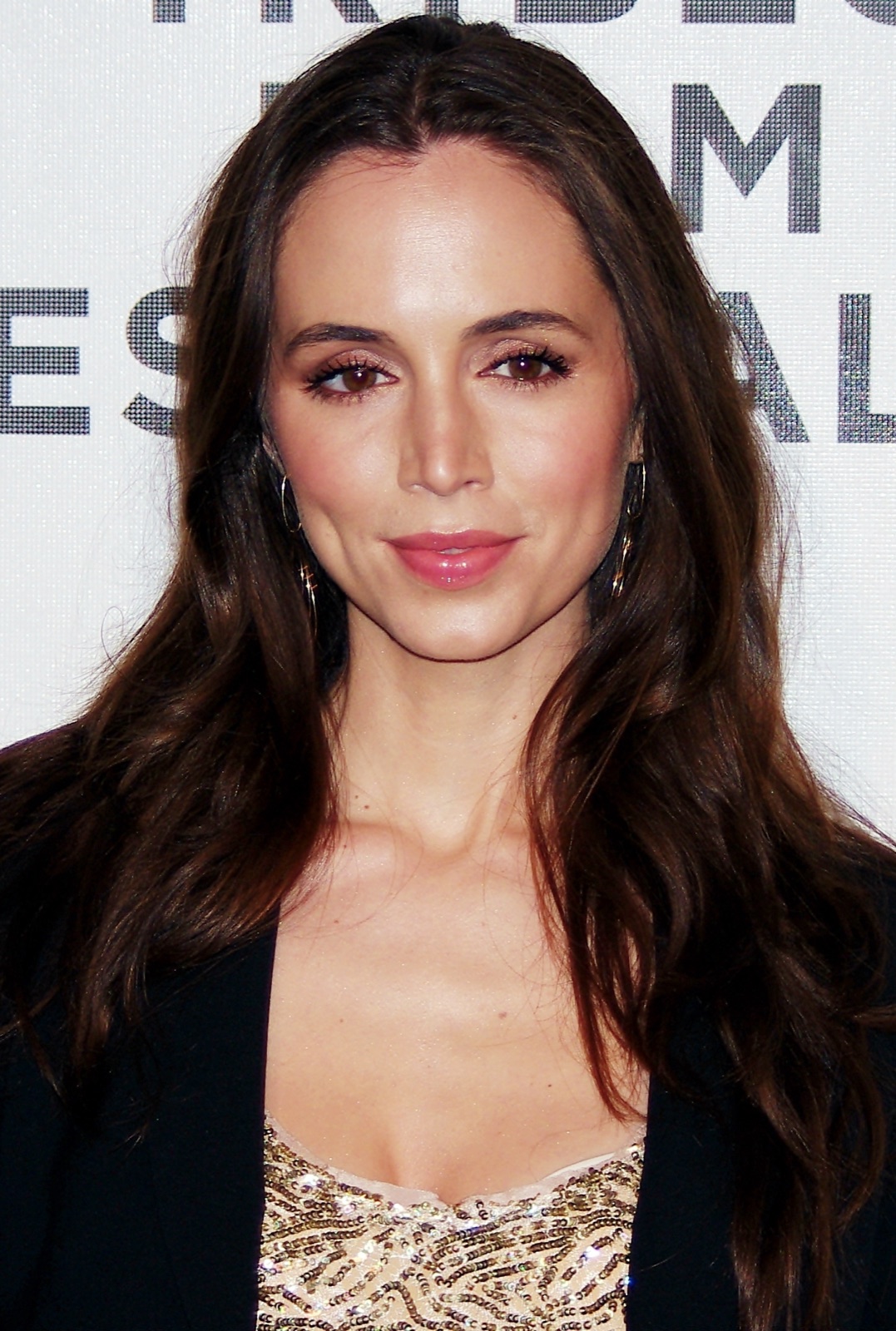
Eliza Patricia Dushku — born December 30, 1980 in Boston, Massachusetts — is the daughter of an Albanian-American father whose parents came from Korçë, in southeastern Albania. She had her breakthrough role at seventeen as Faith Lehane in Buffy the Vampire Slayer, headlined Fox’s Tru Calling and Dollhouse across the 2000s, took Albanian citizenship in 2011, and in 2018 became one of the early test cases of post-#MeToo accountability when CBS settled with her for $9.5 million over harassment on the set of Bull. She has not acted on screen since. She holds a Master’s in Clinical Mental Health Counseling from Lesley University and works as a trauma therapist focused on psychedelic-assisted treatment of PTSD (Wikipedia: Eliza Dushku).
Three things sit at the center of how the Albanian-American community talks about her: a Boston-area childhood in Watertown, MA, one of the densest Albanian-American towns in the country; a public Albanian-citizenship moment in Korçë and Tirana in 2011; and the Bull settlement, which moved her from “former Buffy lead” into the longer record of harassment cases that reshaped television production after 2017.
What follows is an account of her life and career, with the Albanian-American thread on the record alongside the rest.
Family and early life: Watertown, Boston, Korçë
Eliza Dushku was born in Boston, the only daughter and the youngest of four children of Philip R. G. Dushku (1941–2018) and Judy Dushku (née Rasmussen). Philip was Boston-born; his parents were Albanian immigrants from Korçë, a southeastern Albanian city with a long Orthodox-and-Bektashi mixed history that produced Fan Noli’s Vatra cohort, the Frashëri brothers, and a heavy share of the late-Ottoman-era emigration to Massachusetts. Judy is a political-science professor at Suffolk University; she comes from a Danish-Mormon family and raised her children in The Church of Jesus Christ of Latter-day Saints. Philip and Judy had divorced before Eliza’s birth (Wikipedia: Eliza Dushku).
The family settled in Watertown, MA — a town just west of Boston that has held one of the largest and oldest Albanian-American communities in the United States since the early 20th century. Vatra, the Pan-Albanian Federation of America, was founded in Boston in 1912 by Fan Noli and Faik Konitza; the Dielli newspaper was published in Boston for decades; the Albanian Orthodox Archdiocese in America traces its Boston roots to March 22, 1908, when Fan Noli celebrated the first Divine Liturgy in Albanian at the founding of St. George Cathedral in South Boston. The Korçë-to-Boston axis is not incidental to Eliza Dushku’s biography — it is the channel her father’s family came through.
Eliza attended Beaver Country Day School in Chestnut Hill and graduated from Watertown High School. She studied piano, drums, and dance — jazz, tap, and ballet — from childhood. Her three brothers include actor and producer Nate Dushku, who has stayed her closest professional collaborator and runs Boston Diva Productions with her.
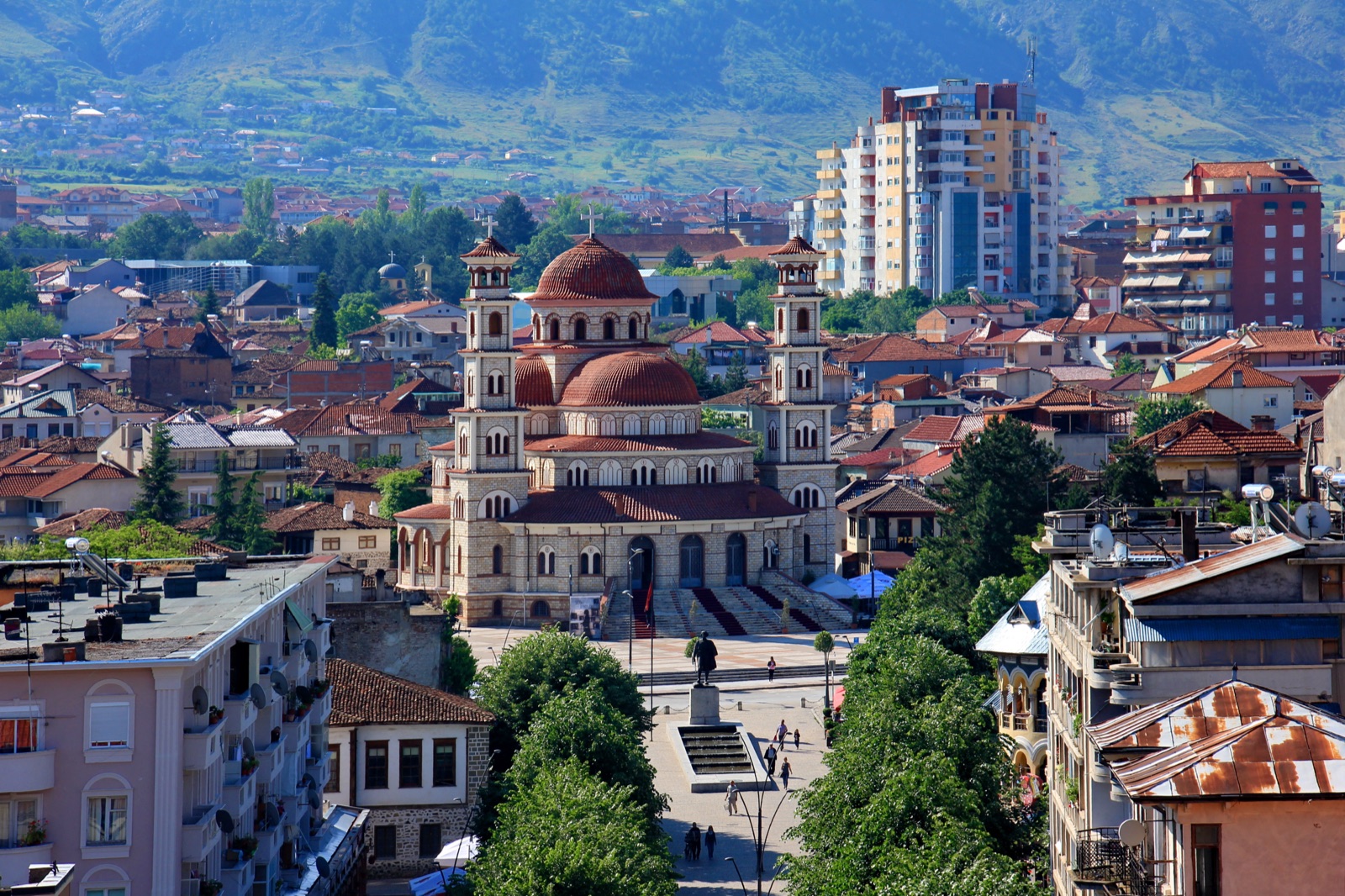 Photo: ShkelzenRexha / Wikimedia Commons / CC BY-SA 4.0
Discovery and child-acting years: 1992–1997
Casting agents identified Dushku at age ten during a five-month national search for the lead in That Night (1992). She got the part of Alice Bloom in the romantic drama and was cast a year later as Pearl in Robert De Niro and Leonardo DiCaprio’s This Boy’s Life (1993).
The credit that put her in front of the largest audience came in 1994, when she was thirteen: Dana Tasker, the teenage daughter of Arnold Schwarzenegger and Jamie Lee Curtis, in James Cameron’s True Lies. The production is also where she was sexually molested at age twelve by stunt coordinator Joel Kramer, a fact she would not disclose publicly until January 2018 in a long Facebook post written during the wave of post-Weinstein industry disclosures. Per her own account, an adult friend confronted Kramer on set; the same day, she was injured during a stunt Kramer was responsible for safe-rigging, breaking several of her ribs (Wikipedia: Eliza Dushku).
She continued working as a teenager — Bye Bye Love (1995), Race the Sun (1996) — alongside school in Watertown. Throughout this period she was, in legal terms, a minor working studio hours, which would matter again at the start of Buffy.
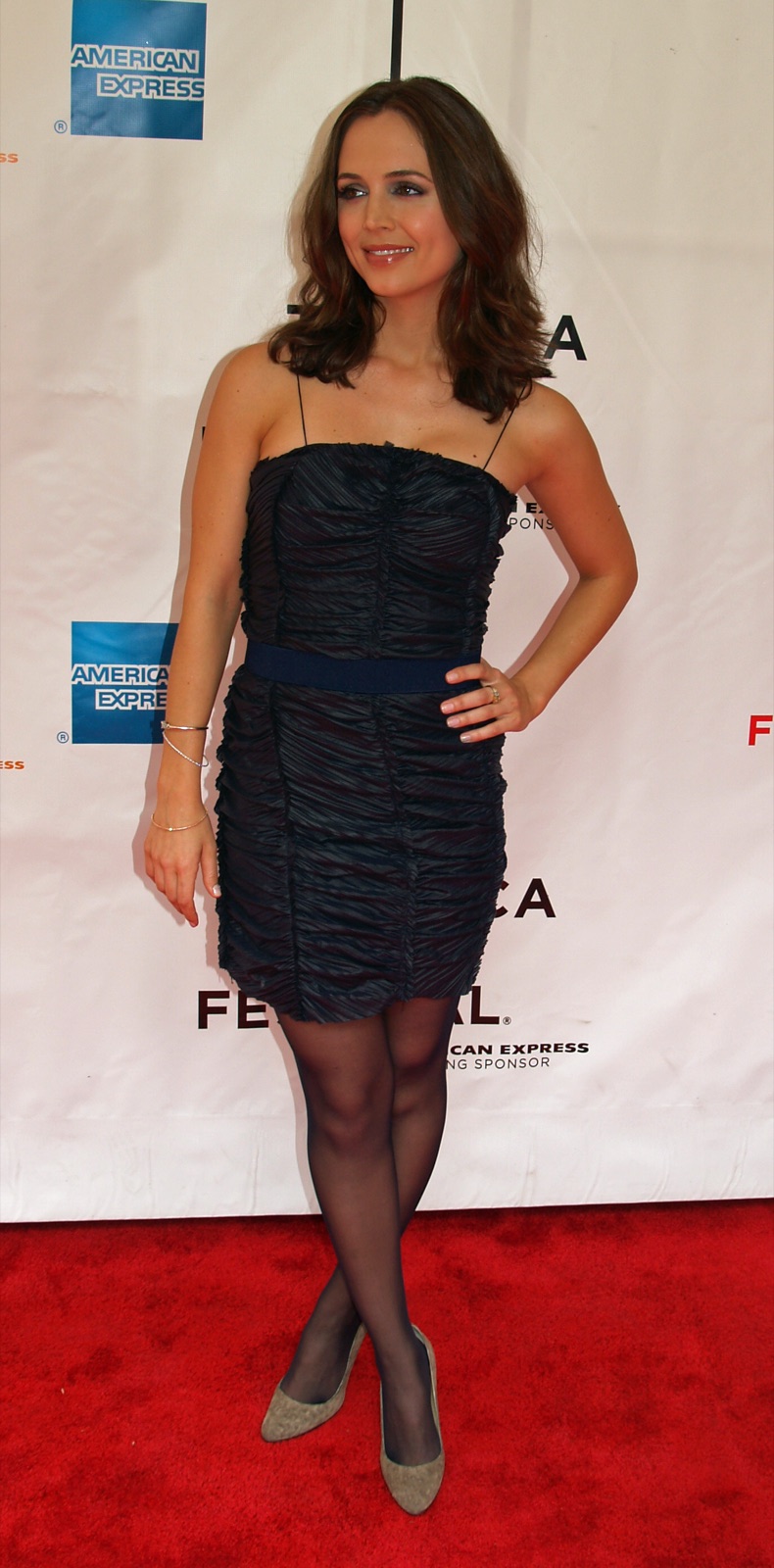 Photo: David Shankbone / Wikimedia Commons / CC BY-SA 3.0
Buffy, Bring It On, Tru Calling: 1998–2005
In 1998, Dushku was cast as Faith Lehane — the second slayer, Buffy’s dark mirror — in the third season of Buffy the Vampire Slayer. The role was originally written as a three-episode arc. It expanded to the full season, then a multi-episode arc on the spin-off Angel (2000–2003), then a return for the last five episodes of Buffy in 2003. Across the two shows she logged 20 episodes of Buffy and 6 of Angel — 26 episodes total as Faith. She was emancipated as a minor at sixteen so she could legally work production hours on the Buffy schedule.
In 2000 she played Missy Pantone opposite Kirsten Dunst in Bring It On — the cheerleading comedy that became a cable rerun staple and one of the most-watched teen films of its era. The same year she appeared in Kevin Smith’s Jay and Silent Bob Strike Back (2001) and reunited with Robert De Niro on City by the Sea (2001).
From 2003 to 2005 she carried her first lead role on a network drama as Tru Davies in Fox’s Tru Calling — a young morgue assistant who relives the previous day to prevent the deaths she’s already seen. The show ran 26 episodes across two seasons. In 2003 she also led the horror feature Wrong Turn, which spawned a long franchise.
 Photo: Gage Skidmore / Wikimedia Commons / CC BY-SA 3.0
Dollhouse and the late-2000s producer turn: 2007–2010
In August 2007 Dushku signed a development deal with Fox Broadcasting and 20th Century Fox Television. The deal produced Joss Whedon’s Dollhouse (2009–2010), with Dushku in the lead role of Echo / Caroline Farrell — an “active” whose personality is wiped and reprogrammed for each assignment — and credited as a producer for the first time in her career. The show ran 27 episodes across two seasons before Fox cancelled it in November 2009.
The same period covered her video-game voice work — Shaundi in Saints Row 2 (2008), the lead Rubi Malone in WET (2009), Megan McQueen in Fight Night Champion (2011) — and the lead voice of Selina Kyle / Catwoman in DC’s animated Batman: Year One (2011). From 2013 to 2015 she voiced She-Hulk / Jennifer Walters across 52 episodes of Disney XD’s Hulk and the Agents of S.M.A.S.H.
Albania, citizenship, and Dear Albania: 2006, 2011
Dushku first visited her father’s country of origin in 2006, at the invitation of then–Prime Minister Sali Berisha. She also crossed into Kosovo on the same trip and got the Albanian double-headed eagle tattooed on the back of her neck.
The 2011 visit was the public one. She applied for and received Albanian citizenship and a passport, was named honorary citizen of Tirana by then-mayor Lulzim Basha with the title “Tirana Ambassador of Culture and Tourism in the World,” and was granted honorary-citizen status in Korçë itself. With her brother Nate she filmed Dear Albania (2015) — a Travel Channel / Lonely Planet hour-long tourism documentary that walked viewers through Tirana, Berat, the Riviera, Lake Ohrid, and Korçë. It is, to date, the most widely-distributed positive-framing documentary on Albania to reach an American mainstream television audience, and it was made by an Albanian-American with a personal map of where to go.
She has spoken in subsequent interviews about how the citizenship moment did not feel symbolic — it formalized a heritage she had already claimed.
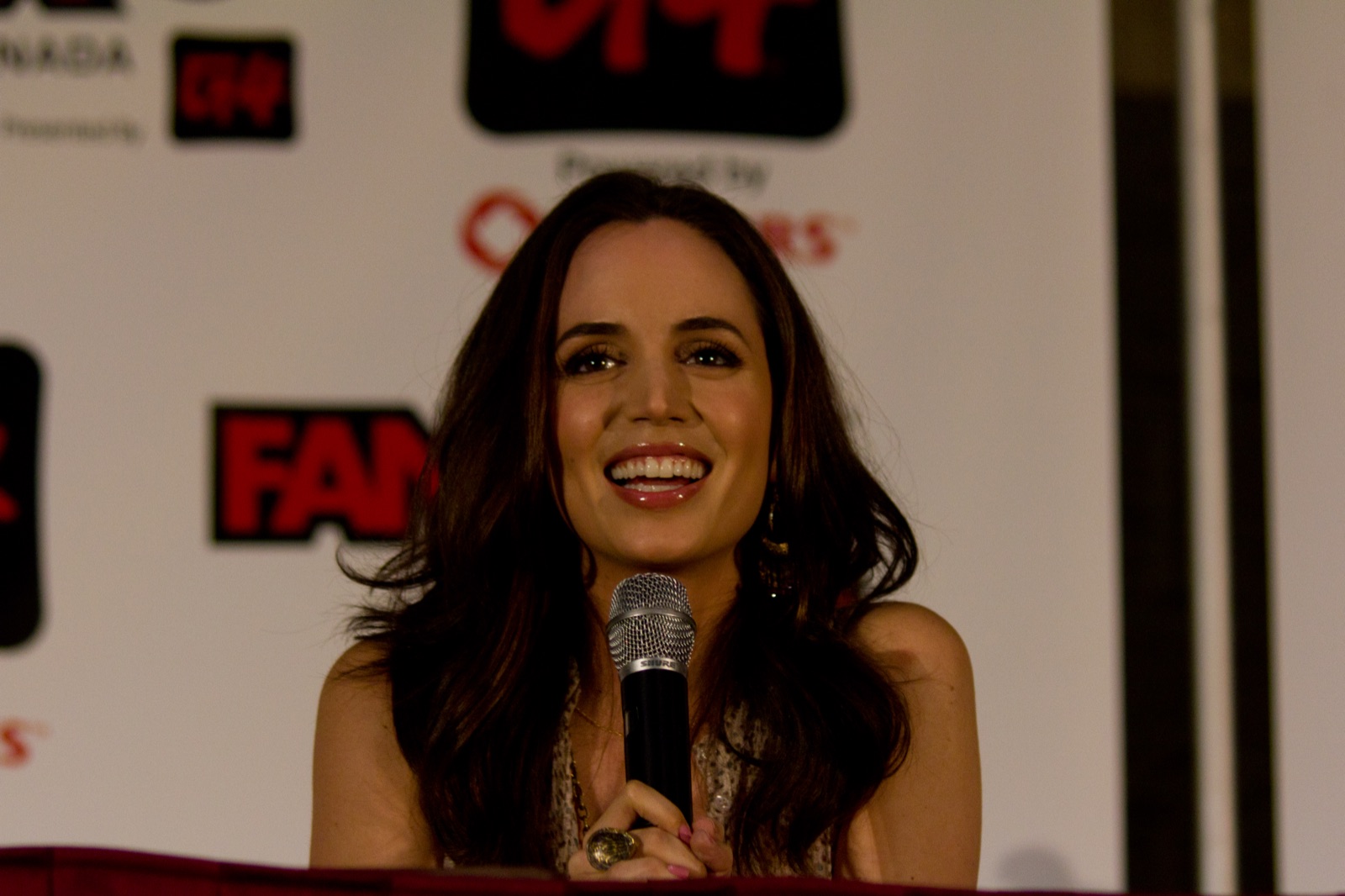 Photo: Tabercil / Wikimedia Commons / CC BY-SA 2.0
Bull, the $9.5M settlement, and post-#MeToo accountability: 2017–2019
In 2017, CBS hired Dushku for three episodes of the legal drama Bull as defense attorney J.P. Nunnelly, with the studio’s stated intent that she would be promoted to series regular. During production she filed a complaint to producers about repeated sexual remarks made on set by series lead Michael Weatherly, including comments about spanking her, soliciting threesomes, and a reference to a “rape van” — comments that mediation later confirmed were caught on the production’s own audio.
Showrunner Glenn Gordon Caron terminated her arc shortly after the complaint, despite, per court documents, opposition from the studio executives who had originally wanted her promoted. CBS settled in January 2018 for $9.5 million — calculated to compensate the lost earnings from the “well-developed plans” to promote her to series regular after the three-episode arc.
In December 2018, after the settlement leaked to The New York Times, Weatherly issued a public apology. Dushku replied that the apology was “more deflection, denial, and spin.” In November 2021 she testified before the U.S. House Judiciary Committee on workplace harassment, citing the Bull facts on the record.
The settlement is now studied as one of the early post-#MeToo cases where a major broadcaster — not a single producer or harasser, but the network itself — paid out a sum calibrated to lost career earnings rather than legal-defense cost.
Therapist, producer, retirement: 2014–present
Dushku had moved back to Watertown, MA in 2014 and re-enrolled in college. She first studied sociology at Suffolk University (where her mother teaches) before transferring to Lesley University, where she earned a BA in holistic psychology in May 2020 and a Master’s in Clinical Mental Health Counseling in June 2025, with a focus on psychedelic-assisted therapy (Wikipedia: Eliza Dushku).
She is a board member of THRIVE-Gulu, the Trauma Healing and Reflection Center in Gulu, northern Uganda, co-founded by her mother Judy and stepfather Philip Barlow. The center serves war survivors and former child soldiers from the Lord’s Resistance Army insurgency; Dushku raised $30,000 toward the land for the center’s permanent building (Wikipedia: Eliza Dushku). She has also been a multi-year supporter of Camp Hale — a sleepaway camp in Sandwich, New Hampshire, run by the Boston nonprofit United South End Settlements, and the summer camp her father and brothers attended — and led the campaign that opened and sustained the camp’s girls’ session, which launched in 2012.
In November 2025 she and her husband Peter Palandjian executive-produced the Netflix documentary In Waves and War, which follows former Navy SEALs using psychedelic-assisted therapy for PTSD and traumatic brain injuries. In December 2025 she confirmed retirement from acting to The Hollywood Reporter: she has not been on screen since Bull in 2017 and has stated she will not be again unless it serves the therapy work.
She married Peter Palandjian — a Boston businessman, Armenian-American, former professional tennis player, CEO of Intercontinental Real Estate — on August 18, 2018, after a June 2017 engagement. They have two sons: Philip (born August 1, 2019) and Bodan (born August 2021). Both children are being raised in Boston.
In personal terms, Dushku has been on the public record since March 2017 about her own recovery from substance use. She has stated she began drinking at fourteen, has been sober since around 2008, and lives with ADHD. The therapy training she has done since 2014 is downstream of that recovery and of the Bull and True Lies disclosures — a directly stated arc of moving from one side of trauma to the other.
Where she sits in the Albanian-American picture
The Albanian-American population the U.S. Census measured at roughly 230,000 in 2024 — and which community estimates put closer to 1,000,000 including ethnic Albanians and second- and third-generation descendants — has produced a small number of nationally-visible cultural figures. Eliza Dushku is one of them, alongside Bebe Rexha in pop, Dua Lipa (UK-Kosovar-Albanian) in pop, Rita Ora (UK-Kosovar-Albanian) in pop, Ferid Murad in science, and Mother Teresa historically. Of those, Dushku is the one whose connection runs through the Korçë-to-Boston axis — the oldest documented channel of Albanian arrival in the United States, and the one Vatra was built to serve.
She has not used her platform to make broad ethnic-pride claims, and the registry’s voice does not need to either. She visited Albania, took the citizenship she had a legal right to, made an hour of network TV that introduced an American audience to the country, and stayed in Watertown afterward.