
About 2,000 people died in the rebellion that followed, the Democratic Party government in Tirana fell, and Italy led a 7,000-troop multinational force into the country to restore order. A wave of emigration that began in those months reshaped the Albanian diaspora — including the part of it that lives in the United States today.
The headline numbers are familiar to anyone who has read the standard accounts. Combined scheme liabilities of roughly $1.2 billion, against an Albanian GDP of about $2.5 billion. Roughly 2 million people — out of a population of 3 million — with money in the schemes when they failed (Wikipedia: Pyramid schemes in Albania). Hundreds of thousands of weapons looted from state armories during the collapse, with most of them never recovered. Approximately 2,000 dead in the civil unrest that followed.
What those numbers do not yet say is what the collapse meant for the people who lived through it, what they did next, and how the wave of emigration that followed seeded the Albanian-American community that NAR exists to count today. That is the angle of this article.
What the schemes were
The Albanian schemes were not a single scam. They were a cluster of roughly 25 unregulated investment companies that emerged across 1993–1996, in the early years of Albania’s transition out of one-party state socialism. They shared a common business model — taking deposits from the public and paying interest out of new deposits, the textbook structure of a Ponzi scheme — but they varied in scale, ownership, and pretense of legitimate business.
The largest was VEFA Holding, founded in 1992 by Vehbi Alimuça. VEFA had real operating businesses on its books — supermarkets in Tirana, fuel stations, hotels, manufacturing — which gave it the look and feel of a diversified industrial group. By the time it collapsed in 1998, VEFA had 59,005 registered creditors, more than any other scheme, and was the single most familiar consumer brand in the country.
Below VEFA, the named schemes included Sudja (run by Maksude Kademi, a Romany woman who had previously worked in a shoe factory), Gjallica (Vlorë-based, founded by three former State Security operatives), Xhaferri (registered as a foundation, run by Rrapush Xhaferri), and Populli (run by Bashkim Driza, another former State Security agent). The Wikipedia compilation lists nine schemes by creditor count: VEFA, Cenaj, Kamberi, Sude, Beno, Gjallica, Silva, M. Leka, and Global. The combined creditor count across just those nine was 132,487 registered claims — and the universe of informal depositors was several times larger.
The promised returns were the giveaway. Monthly interest rates ran from 10% to 25%, in a country where the average monthly wage was about $80. Foreign observers raised alarms early. Inside Albania, the schemes were defended publicly. President Sali Berisha’s Democratic Party government waved off International Monetary Fund warnings in 1996 and accused the IMF of interfering in Albania’s internal affairs.
How two-thirds of Albanian households got drawn in
It is hard to read those interest rates today and not ask how anyone could have believed them. The honest answer requires holding two facts at once.
The first fact is structural. Albania in 1992 was emerging from forty-four years of one-party state socialism under Enver Hoxha. The country had been almost completely sealed from the outside world. There was no functioning private banking system, no equities market, no consumer credit, no mortgage market, no deposit insurance, and no public memory of any of those things. When the schemes appeared, there was no comparable legitimate alternative against which to measure them. A licensed bank offered roughly 4% per year. A scheme offered roughly 10% per month. For a population that had no framework for what either number meant, both were just numbers.
The second fact is that the schemes briefly looked like they were working. Albania’s official GDP grew at over 8% per year between 1993 and 1995, faster than Bulgaria. VEFA’s hotels were open. Its supermarkets had goods on the shelves. Early depositors received early interest payments on time. A whole consulting class — newspapers, television hosts, lawyers, even university faculty — treated portfolio diversification across multiple schemes as a respectable financial strategy. One Tirana academic later recalled colleagues advising clients to put “some money in scheme A, some in Scheme B, some in Scheme C” without realizing they were all the same fraud.
Money flowed in from three directions. Local Albanians liquidated savings, sold homes, sold livestock. Albanian emigrants in Greece and Italy — roughly 500,000 people by 1996 — wired money home, and a meaningful share of those remittances went straight into the schemes. And the schemes themselves laundered income from gray and illegal economies that had emerged during the UN sanctions on Yugoslavia, particularly cross-border smuggling of fuel and goods through northern Albania.
By late 1996, deposits in the schemes equalled roughly half of Albania’s GDP. The exposure was no longer a financial-sector problem. It was the household balance sheet of an entire country.
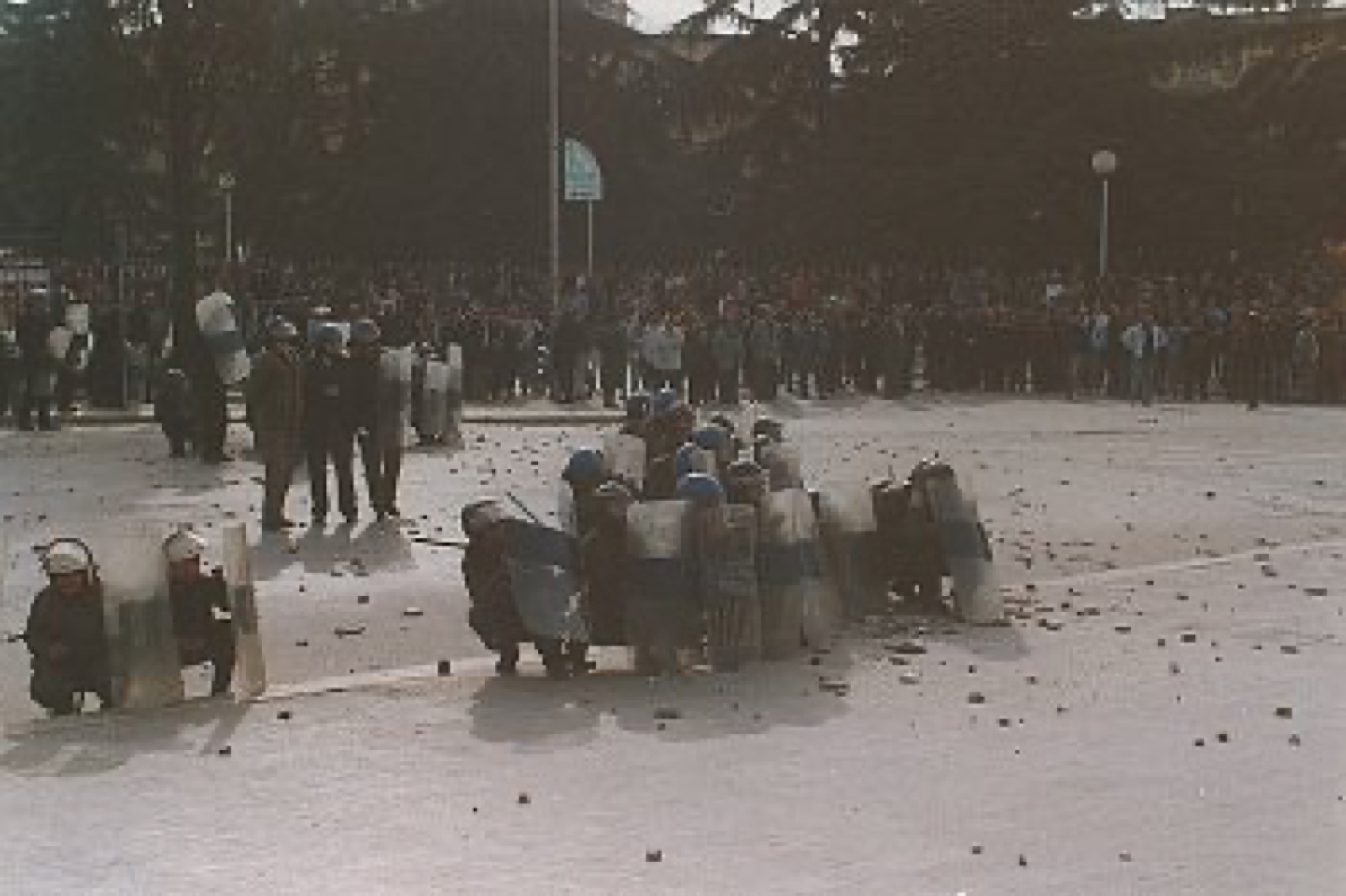 Photo: 1997 wire-service archive / Wikimedia Commons / Public Domain.
The January–March 1997 collapse
The first tremor came in early January 1997. Several of the smaller schemes — Kamberi, Silva, Sudja — stopped payments to depositors between January 8 and January 16.
The breakthrough moment came on January 15. Maksude Kademi appeared at her Tirana balcony, in front of a crowd of angry depositors, and announced through a megaphone that her company was bankrupt and the scheme had failed. She was arrested shortly after. The next day, 6,000 people demonstrated in the southern port city of Vlorë.
Within a week, the protests had hardened into uprising. On January 24 in Lushnjë, demonstrators burned the city hall and the local cinema. The next day they took the opposition leader Tritan Shehu hostage at the city stadium. On January 26 in Tirana, crowds damaged public buildings around Skanderbeg Square — near the National History Museum, the Palace of Culture, and the Et’hem Bey Mosque — and burned the city hall (Wikipedia: 1997 Albanian civil unrest).
February brought the second collapse. Gjallica, the largest of the southern schemes, declared bankruptcy on February 5, and Vlorë — already the political center of the uprising — exploded again. On February 9, an armed crowd attacked the Vlorë police station. Prime Minister Aleksandër Meksi would not resign for another three weeks. On February 28, demonstrators stormed the local SHIK (state intelligence) building and nine people were killed in the firefight: six SHIK officers and three civilians.
By March 2, President Berisha had declared a national state of emergency. The Meksi government formally resigned the same day. By March 7, rebels had captured Gjirokastër. By March 13, Tirana itself appeared at risk and the United States began evacuating American nationals through Operation Silver Wake.
The southern rebellion and ~2,000 dead
The southern third of the country, by mid-March, was outside government control.
What replaced government authority was a patchwork of local Salvation Committees — Komitetet e Shpëtimit Publik — that grew up first in Vlorë under Albert Shyti and then in most southern towns. The committees had roots in the Socialist Party but described themselves as a defense of democracy against a Berisha government they regarded as authoritarian. The committees coordinated, fed people, kept some semblance of order in the daytime, and demanded Berisha’s removal.
Alongside the committees, an informal economy of armed groups took over the night. Five major gangs operated out of Vlorë alone, with two — the Gang of Çole under Myrteza “Zani” Çaushi and the Gang of Gaxhai under Gazmend Braka — dominant. Other named gangs operated out of Berat (Altin Dardha), Lushnjë (Aldo Bare), and Tropojë.
The decisive accelerant was the looting of state armories. Berisha had ordered armories opened in the loyalist north to allow the population to defend itself. In the south, opening was unauthorized but no one stopped it. Across both regions the totals were eventually estimated at 550,000 to 700,000 small arms, 1.5 billion rounds of ammunition, 3.5 million hand grenades, and 1 million land mines taken into private hands within weeks. On April 29 in Selitë, near Burrel, an armory explosion at a depot killed 22 villagers — one incident among many.
The casualty count is contested but converges on roughly the same number. Christopher Jarvis at the IMF documented about 2,000 deaths. Fred C. Abrahams at Human Rights Watch documented about 1,600 deaths between March and May 1997, mostly from gang shootouts. A UNIDIR document put the March-only figure above 2,000. Wounded estimates run from 3,700 to 5,000. Material damage was estimated at $200 million — a figure that does not capture the destruction of household savings that started the rebellion in the first place.
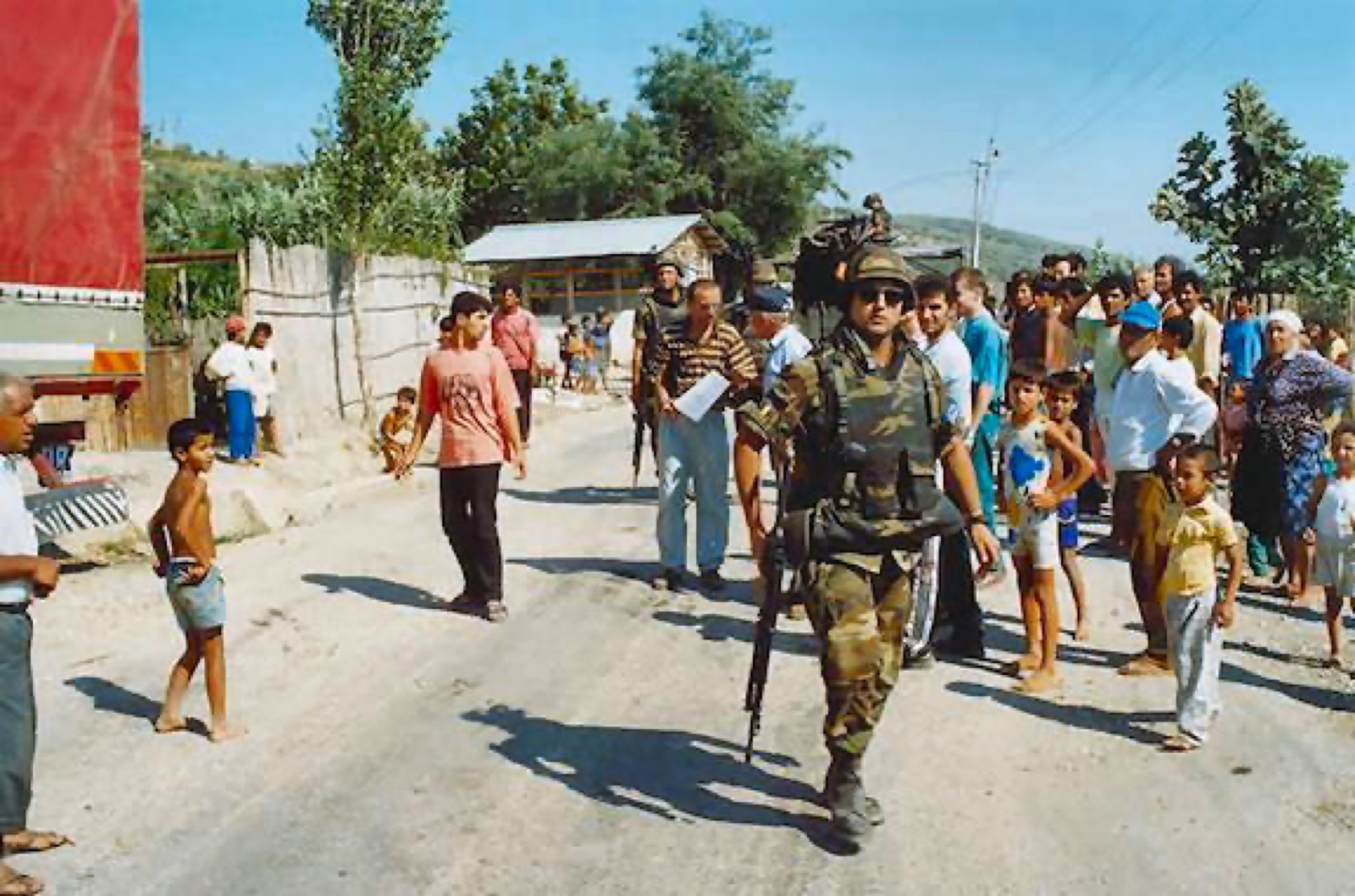 Photo: Uenue / Wikimedia Commons / CC BY-SA 4.0.
Operation Alba and the international intervention
The international response moved faster than international responses to Balkan crises usually moved, in part because Italy was the closest neighbor and the country with the most direct exposure to what was happening in the Adriatic.
On March 28, 1997, an Italian Navy corvette, the Sibilla, intercepting Albanian refugee boats in the Strait of Otranto collided with and sank one of them. At least eighty-four people, including children, drowned. The Otranto tragedy sharpened the sense in Rome and Brussels that an international intervention had become a political necessity.
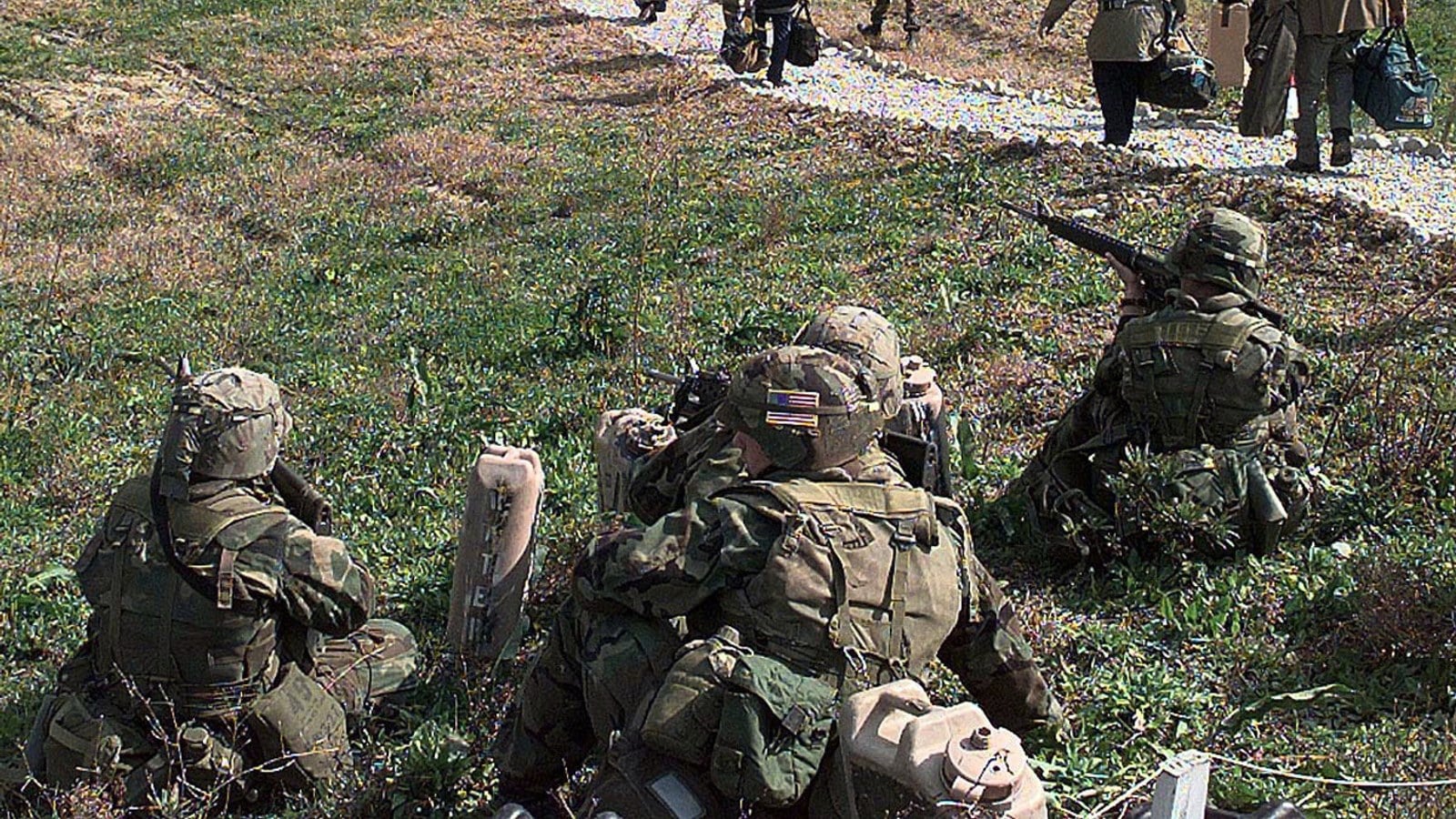
The UN Security Council, acting on a resolution already in preparation, authorized a multinational force that same day — March 28, 1997 — in Resolution 1101. The force, named Operation Alba, deployed on April 15 with about 7,000 troops under Italian command. The 11 participating nations were Austria, Belgium, Denmark, France, Greece, Italy, Portugal, Romania, Slovenia, Spain, and Turkey. The mandate was humanitarian: protect distribution of food and supplies, secure airports and ports, and enable the political transition.
In parallel, three national operations — separate from Alba — evacuated foreign nationals: Operation Silver Wake (United States), Operation Libelle (Germany), and Operation Cosmas (Greece, which lifted 240 foreign dignitaries out of Durrës). Operation Alba forces drew down beginning in late June and fully withdrew on August 8, 1997.
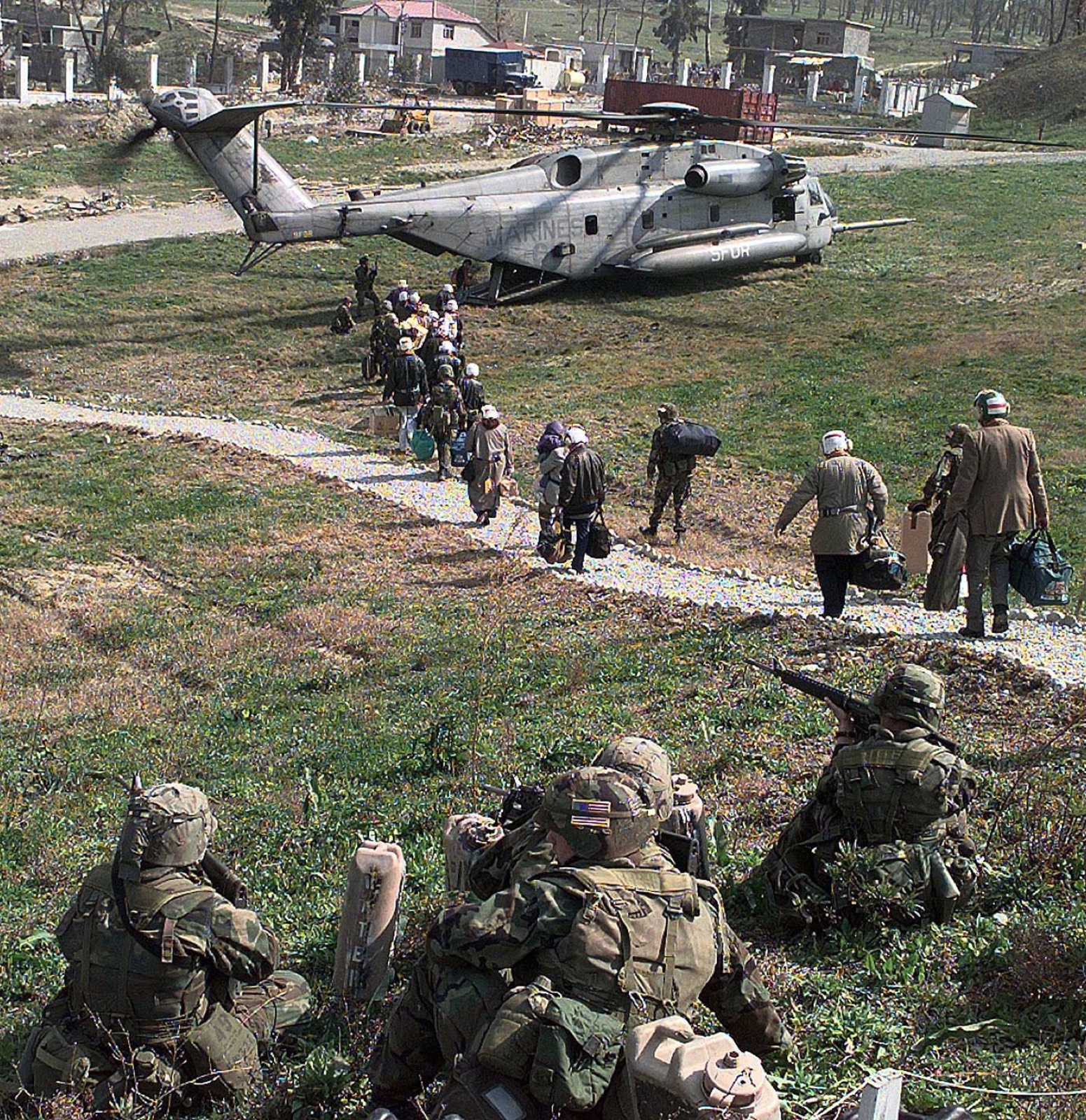 Photo: Photographer’s Mate 2nd Class Brett Siegel, US Navy / Wikimedia Commons / Public Domain.
The fall of Berisha and the new government
The political resolution moved faster than the economic one. On March 9, Berisha and the opposition agreed on a Government of National Reconciliation under Bashkim Fino, a Socialist Party figure from Gjirokastër, with a mandate to organize new elections. The deal kept Berisha as president for the moment but transferred executive authority to a coalition cabinet.
The elections came on June 29, 1997. The Socialist Party and its allies won 100 of 151 parliamentary seats with 72.6% turnout. The Democratic Party suffered a historic defeat. A simultaneous referendum on restoring the monarchy was rejected by 66.7% of voters — Crown Prince Leka disputed the results — closing the door on a Zogu restoration that some exile circles had pushed since 1939.
Berisha resigned the presidency on July 24, 1997. The new parliament elected Rexhep Meidani, a physics professor and Socialist deputy, as his successor. The transition was, by the standards of Balkan crises in the 1990s, peaceful at the institutional level even as the southern countryside remained heavily armed for years.
The 1997–99 emigration wave
The story most often told ends roughly there: international force in, elections held, new government seated, country still in pieces but moving. The story less often told begins there. Hundreds of thousands of Albanians had decided, by mid-1997, that the country they had stayed in for the post-Communist transition was not a country they could rebuild from inside.
The Migration Policy Institute estimates that approximately 70,000 Albanians emigrated within months of the unrest, the majority across the Adriatic into Italy and across the southern border into Greece. The Otranto tragedy was one visible point on a much larger flow of unsafe boat crossings that ran through the spring and summer of 1997.
The wave that reached the United States was smaller in absolute numbers but distinct in composition. It moved through three legal tracks. The first was the Diversity Visa lottery, which had opened to Albanians in 1995 and which became a primary route after 1997 for younger applicants with no existing US relatives. The second was family reunification, which connected new arrivals to the Albanian-American communities already established in New York, Massachusetts, and Michigan since the early twentieth century. The third was asylum, claimed on the basis of the documented violence and persecution risk in the south during 1997–98.
A meaningful share of the Albanian-Americans who are now in their forties and early fifties arrived in this window. NAR’s founder, Ervin Toro, is one of them — he arrived in New York at the age of thirteen in 1997, during the post-pyramid civil unrest. He is not unusual in that. The state-by-state distribution that the 2024 American Community Survey records — roughly 56,000 Albanian-Americans in New York, 27,000 in Michigan, 21,000 in Massachusetts — is in part the long shadow of decisions made by parents in Vlorë, Gjirokastër, Korçë, and Tirana between January and August 1997.
What the looted weapons later did
A second, longer shadow extends out of 1997 into the wars that followed.
The hundreds of thousands of small arms, the 1.5 billion rounds, the 3.5 million grenades, and the 1 million land mines that left state armories in the spring of 1997 did not stay in Albanian hands. A meaningful share crossed into Kosovo during the 1998–99 war, where they materially supplied the Kosovo Liberation Army in its conflict with the Yugoslav security forces. Multiple subsequent histories of the KLA — and the 2000 ICTY documentation of arms flows — trace the supply chain back to the looted Albanian depots.
The implications were dual. The 1997 looting put weapons into a conflict in which a meaningful Albanian-American constituency had a direct stake. It also left Albania itself with a long demining problem that has continued for two decades; the AAATM (Albanian Mine Action Executive) was still operating into the 2010s on residue from depots opened in 1997.
For the diaspora, the connection runs through families. Many Albanian-American households that absorbed losses in the 1997 schemes also had relatives caught in the 1998–99 Kosovo war. The two events are usually written about as separate stories. Inside the families they were often the same story.
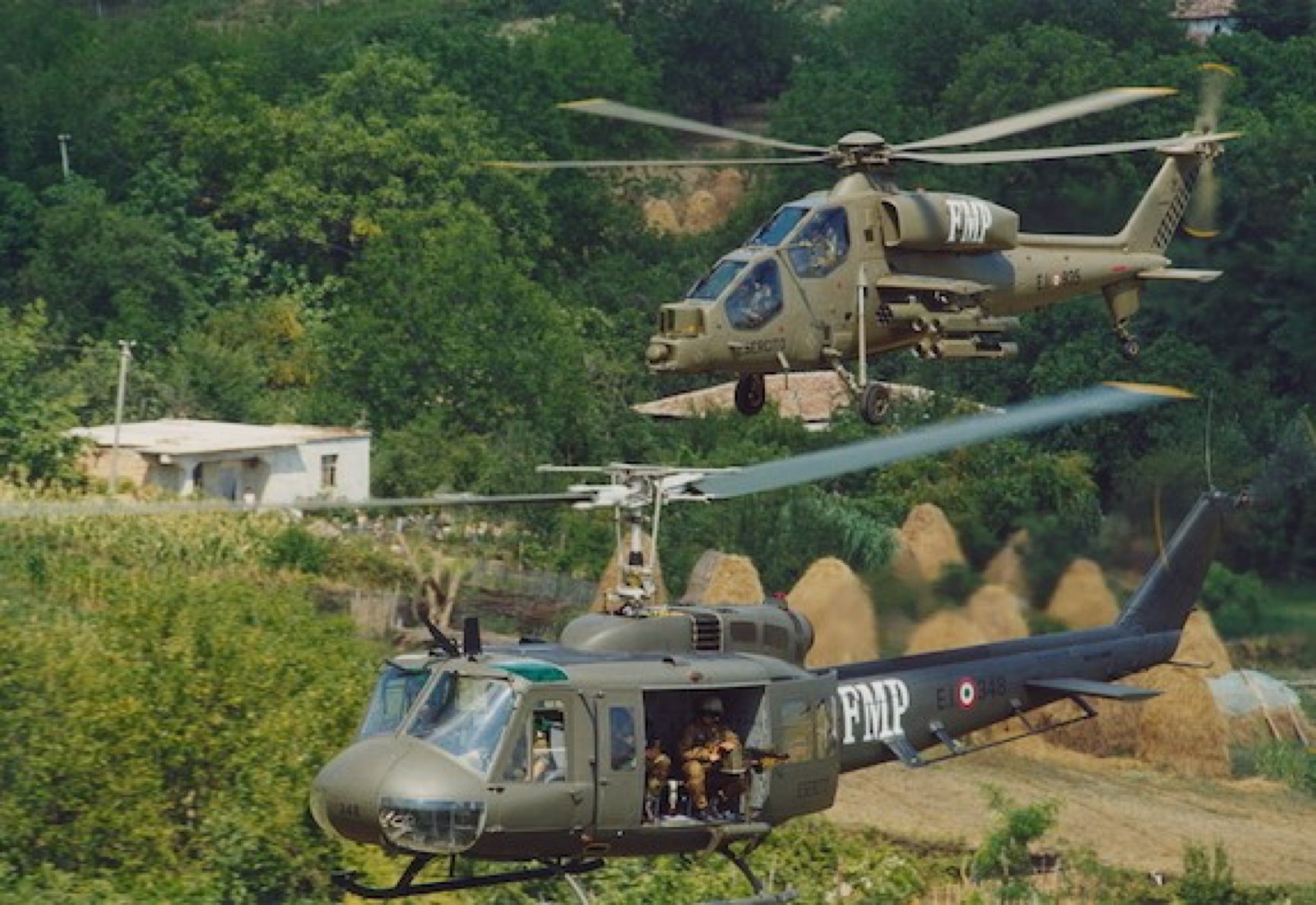 Photo: Uenue / Wikimedia Commons / CC BY-SA 4.0.
The diaspora reckoning
The long historical reckoning of 1997 inside Albania has been partial. Prosecutions were limited — the maximum sentence for fraud at the time was five years — and several scheme operators served short terms or escaped abroad. VEFA Holding’s Vehbi Alimuça was imprisoned. Sudja’s Maksude Kademi was arrested at her balcony. Xhaferri’s Rrapush Xhaferri was arrested in Lushnjë on January 22, 1997. Populli’s Bashkim Driza was eventually arrested in Montevideo in September 2008 and escaped extradition in February 2009. None of the criminal proceedings approached the scale of the underlying loss.
Inside the diaspora, the reckoning has been quieter and more private. Households that emigrated in 1997–99 carried, in many cases, financial losses that were never recovered, family members lost in the violence or the boat crossings, and a generational distrust of formal financial institutions that has shaped behavior in the United States for decades. None of that is on the public record. Most of it is inside families.
The National Albanian Registry exists, in part, to make that diaspora record more visible without forcing anyone to publish what they would rather keep private. Counting the community is the first step. The historical record of how the community arrived — including the parts that begin in Vlorë in February 1997, or Gjirokastër in March, or in a small boat on the Adriatic in the weeks after Otranto — is part of what the count keeps in view.
If you carry a family history that touches this period, your registration is part of the larger record. You can register here.