

The law most of the diaspora hasn’t read
In 2020, Albania quietly rewrote the rules for who counts as Albanian, and most of the diaspora still operates under the old assumptions. Conversations at family dinners, on Albanian community Facebook groups, and even with some immigration attorneys still reference the pre-2020 rules: “you have to renounce your other citizenship,” “only your parent can transmit it,” “you have to live in Albania first.” None of those are true anymore.
Law No. 113/2020, the Albanian Citizenship Law, replaced the 1998 statute and is now the controlling law on who can become an Albanian citizen, how they do it, and what counts as proof. The law has since been amended, most notably by Law No. 77/2023, adding further refinements. This article is the plain-English version of what the law says, who it covers, and where the practical traps still live. For the step-by-step application process, see Albanian Citizenship by Descent: 2026 US Guide; for the full document list, see Albanian Passport Documents Checklist.
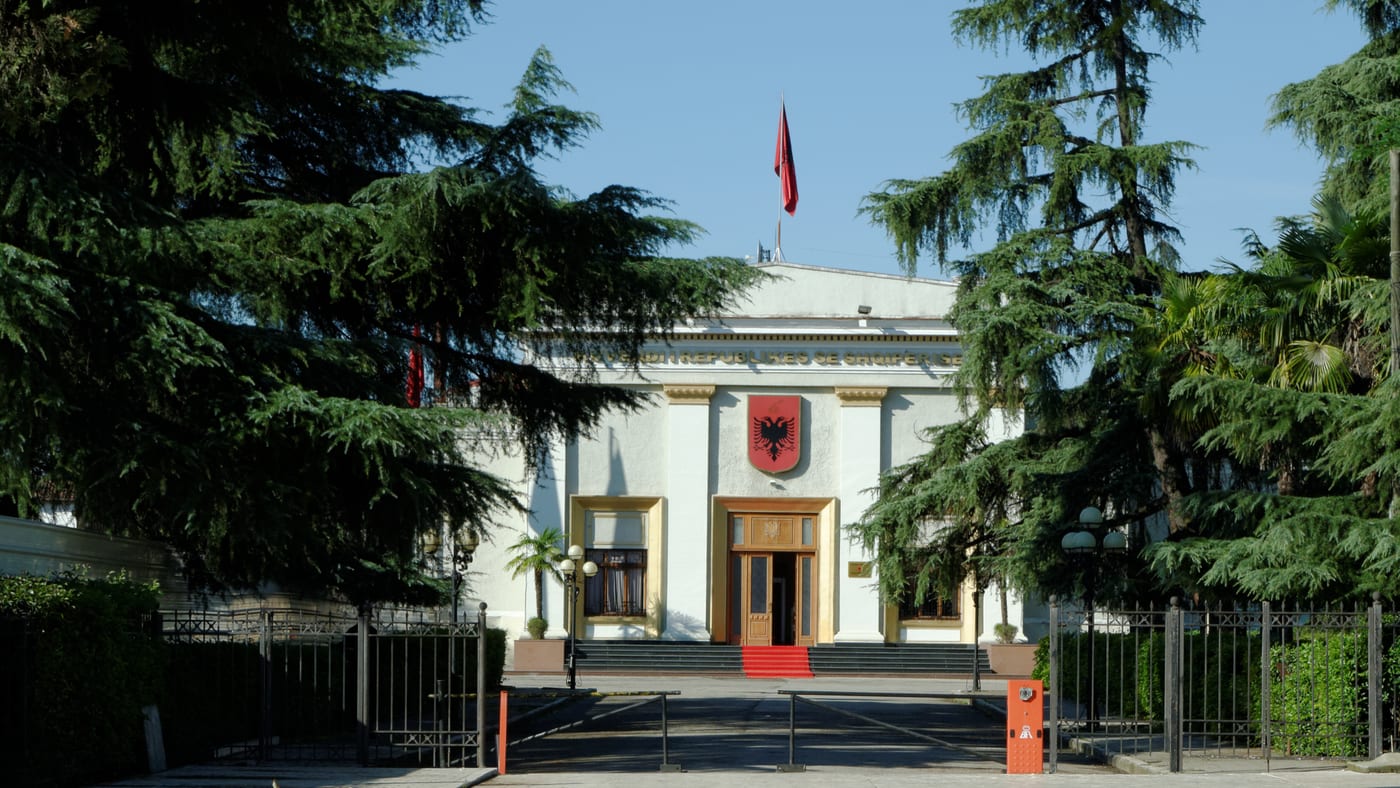
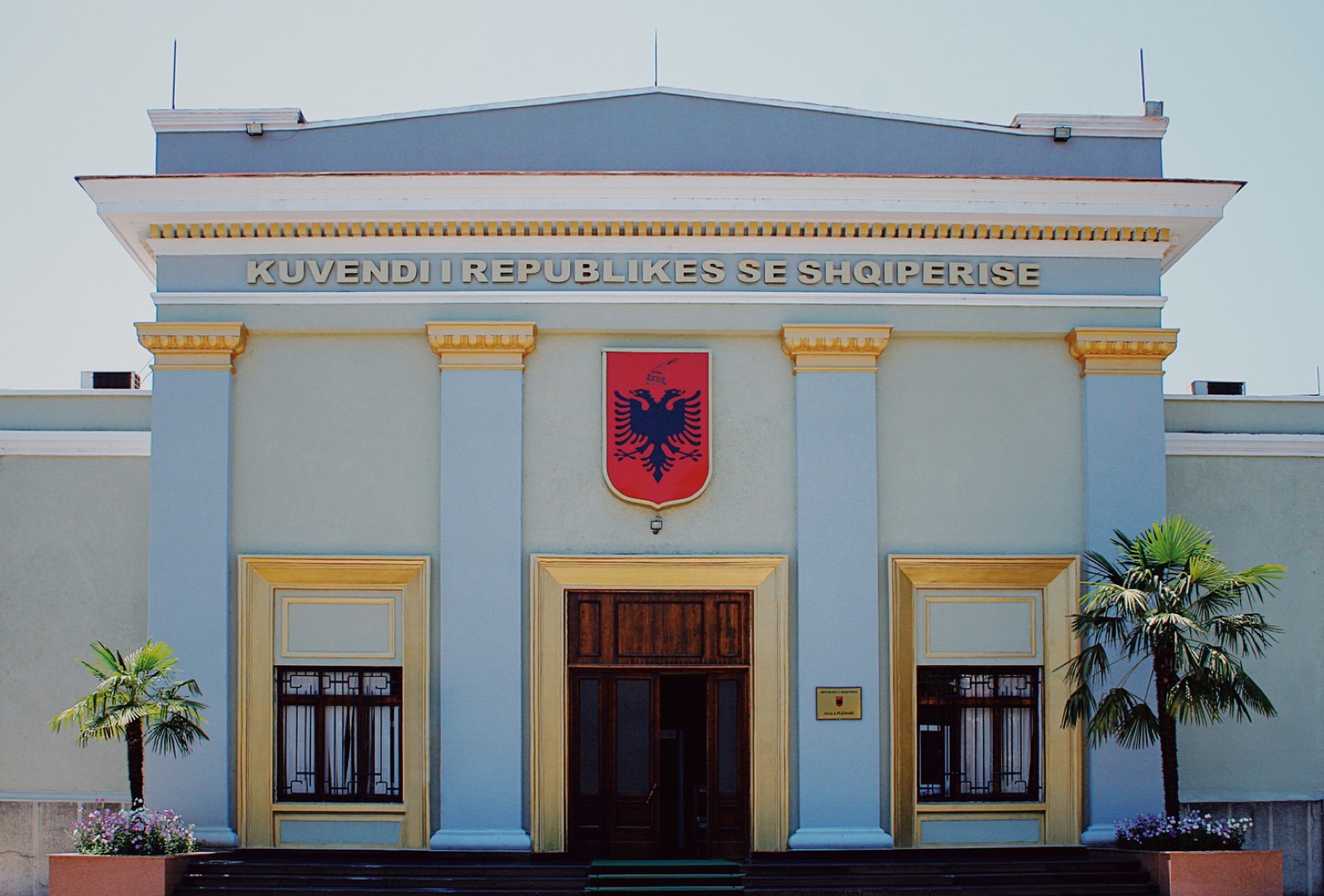 Kuvendi (Parliament of Albania), Dëshmorët e Kombit Boulevard, Tirana, the body that passed Law No. 113/2020 (the Albanian Citizenship Law).
Photo: Kj1595 via Wikimedia Commons / CC BY-SA 4.0
Kuvendi (Parliament of Albania), Dëshmorët e Kombit Boulevard, Tirana, the body that passed Law No. 113/2020 (the Albanian Citizenship Law).
Photo: Kj1595 via Wikimedia Commons / CC BY-SA 4.0
 Stylized rendering of an official Albanian state document with red wax seal, the kind of certified paper a citizenship-by-descent applicant assembles to prove the chain of birth records.
Graphic by NAR
Stylized rendering of an official Albanian state document with red wax seal, the kind of certified paper a citizenship-by-descent applicant assembles to prove the chain of birth records.
Graphic by NAR
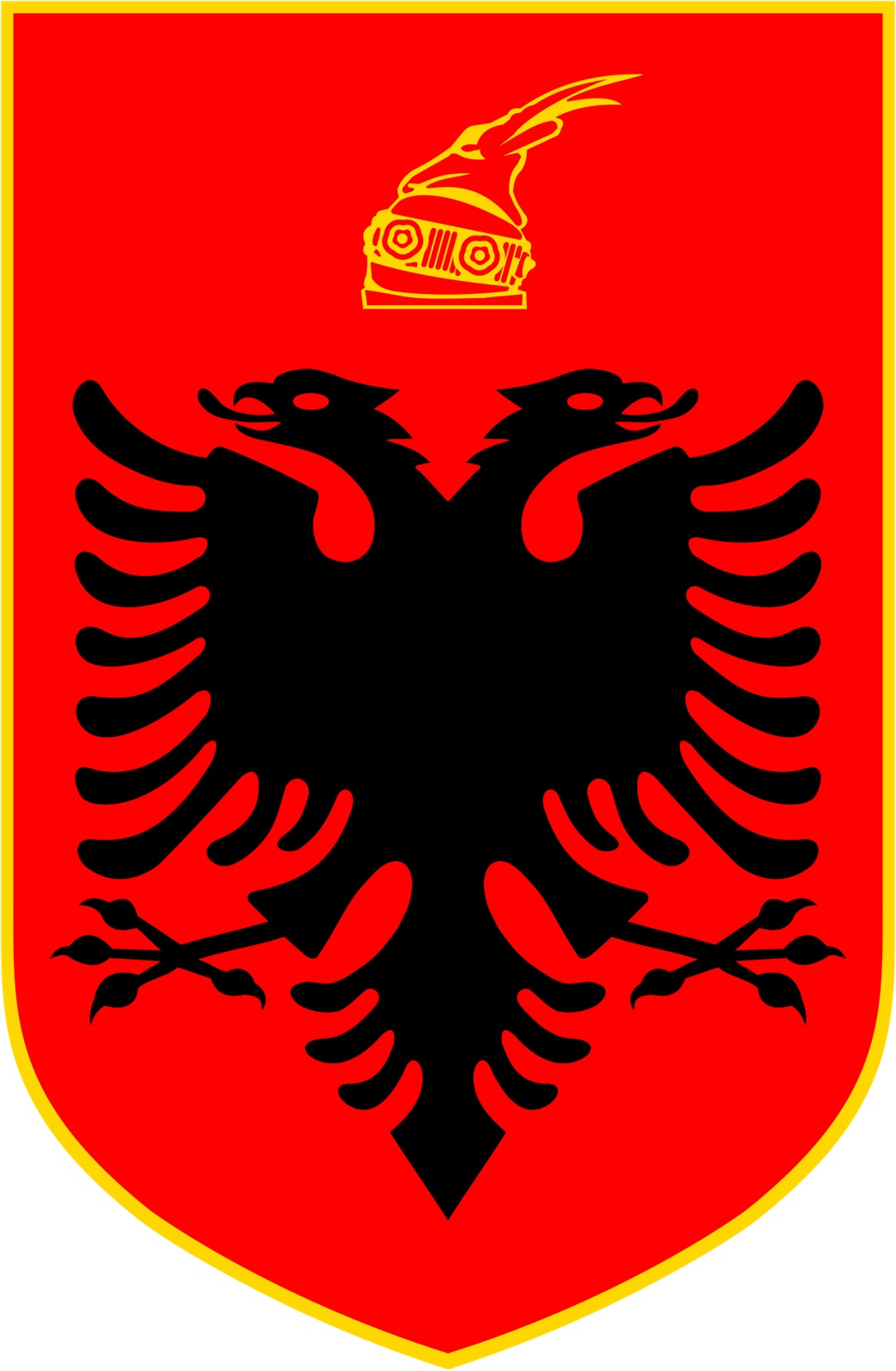 Coat of arms of the Republic of Albania (1998 design), black double-headed eagle on red shield, surmounted by Skanderbeg’s golden helmet. Stamps every Albanian passport and citizenship certificate.
Vector: Kj1595 via Wikimedia Commons / public domain (Albanian Copyright Law No. 35/2016, Art. 12)
Coat of arms of the Republic of Albania (1998 design), black double-headed eagle on red shield, surmounted by Skanderbeg’s golden helmet. Stamps every Albanian passport and citizenship certificate.
Vector: Kj1595 via Wikimedia Commons / public domain (Albanian Copyright Law No. 35/2016, Art. 12)
What the 2020 Law changed
Five substantive shifts vs the prior law:
- Descent eligibility extended to three generations. Previously, descent claims were practically capped at parent and grandparent in most enforcement scenarios. Article 6 of the 2020 Law explicitly states “up to the third degree”, parent, grandparent, or great-grandparent.
- No renunciation required for descent applicants. The old law had practical pressures toward renouncing other citizenships. The 2020 Law imposes no such requirement: a descent applicant under Article 6 must satisfy only two of the naturalization conditions, a clean serious-criminal record and no national-security threat (Article 8(1)(dh) and (ë)), and never has to give up another citizenship.
- Dual citizenship explicitly permitted with no restrictions. The 2020 Law does not condition dual nationality on bilateral treaties or any reciprocity test.
- Residency requirement waived for diaspora. Naturalization applicants still need 7 years of legal residence. Descent and ethnic-origin applicants are exempt.
- Streamlined procedure for diaspora applicants. Later amendments simplified passport issuance and exempted qualified diaspora applicants from the language and history examination.
The three pathways to citizenship
Law 113/2020 recognizes three primary pathways. Most Albanian Americans qualify under exactly one of them; very few qualify under more than one.
Pathway 1, Descent (Article 6)
The descent path is the one most US-based readers will use. The plain-English test:
- Are you a direct lineal descendant of someone who was an Albanian citizen at the time of their birth, OR who was ethnically Albanian by origin?
- Is that ancestor your parent, grandparent, or great-grandparent?
- Can you document the chain of descent with civil status records (birth certificates, marriage certificates where name changes occurred, naturalization records where applicable)?
If yes to all three, you qualify under Article 6.
Article 6’s own wording is broad: it grants citizenship to a foreigner “whose ancestors are of Albanian descent.” Read on its face, that reaches ethnic Albanians from Kosovo, North Macedonia, Montenegro, and Greek Çamëria, even though those territories were not part of the modern Republic of Albania.
There is a wrinkle worth knowing before you rely on it. Article 2(d), the law’s definitions section, defines “descent” as “a direct lineal kinship up to the third degree between an applicant and their ancestor holding Albanian citizenship.” Many ethnic Albanians outside Albania’s borders had ancestors who held Ottoman, Yugoslav, Serbian, or Greek citizenship, and never that of the Albanian state. So the statute pulls in two directions: Article 6 says “of Albanian descent” (an ethnicity test), while the defined term “descent” points to an ancestor who was an Albanian citizen. The law does not reconcile the two on its face. In practice, the answer for a borderline case is set by the documentation instruction the Minister issues under Article 6(3) and by consular practice, both of which have generally recognized ethnic-Albanian origin. If your line ran through a neighboring state rather than Albania proper, that recognition is likely but not automatic: confirm the specific documentary requirement with the Albanian consulate before building an application around Article 6.
Pathway 2, Marriage (Article 8)
If you marry an Albanian citizen, you can apply for citizenship after 3 years of marriage, provided you have also resided lawfully in Albania for at least 1 year. Marriage is a facilitated form of naturalization under Article 8, it waives the 7-year residence and the language/history test that standard naturalization requires, but not physical residence entirely. Most US-based spouses don’t qualify in practice unless they’ve moved to Albania.
Later amendments exempted family-reunification applicants from the language and history test, which made the marriage path more accessible for those who do live in Albania with an Albanian spouse.
Pathway 3, Naturalization (Article 8)
The general naturalization track requires:
- 7 years of legal residence in Albania
- Stable income or means of support
- Suitable housing
- Albanian language proficiency (test required, with exemptions noted below)
- No serious criminal record
- A demonstrated relationship with Albania (the law leaves this discretionary)
This is the longest path and is rarely how Albanian Americans become citizens, since descent applicants can skip it entirely.
Later amendments, what’s new
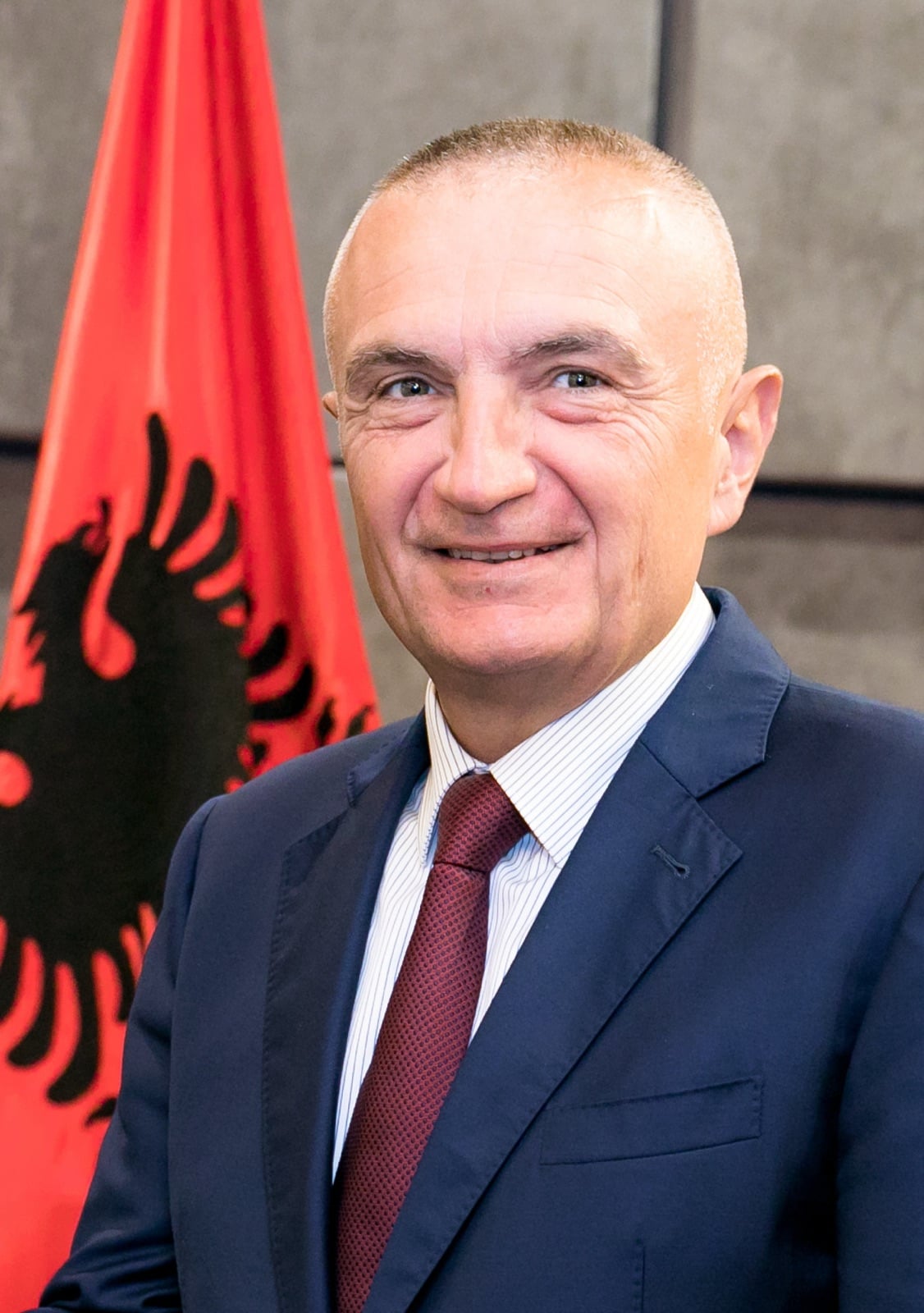 Ilir Meta, President of Albania 2017–2022, photographed 2018, the head of state during whose term the Kuvendi passed Law 113/2020, adopted July 29, 2020.
Photo: Malton Dibra / European Union via Wikimedia Commons / CC BY 4.0
Ilir Meta, President of Albania 2017–2022, photographed 2018, the head of state during whose term the Kuvendi passed Law 113/2020, adopted July 29, 2020.
Photo: Malton Dibra / European Union via Wikimedia Commons / CC BY 4.0
Amendments since 2020, most notably Law No. 77/2023, introduced several changes that especially benefit the diaspora:
- Language and history test exemptions for: applicants from countries where Albanian is an official language (i.e., Kosovo, North Macedonia in some regions); spouses of Albanian citizens applying via family reunification; and parents of Albanian-citizen minor children applying via family reunification.
- Automatic citizenship for children born in Albania to parents with long-term legal residence, with parental consent.
- National-interest minor citizenship: a minor can be granted Albanian citizenship for reasons of national interest in education, science, art, culture, economy, or sports, with parental consent (and the minor’s own consent at age 14+).
Separately, and this is in the base 2020 Law, not an amendment, an applicant whose request is refused can appeal the decision to the competent administrative court (Article 18(5)).
Six concrete examples, who qualifies
To make Article 6 less abstract, here are six real-world examples we see frequently in the Albanian American community:
1. Maria, born in Detroit in 1985, whose grandmother was born in Korçë in 1940 and emigrated in 1956. Qualifies under Article 6 via grandparent. Documents needed: Maria’s US birth certificate, her parent’s US birth certificate, her grandmother’s Albanian certifikatë lindjeje from Korçë.
2. James, born in New York in 1992, whose mother emigrated from Tirana in 1991 and naturalized as a US citizen in 1999. Qualifies under Article 6 via parent. James’s mother is an Albanian citizen by birth, and acquiring US citizenship does not by itself cause loss of Albanian citizenship (Albania permits dual nationality). James qualifies whether or not she has actively maintained her Albanian status.
3. Adrian, born in Boston in 1988, whose great-grandfather was born in Gjirokastër in 1898 and emigrated to the US in 1920. Qualifies under Article 6 via great-grandparent, the third-generation cap is the limit, but it does cover this case. Documents will be older and harder to source but typically still findable in Gjirokastër’s municipal archives.
4. Lulzim, born in Pristina, Kosovo in 1980, naturalized US citizen since 2010. The case with the most legal nuance. Article 6 reaches “ancestors of Albanian descent,” but Article 2(d) defines “descent” as a line to an ancestor who held Albanian citizenship, which a Kosovo-origin family typically won’t have, since the relevant ancestors were Ottoman then Yugoslav citizens. In practice Albania has recognized ethnic-Albanian origin, and the reconciling detail sits in the Article 6(3) documentation instruction. His Kosovo birth certificate plus proof of ethnically Albanian parentage is the starting point, but he should confirm the exact requirement with the consulate rather than treat eligibility as automatic.
5. Hannah, born in Charlotte in 1995, whose father was born in Skopje, North Macedonia in 1965 and is ethnically Albanian. Same nuance as the Kosovo case. Article 6’s “of Albanian descent” language reaches ethnic Albanians from North Macedonia, but the Article 2(d) definition points to an ancestor who held Albanian citizenship, which a Macedonia-origin family usually won’t have. The chain of documents includes the father’s Macedonian birth certificate and records establishing Albanian ethnic identity (often a family civil status record from a predominantly Albanian municipality). The controlling standard is set under Article 6(3), confirm it with the consulate.
6. Theresa, born in Tampa in 1990, whose mother is American but whose grandfather was born in Vlorë in 1930. Qualifies under Article 6 via grandparent. The fact that her mother (the linking generation) is not herself Albanian by descent is irrelevant, what matters is the unbroken chain of birth certificates from Theresa back to the Albanian-born grandfather.
Who does not qualify under descent
1. Mark, born in Chicago in 1980, whose great-great-grandparents were born in Albania. Does not qualify under descent, fourth generation is beyond the third-generation cap of Article 6. Mark would need to apply through naturalization (7 years in Albania) or hope for a future amendment that extends the cap.
2. Sarah, born in Atlanta in 1995, married to an Albanian-American (US-born) husband. Does not qualify by marriage to a US citizen of Albanian descent, the marriage path (Article 8) requires marriage to an Albanian citizen, not just someone of Albanian descent. If her husband first acquires Albanian citizenship under Article 6, then her path opens, but only after 3 years of marriage and at least 1 year of residence in Albania.
3. David, born in San Francisco in 1985, whose family is from Bosnia and identifies as Bosniak (not Albanian). Does not qualify under descent. The law requires Albanian descent specifically. Bosnian, Serbian, Croatian, or other South Slavic ethnicities do not satisfy Article 6.
Dual citizenship, what the law says
Law 113/2020 permits multiple citizenship without restriction: none of its acquisition paths require you to renounce another nationality, and dual status is not conditioned on any treaty or reciprocity test. This was already the practical reality before 2020 but is now the settled shape of the primary law. Important consequences:
- You do not need to renounce US (or any other) citizenship to become Albanian.
- Your existing US obligations, military service if drafted, tax filing, are unaffected by acquiring Albanian citizenship.
- Albania does not impose a “primary citizenship” test the way some countries do; you remain fully Albanian even if your day-to-day life is in the US.
- The US generally allows dual citizenship as well; the State Department has explicitly recognized that US citizens may possess foreign citizenship without losing US status.
The one practical caveat: under the US Master Nationality Rule, when you are physically in Albania, the Albanian government treats you as exclusively Albanian for diplomatic and legal purposes. You cannot, for example, ask for US consular assistance in Albania for an issue involving Albanian law enforcement of Albanian citizens.
What “Albanian descent” means legally
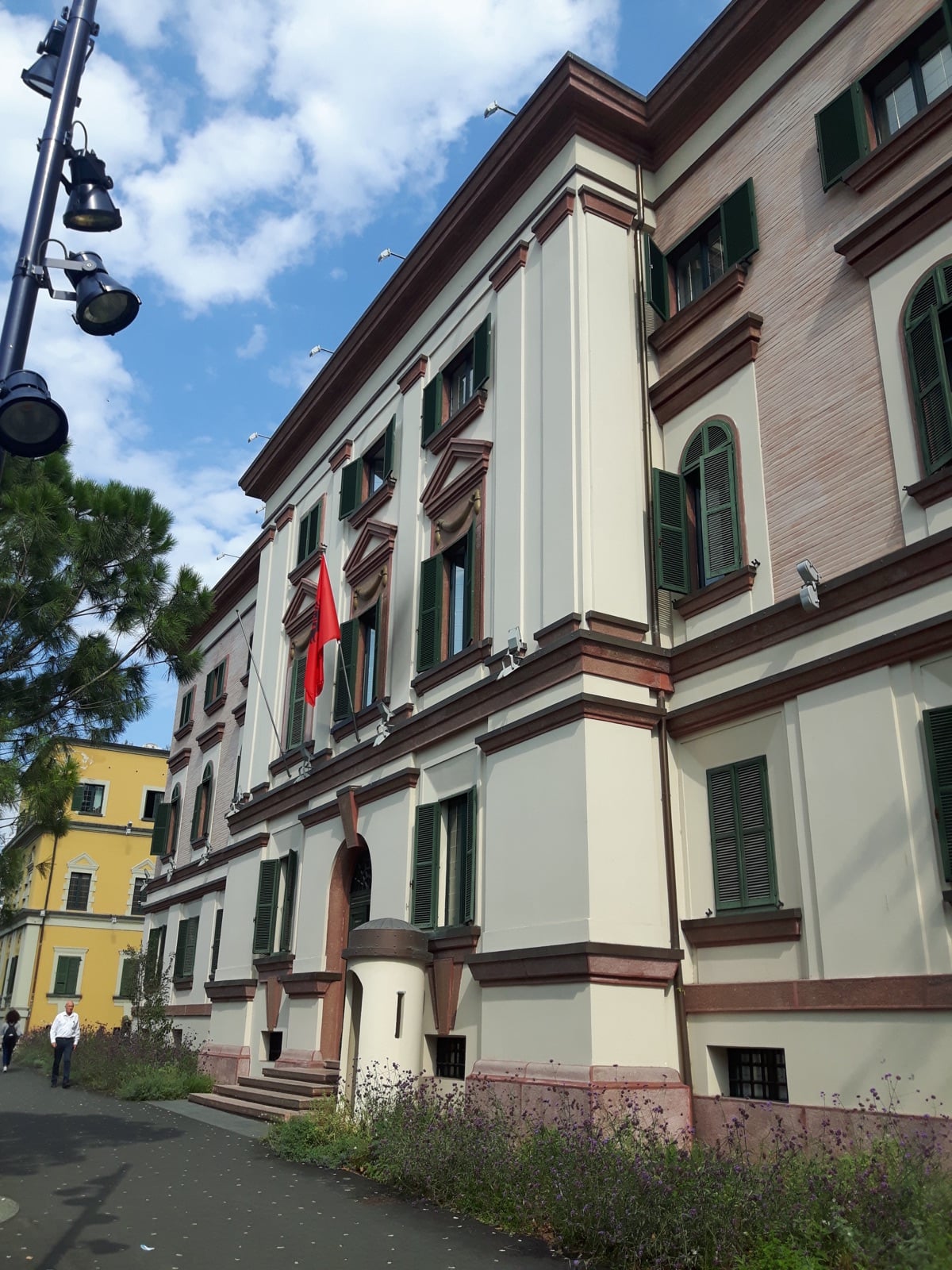 Ministry of Interior of Albania, Dëshmorët e Kombit Boulevard, Tirana (October 2018), the agency that processes citizenship applications under Law 113/2020.
Photo: ErtonKashta via Wikimedia Commons / CC BY-SA 3.0
Ministry of Interior of Albania, Dëshmorët e Kombit Boulevard, Tirana (October 2018), the agency that processes citizenship applications under Law 113/2020.
Photo: ErtonKashta via Wikimedia Commons / CC BY-SA 3.0
The most consequential, and least settled, phrase in the 2020 Law is “i prejardhjes shqiptare”, “of Albanian descent,” in Article 6. Read plainly it is broader than “Albanian citizen” or “born in Albania.” But as noted above, the definitions section (Article 2(d)) ties “descent” back to an ancestor who held Albanian citizenship, and the law never squares the two. Because Article 6(3) hands the documentary rules to a Ministerial instruction, the real-world scope is set administratively rather than by the statute’s words alone.
In practice the following have generally been recognized, in roughly descending order of how settled that recognition is:
- People born within the modern Republic of Albania
- Ethnic Albanians from Kosovo
- Ethnic Albanians from North Macedonia
- Ethnic Albanians from Montenegro
- Çams (ethnic Albanians from Greek Çamëria, displaced during and after WWII)
- Arvanites (descendants of medieval Albanian migrations to Greece), recognition is more discretionary and less commonly tested
- Arbëreshë (Italian-Albanian communities in southern Italy), same
The further your line sits from an ancestor who was an Albanian citizen, the more the outcome depends on that Ministerial instruction and on the individual consular officer, not on a clean statutory guarantee. The practical test is the same everywhere: produce civil status records linking you, generation by generation, to your Albanian ancestor. Whether ethnic origin alone suffices, or the file needs to reach an ancestor who held Albanian citizenship, is exactly the question to put to the consulate before you invest in translations and apostilles.
Why this matters for the Albanian American diaspora
A few practical implications most Albanian Americans haven’t fully internalized:
- You probably qualify. If your family came from anywhere in the historically Albanian-populated regions of the Balkans within the last three generations, the path is open. The 2020 Law was written with the diaspora in mind.
- Your children automatically qualify through you. Once you are an Albanian citizen, your minor children are eligible for Albanian citizenship through you under Article 5, with parental consent. There is no separate decade-long process for them.
- Citizenship is a political tool. Beyond the personal value of dual identity, the size and citizenship status of the diaspora is a political resource. The more Albanians in the US who hold Albanian passports and can vote in Albanian elections, the more weight the diaspora carries in Tirana, and the more weight the Albanian American community carries with US politicians who want diaspora votes.
What still needs to change
Three honest critiques of the 2020 Law from a diaspora-utility perspective:
- The third-generation cap leaves later generations out. Fourth- and fifth-generation Albanian Americans who keep a real cultural connection have no descent path under the current law. If anything, a great-grandparent reach is generous by current standards, Italy cut its once-unlimited citizenship-by-descent to two generations in 2025, and Ireland’s descent route generally stops at a grandparent, so the realistic ask here is a modest extension, not catching up to looser peers.
- Consular processing capacity is the real bottleneck. The DC Embassy and New York consulate are under-staffed for the demand. A US-side application sometimes waits weeks for an appointment slot before it even enters the official 6-month timeline.
- Document costs add up. Beyond the government application fee, the real out-of-pocket costs for a US applicant, apostilles, translations, FBI check, can add up to several hundred dollars or more. That is a meaningful barrier for some families.
These are areas where diaspora advocacy could push for further reform.
You belong on the count
The National Albanian Registry counts Albanian Americans by self-identification, without requiring you to claim citizenship or prove anything. Whether you ever apply for an Albanian passport, whether your great-grandparent’s records are findable, whether you’ve thought about any of this until five minutes ago: if you self-identify as Albanian by birth, descent, or ethnicity, you belong on the registry.
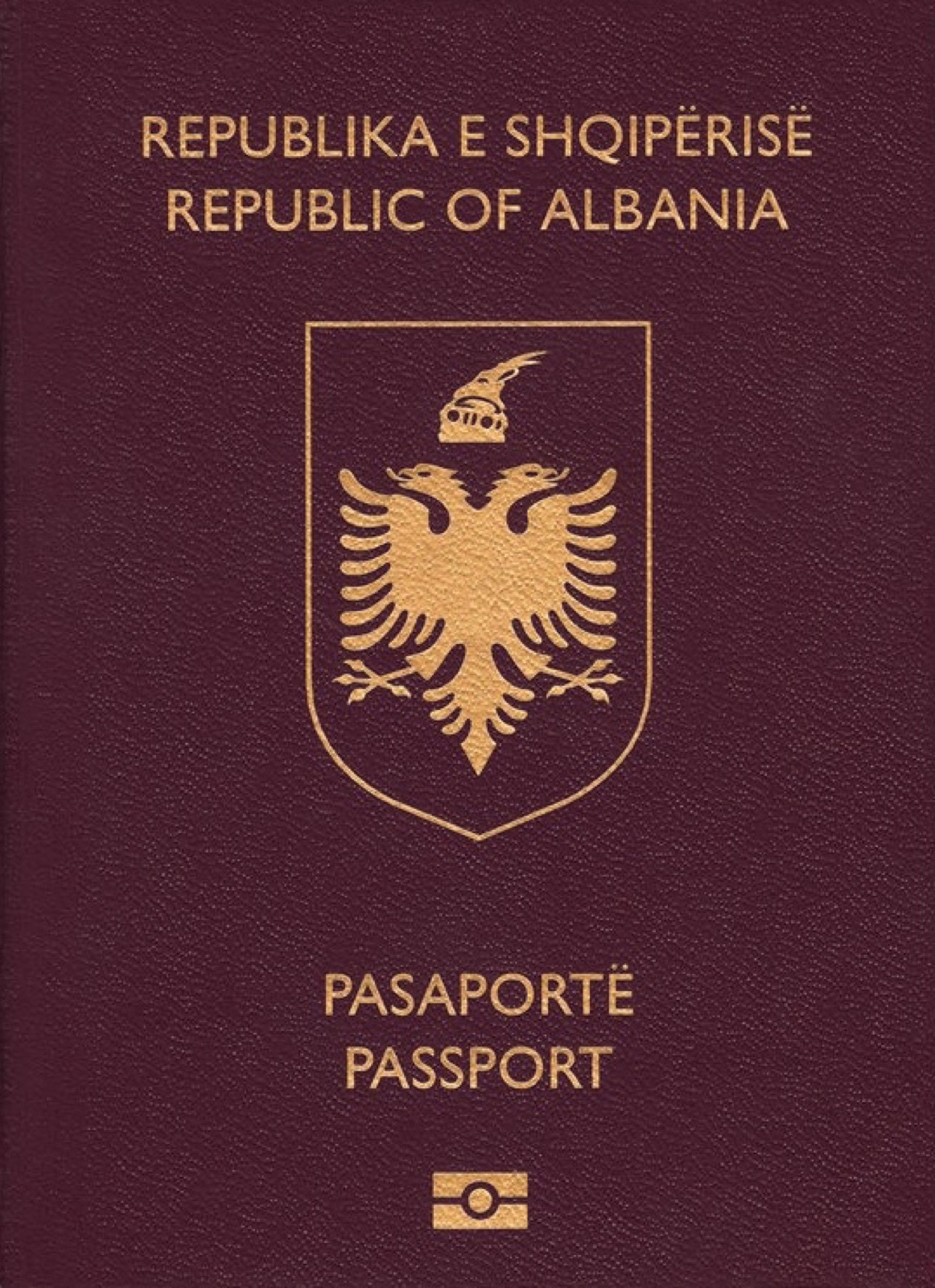 Albanian biometric passport, current burgundy EU-aligned design issued since 2009; the document a successful Article 6 descent applicant ultimately receives.
Photo: Government of Albania via Wikimedia Commons / public domain
Albanian biometric passport, current burgundy EU-aligned design issued since 2009; the document a successful Article 6 descent applicant ultimately receives.
Photo: Government of Albania via Wikimedia Commons / public domain
The U.S. Census records about 230,000 Albanian Americans. The real number, including ethnic Albanians from across the Balkans and second- and third-generation Albanian Americans, is closer to a million. Counting ourselves is the first step toward acting like the community we already are.
Registration takes 2 minutes. It is free. It is private. It produces a permanent digital Certificate of Albanian Heritage.
That gap between the million and the 230,000 is the reason the National Albanian Registry exists. The Census misses most of us for structural reasons we’ve written about at length, and the 2030 count is being designed now. If you are handling Albanian paperwork, you are already doing the harder version of this. Add yourself to the count → It is free and takes about two minutes.
Sources: Law No. 113/2020, full text (English) at GLOBALCIT, Albania: Law No. 113/2020 on Citizenship, Refworld, JBC & Associates, amendments to Law 113/2020, Albanian nationality law, Wikipedia, Securing Rights and Futures: Albania strengthens legislation, UN Albania. General information, not legal advice. Verify current law and procedure with the Albanian consulate or a licensed Albanian attorney before relying on it for an application.