
AANO New York Student Summit
Key takeaways
Four panels, one afternoon at Fordham. Below is what was actually said, panel by panel, with a link straight to that moment in the recording — 27 takeaways in all, then every question the moderator put to a panelist: 20 questions to 18 speakers, each with the clip of the answer.
What came up again and again
6 themes · drawn from four of the five sessions · the short version
Six things were said in more than one room. Each one names the sessions it came up in, so you can go and read the panel it came from.
-
Nobody got there in a straight line
Came up in 3 sessionsThe paths described were detours, not ladders. One panelist started his freshman year at 29 with three children and finished with a doctorate; another had meant to take over her father's construction company and ended up using that to design care facilities; another learned English at 22 and saw his first computer on the first day of a computer-engineering degree. The framing offered for it was a stack rather than a ladder, where things learned separately connect later, and rejection as redirection rather than a door closing.
Came up in Healthcare Without LimitsTechnology, Innovation & EntrepreneurshipEvery panel, together
-
You cannot build anything substantial alone
Came up in 4 sessionsFour of the five sessions made this point. On your own you can write code but not build a company, so the binding constraint becomes communication. One panelist said plainly that nothing in his career could have been done on his own. Students were told to ask, because the access in that room did not exist when the panelists were students, and the Q&A named communication and self-advocacy as the hardest early barrier, answered by reading, listening and practice rather than talent.
Came up in Healthcare Without LimitsTechnology, Innovation & EntrepreneurshipBusiness, Finance & LeadershipEvery panel, together
-
Attitude and consistency outrank the credential
Came up in 3 sessionsAsked how to stand out when every candidate holds the same degree, the answer was attitude, because skills can be taught and attitude cannot. The technology panel put the same thing as consistency beating talent: if you do not think your talent is exceptional, be the one who shows up daily. And a first job that looks small usually is not, with registering patients in an emergency room named as the training for crisis management later.
Came up in Technology, Innovation & EntrepreneurshipHealthcare Without LimitsEvery panel, together
-
Decide before you are certain, but know which door you are opening
Came up in 3 sessionsMoving from engineering into business was described as unlearning that one plus one equals two: there is rarely a provably right answer, only the best decision available now, and waiting for complete information means missing the moment. The Q&A added the test for it, separating decisions that can be reversed from those that cannot, since most people treat every decision as the door that only opens once. Alongside that: assumptions expire, and risk is reduced to what is acceptable rather than to zero.
Came up in Technology, Innovation & EntrepreneurshipBusiness, Finance & LeadershipEvery panel, together
-
The judgement is the part the model does not carry
Came up in 3 sessionsWhen everything in a deal checks out and something still says it is wrong, trust that, because under the analysis there is a human layer the numbers do not hold. No algorithm knows what is right for your life, because the inputs change daily. The same instinct showed up as method elsewhere: observing one child across a full week before giving an assessment, and falling in love with the problem and the people who have it rather than with your own technical solution.
Came up in Business, Finance & LeadershipHealthcare Without LimitsTechnology, Innovation & Entrepreneurship
-
Growing up between two cultures is the advantage
Came up in 2 sessionsPut directly on the business panel: if you grew up between cultures that is a professional advantage and not a gap, because being able to put yourself in someone else's position is the thing that travels across countries. It sat alongside the reminder that where you started does not cap where you can go.
Came up in Business, Finance & LeadershipTechnology, Innovation & Entrepreneurship
Healthcare Without Limits
5 speakers · 7 takeaways · in a 1h 56m recording
See this panel on the programme, with its speakers →
What to take away
7
-
A clinical background opens doors outside the clinic. One panelist moved from the emergency department into building programs and care facilities, after realizing the system was hard to navigate even for the people working inside it.
-
You do not have to pick one lane. The same panelist had wanted to take over her father’s construction company instead, and later used that construction background to help design facilities that work for the patients, families and clinicians in them.
-
The traits that make a surgeon excellent are the wrong ones for leading people. Demanding perfection works in an operating room and fails in an administrative role, where getting the best out of people is a separate skill you have to learn.
-
Progress is not a straight line. One panelist started his freshman year at 29, already a father of three, and finished with a doctorate in public health from Columbia.
-
Understand the why before you reach a conclusion. A researcher described observing one child for a full week, across every program he was in, before giving an assessment — and warned that children get placed under the diagnosis insurance recognizes, when the spectrum is far wider than that.
-
A first job that looks small usually is not. Registering patients in an emergency room taught crisis and emotion management that carried directly into later leadership roles.
-
Use the room. Panelists made the point that this degree of access did not exist when they were students, and that they are willing to help if you ask.
What it covered
5
- Moving from clinical work into leadership, operations and program development
- What a long training path costs, and what makes people stay with it
- Non-traditional routes into medicine, and defining success on your own timeline
- What neuroscience and education research say about how students learn
- Finding room to grow in a first job that is not the destination
Question by question
What the moderator asked each panelist, what they said back, and the clip it came from. The answers are summaries, not quotes — the panels ran in Albanian and English and the captions are machine-translated, so the clip is the record.
Iliriana Sela
Senior Director of Specialty Programs · ARSA Health 1 question
Asked
You started your career on the clinical side of healthcare and later moved into leadership, operations and program development. What experiences helped you realize your clinical background could open doors beyond direct patient care — and what would you tell students who are drawn to healthcare but are not sure which path to choose?
What they said
-
Healthcare is a world of its own: real estate and finding the right facility to build, insurance, building codes, engineering, and healthcare engineering as its own specialty.
-
Working as a clinician in the emergency department she kept asking why the system was so hard to navigate — not only for a person trying to get help at the most vulnerable point of their life, but for the people working inside it — and kept not getting answers.
-
So she went back for an MBA to study how the operations of healthcare work, and married the two sides: not only treating patients but building the programs and helping design facilities that work for the clinicians, the patients and their families.
-
She had wanted to take over her father’s construction company instead, and said she was torn about it. Her point to students: you do not have to pick one field, but you do need a vision of the direction, because having things planned out never works that way anyway.
Dr. Bledi Zaku
Chief, Department of Cardiovascular & Thoracic Surgery · St. Joseph's Health 1 question
Asked
Becoming a cardiothoracic surgeon takes years of study, residency and real personal sacrifice. Looking back, what were the moments you doubted yourself, and what kept you from stopping?
What they said
-
He was plain about the cost: a very long process, heavy physical demand, missed family events and birthdays. What carried him through was proving to himself, year after year, that this was exactly the work he wanted.
-
The qualities that make an excellent surgeon are the wrong ones for leading people. He compared it to the military: you work hard, you demand perfection, and when someone falls short you want to know why. In an administrative role that is close to the worst approach, and he called himself a beginner at the separate skill of gently drawing the best out of people.
-
His instruction to the students was to use the room. None of this access existed when he was in their position, and the panel came to offer networking and advice, not only to tell their stories.
Dr. Pashko Camaj
Public Health & Occupational Safety Leader, Educator & Researcher · MTA Bridges & Tunnels | William Paterson University 1 question
Asked
Your educational path was not what many students consider traditional — you went to college later and eventually earned a doctorate from Columbia. What has that taught you about perseverance and about defining success on your own schedule, especially for students who feel they are already behind?
What they said
-
He arrived in the US at 20 or 21 and put the plan of becoming a doctor aside to do what first-generation immigrants do: adapt, work, raise a family.
-
He started his freshman year at 29, a father of three, and told nobody but his wife. Four months later, with two As and two Bs out of four classes, he was convinced — and he did not stop until he had a doctorate in public health from Columbia. Not the physician he first meant to be, but a doctor of prevention, which he tells his students is the nicer one.
-
The image he gave the room: we are taught the easiest way from point A to point B is a straight line, but sometimes the line is not straight, it winds, and it still arrives at the same point.
Dr. Fatjona Lubonja
Researcher, Educator & Founder · NeuroEduSA 1 question
Asked
Much of your work sits at the intersection of neuroscience, education and human behavior. Based on what you have learned about how the brain processes information and develops, what do you wish more college students understood about how they learn?
What they said
-
She answered with a case rather than a theory. A mother in Albania came to her worried about autism, in a place short on information, and she took an appointment and observed the child for a full week — the teacher, the therapy sessions, every program he was going through — before giving an assessment.
-
Her warning to the room was about the mechanism behind assessments: because insurance recognizes one diagnosis, children get entered under it, and the spectrum is wide enough that this matters a great deal.
-
What she asked students to carry into health, medicine, surgery, epidemiology or insurance is the order of operations — understand how and why something happened before you reach a conclusion, because what you are dealing with is an individual. She would not claim 100%, but as a researcher she said there is almost always some kind of answer.
Saranda Aliu
Healthcare Operations Leader · Memorial Sloan Kettering Cancer Center 1 question
Asked
You have worked in patient access and operations in healthcare, overseeing teams, and you are now in the revenue cycle at Memorial Sloan Kettering. Looking back, what taught you the most — and what would you tell students about recognizing room to grow when a first job does not look like the end goal?
What they said
-
Eleven years ago she started in the emergency room registering patients, a job she assumed was straightforward: register the patient, move them on. It taught her to manage emotion and crisis and to tell what is important from what is not at a critical moment, and that carried directly into later leadership roles.
-
She is a numbers person who likes working with numbers and finance, and that is what took her into revenue cycle work as a financial analyst — making sure the organization is paid correctly, which means knowing not just that you get paid but how.
-
Her framing of the field: for Dr. Zaku, sitting beside her, to do his job he needs five of them behind him. Clinical care is one lane and operations, IT, legal, compliance and health policy are the others, so whether a student is drawn to finance or law there is a job for them in healthcare.
Technology, Innovation & Entrepreneurship
4 speakers · 8 takeaways · in a 1h 56m recording
See this panel on the programme, with its speakers →
What to take away
8
-
Do not fall in love with your technical solution — fall in love with the problem and the people who have it. A working prototype is only the entry ticket: it still has to clear regulatory approval, be built to the same quality every time, be something the surgeon wants to use, and something the hospital will pay for.
-
Consistency beats talent, every day. If you do not think your talent is exceptional, be the person who shows up and does the work daily.
-
Where you started does not cap where you can go. One panelist first learned English at 22 and did not see a computer until the first day of college, studying computer engineering.
-
Moving from engineering into business means unlearning that one plus one equals two. There is rarely a provably right answer — only the best decision available now, with incomplete information. Waiting for complete information means missing the moment.
-
On your own you can write code; you cannot build anything substantial. The constraint becomes communication — selling a vision and understanding what motivates people.
-
Treat a career as a stack, not a ladder. Things you learned separately turn out to connect later, the way Steve Jobs’ calligraphy class ended up as the typography of the first Mac.
-
The work is increasingly at the intersection of disciplines. Asked where they would focus graduating today, the answer was biotechnology — with the warning that institutions are not preparing students for it, so the initiative has to be yours.
-
Get deep expertise in something, and use the tools yourself rather than waiting for an employer to teach you. Depth plus current tooling means a smaller team, and work that used to take months going out in days.
What it covered
7
- Two decades building cloud, mobile, data and now AI products
- Finding the confidence to go after opportunities that look out of reach
- Taking a medical device from R&D through regulatory approval and into the market
- What separates having an idea from building and executing one
- Moving from engineering into product and business leadership
- Changing direction without wasting the education you already have
- Where the panel would focus if they were graduating today
Question by question
What the moderator asked each panelist, what they said back, and the clip it came from. The answers are summaries, not quotes — the panels ran in Albanian and English and the captions are machine-translated, so the clip is the record.
Donald Leka
Founder & CEO · The Jumptuit Group 2 questions
Asked
You have spent over 20 years building technologies in cloud, mobile, data and now artificial intelligence, often before they became mainstream. How do you recognize when a new technology is more than a trend, and how can students learn to spot where the next real opportunities are?
What they said
-
In 2005 he set out to build a cloud-based operating system with a full suite of cross-platform cloud applications. He assembled a team, built the entire platform, and took it to 48 organizations expecting at least one to see what they were doing. All of this preceded Google Docs, Office 365 and cloud services being ordinary things.
-
What he took from it was two things held at once: stay very well informed, and trust your own instincts, because you have to stay aligned with what you believe in order to succeed. He put it as understanding what is happening rather than riding a trend.
-
His second example was a 2017 meeting with what he called perhaps the largest venture capital firm in the world, where the question was where AI was going. Large language models and mimicking human intelligence were clearly the direction; his own view was that understanding the physical world we navigate and make decisions in mattered equally, and that is the vision he stayed focused on.
Asked
So many students have ideas, especially now that AI makes it easier to run experiments, but few turn an idea into something meaningful. From your experience as a founder and inventor, what separates someone who simply has a good idea from someone who can build, execute and create something that lasts?
What they said
-
Vision first, and a specific kind: clear and compelling enough that people will follow it, believe in it, and build a culture around it.
-
Then a real problem. His own example was the data problem in AI, and the intellectual-property framework they built for sovereign data, newly generated and empirically observed — a problem the industry is living with.
-
Then fundraising you understand, because the terms determine your runway and how much of the company you give up. And a team you get involved: he said their interns from Yale, Georgetown and other universities are in the deeply technical and large deployment projects from day one, on the front lines, and he encouraged students to reach out to his company and others for internships.
-
His closing point was to be multidisciplinary and agile. His father was a doctor and his mother a teacher, and he said plainly that this is not that time — you have to combine disciplines and adapt as the world does.
Adrian Shatku
Founder & CEO · UNIFI Communications & UNIFI Capital Group 2 questions
Asked
You recognized very early that the internet would transform global communications, and built a business around technologies like VoIP before they became mainstream. What did that teach you about recognizing an opportunity before everyone else sees it?
What they said
-
He came into it in 2001 already knowing the telecommunications world well, and described the shift as a complete repurposing of what had already been built rather than throwing it out. The world did not stop, it changed — and he put the current AI wave in the same frame.
-
His advice to the students was to go past using a chatbot for a club or a group: AI has several layers, he works in one of them, and he told them to focus on all seven.
Asked
Taking an idea and turning it into a company is one thing, but scaling it internationally is another. What have you learned from building a business across different countries and markets, and what should a young entrepreneur understand about execution that school will not teach them?
What they said
-
He summarized it in one line, which he credited to an earlier speaker rather than claiming for himself: consistency beats talent, every day, every hour, everywhere. If you do not think you have excellent talent, become the consistent one — get up in the morning and do it every day.
-
On building across markets he said the fun part was going around the world, and that he had effectively earned a doctorate in getting punched in the face everywhere. It is a challenging world, and building the networks took exactly that consistency and persuasion. His point to the room was that if he could do it, anyone in it could.
Jona Babi
Product Leader · Google 1 question
Asked
You grew up and received your primary education in Albania and Greece before making the move to Stanford and eventually building a career in the US. Looking back, what gave you the confidence to pursue opportunities that initially seemed out of reach — and what would you say to students who limit themselves because of where they started?
What they said
-
She was born right before communism fell, into a country she described as a hot mess with little to think about in terms of where to go, so getting out to study somewhere else was the best option she could see.
-
She first learned English at 22 and did not see a computer until the first day of college — where she started studying computer engineering.
-
Her instruction to students was not to decide in advance that being Albanian, or being at a high school or college that is not as good, rules out the Ivy League or the company everyone wants to get into. As long as you study and are dedicated, there is no way where you are from stops you getting where you want to go.
Enri Zhulati
Entrepreneur 1 question
Asked
You have taken products from research and development through regulatory approval and into the market. What has that taught you about the difference between having a great technical solution and building something that succeeds in the real world?
What they said
-
A working prototype is only the entry ticket. It still has to clear regulatory approval, be built the same way every single time, be something the surgeon wants to use, and something the hospital will pay for — so building it is a small part of the overall picture.
-
On the products he worked on, the question was never whether it could be built. It was whether people would find value in it, and value is the key word: a product that works is not necessarily a product people want.
-
His line to the room: nobody cares about your technical solution, they care about their own problems. Do not fall in love with the solution — fall in love with the problem you are solving and the people who face it.
Law, Leadership & Civic Impact
4 speakers · excerpt only · in a 6m recording
See this panel on the programme, with its speakers →
This conversation ran between the two recordings, so only a short excerpt was streamed. There is no full recording to summarize — the excerpt is linked above.
Question by question
What the moderator asked each panelist, what they said back, and the clip it came from. The answers are summaries, not quotes — the panels ran in Albanian and English and the captions are machine-translated, so the clip is the record.
Vera Mjeku
Program Manager, Legislative Division · New York City Council 1 question
Asked
The recording of this panel begins partway through this answer, so the question before it was not captured.
What they said
-
She put her career down to a family where education came first — her mother taught English in Tirana — and said she had never imagined she would end up at NYU.
-
Much of what followed was nothing she had pictured: publicity work, including for the NHL without ever having watched a game, and then politics, canvassing and get-out-the-vote, sitting in rooms with political consultants at a point when she could not have named the mayor. The tools she credits are dictionaries, encyclopedias and friends.
-
One of the first projects she worked on was Albanian American Success Stories, and she said she keeps meeting the professionals in it who gave back.
-
On working in government, the thing she singled out was Albanians being recorded as Albanian American for the first time. That is the only platform that counts the community, and counting is what produces the funding and the voice.
-
Her line to the students: your skills are your currency.
Linda Nikaj
Attorney & Adjunct Professor · Marshall Dennehey 1 question
Asked
Yours is a profession where credibility, confidence and the ability to advocate effectively all matter. What has your experience of that been, and what do you need more of?
What they said
-
She traced her voice back to being Albanian, and to starting young: a politically active family gave her a strong sense of self, and that is where she locates both her confidence and her litigation skills. She said she was a litigator early on, before she ever went to law school, without knowing it.
-
She said she wished she had something like this summit as a student and was craving it, and that is the reason they started the women’s law organization — there is a need for community, and it gets found by going out, talking to people, meeting your own and letting people inspire you.
-
The quality she named as the best one to have: curiosity. Always stay curious.
Katrina Berishaj
Managing Counsel & Chair, ERISA & Employee Benefits · Stradley Ronon 1 question
Asked
How will this change your approach to work, and what should law students consider when they are choosing an environment that suits them?
What they said
-
Working as in-house counsel means advising people. The matter may involve a corporation, but you are dealing with a person who has their own pain points — pressure from a CEO to make the bottom line work, the political pressure everyone feels in any environment — and she said that can get lost on other attorneys.
-
Before going in-house she spent a number of years at a pace she eventually decided she needed to change. She wanted to slow it down a bit, and that is what took her in-house, where people tend to be respectful of your ability to have a life of your own.
-
On what students should weigh: priorities shift when you marry and have children and a family, so the real question is the personal one — what do you want?
Nick Gjelaj
Trial Attorney | Executive Committee & Board Member, New York State Trial Lawyers Association · Gjelaj Law PLLC 1 question
Asked
Can you tell us about your experience of working at a large law firm?
What they said
-
He has always bet on himself, and was careful about why: not because he thinks he is the smartest person in the world, but because he does not think there is another person out there who can outwork him.
-
He was candid that working for yourself means an uneven pay rhythm against bills that arrive on a fixed one. He said he would not change it for anything in the world, because nothing is more important than seeing his staff and his attorneys win a case or settle one.
-
The big corporate firm lasted a year, and it is the only job he has ever quit in his life.
Business, Finance & Leadership
5 speakers · 7 takeaways · in a 1h 6m recording
See this panel on the programme, with its speakers →
What to take away
7
-
Build it so it runs without you. The test of a business is whether it still works when you are not in the room, which is a question about what you have taught other people to do.
-
Networking is not a transaction. You are better off leaving with two meaningful relationships than with a room full of introductions, and clients see right through anyone who is not genuine.
-
Assumptions expire. Models are good, but they rest on assumptions, assumptions change, the world changes with them, and the skill worth building is being able to change direction.
-
When everything else checks out and something still tells you it is wrong, trust that. Under the analysis of a deal there is a human layer the numbers do not carry.
-
No algorithm knows what is right for your life. No software, no model and no amount of code will tell you, because your inputs change every day.
-
Ask for help, and stop trying to do it alone. One panelist was blunt that nothing he has done in his career could have been done on his own.
-
If you grew up between cultures, that is a professional advantage rather than a gap. Being able to put yourself in someone else’s position is the thing that travels across countries.
What it covered
6
- The difference between starting a company and building one that outlasts you
- Analytical and critical thinking, from a career in model risk
- Judgment calls when the numbers do not tell the whole story
- Building an international career, and what transfers across countries
- Earning trust with clients and investors — and what people get wrong about networking
- Making decisions with decades, not months, in mind
Question by question
What the moderator asked each panelist, what they said back, and the clip it came from. The answers are summaries, not quotes — the panels ran in Albanian and English and the captions are machine-translated, so the clip is the record.
Eljona Shkreli
Head of Investor Relations · Stratus Financial LLC 2 questions
Asked
You came to the United States after beginning your professional life in Albania, and had to start over in order to eventually move forward.
What they said
-
She was born and raised in Albania, up in the mountains, in an area she described as having close to zero opportunity when she was born. At about 14 her parents trusted her to go to boarding school, and she said that is where she learned trust and discipline very early.
-
Starting over meant working as a waitress, as a coach, cleaning, whatever it took. In that same stretch she perfected her English, learned the culture and learned how things are run here, and the connections that came out of it are what eventually got her into an MBA.
-
Her read on the step backwards is that it was not lost time. She also told the room that being resilient and disciplined runs in Albanian blood, and that coming back up on your feet over and over and reinventing yourself is part of the culture.
Asked
A large part of your success in private banking and investor relations has depended on earning the trust of clients and investors. What have you learned about building genuine professional relationships, and what mistakes do you see young people make when they think networking means meeting as many people as possible?
What they said
-
She said she sees a lot of people treat networking as a transaction, or treat everything as a transaction. You are better off leaving with two meaningful relationships.
-
What works is approaching someone in a genuine way: pay attention to what they are saying, follow up, and care about what they said. Most of her own success came from creating relationships that meant a lot to the other person.
-
And clients can tell: her line was that they see right through you, so be genuine, do what is best for them first, do the right thing and everything will follow.
Stefan Kochi
Entrepreneur 1 question
Asked
You spent over 20 years helping turn this from an idea into a company serving thousands of business locations. What has that taught you about the difference between starting a company and building one that can survive, grow and stay relevant for decades?
What they said
-
He reframed it for a room full of students heading into exams: in business the test is whether the thing makes money, and it is a real one.
-
The turn for him came from a consultant they hired, who kept asking the same question a different way until it became: how can the business run without you being there? Building for decades is a question about what you have taught other people to do.
-
On students specifically, he said he works with young people and sees the same thing year after year — more than half are nervous and short on confidence straight out of college, regardless of what they are paid or given. His answer was to make sure the people hiring you understand what you bring.
Dr. Sonila Beliu
Managing Director, Head of Model Risk Governance & Review for Chase (CCB) · JPMorgan Chase & Co. 1 question
Asked
In applied economics and a career in model risk, you have to analyze complex information and challenge assumptions. What has that taught you about building strong analytical and critical thinking, and how can students strengthen it whatever their field?
What they said
-
She started with the emotion in the room rather than the method: one thing she learned over time is that showing emotion means you care, and she singled out women in particular.
-
The discipline is to take a step back and understand the problem — that there is a lot of uncertainty, and that there is an assumption behind every decision you have made. Models are good, but they are based on certain assumptions, assumptions change, and the world changes with them.
-
She used her own path as the worked example: she wanted to be a physicist, then wanted to be an engineer for six years and said she did not have the nerves to study it, and ended up going into finance with a master’s and then a PhD. Those were the right assumptions at the time and are not the right ones now, which is why the skill she told students to build is being able to pivot as life goes by.
Richard Lukaj
Co-Founder & Senior Managing Director · Bank Street Group 1 question
Asked
After decades of this work, what have you learned about good judgment — knowing when to move forward, when to back off, and when the numbers alone do not tell the whole story?
What they said
-
When you are in the middle of a transaction there is the analysis and all of that, and then there is the human layer, which he called a spider sense. When everything else checks out and something still tells you it is wrong, you have to trust that.
-
He was open that his own career checked none of the boxes: it was an accident, it met no pedigree requirement, there was no legacy, and his only connection to Wall Street was his father. What he offered in that first interview was that nobody out there would outwork him, a line he credited to Nick Gjelaj on the previous panel.
-
He took the long view on technology panic. In his early days there was no such thing as a spreadsheet, just square boxes you wrote in by hand; fax machines appeared in the early 90s, then this thing called email, and suddenly mail arrived on your device. Every generation has had scary things, and the current pace is a difference of degree.
-
His closing point was not about work at all. Your job is not the thing — start by knowing yourself, and value family and community, which he defined as somebody falling down and getting a wound and you being there. He called the road map people talk about for life nonsense, and said he could not have done any of what he has done on his own.
Claire Morrow
Principal & U.S. Market Leader, Global Employer Services · Deloitte 1 question
Asked
You have spent over 25 years working across both the United Kingdom and the United States, helping organizations with international careers. What should students start doing now if they want to work abroad?
What they said
-
Two things, and the first is that it is amazing to have a big network. She credits her success to people in a hundred countries around the world whom she calls on day to day, relationships built up over time so that when she needs something they are successful as a team.
-
The second is appreciation, and how you can bring culture to life. Her own work is looking after employees in corporations who move countries, and she pointed out that many in the room did not grow up in the US and experience different cultures day to day.
-
Her read on that: there is something to be said for an appreciation of putting yourself in someone else’s shoes, which somebody who grew up in one country their entire life gets less practice at. At a minimum you brought your whole culture with you, and you can use it.
Every panel, together
all four panels · 5 takeaways · 5 student questions
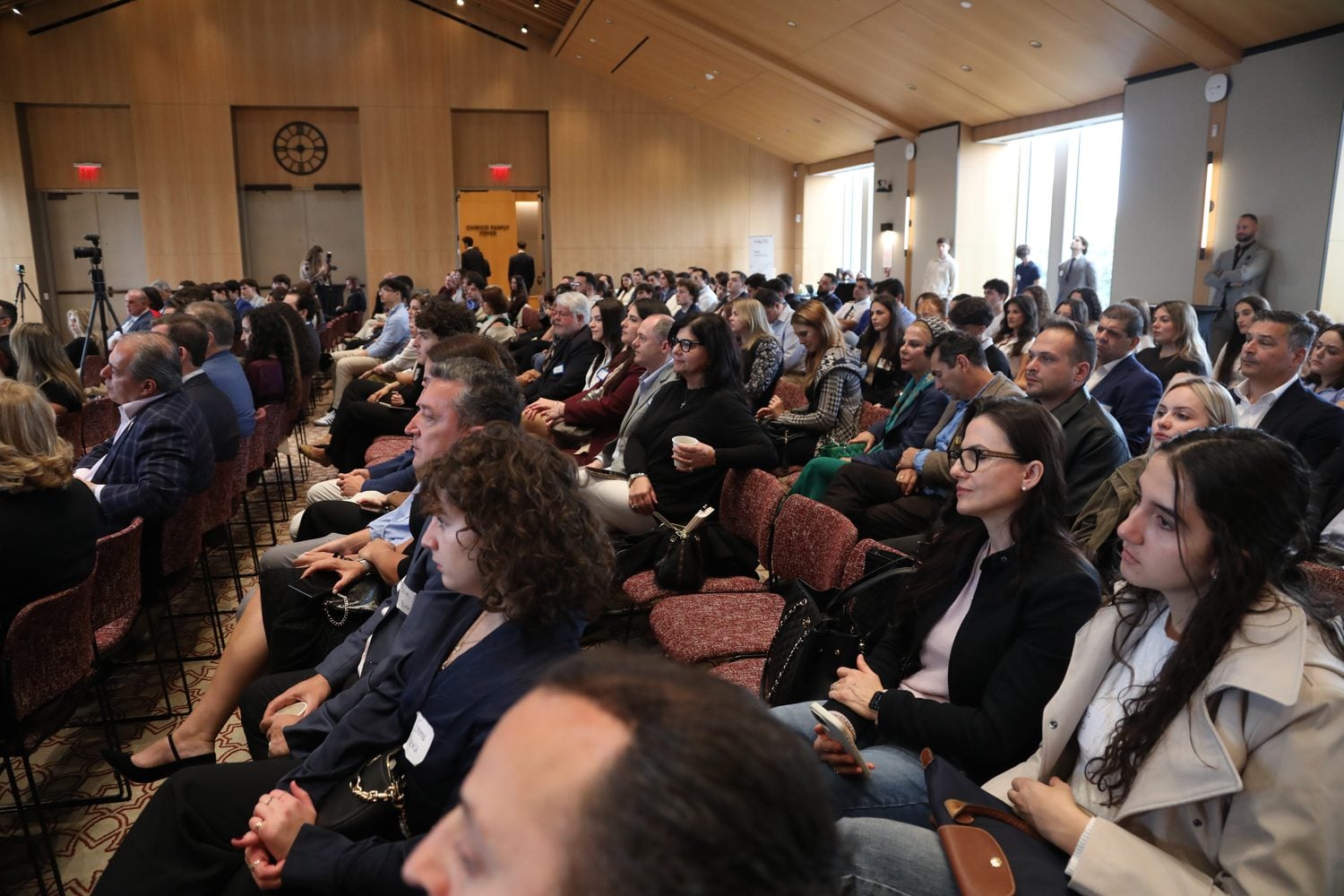
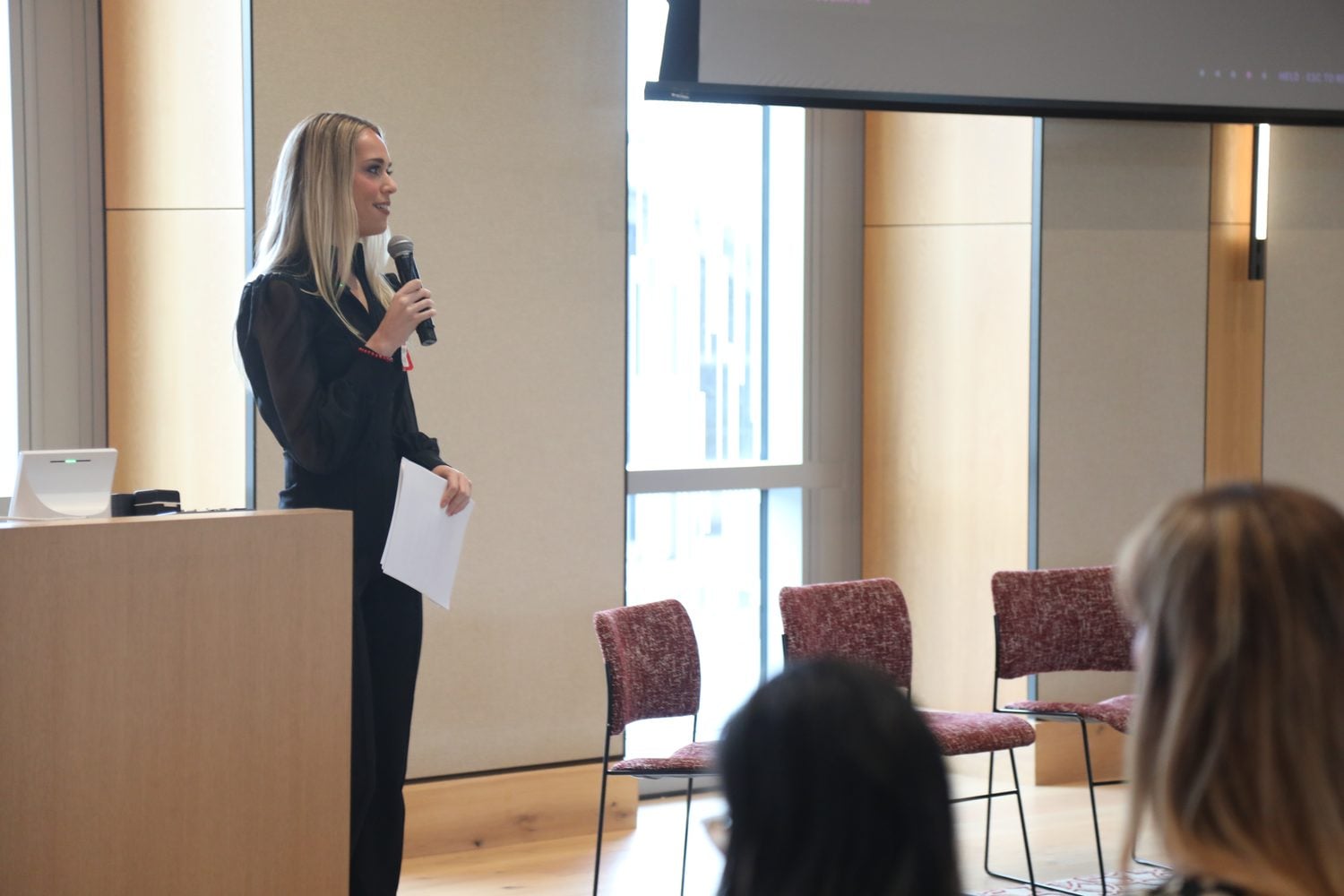
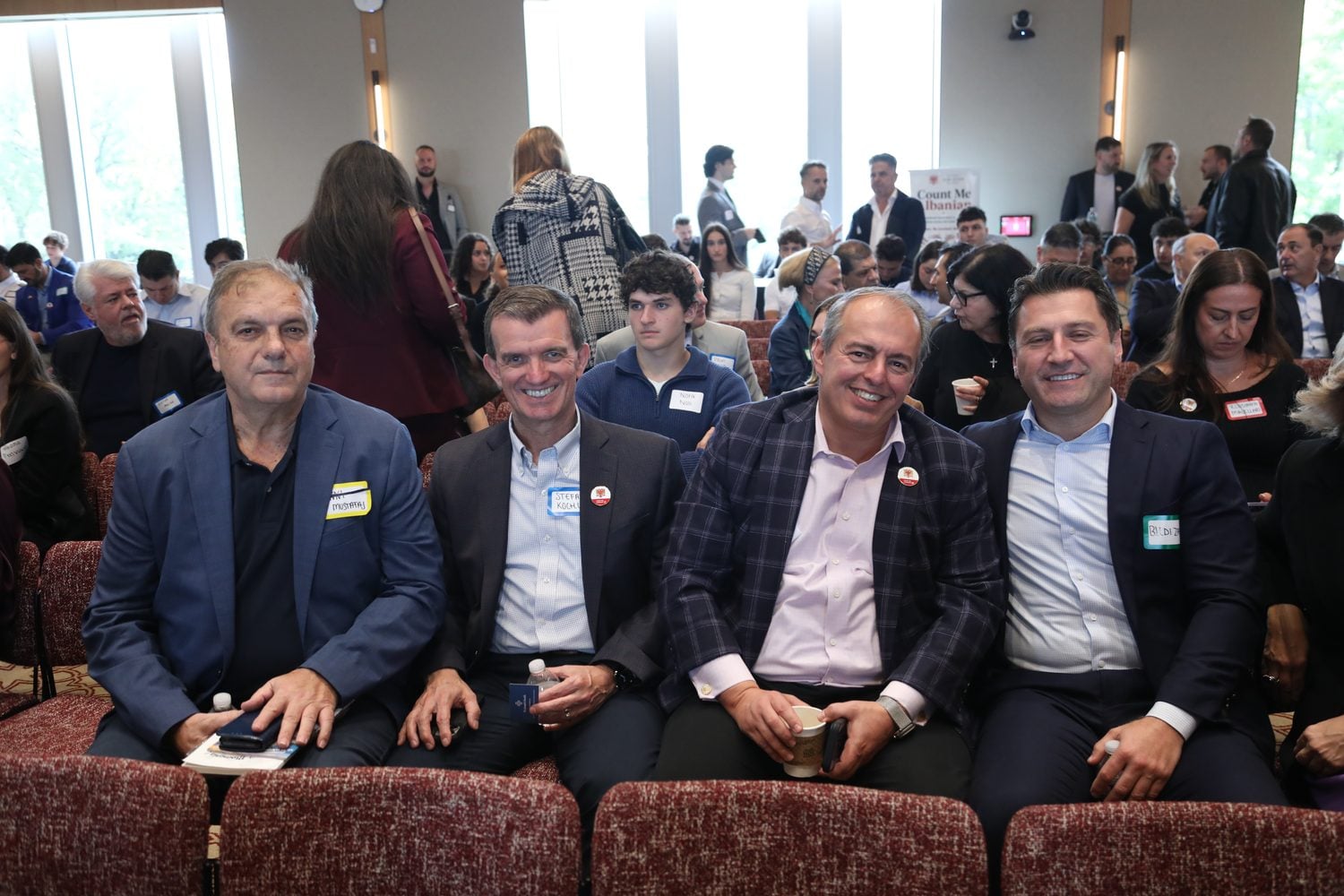
The day closed with all four panels taking questions from students at once.
What to take away
5
-
Attitude is the hiring filter. Asked how to stand out when every candidate holds the same degree, a panelist said he looks for attitude, because he can teach skills and cannot teach attitude.
-
Separate reversible decisions from irreversible ones. A panelist borrowed the two-door framing: if a decision can be reversed you go one way and come back out, and most people treat every decision as the door that only opens once.
-
Rejection redirects rather than ends. A panelist from one of the earlier panels called rejection a wonderful thing, because it opens the door to something else meant for you.
-
Communication and self-advocacy were named as the hardest early barrier, as an immigrant and as a woman in finance, and what answered it was reading, listening and practice rather than talent.
-
Risk never goes to zero. One answer framed the job as reducing it to what is acceptable, and as thinking about the worst that can happen even when the probability of it is low.
What students asked
5
- There is a lot of talk about uncertainty. How do you know whether you are making a good decision?
- With so many candidates holding the same degree and a nearly identical résumé, how do you differentiate yourself in a hiring process?
- What is one of the biggest challenges you have faced in your career, and what did you learn from it?
- How did your goals evolve over time, and what is the next one in your professional career?
- For an aspiring entrepreneur, what is coming in the next five to ten years?
From the day
More photos →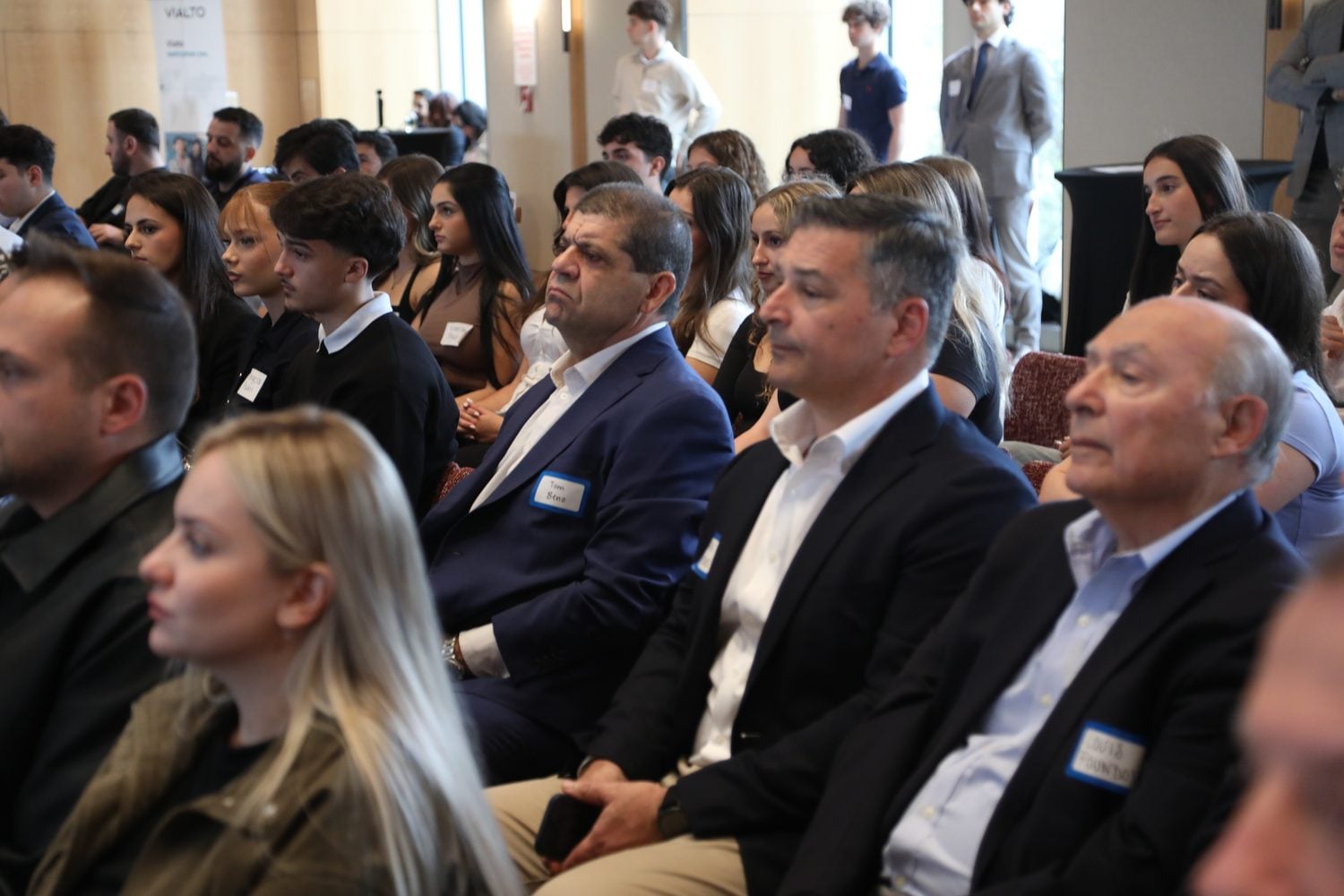
Photos by Vasjana Minga, Eleni Mazija, Dritan Haxhia and Olsi Beci. Vasjana Minga · Eleni Mazija